Some families operate like corporations, distributing resources based on perceived value and future potential. In the Kalen family, love came with spreadsheets, and worth was measured in achievements that aligned with their narrow definition of success. For Naomi Kalen-Morrison and her son Elias, this reality meant existing on the periphery of a family that had never quite figured out where to place them.
The moment that crystallized everything came at a graduation party, surrounded by balloons and congratulations that weren’t meant for them. It was there, amid the celebration of another grandchild’s full ride to Stanford, that patriarch Gerald Kalen delivered the verdict that would change everything: “Why waste it on him? He’s from a broken home.”
This is the story of how those words became the catalyst for something extraordinary—a moment when a seventeen-year-old boy found his voice and used it to redefine what strength really means. It’s also the story of how sometimes the most powerful response to rejection is not anger, but the quiet determination to prove that worth cannot be measured by other people’s limitations.
The Architecture of Exclusion
The Kalen family had always prided itself on tradition, success, and maintaining what Gerald called “the family standard.” This standard was exacting and unforgiving: children were expected to excel academically, marry well, maintain stable nuclear families, and contribute to the family’s collective reputation. Deviation from this template was not met with understanding but with subtle—and sometimes not so subtle—exclusion.
Naomi had violated the family code in multiple ways. Her divorce from Ryan during her pregnancy had been the first strike—a public failure that reflected poorly on the family’s ability to instill proper values in their children. Her subsequent choice to raise Elias as a single mother while working as a librarian represented an ongoing reminder of that failure, a living contradiction to the family’s narrative of success and stability.
The consequences of this violation played out in countless small ways over the years. Family photos were carefully arranged to minimize Naomi and Elias’s presence. Holiday celebrations included them as obligatory guests rather than cherished family members. Financial assistance flowed freely to other family members but was never offered to the single mother struggling to raise her son on a librarian’s salary.
Most painfully, these patterns of exclusion extended to Elias himself. Despite being bright, well-behaved, and academically gifted, he was consistently treated as less valuable than his cousins. While other grandchildren received elaborate birthday parties, Elias got cards with modest gift cards inside. While his cousins were enrolled in expensive summer camps and tutoring programs, Elias spent his summers reading in the children’s section of his mother’s library.
The family’s treatment of Elias was perhaps most cruel because it was so systematic. It wasn’t the result of personal animosity or obvious dislike—it was the calculated application of their belief that children from “broken homes” were damaged goods, unworthy of the same investment as those from intact families.
Growing Up in the Margins
For Elias, childhood meant learning to navigate a world where his place was never quite secure. At family gatherings, he observed the easy confidence of his cousins, who moved through these events knowing they belonged, knowing they were valued, knowing that their futures were secured by both love and money.
Elias learned different lessons. He learned to be grateful for whatever attention he received, to never ask for too much, to make himself useful without being demanding. He learned to read the room, to understand when his presence was welcome and when it was merely tolerated. Most importantly, he learned to find validation within himself rather than waiting for it from others.
The library became Elias’s sanctuary during these formative years. While his mother worked, he would lose himself in books that transported him to worlds where worth was determined by character rather than circumstances. He discovered authors who wrote about outsiders, misfits, and underdogs who found ways to triumph despite the odds against them.
Literature became more than entertainment for Elias—it became a lifeline. Through stories, he learned that there were different ways to be strong, different definitions of success, and different kinds of families that could nurture and support their members. Books showed him that intelligence, creativity, and resilience were valuable qualities, even if his own family failed to recognize them.
By the time he reached middle school, Elias had begun writing his own stories. Initially, these were simple adventures and fantasies, but gradually they became more personal, exploring themes of belonging, identity, and the search for acceptance. His English teachers recognized his talent early, encouraging him to enter writing contests and consider journalism or creative writing as potential career paths.
But it was his relationship with his grandmother, Dorene, that provided Elias with his clearest sense of unconditional love. Unlike the rest of the family, Dorene saw past the circumstances of his birth to recognize his inherent worth. She called him “my little professor,” celebrating his intellectual curiosity and encouraging his love of learning.
When Dorene was diagnosed with cancer during Elias’s freshman year of high school, he became one of her primary caregivers, spending afternoons reading to her, helping with her medications, and simply providing companionship during her treatment. The bond they formed during this period was profound, representing perhaps the first time in his life that Elias felt truly seen and valued by a family member.
Dorene’s death during his sophomore year was devastating for Elias, not just because he lost someone who loved him unconditionally, but because her passing removed the one family member who had consistently advocated for his worth and potential.
The Quiet Achiever
Throughout high school, Elias channeled his complex emotions about family rejection into academic achievement. He approached his studies with an intensity that impressed his teachers and worried his mother, who sometimes found him working at his desk at two in the morning, driven by a need to prove himself that went far beyond normal teenage ambition.
Elias’s academic record was exceptional by any measure. He maintained a perfect GPA while taking the most challenging courses available, participated in academic competitions, and won several regional writing contests. He also worked part-time at a local bookstore, not because the family needed the money desperately, but because he wanted to contribute to household expenses and save for college.
Despite these achievements, the family’s treatment of Elias remained unchanged. His academic successes were acknowledged with polite congratulations but never celebrated with the enthusiasm reserved for his cousins’ accomplishments. When he won a statewide essay contest, Gerald’s response was a brief “That’s nice,” before immediately shifting the conversation to his nephew’s soccer tournament.
This pattern of dismissal taught Elias important lessons about the difference between external validation and internal worth. While he naturally craved recognition from his family, he learned to find satisfaction in the work itself, in the knowledge that he was developing his talents and preparing for a future that would be entirely of his own making.
The college application process became a source of both excitement and anxiety for Elias. He knew he had the grades and test scores to gain admission to excellent universities, but the financial reality weighed heavily on both him and his mother. Unlike his cousins, who could apply anywhere knowing their education would be fully funded, Elias had to focus on schools that offered substantial financial aid.
When the acceptance letters began arriving during his senior year, Elias felt a mixture of pride and sadness. He had been accepted to every school he applied to, including several prestigious universities that offered significant scholarships. But there was no family celebration of these achievements, no acknowledgment that perhaps their assumptions about his potential had been wrong.
The Graduation Party: The Final Insult
The moment that changed everything came at his cousin Sarah’s high school graduation party. Sarah, the daughter of Naomi’s brother Joel, had received a full scholarship to Stanford—an achievement that the family celebrated with elaborate planning and genuine pride. The backyard was decorated with balloons in Stanford’s colors, and Gerald had prepared a speech about how far the “Kalen family name” had come.
Naomi attended the party with mixed emotions. She was genuinely happy for Sarah, who was a sweet girl and deserved recognition for her achievements. But she also couldn’t help noticing the contrast between how Sarah’s success was celebrated and how Elias’s accomplishments were ignored. When Elias was accepted to Northwestern with a substantial scholarship, Gerald’s response had been a grunt and a subject change.
During the party, as Gerald raised his glass to toast the family’s success, Naomi made a decision that would have far-reaching consequences. Rather than staying silent as she had so many times before, she decided to test whether the family’s exclusion of Elias was truly as complete as it seemed.
“Dad,” she said, approaching Gerald with what she hoped was a casual tone, “does Elias get a piece of the college fund too?”
The question was perfectly reasonable. The family had established education funds for all the grandchildren, pooling resources to ensure that each child could attend college without financial hardship. These funds were substantial—enough to cover tuition, room and board, and expenses at even the most expensive universities.
Gerald’s response was swift and brutal: “Why waste it on him? He’s from a broken home.”
The words hit both Naomi and Elias like physical blows. Not just because of their cruelty, but because of how casually they were delivered. Gerald wasn’t angry or emotional; he was simply stating what he considered an obvious fact. Children from broken homes were damaged goods, unworthy of investment.
Naomi smiled and said nothing, as she had trained herself to do over years of similar slights. But inside, something fundamental shifted. The last vestige of hope that her family might eventually recognize Elias’s worth died in that moment, replaced by a cold determination to prove them wrong.
The Secret Weapon: Words as Power
What the family didn’t know—what even Naomi didn’t fully understand—was that their rejection of Elias had been shaping him into something powerful. Every slight, every dismissal, every reminder that he was considered less worthy had been feeding a fire that was about to burst into flame.
Elias had been chosen as valedictorian of his graduating class, an honor that came with the responsibility of delivering a speech to the assembled graduates, families, and faculty. For most students, this speech was a formal obligation—a chance to offer inspirational words about the future and thank the people who had supported them along the way.
But for Elias, the valedictorian speech represented something much more significant: an opportunity to finally speak his truth to an audience that would have to listen.
In the weeks following Gerald’s cruel dismissal at the graduation party, Elias began crafting his speech with the intensity of someone who understood that words could be weapons when wielded properly. He wrote draft after draft, refining his message until it crystallized into something that was both deeply personal and universally resonant.
The speech wasn’t motivated by revenge, though there was certainly an element of wanting his family to understand what they had lost by rejecting him. Instead, it was driven by a desire to speak for all the children who had been dismissed, underestimated, or written off because their families didn’t fit conventional molds.
Elias understood that his moment at the podium would be brief but potentially powerful. He had watched enough graduation ceremonies to know that most valedictorian speeches were quickly forgotten, but he was determined to deliver words that would linger in the minds of everyone who heard them.
The Day of Reckoning
Graduation day arrived with the kind of nervous energy that attends all major life transitions. For Elias, it represented not just the completion of his high school education but the culmination of seventeen years of proving himself worthy despite his family’s indifference.
The morning was spent in the usual preparations—adjusting caps and gowns, taking photographs, and managing the logistics of the ceremony. But there was an undercurrent of anticipation that Naomi could sense in her son, a quiet intensity that suggested something significant was about to happen.
To Naomi’s surprise, the extended family showed up for the ceremony. Gerald, Catherine, Joel, and several other relatives filled an entire row of the auditorium, their presence both welcome and complicated. Naomi was glad they had come—Elias deserved to have family present for his moment of triumph—but she was also apprehensive about their expectations.
As the ceremony began and the list of graduates was read, Naomi felt a surge of pride at the recognition Elias received. His academic achievements were impressive by any standard: valedictorian of his class, National Merit Scholar, recipient of multiple academic awards and scholarships. For a few moments, she allowed herself to hope that perhaps the family would finally recognize what they had been missing.
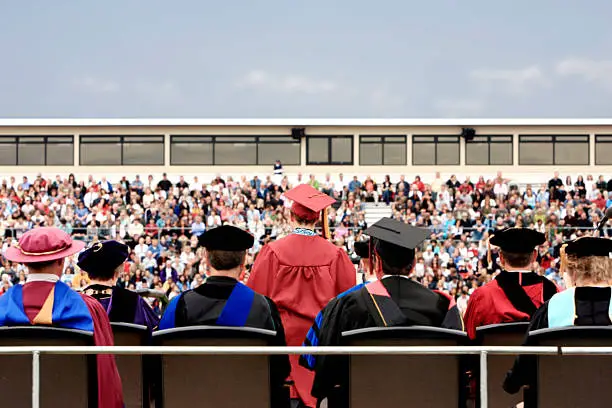
When Elias was introduced as the valedictorian speaker, the auditorium fell silent with the respectful attention usually accorded to such moments. He walked to the podium with confidence, carrying not the standard prepared remarks but his own journal—a detail that immediately caught Naomi’s attention.
The Speech That Changed Everything
Elias began conventionally enough, thanking the faculty, acknowledging his fellow graduates, and offering the kind of inspirational words expected at such occasions. But as he continued, the tone of his speech began to shift in ways that made the audience lean forward with increased attention.
“There are people in this room,” he said, his voice carrying clearly across the auditorium, “who didn’t expect to see me here today. People who thought I wasn’t worth the investment. That being from a broken home made me broken too.”
The words landed like stones dropped into still water, creating ripples of reaction throughout the audience. Naomi felt her heart begin to race as she realized that Elias was about to do something unprecedented.
“But I’ve learned something,” he continued, his eyes scanning the crowd until they found his family’s section. “You don’t have to come from a perfect family to build a powerful future.”
The audience was completely silent now, sensing that they were witnessing something more than a typical graduation speech. Even the family members who had dismissed Elias for so long were paying attention, perhaps for the first time truly hearing what he had to say.
“Some of us are born into applause,” Elias continued, his voice growing stronger with each word. “Some of us have to earn every single clap. But that doesn’t make us less. That makes us strong.”
From her seat, Naomi could see Gerald’s face, could watch as her father’s expression shifted from polite attention to something more complex—surprise, discomfort, and perhaps the first stirrings of recognition that he had gravely underestimated his grandson.
“I spent years thinking silence meant peace,” Elias said, his words now carrying the weight of accumulated experience and hard-won wisdom. “That if I kept my head down, maybe I’d earn my place. That if I worked hard enough, maybe I’d stop feeling like a guest in my own family.”
The personal nature of his remarks was unprecedented for a valedictorian speech, but no one in the audience seemed inclined to stop him. There was something compelling about his honesty, something that demanded attention and respect.
“And then I realized something important,” Elias continued, closing his journal and looking directly at the section where his family sat. “You don’t wait to be invited to take up space in this world. You claim it. You build it. You own it.”
The Final Words
The climax of Elias’s speech came when he delivered the words that would be remembered long after the caps were thrown and the diplomas distributed. Looking directly at Gerald, speaking with the authority of someone who had finally found his voice, he said:
“I was raised in what they call a broken home. But broken homes don’t raise broken people. They raise fighters. They raise listeners. They raise leaders. They raise sons who grow up to stand here today and make even the quiet ones listen.”
The impact was immediate and electric. The audience erupted in applause that seemed to go on forever, a standing ovation that felt less like polite recognition and more like a validation of everything Elias had endured and overcome.
But perhaps the most significant reaction came from Gerald himself. The man who had dismissed his grandson as unworthy of investment, who had casually written him off as damaged goods, slowly rose to his feet. Not in enthusiastic applause, but in something closer to shock—the recognition that he had been profoundly wrong about someone he had never bothered to truly see.
Gerald’s standing was not an apology or an acknowledgment of his mistakes, but it was something: a crack in the wall of indifference and prejudice that had defined his relationship with his grandson for seventeen years.
The Aftermath: When Truth Changes Everything
The immediate aftermath of Elias’s speech was a whirlwind of congratulations, tears, and recognition. Fellow students, faculty members, and parents approached him with words of appreciation and support. The speech had touched something universal—the experience of being underestimated, of having to prove worth that should have been assumed, of finding strength in unexpected places.
But perhaps the most significant reaction was the silence from his own family. As people filed out of the auditorium, the relatives who had dismissed Elias for so long seemed uncertain how to respond to what they had witnessed. His cousins looked at him with new respect, his aunts and uncles offered awkward congratulations, and Gerald himself simply watched from a distance, apparently processing the implications of what he had heard.
Later that evening, as Naomi and Elias sat together reviewing the day’s events, she received a text message from her father. Three words: “He surprised me.”
It wasn’t an apology or an admission of wrongdoing, but coming from Gerald, it was significant. For a man who prided himself on being right about people and situations, the acknowledgment that he had been surprised suggested a fundamental revision of his assumptions.
Elias’s response to his grandfather’s grudging recognition was characteristically mature. “I didn’t do it to hurt him,” he told his mother. “I did it to heal me.”
That distinction captured something essential about Elias’s character and the nature of his achievement. His speech wasn’t an act of revenge against people who had treated him poorly, but an assertion of his own worth and potential. He had used his moment of visibility not to tear others down but to lift himself up.
The Ripple Effects: Beyond the Auditorium
In the days and weeks following graduation, it became clear that Elias’s speech had resonated far beyond the walls of the high school auditorium. Video clips of his remarks were shared widely on social media, generating thousands of comments from people who had experienced similar family dynamics or who were inspired by his message of resilience and self-determination.
The speech particularly struck a chord with young people from non-traditional families—children of divorce, those raised by single parents, kids who had been written off because their circumstances didn’t match conventional expectations of success. Elias began receiving messages from strangers who thanked him for giving voice to experiences they had never heard acknowledged publicly.
Educational professionals also took notice of the speech, with several teachers and counselors sharing it as an example of how young people could overcome adversity and find strength in difficult circumstances. The message that “broken homes don’t raise broken people” became a rallying cry for educators working with students from challenging backgrounds.
For the Kalen family, the speech’s viral success created an uncomfortable spotlight on their treatment of Elias over the years. While no one directly criticized them publicly, the contrast between Elias’s achievements and their lack of support became impossible to ignore. Friends and colleagues who saw the speech began asking questions about the grandson they had rarely heard mentioned.
The College Years: Proving Himself Right
When Elias left for Northwestern University that fall, he carried with him more than just the confidence that comes from academic achievement. His valedictorian speech had crystallized something essential about his character and his potential, providing him with a foundation of self-worth that would serve him well in the years to come.
College life agreed with Elias in ways that high school never had. Surrounded by peers who valued intellectual curiosity and academic achievement, he found the kind of community he had always been seeking. His professors recognized his talent immediately, encouraging him to pursue advanced coursework and offering opportunities for research and publication.
The independence of college life also allowed Elias to fully explore his passion for writing. He joined the university literary magazine, contributed to the campus newspaper, and began working on longer pieces that drew from his own experiences growing up on the margins of his family.
During his freshman year, Elias won a prestigious writing award for an essay about resilience and family dynamics. The piece, which drew heavily from his own experiences, was later published in a national magazine and generated significant attention from readers who connected with its themes.
When he called his mother to share the news of his writing award, Elias mentioned that the essay was “about being raised by a woman who taught me I was enough before anyone else ever did.” For Naomi, those words represented the ultimate validation of her choices as a mother and her decision to prioritize her son’s wellbeing over family harmony.
The Long View: Redefining Success and Family
Five years after his graduation speech, Elias has established himself as a successful writer and advocate for young people from non-traditional backgrounds. His work has been published in major magazines and literary journals, and he speaks regularly at educational conferences about resilience and the importance of recognizing potential in all students, regardless of their family circumstances.
The relationship with his extended family has evolved in subtle but meaningful ways. While Gerald never offered a direct apology for his years of dismissive treatment, his interactions with Elias became more respectful and engaged. He began asking about his grandson’s writing and expressing pride in his achievements—small gestures that represented significant progress for a man who had once written him off entirely.
More importantly, Elias’s success has begun to change how the family thinks about worth and potential. His younger cousins, who witnessed his transformation from dismissed outsider to celebrated achiever, have learned that there are many paths to success and many ways to contribute value to the world.
For Naomi, watching her son thrive has been both vindication and liberation. The years of quiet endurance, of choosing not to fight battles she couldn’t win, had been leading to this moment when Elias would fight his own battles with words more powerful than any argument she could have made.
The college fund that Gerald had refused to waste on Elias became irrelevant in the face of the scholarships and opportunities that Elias earned through his own efforts. He had proven that investment in his potential—whether financial or emotional—would have paid remarkable dividends if the family had been wise enough to make it.
The Universal Message: Strength in Unexpected Places
Elias’s story resonates because it speaks to universal experiences of being underestimated, dismissed, or written off because of circumstances beyond one’s control. His message that “broken homes don’t raise broken people” challenges common assumptions about family structure and success, suggesting that strength and resilience can emerge from the most unlikely circumstances.
The speech also highlights the power of words and the importance of finding one’s voice, especially for young people who have been silenced or marginalized. Elias’s decision to use his moment of visibility to speak truth rather than platitudes transformed a conventional ceremonial occasion into something much more meaningful and lasting.
Perhaps most importantly, his story demonstrates that worth is not determined by other people’s recognition or investment, but by one’s own character, effort, and determination to build something meaningful from whatever circumstances life provides. The validation that Elias had sought from his family ultimately proved less important than the self-respect he earned through his own achievements.
The Mother’s Perspective: Love as Foundation
Throughout Elias’s journey from dismissed grandchild to celebrated graduate, Naomi’s role was both crucial and subtle. Rather than fighting battles on his behalf or demanding recognition he wasn’t receiving, she provided the steady foundation of unconditional love that allowed him to develop the internal strength necessary to advocate for himself.
Her decision to stay silent in the face of family rejection wasn’t weakness or acceptance of their treatment, but strategic wisdom. She understood that fighting for Elias’s place in a family that didn’t want to make room for him would ultimately be less valuable than helping him build the confidence to create his own place in the world.
The sacrifices Naomi made—financial, social, and emotional—created space for Elias to develop his talents and pursue his dreams without the burden of family expectations or the limitations of their narrow definitions of success. Her belief in his potential, even when no one else shared it, gave him the foundation he needed to eventually prove her right.
In many ways, Naomi’s story is as inspiring as her son’s. Her choice to prioritize his wellbeing over family harmony, to work multiple jobs to support his education, and to love him unconditionally despite the challenges of single parenthood created the conditions that allowed his exceptional character to flourish.
Epilogue: The Power of Redefining Family
The final lesson of Elias’s story may be that family is not just about shared blood or surnames, but about recognition, support, and unconditional love. The relatives who dismissed him never truly functioned as family in the ways that mattered most, while his mother’s unwavering support provided all the family foundation he actually needed.
His valedictorian speech was not just a moment of personal triumph but a redefinition of what strength looks like, what family means, and how success should be measured. By refusing to accept his family’s limitations as his own, Elias created space for a different kind of story—one where worth is determined by character rather than circumstances, where potential is recognized rather than dismissed, and where love is shown through belief rather than conditional approval.
The boy who grew up feeling like a guest in his own family became a man who created his own definition of belonging, proving that the most powerful inheritance is not money in a college fund but the unshakeable knowledge of one’s own worth. His story continues to inspire others who have felt marginalized or underestimated, reminding them that sometimes the most profound strength comes from the very experiences that others see as weaknesses.
In the end, Gerald’s cruel dismissal—”Why waste it on him?”—became the catalyst for an answer that echoed far beyond a high school auditorium: Because investment in human potential, especially when that potential has been overlooked or dismissed, often yields the most extraordinary returns of all.

Sophia Rivers is an experienced News Content Editor with a sharp eye for detail and a passion for delivering accurate and engaging news stories. At TheArchivists, she specializes in curating, editing, and presenting news content that informs and resonates with a global audience.
Sophia holds a degree in Journalism from the University of Toronto, where she developed her skills in news reporting, media ethics, and digital journalism. Her expertise lies in identifying key stories, crafting compelling narratives, and ensuring journalistic integrity in every piece she edits.
Known for her precision and dedication to the truth, Sophia thrives in the fast-paced world of news editing. At TheArchivists, she focuses on producing high-quality news content that keeps readers informed while maintaining a balanced and insightful perspective.
With a commitment to delivering impactful journalism, Sophia is passionate about bringing clarity to complex issues and amplifying voices that matter. Her work reflects her belief in the power of news to shape conversations and inspire change.