The Longest Wait
I sat on a wooden bench outside Vanderbilt University Hospital, clutching my hands together until my knuckles turned white. The spring air carried the sweet scent of blooming dogwoods, but none of it reached me. My husband, Daniel Carter, was lying in the intensive care unit behind those walls, fighting for his life against an enemy we never saw coming.
Daniel used to be unstoppable. He was the kind of man who would work a twelve-hour day building custom furniture, then come home and still have the energy to cook dinner. He had this way of smiling that made you believe everything would be okay. He was my safe place, my steady ground, and now, watching him fade, I felt like I was standing on quicksand.
Six months ago, we thought we had a lifetime. Then he came home one night, pale and exhausted. The tiredness lingered, deepened, and turned into unexplained bruises and nights when he struggled to catch his breath. The doctor said words that didn’t seem real: aplastic anemia. His own body was destroying his bone marrow, shutting down the very factory that made his blood. Without a stem cell transplant, they said, there was little hope.
The Search for Hope
Finding a donor became our obsession. Daniel’s sister Rachel was the first to be tested, her face bright with determined optimism as she rolled up her sleeve for the blood draw. “I’m going to be the one,” she’d said confidently. “We’ve always joked about having the same stubborn streak—maybe we have the same stubborn bone marrow too.”
But the results came back negative. Not even close to a match.
His parents flew in from Oregon, both in their seventies but insisting they could be tested despite the doctors’ gentle explanations about age limitations. His mother, Eleanor, sat in the waiting room with tears streaming down her face as she filled out forms with shaking hands. “Forty-three years I carried that boy,” she whispered. “How can I not be able to help him now?”
Neither parent was a match either.
We expanded the search to the national registry, where Daniel’s information joined hundreds of thousands of others desperately seeking their genetic twin among strangers. The doctors spoke in percentages and probabilities, explaining that patients of mixed heritage—Daniel’s grandfather had been Cherokee—faced additional challenges in finding compatible donors.
“The registry has grown significantly,” Dr. Morrison assured us during one of our weekly consultations. “We’re seeing new registrations every day. Sometimes the right match appears when we least expect it.”
But as weeks turned into months, and Daniel’s condition continued to deteriorate, those reassurances began to feel hollow.
The Unexpected Visitor
I was dozing in the uncomfortable hospital chair beside Daniel’s bed when a nurse gently shook my shoulder. The ICU was dimly lit for the night shift, machines beeping their steady rhythm around Daniel’s unconscious form.
“Mrs. Carter? There’s someone here to see you. She says it’s urgent.”
I followed the nurse to the family consultation room, expecting to see Rachel or perhaps one of Daniel’s coworkers from the furniture shop. Instead, I found myself face-to-face with a woman I’d never seen before—tall, elegant, with silver-streaked dark hair and eyes that looked hauntingly familiar.
“Sarah Carter?” she asked, extending a perfectly manicured hand. “My name is Margaret Whitfield. I believe we need to talk about your husband.”
Something in her tone made my chest tighten. “I’m sorry, do we know each other? Are you from the transplant registry?”
Margaret’s smile was carefully controlled, the kind practiced by someone accustomed to delivering difficult news. “In a manner of speaking, yes. I understand Daniel needs a bone marrow transplant?”
“He needs a stem cell transplant, yes. But I don’t understand—who are you exactly?”
She gestured toward two chairs arranged near the window. “Please, sit down. This is going to be complicated to explain.”
As I settled into the chair across from her, Margaret opened an expensive leather portfolio and withdrew a manila folder. “Three days ago, I received a call from the National Marrow Donor Registry. They informed me that I was a preliminary match for a patient in Nashville.”
My heart began racing. “You’re a match for Daniel?”
“A potential match, yes. But before I could proceed with additional testing, I needed to understand something about the patient.” Margaret’s fingers traced the edge of the folder. “You see, Mrs. Carter, I have reason to believe that Daniel might be my son.”
The words hit me like a physical blow. “That’s impossible. Daniel’s parents are Eleanor and Robert Carter. They live in Oregon. I’ve known them for twelve years.”
“The people who raised him, yes,” Margaret said gently. “But not his biological parents.”
The Revelation
Margaret opened the folder and withdrew a photograph—a young woman with dark hair and familiar eyes, standing next to a tall man in military uniform. “This was taken in 1978. I was twenty-two years old, working as a nurse at Fort Campbell. The man with me was Sergeant Thomas Whitfield, my husband.”
I stared at the photograph, noting the resemblance between the young woman and the elegant lady sitting across from me. “I still don’t understand what this has to do with Daniel.”
“Tom was deployed to Germany for eighteen months. During that time, I had an affair with another soldier stationed at the base. When I became pregnant, I convinced myself the baby was Tom’s. We’d been trying to conceive for two years, and the timing… well, I wanted to believe it was possible.”
Margaret’s voice remained steady, but I could see the tension in her shoulders as she continued. “Daniel was born on March 15th, 1979. Does that match your husband’s birthdate?”
My mouth went dry. “Yes.”
“Tom was killed in a training accident when Daniel was six months old. I was twenty-three, widowed, with a baby I was struggling to support. My parents were furious about the circumstances of my pregnancy—they suspected the truth about the affair. I had no family support, no money, and I was barely holding myself together.”
She withdrew another document from the folder—an adoption certificate bearing Daniel’s birthdate and a notation about placement with Robert and Eleanor Carter through Catholic Charities of Tennessee.
“I made the hardest decision of my life,” Margaret whispered. “I believed he would have a better future with a stable family than with a broke, grieving single mother who couldn’t even be certain who his father was.”
The Confrontation
I stood up abruptly, pacing to the window that overlooked the hospital parking lot. “This is insane. You can’t just show up here and claim to be Daniel’s mother. Where have you been for forty-three years? Why now?”
“Because now he needs me,” Margaret replied, her composure finally cracking slightly. “For forty-three years, I’ve wondered about him, searched for him, hoped he was happy and healthy. Three months ago, I hired a private investigator to help me find him. I learned about his illness just as the transplant registry contacted me.”
I turned to face her, anger and desperation warring in my chest. “You abandoned him. You gave him away, and now you want to swoop in and play the hero because he needs your bone marrow?”
“I gave him to parents who could provide for him better than I could,” Margaret said firmly. “Robert and Eleanor Carter gave him a wonderful life. They loved him, supported him, gave him opportunities I never could have provided. I’ve never regretted that decision.”
“Then why are you here?”
Margaret stood and walked to the window beside me. “Because he’s dying, and I might be the only person who can save him. Whatever you think of me, whatever anger you feel about my choices, that child—that man—deserves every chance at life.”
The Dilemma
Over the next hour, Margaret laid out the details of her story with the precision of someone who had rehearsed these facts countless times. She’d remarried five years after giving up Daniel, to a successful attorney named James Whitfield. They’d had two children together—daughters who were now in their thirties and unaware of their half-brother’s existence.
“James doesn’t know about Daniel,” Margaret admitted. “Our marriage began with my promise that the past would stay in the past. He believes I was a widow with no children when we met.”
“So your entire family is built on a lie,” I said, my anger giving way to something approaching pity.
“My entire family is built on the decision to move forward rather than remain trapped by past mistakes,” she corrected. “But now that decision is being tested.”
Margaret had undergone preliminary blood work after being contacted by the registry, confirming that she was indeed a potential match for Daniel. However, the more extensive testing required for final confirmation would take several days, and the actual donation process would require her to spend a week in Nashville for preparation and recovery.
“My husband believes I’m visiting my sister in Atlanta,” she said quietly. “My daughters think I’m at a spa retreat. I can’t maintain those lies indefinitely.”
“What happens when they find out?”
Margaret’s carefully maintained composure finally cracked completely. “I don’t know. James has very strong feelings about honesty in marriage. My daughters… they’ve grown up believing they were my only children. This could destroy everything I’ve built.”
The Weight of Truth
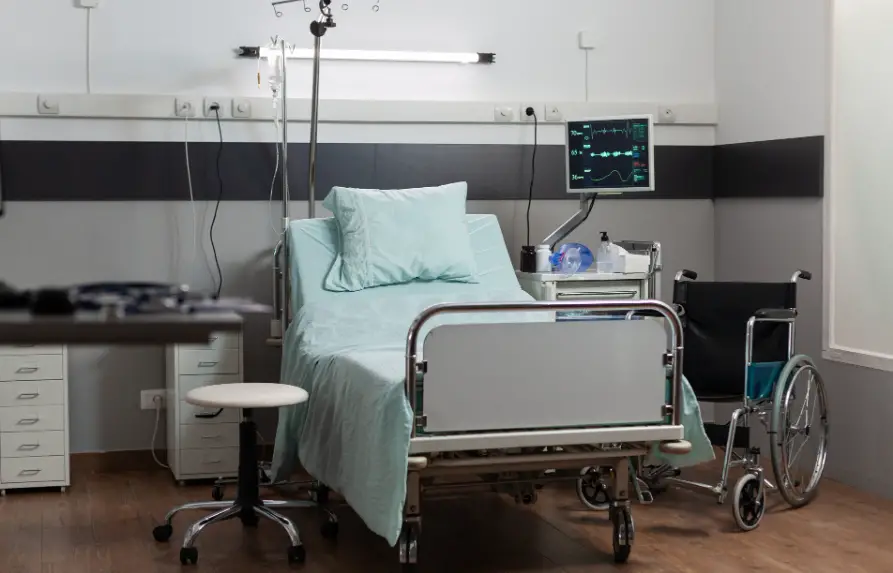
I returned to Daniel’s ICU room with my head spinning from Margaret’s revelations. My husband lay unconscious, his face pale against the white pillows, machines monitoring every heartbeat and breath. The doctors had been preparing us for the possibility that he might not wake up again—his body was failing faster than they’d anticipated.
Sitting beside his bed, I found myself studying his features with new eyes. The strong jawline that I’d always assumed came from Robert Carter. The dark hair with premature silver streaks that seemed to appear from nowhere in his family line. The distinctive shape of his hands that had always seemed elegant for someone who worked with wood.
How many times had Daniel wondered about traits that didn’t seem to match his adoptive family? He’d always joked about being the “black sheep” who chose craftsmanship over the academic careers his parents had pursued. Had there been moments when he’d wondered about his biological origins?
Robert and Eleanor had told him about the adoption when he was twelve, handling it with the same loving honesty they’d brought to every aspect of his upbringing. Daniel had never expressed interest in searching for his birth parents, saying that the parents who raised him were the only ones who mattered.
But now, faced with a potential biological connection that could save his life, everything felt different.
The Testing
Margaret underwent the comprehensive compatibility testing over the next three days, enduring blood draws, tissue typing, and medical evaluations that would determine whether she could donate the stem cells Daniel desperately needed. I spent those days torn between hope and resentment, grateful for the possibility of a match while struggling with anger toward this stranger who claimed to be his mother.
Dr. Morrison kept us updated on Margaret’s test results with professional optimism. “The initial indicators are very promising,” he reported after the second day of testing. “If the final compatibility markers align, Mrs. Whitfield could be an excellent donor candidate.”
Margaret had taken a room at a hotel near the hospital, visiting Daniel daily despite my obvious discomfort with her presence. She would sit quietly in the corner of his room, studying his face with an intensity that made me want to scream.
“Does he look like his father?” I asked on the third day, surprising myself with the question.
Margaret turned from the window where she’d been watching Daniel sleep. “No,” she said softly. “He looks like my father. My dad died when I was sixteen, but Daniel has his nose, his chin, even the way his hands rest when he’s sleeping.”
The observation was so intimate, so specific, that it hit me like a physical blow. This woman knew things about my husband that I’d never noticed, genetic connections that spoke to a truth I didn’t want to accept.
The Decision Point
On the fourth day, Dr. Morrison called us into his office with news that would change everything. Margaret was not just a compatible donor—she was a perfect match, sharing genetic markers that suggested a close biological relationship.
“In my twenty years of transplant medicine,” Dr. Morrison said, “I’ve rarely seen compatibility this precise outside of immediate family members. Mrs. Whitfield, your donation could give Daniel an excellent chance of recovery.”
But there were complications. Daniel’s condition had deteriorated overnight, and the window for transplant was narrowing rapidly. If Margaret was going to donate, the procedure would need to happen within the next forty-eight hours.
“I need to call my family,” Margaret said after Dr. Morrison finished explaining the timeline. “I can’t disappear for a week without explanation, and I can’t lie about this anymore.”
I followed her into the hallway outside the doctor’s office. “What if they try to stop you?”
Margaret’s laugh was bitter. “They probably will. James will be furious about the deception. My daughters will feel betrayed. I might lose everything.”
“But you’ll do it anyway?”
She looked through the window toward Daniel’s room, where he lay surrounded by machines that were keeping him alive. “He’s my son. Whatever else I’ve done wrong, whatever consequences I have to face, I won’t let him die because I’m afraid of the truth.”
The Revelation to Daniel
When Daniel briefly regained consciousness the next morning, I made a decision that terrified me. With Margaret’s permission, I told him about her presence and her claim to be his biological mother.
His reaction was weaker than I’d expected—the medications and illness had drained much of his emotional energy—but his eyes focused on me with familiar intensity. “Is she here?” he whispered.
“She’s been here every day. She’s willing to be tested as a donor.”
Daniel was quiet for several minutes, his breathing labored but steady. Finally, he spoke again. “I want to see her.”
Margaret entered the room with obvious nervousness, approaching Daniel’s bedside like someone afraid of disturbing a sacred space. When their eyes met, something passed between them—recognition, perhaps, or simply the acknowledgment of a connection that had always existed but never been named.
“Why now?” Daniel asked, his voice barely audible.
“Because now you need me,” Margaret replied, the same words she’d spoken to me days earlier. “I know I have no right to ask for forgiveness or understanding. But I’m here, and I want to help if I can.”
Daniel studied her face with the same intensity she’d shown while watching him sleep. “You have kind eyes,” he said finally. “I always wondered about that.”
The Family Crisis
That afternoon, Margaret’s carefully constructed world began to collapse. Her husband James arrived at the hospital unannounced, his face dark with anger and confusion. He’d hired a private investigator after Margaret’s suspicious behavior, learning about her presence in Nashville and her connection to Daniel.
“Forty years,” he said, confronting Margaret in the hospital corridor while I watched from Daniel’s doorway. “Forty years of marriage, and this is how I learn that my wife had a child she gave up for adoption?”
Margaret tried to explain, her voice breaking as she described the circumstances of Daniel’s birth and her reasons for keeping the secret. But James was beyond reasoning, his sense of betrayal evident in every word.
“Everything about our marriage has been built on a lie,” he said. “Our daughters don’t even know they have a brother. How am I supposed to trust anything you’ve told me?”
“Because this is the only lie,” Margaret pleaded. “Everything else has been true. Our marriage, our family, our life together—none of that was fake.”
But James was already walking away. “I need time to think. Don’t come home until you’ve decided whether you want to be married to me or continue living in the past.”
The Daughters
Margaret’s daughters arrived the next morning, their faces showing a mixture of concern and confusion that reminded me painfully of Daniel’s expression when he was trying to solve a particularly complex woodworking problem.
Claire, the elder daughter, took charge immediately. “Mom, we need to understand what’s happening here. Dad called us last night, upset about secrets and lies, but he wouldn’t explain anything clearly.”
Jennifer, the younger daughter, was more direct. “He said something about you having a son we didn’t know about. Is that true?”
I watched from Daniel’s room as Margaret sat with her daughters in the family consultation area, explaining the story of Daniel’s birth and adoption. Their reactions were complex—hurt at being excluded from such a significant family secret, but also concerned about their mother’s obvious distress.
“You’ve been carrying this alone for forty years?” Claire asked, her initial anger softening into something approaching compassion.
“I thought it was better,” Margaret said quietly. “I thought keeping the past separate would protect everyone.”
Jennifer was less forgiving. “Protect everyone from what? From knowing that our brother was out there, maybe needing family? From understanding that our mother had experiences that shaped her before we existed?”
“You don’t understand,” Margaret replied. “The stigma in those days, the judgment about unwed mothers, even widowed ones who’d had affairs… I was ashamed.”
“So you’ve been ashamed of him his entire life?” Jennifer’s voice was sharp with accusation.
“I’ve been ashamed of myself, not of him. Never of him.”
The Donation
Despite the family chaos surrounding Margaret’s revelations, the medical timeline remained unchanged. Daniel’s condition was deteriorating rapidly, and Dr. Morrison insisted that if the transplant was going to happen, it needed to be immediate.
Margaret made the decision to proceed with the donation despite her family’s turmoil. “They can hate me later,” she told me as she prepared for the pre-donation procedures. “Right now, saving Daniel is the only thing that matters.”
The stem cell extraction process was grueling—five days of hormone injections to stimulate Margaret’s bone marrow, followed by hours connected to an apheresis machine that filtered stem cells from her blood. I watched her endure the discomfort without complaint, driven by a determination that seemed to strengthen rather than diminish as the process continued.
James didn’t visit during the donation procedure, but Margaret’s daughters took turns staying with her, their initial anger gradually giving way to admiration for their mother’s sacrifice.
“I can’t imagine giving up a child,” Claire admitted on the third day of the process. “But I also can’t imagine watching him die when I could help.”
Jennifer was more pragmatic. “Dad will come around. He’s hurt now, but he’s not stupid. He’ll realize that you did this because you’re exactly the kind of person he fell in love with—someone who puts family first, even when it’s hard.”
The Transplant
Daniel received Margaret’s stem cells on a Tuesday morning in early May, the procedure itself surprisingly simple after all the complex preparation. We watched as the bags of amber-colored cells dripped slowly into his IV line, carrying the hope of rebuilding his failed bone marrow.
Margaret sat beside his bed throughout the infusion, holding his hand with the careful intensity of someone afraid of causing additional harm. Daniel was conscious but weak, his eyes moving between Margaret’s face and mine as if trying to memorize both.
“Thank you,” he whispered to Margaret as the last of the cells entered his bloodstream.
“Thank you for giving me the chance to help,” she replied, tears streaming down her face. “Thank you for becoming such a good man despite my absence.”
The immediate post-transplant period was critical. Daniel would need to remain in isolation for several weeks while his new immune system developed, protected from infections that could prove fatal. The success of the transplant wouldn’t be apparent for months, but the cells were already beginning their work of rebuilding his bone marrow.
The Reconciliation
Margaret’s family drama began resolving slowly, relationships rebuilding with the careful patience required after significant betrayals. James returned to Nashville five days after the transplant, his anger tempered by conversations with their daughters and his own soul-searching about forgiveness and marriage.
“I understand why you kept this secret,” he told Margaret during their first conversation since his angry departure. “I don’t like it, and I’m hurt that you didn’t trust me with the truth, but I understand it.”
Margaret’s relief was palpable. “I should have told you years ago. I should have trusted that you would understand.”
“Maybe,” James said. “But we can’t change the past. We can only decide how to move forward.”
Their daughters embraced the reality of having a half-brother with surprising enthusiasm, visiting Daniel daily and peppering him with questions about his life, his interests, and his recovery. The genetic connections were obvious once you knew to look for them—Daniel shared Claire’s laugh and Jennifer’s stubborn streak, traits that had skipped the adoptive family line entirely.
The Recovery
Daniel’s recovery was slow but steady. The new stem cells began producing healthy blood cells within two weeks, and his strength gradually returned over the following months. I watched him rebuild not just physically but emotionally, processing the revelation of his biological family with the same methodical patience he brought to his woodworking.
“Do you regret learning the truth?” I asked him six weeks after the transplant, as he sat in the hospital garden for the first time since the procedure.
Daniel was quiet for several minutes, watching butterflies move among the flowering shrubs that surrounded the healing garden. “No,” he said finally. “It explains some things about myself that I never understood. And it brought me a family I didn’t know I had.”
“Are you angry that she gave you up?”
“I was, initially. But the more I think about it, the more I understand her choice. Mom and Dad—Eleanor and Robert—they gave me everything. They loved me completely, supported my dreams, taught me how to be a man. Margaret gave me life twice—once when she carried me, and again when she saved me.”
The philosophical acceptance was typical of Daniel, his ability to find meaning and grace in circumstances that might have broken someone else.
New Beginnings
A year after the transplant, Daniel was declared to be in complete remission. His bone marrow was producing healthy blood cells, his energy had returned, and the doctors pronounced him cured. We celebrated with both sets of his families—the Carters who had raised him and the Whitfields who had saved him.
Margaret had found her place in Daniel’s life carefully, respecting the primacy of Eleanor and Robert while building her own relationship with the son she’d thought she’d lost forever. The two mothers had met during Daniel’s recovery, sharing stories and photographs that painted a complete picture of his life from both perspectives.
“She made the right choice,” Eleanor told me after meeting Margaret for the first time. “We were ready for a child in a way she wasn’t. But we’re grateful she was ready to save him when we couldn’t.”
Margaret divided her time between her life in Atlanta and visits to Nashville, building relationships not just with Daniel but with me as well. The initial resentment I’d felt toward her had evolved into something approaching friendship, bonded by our shared love for the man we’d both fought to save.
The Workshop
Six months after his recovery, Daniel returned to his furniture workshop with renewed passion for his craft. But now his work carried additional meaning—he began creating pieces that honored both families, incorporating design elements that reflected his Cherokee heritage from Robert’s side and the German craftsmanship traditions from Margaret’s family.
His first major project after recovery was a dining table that would seat both families for holiday gatherings, its design incorporating symbols and techniques that represented all the influences that had shaped his life. Watching him work with the focused intensity that had first attracted me to him twelve years earlier, I realized that his illness and recovery had given him something beyond health—they’d given him completeness.
“Do you ever wonder what would have happened if Margaret hadn’t been a match?” I asked him one evening as he put the finishing touches on the table.
Daniel set down his sandpaper and looked at me with the direct honesty that had always been his way. “Every day. But not because I’m afraid of the alternative. Because I’m grateful for how everything worked out exactly as it needed to.”
Full Circle
Two years after that terrifying spring when I’d sat on the hospital bench clutching my hands until my knuckles turned white, I found myself on the same bench again. But this time, I wasn’t alone—Margaret sat beside me, and we were waiting not for news about Daniel’s survival, but for the birth of our first child.
Daniel had insisted that Margaret be present for the delivery, arguing that new life should be witnessed by all the grandmothers who would love and guide this child. Eleanor and Robert had flown in from Oregon, bringing photo albums and family stories that would help our baby understand the complex but beautiful tapestry of family connections they would inherit.
As we sat together watching the spring dogwoods bloom again, Margaret reached over and squeezed my hand. “Thank you,” she said quietly.
“For what?”
“For letting me back into his life. For understanding that love isn’t diminished by being shared. For giving him—giving all of us—the chance to be family.”
I squeezed her hand in return, thinking about the journey that had brought us to this moment. Daniel’s illness had nearly destroyed us, but it had also revealed truths and connections that might have remained hidden forever. Sometimes the greatest gifts come disguised as the greatest fears, and sometimes the family you need finds you exactly when you need them most.
The afternoon sun filtered through the blooming trees, casting dancing shadows on the hospital walls where Daniel waited inside, about to become a father with the support of two mothers who loved him and a wife who had learned that holding on sometimes means letting go, and that the strongest families are built not just on blood or law, but on the choice to love unconditionally, even when it’s complicated.
Epilogue
Our daughter was born that evening, a healthy baby girl with Daniel’s dark hair and my stubborn chin, but with eyes that reminded everyone of Margaret’s father—the grandfather she would never meet but whose genetic legacy lived on in her sweet face. We named her Hope Margaret Carter, honoring both the gift of her existence and the woman whose courage had made it possible.
As I held Hope in the hospital room surrounded by both sets of grandparents, I reflected on how dramatically our understanding of family had evolved. What had started as a nuclear unit of two had expanded into a complex constellation of love that defied conventional definitions but felt more complete than anything we’d ever known.
Daniel recovered completely from his transplant, Margaret rebuilt her marriage stronger than before, and our daughter grew up knowing she was loved by an unusually large collection of grandparents who each brought different gifts to her life. The crisis that could have destroyed us had instead created something beautiful and lasting—proof that sometimes the most devastating moments become the foundation for the most meaningful blessings.
Family, I learned, isn’t always about the connections you’re born with. Sometimes it’s about the connections you choose to nurture, the courage to tell difficult truths, and the willingness to open your heart to love in forms you never expected. Daniel’s illness taught us that life is fragile and precious, but it also taught us that love is stronger than fear, more powerful than pride, and capable of creating miracles when we’re brave enough to believe in them.

Lila Hart is a dedicated Digital Archivist and Research Specialist with a keen eye for preserving and curating meaningful content. At TheArchivists, she specializes in organizing and managing digital archives, ensuring that valuable stories and historical moments are accessible for generations to come.
Lila earned her degree in History and Archival Studies from the University of Edinburgh, where she cultivated her passion for documenting the past and preserving cultural heritage. Her expertise lies in combining traditional archival techniques with modern digital tools, allowing her to create comprehensive and engaging collections that resonate with audiences worldwide.
At TheArchivists, Lila is known for her meticulous attention to detail and her ability to uncover hidden gems within extensive archives. Her work is praised for its depth, authenticity, and contribution to the preservation of knowledge in the digital age.
Driven by a commitment to preserving stories that matter, Lila is passionate about exploring the intersection of history and technology. Her goal is to ensure that every piece of content she handles reflects the richness of human experiences and remains a source of inspiration for years to come.