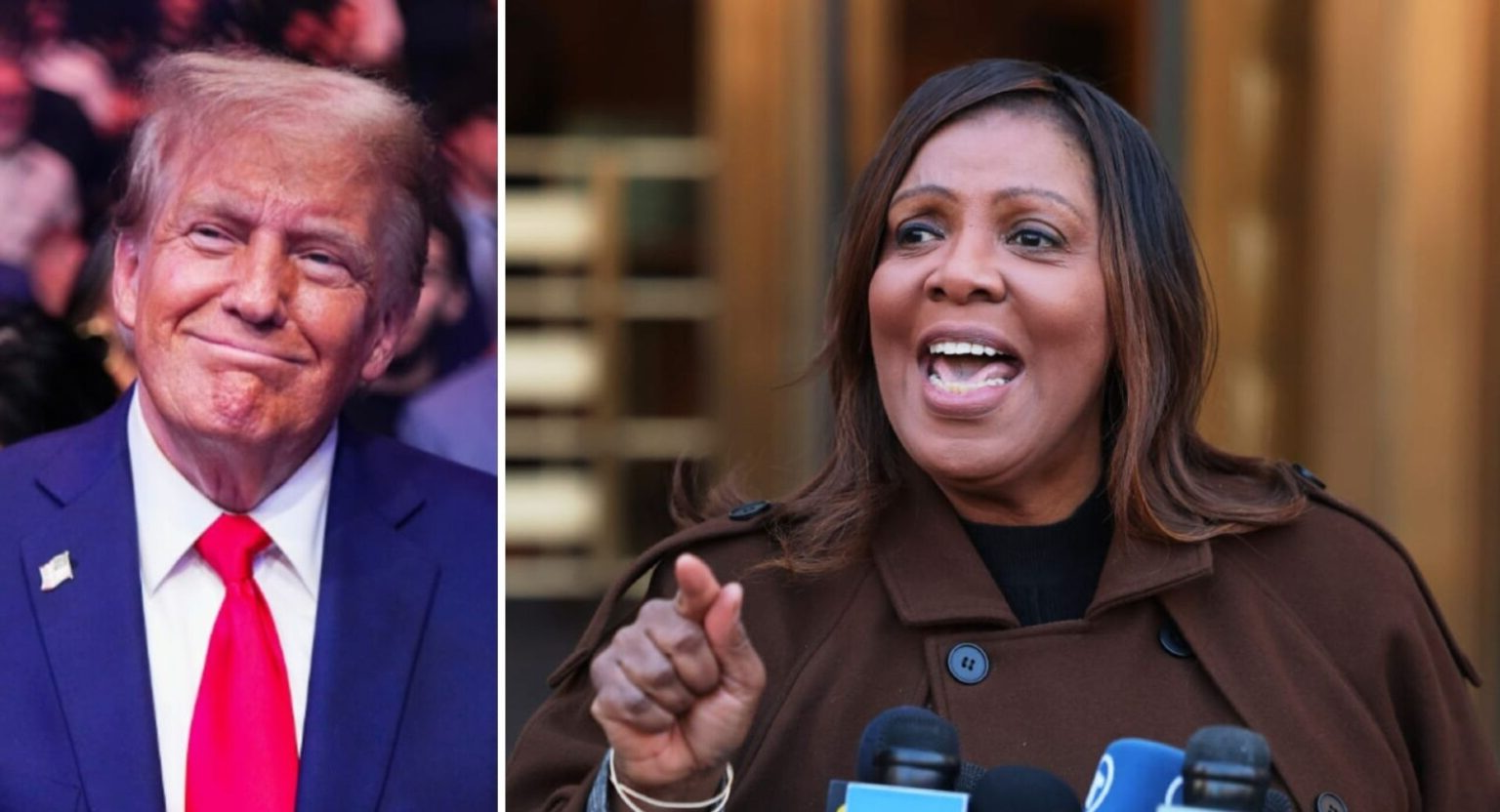
In a stunning twist that sent shockwaves through the political world, New York Attorney General Letitia James, the Democrat who built her national reputation prosecuting Donald Trump, has herself been indicted by a federal grand jury in Virginia.
The charges — bank fraud and making false statements to a financial institution — stem from allegations that James misrepresented her ownership of a Norfolk, Virginia property to obtain preferential mortgage terms, all while secretly renting the home to a private family.
According to federal prosecutors, James’ alleged misrepresentation saved her nearly $19,000 in financial benefits, including lower interest rates and tax deductions typically reserved for second homes.
If convicted, James faces up to 30 years in prison and a $1 million fine per count — penalties that would effectively end her political career and mark one of the most high-profile indictments of a sitting state attorney general in U.S. history.
The case has instantly become a political flashpoint, reigniting partisan battles over the weaponization of the Justice Department, the limits of presidential power, and the question of whether America’s justice system can survive its own polarization.
The Allegations: A “Second Home” That Wasn’t
Court filings reviewed by NBC News detail how James allegedly claimed that a property in Norfolk — a two-story home near the city’s historic Ghent district — was her “secondary residence.” This claim, prosecutors say, was made to secure favorable mortgage rates through a regional lender.
But investigators allege James never actually lived in the home, instead leasing it to a family beginning in 2021 while maintaining her official residence in New York City.
The indictment further claims that she failed to disclose the rental income to the bank, effectively committing both fraud and misrepresentation.
“Letitia James made a false statement of material fact to a financial institution,” the indictment reads. “She obtained a mortgage under false pretenses, for personal gain, while serving as Attorney General of the State of New York.”
The charges were handed down by a federal grand jury in the Eastern District of Virginia, an unusual venue choice for a state official whose jurisdiction is nearly 400 miles away — and one that has raised immediate political questions about motive and jurisdictional reach.
James Fires Back: ‘This Is Political Retribution’
Within hours of the indictment becoming public, Letitia James released a fiery video statement on X (formerly Twitter), calling the charges “baseless” and accusing the Trump administration of abusing federal power to settle political scores.
“These charges are baseless, and the president’s own public statements make clear that his only goal is political retribution at any cost,” James said. “This is not justice — this is vengeance. The president’s actions are a grave violation of our constitutional order.”
She appeared visibly composed yet defiant, framing herself as the victim of political persecution by an administration determined to destroy its opponents.
James’ legal team, led by veteran defense attorney Abbe Lowell, immediately filed notice of intent to seek dismissal of the charges, citing “political interference and prosecutorial misconduct.”
The Trump Connection: A Long History of Hostility
Letitia James’s feud with Donald Trump dates back to her campaign for New York Attorney General in 2018, when she vowed to “take on Trump and his corrupt empire.”
As AG, she filed multiple lawsuits against the Trump Organization, culminating in a civil fraud judgment exceeding $500 million earlier this year — a ruling later overturned on appeal after a New York appellate panel found “significant procedural and evidentiary errors.”
Trump celebrated that reversal as a personal vindication, declaring that James had “humiliated herself” and predicting that “her time would come.”
Now, just months later, that prophecy appears eerily fulfilled.
The Department of Justice case against James was led by Acting U.S. Attorney Lindsey Halligan, a longtime Trump ally who previously served as one of his personal attorneys during the 2022 Mar-a-Lago classified documents controversy.
Halligan was appointed to her current role last month after her predecessor, Erik Siebert, reportedly resigned under pressure for refusing to bring charges against James.
In a statement Thursday, Halligan defended the indictment, calling it a “necessary act of accountability.”
“These allegations represent intentional, criminal acts and tremendous breaches of the public’s trust,” Halligan said. “No one — no matter how powerful or politically connected — is above the law.”
Her comments have only deepened concerns among legal observers that the Justice Department has entered uncharted territory — where partisan battles now dictate prosecutorial decisions.
A Divided Washington Reacts
Reaction in Washington was immediate — and fierce.
Democrats erupted in outrage, calling the indictment a direct attack on democratic institutions.
“This isn’t justice. It’s revenge,” Senate Majority Leader Chuck Schumer (D-NY) declared. “Every American should be horrified by this abuse of prosecutorial power.”
New York Governor Kathy Hochul echoed those sentiments on X:
“We are witnessing the weaponization of the Justice Department to punish those who hold the powerful accountable. This is a dark moment for our nation.”
Meanwhile, Republicans largely applauded the move, framing it as a long-overdue reckoning for a prosecutor they believe overstepped her authority.
“Accountability is not revenge,” said Sen. Eric Schmitt (R-MO). “For years, Letitia James used her office to persecute political enemies. Now she faces the same justice she demanded for others.”
Even moderate Republicans, such as Sen. Thom Tillis (R-NC), offered cautious support:
“I hope the prosecutors did their homework. If the evidence is there, no one should be above the law — not even an attorney general.”
The Legal Road Ahead
James is set to appear in federal court on October 24 before U.S. District Judge Jamar K. Walker, a Biden appointee. The case will likely hinge on whether prosecutors can prove intent to defraud — a critical element in both bank fraud and false statement cases.
Legal experts note that while the bar for indictment is low — probable cause — a conviction requires proof “beyond a reasonable doubt” that James knowingly lied to the bank to secure financial gain.
Former federal prosecutor Michael Zeldin told NewsNation that the case could go either way.
“If the DOJ can show she knowingly falsified her residence to secure better terms, it’s a strong case,” Zeldin said. “But if her defense can show ambiguity — for instance, if she occasionally stayed there — it gets murky fast.”
James’ attorneys are expected to challenge both the venue and the appointment of Halligan, arguing that the entire prosecution is tainted by political influence.
The Broader Pattern: Retaliation or Reform?
James is the second high-profile Trump adversary to face indictment in recent months.
In September, former FBI Director James Comey was charged with lying to Congress and obstructing a congressional proceeding — another case presented by Halligan’s office.
Both indictments have fueled accusations that the Trump administration is using federal law enforcement to punish its critics — a practice that, if proven, could mark one of the most alarming politicizations of the DOJ in modern U.S. history.
White House officials have declined public comment, though senior aides have privately dismissed the criticism as “Democratic hysteria.”
A White House source told POLITICO:
“The president believes in equal justice under the law. If his opponents think they’re immune from it, that’s on them.”
Public Opinion and Political Fallout
The reaction among voters has been sharply divided along partisan lines.
A Snap Poll conducted by Rasmussen Reports after the news broke found that 71% of Republican voters support the indictment, while 78% of Democrats view it as “politically motivated.”
Independent voters were nearly evenly split, with 46% calling it justified and 44% labeling it political retaliation.
The poll underscores the deep divide in how Americans perceive justice depending on partisan identity — a divide that may only widen as the case proceeds.
Political analyst Dr. Mark Feldman of Georgetown University says the indictment could have profound ripple effects:
“This is bigger than Letitia James. It’s about whether Americans still trust their institutions. If people begin to believe every prosecution is political, that’s the end of objective justice.”
Trump Celebrates: ‘She Must Face Justice’
For Trump and his supporters, the indictment was nothing short of vindication.
“She went after me for years — now she must face justice,” Trump posted on Truth Social. “What she did to my family, my business, and the great people of New York was disgraceful. Now she’s learning that you can’t play politics with the law.”
The post quickly went viral among his supporters, drawing hundreds of thousands of shares within hours.
Yet, to critics, the tone of celebration only reinforced their fears — that the Justice Department has become an instrument of political payback.
Conclusion: The Justice System on Trial
The indictment of Letitia James has plunged the nation into another chapter of legal and political turmoil, blurring the line between justice and revenge.
Whether she is ultimately convicted or acquitted, the case will likely set a precedent — not just for how prosecutors pursue powerful figures, but for how far politics can reach into the courtroom.
As one former DOJ official put it:
“This case isn’t just about Letitia James. It’s about whether we still believe in blind justice — or whether every indictment now comes with a party label.”
For now, the country watches as one of Trump’s fiercest critics stands on the other side of the courtroom, her own legacy — and perhaps the credibility of the justice system itself — hanging in the balance.

Adrian Hawthorne is a celebrated author and dedicated archivist who finds inspiration in the hidden stories of the past. Educated at Oxford, he now works at the National Archives, where preserving history fuels his evocative writing. Balancing archival precision with creative storytelling, Adrian founded the Hawthorne Institute of Literary Arts to mentor emerging writers and honor the timeless art of narrative.