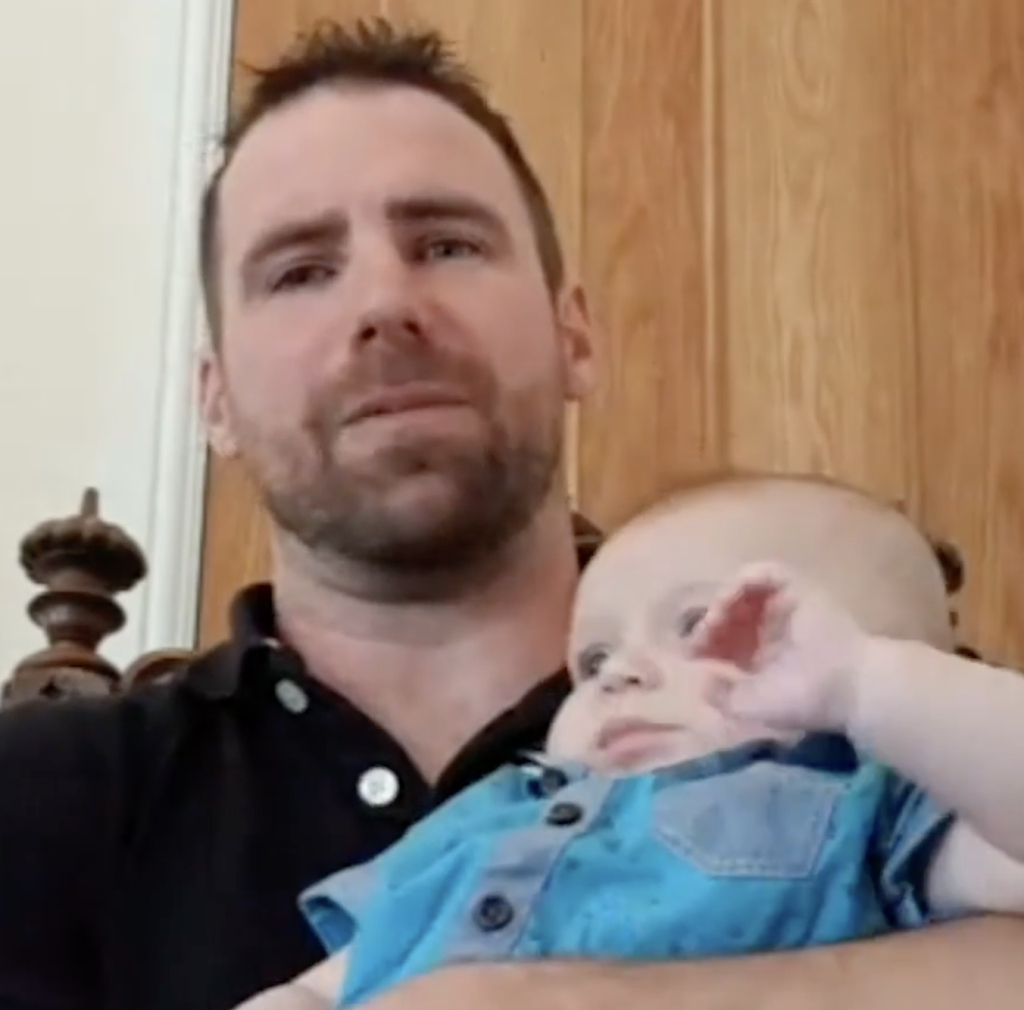
For many parents, naming a child is one of the most joyful and meaningful parts of welcoming a new life into the world. It’s a decision that carries deep personal significance — a name can reflect family heritage, faith, or even a simple love of how it sounds. But for one couple from Derbyshire, England, what should have been a happy moment turned into a tense confrontation with local authorities.
Dan and Mandy Sheldon found themselves in a heated dispute with a government registrar after they attempted to name their newborn son Lucifer — a name that, while not illegal in the United Kingdom, has long been associated with the devil in Christian tradition.

A Simple Registration Turns Controversial
The couple welcomed their son, Lucifer Sheldon, in 2020. Four months later, they arrived at the local registrar’s office, excited to make their son’s name official. But what began as a routine appointment quickly spiraled into a scene of disbelief and judgment.
According to Dan, the registrar reacted with visible discomfort and “a look of utter disgust” when they revealed their chosen baby name.
“She told us he would never be able to get a job,” Dan told The Sun. “She said teachers wouldn’t want to teach him. It felt like she was trying to talk us out of it.”
Despite their insistence that they weren’t religious and that the name held personal meaning for them, the Sheldons were met with skepticism and moral objections.
Why ‘Lucifer’ Sparked Outrage
In many Western cultures, the name Lucifer carries powerful and controversial connotations. In the Christian Bible, Lucifer is often used as another name for Satan — the fallen angel cast out of Heaven.
However, the Sheldons point out that the name’s origins go much deeper than its religious symbolism.
“Lucifer is Latin for ‘light-bringer’ or ‘morning star,’” Dan explained. “In ancient Greek, it referred to the planet Venus. We chose it because we liked the meaning, not the association.”
The couple said they were shocked that a registrar — an official tasked with documenting births — would react so strongly to their personal choice.
“She made us feel ashamed,” Mandy added. “It was humiliating. We just wanted to name our baby what we felt was right for him.”
The Registrar’s Response
According to the Sheldons, the registrar temporarily halted the appointment, asking them to leave the room while she verified whether the name was legally permissible.
When she returned, she reluctantly proceeded with the registration but reportedly did so “through gritted teeth.”
“We were gobsmacked by her behavior,” Dan said. “She eventually did her job, but made it clear she didn’t agree with us.”
Despite the confrontation, the Sheldons refused to change their minds. “Honestly, we just thought it was a nice, unique name,” Dan added. “We didn’t expect so much grief over it.”
Legal and Cultural Context
Unlike countries such as Germany, Switzerland, and New Zealand, the United Kingdom has no official list of banned names. Registrars can, however, advise parents against names they deem offensive, confusing, or inappropriate — particularly those containing numerals or obscenities.
A spokesperson from Derbyshire County Council later issued an apology to the couple.
Their statement read:
“We apologize if the couple were offended. It is the duty of registrars to advise in such matters, as sometimes parents may not be aware of certain meanings or associations attached to specific names.”
The incident sparked debate online about the balance between parental freedom and cultural sensitivity.
Public Reactions: A Divided Internet
The Sheldons’ story quickly spread across social media and talk shows, igniting passionate debate.
Some users praised the couple for choosing a name with historical and linguistic beauty:
“It’s beautiful,” one person wrote.
“Coolest name ever,” added another.
“I love that name. People need to stop being so judgmental,” shared a third.
Others, however, saw the decision as reckless or even cruel.
“Just because you like something doesn’t mean it’s best for your child,” one critic commented.
“That was selfish — he’s the one who’ll have to live with that name,” another wrote.
Some noted that while the name Lucifer carries different meanings in ancient languages, its modern association with evil might make life difficult for the child.
“Why would they give their son this name?” one user asked. “They clearly haven’t thought about what he’ll go through.”
Appearing on Television
In the aftermath of the controversy, Dan and Mandy appeared on ITV’s This Morning alongside baby Lucifer. The segment drew millions of viewers and reignited the debate about naming freedom in the UK.
“I understand why people think of the religious meaning,” Dan said on-air. “But to us, it’s about the original Greek meaning — ‘light-bringer.’ It depends which part of history you look at.”
During the show, Dan also explained that he and Mandy were not trying to make a statement or attract attention — they simply loved the name and its sound.
“We just didn’t expect this level of reaction,” he admitted. “To us, it was personal, not provocative.”
A Name That Challenges Tradition
The name Lucifer has been officially banned in several countries. In New Zealand, it appeared on a government list of prohibited names in 2013, alongside “Christ” and royal titles like “King,” “Prince,” and “Princess.” Germany and Switzerland also reject names that could cause embarrassment or distress to a child.
However, in the United Kingdom, naming laws are far more flexible. As long as a name doesn’t include numbers, symbols, or explicit language, parents generally have full freedom.
The Independent notes:
“While registrars can advise parents, they have no legal authority to refuse a name unless it violates formal registration standards.”
The Broader Question
The Sheldons’ experience raises a broader issue: How much influence should society have over personal naming decisions?
On one side are those who argue that parents should have complete autonomy. Names are a form of identity, they say, and cultural taboos shouldn’t restrict creativity or personal meaning.
On the other are those who believe names carry power — social, cultural, and even psychological — that can shape a child’s life for decades.
While experts agree that children named after controversial or infamous figures might face prejudice, they also note that society’s attitudes evolve over time.
Looking Ahead
As for Dan and Mandy, they stand by their decision. They describe their son as a happy, curious, and bright little boy — living proof that a name does not define a person’s worth.
“We didn’t choose Lucifer to shock anyone,” Dan said. “We chose it because it means something beautiful to us — light, hope, and individuality.”
Their story continues to circulate online, sparking ongoing discussions about the line between personal freedom and social responsibility.
For now, baby Lucifer Sheldon holds a name that has challenged centuries of tradition — one that may, in time, shine as brightly as its original meaning: light-bringer.

Adrian Hawthorne is a celebrated author and dedicated archivist who finds inspiration in the hidden stories of the past. Educated at Oxford, he now works at the National Archives, where preserving history fuels his evocative writing. Balancing archival precision with creative storytelling, Adrian founded the Hawthorne Institute of Literary Arts to mentor emerging writers and honor the timeless art of narrative.