It didn’t take long.
Just moments after Zohran Mamdani clinched his historic victory to become New York City’s next mayor, he turned his gaze toward Washington — and straight at the most powerful man in America.
Standing on the stage of Brooklyn’s Paramount Theatre, surrounded by red and gold confetti and a crowd roaring with chants of “For the people!”, the 34-year-old democratic socialist smiled into the cameras and delivered his first message as mayor-elect.
“So, Donald Trump, since I know you’re watching,” he said, pausing just long enough for the cameras to tighten their shot, “I have four words for you: turn the volume up.”
It was equal parts taunt and declaration — a signal that his fight wouldn’t just be against New York’s inequality, but against the man he sees as the symbol of everything wrong with it.
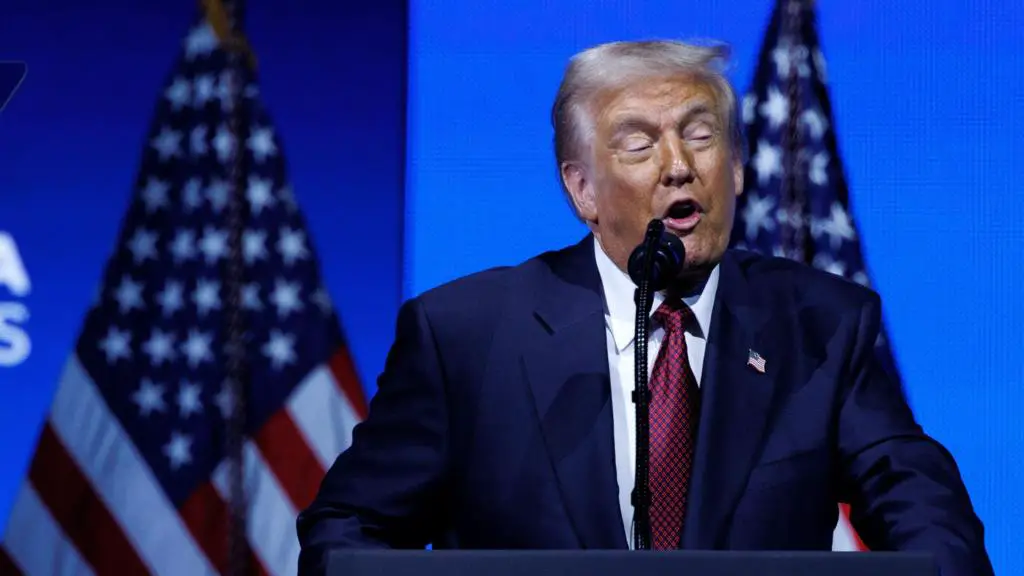
Within minutes, the president responded.
On Truth Social, Trump posted a single line in all caps:
“…AND SO IT BEGINS!”
A Collision Years in the Making
The exchange marked the beginning of what’s already being called “America’s next great political rivalry” — the populist president from Queens versus the socialist upstart from Manhattan.
Trump, who had endorsed Andrew Cuomo in the mayoral race, had warned voters repeatedly that a Mamdani victory would mean “New York’s final collapse.” He threatened to slash federal funding and even hinted at sending in the National Guard if “law and order” broke down under the new mayor’s leadership.
But Mamdani’s win — narrow though it was — represented a political earthquake. A Muslim, South Asian, democratic socialist mayor taking control of the nation’s largest city while Donald Trump sat in the White House again was something few could have imagined five years ago.
The confrontation, analysts say, was inevitable.
“This is not just a clash of policies — it’s a clash of worldviews,” said Princeton political historian Julian Zelizer. “Mamdani represents the young, diverse, progressive city; Trump represents the nationalist, traditionalist heartland. They embody two Americas that no longer understand each other.”
The Morning After
By Wednesday morning, less than twelve hours after Mamdani’s victory speech, Trump was back at it.
In a post that quickly went viral, the president warned that New Yorkers would “flee the city in record numbers” once Mamdani took office.
“The people of New York have made their choice,” Trump wrote. “Unfortunately, that choice means higher taxes, more crime, and fewer jobs. I love New York — but this will be the end of it.”
For Mamdani, it was the kind of attention most politicians can only dream of — an instant national spotlight, framed against the backdrop of a president who clearly viewed him as a threat.
And yet, he seemed unfazed.
“If anyone can show a nation betrayed by Donald Trump how to defeat him,” Mamdani declared during his speech, “it is the city that gave rise to him.”
The crowd erupted.
In that moment, the battle lines were drawn: New York City — birthplace of both Trump’s empire and Mamdani’s movement — would once again become the stage for America’s defining ideological war.
A City Under Siege
The timing couldn’t be worse.
The federal government shutdown, now entering its sixth week, has already crippled local programs that rely on federal funding. Trump has frozen nearly $18 billion in infrastructure projects earmarked for New York, according to administration officials, citing “budgetary prudence.”
That includes key subway modernization efforts, coastal resiliency upgrades, and public housing renovations long delayed by bureaucratic gridlock.
And those aren’t the only funds at risk.
New York City receives approximately $8.5 billion a year in federal support — about 7% of its total budget. That money underwrites housing programs, disaster relief, education initiatives, and child services.
If Trump makes good on his threat to “review” or “restructure” those allocations, Mamdani’s ambitious agenda could evaporate before he even takes office.
“There’s going to be a money issue to do anything,” Zelizer warned. “If federal dollars start to deplete, that makes it much harder to do anything new.”
Promises Under Pressure
Mamdani’s campaign was built on a sweeping vision: free and faster bus service, universal childcare, rent freezes for nearly one million stabilized apartments, and city-run grocery stores.
It was a populist pitch tailored to a city battered by inflation and skyrocketing living costs. “A city we can afford,” his campaign posters promised.
But behind the slogans lies a grim fiscal reality.
To fund his social programs, Mamdani has proposed raising $10 billion in new revenue through increased taxes on large corporations and the top one percent of earners — a plan that requires approval from Albany.
And that’s where the first cracks appear.
Gov. Kathy Hochul, a moderate Democrat facing re-election next year, has been cautious about endorsing tax hikes, especially ones that could drive businesses out of the state.
At the same time, Rep. Elise Stefanik — one of Trump’s most vocal allies — has already announced her bid for governor, setting up what could become a referendum on Mamdani’s policies and their impact on the state’s economy.
The ‘Kansas City Warning’
Critics have also pointed to the cautionary tale of Kansas City’s Sun Fresh Market — a taxpayer-funded grocery store launched under similar “community-first” ideals in 2018.
Hailed as a model for “publicly owned retail,” the experiment ended in failure this past August when the store permanently closed after years of empty shelves, mismanagement, and security issues.
“The mayor-elect should study what happened in Kansas City,” said Daniel DiSalvo, a political scientist at CUNY’s Colin Powell School. “Government-run retail sounds good in theory, but it quickly becomes a nightmare in practice. When there’s no profit incentive, there’s no accountability.”
Mamdani insists his plan will be different — locally sourced, union-run, and community-driven — but even some allies privately admit it’s unclear how he’ll fund or manage it.
Trump’s Federal Hammer
If history is any guide, Trump won’t hesitate to use federal power against local officials who challenge him.
During his first term, he clashed repeatedly with Democratic mayors over immigration, crime, and pandemic restrictions. He dispatched federal agents to Portland and Chicago, froze disaster aid to California, and publicly mocked city leaders he viewed as “weak.”
Now, with full control of the executive branch and a new mandate from voters, Trump’s approach appears even more aggressive.
Since the shutdown began on October 1, the president has selectively withheld funds from what he calls “noncompliant jurisdictions” — a category that includes every major blue city in America.
He’s also deployed National Guard troops to several urban areas under a new domestic security directive, citing “elevated threats to infrastructure and civil order.”
New York hasn’t seen such deployments yet, but insiders believe it’s only a matter of time.
“Mamdani’s rhetoric makes him an easy target,” said a senior Homeland Security official speaking anonymously. “The president sees him as a useful foil — someone he can point to and say, ‘See what socialism looks like.’”
The Shadow of Washington
Mamdani’s transition team, aware of the looming threat, is already drafting legal strategies to challenge any federal funding cuts in court.
His advisers are coordinating with Gov. Hochul and state Attorney General Letitia James to prepare lawsuits under the Tenth Amendment and the Spending Clause — arguing that Trump’s selective withholding of funds constitutes unlawful political retaliation.
But legal battles take time, and time is one thing the mayor-elect doesn’t have.
New Yorkers will expect results the moment he takes office on January 1.
“It’s a political trap,” said longtime New York strategist Basil Smikle. “If he fails to deliver on his promises, Trump can say socialism doesn’t work. If he picks a fight with Washington and loses funding, Trump wins again.”
A New Kind of Power Struggle
In many ways, the feud between Mamdani and Trump represents a modern update of an old New York story — the eternal tension between City Hall and Washington, between local idealism and federal muscle.
But this time, the ideological gulf is unprecedented.
Trump’s America First nationalism thrives on the notion of personal responsibility, limited government, and patriotic loyalty. Mamdani’s democratic socialism, by contrast, centers on redistribution, structural change, and collective care.
They’re not just political opponents; they’re philosophical opposites.
And both men know how to command a camera.
For Trump, Mamdani is a convenient villain — a “radical socialist” running a city he can portray as chaotic and mismanaged.
For Mamdani, Trump is the perfect antagonist — the living embodiment of capitalist greed and authoritarianism.
It’s political theater with real-world consequences, and both sides seem eager to play their part.
The Generational Divide
The symbolism is hard to miss.
Trump, 79, built his fortune on Manhattan’s skyline — towers of glass and gold that celebrated wealth, excess, and dominance. Mamdani, 34, built his career in the working-class neighborhoods of Queens and the Bronx, organizing tenants and fighting eviction notices.
They are, quite literally, two New Yorkers separated by a generation, a borough, and an ideology.
And yet, their fates are now intertwined.
Trump needs Mamdani as proof that Democrats have “gone off the deep end.”
Mamdani needs Trump as proof that his movement is righteous and under attack.
Each defines himself by the other’s existence — the capitalist kingpin versus the socialist reformer, the empire builder versus the empire challenger.
The Numbers Game
For all the drama, the mayor-elect’s path forward may depend less on ideology than on arithmetic.
His proposed wealth taxes and corporate levies would need approval from the state legislature — and that’s far from guaranteed. Moderate Democrats hold key committee chairs in Albany and are already signaling skepticism.
Meanwhile, Trump’s renewed economic agenda — prioritizing domestic manufacturing, tax cuts, and reduced federal aid to “fiscally irresponsible” states — directly conflicts with Mamdani’s dependency on federal partnership.
“New York City is entering a collision course with Washington,” said former HUD official Rafael Ortiz. “When you have a president who sees blue cities as political enemies, you can expect funding to become a weapon.”
The Optics Battle
Even before taking office, Mamdani is learning the cost of visibility.
His victory celebration, intended as a jubilant display of grassroots triumph, became a viral controversy when photos revealed a cash bar with eye-watering prices — $13 beers and $22 cocktails.
Critics called it the perfect metaphor for socialist hypocrisy.
Supporters brushed it off as a harmless venue policy.
But to political observers, it was a preview of the challenges ahead: symbolism, perception, and messaging.
“Politics is about storytelling,” said communications strategist Lis Smith. “The story Mamdani wants to tell is one of economic justice. The story Republicans will tell is of a socialist sipping $22 martinis while promising free buses. Guess which one sticks?”
What Comes Next
As the government shutdown drags on and tempers flare in Washington, both camps are bracing for escalation.
Trump has hinted at further executive actions targeting sanctuary cities and “anti-American jurisdictions,” language that many believe includes New York.
Mamdani’s allies are urging him to strike back rhetorically but tread carefully on policy until the city’s budget picture becomes clearer.
The mayor-elect’s first major challenge will come within days of taking office, when he must submit a preliminary budget for fiscal year 2026 — one that balances his ambitious social promises against an uncertain stream of federal and state funding.
If Trump follows through on his threats, Mamdani could face an immediate shortfall of up to $3 billion, according to projections from the city’s Independent Budget Office.
That would force painful trade-offs — and political choices that could test the limits of his movement’s faith in him.
The Stakes for Both Sides
For Trump, the political calculus is simple.
A defiant socialist mayor in America’s largest city provides the perfect contrast for his re-election narrative: “They want socialism. I want success.”
For Mamdani, the stakes are existential.
His entire movement — and perhaps the future of progressive politics in the U.S. — depends on proving that socialism can work at scale.
Failure in New York wouldn’t just damage his career; it could discredit the left-wing resurgence across the country.
“This isn’t just a local story anymore,” said political commentator Matthew Continetti. “This is a national test case. Can a self-described socialist run America’s most complex city under a Republican president who wants him to fail? That’s the question everyone’s watching.”
The Calm Before the Storm
For now, the two men have retreated to their corners — Trump to the White House, Mamdani to his transition office in Queens.
But everyone knows it’s only temporary.
Mamdani will be sworn in on January 1, and Trump’s next Truth Social post is likely already written.
The city that made them both — one through real estate, the other through rebellion — is once again the front line of America’s political divide.
And as the lights dim on 2025, one thing is certain:
The battle for New York’s soul has only just begun.

Adrian Hawthorne is a celebrated author and dedicated archivist who finds inspiration in the hidden stories of the past. Educated at Oxford, he now works at the National Archives, where preserving history fuels his evocative writing. Balancing archival precision with creative storytelling, Adrian founded the Hawthorne Institute of Literary Arts to mentor emerging writers and honor the timeless art of narrative.