Nearly five years after pipe bombs were placed near the headquarters of both major political parties on the eve of the January 6 Capitol riot, the FBI announced it has arrested a suspect investigators believe carried out one of the most puzzling and politically volatile acts tied to that day. The devices never detonated, but authorities long warned they were fully capable of causing mass casualties had they gone off.
For nearly half a decade, the case haunted federal investigators, fueled speculation across the political spectrum, and served as one of the most persistent unanswered questions surrounding the events of January 6. Despite thousands of investigative hours, no arrests were made — until now.
As news of the arrest spread, a separate controversy erupted in Washington: newly released documents revealing that the Biden-era FBI relied on flimsy evidence, partisan sources, and questionable legal justifications when launching its sweeping “Arctic Frost” investigation targeting former President Donald Trump and hundreds of his allies.
The two developments — one involving the unfinished business of 2021, the other involving the politically charged actions of federal investigators themselves — collided to create a politically explosive week in Washington, raising fresh questions about law enforcement credibility, past investigative decisions, and future accountability.
A Break in a Case That Confounded the Nation
On January 5, 2021, surveillance footage captured a masked individual moving through the streets of Washington, D.C., carrying a backpack. The person wore a gray hoodie, gloves, glasses, and a face mask. The FBI said the bombs they carried — one placed near the Republican National Committee (RNC) headquarters and the other near the Democratic National Committee (DNC) headquarters — were “viable” and could have killed or maimed anyone nearby.
The RNC device was discovered first. Hours later, the DNC device was found as then–Vice President-elect Kamala Harris was inside the building — a detail that intensified national security concerns.
For years, the FBI maintained the suspect acted alone and had not been identified. Investigators conducted one of the most extensive domestic manhunts in modern bureau history:
-
visiting 1,200+ homes and businesses
-
conducting more than 1,000 interviews
-
reviewing 39,000 video files
-
chasing 600+ public tips
Despite the enormous effort, the case remained open and publicly unsolved. Critics — especially Republicans on Capitol Hill — accused the FBI of withholding information, bungling key leads, or deliberately avoiding certain investigative avenues.
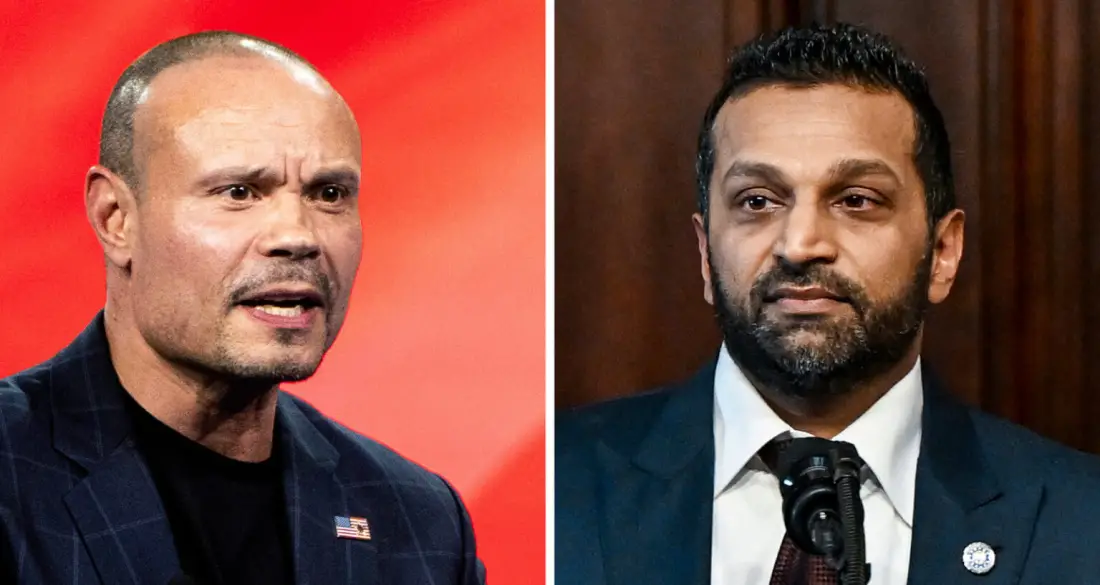
Those suspicions deepened last month, when FBI Deputy Director Dan Bongino, recently appointed by President Trump, directly accused previous bureau leadership of intentionally avoiding answers.
“There is a massive cover-up,” Bongino said in November 2024. “They don’t want you to know who it was, because it’s either a connected anti-Trump insider or this was an inside job.”
Bongino vowed to “aggressively pursue a new strategy” once taking office. Within weeks, an arrest was announced.
The FBI has not yet released the suspect’s identity publicly, citing ongoing investigative steps and potential additional charges.
A politically charged backdrop
The announcement of the arrest comes at a moment when public trust in federal investigations — especially those touching politics, elections, and Donald Trump — is undergoing rapid reassessment. Much of that reevaluation stems from the newly disclosed internal materials of the Biden-era Arctic Frost investigation.
What began as a classified probe into Trump’s allies has now transformed into one of the most politically controversial law-enforcement decisions in modern presidential history.
★ THE ARCTIC FROST REVELATIONS
A Biden-Era Investigation Built on CNN Clips and “Assumptions”
According to documents newly obtained by House Judiciary Chairman Jim Jordan, the FBI memo that initiated the Arctic Frost investigation in spring 2022 — shortly after Trump announced his intention to run again for president — was based on:
-
CNN interview clips
-
media commentary
-
speculative statements about Trump’s motives
-
no direct evidence of a criminal conspiracy
Several former FBI agents and federal prosecutors reviewed the memo after its release and concluded it lacked the factual predicates required for opening a major federal investigation — especially one targeting a former president and hundreds of private citizens.
“This looks like Crossfire Hurricane all over again,” one retired FBI supervisor said, referring to the 2016 Russia probe that was later found to have relied heavily on opposition research and politically tainted intelligence.
The Arctic Frost probe centered on claims that Trump and his advisors orchestrated a criminal conspiracy by working with Republican officials in several states to submit alternate elector slates during the 2020 election certification. But, as historians quickly pointed out, alternate electors were submitted in at least two earlier U.S. elections — neither resulting in federal prosecution.
Yet under the Biden administration, the FBI treated the act as “probable criminal conduct.”
A hostile investigator and top-level political involvement
More troubling for critics was the revelation that the initial supervising FBI official for Arctic Frost had previously expressed anti-Trump views on internal communications. Though the agent was later removed, the probe was already underway — and then transferred to Special Counsel Jack Smith, who expanded its reach dramatically.
Documents show:
-
Attorney General Merrick Garland approved the investigation
-
Deputy Attorney General Lisa Monaco signed off
-
FBI Director Christopher Wray authorized resource deployment
-
a White House lawyer was involved in early discussions
-
subpoenas were later issued to more than 400 Republican individuals and groups
-
the probe grew to become one of the largest political investigations in U.S. history
Sen. Chuck Grassley (R-IA) released 197 subpoenas this week, noting that Smith’s team sought phone records, emails, donor lists, internal strategy documents, and private communications from dozens of state-level GOP organizations.
Jordan blasted the effort, saying:
“What the FBI did in Arctic Frost mirrors the same political bias, the same procedural shortcuts, the same disregard for evidence that we saw in Crossfire Hurricane.”
Jordan says he will subpoena Jack Smith if he refuses to testify voluntarily.
Smith maintains he acted lawfully and intends to defend his decisions.
★ A Parallel Timeline: Pipe Bombs, January 6, and Investigative Crossroads
The timing of the Arctic Frost revelations and the pipe bomb arrest is notable.
-
The pipe bomb investigation remained unsolved from Jan. 6, 2021, through the entire Biden presidency.
-
Arctic Frost was opened in spring 2022, based on thin evidence.
-
The same top officials who hesitated on the bomb investigation aggressively pursued the Trump-elector investigation.
-
Republican lawmakers have long argued the pipe bomb case was “politically inconvenient” for the narrative Democrats crafted around January 6.
The revelation that the DNC bomb was discovered while Kamala Harris was inside the building only adds new urgency to understanding what the suspect’s motives were — and why the case stalled for years.
Why the renewed focus matters now
The broader question emerging in Washington is:
Why did the FBI aggressively pursue some leads surrounding January 6 but let others stagnate?
Republicans argue that past leadership at the bureau prioritized political narratives over objective investigative priorities.
New FBI Director Kash Patel has vowed to rebuild trust by releasing internal files, reexamining politically sensitive cases, and imposing new constraints on partisan influence within the bureau.
The pipe bomb arrest is being held up by Trump allies as evidence that changes at the agency are already bearing fruit.
★ A System Under Scrutiny
The Arctic Frost disclosures have led to new bipartisan calls for restraining the FBI’s ability to launch politically sensitive investigations without substantial factual evidence.
Former federal prosecutor Andrew Leipold said:
“Using news clips as the basis for launching an investigation into a former president and hundreds of private citizens is legally indefensible. It is not how federal investigations are supposed to begin.”
A retired FBI intelligence analyst put it more bluntly:
“This was Crossfire Hurricane with a new name.”
Inside the Arctic Frost Investigative Tactics
The newly released documents reveal the investigation used aggressive methods:
-
bulk subpoenas
-
metadata sweeps
-
donor-list seizures
-
communication-warrants on activists
-
data requests on state Republican parties
In some cases, subpoenas were issued for individuals who merely attended meetings where alternate elector strategies were discussed.
One subpoena demanded a state GOP chairman produce “any documents referencing the name Donald Trump” over a two-year period — a staggering request amounting to nearly every communication the party conducted.
Republicans argue this was proof the investigation was never narrowly tailored — it was a dragnet.
★ What Happens Next? Congressional and Legal Fallout
Jim Jordan has already scheduled hearings on Arctic Frost and intends to question:
-
Attorney General Garland
-
Deputy AG Monaco
-
former FBI officials who approved the memo
-
White House legal staff
-
Special Counsel Jack Smith
Jordan has signaled he will seek criminal referrals if testimony reveals constitutional violations.
Sen. Grassley says the subpoenas show a Justice Department “operating as a political weapon rather than a law-enforcement office.”
The Biden Justice Department has rejected those accusations, calling the investigation “appropriate, measured, and grounded in statutory authority.”
Special Counsel Smith has not yet responded to Grassley’s release of the subpoenas.
★ A New Chapter Under Trump and Bongino
The FBI’s leadership overhaul under President Trump — including appointing Bongino as Deputy Director and Patel as Director — has already reshaped the bureau’s direction.
Their message has been pointed:
-
politically motivated investigations will end
-
evidence-free memos will not be tolerated
-
past abuses will be exposed
-
major cases will be reopened
The pipe bomb arrest is now held up as the first major demonstration of this new posture.
Bongino said:
“We are going to finish every case that was stalled for political convenience.”
Patel added:
“Transparency is a requirement now, not an option.”
★ Two Stories, One Theme: Accountability
The convergence of two major developments — the arrest in the long-unsolved pipe bomb case and the unveiling of deep flaws in the Arctic Frost investigation — has rekindled national debate about the integrity, priorities, and political neutrality of federal law enforcement.
The Biden-era Arctic Frost probe targeted Trump with weak evidence while the real January 6 bomber remained unidentified.
The new administration is working to flip that script.
Where the story goes next will depend on:
-
congressional investigations
-
future DOJ disclosures
-
testimony from key officials
-
the legal process surrounding the suspect
One thing is certain:
Washington is entering a new era of transparency and reckoning — one where both past violence and past political decisions are being reexamined with fresh, unrelenting scrutiny.

Sophia Rivers is an experienced News Content Editor with a sharp eye for detail and a passion for delivering accurate and engaging news stories. At TheArchivists, she specializes in curating, editing, and presenting news content that informs and resonates with a global audience.
Sophia holds a degree in Journalism from the University of Toronto, where she developed her skills in news reporting, media ethics, and digital journalism. Her expertise lies in identifying key stories, crafting compelling narratives, and ensuring journalistic integrity in every piece she edits.
Known for her precision and dedication to the truth, Sophia thrives in the fast-paced world of news editing. At TheArchivists, she focuses on producing high-quality news content that keeps readers informed while maintaining a balanced and insightful perspective.
With a commitment to delivering impactful journalism, Sophia is passionate about bringing clarity to complex issues and amplifying voices that matter. Her work reflects her belief in the power of news to shape conversations and inspire change.