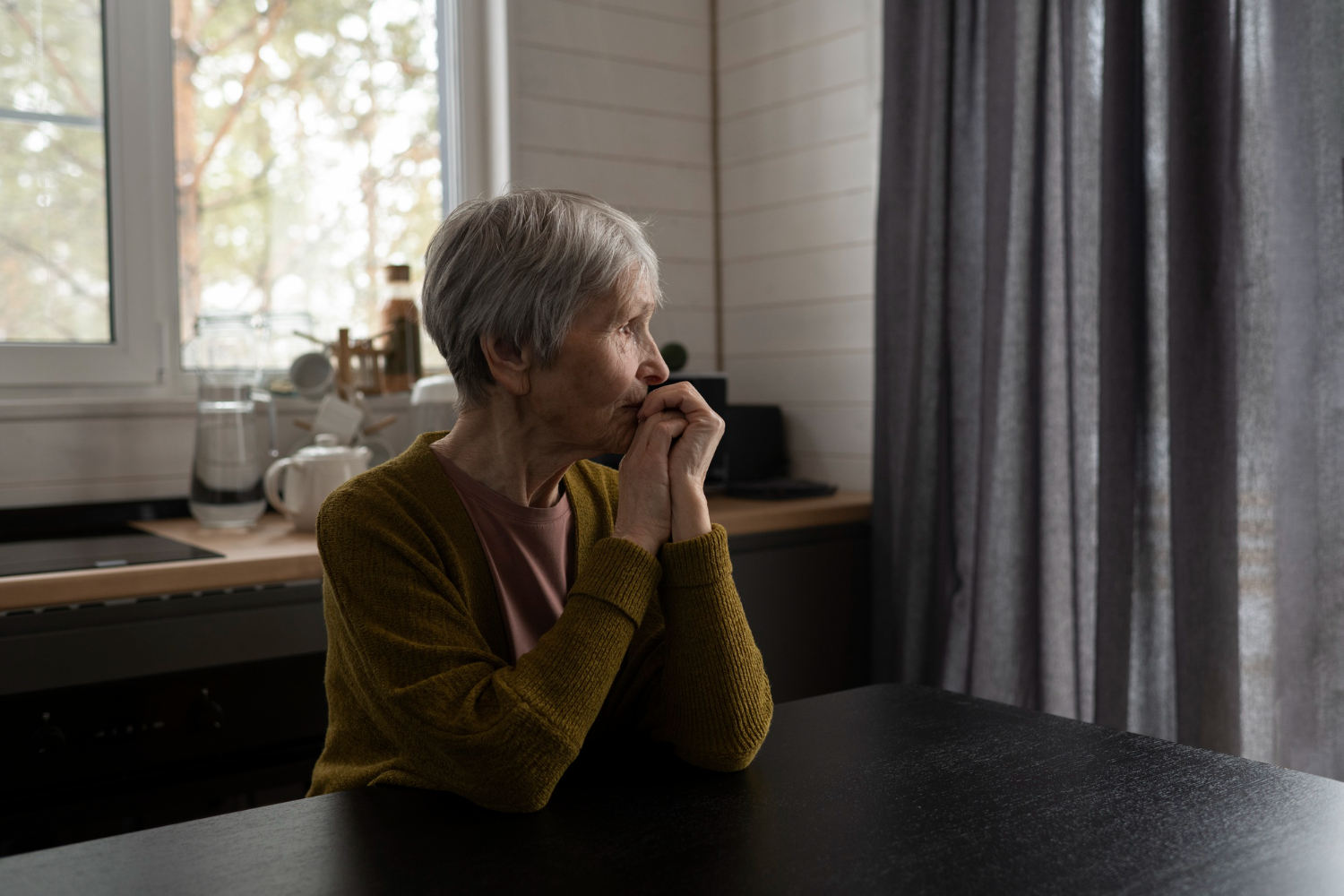
I arrived at my son’s house on Christmas Eve just before dinner, carrying two bags—one with gifts for my granddaughter Mia, one with the pastries I’d made that morning. Snow was falling hard, the kind of heavy December snow that turns Portland into something from a greeting card, all white and soft and promising. I walked up the driveway with steady steps, my boots crunching on fresh powder, and knocked on the door of the home Sam had bought three years ago with money I’d helped him secure.
He opened it a second later. He didn’t smile. He didn’t say “Merry Christmas” or “Come in, Mom” or any of the warm things you say to the woman who raised you when she arrives on Christmas Eve. He just stared at the bags in my hands like they were trash I’d brought to the wrong house.
“You’re early,” he said flatly.
“I didn’t want to keep anyone waiting,” I replied, keeping my voice pleasant. “Merry Christmas, Sam.”
He stepped aside without warmth, and I walked into a house loud with chatter from Clarissa’s family. Music played from hidden speakers. Lights blinked on an expensive tree decorated with ornaments that matched the room’s color scheme. The moment I crossed the threshold, the noise felt distant, muted, as if I were observing someone else’s celebration through thick glass.
Clarissa sat on the cream-colored couch with her phone raised, taking selfies in front of the Christmas tree. Her dress sparkled under the lights—something designer, something she’d probably charged to a card I didn’t know existed. She glanced at me with the briefest acknowledgment, a quick nod that felt more dismissive than welcoming, then returned to adjusting her hair in the phone’s camera.
I set the bags down carefully and removed my gloves. Before I could take off my coat, I heard small feet running fast across hardwood floors.
“Grandma!”
Mia crashed into me with the full force of a seven-year-old’s love, her arms wrapping tight around my waist, her face buried in my coat. I held her with one arm and smoothed her hair with the other, this bright spot in a room that had already gone cold.
“I missed you so much,” she whispered.
“I missed you too, sweetheart,” I said, meaning it with every fiber of my being.
Before I could say more, Clarissa called from the couch without looking up from her phone. “Mia, honey, let Grandma breathe. She just got here.”
Mia stepped back reluctantly but stayed close, her small hand finding mine. I walked toward the dining room, still holding her fingers, and stopped so suddenly Mia bumped into me.
There were ten seats at the table. Every single one was taken. Plates set with Clarissa’s wedding china. Crystal glasses filled with wine. Napkins folded into elaborate shapes. A centerpiece of white roses that probably cost more than my monthly grocery budget. They had planned an entire Christmas dinner, invited Clarissa’s entire family, and hadn’t left a single chair for me.
I looked at Sam, searching his face for some explanation, some sign this was an oversight. He avoided my eyes entirely, suddenly very interested in straightening a fork that was already perfectly aligned.
I placed the pastries on the kitchen counter, moved to set Mia’s gift near the tree, and the second the wrapped package touched the side table, Sam pushed his chair back. The scraping sound cracked through the room like a gunshot. He stood, his face shifting from uncomfortable to something sharper, angrier, fueled by liquid courage or rehearsed resentment or both.
“Mom, no,” he said loudly enough that everyone stopped talking. “Stop. Don’t put that there.”
The room went silent. Clarissa’s family—her parents, her brother, her cousins—all turned to watch. Clarissa lowered her phone, her expression not shocked but satisfied, like she’d been waiting for this scene.
Sam’s voice rose. “You are not welcome here. Get out.”
Mia gasped, her hand tightening around mine. One of Clarissa’s cousins dropped her fork with a clatter against china. The room held its collective breath, waiting to see if this was real, if a grown man was actually throwing his elderly mother out on Christmas Eve in front of a dozen witnesses.
He was.
“I mean it,” Sam continued, his voice harder. “Leave. Now.”
I didn’t speak immediately. I looked at my son—my only child, the boy I’d raised alone after his father died, the man I’d supported through college and career changes and a mortgage he couldn’t quite afford—and waited to see if he would realize what he’d just done. He didn’t. He doubled down.
“I wasn’t kidding. Get out of my house.”
Clarissa crossed her arms and leaned back in her chair, watching like this was entertainment she’d already paid for. Her mother whispered something to her father and actually smirked. Not one person at that table—not one—said anything to stop him.
I kept my expression still, refusing to give them the satisfaction of seeing me break. “Sam,” I said quietly, “I brought gifts for Mia.”
“We don’t need anything from you,” he replied. “You weren’t supposed to come anyway.”
That last part landed like a slap. I hadn’t been supposed to come to my son’s house for Christmas dinner. The invitation had been rescinded somewhere between the phone call two weeks ago and tonight, and no one had bothered to tell me.
Mia grabbed my hand with both of hers. “Dad, please don’t do this,” she said, her voice cracking.
He ignored her. I looked around the table one more time. No one spoke. No one stood up. Not one person—these same people who’d eaten at my table for years, who’d asked me for recipes and advice and help—said a single word in my defense. They just sat there watching, as if I were ruining their evening by existing in it.
I tightened my grip on Mia’s hand for one second, memorizing how it felt, then let go. “It’s all right, sweetheart,” I told her, touching her cheek. “Go back to your seat.”
She shook her head, tears starting. “No, I want to stay with you.”
But I knew better. I knew what staying would cost her after I left, how Sam would take his humiliation out on the nearest target. “I’ll see you soon,” I said softly. “I promise.”
I turned back to Sam. He looked ready to continue, to escalate, to humiliate me further if I gave him the chance. I didn’t.
I straightened my coat, lifted my chin, and looked at him the way a mother looks at a child who has crossed a line he doesn’t understand and will regret when it’s too late.
“As you wish,” I said calmly. “But I want you to remember your words, Sam. Remember them carefully.”
The sentence landed with weight. His eyes flickered with something—confusion, maybe, or the first whisper of uncertainty—as if he’d expected tears or begging, not this quiet dignity.
I picked up my bags, not rushed, not embarrassed, not defeated. Clarissa took a sip of champagne, pretending to look away but obviously listening to every word. I walked toward the door as the room stayed painfully silent except for Mia’s shaky breathing as she tried not to cry.
When I reached the entryway, I put my gloves back on carefully, taking my time. My hands didn’t shake. I opened the door and cold air rushed in, bringing snow with it. Before stepping out into the night, I turned my head just slightly—enough to speak, not enough to give them the power of my full attention.
“Merry Christmas,” I said, my voice carrying through the silence. “To all of you.”
Then I walked out into the snow. The door closed behind me, not slammed, just closed. Firmly. Finally.
I stood on the porch for a moment, letting my eyes adjust to the darkness, letting the cold air fill my lungs. Snow hit my face but I barely felt it. What had just happened inside bothered me far less than Sam expected. I’d seen this coming for months, if I was honest with myself. The phone calls that went unreturned. The cancelled visits. The awkward conversations where he’d asked probing questions about my finances, my estate planning, my “intentions” for the house I’d lived in for forty-three years.
I walked down the steps slowly, carefully navigating the ice underneath fresh snow. Behind me, the door stayed shut. No one came after me. Not Sam. Not Clarissa. Not even Mia, who I knew wanted to but wouldn’t be allowed.
I reached my car, set the bags on the passenger seat—pastries still warm, gifts still wrapped—and stood there for a moment in the falling snow. The house glowed behind me, all those windows bright with celebration, all that warmth and family and Christmas spirit that apparently had no room for the woman who’d made most of it possible.
“My son,” I whispered to myself, “you just burned the last bridge. Not with anger. Not with heartbreak. With recognition.”
I brushed snow from my coat, opened the driver’s door, and sat down. The car was cold but I didn’t rush to start the engine. I rested my hands on the steering wheel and let myself feel the full weight of what had just happened. This wasn’t the first warning sign. It wasn’t even the tenth. This was simply the moment I stopped ignoring what I’d known for months.
I reached into my purse and pulled out my phone. My fingers moved without hesitation, scrolling through contacts until I found the name I needed. Not family. Not a friend. My lawyer.
Christopher Harrington picked up on the second ring, his voice professional despite the late hour. “Adele. It’s Christmas Eve. Is everything all right?”
“I need you tomorrow morning,” I said. “First thing.”
There was a pause, then a shift in his tone—alert, focused, recognizing that tone in my voice. “Understood. Is this about what you mentioned last month?”
“Yes. It’s time.”
“I’ll clear my schedule. Nine o’clock?”
“I’ll be there.”
I ended the call without elaboration. No emotional explanation needed. No details required. Harrington had been my attorney for fifteen years—he’d handled my late husband’s estate, my property transfers, my will. He knew me well enough to understand that when I said “it’s time,” I meant business.
Through the windshield, I saw the living room curtains move. Clarissa’s silhouette appeared behind them, watching to make sure I’d really left, checking that the problem had been successfully removed. She stood there for a moment, posture straight and satisfied, then turned away. The curtain fell back into place.
I reached for my keys but my phone buzzed. A text from Mia, sent from whatever device she’d managed to grab without her parents noticing.
“Grandma where are you going?”
I stared at the screen, my heart squeezing. She didn’t deserve any of this. Whatever happened next, Mia would be protected. I typed back quickly, “I’m okay, sweetheart. Enjoy your dinner. I’ll see you soon.”
I placed the phone in the cup holder and started the engine. The headlights illuminated the driveway, the ice, the snow still falling in thick curtains. I backed out slowly, carefully, and drove down the street lined with Christmas lights and decorated homes where families were gathering, presumably with all members welcome.
The drive home took twenty minutes through empty streets. I turned on the wipers, kept my speed steady, and felt nothing except crystal-clear certainty. I wasn’t heartbroken. I was finished.
I reached my house—a modest ranch I’d bought with my late husband Thomas forty-three years ago, paid off through careful budgeting and his life insurance after he died—and parked under the small light above the garage. I carried the bags inside, hung up my coat, and set the pastries in the refrigerator. The gifts for Mia went into the hall closet where I kept things for her visits.
The house was quiet, warm, orderly. Everything Sam’s house wasn’t. Everything I’d built when I was young and believed family meant something permanent.
I made myself a cup of tea, sat at my kitchen table, and opened the notebook I kept for important matters. At the top of a fresh page, I wrote: December 24th. The day everything changed.
Then I made a list. Not an emotional purge, just facts.
— Arrived 6:45 PM
— No chair prepared at table
— Sam ordered me to leave
— Public humiliation in front of 10+ witnesses
— Clarissa’s reaction: satisfied, complicit
— No intervention from anyone present
— Mia distressed
I closed the notebook. Tomorrow would be busy. Tonight, I would rest.
But sleep didn’t come easily. I lay in bed staring at the ceiling, my mind replaying not just tonight but the months leading up to it—the pieces I’d noticed but dismissed, the pattern I’d been too loyal or too hopeful to acknowledge.
Three months ago, Sam had asked detailed questions about my will. Two months ago, he’d suggested I might want to “simplify” my finances by adding him to my accounts “just in case something happens.” One month ago, he’d called to ask if I’d considered moving into “something smaller, more manageable,” perhaps selling this house and using the money to “secure my future.”
At the time, I’d thought he was being practical, concerned about his aging mother. Now, lying in the dark, I understood. He’d been preparing. Planning. Positioning himself.
And tonight’s performance—throwing me out in front of witnesses—that hadn’t been spontaneous anger. That had been strategy. Create a narrative that I was difficult, unwelcome, estranged. Make it easier to later claim I was isolated, confused, in need of someone to take over my affairs.
I sat up in bed, turned on the lamp, and reached for my phone. I scrolled through old messages, looking for the ones I’d ignored or explained away. There were dozens. Sam asking about my “cognitive health.” Clarissa suggesting I seemed “forgetful” at recent family gatherings. Questions about my doctor’s appointments, my medications, my daily routines—all framed as concern, all building a case.
At 2:00 AM, I got out of bed and walked to my home office. I pulled out a file folder I’d started keeping six months ago when something first felt wrong. Inside were bank statements showing unusual inquiries—requests for information on my accounts that I hadn’t authorized. Credit reports with unfamiliar activity. A letter from my insurance company about a beneficiary change I’d never requested.
I’d called the bank at the time, put fraud alerts on everything, and assumed it was random identity theft. Now I knew better.
I added tonight’s events to the file, then locked it in my desk drawer. Tomorrow morning at nine o’clock, Christopher Harrington would see everything. And then we would act.
I returned to bed, but this time I wasn’t restless. I was calm. Resolved. Clear about what needed to happen next.
Sometimes love means letting go. Sometimes protection means distance. And sometimes the most powerful thing you can do is simply stop enabling people to hurt you.
The next morning—Christmas Day—I woke at six, made coffee, and drove to Ridge View Bank the moment it opened at nine. The parking lot was nearly empty, just a few early risers handling post-holiday business. I walked inside with my folder and asked for the branch manager.
Mr. Ford greeted me in his office, concern crossing his face the moment he saw my expression. “Adele, what can I help you with?”
“I need a full review of every account under my name,” I said. “Checking, savings, investments, everything. And I want a record of any recent inquiries, access attempts, or changes.”
He turned to his computer and began typing, his expression growing more serious with each screen. “There’s something you should know,” he said carefully. “Your son was here three days ago.”
My hands stayed steady in my lap. “For what purpose?”
“He asked about your portfolio. He wanted to discuss becoming a co-owner on several accounts.”
“Did you approve anything?”
“No. I told him he needed you present for any changes. He wasn’t happy about it, but he left without further action.”
“Good,” I replied.
Mr. Ford clicked through more screens, his frown deepening. “There’s more, Adele. Four days ago, someone attempted to open a $250,000 credit line using your name and social security number.”
The room felt very still. “Was this done in person?”
“Yes. The signature on the application didn’t match yours, so we flagged it and declined the request. But I printed a copy because it concerned me.”
He pulled a folder from his desk and slid it across. I opened it and saw my name, my social security number, my address—but a signature that looked nothing like mine, all rushed and uneven, as if the person signing hadn’t bothered to practice.
“Was Sam here that day as well?” I asked.
“He came in about an hour after the credit line attempt. Asked again about adding his name to your accounts.”
I closed the folder carefully. “I want fraud alerts placed on every account. Lock everything. No new credit lines, no changes, no access attempts without my in-person authorization.”
“I’ll do that right now,” Mr. Ford said, already typing.
While he worked, my phone buzzed. A text from one of my neighbors, Rose Coleman—part of what my late husband used to call “the golden ladies,” a group of women my age who’d become my closest friends.
“Morning walk at 10? We’re here if you need us.”
I texted back: “Yes. I need you today.”
Mr. Ford handed me a stack of printed documents—account activity logs, access attempts, flagged alerts, everything from the past sixty days. There were multiple suspicious entries, all tied to Sam’s name or email address.
“Thank you,” I said. “This is exactly what I needed.”
He leaned forward. “Adele, I’ve worked with you for twenty years. Whatever’s happening, be careful. Financial exploitation of elderly parents is more common than people realize, and it often comes from family.”
“I know,” I replied. “That’s why I’m here.”
After the bank, I met Rose, Mary, and Anne at our usual walking spot—a small park near the river where we’d been meeting for years. They took one look at my face and knew something had shifted.
“Tell us everything,” Rose said.
So I did. As we walked the snow-covered path, I explained Christmas Eve—the rejection, the witnesses, the deliberate humiliation. Then I explained what I’d learned at the bank, the credit line attempt, Sam’s repeated inquiries, the pattern of behavior that had been building for months.
By the time I finished, all three were silent with that particular quality of silence that comes from controlled rage.
“That boy needs to be taught a lesson,” Anne said finally.
“He’s going to be,” I replied. “That’s why I’m meeting with Christopher Harrington this afternoon.”
“What are you going to do?” Mary asked.
“Protect myself. Protect my assets. And make sure Sam understands that actions have consequences.”
Rose squeezed my arm. “Whatever you need, we’re here. All of us.”
“I know. And I’ll need witnesses soon.”
They nodded without hesitation.
At two o’clock, I sat across from Christopher Harrington in his office downtown. He’d clearly spent the morning researching, because his desk was covered with open law books and printed statutes.
“Tell me everything,” he said.
I did. The Christmas Eve incident. The bank fraud. The credit attempts. The subtle campaign to paint me as confused or incompetent. When I finished, I handed him the folder from the bank.
Christopher reviewed every page, his expression growing darker. “This is textbook financial exploitation,” he said. “What your son attempted at the bank is identity fraud—a federal crime. The credit line application with a forged signature, the unauthorized inquiries, the pressure to add him to your accounts—it’s all part of a coordinated effort.”
“Can you prove it?” I asked.
“With this documentation? Absolutely. The bank’s records are timestamped and notarized. We have clear evidence of attempted fraud.”
He opened another folder. “There’s something else you should know. Your son retained an attorney two weeks ago. The consultation was about declaring you mentally incompetent.”
The words should have hurt. They didn’t. They just confirmed what I’d suspected.
“He was planning to take legal control of my finances,” I said.
“Yes. If he’d succeeded in getting a competency hearing, he could have had you declared unable to manage your own affairs. At that point, he would have been appointed your conservator with full access to everything you own.”
“He won’t succeed.”
“No,” Christopher agreed. “Because we’re going to act first. Here’s what I recommend…”
For the next hour, we planned. Updated will. Fraud report filed with federal authorities. Competency evaluation scheduled with an independent physician. Emergency protection order preventing Sam from accessing any of my financial information. And a formal letter, delivered by courier, notifying Sam that any further attempts to access my accounts would result in criminal charges.
“This will be painful,” Christopher warned. “He’s your son.”
“He stopped being my son when he tried to steal my life,” I replied. “I’m not protecting a thief just because I gave birth to him.”
“Then let’s proceed.”
By the time I left Christopher’s office at five o’clock, everything was in motion. The competency evaluation was scheduled for the day after Christmas. The fraud reports were being filed. The protection orders were being drafted. Tomorrow, Sam would receive a letter that would change everything.
I drove home as the winter sun set, painting the snow gold and pink. My phone buzzed constantly—texts from Sam, then calls, then voicemails, all with the same theme: “Mom, we need to talk.” “Mom, I think there’s been a misunderstanding.” “Mom, please call me back.”
I ignored every one.
That evening, I made myself dinner—soup and bread, simple and warm—and sat at my kitchen table reviewing the documents Christopher had given me. Everything was there, organized, unassailable, protected.
My doorbell rang at seven. Through the window, I saw Sam standing on my porch, hands shoved in his pockets, shoulders hunched against the cold. I didn’t open the door.
He knocked. “Mom, please. I know you’re in there. Just let me explain.”
I stood on the other side of the door, silent, waiting.
“What happened last night—I was stressed. Clarissa’s family was pushing me about money, and I just… I snapped. It wasn’t personal. Please, Mom, just open the door.”
I watched him through the peephole. He looked cold, tired, desperate. Not sorry. Desperate.
“Mom, we need to talk about your finances. There are things you don’t understand, complications with the estate that I’ve been trying to handle for you. If you’d just let me in…”
I turned away from the door and walked back to my kitchen. His knocking continued for another five minutes, then stopped. Through the window, I watched him return to his car and sit there for a while, phone pressed to his ear, probably calling Clarissa, probably trying to figure out why the script wasn’t working.
Finally, he drove away.
I locked the doors, turned off the porch light, and went to bed early. Tomorrow would be the day Sam discovered that actions had consequences. Tomorrow, he would learn that the mother he’d dismissed was far stronger than he’d imagined.
And tomorrow, I would begin rebuilding a life that finally belonged only to me.
The days between Christmas and New Year’s unfolded with efficient precision. The competency evaluation took two hours—Dr. Elena Ramirez, a neuropsychologist Christopher recommended, put me through a battery of tests and concluded that my cognitive function was “excellent, with no signs of impairment.” She provided a notarized report stating I was fully competent to manage my affairs, which Christopher immediately filed with the court.
The fraud reports were submitted to federal authorities, complete with the bank’s documentation and sworn statements. An FBI agent called to interview me, taking detailed notes about the timeline of Sam’s attempts to access my accounts.
And on December 27th, Sam received the letter.
Christopher had it hand-delivered by courier at ten in the morning. I was at home, having tea with the golden ladies, when my phone rang. Sam’s number. I let it go to voicemail. He called six more times in the next hour, each voicemail increasingly frantic.
“Mom, what the hell is this? You’re filing fraud charges against me? This is insane!”
“You can’t do this. I’m your son!”
“Mom, please, just call me back. We can work this out. Don’t do this to our family!”
By the afternoon, Clarissa was calling too, her voice shrill with panic. “Adele, Sam is falling apart. He’s saying he might go to prison. You can’t mean this. He made mistakes, but he’s still family!”
I didn’t respond to any of them.
Instead, I spent the afternoon with Christopher, signing the final documents that would protect my estate. The updated will removed Sam as beneficiary, redirecting everything to a charitable foundation in Thomas’s name, with a trust established for Mia that Sam couldn’t touch.
“Are you certain about this?” Christopher asked, not because he disagreed, but because he needed to hear me confirm it one final time.
“Completely certain,” I replied. “My son tried to steal from me. He tried to have me declared incompetent. He humiliated me in front of witnesses. He doesn’t get to inherit from the woman he tried to destroy.”
“Then it’s done,” Christopher said, stamping the final document.
Three days later, Sam appeared at my door again. This time I opened it, but only because Rose, Mary, and Anne were inside with me, witnesses to whatever came next.
Sam looked terrible—unshaven, dark circles under his eyes, clothes wrinkled. “Mom,” he said, his voice breaking. “Please. Can we just talk?”
“Talk,” I said, not inviting him inside.
He ran his hand through his hair. “I’m sorry. I’m so sorry. I know what I did was wrong. I wasn’t thinking straight. Clarissa’s been pushing me about money, her family keeps asking questions, and I just… I panicked.”
“You tried to steal from me,” I said flatly.
“I wasn’t stealing! I was trying to help you. You’re getting older, and I thought maybe you needed someone to help manage things—”
“By forging my signature?”
He flinched. “That wasn’t me. That was… I mean, I went to the bank, but I didn’t forge anything.”
“Sam, I have the documentation. Timestamped. Notarized. With your signature on the inquiry forms.”
His face crumbled. “Okay. Okay, yes, I made mistakes. But I’m your son, Mom. Doesn’t that mean anything?”
“It means I raised you to be better than this,” I replied. “It means I’m disappointed beyond words. But it doesn’t mean I’m going to let you destroy my life because you’re too greedy or too weak to build your own.”
He started crying—real tears, not manipulative ones. “I’m begging you. Don’t press charges. I’ll pay back anything you think I took. I’ll stay away from your accounts. Just please, don’t do this to me.”
“You did this to yourself,” I said. “And you did it to Mia. She watched you throw me out on Christmas Eve. She’s seven years old, Sam. What did you teach her that night?”
His shoulders shook. Behind me, I heard Rose shift slightly, a small sound of support.
“I’ll make it right,” Sam whispered. “I swear I will.”
“You can start,” I said, “by taking responsibility. By admitting what you did to the authorities when they contact you. By getting help for whatever broke inside you that made you think this was acceptable.”
“And then?” he asked desperately. “If I do all that, will you forgive me?”
I looked at my son, this man who’d once been a sweet boy, who’d held my hand crossing streets and told me he loved me every night before bed. That boy was gone. I didn’t know who’d replaced him.
“I don’t know,” I said honestly. “But I know that forgiveness without consequences isn’t love. It’s enabling. And I’m done enabling you.”
I closed the door quietly. Through it, I could hear him sobbing on my porch. Part of me—the mother part, the part that had nursed him through fevers and helped with homework and celebrated every milestone—wanted to open the door again, to comfort him, to fix it.
But the stronger part, the part that had finally learned to protect herself, kept the door closed.
After a few minutes, I heard his car start and drive away.
Rose came up beside me. “That was one of the hardest things I’ve ever watched,” she said softly.
“It was one of the hardest things I’ve ever done,” I replied. “But it was necessary.”
Three weeks later, the legal proceedings concluded. Sam signed an agreement acknowledging his fraud attempts, agreeing to five years of probation, mandatory financial counseling, and a restraining order that prohibited him from contacting me about financial matters. In exchange, I agreed not to pursue federal charges.
Clarissa filed for separation. Apparently, learning your husband had committed fraud and tanked your social standing was too much for a woman who valued appearances above everything else.
And on a cold Tuesday in January, Mia came to visit.
Sam dropped her off without getting out of the car—respecting the boundaries I’d set, at least in that small way. Mia ran up my walkway and threw herself into my arms.
“I missed you so much, Grandma,” she said.
“I missed you too, sweetheart.”
We spent the afternoon baking cookies, reading books, and talking about school. She didn’t ask about what had happened between her father and me. She was seven—she understood something was wrong, but not the details, and I was grateful for that.
When Sam picked her up that evening, he walked her to the door but didn’t try to come inside. He knelt down, hugged her tight, then looked at me.
“Thank you,” he said quietly. “For still letting her visit.”
I nodded once. Not forgiveness. Just acknowledgment.
After they left, I sat on my couch with a cup of tea and looked around my home—the house Thomas and I had built a life in, the space I’d nearly lost to my son’s greed. It felt peaceful now. Safe. Mine.
My phone buzzed. A text from Rose: “Dinner Friday? Mary’s making her famous pot roast.”
I smiled and texted back: “I’ll be there.”
That night, I opened my journal and wrote one final entry about this chapter.
Justice isn’t always loud. Sometimes it’s quiet. Sometimes it’s simply refusing to be a victim anymore. Sometimes it’s choosing peace over chaos, even when the chaos is your own child.
I didn’t destroy my son. I simply stepped out of the way and let him face the consequences of his choices. He can rebuild his life. He can learn. He can change.
But he’ll do it without standing on my back.
I closed the journal, turned off the light, and went to bed.
Tomorrow would be ordinary. And after everything, ordinary felt like a blessing.
I had chosen myself. And for the first time in a very long time, that felt like enough.

Adrian Hawthorne is a celebrated author and dedicated archivist who finds inspiration in the hidden stories of the past. Educated at Oxford, he now works at the National Archives, where preserving history fuels his evocative writing. Balancing archival precision with creative storytelling, Adrian founded the Hawthorne Institute of Literary Arts to mentor emerging writers and honor the timeless art of narrative.