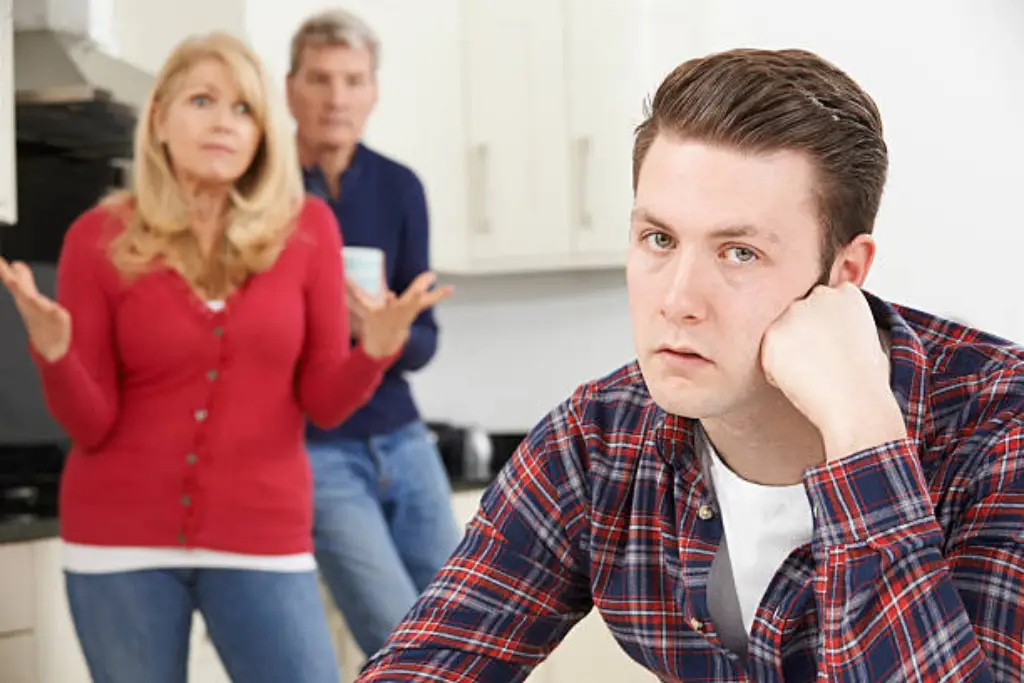
The night it happened, my father didn’t even let me finish the sentence. I stood in our spotless Cherry Hills Village kitchen—white marble countertops, stainless steel appliances, everything gleaming like nobody was allowed to be human there—and said, “My girlfriend is expecting.”
He didn’t ask her name. He didn’t ask if she was okay. He didn’t ask if I had a plan or how far along she was or if I needed help. He just stared at me like I’d taken a hammer to his perfect legacy, like I’d spray-painted graffiti across the pristine family portrait he’d spent decades constructing. Then he barked, “Get out.”
Two words. That’s all it took to erase twenty-two years.
My mother stood by the sink, her hands folding the same linen dish towel over and over, pressing it flat like she could iron out the shame, smooth away the scandal before it wrinkled the family name. She didn’t look at me. Not once. Just kept folding that towel with mechanical precision while her husband dismantled her son’s life in real-time.
“Dad, if you’d just listen—”
“I said get out.” His voice dropped lower, colder. The yelling I could have handled. This surgical precision was worse. “You’re not bringing this embarrassment into my house. You want to throw your life away? Fine. But you won’t drag us down with you.”
When I refused to “handle it quietly” on his schedule—his exact words, delivered like a corporate directive—my father’s anger crystallized into something more dangerous than rage. It became strategy. He didn’t slam doors or throw things. He simply made the decision that I no longer existed in the version of reality he presented to the world.
So I grabbed one duffel bag, packed what I could in ten minutes while he watched from the doorway like a security guard, and walked into the cold Colorado night with my jaw locked and my heart hammering against my ribs. I smiled on the porch before I left—not because I’d won anything, but because I knew something they didn’t.
They thought they were throwing me out over a pregnancy.
They weren’t.
The RiNo studio I found was barely four hundred square feet, tucked above a motorcycle repair shop that filled my nights with the smell of motor oil and the distant clang of wrenches on concrete. The mattress came from a guy on Craigslist who assured me it was “barely used,” which I chose to believe because I had no other option. The radiator clanked and hissed, providing heat in random intervals that bore no relationship to the actual temperature outside.
I worked three jobs that first year. Morning shifts at an urgent care clinic, afternoon hours doing medical billing for a practice in Lakewood, and late-night calls for a telehealth service where people phoned in at two a.m. about rashes and chest pains and whether it was normal for their baby to sleep this much. Everything that kept the lights on and food in the fridge and slowly, painfully, built toward something resembling stability.
Sarah never complained. Not when our dinner was ramen with frozen vegetables stirred in to pretend it was nutritious. Not when our dates consisted of walks through City Park because movies were a luxury we couldn’t justify. Not when she went to prenatal appointments alone because I was working doubles to cover the insurance premiums. She just kept her hand on her growing belly and told me we’d be fine, with a certainty I desperately wanted to believe.
During those long nights, while Sarah slept and the city hummed outside our window, I learned things my father had never bothered teaching me. I learned how systems really work—not the glossy version presented in boardrooms, but the actual mechanics underneath. Contracts. Documentation. Paper trails. The difference between a mistake and a pattern. The way money moves when people think nobody’s watching.
I learned because I had to. Because being broke makes you careful. Because when you’re building from nothing, you notice the cracks in other people’s foundations.
Then, about six months after I left, I started hearing my family name again. Not from them—we hadn’t spoken since that night—but in whispers. Quiet conversations at the clinic. A news article buried on page six of the business section. An audit of a certain charitable foundation. Donors being contacted for “routine verification.” Things being handled carefully, delicately, like everyone was walking on glass.
The Thatcher Family Foundation, which my father had chaired for twelve years, was being investigated for financial irregularities. Nothing proven yet. Nothing criminal charged. Just questions about where exactly all that donated money had gone, and why the public tax filings didn’t quite match the internal documentation some former employee had anonymously provided to the state.
I should have been surprised. I wasn’t.
Because one morning, about two weeks before the night he threw me out, I’d found an email on the family computer—the one in the den we all shared, back when I was naive enough to believe we were actually a family. I’d been looking for my own college transcripts, needed them for a medical school application, and I’d accidentally opened my mother’s account instead of mine. The passwords were similar, an old family habit.
The email was from her to my father, timestamped at one-thirty in the morning. Subject line: “Please don’t do anything that embarrasses your father this week.”
Just that. No context, no explanation. But I remembered that week. It was the week before a major foundation gala, the kind of event where wealthy donors wrote six-figure checks while eating catered salmon and congratulating themselves on their generosity. The week before several board members were scheduled to review the foundation’s financial statements.
I’d taken a screenshot without thinking, some instinct telling me to document it. Then I’d dug deeper. Just a little. Just enough to see things that didn’t add up—expense reports for trips that never happened, invoices from vendors that didn’t seem to exist, transfers to accounts labeled with vague descriptions like “administrative overhead” and “program development” that somehow consumed forty percent of donated funds.
I wasn’t looking to destroy him. I wasn’t even looking to confront him. I was just trying to understand why my mother would send an email like that, why she’d be worried about embarrassment right then, right before this scrutiny.
Then I’d gotten my girlfriend pregnant, and everything had clicked into place with nauseating clarity.
The timing wasn’t an accident. I wasn’t punished for some moral failing. I was removed—strategically, deliberately—before I could become a liability. Before I could ask uncomfortable questions at the wrong moment. Before some nosy medical student son might accidentally mention something inconvenient to the wrong person at the wrong gala, creating exactly the kind of embarrassment my mother had warned against.
My father hadn’t thrown me out over a pregnancy. He’d thrown me out because I knew too much, even if I didn’t realize it yet. And a family scandal—a grandson born out of wedlock, a son who’d “disappointed” them—made a perfect smokescreen, a perfect explanation for why suddenly I wasn’t around anymore, why I wasn’t at family events, why I’d “chosen” to distance myself from their world.
The investigation fizzled eventually, as investigations into wealthy families often do. Insufficient evidence. Incomplete records. He’d made a settlement with the foundation board, stepped down from his chairmanship, issued a statement about wanting to “focus on other priorities.” The foundation restructured. Everyone moved on. The family name survived with barely a scratch.
But I remembered. And I built my life on the opposite principle of everything he’d taught me.
Sarah gave birth to Lucas in a hospital room that smelled like antiseptic and hope, and I held my son while tears streamed down my face because he was perfect and mine and represented every choice I’d made that my father had called a mistake. I finished my medical degree through sheer stubbornness and sleep deprivation, graduated with honors because failure wasn’t an option, and started my residency in emergency medicine because I liked the chaos, the honesty of crisis, the way nobody had time to lie when their life was on the line.
I built a practice. Then a second clinic. Then a third. Not because I wanted to compete with my father’s wealth—though I’d be lying if I said that wasn’t satisfying—but because I’d seen what it meant to have nothing, to sit in waiting rooms wondering if you could afford the copay, to choose between medication and groceries. I wanted to build something that actually helped people instead of just performing charity for tax benefits and social capital.
Sarah and I got married in a courthouse ceremony with two friends as witnesses, and it was perfect because it was real. No performance, no guest list curated for business connections, no seven-tier cake designed to photograph well. Just us, promising to keep choosing each other, which we’d already been doing for years anyway.
Lucas grew up in a house filled with laughter and homework battles and soccer practices. He never met his grandparents. For fifteen years, they were just a story I told reluctantly when he asked why he only had one set of grandparents, why mommy’s parents came to his birthday parties but daddy’s didn’t. I kept it simple: “Sometimes families make choices. They chose not to know you. That’s their loss, not yours.”
I didn’t realize how much I meant it until the thin envelope arrived.
My mother’s handwriting hadn’t changed—still that careful, looping script I remembered from birthday cards and permission slips from another lifetime. The return address was the same Cherry Hills house, like they’d frozen in place while I’d built an entire world they knew nothing about.
The letter was short. She wanted to meet her grandson. She was sorry for “how things happened.” She understood if I was angry. She just hoped, after all this time, we could find a way forward. For Lucas’s sake. Family was important. Surely I understood that now that I was a parent myself.
I read it three times, looking for an actual apology, for acknowledgment of what they’d done, for any indication they understood. I found carefully worded regret about circumstances, passive voice that erased agency, and the kind of emotional manipulation that repositioned their abandonment as something I was now obligated to fix for my son’s benefit.
Sarah watched me from the doorway. “What are you going to do?”
I thought about it for a long time. I thought about protection, about boundaries, about the difference between forgiveness and reconciliation. I thought about what I wanted Lucas to learn from this—not about holding grudges, but about self-respect. About not letting people back into your life just because they wanted something from you, or because time had passed, or because they’d suddenly decided you were useful again.
But mostly, I thought about that email. “Please don’t do anything that embarrasses your father this week.” I thought about being removed like a problem, erased like an inconvenience. I thought about fifteen years of birthdays and soccer games and school plays they’d chosen to miss, not because I’d kept them away, but because they’d never asked to be included.
“I’m going to let them come,” I finally said. “But not because I owe them anything. Because I want them to see exactly what they threw away. I want them to walk into my life the way I walked out of theirs—unprepared.”
I sent them an address and a time. I didn’t tell them who I’d become or what I’d built. I didn’t explain anything. Just: “Saturday, two p.m., this address. Come meet your grandson.”
They showed up early, standing on my porch like strangers trying to remember the rules of engagement. Through the window, I watched them approach—my father with his shoulders squared like posture could substitute for an apology, my mother looking past me toward the house as if she could spot the boy she’d missed somewhere in the architecture.
I opened the door before they could knock.
My father looked older. The gray had taken over completely, and the lines around his eyes had deepened into canyons that makeup couldn’t fill. My mother had the kind of careful elegance that spoke of salon appointments and personal trainers, but her hands trembled slightly when she saw my face.
“Hello, son,” my father said, and the word felt foreign in his mouth, unpracticed.
“Richard. Patricia.” I used their first names deliberately, watched his jaw tighten at the distance it created. “Come in.”
The house was beautiful because Sarah had made it that way—warm and lived-in, with photos covering every surface and Lucas’s artwork magnetted to the fridge and the kind of comfortable clutter that happens when people actually inhabit a space. Not a showroom. A home.
They stood in the foyer like museum visitors, uncertain where to look, what to touch, how to navigate a space where they had no authority.
“Lucas,” I called up the stairs. “Come down, please. There are people here to meet you.”
He bounded down with the unconscious energy of a fifteen-year-old, all long limbs and messy hair and his mother’s smile. He stopped when he saw them, suddenly uncertain, and I put a hand on his shoulder.
“Lucas, these are my parents. Your grandparents. Richard and Patricia Thatcher.”
“Oh.” He looked at them with polite curiosity, the way you’d look at distant relatives you’d heard about but never met. “Hi.”
My mother’s eyes filled with tears. “Oh, he looks just like you did at that age.”
“He looks like himself,” I corrected gently. “Lucas, why don’t you show them the living room? I’ll get some coffee.”
I left them there—deliberately, strategically—and took my time in the kitchen, listening to the awkward conversation drift through the doorway. Lucas was polite because we’d raised him that way, but there was no recognition, no instant bond. They were strangers. And fifteen years of absence couldn’t be bridged with small talk about his height and whether he played sports.
When I returned with coffee, my father was standing by the mantel, studying the photos there. Baby pictures, family vacations, Lucas’s soccer team, Sarah’s promotion celebration, our clinic opening. A life documented in frames.
But he’d stopped at one photo in particular. His face had gone pale, and his hand trembled slightly as he picked up the frame.
It was from five years ago. A ribbon-cutting ceremony. Me in a suit, scissors in hand, standing in front of a building with a sign: “Thatcher Community Health Center – Free Primary Care for Underserved Populations.”
“What is this?” His voice was barely a whisper.
“My clinic,” I said simply. “Well, one of them. We have three now. This was the first. We provide free healthcare to people who can’t afford it. Unlike certain foundations that claim to help people while funneling donations into administrative overhead.”
The room went dead quiet.
My mother’s face drained of color. “You… you used our name?”
“It’s my name too,” I said calmly. “I didn’t steal it. I inherited it. And then I did something with it that actually matters.”
My father set the photo down like it had burned him. “Do you have any idea what you’ve—”
“What I’ve done?” I finished for him. “Yes. I’ve built something real. I’ve helped thousands of people. I’ve created exactly the kind of organization your foundation pretended to be.”
“That’s not—” He stopped himself, seemed to remember that Lucas was in the room, that they were guests in my home, that he no longer had the authority to finish that sentence the way he wanted to.
I leaned against the doorframe, completely calm. “You threw me out because I knew too much. Not about the pregnancy—though that made a convenient story, didn’t it? A disappointing son who got his girlfriend pregnant, who threw away his potential, who chose to distance himself from his family. Perfect cover for why I suddenly wasn’t around during that messy audit investigation.”
“That’s not true,” my mother said weakly, but she wouldn’t meet my eyes.
“I found your email,” I told her. “The one about not embarrassing Dad during a particularly important week. And I saw the expense reports. The vendor invoices. The transfers to accounts that didn’t quite add up. I wasn’t looking for it—I was twenty-two and naive and still believed you were good people. But I saw it anyway. And that’s why you needed me gone.”
My father’s hands clenched into fists. “You have no proof of anything.”
“I’m not trying to prove anything,” I said quietly. “I’m just telling you what I know. What I’ve known for fifteen years. You chose your reputation over your son. You chose a cover story over the truth. You chose to protect yourself instead of giving me a chance to speak. And now you show up wanting access to my child because you’ve decided you’re ready to be grandparents?”
“We made a mistake,” my mother whispered, tears streaming down her face now. “We were scared and we made a mistake. Can’t you forgive us?”
“I did forgive you,” I said, and meant it. “Years ago. I forgave you because holding onto anger would have poisoned my life, and I refused to let you take anything else from me. But forgiveness doesn’t mean reconciliation. It doesn’t mean pretending it didn’t happen. And it definitely doesn’t mean giving you access to my son just because you finally decided you were ready.”
Lucas stood up then, tall for his age, and moved to stand beside me. He didn’t say anything. He didn’t have to. The statement was clear.
My father looked at him—really looked at him—and something in his face crumbled. “I’ve missed fifteen years.”
“Yes,” I agreed. “You have. That was your choice.”
“Can we…” My mother’s voice broke. “Is there any way we can be part of his life? Part of your life? I know we don’t deserve it, but—”
“I don’t know,” I said honestly. “Maybe someday. But not today. Not like this. Not with you showing up after fifteen years expecting instant access, expecting me to hand over my son like time erases what loyalty didn’t. If you want to be part of our lives, you’ll have to earn it. Slowly. Carefully. Starting with actually acknowledging what you did instead of calling it a mistake, like it was an accident instead of a choice.”
“But—”
“No,” I said firmly. “You left. That was your decision. Now this is mine. If you want another chance, you’ll respect my boundaries. You’ll accept that I get to set the terms. And you’ll understand that I’m not the scared twenty-two-year-old you threw out. I’m not asking for permission anymore. I’m not hoping for your approval. I built this life without you. We’re fine. If you want to be part of it, you’ll have to prove you deserve to be here.”
They stood there in my living room, surrounded by photos of the life they’d missed, facing the man I’d become without their guidance or support or approval. For the first time in my memory, my father had nothing to say. No commands. No ultimatums. No carefully worded dismissals.
Just silence.
“I think you should go now,” I said quietly. “I have your number. If I decide we’re ready to talk more, I’ll call.”
My mother started to protest, but my father put a hand on her arm. For once, he understood that he’d lost the right to demand anything.
They walked to the door, my father’s perfect posture finally slumping, my mother’s elegant composure cracking with every step. At the threshold, she turned back one more time.
“I am sorry,” she said, and for the first time, it sounded real. “For all of it. Not just the mistake—for the choice. For choosing wrong.”
“I know,” I said. “But sorry isn’t enough to undo fifteen years. Sorry is just the first step. The rest is up to you.”
They left, and Lucas and I stood in the doorway watching them walk back to their pristine luxury sedan, back to their perfect house in Cherry Hills, back to the life they’d chosen over us.
“Dad?” Lucas said after they’d driven away. “Are you okay?”
I pulled him into a hug, this boy who’d grown up without grandparents but never felt the lack because he’d been surrounded by love. “Yeah, buddy. I’m okay. We’re okay.”
“They seemed… sad.”
“They are,” I agreed. “They should be. They missed out on knowing you, and that was their loss.”
“Are you going to let them back in?”
I thought about it, really thought about it. About boundaries and second chances and what I wanted to teach him about both. “Maybe. Someday. If they prove they’ve actually changed. But not because I owe them anything. And not because family means accepting whatever they’re willing to give. Real family shows up. Real family makes sacrifices. Real family doesn’t throw you away when things get complicated.”
He nodded, understanding in a way that made me proud. “Like you and Mom did.”
“Like we did,” I confirmed. “And like we always will.”
That night, after Lucas was asleep and Sarah and I sat on the porch watching the Denver lights twinkle in the distance, I thought about that moment fifteen years ago. Standing in their perfect kitchen, being dismissed like I didn’t matter. Walking out with one bag and a broken heart and no idea what came next.
I’d thought I was being cast out. I’d thought I was losing everything.
But really, I’d been freed. Freed from living up to impossible expectations. Freed from participating in their performance. Freed to build something real, something good, something that actually mattered.
They’d meant to destroy me. Instead, they’d given me the greatest gift possible: the necessity of becoming someone better than they’d ever imagined. Someone who helped people instead of using them. Someone who built instead of taking. Someone who chose love over reputation, truth over convenience, principle over comfort.
I’d smiled on that porch fifteen years ago because I’d sensed, somehow, that walking away would save me.
I smiled now because I knew I’d been right.
My phone buzzed. A text from an unknown number: “Thank you for seeing us. We understand it will take time. We’ll wait. We’ll do better. – Patricia”
I showed it to Sarah. She raised an eyebrow. “What do you think?”
“I think time will tell,” I said. “And I think I’m finally okay with that.”
Because I’d built a life I was proud of. I’d raised a son who knew his worth. I’d created something that mattered. And I’d done it all without them—not in spite of them trying to stop me, but because they’d given me no choice but to become someone who didn’t need their approval to know I’d succeeded.
That was its own kind of justice. The kind that didn’t require revenge or confrontation or proving anything to anyone except myself.
They’d thrown me out thinking they were protecting their legacy.
Instead, they’d set me free to build one worth keeping.

Lila Hart is a dedicated Digital Archivist and Research Specialist with a keen eye for preserving and curating meaningful content. At TheArchivists, she specializes in organizing and managing digital archives, ensuring that valuable stories and historical moments are accessible for generations to come.
Lila earned her degree in History and Archival Studies from the University of Edinburgh, where she cultivated her passion for documenting the past and preserving cultural heritage. Her expertise lies in combining traditional archival techniques with modern digital tools, allowing her to create comprehensive and engaging collections that resonate with audiences worldwide.
At TheArchivists, Lila is known for her meticulous attention to detail and her ability to uncover hidden gems within extensive archives. Her work is praised for its depth, authenticity, and contribution to the preservation of knowledge in the digital age.
Driven by a commitment to preserving stories that matter, Lila is passionate about exploring the intersection of history and technology. Her goal is to ensure that every piece of content she handles reflects the richness of human experiences and remains a source of inspiration for years to come.