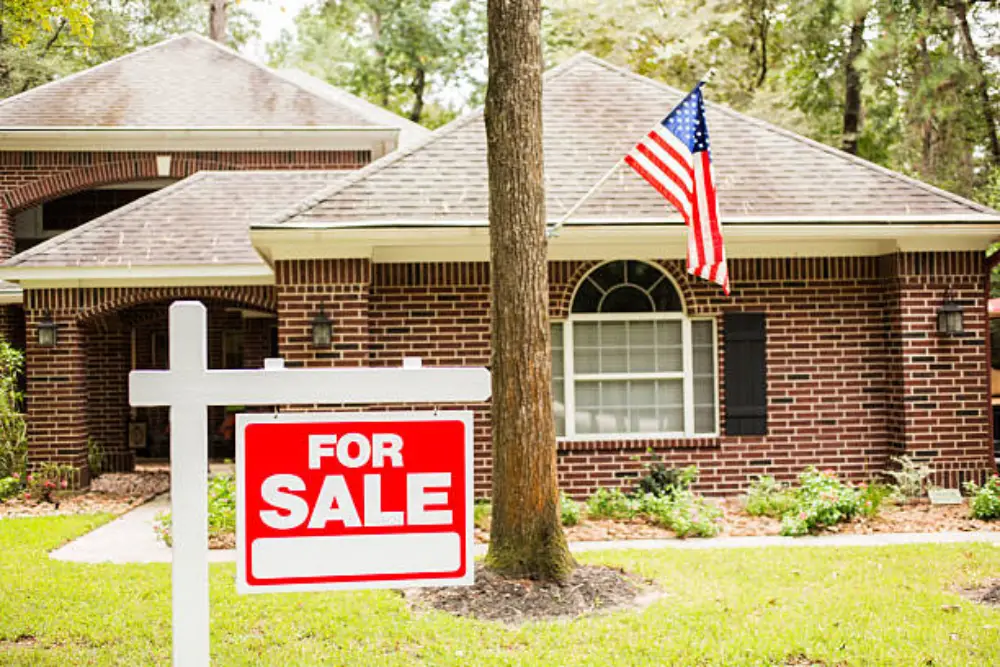
“Mom, I gave your house to my in-laws. I thought you were going to die.”
The words left my son’s mouth as casually as if he were commenting on the weather or asking what I wanted for dinner. But for me, still lying in that sterile hospital bed with my body wasted from six months of immobility and my mind scrambling to piece together the vast emptiness of lost time, they hit like a physical assault—a blow to the chest that left me gasping for air I couldn’t quite catch.
I had just woken up from a coma. Six months. Half a year where my body lay dormant in this very bed, kept alive by machines that breathed for me and fed me through tubes, while my consciousness wandered somewhere I couldn’t remember, couldn’t access, like a book with pages torn out. The doctors kept using words like “remarkable” and “miraculous,” talking about brain activity and recovery patterns, but all I could focus on was the strange weakness in my limbs and the way my throat felt raw from the breathing tube they’d only removed two days ago.
And the first thing my only son said to me—not “Thank God you’re alive,” not “We missed you so much,” not even a simple “How are you feeling?”—was that he had given away my home. The brick house I had bought with decades of sweat and callused hands and sleepless nights working multiple jobs. Given it to his wife’s parents. Because in his mind, I was already dead and buried.
His wife Jessica stood beside him, checking her manicured nails with the kind of bored impatience you’d show in a slow checkout line. When I didn’t immediately respond—because how do you respond to something so unthinkable?—she added with a dismissive wave of her hand, “You’ll need to find another place to live. They’re already settled in. It would be cruel to uproot them now.”
My name is Emily Parker. I am sixty years old, and this is the story of how I lost everything I’d built across a lifetime of struggle, and how I fought with everything I had left to take it back.
I was born in a small town south of Chicago where dignity was the only currency we had, and we hoarded it like gold. My mother sewed dresses until her fingers bled and her eyesight dimmed, and my father broke his back on construction sites, coming home each night bent and exhausted but never broken. “Never ask for anything you cannot earn with your own hands,” my mother would tell me, her voice sharp but loving, her weathered hands still somehow gentle when she braided my hair. I carried that lesson like a shield through every hardship that followed.
At twenty-two, I married David Parker. We were young and foolishly optimistic, believing love could conquer the poverty we’d both grown up in. When Michael was born two years later on a foggy January morning, I held him in the hospital room and promised him the world, promised him everything I’d never had. But the world is cruel to people like us. David died in a construction accident when Michael was only eight—a falling beam, a moment of inattention, a life snuffed out in the space of a heartbeat.
I was left a widow with a small child, no savings, and a future that looked like a black hole. But I didn’t break. I refused to break. I scrubbed floors in office buildings at night while Michael slept at my mother’s. I cooked catering platters until my tiny kitchen smelled permanently of onions and roast beef and my hands were scarred from burns. I saved every dime in a cookie tin under my bed, counting it on Sunday nights like it was a prayer. I wore the same winter coat for ten years so Michael could have new school uniforms, new shoes, the supplies he needed to succeed.
And it worked. Michael grew up smart, polite, respectful—the pride of our neighborhood. He won scholarships, went to college, graduated with honors in accounting. He got a job at a prestigious firm downtown, wore suits that cost more than my monthly rent, drove a car that gleamed. “Now it’s my turn to take care of you, Mom,” he told me, hugging me tight after his graduation, and I believed him with my whole heart.
I bought my house around that time, finally. A small, sturdy place in Oak Creek with a yard that held my pride and joy: an apple tree I planted myself, my hands in the soil, nurturing something beautiful and lasting. It wasn’t a mansion, but it was mine—every brick, every window, every creaking floorboard earned through years of sacrifice.
Then came Jessica.
She was beautiful in that polished, untouchable way—blonde hair always perfectly styled, clothes that whispered money, a smile that never quite reached her eyes. She came from a family with wealth, with connections, with the kind of comfort I’d spent my life chasing. And she never, not once, let me forget the gap between us.
When Michael married her three years ago, I watched him change. He became distant, critical of things that had never bothered him before. He stopped visiting except for obligatory holidays. The phone calls dwindled to texts, then to silence. When I asked if something was wrong, Jessica would answer his phone, her voice sweet as poison: “Michael’s just so busy with work, you understand.” But I heard what she wasn’t saying—you’re not worth his time anymore.
Then, seven months ago, I collapsed in my kitchen. A stroke, sudden and devastating. I remember the tile floor rushing up to meet me, the strange metallic taste in my mouth, and then nothing. Absolute nothing.
Until I woke up to white walls and the rhythmic beeping of monitors. A nurse with kind eyes told me I’d been in a coma for six months, that my recovery was nothing short of miraculous, that I was lucky to be alive. Lucky. The word felt hollow.
Now Michael stood at the foot of my hospital bed, Jessica beside him checking her watch like she had somewhere more important to be, and they were telling me I was homeless. That the house I’d bled for, the home I’d built from nothing, was no longer mine.
“Find another place to live,” Jessica repeated when I didn’t respond, her tone suggesting this was all perfectly reasonable. “My parents sold their house to move into yours. They can’t just leave now.”
I looked at my son—the boy I had raised, the man who had promised to protect me—and I saw a stranger. A stranger who’d apparently decided six months ago that I was already dead and my property was his to distribute. Rage flared in my gut, hot and sudden and almost overwhelming, but I swallowed it down. I had learned long ago that rage without strategy was just noise.
I closed my eyes and breathed deeply, the way the physical therapist had taught me just that morning. In that moment of forced calm, I made the most important decision of my life. I wasn’t going to beg. I wasn’t going to scream or cry or appeal to whatever shred of conscience Michael might have buried under Jessica’s influence. I was going to do what I’d always done: solve it with my own two hands.
“I understand,” I said, my voice surprisingly steady.
Michael blinked, clearly confused by my lack of hysterics. “You… you understand?”
“Get out,” I said quietly. “Both of you. Don’t come back until I call you.”
As they left, Jessica shot me a look that can only be described as triumphant—like she’d won some game I hadn’t even known we were playing. She thought it was over. She didn’t know the war had just begun.
I spent the next three days in the hospital planning my counterattack, and when the legal aid attorney finally sat down beside my bed, what he told me about the paperwork Michael had signed turned my blood to ice.
Mr. Davis was a legal aid attorney with gray hair, tired eyes, and a worn leather briefcase that smelled of old paper and coffee. He sat in the chair beside my hospital bed, listening with careful attention as I recounted everything Michael had said.
“Is the house in your name?” he asked, peering over reading glasses that sat crooked on his nose.
“Yes. Only mine. My name alone on the deed.”
“Did you sign a Power of Attorney before the stroke? Anything giving your son authority over your property?”
“Never,” I said firmly. “I never signed anything like that.”
His expression darkened. “Then what your son did isn’t just immoral, Mrs. Parker. It’s illegal. It’s misappropriation of property. And if he signed any contract or agreement allowing his in-laws to occupy your home, he committed fraud.”
“He said he thought I was going to die,” I whispered, the shame and hurt of it burning my throat.
“That is not a legal defense,” Mr. Davis said with quiet intensity. “I need your permission to check the county records. If there’s a signature on file—if any documents were filed to transfer rights or grant occupancy—we need to see them.”
I signed the authorization form with a hand that still trembled from muscle atrophy, my signature barely recognizable even to me.
The next morning, Mr. Davis returned with a manila folder and an expression that made my stomach clench. “It’s worse than we thought,” he said, pulling documents from his briefcase and spreading them on the rolling table across my bed. “Your son didn’t just give them keys and verbal permission. He signed a legal contract—a ‘gratuitous bailment agreement’—allowing Frank and Sarah Miller to occupy the premises for two years, rent-free, with full rights to the property. And to execute that contract, he presented a Power of Attorney document dated almost a year ago.”
He held up the paper, pointing to a signature at the bottom. “Is this your signature?”
I stared at the scrawled writing, the shaky letters trying too hard to mimic my handwriting, getting the loops wrong on the ‘y’ and the slant all wrong on the ‘P.’ “No,” I said, my voice hardening with certainty. “That is a forgery.”
“Then we have them,” Mr. Davis said, and for the first time I saw something like satisfaction in his tired face. “We can file for immediate eviction. The contract is void if it was signed using fraudulent authorization. And Mrs. Parker…” He paused, letting the weight of his next words settle. “We can file criminal charges for fraud and forgery. Your son could go to prison for this.”
The room went absolutely silent except for the beeping of the monitor tracking my heartbeat. Prison. My Michael. The little boy who used to bring me crumpled wildflowers from the neighbors’ yards, who’d cried when he accidentally stepped on a beetle.
“Give me twenty-four hours,” I said finally. “Proceed with the eviction paperwork. But give me one day before we decide about the criminal charges.”
I was discharged from the hospital that afternoon with a walker, a list of medications longer than my arm, and nowhere to go. I called Mrs. Higgins, my old neighbor who had watched Michael when he was small, who’d slipped me casseroles when times were especially hard. She took me in without hesitation, setting me up in her guest room with clean sheets and a gentleness that made me want to weep.
That evening, despite Mrs. Higgins’ protests about my health, I insisted on walking to my house. I needed to see it with my own eyes. I needed to understand what had been done to the home I’d spent a lifetime building.
The walk was only three blocks, but it took me nearly thirty minutes with the walker, my muscles weak and uncooperative. When I finally stood on the sidewalk across from my house, the sight of it stole my breath. The front door was painted a hideous shade of green I never would have chosen. Strange ceramic planters sat on the porch, gaudy and too large. Through the living room window, I could see new furniture—massive leather sofas that looked expensive and uncomfortable, a television taking up half the wall. My things, all the furniture I’d carefully selected and refinished over the years, were simply gone.
A man came to the door—Frank, Jessica’s father, a stocky man with a suspicious face. “Can I help you?” he asked, not quite hostile but not welcoming either.
“I… I think I have the wrong house,” I stammered, backing away, my throat closing with humiliation and rage. I turned and walked away as quickly as my weak legs would carry me, tears streaming down my face.
But that humiliation became fuel. When I got back to Mrs. Higgins’ house, I called Mr. Davis with absolute certainty. “Do it,” I said. “File the eviction. Get the court order. I want them out.”
Three days later, armed with a sheriff’s deputy and a court order signed by a judge, we arrived at my house at exactly ten o’clock in the morning.
Officer Stevens, a tall man with kind eyes and a no-nonsense demeanor, pounded on the door with official authority. “Sheriff’s Department! We have a court-ordered eviction! Open the door!”
Frank opened it, his face pale and defeated, shoulders sagging like a man who’d seen this coming. “We’re leaving,” he muttered without meeting my eyes. “We’re packing now.”
I walked into my home—my home—and the wrongness of it hit me like a wave. It smelled of strangers, of unfamiliar cooking and different detergent. My beautiful cream-colored walls had been repainted stark white. My kitchen table—the one I’d sanded and painted myself, that had held a thousand meals and homework sessions and late-night conversations—was gone, replaced by cold glass and chrome that had no history, no warmth.
I found Sarah, Jessica’s mother, in what used to be Michael’s childhood bedroom, shoving clothes into a suitcase with angry, jerky movements. She stopped when she saw me standing in the doorway.
“I didn’t think you’d actually come back,” she said, her voice cold with resentment. “Michael said you were as good as dead. That you’d never wake up.”
“Michael was wrong,” I said quietly.
“You’re a selfish woman,” she spat, slamming the suitcase shut with unnecessary force. “Kicking us out like this. We sold our house based on his promise. We have nowhere to go now. No home. You’ve destroyed us.”
“I woke up from a coma,” I said, my voice shaking with suppressed fury, “and was told to find a new place to live. You have been living in my house, sleeping in my bed, enjoying everything I worked decades to build, while I lay unconscious in a hospital bed. And when I woke up, your daughter told me I was homeless. Do not talk to me about selfish.”
She stormed past me without another word, her shoulder deliberately hitting mine as she passed.
I walked through the rest of the house in a daze, cataloging the changes, the violations. Then I went to the back door, needing to see my yard, needing the comfort of the apple tree that had always been my sanctuary.
I stopped dead in the doorway, my hand gripping the frame for support.
The tree had been butchered. My beautiful apple tree, the one I’d planted with my own hands fifteen years ago, had been savagely cut back. The majestic branches that used to create a canopy of shade were gone, leaving only jagged stumps weeping sap. It looked like a skeleton, like something that had been tortured.
“What did you do?” I whispered, barely able to form words.
“It dropped apples,” Frank grunted, carrying a box past me toward their truck. “Made a mess on the patio. We pruned it back.”
Pruned. They called this pruning. I fell to my knees on the concrete patio, staring at the mutilated tree, and something inside me broke open. They hadn’t just taken my house. They had tried to erase me, to destroy the living things I loved, to remake my home in their image with no thought for what they were destroying.
That night, sitting on my old floral sofa that I’d rescued from where they’d dumped it in the shed, I made a decision. Michael thought he could fix this with an apology and tears. He thought he could cry and I would fold the way I always had, prioritizing his feelings over my own hurt. He was about to discover that the mother he remembered had died in that hospital bed, and someone stronger had woken up in her place.
The next few days were a blur of physical labor that my weakened body could barely handle. I dragged my furniture back inside, piece by piece, resting between efforts. I repainted the walls cream with Mrs. Higgins’ help. I sat with my destroyed apple tree, watering its roots, whispering promises that we would both survive this violation, that we would both heal.
A week later, Michael knocked on the door.
He looked terrible—unshaven, dark circles under bloodshot eyes, his usually crisp shirt wrinkled and stained. The polished professional I’d seen in the hospital was gone, replaced by someone who looked haunted.
“Mom,” he said, his voice breaking on the single word.
“Come in,” I said, stepping aside.
He walked into the living room and stopped, looking at the old furniture he’d grown up with, the cream walls now restored, the family photos back on the mantle. He started to cry—not the manipulative tears I’d half-expected, but genuine, broken sobbing.
“I’m sorry,” he choked out. “I’m so, so sorry. I was scared. I was confused. Jessica kept saying… she said we had to be practical. She said you weren’t coming back, that we had to move forward, that her parents needed help. I thought I was doing the right thing.”
“And you listened to her,” I said, standing straight despite my fatigue. “You listened to her instead of waiting. Instead of hoping. Instead of keeping faith that I might survive.”
“I know,” he whispered. “I know. It was wrong. I was wrong.”
“You forged my signature, Michael,” I said, letting the full weight of those words fall between us. “You committed a crime. Multiple crimes. Fraud. Forgery. Mr. Davis has all the documentation. I could send you to jail right now. I have the paperwork ready to file.”
He went absolutely white, his legs seeming to give out as he sank onto the couch. “You know about that?”
“I know everything,” I said. “The fake Power of Attorney. The contract you had no right to sign. All of it.”
He buried his face in his hands. “Mom, please. Please don’t send me to jail. I’ll do anything. Jessica already… when she found out you were taking the house back, when she realized her parents had nowhere to go… she left me. She said she couldn’t be with a man who chose his mother over his wife, who couldn’t even manage his inheritance properly.”
“She didn’t love you, Michael,” I said softly, sitting down in the chair across from him. “She loved what you could provide. Your income, your prospects, the house she thought you’d inherit. And when that disappeared, so did she.”
“I know,” he whispered brokenly. “I know that now. I’ve been such a fool.”
“I’m going to drop the criminal charges,” I said.
His head snapped up, hope flooding his ravaged face. “You are? Oh God, thank you. Thank you so much—”
“But,” I held up a hand, cutting him off, “things are going to be different between us. I’m changing my will. This house, my savings, everything I have—it will go to charity when I die. You will inherit nothing. Not one dollar.”
He recoiled as if I’d physically struck him. “What? But I’m your son. I’m your only child.”
“And I was your mother,” I said, my voice steady and final. “And you threw me away. You gave away my home, forged my signature, and left me with nothing. You have to learn, Michael. You have to build your own life, with your own hands, the way I did. I will not be your safety net. I will not be your backup plan. You need to learn what it means to earn something instead of waiting for it to be handed to you.”
He sat in silence for a long time, his face cycling through shock, anger, understanding, and finally acceptance. “I deserve that,” he said finally, his voice small.
“Yes,” I agreed. “You do.”
He stood up slowly, wiping his eyes with the back of his hand like a child. “Can I… can I still come visit? Can I help you fix things around here? Can we try to… to rebuild something?”
I looked at him carefully, studying his face for signs of manipulation or false remorse. But what I saw was genuine regret, heavy and real and transformative. I saw the boy who used to help me stir oatmeal, who’d held my hand during thunderstorms. He was broken, but maybe—just maybe—he could be rebuilt into something better.
“Come back on Saturday,” I said. “Come early. We have walls to touch up and a yard to clean. If you want to be in my life, you’ll have to work for it.”
He nodded, something like relief softening his features. “I’ll be here. I promise.”
After he left, I sat alone in the quiet of my reclaimed home. I felt strong in a way I’d never felt before—not the strength of endurance I’d relied on my whole life, but something harder, cleaner. The strength of boundaries. But the next day, I received a call that shattered that fragile peace.
“Mrs. Parker, this is Miss Thompson from the hospital administration office. We’ve been conducting an audit of patient files from the critical care unit, and we’ve found some irregularities regarding your case. Could you come in to discuss them?”
Miss Thompson was a stern woman with kind eyes behind wire-rimmed glasses. She sat me down in her office and opened a thick file with my name on the tab.
“During your coma,” she began carefully, watching my face, “your son was listed as your medical proxy. He authorized several decisions regarding your care. Most were standard and appropriate. But we found records that are… concerning.”
She pulled out a form, her finger tracing a line of text. “He attempted to decline certain rehabilitation therapies. Physical therapy, occupational therapy—treatments specifically designed to prevent muscle atrophy and improve your chances of meaningful recovery. These are expensive therapies, and according to notes from our staff, he argued they were unnecessary if you weren’t going to wake up.”
My breath caught in my throat. “He tried to stop my treatment?”
“Not all of it,” she clarified quickly. “The critical life support continued. But the rehabilitation that would have made your waking up easier, that would have preserved your muscle function and mobility—he tried to refuse those. Our medical ethics board overruled him, which is why you received them anyway. But the attempts are documented.”
She flipped to another page, her expression grim. “We also have records of multiple inquiries from him regarding your life insurance policy. He contacted the billing department repeatedly, asking about death certificates, about how to file claims, about early payout options.”
I sat frozen, the words washing over me like ice water. It wasn’t just the house. He hadn’t just given away my home while I was helpless. He had tried to stop the very treatments that would help me recover. He had been preparing to cash in on my death before my body was even cold.
“Do you want to take legal action regarding these decisions?” Miss Thompson asked gently.
I thought about Michael crying on my floor. I thought about Jessica leaving him, about the emptiness in his eyes when he’d said “I deserve that.” I thought about the apple tree with its new shoot of growth.
“No,” I said finally, my voice surprisingly steady. “Life is already punishing him quite thoroughly. He has to live with what he did. That’s consequence enough.”
Saturday morning arrived with clear skies and a cool breeze. Michael showed up at exactly eight o’clock with a box of pastries from the bakery I used to take him to as a child, and a worn paintbrush tucked in his jacket pocket.
We worked in near silence for hours, the rhythm of physical labor creating a bridge across the chasm between us. We touched up the trim, cleaned the windows until they sparkled, scrubbed the kitchen until it smelled like lemon instead of strangers. It felt like penance, like prayer, like the slow, painful process of rebuilding trust one small action at a time.
Around noon, we took a break on the patio. Michael stared at the apple tree with its brutal stumps and its single shoot of new growth.
“It looks so damaged,” he said quietly. “I can’t believe they did that.”
“It’s hurt,” I agreed, sipping the water he’d brought me. “But look closer.”
I pointed to the new growth—not just one shoot now, but three, small but determined, green leaves unfurling toward the sun.
“It’s coming back,” he whispered, something like awe in his voice.
“Yes,” I said. “It will take time. It will have scars. The shape will be different than it was before. But it will grow. It will bear fruit again.”
Michael looked at me, really looked at me, with understanding and shame mixing in his expression. “Like you.”
“Like us,” I corrected gently, reaching over to squeeze his hand. “If you’re willing to do the work. If you’re willing to grow back different than you were.”
Six months have passed since I woke up from that coma. Six months since I learned that the people I’d spent my life protecting had betrayed me in ways I couldn’t have imagined.
It’s Sunday morning now. The sun streams through my kitchen window, lighting up the cream walls and my old wooden table—the one I rescued, refinished, and brought back to its rightful place. Outside, the apple tree has pushed out a full canopy of new leaves. They’re not quite the same as before—the shape is different, asymmetrical, bearing the scars of what was done to it. But hidden among those leaves, small and perfect, are seven apples. Seven promises that destruction isn’t the end of the story.
Michael comes every Saturday now. He left the prestigious firm and took a position at a smaller company where the pay is less but the ethics are better. He’s single, humbler, working through his mistakes in therapy. He’s learning to build something with his own hands instead of waiting to inherit someone else’s work. The trust between us is fragile, like a glued vase that will never be quite the same but still holds water, still serves its purpose.
Jessica is gone, living in another city, already attached to a new man with better financial prospects. I don’t hate her. I don’t have room in my heart for that kind of poison anymore. She was what she was, and she showed me what I needed to see about my son.
I learned that love without boundaries is self-destruction. I learned that forgiveness doesn’t mean forgetting—it means letting go of the knife so you don’t keep cutting yourself on it. I learned that sometimes the people who love you most can still hurt you worst, and that survival means knowing when to save yourself even when it costs you everything.
I am Emily Parker. I’m sixty years old. I lost my husband to a construction accident, my health to a stroke, my home to betrayal, and nearly lost my son to his own weakness.
And I got it all back—not by waiting for someone to save me, not by hoping things would fix themselves, but by saving myself. With my own two hands, just like my mother taught me.
The apple tree outside my window drops its fruit now. I make pies with those apples, and they taste like victory. Like survival. Like the future I built from the ruins of what I’d lost.
If you’re reading this story, remember: No matter how dark the room, no matter how deep the hole, no matter how absolute the betrayal—you can climb out. You have two hands. Your own strength. Your own worth that nobody can take from you unless you give it away.
And always, always, keep the deed to your house in a fireproof safe.

Adrian Hawthorne is a celebrated author and dedicated archivist who finds inspiration in the hidden stories of the past. Educated at Oxford, he now works at the National Archives, where preserving history fuels his evocative writing. Balancing archival precision with creative storytelling, Adrian founded the Hawthorne Institute of Literary Arts to mentor emerging writers and honor the timeless art of narrative.