I’m thanking my aunt for the keychain she sent me for my birthday two months ago when she stops stirring the gravy, sets down her spoon with deliberate precision, and says in a voice that could freeze fire, “I didn’t send you a keychain, Lydia. I bought you a four-hundred-thousand-dollar apartment. The keychain was just supposed to be a placeholder.”
The dining room goes absolutely silent. My father’s carving knife freezes mid-slice through the turkey. My stepmother Linda’s wine glass trembles in her hand. My nineteen-year-old half-sister Emma goes pale as fresh snow, her phone clattering onto her plate with a sound that seems impossibly loud in the sudden quiet.
My name is Lydia Chen, I’m thirty-one years old, and I’m about to discover that my family has been even worse than I thought—which is saying something, considering I’ve spent the past twenty-three years being systematically treated like a second-class citizen in my own father’s house.
But I’m getting ahead of myself. Let me back up and explain how we got to this moment where my entire family looks like the air has been sucked out of the room and I’m sitting here holding a cheap silver keychain wondering if I’ve lost my mind.
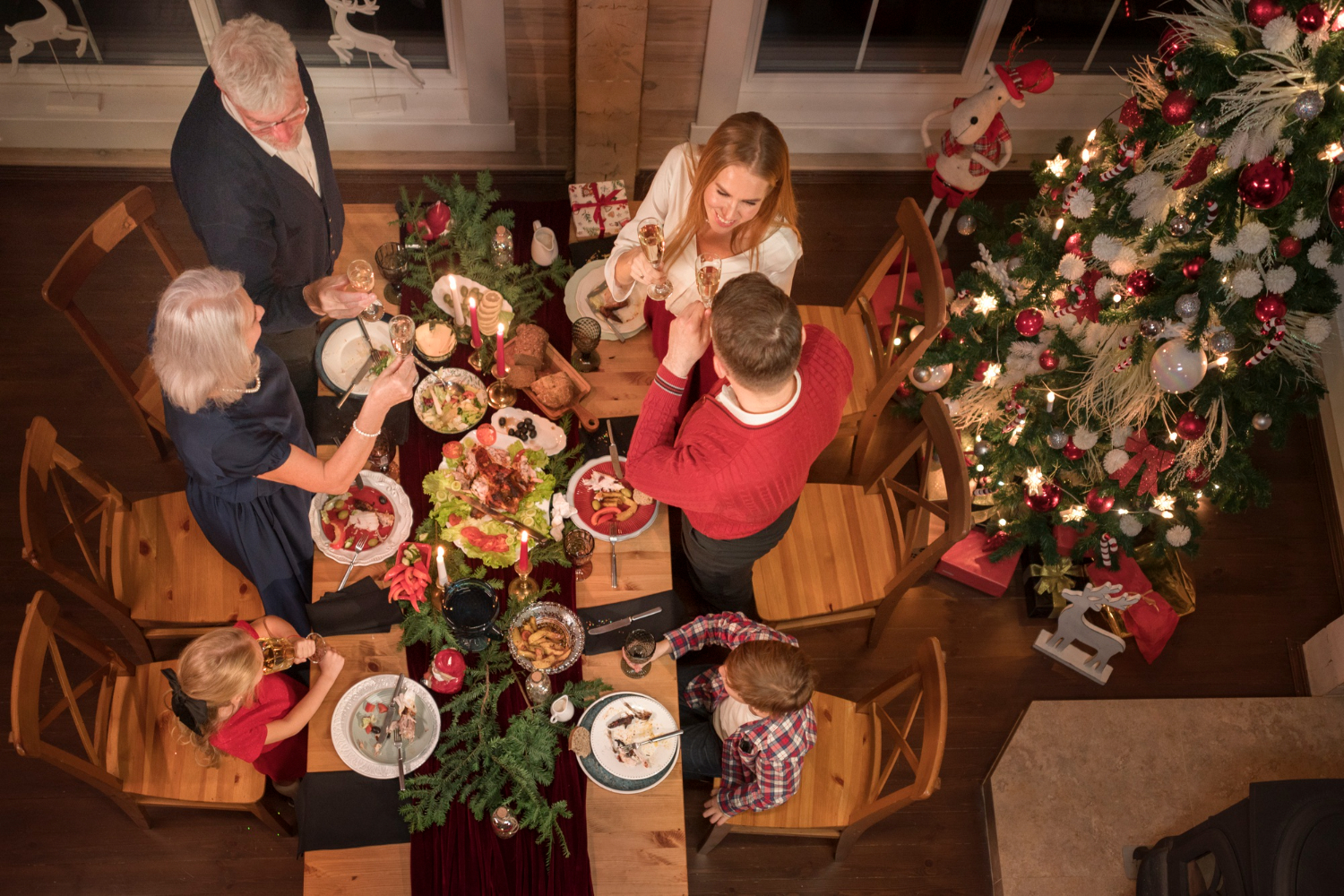
The Christmas table is perfect, of course—Linda’s best china with the gold trim, candles flickering in crystal holders, the scent of honey-glazed ham competing with pine from the expensive wreath hanging over the sideboard. Everything coordinated, everything beautiful, everything designed to project the image of a family that has its life together. My father sits at the head of the table in the same spot he’s occupied since Linda redecorated fifteen years ago, carving turkey with his usual meticulous precision. Emma scrolls through her phone despite the supposed no-phones-at-dinner rule that mysteriously only applies to me. And Linda directs the meal like a general commanding troops, her smile bright and her eyes calculating.
I’m in my usual spot—the chair closest to the kitchen so I can help serve and clear plates—next to Aunt Margaret, my father’s sister, who flew in from Phoenix as a surprise. She’s the only person at this table who’s ever made me feel like I actually matter, like my existence is more than an inconvenience to be managed around Emma’s needs.
Growing up as the stepdaughter in this house taught me early that I existed in the margins of their real family. My mother died when I was seven, and Dad remarried Linda two years later when I was still trying to figure out how to tie my shoes without Mom’s help. Linda brought her daughter Emma and her special brand of subtle cruelty disguised as motherly concern, and suddenly everything in my life became a lesson in scarcity.
While Emma got new clothes for every season, I got carefully selected clearance items. “We’re teaching Lydia the value of money,” Linda would explain to relatives, as if thrift was a character-building exercise designed specifically for me while Emma learned the value of entitlement. When Emma wanted a car for her sixteenth birthday, she got a brand-new Honda with a bow on it. When I turned sixteen, Linda suggested I could borrow her old minivan “when the family didn’t need it,” which turned out to be approximately never.
College was where the inequality became impossible to ignore or rationalize. I worked at a movie theater my entire senior year, wrote scholarship essays until my hands cramped, and chose the state school I could afford with in-state tuition. Emma applied to five private colleges with application fees that cost more than I made in a week, and nobody blinked. When I graduated magna cum laude with my nursing degree, debt-free thanks to scholarships and working forty hours a week while taking classes, the celebration was dinner at Applebee’s. When Emma graduated high school with a C-plus average, they threw a party that cost more than my car.
The pattern was always the same: Emma’s needs came first, Emma’s wants were necessities, and my requests were luxuries we couldn’t afford. When I asked for art classes, Dad said we needed to prioritize practical skills. When Emma wanted piano lessons, they hired a private instructor. Linda would smile sweetly when relatives noticed the disparity and say, “Each girl has different needs. Lydia is so independent and responsible. Emma needs more guidance.” Translation: Lydia can figure it out herself; Emma deserves to be taken care of.
The only person who ever called them out was Aunt Margaret. She was the one who remembered my birthday every year, who asked about my life like it actually mattered, who treated me like I was precious instead of peripheral. She never had children of her own, but she gave me something my own father couldn’t seem to manage—unconditional love.
By twenty-five, I was a single mother working as a pediatric nurse, living in a tiny apartment with my four-year-old son Danny. His father had disappeared the moment he found out about the pregnancy, which honestly felt pretty much on brand for my life at that point. The apartment was cramped—Danny’s “bedroom” was really just a converted closet with a curtain—but it was clean, and Danny was happy. My family’s relationship with my son was performative at best. Linda posted photos of him on Facebook with captions about being the world’s best grandma, but when I needed actual help like babysitting so I could pick up extra shifts, they were mysteriously always busy.
Aunt Margaret was different. She showed up consistently, driving two hours from her house every few weeks to spend weekends with us, bringing homemade cookies and genuine interest in our lives. When Danny got pneumonia at three and needed a week in the hospital, Margaret took time off work to help while my own father visited twice for less than an hour each time. That’s when I understood who my real family was.
When Margaret called last year to tell me she’d been diagnosed with breast cancer, I didn’t hesitate. “What do you need?” I asked immediately. The answer was nobody—Dad was too busy with work, Linda had commitments with Emma’s college activities, Emma was too young for such serious matters. So I became Margaret’s support system. Twice a week for six months, I loaded Danny into his car seat after my nursing shift and made the three-hour round trip to her house and the cancer center. Danny learned to entertain himself quietly in waiting rooms, coloring in books Margaret bought him, while I advocated for her treatment and held her hand through chemotherapy.
During the worst of it, I’d stay overnight, making sure she ate and took medications. Danny would curl up next to her on the couch, his small hand patting her bald head gently. “Aunt Maggie is brave,” he’d whisper. “Yes, she is,” I’d agree, thinking she deserved better from her family than two phone calls in six months from my father and a sympathy card from Linda.
The night Margaret finished her last round of chemo, she grabbed my hand with more strength than she’d had in weeks. “You saved my life,” she said quietly. “Not just medically—you showed up when everyone else had excuses. You made me feel loved when I felt forgotten.” Her eyes filled with tears. “Your father called me twice in six months. Twice. But you—working full-time, raising a child alone—you found a way to be here every time I needed you.”
The anger in her voice was new. Margaret had always been the family peacekeeper, smoothing over uncomfortable moments. But cancer had apparently burned away her patience for pretense. “I’ve been watching your family dynamic for years, making excuses, hoping things would improve,” she continued. “They haven’t. If anything, they’ve gotten worse.”
When Margaret’s hair grew back and her strength returned, she announced plans to travel Europe for three months—all the places she and her late husband Richard had dreamed of visiting. I was thrilled for her and told her so, even though I’d miss her terribly. “Before I go,” she said, “I want to do something special for your birthday in October. I have plans.”
Three days before my twenty-eighth birthday, a package arrived from Europe—a small jewelry box containing a simple silver keychain with a heart charm and a note: Happy birthday, sweetheart. This is just a little something to hold you over until I get back and give you your real present. All my love, Aunt Margaret.
I attached it to my keys immediately and carried it everywhere. My actual birthday came and went quietly—a double shift at the hospital, a voicemail from Dad apologizing for forgetting to call, a text from Emma with cake emojis. Danny made me a construction paper card at daycare with handprints and glitter. His gift was worth more than anything they could have bought.
When I called Margaret that evening, she laughed when I thanked her for the keychain. “That little thing is nothing,” she said mysteriously. “Wait until you see what I really got you. It’s going to change your life.”
I assumed she meant jewelry or something special from her travels. I never imagined anything more.
November passed in a blur of work and parenting. Margaret’s postcards kept arriving, showing her adventures across Europe. In one, she mentioned asking Dad to handle something important for her while she was away—something about my birthday present. I thought that was odd but assumed it was coordinating delivery of something too large to ship internationally.
That’s when I started noticing Emma posting photos on Instagram from what looked like a beautiful new apartment. Modern furniture, huge windows, expensive decorations. When I mentioned it to Dad during one of our brief calls, he said Emma had gotten an opportunity to house-sit for someone traveling internationally. “Lucky girl,” I said, not thinking much of it. Emma always landed in comfortable situations.
The invitation to Christmas dinner came mid-December—the same generic call I got every year from Linda. “Margaret is flying back as a surprise,” she added. “She wanted to spend Christmas with family.” My heart jumped. I’d missed Margaret terribly, and having her there would make the obligatory family gathering actually worthwhile.
Now we’re at Christmas dinner, and I’ve just thanked Margaret for the keychain, and her face has gone from warm to absolutely furious in the space of a heartbeat.
“What keychain are you talking about?” she asks, her voice dangerously calm.
I pull it from my purse, holding up the simple silver chain with the heart charm. “This one. You sent it for my birthday with that note about it being something to hold me over.”
Margaret stares at it like it might bite her, then looks slowly around the table. Emma sits frozen, her face draining of color. Linda’s hand trembles as she reaches for her wine. Dad clears his throat like he’s about to deliver bad news but can’t figure out how to start.
“I didn’t send you a keychain,” Margaret says, her voice cutting through the silence like a blade. “I bought you a four-hundred-thousand-dollar apartment. Two bedrooms, downtown, perfect for you and Danny. Safe neighborhood, good schools, walking distance from the hospital where you work. I put down the full purchase price and had the deed transferred to your name as your birthday present.”
The words hit the table like physical objects. My brain struggles to process the information. An apartment. A real apartment. Worth more than I’ll make in ten years.
“But… Emma said she was house-sitting,” I manage to say.
“House-sitting.” Margaret’s laugh is bitter as winter wind. “Emma, sweetheart, whose apartment have you been living in for the past two months?”
Emma’s face crumbles. She looks at Linda with pure panic, like a child caught in an enormous lie. “Mom, you said… you promised me they’d never find out. You said by the time Aunt Margaret got back, I’d be settled and she’d just have to accept it.”
The audacity of the plan becomes clear. Take the apartment meant for me, give it to Emma, and present it as a fait accompli by the time Margaret returned from Europe. Simple, efficient, and counting on my usual passivity to smooth over any objections.
“What exactly did your mother promise you?” Margaret asks, her voice cold enough to freeze blood.
Emma starts crying—not delicate tears but ugly, panicked sobs. “Mom said Aunt Margaret would never find out. She said you’d be traveling for months, and by the time you got back, I’d be settled and it would be too complicated to change everything. She said Lydia would understand because she already had somewhere to live.”
Dad finally finds his voice. “Margaret, I can explain—”
“Oh, please do,” Margaret says, leaning back in her chair with her arms crossed. “Explain to me how you took an apartment I purchased specifically for Lydia and decided Emma should live in it instead.”
“Linda convinced me it would just be temporary,” Dad says weakly. “Just until we could buy Emma her own place. We thought we’d have time to explain everything when you returned.”
“And these?” Margaret pulls folded papers from her purse. “The three lovely thank-you letters I received from Lydia, expressing her gratitude for the wonderful apartment and telling me how settled and happy she was there?”
My mouth falls open. They forged thank-you letters. Actually sat down and pretended to be me, writing grateful messages for a gift they’d stolen.
Linda jumps in, deploying her usual strategy of reframing theft as reasonable planning. “We were going to tell her eventually. We thought Emma needed the space for college. Lydia is so independent—she’s been managing fine on her own. We were going to give her the apartment after Emma graduated.”
“In four years,” I say flatly, finding my voice. “You were going to give me my own birthday present in four years.”
“It’s not like that,” Dad protests. “We just thought… practical considerations. Emma’s education—”
And there it is. The same old justification. Emma’s needs come first. Emma’s future matters more. Emma deserves the better option because she’s Emma, the golden child who’s never worked for anything, never sacrificed, never had to choose between groceries and rent.
I look around the table at these people I’ve called family for twenty-four years. Dad squirming and avoiding my eyes. Linda calculating how to spin this into something acceptable. Emma sobbing like she’s the victim. And something inside me that’s been bending for thirty-one years finally snaps clean.
For the first time in my adult life, I feel completely calm. Not hurt. Not angry. Just clear—like someone handed me glasses after years of trying to see through fog.
Margaret stands slowly, her hands shaking with rage. “So all three of you knew this apartment belonged to Lydia and decided to steal it anyway.”
“We never meant—” Dad starts.
“I want the keys to that apartment. Right now.”
Linda tries one more deflection. “We spent money decorating it. Emma needed furniture, bedding, kitchen supplies. We’ve invested thousands—”
“Money you spent on stolen property,” Margaret cuts her off. “Would you like me to call the police and explain the situation? Because I have documentation of the purchase, the deed transfer, and copies of every forged letter you sent in my name.”
The threat of police involvement changes everything. Linda fumbles in her purse and produces keys, setting them on the table like surrendering weapons.
Margaret scoops them up and turns to me. “Lydia, would you like to see your apartment?”
Would I like to see the apartment I didn’t know existed until five minutes ago? The apartment that’s been mine for two months while I’ve been paying rent on a place where my son sleeps in a converted closet?
“Yes,” I say quietly. “Yes, I would.”
As I stand to follow Margaret, Emma grabs my arm. “Lydia, please. I didn’t know it was specifically for you. I thought it was just family property and Mom decided I should use it.”
I look at her hand on my arm, then at her face. “Emma, did you really not know?”
Her eyes flick to Linda. “We all knew you’d never fight back. You never do. Mom said you’d accept it eventually, like you always accept everything else.”
The honesty is breathtaking. They’d calculated that I would be too passive to defend myself, too trained in making myself small to actually claim what was mine.
I carefully remove her hand. “But this time, you were wrong.”
The apartment is everything Margaret described and more. Third floor corner unit in a converted historic building with original hardwood floors and massive windows overlooking a tree-lined park. Two real bedrooms—one for me, one for Danny with built-in bookshelves and morning sunlight. A kitchen with white cabinets and granite counters. A bathroom with a deep tub perfect for soaking after long shifts.
It’s furnished with beautiful, carefully chosen pieces—a sectional sofa, a real dining table, kitchen supplies, even groceries in the refrigerator. “I may have gone overboard with move-in preparations,” Margaret says sheepishly. “I wanted you to walk in and feel at home immediately.”
Danny discovers ice cream in the freezer and announces his approval. I sink onto the sofa and let it hit me: this is mine. Not a rental. Not temporary. Mine.
My phone starts buzzing with calls and texts—Dad, Linda, Emma, even my father’s business partner I’ve never spoken to directly. I don’t read them.
Instead, I look out at the park where children are playing, at the neighborhood where my son and I are going to build a real life, and I feel something I haven’t felt in years: like I’m exactly where I belong.
Moving in takes one weekend. Our old apartment looks even more depressing when viewed through the lens of where we’re going. Danny adapts with the resilience of small children, treating the move like an adventure, claiming spaces and announcing his plans for dinosaur arrangements and cereal-eating locations.
The calls from my family continue relentlessly, progressing from apologetic to demanding to hostile. Voice messages following the same pattern: acknowledgment that mistakes were made, followed by explanations of why Emma’s needs should still take priority, ending with accusations that I’m being selfish and unreasonable. I stop listening after the fifth one.
When Dad shows up unannounced at my door a week later, I almost don’t let him in. But I’m curious what new angle they’ve invented, so I give him five minutes.
“Emma is struggling,” he says, looking around the beautiful apartment with calculating eyes. “She’s in a dorm room the size of a shoebox, sharing a bathroom with twenty girls. She can’t concentrate on her studies.”
“You mean she’s living like a normal college student,” I say.
“That’s not— It’s not the same thing.”
“Why not, Dad? Who decided Emma should never experience discomfort? Who created a twenty-year-old woman who falls apart when faced with standard college living conditions?”
“We just want what’s best for her.”
“What about what’s best for me?” The words hang between us. “When did you ever want what’s best for me, Dad? When I was sixteen and needed a car? When I was working double shifts to pay for college while Emma got her tuition handed to her? When I was a single mother struggling to pay rent while taking care of your sister during cancer treatments?”
“Those situations were different. You’ve always been more capable. Emma needs more support.”
And there it is—the twisted logic that shaped my entire life. My success despite lack of support proved I didn’t need help. Emma’s failure despite massive advantages proved she needed more.
“I need you to leave now,” I say quietly.
“Can’t we work something out? Maybe Emma could use the second bedroom when she needs to study—”
“Get out.” My own raised voice surprises me. I rarely raise my voice, and never at family.
Dad stares like I’ve slapped him. “I don’t know what’s happened to you, but this isn’t the daughter I raised.”
“You’re right,” I say, walking to the door. “The daughter you raised would have handed Emma the keys by now and apologized for causing trouble. She would have moved back into a studio and spent four years paying rent while Emma lived in her home.”
He stands there looking like he wants to argue, but something in my expression convinces him I’m serious. “This isn’t over,” he says.
“Yes, Dad,” I reply calmly. “It is.”
Emma’s adjustment to dorm life goes poorly, according to my sources. She visits the housing office repeatedly requesting transfers, complains about noise and cleanliness, approaches financial aid asking for housing allowances. When told her family’s income makes her ineligible, she apparently breaks down crying: “I was supposed to have my own apartment.”
Her texts escalate from pleading to accusatory to nasty. I screenshot the worst ones and save them in a folder labeled “evidence,” without responding.
The escalation comes when Emma shows up at my building, crying until a neighbor lets her in, then pounding on my door. She looks terrible—unwashed hair, wrinkled clothes, dark circles.
“You have to help me,” she says when I open the door but don’t invite her in. “I can’t live like this. The dorm is horrible. I planned my whole college experience around having my own space.”
“That apartment was never promised to you,” I say gently. “It was my birthday gift. You were living there illegally.”
“But what am I supposed to do? I’ll go crazy in the dorms.”
“You’ll adapt. Millions of students live in dorms. You can work part-time like most students do.”
“Are you saying I should get a job?” The confusion is genuine—a twenty-year-old asking if she should get a job like it’s a foreign concept.
“How do you think I paid for college?”
“That’s different. You always worked.”
“What’s your GPA?” I ask.
She looks uncomfortable. “It’s not about grades. It’s about the full college experience. Social development.”
“I’m not going to help you, Emma. You have housing, meal plans, everything you need to succeed—if you choose to apply yourself.”
“Fine,” she snaps, tears drying as anger takes over. “Keep your precious apartment. Don’t expect me to ever speak to you again.”
“I don’t,” I say honestly. “And that’s actually quite liberating.”
The legal transfer finalizes on a Tuesday. I sign documents making me the official owner of something worth four hundred thousand dollars, and the surreality of it makes my hands shake. Margaret insisted on making everything legally bulletproof.
Without rent payments, my nursing salary suddenly stretches to cover not just necessities but small luxuries. Danny’s daycare becomes manageable. I can buy groceries without calculating every item. For the first time in years, I’m not living paycheck to paycheck.
My family’s narrative to extended relatives is predictable: I’m going through a difficult phase, and they’re giving me space to work through my issues. I don’t bother correcting assumptions anymore.
Margaret and I grow even closer. She splits time between traveling and spoiling Danny, who calls her his adventure grandma. Last month she took us to Disney World—Danny’s first real vacation.
The text messages from Emma eventually stop. Dad calls occasionally about family events he thinks I should attend “for Danny’s sake.” I decline politely but firmly. Danny has plenty of family in Margaret, plenty of friends at school, plenty of love at home. He doesn’t need exposure to people who view his mother as disposable.
Months later, I’m sitting in my breakfast nook drinking coffee, watching Danny build Lego cities on the dining table that actually has space for his projects. Morning sunlight streams through east-facing windows. I can hear children playing in the park across the street.
The financial transformation has been remarkable, but the emotional transformation has been even more profound. I’m calmer, more confident, more present. Colleagues comment on how different I seem, and I tell them I finally learned the difference between being independent and being abandoned.
These aren’t dramatic victories—they’re normal experiences of a stable, comfortable life. But after years of struggle, normal feels revolutionary.
Looking back, I realize the Christmas dinner revelation wasn’t really about the apartment, though the apartment changed everything. It was about finally seeing my family clearly, without the fog of obligation and hope clouding my vision.
They didn’t stop loving me. They never started.
But Margaret did. Danny does. My real friends do. And I’ve finally learned to love myself enough to demand better treatment.
The apartment was a gift, but the life I’ve built here—that’s something I earned.
As I finish my coffee and prepare for another day at a job I enjoy, in a home I love, with a child who feels secure and happy, I think about that moment at the Christmas table when truth exploded in the middle of Linda’s perfect dinner.
The best part wasn’t watching their faces when they realized they’d been caught.
The best part was watching my own reflection in the dining room mirror and seeing a woman who finally knew exactly what she was worth.

Lila Hart is a dedicated Digital Archivist and Research Specialist with a keen eye for preserving and curating meaningful content. At TheArchivists, she specializes in organizing and managing digital archives, ensuring that valuable stories and historical moments are accessible for generations to come.
Lila earned her degree in History and Archival Studies from the University of Edinburgh, where she cultivated her passion for documenting the past and preserving cultural heritage. Her expertise lies in combining traditional archival techniques with modern digital tools, allowing her to create comprehensive and engaging collections that resonate with audiences worldwide.
At TheArchivists, Lila is known for her meticulous attention to detail and her ability to uncover hidden gems within extensive archives. Her work is praised for its depth, authenticity, and contribution to the preservation of knowledge in the digital age.
Driven by a commitment to preserving stories that matter, Lila is passionate about exploring the intersection of history and technology. Her goal is to ensure that every piece of content she handles reflects the richness of human experiences and remains a source of inspiration for years to come.