The Celebration That Became a Reckoning
The invitation arrived on an ordinary Tuesday, slipped between grocery store circulars and credit card offers. I almost missed it entirely. But there it was—cream-colored cardstock with my name written in careful calligraphy across the front. Summer. Just that. Nothing more.
Inside, the message was brief: You are cordially invited to celebrate a milestone. Saturday, 7 PM. Marcello’s. No mention of what milestone. No RSVP information. No signature.
I stared at that card for longer than I should have, turning it over in my hands as if the back might reveal some hidden message, some explanation for why my family—my family who had never acknowledged a single birthday of mine with more than a hastily signed card—would suddenly decide that thirty deserved this kind of attention.
But I didn’t throw it away. And that, I suppose, was my first mistake.
The Phone Call
My sister called while I was on a late shift, sitting in a hospital break room with cold coffee and fluorescent lights buzzing overhead. The same lights that had hummed above me during countless night shifts over the past seven years. I’d learned to tune them out, the way I’d learned to tune out a lot of things.
“Summer?” Her voice was unusually cheerful, almost sing-song. That should have been my second warning.
“Hey, Claire.” I pressed the phone between my shoulder and ear, using both hands to tear open a granola bar. Dinner, such as it was.
“Did you get the invitation?”
I swallowed. “The card? Yeah, I got it. What’s this about?”
“Mom and Dad are doing something big for you this year,” she said, and I could hear the smile in her voice. “A real celebration. Everyone’s coming.”
Everyone. The word hung in the air like smoke.
“Everyone?” I repeated.
“The whole family. Aunts, uncles, cousins. Even Grandma Rose is flying in from Phoenix. They really want to make this special, Summer.”
I should have asked why. I should have questioned the sudden shift, the unprecedented attention. In thirty years, they’d never thrown me a party. Not a sweet sixteen. Not a graduation celebration. Not even a cake on most birthdays. My achievements—nursing school, my first apartment, my promotion to senior staff—had been met with polite nods and quick subject changes.
But thirty felt different somehow. Thirty felt like a threshold, a doorway into a version of adulthood I’d been waiting my whole life to step through. Maybe this was it. Maybe this was the year they finally saw me as more than an afterthought, more than the quiet daughter who’d learned early to take up less space, ask for less attention, expect less love.
So I let myself believe it.
“That’s… that’s really nice,” I managed, hating how my voice wavered. “Tell them thank you.”
“Wear something nice,” Claire added. “It’s a classy place. And Summer?”
“Yeah?”
“I’m really happy for you.”
The line went dead before I could respond.
The Preparation
I bought a dress the following Saturday. Simple, navy blue, knee-length with a modest neckline. Nothing flashy—I’d learned long ago that standing out in my family was rarely rewarded—but something that said I belonged in the room. That I deserved to be there.
The saleswoman told me I looked elegant. I paid in cash, using money I’d been saving for new scrubs, and told myself it was an investment. In what, I wasn’t entirely sure. Hope, maybe. Or delusion.
The week leading up to the party passed in a strange blur. I picked up extra shifts at the hospital, partly because we were short-staffed, partly because staying busy meant I couldn’t overthink things. But even as I drew blood and checked vitals and held the hands of frightened patients, part of my mind was elsewhere.
I kept imagining the moment I’d walk through those restaurant doors. The surprise on everyone’s faces. The warmth. Maybe even pride. I pictured my mother’s smile—the real one, not the tight-lipped version she usually offered me. I imagined my father raising a glass, saying something about how I’d grown into a fine woman, how proud he was.
Pathetic, maybe. But hope has a way of feeding itself, especially when you’ve been starving for it your entire life.
I even made them a gift. A photo book, leather-bound, filled with family pictures I’d collected over the years. Me as a toddler on my father’s shoulders. Claire and me building sandcastles at the beach. Mom teaching me to braid my hair. Grandma Rose at her seventy-fifth birthday, surrounded by everyone she loved.
I spent hours arranging the photos, writing small captions, trying to weave together a narrative of belonging. Evidence that I was part of this family. That I mattered.
Thursday night, unable to sleep, I lay in bed and practiced what I might say when they surprised me. Should I act shocked? Should I cry? Would crying be too much? Not enough? I rehearsed grateful smiles in the bathroom mirror, adjusting the corners of my mouth, checking my teeth.
By Friday, I’d convinced myself this was real. That the years of being overlooked, of being the daughter they forgot to mention when listing their children’s accomplishments, of being excluded from family photos and inside jokes—all of it was about to be redeemed. Forgiven. Made right.
I was so ready to forgive them. I’d been ready my whole life.
The Arrival
Saturday arrived cold and gray, the kind of November evening that threatens rain but never quite delivers. I left my apartment early, giving myself extra time in case of traffic, though really I just couldn’t stand sitting still any longer.
Marcello’s was in the old downtown district, a neighborhood of brick buildings and gas lamps, where valet parking cost more than most people’s weekly grocery budget. I’d driven past it countless times but never imagined actually eating there. It was the kind of place families chose when they wanted things to feel important. When they wanted to mark an occasion as significant.
I parked two blocks away, not trusting the valets with my twelve-year-old sedan, and walked slowly through the darkening streets. The photo book was heavy in my bag, and I found myself touching it periodically, drawing courage from its weight.
The restaurant’s exterior was all warm light and elegant lettering. Through the windows, I could see other diners, other families, leaning toward each other over white tablecloths, sharing wine and stories and the easy intimacy I’d always observed from the outside.
The hostess was young, pretty, perfectly composed in a black dress that probably cost more than my rent.
“Welcome to Marcello’s. Do you have a reservation?”
“I’m… I think I’m expected? The Morrison party?”
Her face brightened with recognition. “Oh! Yes, of course. They’ve been waiting for you. Right this way.”
She led me past the main dining room, through a hallway decorated with black-and-white photographs of what I assumed was Italy, toward a set of double doors at the back of the restaurant.
“Right through there,” she said, gesturing with one perfectly manicured hand.
I took a breath. This was it. The moment I’d been imagining all week. I touched the photo book one more time, rehearsed my surprised smile, and opened the door.
The Room
No decorations.
No music.
No laughter.
No champagne or streamers or balloons. No birthday banner. No cake on a side table waiting to be lit.
Just rows of relatives sitting in silence, arranged in chairs facing the front of the room like an audience. Or a jury.
All eyes fixed on me.
The room was configured wrong for a party. Instead of round tables encouraging conversation, the chairs were lined up theater-style, all facing forward. The lighting was bright, clinical almost, nothing like the warm ambiance of the main dining room.
My parents stood at the front behind a long table. Not standing casually, chatting with guests. Standing formally, positioned like they were about to make a presentation. On the table sat a single folder, bright red against the dark wood.
No one smiled.
No one stood to hug me.
No one said “Surprise!”
I scanned the faces: Aunt Linda, Uncle Tom, my cousins Rachel and Marcus, Grandma Rose in her wheelchair near the front, Claire sitting beside her with an expression I couldn’t quite read. More relatives I hadn’t seen in years. Some I barely recognized.
All of them silent. All of them staring.
My father picked up a microphone. When had they set up a microphone?
“Summer.” His voice came through speakers I hadn’t noticed. “Sit down. We need to clear something up.”
Not “happy birthday.” Not “we’re so glad you’re here.” Not even a hello.
My legs moved on instinct, carrying me toward an empty chair in the front row. I sat, the photo book suddenly burning through my bag like a coal. Around me, the silence pressed in from all sides, thick and expectant.
My mother stood and walked toward me, heels clicking against the hardwood floor. When she reached me, she held out her hand.
“Your keys, honey.”
I blinked at her, not understanding.
“Your house keys,” she clarified, voice gentle but firm. “We’ll need those.”
The world tilted slightly. “What?”
“Just for now. We’ll explain everything.”
My hand moved to my purse without my permission, fingers finding the key ring. Some autopilot part of my brain—the part trained since childhood to comply, to not make scenes, to trust that my parents knew best—made me hand them over.
My mother’s fingers closed around them, and she returned to the front of the room.
That’s when my father opened the red folder.
The Document
He lifted a document for everyone to see. Multiple pages, stapled together, official-looking. Even from where I sat, I could make out headers, charts, what looked like legal formatting.
“I’m sure you’re all wondering why we called this meeting,” my father began, his voice taking on the formal tone he used for work presentations. “And I’m sure Summer herself is confused. But this needed to be done publicly. For the sake of transparency. For the family’s sake.”
Family. The word felt like a stone in my stomach.
He held up the document higher. “This is a financial disclosure statement. It details, in full, the monetary support my wife and I have provided to Summer over the past thirty years.”
Silence. Someone coughed. I heard Grandma Rose’s oxygen tank hiss.
“From birth through high school,” he continued, “the estimated cost comes to approximately $186,000. This includes food, clothing, shelter, education, medical care, and various extracurricular activities. Then there’s college—$47,000 in tuition assistance, even though Summer chose a state school. Living expenses during those years, another $23,000.”
He flipped to another page.
“Post-graduation, we co-signed for her first apartment. We helped with her car when it broke down. We’ve provided numerous loans—small amounts here and there that Summer always promised to pay back but never has.”
I felt my face flush hot. Small loans. A hundred dollars when my water heater died. Two hundred when I had to replace my phone. Three hundred for textbooks one semester.
“In total,” my father said, his voice carrying across the silent room, “our investment in Summer comes to $312,000. And we’ve never asked for a single penny back. Never complained about the sacrifices we made. Never pointed out that while we were funding her life, we had to delay our own dreams, our own goals.”
He looked directly at me then, and I saw something in his eyes I’d never seen before. Not anger exactly. Disappointment, maybe. Or vindication.
“But recently, something came to our attention,” he continued. “Summer has been telling people—friends, coworkers, apparently even some of her patients—that her family doesn’t support her. That she did everything on her own. That we never helped her, never cared about her success.”
My mouth opened, but no sound came out.
“These accusations were brought to us by a mutual friend. Someone who overheard Summer at a coffee shop, complaining about her ’emotionally distant’ parents. Her ‘neglectful’ upbringing.”
I searched my memory frantically. Had I said that? Maybe once, venting to a coworker after a hard shift, after another holiday had passed with a generic text message and no invitation to dinner. Maybe I’d used those words in a moment of frustration, never imagining they’d be repeated, weaponized, turned into evidence.
“So this gathering,” my mother spoke up now, her voice softer but no less cutting, “is to set the record straight. In front of witnesses. We want everyone here to understand that we gave Summer everything. Every opportunity. Every advantage. And this is how she repays us—with lies and ingratitude.”
The room remained silent. I searched the faces around me for one person—one—who looked uncomfortable. Who looked like they might speak up. Who might question whether ambushing someone at what they thought was a birthday party was reasonable or kind or sane.
No one did.
They all just stared. Some looked sympathetic to my parents. Others looked curious, eager to see what happened next. A few, like Claire, looked down at their laps.
But no one spoke.
The Stranger
That’s when I noticed him.
A man I didn’t recognize, standing near the side exit. He wasn’t seated with the others. He was dressed simply—dark jeans, a button-down shirt, nothing fancy. His hands were folded in front of him, and he was watching me. Not with judgment or pity, but with something else.
Recognition.
Like he saw something in this moment that no one else did.
My father was still talking, detailing some memory of a science fair project he’d funded, a calculator he’d bought me, making his case for the prosecution. But I couldn’t focus on his words anymore. I was transfixed by this stranger, this man who didn’t belong here, who shouldn’t have been invited.
He started clapping.
Slowly. Once. The sound sharp and unexpected in the silence.
Then again.
Then again.
Every head turned.
The stranger was smiling now, but not warmly. It was the kind of smile you give when you’ve just heard a particularly creative lie. He stepped forward from the wall, moving into the center of the room with the ease of someone who had every right to be there.
My father’s face tightened. “Excuse me, this is a private family gathering. I don’t know who you are or how you got in here, but—”
“Oh, I was invited,” the stranger said. His voice was calm, conversational. “Not by you, of course. But invited nonetheless.”
He looked around the room, making eye contact with different relatives, letting his gaze linger just long enough to make them uncomfortable.
“I have to say,” he continued, “this is impressive. Really. The production value alone—renting out the private room, preparing the financial documents, coordinating everyone’s schedules. You really went all out.”
My mother stepped forward. “I’m sorry, but I’m going to have to ask you to leave. This is a family matter.”
“Is it?” The stranger tilted his head. “Because from where I’m standing, this looks like public humiliation disguised as accountability. And I think there are a few things this family should know. About Summer. About what she’s actually been doing with her life.”
I found my voice finally. “I don’t… I don’t know you.”
He turned to me, and his expression softened. “No, you don’t. But I know you, Summer. I’m David Chen. I’m the director of patient services at Mercy General.”
My hospital. He was from my hospital.
“I came here tonight,” he said, addressing the room now, “because when Summer’s sister called to say the family was surprising her, she mentioned it would be at 7 PM on a Saturday. And I knew—I knew—that Summer had requested that exact time off for the first time in three years. She works every Saturday night. Every single one. She volunteers for the worst shifts, holidays, overnights. She’s our most reliable nurse.”
He pulled out his phone, swiped a few times, then held it up.
“This is from our employee recognition board. Last month, Summer stayed four hours past her shift—unpaid—to sit with a terminal patient who had no family. She held his hand while he died. She arranged his memorial service. She paid for it herself.”
He swiped again.
“This is a thank you card from the Ramirez family. Summer worked with their daughter for eight months, helping her recover from a traumatic brain injury. She came in on her days off. She bought the girl books, puzzles, anything to help with rehabilitation. The family wanted to pay her. She refused.”
Another swipe.
“Here’s a photo from our annual charity drive. Summer organized the whole thing. Collected donations, coordinated volunteers, worked the event herself. She raised $18,000 for the children’s cancer ward.”
The room had gone even quieter, if that was possible.
David lowered his phone and looked at my parents.
“You want to talk about investments? About what you’ve given? Let me tell you what Summer gives. She works sixty-hour weeks. She donates fifteen percent of every paycheck to various charities. She mentors new nurses. She volunteers at homeless shelters on her rare days off. She’s working on a master’s degree—paying for it herself, by the way, taking night classes after twelve-hour shifts.”
He paused, letting his words sink in.
“And yes, I’ve heard her mention her family exactly once. A coworker asked if she had plans for Thanksgiving. Summer said no, she’d be working, her family did their own thing. That was it. No complaints. No accusations. Just a simple statement of fact.”
My father’s face had gone red. “This is—you can’t just come in here and—”
“Actually, I can,” David said. “Because I’m tired of watching people like Summer—good, decent, selfless people—get treated like they’re not enough. Like they need to prove their worth to people who should be grateful they exist.”
He turned back to me.
“Summer, I came here tonight to offer you something. We’re opening a new pediatric wing next month, and we need a head nurse. The position comes with a significant raise, better hours, and your own team. I was going to wait until Monday to tell you, but given the circumstances, I figured you should know now. The job is yours if you want it.”
I couldn’t speak. Couldn’t move. Couldn’t process what was happening.
“You don’t owe them anything,” David said quietly, but in the silence, everyone heard him. “You don’t owe them explanations or justifications or gratitude for doing the bare minimum of parenting. You don’t owe them your keys or your dignity or your peace of mind.”
He looked around the room one more time.
“And you,” he said to my assembled relatives, “you should all be ashamed. Every single one of you, sitting here, letting this happen. This is someone’s daughter. Someone’s sister. Someone’s granddaughter. And instead of celebrating her—actually celebrating her, for the remarkable person she is—you’re participating in her humiliation.”
Grandma Rose’s voice, thin and wavering, broke the silence. “David’s right.”
Everyone turned to look at her.
“I’m ashamed,” she continued, and I saw tears in her eyes. “Summer, honey, I’m so sorry. This is wrong. This whole thing is wrong.”
She fumbled with the wheels of her wheelchair, trying to turn toward my parents.
“You’re my son,” she said to my father, “and I love you. But this? This is cruel. This is unforgivable.”
My father’s mouth opened and closed. For the first time that night, he looked unsettled. Uncertain.
Because whatever they thought this moment was going to be—whatever confession they expected, whatever public apology, whatever satisfaction they’d imagined—it clearly wasn’t going to end the way they planned.
The Unraveling
Uncle Tom stood up. “I’m out. I didn’t sign up for this.”
He walked to the exit without another word. The door swung shut behind him with a soft click.
Then Rachel stood. Then Marcus. One by one, relatives began to leave, some avoiding eye contact, others stopping to squeeze my shoulder or murmur apologies.
My mother’s carefully constructed intervention was falling apart.
“Wait,” she said, her voice rising. “Everyone, please. You don’t understand. We’re trying to help her. We’re trying to teach her about gratitude, about—”
“About power,” David interrupted. “You’re trying to teach her that you have power over her. That you can summon her to a public space, humiliate her in front of her family, and she’ll just take it. Because that’s what she’s always done, right? Taken it. Stayed quiet. Kept trying to earn something you were never planning to give.”
My mother’s face crumpled. I’d never seen her look like that—lost, confused, like she genuinely couldn’t understand how this had gone wrong.
“We gave her everything,” she whispered. “We sacrificed—”
“You did what parents do,” Grandma Rose said. “You raised a child. You don’t get bonus points for that. You don’t get to hold it over her head forever.”
My father slammed his hand on the table. “That’s easy for you to say. You don’t know what it’s like. We had plans. Dreams. Things we wanted to do with our lives. And we put all of that aside to raise her, to give her every opportunity, and she doesn’t even—”
“Say thank you?” I found my voice finally. It came out smaller than I wanted, but it came. “I’ve said thank you a thousand times. For everything. For every small thing. I wrote you thank you notes for Christmas gifts. I thanked you for letting me come home during college breaks. I thanked you for acknowledging my graduation. I’ve spent thirty years saying thank you for the bare minimum of parental care.”
I stood up, my legs shaking.
“But you’re right about one thing. I did tell someone that you were emotionally distant. Because you are. I told someone that I felt unsupported. Because I do. And I’m sorry if the truth makes you uncomfortable, but I’m not going to apologize for acknowledging my own experience.”
My voice was getting stronger now, fueled by years of swallowed words.
“You want to know why I work every holiday? Why I volunteer for the worst shifts? Why I’m never at family gatherings?”
I looked around at the faces still remaining in the room.
“Because the patients at my hospital treat me with more warmth and respect than I’ve ever gotten in this family. Because strangers are kinder to me than my own blood. Because I’d rather spend Christmas holding the hand of a dying patient than sitting at your table, trying to convince myself that your indifference is love.”
My mother’s tears were flowing freely now. “Summer, we do love you—”
“Do you?” The question hung in the air. “Because love doesn’t ambush people. Love doesn’t create spreadsheets of everything you’ve spent, keeping a running tally like you’re a creditor waiting to collect. Love doesn’t throw a fake birthday party just to publicly shame someone.”
I turned to David. “Thank you. For coming. For saying what no one else would. And yes—I accept the position.”
Then I looked at my father, at the red folder still in his hands.
“Keep the receipts,” I said. “Keep track of every dollar you spent. Add it up, calculate interest if you want. Because you know what? I’ll pay you back. Every cent. Not because I owe you—parents don’t get to bill their children for choosing to have them—but because I want to. Because I want to look you in the eye someday and know that you have no claim on me. None at all.”
I grabbed my bag and walked toward the exit. As I passed Claire, I stopped.
“You knew,” I said quietly. “You called me about this party. You told me to wear something nice. You knew what they were planning.”
She looked up at me, mascara running. “I thought… I thought if you heard them out, if you understood how much they’d done, maybe you’d—”
“Maybe I’d what? Be more grateful? More compliant? Less honest about my own pain?”
She didn’t answer.
I kept walking.
David fell into step beside me. “I parked in the back. Can I give you a ride somewhere?”
“I walked. I mean, I drove, but I parked a few blocks away.”
“Let me walk with you then.”
We left the restaurant together, leaving behind the wreckage of my parents’ intervention. Behind us, I could hear my mother crying, my father trying to restore order, voices overlapping in confusion and argument.
I didn’t look back.
The Aftermath
The November air was cold and clean. I breathed it in deeply, feeling something loosen in my chest. Something that had been tight and knotted for as long as I could remember.
“How did you know to come tonight?” I asked as we walked.
David smiled. “Your sister called the hospital, trying to verify your employment. Said she wanted to make sure we could spare you for a ‘special family event.’ The receptionist mentioned it to me, and something felt off. So I did some digging, made some calls, and here we are.”
“That’s above and beyond for an employee.”
“You’re not just an employee, Summer. You’re one of the best nurses I’ve ever worked with. And more than that, you’re a good person. Good people deserve protection sometimes.”
We reached my car. I unlocked it but didn’t get in right away.
“I don’t know what happens now,” I admitted. “I don’t know how to have a family that doesn’t want me but won’t let me go either.”
“Maybe you don’t,” David said. “Maybe you find a new definition of family. The hospital staff who cover your shifts when you’re sick. The patients who write you thank you cards. The people who show up for you without keeping score.”
He handed me a business card.
“My personal number’s on there. If you need anything—a reference, a friend, someone to call at 2 AM when it all feels like too much—you use it.”
I took the card, feeling tears prick at my eyes for the first time that night.
“Thank you,” I whispered.
“You’re welcome. Now go home. Take a hot bath. Order takeout. Watch something mindless on TV. Tomorrow’s soon enough to figure out the rest.”
I drove home in a daze, my mind replaying the evening in fractured images. The silent room. The red folder. My mother taking my keys. David’s slow, deliberate clapping.
My apartment felt different when I unlocked the door—quieter, safer, mine in a way it hadn’t been before. I set down my bag, pulled out the photo book I’d never gotten to give them, and looked at it for a long moment.
Then I threw it away.
The Days After
Monday morning, I woke up to seventeen missed calls and forty-three text messages.
Most were from my mother, escalating from apologetic to angry to desperate: We need to talk. This is ridiculous. You’re being dramatic. Please call me. Your father and I are worried. Summer, this is childish. We’re your parents. You owe us a conversation.
Claire sent a long message trying to explain, to justify, to smooth things over: Mom and Dad were just trying to help you see things from their perspective. They’ve been hurt by the things you said. They wanted closure. We all love you. Can we please just talk about this like adults?
I deleted them all.
Instead, I texted David: Starting next Monday works for me.
His response came immediately: Perfect. Welcome to the team.
I went to work that day expecting whispers, awkward glances, pity. But David had kept his word—whatever he’d said to the staff, they treated me normally. Better than normally. Theresa from radiology brought me coffee. Marcus from maintenance fixed the squeaky wheel on my supply cart without being asked. Small kindnesses that suddenly felt enormous.
During my lunch break, I got a call from an unknown number.
“Is this Summer Morrison?”
“Yes?”
“This is Janet Reeves from Reeves and Associates. I’m a family law attorney. David Chen suggested I reach out to you.”
I blinked. “I’m not sure I need—”
“Just a consultation,” she said. “No charge. David mentioned there might be some… complicated family dynamics. Financial coercion. I’d like to offer my services, just to make sure you understand your rights and options.”
We set an appointment for Thursday.
That night, my father showed up at my apartment. I saw him through the peephole, standing in the hallway, looking smaller somehow than he had at the restaurant. Older.
I didn’t open the door.
“Summer, I know you’re in there.” His voice was muffled through the wood. “Please. We need to talk.”
I stayed silent.
“What happened Saturday… that wasn’t how it was supposed to go. Your mother and I, we just wanted you to understand. We wanted you to see how much we’ve given, how much we’ve sacrificed. We thought if you saw it all laid out, you’d—”
“I’d what, Dad?” I spoke through the door, not opening it. “I’d be grateful? I’d stop having feelings about my childhood? I’d pretend that keeping a financial ledger of parenting is normal?”
Silence.
“We love you,” he said finally.
“Do you? Or do you love who you think I should be? The grateful daughter who never questions anything. Who never admits to being hurt. Who thanks you for doing what you chose to do when you chose to have children.”
“That’s not fair.”
“Isn’t it? You turned my birthday into a public trial, Dad. You humiliated me in front of the entire family. You took my keys. You tried to make me feel like I owed you something beyond basic human decency.”
“We gave you everything—”
“You gave me what parents are supposed to give. Food, shelter, education. Congratulations. You met the legal requirements for raising a child. Do you want a medal?”
I heard him sigh, long and heavy.
“What do you want from us, Summer? What would make this right?”
The question hung between us. What did I want?
“I want you to go,” I said finally. “I want you to leave me alone. I want you to stop calling, stop texting, stop showing up at my home. I want space to figure out who I am when I’m not trying to earn your approval.”
“For how long?”
“I don’t know. Maybe forever. Maybe until you can look at me and see an actual person instead of a failed investment.”
His footsteps retreated down the hallway. I heard the elevator ding. Then silence.
I slid down against the door and cried—not for what I’d lost, but for what I’d never really had in the first place.
Moving Forward
The next few weeks passed in a strange, quiet rhythm. I started the new position at the hospital, leading a team of nurses in the pediatric wing. The work was harder but better—more responsibility, more autonomy, more impact.
I stopped checking my phone for messages from my family. Stopped hoping each notification might be the apology I deserved.
Grandma Rose called once, her voice thin but warm.
“I’m proud of you, sweetheart,” she said. “For standing up for yourself. For knowing your worth.”
“Thank you, Grandma.”
“Your parents… they’re not bad people. But they’re wrong about this. And they’re too stubborn to admit it.”
“I know.”
“Give them time. But more importantly, give yourself permission to be happy without their approval.”
After we hung up, I realized that was exactly what I’d been doing. Slowly, quietly, I’d been building a life that didn’t revolve around earning love I might never receive.
The hospital staff became my family. We celebrated birthdays with cupcakes in the break room. We covered each other’s shifts during emergencies. We showed up when it mattered.
I joined a book club. Started taking yoga classes. Adopted a cat named Tuesday. Small things that felt revolutionary because I was choosing them for myself, not to prove anything to anyone.
Sometimes I still thought about that night at the restaurant. The shock of it. The betrayal. The red folder.
But mostly I thought about David’s slow clapping. About Grandma Rose saying she was ashamed. About walking out of that room and into the cold November night, free.
One Year Later
My thirty-first birthday arrived on a Tuesday. I didn’t tell anyone at work. Didn’t make a big deal of it.
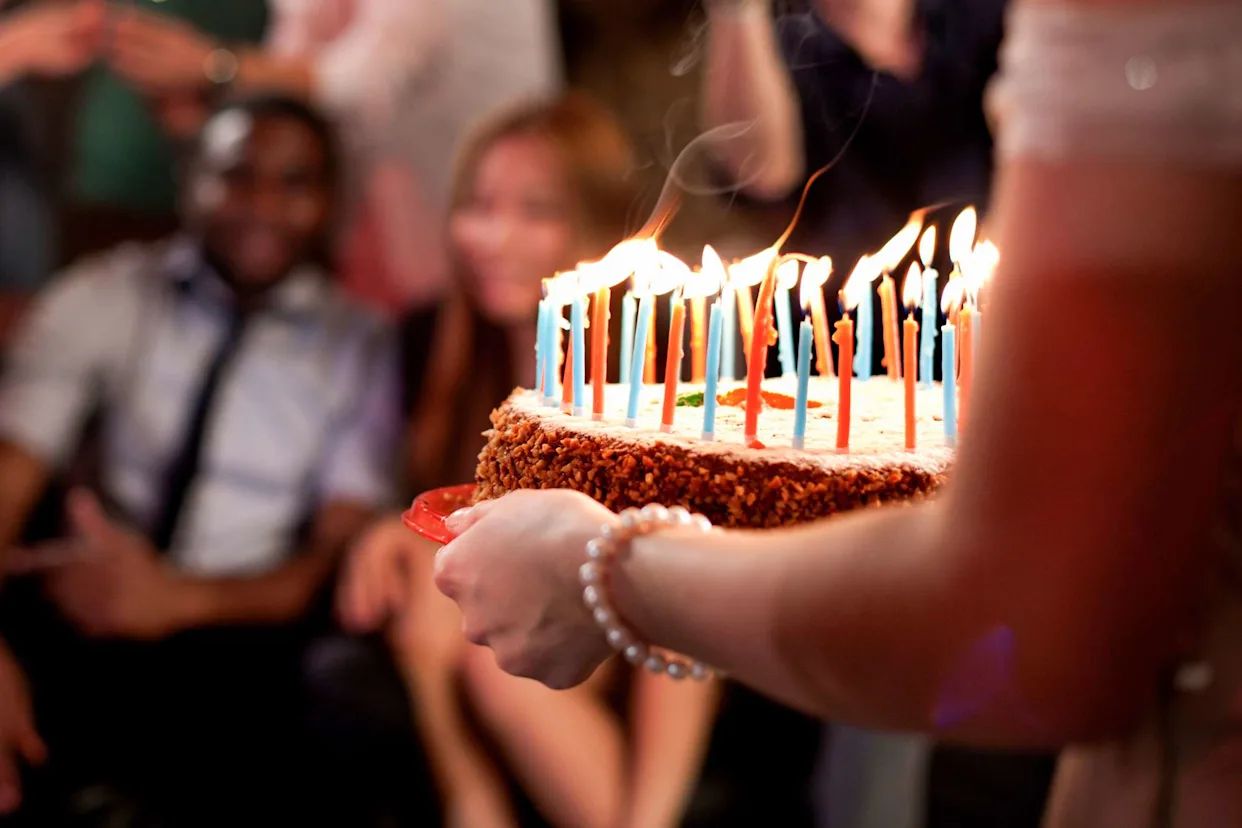
But when I came into the staff lounge for my lunch break, there was a cake. Small, homemade, a little lopsided. A cluster of balloons. A card signed by the entire pediatric wing.
“Happy birthday, Summer,” Theresa said, grinning. “We know you hate fuss, but too bad.”
I cried. Happy tears this time.
We ate cake and told stupid jokes and someone gave me a coffee mug that said “World’s Okayest Nurse” which was perfect.
That evening, I got home to find a package on my doorstep. Inside was a leather journal and a note:
For writing your own story. The one where you’re the hero. – David
I made tea, curled up on my couch with Tuesday purring beside me, and opened to the first blank page.
At the top, I wrote: Chapter One: The Day I Stopped Apologizing for Existing
And I began.
My phone buzzed once. A text from a number I’d deleted but still recognized. My mother.
I know you don’t want to hear from me. I just wanted to say happy birthday. And that I’m sorry. You were right about everything. I don’t expect forgiveness. I just wanted you to know.
I stared at the message for a long time. Felt the old pull, the old programming telling me to respond, to reassure, to make it easier for her.
Instead, I set down my phone and returned to my journal.
Maybe someday I’d be ready to forgive them. Maybe someday we’d find a way back to each other that didn’t require me to diminish myself.
But today wasn’t that day.
Today was for me. For Tuesday and tea and blank pages waiting to be filled. For the family I’d chosen and the life I’d built. For knowing, finally, that I was enough.
All on my own.
THE END

Ethan Blake is a skilled Creative Content Specialist with a talent for crafting engaging and thought-provoking narratives. With a strong background in storytelling and digital content creation, Ethan brings a unique perspective to his role at TheArchivists, where he curates and produces captivating content for a global audience.
Ethan holds a degree in Communications from Zurich University, where he developed his expertise in storytelling, media strategy, and audience engagement. Known for his ability to blend creativity with analytical precision, he excels at creating content that not only entertains but also connects deeply with readers.
At TheArchivists, Ethan specializes in uncovering compelling stories that reflect a wide range of human experiences. His work is celebrated for its authenticity, creativity, and ability to spark meaningful conversations, earning him recognition among peers and readers alike.
Passionate about the art of storytelling, Ethan enjoys exploring themes of culture, history, and personal growth, aiming to inspire and inform with every piece he creates. Dedicated to making a lasting impact, Ethan continues to push boundaries in the ever-evolving world of digital content.