The Note That Nearly Destroyed Everything
I thought the hardest part about losing my husband would be learning to live without him. I never imagined it would be fighting to defend the memory of what we had together.
My name is Evelyn Carter, and I’m fifty-five years old. For thirty-six years, I was Greg’s wife. Three days ago, I buried him after a truck ran a red light on a rainy Tuesday morning and changed my entire world in an instant.
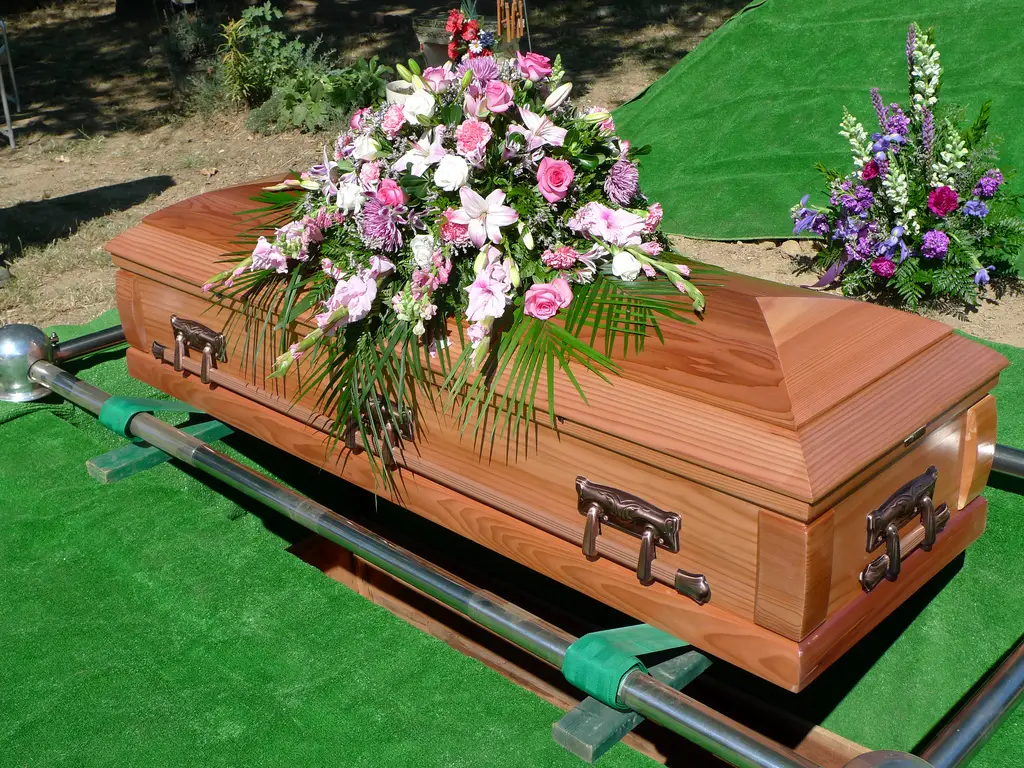
At his viewing, I leaned over his casket to place a single red rose in his hands. What I found hidden there nearly shattered everything I thought I knew about the man I’d loved since I was nineteen.
This is the story of a crumpled note, a bitter woman’s lie, and how the dead can’t defend themselves from the living who want to rewrite their stories. It’s about discovering that some people will weaponize your grief if they think it will ease their own pain.
But mostly, it’s about fighting for the truth when someone tries to steal it from you at the worst possible moment of your life.
The Life We Built
Greg and I met in college when I was nineteen and he was twenty-one. Nothing dramatic or movie-worthy—we were both in line at the campus bookstore, both complaining about the price of textbooks, and somehow that shared frustration turned into coffee, which turned into thirty-six years of shared everything.
Raymond Gregory on every official form, but Greg to me from that first afternoon onward. The kind of man who always took the seat facing the restaurant door “in case some lunatic decides to drive through the window.” Who remembered that I liked my coffee with exactly one sugar and my eggs scrambled dry. Who could fix anything that broke in our house but called a professional for anything involving electricity because he’d nearly electrocuted himself changing a light fixture during our first year of marriage.
We were the couple our friends called boring in the most affectionate way possible. No passionate arguments, no dramatic reconciliations, no soap opera storylines. Just the steady accumulation of shared jokes and comfortable silences and grocery lists stuck to the refrigerator. The kind of love that builds like sediment, layer by layer, until it becomes the foundation everything else rests on.
The only real heartbreak we faced came five years into our marriage when we started trying for children. Month after month of negative pregnancy tests, followed by years of doctor’s appointments and medical procedures and quietly devastating conversations in sterile hospital waiting rooms.
I’ll never forget the afternoon Dr. Martinez delivered the final verdict: my fallopian tubes were too damaged for pregnancy to be possible, even with assistance. I sat in her office and felt something fundamental break inside me.
“There are other options,” she said gently. “Adoption, surrogacy—”
But Greg and I had already talked ourselves in circles about those possibilities. The waiting lists, the uncertainty, the financial strain we couldn’t afford. We were both school teachers; our salaries covered our modest life but wouldn’t stretch to the costs of alternative paths to parenthood.
That night, I cried into Greg’s chest until my throat was raw. “I’m so sorry,” I kept saying. “I’m so sorry I can’t give you children.”
“Hey,” he said, tilting my chin up to look at him. “It’s you and me. That’s enough. You are enough.”
And somehow, miraculously, it was. We traveled more than we might have with kids. We spoiled our nieces and nephews. We had the kind of marriage that looked quiet from the outside but felt rich and full on the inside.
Greg worked as a facilities manager for the county office building downtown. Not glamorous, but steady and secure. He managed supply orders, maintenance schedules, vendor relationships—the kind of behind-the-scenes work that keeps organizations running smoothly. He took pride in solving problems before anyone noticed they existed.
I taught fourth grade at Jefferson Elementary for thirty-two years, until I retired last spring to take care of Greg’s mother during her final illness. We’d been talking about what came next—maybe travel, maybe volunteer work, maybe just sleeping in on weekdays for the first time in decades.
“We’ve got time,” Greg would say when I worried about our post-retirement plans. “We’ll figure it out together.”
We thought we had time.
The Day Everything Ended
That Tuesday started like any other. Greg left for work at seven-thirty after kissing my forehead and reminding me to call the plumber about our kitchen sink. I spent the morning cleaning out closets and the afternoon reading on our back porch.
He was supposed to be home by six. When seven o’clock came and went without his usual text about traffic, I called his office. Voice mail. When eight o’clock passed, I called his cell. Straight to voice mail again.
At eight-fifteen, my phone rang.
“Is this Evelyn Carter? Gregory Carter’s wife?”
The voice was professional, careful, the tone people use when they’re about to change your life forever.
“Yes.”
“This is Dr. Williams at St. Mary’s Hospital. Your husband has been in an accident.”
The next few hours exist in my memory as fragments. The frantic drive to the hospital. The waiting room that smelled like disinfectant and fear. Dr. Williams explaining that a delivery truck had run a red light, that Greg’s small sedan had taken the full impact on the driver’s side.
“We did everything we could,” she said gently. “But his injuries were too severe.”
Just like that. Thirty-six years of marriage, ended by someone else’s moment of carelessness on a wet road.
The Viewing
By the day of the viewing, I felt hollowed out, like someone had scooped away everything essential and left only the shell. I’d cried so hard over the previous three days that my face was swollen and my eyes burned constantly. My sister Laura had to help me get dressed because my hands shook too badly to manage the zipper on my black dress.
The funeral home had done their best to make Greg look peaceful. He wore the navy suit I’d bought him for our last wedding anniversary, his gray hair combed back the way he’d styled it for church and special occasions. His hands were folded across his chest like he was just taking a nap.
People filed past all afternoon—coworkers, neighbors, former students and their parents, friends from church. Everyone touched my arm gently and said things like “He was a good man” and “You’re in our prayers.” I nodded and thanked them and felt like I was watching someone else’s life from very far away.
As the afternoon wore on and the line of visitors thinned, I found myself standing alone beside the casket. This would be my last chance to do something just for him, something private between us.
I’d brought a single red rose—the same kind he’d given me on our first real date thirty-seven years earlier. I wanted to place it in his hands as a final goodbye.
When I leaned over the casket and gently lifted his folded hands to tuck the rose stem between his fingers, I saw something that made my heart stop.
A small piece of white paper, folded tight, hidden beneath his hands where no one would see it unless they moved them.
I glanced around the chapel. People were clustered in small groups, sharing memories and quiet conversation. No one was watching me closely. No one looked guilty or nervous.
Someone had put a secret in my husband’s casket, and they hadn’t told me.
My hands trembled as I slid the paper free and replaced it with the rose. I slipped the note into my purse and walked quickly down the hall to the nearest restroom.
The Message
I locked the bathroom door and leaned against it, my heart hammering as I unfolded the small piece of paper.
The handwriting was neat and careful, written in blue ink:
“Even though we could never be together the way we deserved… my kids and I will love you forever.”
I read it three times before the words penetrated.
My kids.
Greg and I didn’t have children. We couldn’t have children.
But someone was claiming that their children—Greg’s children—loved him forever.
I gripped the sink and stared at my reflection in the harsh fluorescent light. My mascara was smeared, my eyes swollen and red. I looked like exactly what I was: a woman whose world had just collapsed twice in the span of four days.
Who had written this? Who had children with my husband?
I didn’t cry. Not then. I was too stunned, too disoriented by this impossible revelation. Instead, I smoothed my dress, washed my hands, and walked back toward the chapel with that note burning in my purse like evidence of a crime.
But first, I needed to know who had put it there.
The Security Footage
I found the security office tucked behind the administrative desk—a small room with four monitors and a man in a gray uniform whose name tag read “Luis.”
He looked up, startled, when I knocked on the open door.
“Ma’am, this area is restricted—”
“My husband is in the chapel,” I said, keeping my voice steady with an effort that felt Herculean. “Someone put something in his casket without my knowledge. I need to know who it was.”
I pulled the note from my purse and held it up. “This was hidden under his hands.”
Luis hesitated, clearly uncomfortable with the situation. “I’m not sure if I’m supposed to—”
“I paid for that room. He’s my husband. Please.”
He sighed and turned to his monitors. “Let me see what I can find.”
He pulled up the chapel feed and started rewinding. People moved backward across the screen in fast motion—a reverse parade of mourners paying their respects.
“Slow down,” I said when I saw what I was looking for.
There: a woman in a black dress approaching the casket alone. She glanced around quickly, then reached under Greg’s hands, tucked something small into place, and patted his chest gently before walking away.
“Stop,” I said. “Can you zoom in on her face?”
I knew her immediately. Susan Miller.
Susan who owned the supply company that delivered to Greg’s office. Susan who I’d met at a few work functions over the years—thin, efficient, always laughing just a little too loudly at everyone’s jokes. Susan who had just snuck a love note into my husband’s coffin.
I took a picture of the paused screen with my shaking phone.
“Thank you,” I told Luis.
Then I walked back to the chapel to confront the woman who claimed to have had children with my husband.
The Confrontation
Susan was standing near the back of the room, talking quietly with two women from Greg’s office. She had a tissue in her hand and her eyes were red, like she was the grieving widow instead of me.
When she saw me approaching, her expression flickered. Just for a second, but I caught it: guilt.
I stopped directly in front of her. “You left something in my husband’s casket.”
The conversation around us faltered. People turned to look.
Susan blinked, trying to look confused. “What?”
“I watched you do it on the security camera. Don’t lie to me.”
Her face went pale. “I… I just wanted to say goodbye to him.”
“Then you could have done it like everyone else,” I said, my voice rising despite my efforts to keep it level. “You hid it under his hands. Why?”
Susan’s chin trembled. “I didn’t mean for you to find it.”
I pulled the note from my purse and held it up so she could see it. By now, half the room was listening to our conversation. My private grief had become public theater.
“Who are the kids, Susan?”
She stared at the note like it might catch fire in my hands. Then, in a voice barely above a whisper: “They’re his. They’re Greg’s kids.”
A collective gasp went through the nearby mourners. Someone behind me said “Oh my God” under their breath.
“You’re saying my husband has children with you?” I asked.
She swallowed hard. “Two. A boy and a girl.”
“You’re lying.”
“I’m not,” Susan said, louder now, like volume would make her story more believable. “He didn’t want to hurt you. He told me not to bring them today. He said he didn’t want you to see them.”
Every word felt like a physical blow. I could feel the eyes of everyone in that room—friends, neighbors, coworkers—watching my humiliation unfold in real time. My marriage, my memories, my understanding of the man I’d loved for thirty-six years, all of it crumbling in front of an audience.
I couldn’t scream. Not here, not in front of Greg’s body. I couldn’t give Susan the satisfaction of seeing me completely destroyed.
So I did the only thing I could: I turned and walked out.
The Journals
After the burial, our house felt like a museum dedicated to someone I’d apparently never really known. Greg’s shoes were still by the front door where he’d kicked them off Monday night. His coffee mug sat in the sink, still stained with the last cup he’d ever drink. His reading glasses lay on the nightstand beside our bed.
I sat on the edge of that bed and stared at the closet shelf where Greg kept his journals. Eleven neat volumes spanning the years of our marriage. I’d never read them—it had felt like prying, like opening his head and rummaging around inside his private thoughts.
“Helps me think,” he’d always said when I teased him about writing in them every night. “Gets the day out of my system.”
But Susan’s words were echoing in my head: “Two. A boy and a girl.”
I pulled down the first journal and opened it with trembling hands.
The first entry was from a week after our wedding. He’d written about our terrible honeymoon motel, the broken air conditioner, and how my laugh had made everything bearable. Page after page about us—our first apartment, our inside jokes, my attempts at cooking, his fear of spiders.
I moved to the second journal, then the third. More stories about our life together. He’d written about our first fertility appointment, about holding me while I cried in the car afterward. “I wish I could trade bodies with her and take this pain,” he’d written.
No mention of another woman. No secret children. No double life.
It wasn’t until I reached the sixth journal that the tone changed. Halfway through, Greg’s writing became darker, more frustrated.
“Susan pushing again. Wants us locked into a three-year contract. Quality of supplies slipping. Last shipment of cleaning chemicals was so diluted people got sick.”
The next entry: “Told her we’re canceling the contract. She lost it. Said I was ruining her business, that she’d put everything into this account.”
And then: “Legal says we could sue for the bad supplies. But she has two kids to feed. Don’t want to take food off their table.”
Under that, in heavier ink: “I’ll let it go. But I won’t forget what she’s capable of.”
I sat on our bedroom floor, journal open in my lap, understanding flooding through me like cold water.
Two kids. Her kids. Not his.
What if there were no secret children? What if Susan had walked into my grief and decided it wasn’t enough—that I needed to suffer more?
The Investigation
I called Peter, Greg’s closest friend from work. He’d been helping me with practical things since the accident—fixing a leaky faucet, changing lightbulbs, doing the kinds of tasks Greg had always handled.
“Ev?” he answered on the first ring.
“I need your help. And I need you to believe me.”
I told him everything. The note, the security footage, what Susan had said at the viewing, what I’d found in Greg’s journals. When I finished, there was a long silence.
“Peter?”
“I believe you,” he said finally. “I knew Greg for fifteen years. If he’d had children with someone else, he wouldn’t have been able to hide it. He was the worst liar in the world.”
Despite everything, I laughed. “He really was.”
“I’ll help you find out what’s real,” Peter said. “You deserve that.”
The next afternoon, Peter sent his seventeen-year-old son Ben to Susan’s house. “I’d lose my temper if I went myself,” Peter explained. “Ben’s calmer, more objective.”
Ben stopped by my house first. “You don’t have to prove anything to anyone,” he said gently. “But if you need to know for sure, I’ll help.”
An hour later, he was back, settling into my kitchen chair with the careful movements of someone delivering difficult news.
“Tell me everything,” I said.
“I knocked on their door,” Ben began. “A teenage girl answered. Pajama pants, messy hair. I asked for her father. She yelled for him.”
Ben described a man in his fifties coming to the door, confused but polite. “I told him I was there because of something his wife had said at a funeral yesterday. That she’d claimed she’d had an affair with Greg, that her children were Greg’s.”
I pictured the scene as Ben continued.
“The man just froze. Then he called for Susan. She came out with a dish towel in her hands. When she saw me, she knew immediately that something was wrong.”
“What did she say?”
“She denied it at first. Said I was lying. But her husband kept asking, ‘Did you tell people our kids aren’t mine?’ He looked… broken.”
Ben stared at the table. “Finally she snapped. She yelled, ‘Fine, I said it, okay? I said it.'”
“Why?” I whispered. “Why did she do it?”
“She said Greg ruined her life. That when he canceled their contract, she lost other clients too. Her company went under. She said she came to the funeral to hurt you, to make you feel as crazy as she felt.”
The room spun around me. “And the children?”
“She admitted they’re her husband’s. She only used Greg’s name to get revenge. Those were her exact words: ‘It was just words. I wanted her to hurt.'”
I pressed my palms against my eyes and sobbed—with relief, with rage, with the overwhelming exhaustion of having to fight for the truth at the worst possible moment of my life.
“Her daughter was crying,” Ben added quietly. “Her husband looked like someone had punched him in the stomach.”
When I finally calmed down, Ben said, “My dad always said Greg was the most loyal guy he knew. For what it’s worth.”
“It’s worth everything,” I said.
Writing the Truth
After Ben left, I went back upstairs and picked up Greg’s journal again. I found the entry about Susan: “I’ll let it go. But I won’t forget what she’s capable of.”
“Neither will I,” I said to the empty room.
I found a blank notebook in my nightstand and opened it to the first page. If Susan could write lies and tuck them into my husband’s hands, I could write the truth and keep it safe.
I started with the rose I’d tried to place in Greg’s hands. Then the note I’d found instead. The security footage. Luis helping me find answers. Peter and Ben helping me discover the truth. Susan’s bitter lie designed to destroy my memories of the man I’d loved.
I don’t know what I’ll do with this written record yet. Maybe nothing. Maybe everything. But I know this: my marriage wasn’t a lie.
My husband was flawed and human and stubborn and sometimes annoying. But he was mine, completely and faithfully, for thirty-six years.
And when I turn the pages of his journals, one phrase appears over and over in the margins and between his daily observations:
“I love her.”
He never hid that. Not from me, not from anyone, not even from himself.
Epilogue
It’s been two weeks since the funeral. The house still feels too quiet, and I still wake up expecting to hear Greg making coffee in the kitchen. Grief is a strange thing—it comes in waves that knock you down when you think you’re finally getting your balance back.
But I’m not carrying the additional weight of doubt anymore. I know who my husband was. I know what our marriage meant. I know that Susan’s lies came from her own pain, not from any truth about Greg’s character.
I’ve thought about confronting her again, about demanding a public apology for what she put me through. But I’ve decided she’s already destroyed enough—her own marriage, her children’s sense of security, her reputation in our small community. Her lie didn’t just hurt me; it devastated her entire family.
Some people have asked me how I can be sure Greg never strayed. How I can be certain there weren’t other secrets hidden in places I haven’t looked.
The answer is simple: thirty-six years of small evidence. The way he looked at me across the breakfast table every morning. The way he always called if he was going to be late. The way he wrote about me in journals he never intended for me to read. The way our friends talked about us, the way his coworkers described our marriage, the way his own private thoughts revealed a man who was exactly who he appeared to be.
Was our marriage perfect? No. Did we have arguments and disappointments and difficult seasons? Of course. But we had something more precious than perfection: we had truth. We had fidelity. We had love that deepened instead of faded, that survived infertility and financial stress and the ordinary challenges that break weaker partnerships.
Susan tried to steal that from me when I was too broken to defend it. She almost succeeded.
But the truth is stronger than lies, even when those lies are delivered at your most vulnerable moment. Love leaves evidence. Real marriages leave trails of authenticity that can’t be erased by one bitter woman’s need for revenge.
I still miss Greg every day. I still reach for my phone to call him when something funny happens. I still save newspaper articles I think he’d find interesting.
But I’m not missing a stranger. I’m missing the man I actually knew, actually loved, actually spent thirty-six years building a life with.
And that makes all the difference.
—Evelyn Carter Widow, Truth-Defender, Keeper of Real Love Stories
To anyone whose grief has been weaponized by someone else’s pain: you don’t have to carry lies along with your sorrow. The people we love leave evidence of who they really were. Trust that evidence. Trust your own experience. And don’t let anyone rewrite your history to make themselves feel better about their own choices.

Lila Hart is a dedicated Digital Archivist and Research Specialist with a keen eye for preserving and curating meaningful content. At TheArchivists, she specializes in organizing and managing digital archives, ensuring that valuable stories and historical moments are accessible for generations to come.
Lila earned her degree in History and Archival Studies from the University of Edinburgh, where she cultivated her passion for documenting the past and preserving cultural heritage. Her expertise lies in combining traditional archival techniques with modern digital tools, allowing her to create comprehensive and engaging collections that resonate with audiences worldwide.
At TheArchivists, Lila is known for her meticulous attention to detail and her ability to uncover hidden gems within extensive archives. Her work is praised for its depth, authenticity, and contribution to the preservation of knowledge in the digital age.
Driven by a commitment to preserving stories that matter, Lila is passionate about exploring the intersection of history and technology. Her goal is to ensure that every piece of content she handles reflects the richness of human experiences and remains a source of inspiration for years to come.