What the Deed Says
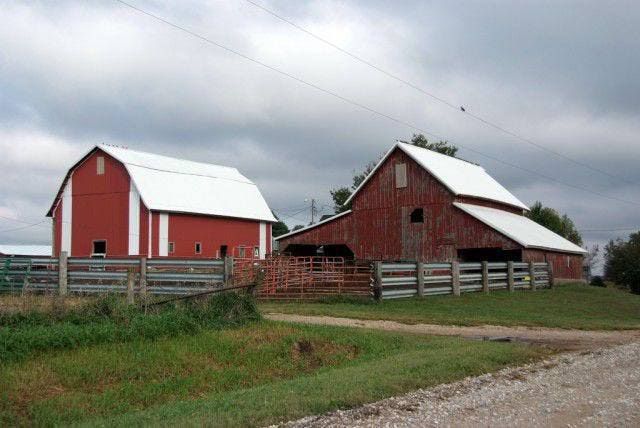
My name is Natalie Rowan. I’m thirty-four years old, I live in Des Moines, and I learned to drive a tractor before I had a driver’s license. I know the smell of that farm at five in the morning when the dew is still on the corn and the sky is the particular gray-pink of a day that hasn’t decided what it wants to be yet. I know the sound the equipment shed makes when the wind comes from the north, a low complaint from the corrugated metal roof that my grandfather said was the farm talking. I know which fence posts along the east line are original and which ones I replaced myself on a cold Saturday four years ago when my parents were in Florida and nobody else was coming.
They sold it on a Tuesday, and they told me in the equipment yard, loud enough for the hired hands to hear.
I want you to understand the choreography of that moment, because it wasn’t accidental. My father has a particular sense of theater when it comes to putting me in my place, and he has learned over thirty-four years that public venues work best because they introduce the element of an audience, people who will watch me react, which creates a pressure toward dignity that he can exploit. He stood with his thumbs in his belt loops the way he does when he’s decided something and wants you to feel the finality of it. My mother was beside him with her arms folded and her chin lifted, wearing the expression I can only describe as the one she saves for public corrections, the smile of a woman who has been waiting for a specific moment and is now experiencing it.
The man with them was city-clean, not farm-clean. There’s a difference that people who’ve spent time on working land understand immediately. Farm-clean is when you’ve washed three times and there’s still something under your fingernails. City-clean is pressed cotton and shoes that have never touched mud. He had a folder and he kept checking his watch, the way people do when they’ve already decided the current appointment is less important than the next one.
“Evan Mercer,” he said, and extended a hand. “Cedar Ridge Development. We’re excited to bring jobs and housing to the county.”
I looked at his folder and then at the field behind him, the field my grandfather had been offered money for three separate times over thirty years and had refused three separate times because some things, he said, are not for sale just because someone wants to buy them. Walter Rowan had a way of saying that made it sound simple, obvious, the kind of truth that doesn’t require argument.
“You sold it when Grandpa’s estate still isn’t settled?” I asked.
I said it flatly, as a fact, because it was a fact. My grandfather died fourteen months ago. I had asked, in the weeks after his death, about the probate process, and I had been told, by my father, that it was being handled. He used that phrase specifically: being handled. It was the kind of phrase designed to communicate that the situation is under control while also communicating that your interest in the situation is unwelcome.
My father’s eyes narrowed in the way they do when he decides that a question is an act of aggression.
He shoved the papers against my chest. Hard enough that I took a step back. The hired hands were watching and he knew they were watching, and I understood in that moment that the shove was partly for them, proof of authority delivered physically, the way you might nail a notice to a post.
“Sign,” he said. “And stop acting entitled.”
My mother leaned in, voice calibrated to sweet and sharp simultaneously, the way she’s always been able to hold both at once. “You don’t own anything here, Natalie.”
I held the papers long enough to read them. This is a discipline I learned from my grandfather, who said that the most dangerous thing you can sign is a document you haven’t read, and the second most dangerous is one you’ve read without understanding. The papers were vague in the specific way that legally consequential documents are vague when someone hopes you won’t notice. An acknowledgment. A blank line for a signature. No probate reference number. No instrument number. No recording information. Nothing that would connect this document to an actual legal proceeding, because there was no actual legal proceeding, which I did not yet know for certain but which I suspected with the particular instinct of someone who has balanced a farm’s books and learned that missing numbers are never an accident.
“Not on the hood of your truck,” I said, and handed them back. “If this is legitimate, it will survive paperwork.”
My father’s face went the color it goes when something isn’t working. He has good color in anger, vivid and immediate, and he’s never learned to control it. He used my full name, which he only does when he wants to convert a statement into a command.
“Don’t do this, Natalie.”
I looked at him for a moment. I thought about the weekends I’d come back when I was in my twenties and they were in Florida, or Chicago, or wherever that season’s version of away was. I thought about the fence line repairs and the equipment maintenance logs I kept better than anyone had before me, and the hours I’d sat beside my grandfather at the kitchen table while his hands shook and he talked about the farm like it was a living thing that needed tending not just physically but legally, carefully, with attention. He used the word proof sometimes, in those conversations, in a way that seemed like he was trying to tell me something specific. I hadn’t understood it as a specific thing then. I was beginning to understand it now.
I got in my truck and drove to the Hawthorne County Clerk and Recorder’s Office.
It’s a twenty-minute drive from the farm, and I spent most of it not on the phone, not composing arguments, just driving on roads I’ve driven my whole life past fields I can name by the family that works them. There is something about this county that I’ve never been able to explain to people who didn’t grow up in it, a quality of ground-level accountability that exists in flat agricultural land, where everyone knows whose land borders whose and who sold to whom and under what circumstances, and where the records office is the closest thing to a neutral party the county has ever produced.
The building smells like toner and old paper, the particular archival smell of a place where the past is stored in an orderly fashion and is, by law, available to anyone who wants to look at it. The sign in the lobby says ALL RECORDS ARE PUBLIC in the matter-of-fact way of an institution that considers this self-evident.
The clerk at the counter wore reading glasses on a chain and had the expression of someone who has spent decades watching families navigate property disputes, which means she has watched people lie with straight faces and has developed a calibrated response to it, neither credulous nor cynical, simply careful. I gave her the parcel information and my grandfather’s name.
“Walter Rowan,” I said. “I need the deed history and the probate file.”
Her fingers were fast on the keyboard, the speed of someone who has run this search thousands of times and knows the system’s rhythms. Then she paused.
It was not the normal pause of a search running. It was the pause of someone seeing something unexpected in a place where unexpected things are professionally significant.
“What’s your name?” she asked.
“Natalie Rowan.”
“Relationship to Walter Rowan?”
“Granddaughter.”
She nodded once, stood up, and disappeared through a door behind the counter. When she came back, she was carrying a thin folder that she placed in front of me with a deliberateness that communicated she understood the folder’s weight in a way that had nothing to do with paper.
“The parcel shows a recent transfer,” she said. “Recorded yesterday.”
I had expected this. What I hadn’t expected was the qualifier.
“Where’s the probate case?” I asked. “What’s the file number?”
Her mouth tightened in the small, precise way of someone who is about to deliver information they wish they didn’t have to deliver. She clicked into a different system, scrolled, and stopped.
“That’s the issue,” she said. “There’s no active probate case under Walter Rowan in Hawthorne County.”
I held that for a moment. The hands that have balanced books and repaired equipment and held my grandfather’s hand in the hospital were perfectly still on the counter.
“So how did the estate transfer property?” I asked.
She scrolled again. Stopped again. Her expression changed in the way that expressions change when a screen shows something that the person looking at it recognizes as significant.
“There’s an attached packet,” she said, and her voice had dropped. “Scanned. Older. Labeled will.”
She opened the file and for a moment neither of us spoke. I watched her read it, and I watched the air in the room shift in the way it does when something that has been hidden is suddenly present.
She leaned toward me, quiet enough that the other clerks at the far end of the counter couldn’t hear.
“Ms. Rowan,” she said, “this was never filed. And it changes who owns the farm.”
I stayed perfectly still. Not because I didn’t understand, but because I understood too precisely, and understanding something precisely requires a moment of stillness before you can act on it. A will exists. It has never been filed. Property has been transferred without probate, which means without going through the legal process that a will’s existence would require. Someone has been running around a document they knew existed, which means someone knew the document existed, which means the word for what has happened has a legal definition and it is not a complicated one.
“Print it,” I said. “Certified copy.”
She was already moving, but before she printed she clicked into something else, a system I hadn’t seen before, an internal access log. Her eyes tracked down the screen and stopped.
“It was accessed yesterday,” she said, soft. “This file.”
“By who?”
She clicked once more. A name appeared on the screen. I looked at it with the same stillness I’d been maintaining for the past ten minutes, and the name was not my father’s. It was my mother’s.
Gail Rowan. Viewed yesterday morning.
Before the transfer was recorded.
I thought about my mother standing in the equipment yard with her arms folded, saying you don’t own anything here. I thought about the folder Evan Mercer had been holding, the survey he’d referenced, the timeline of a sale that had apparently been planned with enough precision that my mother had reviewed the suppressed will at the county office the morning before the transfer recorded. I thought about what yesterday morning meant in terms of what she’d known and when, and I thought about my grandfather at the kitchen table using the word proof like it was insurance.
He had known. He had known they would do something like this, and he had tried, in the halting way of a man whose hands were shaking and whose time was running short, to tell me that documents exist, that records are public, that the truth is available to anyone willing to go looking for it.
The clerk slid the first certified pages across the counter. At the top: my grandfather’s name, Walter Rowan, and a deposit stamp from years before his death. I turned the pages slowly, with the care you give to something that is both fragile and consequential, and I found the line I was looking for.
My name was in it.
My grandfather had written my name into his will. Not my parents. Not as a token. In the specific, deliberate way of a man who had watched his land for forty years and had decided, with whatever legal clarity he had available to him, who should have it when he was gone. He had not told me directly, perhaps because he didn’t want to create a conflict while he was alive, or perhaps because he believed the document would speak for itself when the time came. He had trusted the record. He had trusted, in his quiet and stubborn way, that the truth recorded in an official place would outlast anyone’s attempt to ignore it.
My phone buzzed. I already knew it was my father before I looked.
The message was short: Don’t make this ugly. The survey crew is coming tomorrow.
I read it once and put my phone back in my pocket. The survey crew coming tomorrow was a pressure tactic, the introduction of an imminent physical fact designed to make delay feel impossible. If the survey happens, the transaction accelerates. If the transaction accelerates, things get recorded and completed and incrementally harder to unwind. He understood timelines the way he understood equipment, as tools for producing a desired outcome, and he was trying to use one now.
What he did not know, because he had not come to this building and he had not talked to this clerk, was that the timeline was no longer his.
I turned toward the probate window down the hall.
The probate clerk was a younger man who had the patient, methodical quality of someone who genuinely believes in process, in the idea that things done correctly produce outcomes better than things done quickly. I laid the certified copies on his counter and explained the situation in the orderly way I’d been organizing it in my mind since I walked in: Walter Rowan, deceased fourteen months ago. No probate filed. A will, located in county records this afternoon, that had been filed years before death as a deposit rather than going through normal probate channels, which I would need him to explain the implications of. A transfer recorded yesterday that had proceeded without any probate proceeding. And an access log showing that my mother had viewed the suppressed will the morning before the transfer.
He listened to all of it without interrupting. He had the expression of someone piecing together a picture as information arrives, and when I finished, he was quiet for a moment in the professional way of someone who wants to be accurate before he speaks.
What he told me, carefully and precisely, was this: a will deposited with the county but never formally admitted to probate exists in a specific legal limbo. It is recorded. It is a public document. It has legal standing as a statement of the decedent’s intent. But because no probate proceeding has been opened, it has never been given legal effect, which means the property has technically remained in the estate, which means the transfer recorded yesterday had proceeded without legal authority to proceed, because you cannot convey estate property without going through probate, and you cannot go through probate while concealing a will.
He used the phrase fraudulent conveyance. He used it carefully, in the way professionals use precise legal terms when they want to be accurate rather than alarming. He also mentioned the relevant Iowa statute, and he also mentioned that a petition to open probate could be filed today, that the petition would automatically cloud the title on the property, which would appear in any title search Cedar Ridge Development or its lender conducted, and that a clouded title makes a real estate transaction impossible to close.
The survey crew coming tomorrow would arrive at a farm whose title was no longer clean.
He gave me the forms. I sat at the small table against the wall, the one with the chair that wobbles slightly on the left leg, and I filled them out with the same deliberateness I bring to any document that matters. Walter Rowan. Hawthorne County. Date of death. Names of interested parties. The basis for the petition. I attached the certified copy of the will. I attached the access log showing my mother’s name and the timestamp. I filled in every line.
I filed it at four forty-seven in the afternoon, thirteen minutes before the office closed.
The case number was stamped in red ink at the top of my copy, and I held it the way I held the deed history, with the care appropriate to something that has weight beyond its material.
I drove back to the farm as the sun was dropping toward the fields, that late-afternoon light that turns everything in Iowa the same warm gold, the corn and the equipment and the roads and the sky all becoming versions of the same color. I did not call my father. I did not call my mother. I sat in my truck for a moment in the long driveway with the engine off and looked at the equipment shed and the east fence line and the field that my grandfather had refused to sell three separate times over thirty years.
Then I called an attorney. Not someone my parents knew. A property and probate attorney in Des Moines named Carol Vance, whose name I had found six weeks earlier when I had started, quietly and without telling anyone, to research what happens when estate property is transferred without completing probate. I had not known specifically what I was preparing for. I had only known that the numbers my parents gave me about the estate settlement had never added up, and that when numbers don’t add up in a farm context you go back to the source document and you find where the error was introduced.
Carol answered on the second ring. I told her I’d filed the petition. I read her the case number. I described the access log. She was quiet for a moment in the way of someone making rapid calculations.
“Natalie,” she said, “that title is clouded as of today. They cannot close this transaction.”
“I know.”
“Your parents are going to move fast when they find out.”
“I know that too.”
“How are you doing?”
It was an unexpected question, and I was surprised to find it took me a moment to answer. I looked at the equipment shed and the field and the particular quality of the afternoon light on the corn.
“I’m okay,” I said. “I’m at the farm.”
She told me what would come next. The probate court would notify interested parties, which included my parents as the ones who had filed the transfer. They would have the opportunity to contest the petition, to argue that the will was invalid or that the transfer was legitimate, and they would have attorneys of their own who would make those arguments as persuasively as possible. This was not going to be fast. Iowa probate moves at a pace set by the court’s docket and the complexity of the dispute, and this dispute was not simple. There would be months of it, possibly longer.
But the farm could not be conveyed while it was pending. Evan Mercer’s survey crew could come tomorrow and they could survey every inch of a hundred and sixty acres and it would make no difference, because Cedar Ridge Development could not close a transaction on a property whose title was under active litigation. Their lender would not fund it. Their title insurance company would not cover it. The transfer that had been recorded yesterday would be challenged and would almost certainly be voided, because you cannot transfer estate property without probate, and you cannot conduct probate while a will sits in a county records office, having been accessed by a party who then proceeded with a transaction that the will would have prevented.
The access log. That was the piece my mother had not considered. She had gone to the county records office to review the will, perhaps to confirm it was still dormant, perhaps to understand exactly what it said, perhaps both. And she had done it using her own name on a system that timestamps every access, in a building that stores everything and discards nothing, because that is what county records offices do. They keep the truth in a place where anyone can find it, which is also where my grandfather, in his failing and deliberate and ultimately accurate way, had put the document he wanted me to find.
I thought about him sitting at the kitchen table talking about proof like it was insurance. I thought about the way he used to look at the fields in the early morning from the kitchen window, a private satisfaction in the look, the look of a man who has built something he expects to outlast himself. He had not been able to protect it directly. He had been sick and his hands had shaken and there were things he could not control. But he had put the document in a place that was permanent and public and accessible, and he had talked to me about proof in a way that I had absorbed without quite understanding, and when the moment came I had known, without being told explicitly, exactly where to go.
My phone buzzed again. This time it was a text from my mother, which was unusual. She tends to work through my father. The message said only: Natalie, please don’t do something you’ll regret.
I read it once. Then I set my phone on the passenger seat and got out of the truck.
The equipment shed was exactly the way it always is. The tools I catalogued and the maintenance logs I kept and the fence posts I replaced and the books I balanced, all of it accumulated evidence of someone who had shown up and kept showing up, not because she was paid to, not because she was told to, but because the land was worth showing up for. My grandfather had known that. He had watched me do it and he had known it and he had written it down in the document he deposited with the county and never told me about, because some things, I think he believed, should be demonstrated rather than promised.
I walked the east fence line as the light finished going gold and shifted into the softer gray of early evening. The fence was solid. The posts were set right. The field beyond it was in the last stretch before harvest, corn standing at its full height, the whole row of it moving slightly in the same wind that had been moving through it when my father told me the news that morning, the wind that had sounded like a warning.
It sounded different now.
I had a case number in my pocket and an attorney on my side and a certified copy of a will with my name in it, and the title of a hundred and sixty acres was clouded under an active probate petition, and the survey crew could come tomorrow and find nothing they could legally act on. The process would be long. My parents would fight it, because they are people who fight when they feel something slipping, and they have resources and a different attorney and the conviction of people who have spent thirty-four years deciding I didn’t count. It would not be simple or clean or fast.
But the farm was not going anywhere.
My grandfather had known I would come to the records office. He had known it the way he knew things about this land, from long attention and a certain faith in what persists. He had trusted the documents and he had trusted me, and he had been right about both.
The last light left the field and I stood at the fence line in the early dark, with my boots in the soil and the corn moving in the wind, and I understood that this was not finished, that the hardest parts were in fact ahead, and that I was ready for them in the way you are ready for something you’ve been preparing for your whole life without knowing it.
The case was filed. The title was clouded. The farm was still here.
I walked back to my truck and drove down the road my grandfather built toward the rest of what needed to be done.

Lila Hart is a dedicated Digital Archivist and Research Specialist with a keen eye for preserving and curating meaningful content. At TheArchivists, she specializes in organizing and managing digital archives, ensuring that valuable stories and historical moments are accessible for generations to come.
Lila earned her degree in History and Archival Studies from the University of Edinburgh, where she cultivated her passion for documenting the past and preserving cultural heritage. Her expertise lies in combining traditional archival techniques with modern digital tools, allowing her to create comprehensive and engaging collections that resonate with audiences worldwide.
At TheArchivists, Lila is known for her meticulous attention to detail and her ability to uncover hidden gems within extensive archives. Her work is praised for its depth, authenticity, and contribution to the preservation of knowledge in the digital age.
Driven by a commitment to preserving stories that matter, Lila is passionate about exploring the intersection of history and technology. Her goal is to ensure that every piece of content she handles reflects the richness of human experiences and remains a source of inspiration for years to come.