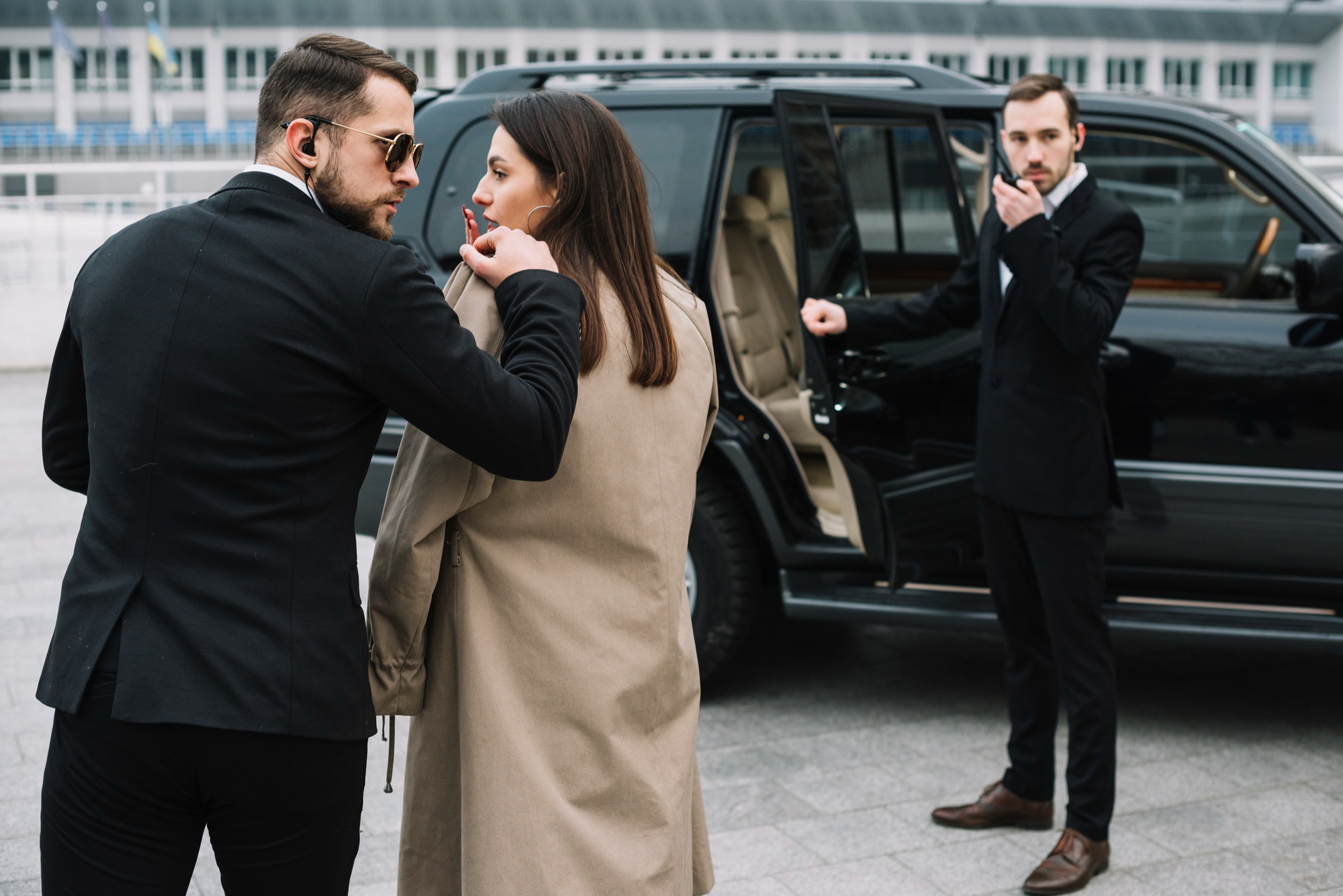
My name is Major General Laura Whitaker, United States Marine Corps, and the first thing my father did after marrying Denise Calloway was lift a champagne glass, grin at a room full of relatives, and call me a bastard.
He did it in front of everybody.
Not quietly. Not with the practiced softness people use when they want plausible deniability later. He did it with a microphone in one hand and his new wife’s fingers laced through the other, standing beneath a paper arch decorated with fake roses and silver streamers at the American Legion Hall in Fredericksburg, Virginia. The DJ had just switched from a scratchy Conway Twitty song to some upbeat number nobody was really listening to. The room smelled like barbecue sauce, cigarette smoke trapped in old paneling, and the stale sweetness of sheet cake frosting.
I have stood in sandstorms with grit between my teeth and blood drying under my fingernails. I have briefed generals with more stars than mine, signed condolence letters that made mothers collapse against kitchen counters, and watched young Marines square their shoulders in the dark because I told them they could. I have been called ma’am and general and sir by mistake, and every variation in between. But when my father pointed at me with his champagne glass and said, “She’s nothing but a bastard,” the room telescoped and I was thirteen years old again in a way that decades of rank cannot fully prevent.
Everything stopped.
Forks paused over paper plates. A church lady near the punch bowl let out a small gasp. My Aunt June muttered something weary at the table beside me. Someone laughed for a half second, clearly hoping it was a joke, but my father’s face was not doing the thing it does when something is a joke, and the laugh died into that particular silence people wear when they are relieved the cruelty is aimed at someone else.
Then he reached for Ashley.
Ashley was Denise’s daughter from her first marriage. Twenty-six. Blonde hair sprayed into an elaborate architecture. Pink satin dress cinched at the waist. High heels that sank a quarter inch into the old wooden floor each time she shifted her weight. She had the manner of someone performing for an audience she had spent the afternoon preparing for, and she wore it naturally enough that you could almost miss how much effort it was costing her.
My father slung his arm around her shoulders and puffed out his chest like he had finally received something he had been owed for a long time.
“This is my real daughter,” he said, pulling her close. “This is the one who carries my name right.”
The silence that followed was worse than the insult itself.
Nobody knew where to look. At me, if they were brave enough. At the floor or the cake or the middle distance if they were not. Denise smiled the tight, satisfied smile of a woman who believes she has settled something that required settling. Ashley flushed under all that makeup and lifted her chin half an inch, drawing in the moment like warmth.
I was holding a Styrofoam cup of coffee so bad it tasted like burnt dirt. I remember that detail with the strange clarity that shock sometimes produces around irrelevant things. Not the exact words he used. Not even the expression on his face. Just that cheap cup going soft in my grip because I was squeezing it too hard. I set it carefully on the bar and asked the bartender for water instead.
Then I walked outside.
The heat of the day still rose off the asphalt in visible waves. Cicadas screamed in the trees around the parking lot. A couple of old veterans in Legion caps stood near the side door smoking and when they caught my face they looked away with the pained discretion of men who understand they have witnessed something private happening in public. My Chevy Malibu sat under a buzzing light pole with dust on the rear bumper. In the trunk was a garment bag holding my blue dress uniform from the promotion ceremony I had presided over at Quantico that same morning.
Inside the hall, the music started again.
Laughter returned in broken pieces and then fuller, because people will forgive almost anything if there is an open bar and a cake to cut. I leaned against my car and looked at the sunset bleeding orange over the tree line and let my father’s words find me properly.
Bastard.
He had not said it out loud in years. Not because he had stopped meaning it, but because the opportunity had not been so well staged. He had implied it in other ways, in the way he forgot birthdays and remembered other people’s, in the way he had looked at me the day I told him I was enlisting, as if joining the Marines were a move designed personally to embarrass him. He had always been a man who preferred clean slates, who talked about starting over the way a gambler talks about the next hand, and I had always been the evidence that nothing in his past was as finished as he wanted it to be.
I could have driven away.
I could have gotten back on I-95 and made it home before midnight with the windows down and the radio doing its best. My mother used to say that not every insult deserved an answer. She also said that if you were going to fight, you fought it clean. I stood in that parking lot breathing cut grass and tar and old cigarette smoke, and I understood that what had happened inside was not really about one man saying one ugly word. It was about a room full of people being invited to agree with him through their silence.
That distinction mattered.
I grew up in Leach, Texas, which is not a place that appears on maps people plan to visit. A duplex with warped siding and a swamp cooler that pushed warm air into the kitchen. My mother, Maggie, worked double shifts at a diner off 34th Street for as long as I could remember. Fry grease lived in her clothes and coffee lived in her hair and she came home bone-tired with her feet swollen, and still managed a smile in a way that I have spent my entire adult life trying to understand. She was small and dark-haired and stubborn in the specific way of women who have learned that the world does not adjust itself around you, so you had better learn to adjust yourself around it. She never used the word strong to describe herself. Women like her rarely did. They just kept supper on the table, stretched money until it became a kind of miracle, and absorbed disappointment without making it anyone else’s problem.
My father drifted in and out of that life like a seasonal disruption. He had a talent for arriving with promises rolled out like fresh paint over rotted wood, new contracts and business partnerships and church projects and plans that evaporated by the following season. When he disappeared, my mother went quiet in a way that frightened me more than crying would have. When he was present, he had a gift for making a room feel smaller. He spoke to my mother like she was an inconvenience he had not planned for. He spoke to me like I was a verdict he was still waiting to appeal.
One night when I was around thirteen, he looked across the dinner table at me and said, flatly, that I would never be more than she was.
He meant it as an insult to both of us.
I took it as something else entirely. Because if being my mother meant working until your feet bled and still making sure your child believed tomorrow was worth arriving for, he had no idea what he had handed me.
I started working young. Newspapers before dawn, fingers numb against wet bundles in winter. Lawns in summer. Babysitting children who bit and shrieked. Cleaning houses where women with perfect nails pointed at dust as though its existence were a moral failing. I saved everything I could. My friends bought lip gloss and movie tickets and cassettes. I bought distance, slowly, a dollar at a time.
By high school, I had developed the discipline of keeping my head down, not from weakness but from strategy. I was watching, measuring, counting exits. One of my teachers wrote on a report card that Laura follows through. I kept that card for years. There are children who grow up certain of their gifts, who are told daily that they are brilliant and beautiful and destined. I grew up being told I was difficult and too serious and too much like my mother. So when someone observed that I followed through on what I started, it sounded like prophecy.
The summer after graduation, I walked into a Marine Corps recruiting office on Slide Road in Lubbock. The staff sergeant behind the desk looked up over his mustache with the particular skepticism of a man who has already decided what women can endure.
“You sure about this, miss?”
“Yes,” I said.
He leaned back. “The Marines aren’t a way to run from home.”
“I know,” I said. “That’s why I picked them.”
He laughed, and there was respect inside it.
My mother cried the night I signed my papers. Not because she wanted me to stay, but because she understood that some departures are victories too large to celebrate without grief attached. She handed me a pocket Bible with my name written on the inside cover and fifty dollars folded into the back.
“That’s all I can give you,” she said.
“It’s enough,” I told her.
“No,” she said, and put her hand against my face. “You are.”
I carried that sentence into Parris Island.
Boot camp was the first time in my life that pain felt honest and purposeful. Sand fleas and sweat and drill instructors whose voices could peel paint. Boots full of red South Carolina mud. Muscles screaming at two in the morning. But pain there had a reason, and correction could be earned back, and if you failed there was a reason you could identify and fix. Coming from where I came from, that felt revolutionary.
I did not excel because I was naturally gifted. I excelled because I understood endurance better than most people my age. I knew how to swallow anger. I knew how to keep moving when nobody praised you. I knew how to stay upright inside shame until it burned itself into something harder and more useful. Every time my legs shook on a forced march I thought about my father’s face when he told me I would never amount to anything. Every time a drill instructor stood two inches from my face and told me I was nothing, I thought: you are not him, and you do not know me, and I will outlast you.
By the time I graduated, the world had not transformed. I was still from Leach. Still Maggie’s daughter. Still a woman in an institution where men set the standard and women were expected to clear it without complaint or acknowledgment. But for the first time in my life, I was inside a system that recognized effort, and effort was something I had in supply that never ran out.
The years that followed were mostly fluorescent. Clipboards and gear lists and early mornings with terrible coffee and long stretches of administrative tedium broken by moments that rearranged something in the architecture of who you were. I started as a logistics officer because the Corps decided, correctly, that a woman with a serious face and no patience for excuses could move supplies across impossible terrain. At Camp Lejeune I learned that a unit’s true strength could be measured by what nobody noticed. If chow arrived and ammunition was tracked and fuel made it where it needed to go, nobody praised logistics. That was how you knew it was working.
I loved it. There was a deep dignity in invisible competence, in being the scaffolding that let everyone else do their jobs. I spent my twenties in cinderblock buildings that smelled like mildew and bleach, eating food that tasted like cardboard, and building a reputation so incrementally that I did not realize I had one until senior enlisted men started saying things like, “If Whitaker signed off on it, it’s squared away.”
That mattered more to me than any formal recognition.
Okinawa. Quantico. Camp Pendleton. Iraq. Afghanistan. Each assignment added weight and dimension, and I carried it all. The wars were not what people imagine from a distance. They were heat that bent the horizon and dust that lived behind your teeth and the static crackle of a radio before bad news, and a corporal sitting on an ammo crate with his helmet in his lap because the friend he had eaten breakfast with was gone before noon. I wrote too many condolence letters, signed my name under sentences that no parent should ever have to read, and then walked back into operations centers because grief does not pause logistics.
First lieutenant. Captain. Major. Lieutenant colonel. Colonel.
By the time I pinned on my first star, my mother was gone. Ovarian cancer, quiet and mean. She lasted longer than anyone expected, because of course she did. In the last week of her life, when the morphine had made everything dreamlike and the hospice nurse stepped out, she gripped my wrist with surprising strength and said, “Don’t spend your whole life trying to make that man see you.”
I knew who she meant.
I also knew she was right.
But children do not stop wanting what they should outgrow. Not entirely. Even decorated ones. Even those with stars on their collars and command authority over thousands of Marines. Somewhere inside every adult whose parent withheld love is still a small waiting room, and you can know it is there, and account for it, and still find yourself sitting in it at the worst possible moments.
I did not visit my father often after my mother died. Christmas cards sometimes. Occasional late birthday voicemails. Long silences. Rumors through Aunt June about whatever venture he had launched or woman he was with or church he had joined. I heard he had moved to Virginia and remarried, then divorced, then remarried again. By the time Denise appeared in the picture, my father’s choices felt less like personal wounds and more like weather patterns the family had learned to shelter from without expecting them to change.
Then the wedding invitation arrived.
Cream envelope. My name misspelled. Laura Whitacker, with an extra t, which he had done before. I laughed at it. Then I set it on the kitchen counter and nearly dropped it in the recycling.
Three days later, Aunt June called.
“You got the invitation.”
“I did.”
“You going?”
“I hadn’t planned on it.”
She was quiet for a moment, long enough that I could hear a game show playing behind her. Then she said, “Come because I’m asking. Not because he deserves it.”
June was the woman who had slipped five-dollar bills into church programs for me when I was a teenager and pretended they had fallen there by accident. The woman who drove me to the bus station when I left for boot camp because my father “had work.” The woman who had noted every deployment and every promotion and every grief for thirty years without being asked to. If June asked, I came.
So I drove down from Quantico that morning after presiding over a promotion ceremony, changed out of my blues into a plain navy dress, and walked into the American Legion Hall as simply Laura.
The difference between walking in as Laura and walking in as Major General Whitaker is not about ego. It is about what you are asking a room to see. I had chosen to be invisible, which was a choice I extended to my father more than he would ever understand.
I almost recognized Ashley immediately, which I kept to myself.
Lance Corporal Ashley Calloway. Administrative section at Quantico. Her file had crossed my desk the week prior in a routine senior review involving irregular travel reimbursements. The issue was fixable if she came clean about it. Dangerous if she compounded it with more dishonesty. In the hall she was just a bride’s daughter in a pink dress, smiling at people who kept telling her how beautiful she looked, and I put the file away in the back of my mind where professional things belong when you are somewhere personal.
Then my father stood up for his toast, and delivered the sentence that stripped all of that context away.
After I walked outside, I stood in the parking lot for several minutes doing nothing useful, and then I did something I had not done in a long time. I called Sam Ortiz.
Retired Major General Samuel Ortiz had been a gunnery sergeant by spirit even after the stars arrived. We had met in Okinawa when I was a captain with a reputation for impossible checklists and he was a major who cursed with precision and cared for his people with the devotion of a parish priest who also knew how to fight. Over twenty years and several continents, through deployments and commands and funerals and promotions, he had become the kind of friend that military service occasionally grants: the sort forged first by professional respect, then by affection, and held together by an agreement to tell each other the truth.
He answered on the second ring.
“General Whitaker. If this is about my cholesterol, I’m hanging up.”
“It’s not.”
“Then something’s wrong.”
I looked at the lit doorway of the Legion Hall. “I’m at my father’s wedding.”
“Hell of a sentence already.”
“He called me a bastard in front of everyone. Then introduced his stepdaughter as his real daughter.”
Ortiz was quiet for a beat. “You okay?”
“I’m not sure yet.”
“What’s in the trunk?”
I laughed, short and genuine. “How do you know there’s something in the trunk?”
“Because you only sound like this when you’re deciding whether to walk into something or past it.”
“My dress blues. Stars and all.”
“Then I’ll ask again,” he said, and I could hear him settling into whatever chair he was in. “What’s in the trunk?”
I leaned my forehead against the roof of the car. “Part of me wants to put it on and walk back in there. Part of me thinks that’s petty.”
“You earned that uniform.”
“That doesn’t answer the question.”
“It does,” he said. “Wear it if you’re telling the truth. Don’t wear it if you’re trying to humiliate him.”
That was the reason I had called him. He could locate my pride faster than I could hide it.
“I don’t want revenge,” I said.
“Then don’t take any. But don’t let a lie stand as the last word either.” He paused. “Your mother say anything useful about fighting?”
“She said fight clean.”
“There’s your answer. Go in clean. No speech. No theatre. Just stand there as yourself and let the room do the math.” Softer, before hanging up: “Laura. Your father doesn’t decide what counts as blood. And he sure as hell doesn’t decide what counts as honor.”
There is a ritual to dressing in uniform that has nothing to do with ceremony and everything to do with restoration. Shirt. Collar. Tie. Trousers. Jacket. Ribbons placed correctly and in order. Medals. Cover. The small, precise geometry of earned rank. I changed in the back seat of the Malibu like a second lieutenant on the move, careful not to crease anything, more composed with each piece I put on. When I slid the jacket over my shoulders and felt the weight settle, I did not feel taller.
I felt truer.
In the side mirror, under the buzzing parking lot light, a woman looked back at me with silver at her temples and two stars on her collar that had cost her most of a lifetime to earn. I picked up my cover, breathed once, and walked back inside.
People assume authority announces itself through volume or speed. It does not. Sometimes it is the precise sound of polished heels on a wooden floor and the particular stillness that settles over a room when it understands it has been wrong about something.
The hall had leaned deeper into celebration while I was gone. The DJ was playing something by George Strait. The cake had been cut. Children slid under tables while their mothers danced with plastic cups in hand. My father was at the head table laughing at something with Denise.
Then I opened the door.
The bartender in the bow tie vest noticed me first and straightened without deciding to. One of the old veterans from outside came half out of his chair before catching himself. The stillness spread from person to person the way silence always does when everyone in a room realizes they are looking at the same thing for the same reason.
The music stopped.
I walked through the center of the room under fluorescent lights that found every ribbon and medal on my chest. I did not hurry. I could feel the room counting stars, recalibrating what it thought it knew. There is a specific quality to the silence that occurs when civilians encounter unexpected rank, and it deepens when the rank belongs to a woman, and deepens further still when she is a woman that room has just finished agreeing was negligible.
My father went white around the mouth.
Denise’s smile collapsed from the inside out.
And Ashley. Ashley’s face moved through confusion, then recognition, then the draining horror of someone realizing that a person from one world belongs to the authority structure of another world she had not thought to connect. Her hand tightened on her wine glass. She took one involuntary step backward and the words left her before she could weigh them.
“Oh my God,” she said. Then, louder, in a voice that traveled further than she intended: “She’s my general.”
The words moved through the room in whispers.
She’s my general.
I stopped a few feet from the head table and looked at Ashley first. Not to shame her. To steady her. She was very young in that moment, not because twenty-six is so young, but because terror had stripped all performance from her face and what remained was just a young woman realizing the full shape of her situation.
“It’s all right, Lance Corporal,” I said, quietly enough that it did not carry far. “We handle Marine business at work.”
She swallowed. “Yes, ma’am.”
Then I turned to the room. I could have delivered the speech the moment deserved. I could have recited everything my father had called me and everything I had built since, and forced everyone present to sit inside that contrast until it burned. Instead I heard my mother: fight clean.
A glass of water had appeared at the bar. I lifted it.
“I came tonight to honor a wedding,” I said, “not to make a scene. I am exactly who I have earned the right to be.”
Nothing more than that.
For one suspended second, no one moved.
Then Aunt June started clapping.
Her hands were shaking. Tears moved openly down her face. She clapped like someone thanking God for a prayer that had taken thirty years to receive an answer. One by one others joined her, first slowly, then without reservation. Two of the old Legion men stood and saluted. A woman from a church my father used to attend covered her mouth with a napkin and wept without trying to hide it. The bartender straightened again with something in his face that was close to awe.
My father did not clap.
He stood at the head table with his jaw tight, humiliation and anger working across his face the way weather moves through a changing sky. Denise looked furious in the specific way of people who have lost control of a story they were certain they owned. Her daughter’s shoulders had gone rigid. The room had seen the truth, and no amount of cake and Conway Twitty would unsee it.
I set the water glass down and walked back out into the Virginia night while the applause followed me through the door.
I want to be honest about what that felt like, because people imagine such moments as triumphant, and they are not, or at least that one was not for me. Standing in the parking lot afterward, with the humid air heavy on my skin and the cicadas loud in the trees, I did not feel the satisfaction of conquest. I felt emptied. Like a splinter that had been working in a deep place for decades had finally come free, and the place where it had been was sore and tender rather than healed.
People came out in small groups. An old Marine in a Vietnam cap shook my hand and said he was proud of me without qualifying it. A woman from one of my father’s former churches pressed my hand between both of hers and whispered that my mother would be proud. A cousin named Bobby who had stolen my bicycle when we were children said he hadn’t known, as if that were the main thing he needed me to understand.
Then Ashley came.
She had traded her wine glass for a bottle of water she was not drinking. Up close, her makeup had begun to separate at the corners of her eyes. Not from crying. From the heat and effort of holding a version of herself together that the evening had made increasingly difficult to maintain.
“General,” she started.
“Laura is fine,” I said. “We’re not on base.”
She blinked at that, uncertain of the offer.
“I didn’t know,” she said finally. “About you. I mean, really know. My mom made it sound like you had sort of… not done much. Stayed away because you thought you were better than everyone.”
There are moments when the truth arrives so unsurprisingly that it becomes almost tender.
“I see,” I said.
She looked toward the hall. “The thing at work. I can explain.”
“You should,” I said. “At Quantico. In the proper place, with the proper documents.”
Color moved into her face. “Yes, ma’am.”
I looked at her for a moment. Beneath the vanity and the borrowed confidence and the nerves, she looked frightened in a way I recognized from years of watching young Marines discover the distance between who they had been performing and who they actually were.
“You are not in trouble for being young,” I said. “You will only be in real trouble if you lie.”
She nodded quickly. “I won’t.”
“I believe you mean that,” I said. “Make sure you do.”
She gave me the most earnest and awkward attempt at military bearing I had ever witnessed in heels, and retreated.
Monday morning at Quantico arrived with the unromantic certainty of all Mondays. The base smelled like cut grass and diesel. Staff officers were already late to meetings they had scheduled themselves. I went to my office, set down my cover, and found Ashley’s file where I had left it.
Travel receipts. Mileage that did not match approved routing. Two hotel reimbursements flagged for pattern review. A signed statement vague in all the places vagueness is usually a warning sign.
The easy mistake, in my position, would have been to let personal knowledge bend the process in either direction. Favoritism because she was my father’s stepdaughter, or extra severity because of Saturday night. Both would have been cowardice dressed as something else. So I did the harder thing and followed the process exactly as I would have for any lance corporal in any administrative section.
What the review produced was not corruption. It was stupidity amplified by insecurity. She had inflated a few reimbursement claims because she was in debt and ashamed of it and had been told by a boyfriend that everybody works the system a little. She had believed that nobody important would notice.
Everybody does not work the system. And somebody important always notices eventually.
I assigned the corrective action recommended under policy: repayment, formal counseling, additional oversight, mandatory financial education, and temporary removal from reimbursement handling until trust could be reestablished over time. No theatrical speech. No reference to the wedding. No use of the situation to deliver anything beyond what the situation actually required.
When the meeting ended and her section chief had stepped out, Ashley lingered at attention.
“What is it, Lance Corporal?”
“I wanted to say thank you,” she said. “For not humiliating me.”
I looked at her. “The Marine Corps is not in the humiliation business. It is in the accountability business. Learn the difference.”
She started for the door, then stopped. “Can I ask you something?”
“If it’s appropriate.”
She turned back. “Why didn’t you destroy me? After Saturday night, you could have.”
I almost smiled.
“Because I’m not my father,” I said.
She left with tears bright in her eyes and her back very straight, and I thought, watching her go, that there was a chance she would be all right.
In the weeks that followed, she changed in the way some people do when they stop mistaking proximity for accomplishment. She repaid every dollar ahead of schedule. She stopped name-dropping and started asking better questions. She owned mistakes without decoration. I watched from the appropriate distance, intervening only when the chain required it.
About a month later, I passed her in a corridor and overheard a corporal jokingly tell another Marine to watch himself because Ashley’s general was nearby. Without missing a beat, Ashley corrected him.
“She’s a general,” she said. “She’s not mine because of family. She’s mine because I serve under her command.”
I kept walking, but I carried that with me.
My father and I did not speak for several weeks. Not because I was making him wait, but because silence was the only honest space left between us. Then Aunt June told me he had been briefly hospitalized with chest pain that turned out to be a warning rather than an event. The doctor called it blood pressure and stress. June called it consequences with a co-pay.
“He’s scared,” she said.
“I’m sorry to hear that.”
“Are you?”
I watched Marines crossing the parade deck from my window. “I’m sorry for anyone who’s scared,” I said.
Late on Thanksgiving afternoon, there was a knock at my front door in Stafford.
My father stood on the porch with a grocery-store pumpkin pie in one hand and a department-store bag in the other. He looked older than he had at the wedding. Not dramatically. Just less inflated, as if some sustaining pressure had gone out of him.
“Can I come in?” he asked.
“No,” I said.
He winced and nodded, like he had rehearsed being turned away and was committed to seeing it through. He held up the bag. “I brought a frame. June told me you had that photo from your first promotion in a bent frame. Your mama’s in it.”
I said nothing.
“I wanted to say I was wrong.”
“About the wedding?”
“Yes.”
“About calling me a bastard?”
He swallowed. “Yes.”
“About introducing Ashley as your real daughter?”
His face went gray with something I recognized, after fifty-four years, as shame that had nowhere left to hide.
“Yes,” he said.
I let the silence stay where it was. People rush to rescue apologies from discomfort, as if the pain that surrounds them invalidates their sincerity. I have never believed that. A real apology can stand in the space it caused.
He looked out at the cold yard. “I don’t know why I turned out the way I did.”
“I do,” I said. “You were afraid of anything you didn’t control, and I was never something you could control.”
He said nothing, which was more honest than anything he had said at the wedding.
“You can leave the frame on the porch,” I told him. “And the pie.”
He set them both down carefully.
“Laura,” he said, and stopped. Whatever he had intended to say next stayed inside him, which I suspect was the right place for it.
“Merry Thanksgiving, Dad,” I said.
I went back inside.
I put the frame on the mantle that evening, the one with the bent corner replaced now by something sturdier. My mother looks out of it the way she always did in photographs, a little squinting, a little surprised to find herself being captured. Beside her, twenty-two years younger with one bar on my collar, I am standing at full attention in the specific, almost painful way of officers who have not yet learned that good posture does not require quite so much effort.
I have thought often, in the time since, about what it means to earn something in the presence of people who decided before you started that you never would. My father spent his whole life expecting to be seen without doing the work of being worth seeing. And I spent mine doing the work while he looked elsewhere, and somewhere along the way stopped needing him to look.
That is not a triumphant thing, exactly. It is just true. And truth, I have learned, is the only ground that holds.
Ashley put in for officer candidate consideration six months later. Her section chief submitted the recommendation with a note that said she had demonstrated the willingness to be corrected and the discipline to act on the correction. That combination, in my experience, is rarer and more valuable than raw talent, and harder to fake.
I approved the nomination.
Aunt June still calls on Sundays, still sounds like the same woman who pressed five-dollar bills into church programs and drove a girl to a bus station early on a cold morning and said goodbye without making it about herself. Some things in a life are steady not because they are simple but because they are built by people who decided to build them that way, and maintained by the same decision made again and again.
My mother told me to leave ready.
I did.
I still am.

Adrian Hawthorne is a celebrated author and dedicated archivist who finds inspiration in the hidden stories of the past. Educated at Oxford, he now works at the National Archives, where preserving history fuels his evocative writing. Balancing archival precision with creative storytelling, Adrian founded the Hawthorne Institute of Literary Arts to mentor emerging writers and honor the timeless art of narrative.