The chalk was barely the length of his thumb, and it was the only thing in his pocket worth anything that morning.
Ethan Calloway hadn’t slept in twenty-two hours. He still smelled like the warehouse — like concrete dust and cold metal, like a man the world had stopped noticing a long time ago. He sat on a wooden bench near the old oak tree in Riverside Park and watched his son tear across the patchy grass with a red rubber ball, and felt the specific aching tenderness of a man who understood that he was looking at the best thing he’d ever done.
Saturday mornings were the only hours of the week that belonged entirely to them. Not to the warehouse. Not to the foreman who scheduled Ethan for back-to-back overnight shifts without asking. Not to the landlord whose texts arrived at odd hours, not to the hollow apartment that still held the shape of a life Ethan no longer knew how to live. Saturday mornings at Riverside Park belonged to him and Owen, and that was the one arrangement the rest of the world hadn’t found a way to take from them yet.
Owen was seven years old and ran like the ground couldn’t hold him. He’d been that way since he learned to walk — always at full speed, arms out, always convinced that whatever was just ahead was worth reaching.
Ethan watched him and let himself not feel the lower back that had been lodged in quiet protest since the third hour of his shift. He was thirty-four years old and some mornings he felt twice that. And some mornings — mornings like this one, with Owen sprinting through dappled light — he didn’t feel it at all.
Two years. It had been two years since the accident on Route 9, since the phone call, since the world split itself into a before and an after. Ethan didn’t talk about it much anymore. There wasn’t anyone left to tell it to who didn’t already know. And the ones who knew had eventually run out of things to say about it, which was fine. He’d run out of things to say about it too. What remained was Owen and the park and the Saturday mornings that no one could take.
He was watching the oak tree’s shadow stretch across the concrete path when Owen’s ball got away from him.
It rolled fast, bouncing once off the edge of the path and curving toward the iron fence along the park’s eastern border. Owen ran after it without hesitation, the way he ran after everything, and then stopped.
There was a girl near the fence.
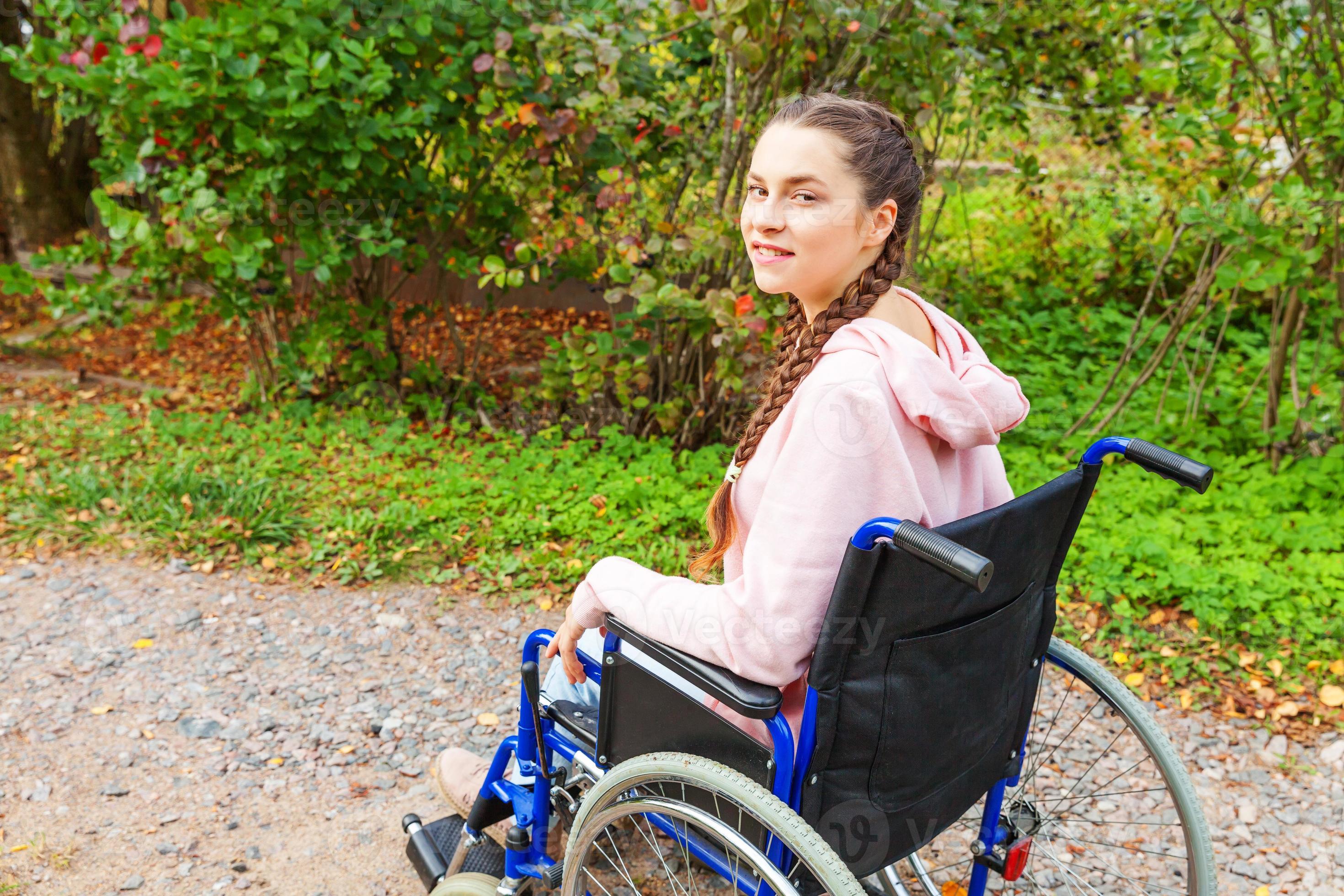
She looked about six — small even for that — with brown hair pulled into a braid that had come half loose, wearing a yellow jacket a size too big. She sat in a wheelchair angled slightly away from the path, positioned in a stripe of shade, like someone had placed her there carefully and then left. She wasn’t watching Owen. She wasn’t watching anything in particular. Her hands rested in her lap, her legs completely still, and her eyes were cast down at the ground in front of her with the expression of someone who had already learned not to want things too loudly.
Owen picked up his ball.
Then he looked at her. The way only children look at strangers — directly, without strategy, without the performance of indifference that adults spend decades perfecting.
“Do you want to play with me?” he asked.
The girl looked up. Something moved through her face — a flicker of something that might have been hope if she’d let it get that far. Then she looked down at her legs, and the flicker went out.
“I can’t play,” she said. Her voice was quiet and matter-of-fact. Not shyness. The kind of quiet that comes from having said a thing so many times it had stopped hurting to say.
Ethan was on his feet before he realized he was standing.
He’d seen that look before. Not on a stranger’s child. Not in a park. He’d seen it in a mirror, in the months after the accident, when the world kept asking him to participate in it and he kept finding reasons why he couldn’t. That look wasn’t sadness, exactly. It was something worse. It was a child who had already started editing herself out of the story.
He crossed the grass slowly, hands in his jacket pockets, and stopped a few feet away.
Owen ran back immediately and grabbed his father’s hand with both of his. “Dad, help her play with us.”
Ethan looked at Owen, then at the girl. She was watching him now with careful eyes — not unfriendly, just the way someone looks at an outstretched hand before deciding whether to take it.
“What’s your name?” he asked.
A beat.
“Gracie.”
“I’m Ethan. That’s Owen, in case he forgot to mention himself.”
Owen had not forgotten. He’d already told her twice. But Gracie almost smiled, and that was reason enough.
Ethan crouched down to her eye level. “What’s your favorite thing to do?”
Her eyes moved sideways, the way they do when a question requires accessing something that hasn’t been used in a while.
“Drawing,” she said finally. “But I don’t have anything to draw with.”
Ethan reached into his jacket pocket. He wasn’t sure why he checked — he didn’t carry art supplies. But his fingers found something small and cylindrical wedged in the seam of the lining. A piece of chalk, white, worn down to a stub. Owen must have dropped it in there weeks ago after one of his sidewalk projects. Ethan had never cleaned his pockets out because he never had the time or the energy for things that weren’t strictly necessary.
He looked at the chalk in his palm.
Then he looked at the wide, flat, empty stretch of concrete path beside them.
He stood, walked to the path, and drew a circle. Not a careful one. A wide, looping circle, the kind a child would draw — imprecise and generous and large enough to stand inside. Then he drew a shape inside it, and another beside that.
When he looked back at Gracie, she was leaning forward in her wheelchair, just slightly, neck craned, watching his hand move.
He walked back to her and held out the chalk.
“Your turn,” he said.
Gracie looked at the chalk. She looked at the circle on the pavement. She looked at Ethan’s face, reading it with the thoroughness of a child who had learned to check whether adult kindness was real or performed — whether it would last or evaporate the moment it became inconvenient.
Whatever she found in his expression, it was enough.
She reached out and took the chalk from his hand.
She didn’t draw right away. For a long moment she just held it in her fist and looked at the circle, the way someone looks at a door they’re not sure they’re allowed to open.
Then Owen dropped to his knees beside the concrete, picked up an imaginary brush with great theatrical seriousness, and announced, “I’m going to draw a dragon. But not a scary one. A nice one with a bow tie.”
Something in Gracie’s face broke open quietly — the way light comes through a curtain when someone pulls it just an inch.
She leaned forward and pressed the chalk to the concrete. The first line was thin and tentative. Then it curved. Then it became something — the suggestion of a wing, then a tail, then a round cartoonish head she added last and then looked at with the private satisfaction of someone who had surprised herself.
Owen studied it with the gravity of a professional critic. “That’s better than mine,” he announced.
Gracie looked at him. “You haven’t drawn yours yet.”
“I know,” he said. “Mine’s still going to be worse.”
This time she laughed — the kind that arrived without permission, unpracticed and unguarded, the kind a child produces before they’ve learned to monitor how they sound. It rang out across the path and vanished into the warm morning air. And Ethan, crouching nearby making slow deliberate chalk marks of his own, felt something loosen in his chest that he hadn’t known was tight.
He was so absorbed in watching them that he didn’t notice the woman until she was already close.
She came from the direction of the bench on the far side of the path. Early forties, composed, dressed plainly in dark slacks and a gray jacket that was just slightly too neat for a casual Saturday in a public park. She moved with the purposefulness of someone whose job was to notice things, and right now she was noticing Ethan.
She stopped a few feet away. “Excuse me. Do you know this family?”
“No,” Ethan said simply. “My son wanted to play with her.”
The woman’s eyes moved between him and Gracie, then back to him. She didn’t say anything more, but she didn’t leave either. And the way she positioned herself — weight forward, slightly angled — communicated clearly without requiring words.
She was a wall.
Ethan understood what she saw when she looked at him. A stranger, underdressed, visibly exhausted, crouching next to a child he had no connection to. He understood the calculation she was running and he didn’t blame her for it. But Gracie was still drawing, and Owen was now attempting the bow-tied dragon with tremendous confidence and very limited technical skill, and whatever invisible line this woman was guarding, Ethan wasn’t interested in crossing it. He was simply not going to leave.
The woman remained standing. The three of them kept drawing. After a while the tension thinned, the way tension does when the threat it anticipated fails to materialize.
Owen finished his dragon. It looked like a potato with wings and a very small bow tie. He held it up for Gracie’s appraisal with the expression of a man presenting a masterpiece.
“It’s very good,” Gracie told him, in the tone of someone being diplomatically honest. “The bow tie is good.”
“The rest is kind of bad,” Owen agreed.
Gracie looked down at her own drawing, then picked up the chalk and began adding something to Owen’s dragon — a small crown, sketched carefully above its potato head. She had to lean further forward to reach the right angle, and she stretched out her arm, and she was so focused on the crown that she didn’t notice at first.
But Ethan noticed.
Her left foot shifted.
Not much — a few centimeters, the kind of motion that might have been dismissed as a chair adjustment, a coincidence, a tremor. But it wasn’t any of those things. He could see the concentration in her face change. Her brow drew together slightly, as if she were registering something new. Something unexpected. Something arriving from a part of herself she’d been told was no longer sending signals.
She stopped drawing.
She looked down.
Her face went through several things at once — confusion first, then a kind of electric, terrified wonder. The expression of someone standing at the edge of something enormous, not yet knowing whether it’s a cliff or a beginning.
“My feet,” she whispered.
Then louder: “I can feel my feet. I felt them move.”
The words fell into the morning like stones into still water.
Owen looked up from the dragon. “What?”
“I felt them,” Gracie said, looking at Ethan now with an expression that was almost accusatory, as if he might be able to explain it. “I felt my feet move.”
Ethan went very still. He had no explanation. He had no authority to confirm or deny what she was experiencing. But he was wise enough to understand that neither was what she needed. What she needed was someone to believe her.
“Okay,” he said quietly. “That happened. I saw it.”
The woman in the gray jacket had already taken three steps back and drawn out her phone. Her composure — maintained so carefully for the past twenty minutes — had developed a visible crack. Her hand was unsteady as she pressed the phone to her ear, and her voice when she spoke was lower than before, carrying a tremor she couldn’t contain.
Ethan began gathering himself to leave. It seemed right. Whatever this moment was, it belonged to Gracie and whoever was coming, and he was a stranger from the other side of the park who had drawn some circles on the ground. Owen was already on his feet, brushing chalk dust from his knees.
Then Gracie’s hand found his wrist.
Her grip was small but certain — the grip of a child who had made a decision.
“Don’t go,” she said. She wasn’t looking at him. She was looking at the chalk drawings on the concrete — the circle, the dragon, the crown. “Draw more with me.”
Ethan looked at her hand on his wrist.
He stayed.
He didn’t know that at the far end of the park a woman had just received a phone call and was now walking fast — not running, but close to it — coat unbuttoned, eyes fixed on the iron fence and the small yellow jacket visible from sixty yards away. He didn’t know what she’d been doing before the call came in, or how long she’d been in the park, or why she came here alone on Saturday mornings without a driver or security or any of the apparatus that accompanied her everywhere else in her life.
He was drawing a house inside the circle. Gracie was adding windows.
The woman arrived the way weather arrives — suddenly present, the atmosphere changing before she was fully visible. She came through the gap in the fence and crossed the path in long urgent strides, and Ethan heard the woman in the gray jacket say something low and reverential — a name, a title — and then step back.
The woman who arrived dropped to her knees on the concrete without hesitation. Without regard for her coat or her slacks or the chalk dust. She pulled Gracie into her arms and held her with the specific wordless ferocity of someone who had been terrified for a very long time and was only now, in this moment, allowing themselves to feel it.
“Mom,” Gracie said.
The woman held on. Her shoulders shook once, then steadied. She pressed her face into Gracie’s hair.
Owen stood very still beside Ethan, the way children stand when they understand that something adult and serious is happening and they’re not sure what their job is.
After a long moment, the woman lifted her head.
She looked at Ethan. She was perhaps fifty — sharp-featured, dark-eyed, with the kind of face that had learned to reveal only what it chose to reveal. But right now it was revealing everything. The exhaustion. The grief. Two years of fighting something invisible with every weapon available and watching the weapons fail one by one.
She looked at him the way people look at something they cannot immediately categorize.
“I hired fourteen of the top neurological specialists in this country,” she said. Her voice was steady, though it cost her something to make it so. “I have spent more than three million dollars.” She looked at Gracie, then back at him. “And you did this with a piece of chalk.”
Ethan didn’t have an answer for that. He wasn’t sure there was one.
He looked at the chalk circle on the ground. At the dragon with the crown. At Gracie, still leaning against her mother’s shoulder, one hand resting on her own knee, her fingers pressing down gently — testing, learning, reclaiming something she’d been told was gone.
The woman straightened and extended her hand toward him. Not a polite gesture. The gesture of someone who had already made a decision and was formalizing it.
“Diane Whitmore,” she said. “I’d like to be in touch, if you’re willing.”
She held his gaze.
“May I have your number?”
Ethan looked at her for a moment. Then he told her.
He still didn’t understand why staying had been enough. He had simply stopped. He had simply not walked away. And somehow that had been the whole thing.
He learned who Diane Whitmore was the way he learned most things about her in the days that followed — gradually, in pieces, never from Diane herself. Owen looked her up on Ethan’s phone that evening with the unselfconscious efficiency of a seven-year-old and announced with great solemnity that Gracie’s mom was kind of a big deal. A coworker at the warehouse saw the business card Ethan had left on the kitchen counter and spent most of a lunch break explaining in increasingly dramatic terms exactly how big a deal she was. Forbes lists. Senate testimony. The kind of name that appeared in headlines not because anything had gone wrong, but because people wanted to know what she was thinking.
None of that had been visible in the park. In the park she had been a woman on her knees in chalk dust holding her daughter and trying not to come apart in front of a stranger.
That was the version of Diane Whitmore that Ethan kept returning to.
In the weeks after that Saturday, Riverside Park became a different kind of place. Diane brought Gracie back the following weekend, and the one after that, and the one after that. She always arrived the same way — quietly, without announcement — Gracie’s wheelchair navigating the slightly uneven path from the east entrance while Owen spotted them from across the grass and ran to meet them with the full-body enthusiasm he applied to everything he loved.
No assistants on these visits. No gray-jacketed attendants stationed at a careful distance. Just Diane on the bench and Gracie and Owen on the concrete with whatever chalk Owen had remembered to bring.
Gracie’s progress was not dramatic in the way stories sometimes make these things dramatic. It didn’t happen in a rush. It happened the way dawn happened — so gradually that you couldn’t identify the exact moment when darkness became light, only that at some point it had. The first week, she could feel both feet when she concentrated. The second, she could curl her toes. By the fourth visit, she was gripping the arm of her wheelchair and lifting her heel a fraction of an inch off the footrest. And Owen watched this with fierce proprietorial pride, as though her feet were a project he had personally supervised.
Ethan watched from the bench beside Diane. They didn’t talk much at first, not because there was nothing to say, but because sitting in silence beside someone while your children drew dragons on the pavement was its own kind of conversation, and neither of them was in a hurry to replace it with words.
He learned that she took her coffee without anything in it. She learned that he fell asleep on the bench if the sun hit the right angle and Owen was occupied enough not to need him. These were small things. They added up.
It was on a Tuesday — not a Saturday, which meant Diane had rearranged something significant — that she called and asked if they could meet without the children.
They sat at a corner table in a coffee shop three blocks from the park, mismatched chairs and a chalkboard menu and no ambient music, just the street outside and the occasional hiss of the espresso machine. Diane had arrived before him, hands folded on the table, in the posture of someone who had prepared what they were going to say and was committed to saying it.
She waited until the coffee arrived. Then she said, “I want to build something.”
Ethan wrapped both hands around his mug. “What kind of something?”
“A foundation.” She said the word directly, without preamble. “Not a medical foundation. Not a research fund. Something different.” She turned her coffee cup a quarter turn without drinking from it. “Every specialist I hired for Gracie was trying to fix what was broken. They were very good at looking at what wasn’t working and designing interventions. None of them ever asked her what she liked to do.”
Ethan didn’t say anything. He recognized the shape of what she was describing.
“She hadn’t laughed in eight months,” Diane said. “I knew that. I saw it every day and I kept thinking it was a symptom of the condition — something that would resolve when the physical situation resolved.” She looked out the window at the street. “It wasn’t a symptom. It was the condition. She had stopped believing she was allowed to be a child.” She looked back at him. “You walked over and asked her what her favorite thing to do was. That’s the whole thing.”
“Owen asked her to play first,” Ethan said. “I just followed him.”
“I know.” Something moved through her expression, not quite a smile but close to it. “I’m asking you, not Owen, because Owen is seven and you’re the one who stood up from the bench.”
Ethan turned his mug in a slow circle.
He understood what was coming. He’d understood it since she called — maybe earlier, maybe since some moment he hadn’t consciously registered.
“What does the foundation do?” he asked.
She had thought about this carefully. He could tell by the way she spoke — not reading from notes, but recalling something she’d already refined through many internal drafts. The foundation would work with children who had physical disabilities and limited financial resources. Not primarily with their medical teams, though it would coordinate with them — primarily with the children themselves. Structured programs built around play, around creativity, around the simple and radical act of putting kids in the same space and letting them be kids together regardless of what their bodies could or couldn’t do. Community first, everything else second.
She was going to call it the Chalk Circle Foundation.
Ethan was quiet for a moment after she said the name. A bus went by outside. The espresso machine hissed.
“You want me to run it,” he said.
“I want you to run the community programs — the part that actually touches the children. I have people who can manage the administrative structure and the funding. I don’t have anyone who can do what you do.”
“I move freight,” Ethan said. It came out more flatly than he intended, but he didn’t walk it back. It was true, and it was the relevant truth. “I don’t have a background in child development or nonprofit management or any of the things this would actually require.”
“I know your background,” Diane said without apology. “I also know what I watched in that park for four weeks before I hired a single expert.” She set her cup down. “You see what children need — not what adults decide they need. That is not a credential you can get from a program. It is either in you or it isn’t.”
Ethan looked at the table.
He thought about the warehouse. The overnight shifts. The specific texture of that life, the reliability of it, the way it asked nothing from him except his body and his hours, the way he could move through it without being seen, without being required to be anything more than functional. It had been a kind of shelter — not a good one, but a familiar one. The kind of shelter a person builds not because it keeps them warm, but because assembling it gives their hands something to do.
He thought about Owen asking why he always looked tired.
He thought about Gracie’s hand on his wrist.
Don’t go.
“I’d need to learn a lot,” he said finally.
“Yes,” Diane agreed, without flinching. “You would.”
“And I’d need it to actually work. Not just exist. Not just be something you put your name on.”
“That’s why I’m asking you and not someone who would be satisfied with it just existing.”
He looked up at her. She held his gaze with the steadiness of someone accustomed to rooms full of people who needed convincing, but underneath the steadiness was something else — something not quite vulnerability, but adjacent to it. She needed this to be real, too. Not just for the foundation. For Gracie. For whatever it meant to have spent two years looking in the wrong direction and then accidentally looked the right way.
He said yes.
Six months later, the Chalk Circle Foundation held its opening event in a converted warehouse space in South Boston — a detail Owen found enormously funny and Ethan found quietly, privately apt. The space had been painted in warm colors and fitted with wide accessible tables and a concrete floor that was already covered, by the time the doors opened, with chalk drawings contributed by the first forty children enrolled in the program.
The launch received coverage Ethan hadn’t anticipated and didn’t entirely know what to do with. There were reporters and photographs and a moment where Diane stood beside him in front of a microphone and said things about community and vision that he agreed with but that felt strange to hear said about him specifically.
He was better at the part that came after the speeches — moving through the room, crouching down beside a kid who’d gone quiet in a corner, asking the question that had started all of this.
What’s your favorite thing to do?
The image that circulated most widely in the days after the launch was not from the event itself. It was a still pulled from Riverside Park security footage — a grainy, slightly overexposed frame from a Saturday eight months earlier, showing a man crouched on a concrete path drawing a chalk circle, a girl in a wheelchair leaning forward to watch, and a small boy with his arms flung wide in the background, caught mid-jump at the apex of whatever joy had launched him off the ground.
Gracie walked into the opening event on her own two feet.
She held her mother’s hand for the first step. Then she didn’t need to anymore.
She found Owen near the drawing tables and they sat together on the floor with their chalk and their dragons — his still potato-shaped, hers still crowned — and the sound of her laughing carried across the room to where Ethan was standing.
He heard it the way you hear something you didn’t know you’d been listening for.
Owen looked up from his drawing and found his father across the crowded room. He held up his latest dragon — rounder than ever, bow tie slightly lopsided — with an expression that asked for nothing and offered everything.
Ethan raised his hand.
His son beamed and went back to drawing.
There was a version of the story Ethan sometimes thought about, in which he stayed on the bench that Saturday morning. In which he let exhaustion make the decision. In which he let the distance between himself and a stranger’s child remain distance, and let the morning be nothing more than what it appeared to be. It would have been easy. It would have been understandable. It would have cost him nothing he could name.
What changed a life, he had learned, was rarely the large visible well-documented thing.
It was the moment before the moment. The decision to stand up from the bench. The chalk found by accident in an unwashed pocket. The question asked without agenda to a child who had stopped expecting to be asked.
Six words.
And everything that followed.
Specialty: Emotional Turning Points
Rachel Monroe writes character-driven stories about betrayal, second chances, and unexpected resilience. Her work highlights the emotional side of family conflict — the silences, the misunderstandings, and the moments when someone quietly decides they’ve had enough.