The Corridor
My father used to take me to the docks on Saturday mornings before the heat came up. I was six years old and he was thirty one, a chief petty officer in the United States Navy, a compact man with an economy of movement that I thought was just his personality and later understood was something trained into him across years of service. We would walk to the waterfront in Norfolk, and he would show me the ships, the grey hulls and the high bows and the long rows of portholes like closed eyes, and he would explain what each one did in the kind of plain language that makes complicated things feel possible. He crouched to my height once near a destroyer’s waterline and told me that everything worth protecting, the sea already knew about. I was six. I didn’t understand it. But I filed it away the way children file things that feel important before they know why.
His name was Robert Navaro. He was born in 1960, the son of a Mexican American family from Corpus Christi, Texas. He enlisted at eighteen and spent a decade going from seaman recruit to chief petty officer through a combination of intelligence and persistence that his commanding officers noted in every fitness report he received. He was not someone who needed applause. He got up early, did the work, and came home. He made pancakes with strawberries on Sunday mornings. He read at the kitchen table in the evenings with the focused quiet of a person who treats time as something not to be wasted.
He told me once, when I was seven and asking why he liked the Navy when it made him go away so much, that the military teaches you what you are made of and that whatever that turns out to be, it is yours, and no one can take the knowing of it away from you. I thought it was the kind of thing adults say to fill the space between harder things. I think about it now at midnight in classified briefings when the work is long and the results are things that will never carry my name in public, and I think, yes, he was exactly right. He knew before I did.
He died in 1991. I was eight. A cable failure during deck operations aboard the USS Saratoga. A man overboard who could not be recovered in the dark water in time. The Navy sent a casualty assistance officer to our house at seven thirty on a Wednesday morning. He was young and very formal and stood in our doorway holding his cover in both hands. My mother sat down at the kitchen table and put her hands flat on the surface the way you put your hands on something solid when you need the ground to stay where it is. She told me in words that were very simple and very careful that my father was gone. She said, “We lost him.” Which made me think at first of something mislaid rather than something permanent. I didn’t understand the full weight of it until after the funeral, after the folded flag arrived in its triangular case and sat on the mantelpiece and he still was not back.
The summer I was nine, alone in the house for the first time, I found his service record in the bottom drawer of the filing cabinet. A manila folder with his name in his own handwriting on the tab. I sat on the floor and read through the whole thing. The evaluations, the commendations, the duty station records. His commanding officers used words like exceptionally capable and technically proficient and leads by example. One fitness report said he was the kind of chief petty officer a ship cannot function without. I folded that page and put it in my pocket. I put the folder back exactly as I had found it and went and made a sandwich and sat at the kitchen table where he used to read. Something settled in me that afternoon. Not a decision. More like a direction, a sense of which way I was going even though I could not yet have named the destination.
The Navy that had taken my father was also, after that, the only thing that still felt like him. The ships, the uniforms, the structure, the specific vocabulary of it, the way a naval installation smells when you pass through the gate with someone who belongs there. I know it is a complicated relationship to form with an institution that cost you your father, but I was eight years old and I did not have the vocabulary yet for complicated. I only knew that when I was near things that reminded me of him, I felt less alone.
I joined NJROTC at fifteen. I was one of three girls in a unit of twenty two. My instructor was a retired Navy chief named Morrison who had served twenty two years across three homeports and who had the quiet authority of a person who has seen everything worth seeing and is choosing what to transmit. He wrote in my first semester evaluation that I had the instincts of an officer and that I would be difficult to ignore. I kept that paper. He meant it as a performance observation. I understood it as a promise I was making to myself.
I enrolled at Virginia Tech in the fall of 2001 on a Naval ROTC scholarship, the semester that followed September 11th, which meant every young person in uniform on that campus understood that the choice they were making had weight. My mother drove me to campus on a Sunday in August and helped carry boxes up two flights of stairs. We stood at the curb with the car running, and she took both my hands and looked at me and said, “Be careful.” Not, “I am so proud of you.” Not, “Your father would have been here.” Just, “Be careful,” as if careful were the instruction that covered everything else. I told her I would. She got in the car and drove away, and I stood on the sidewalk with everything I owned in boxes around me, and the morning felt enormous and mine and more frightening than I had expected.
I was commissioned as an ensign in May of 2004. A small ceremony. Twelve graduates. Family members in folding chairs on a linoleum floor. My mother was in the third row in a blue dress she had bought for the occasion, and she clapped when they called my name. Not the polite kind of clapping. The kind that means something, the kind that comes from a person who has been paying attention for a long time and is watching something arrive that she has been waiting to see. There was no one else there for me. No father with a camera. Just Linda clapping. In my jacket pocket I carried my father’s old chief petty officer insignia, the eagle and the chevrons, slightly tarnished, which I had found in a shoebox in the attic two weeks before. I rubbed it like a coin through the whole ceremony. When they called my name and I raised my right hand and spoke the oath, I thought of him crouching at a waterfront in Norfolk, telling me the sea knew everything worth protecting.
The years that followed were years of quiet, deliberate accumulation. That is the only honest way to describe intelligence work at the junior levels. You learn one thing, and it opens a door to another thing, and you follow the door, and you get better at the following. I moved through assignments at a pace my supervisors noted and that I treated as information rather than accomplishment. My first duty station was the Naval Intelligence Training Command at Dam Neck, Virginia. Then a Defense Intelligence Agency liaison cell at Joint Base Anacostia Bolling in Washington, where I learned to hold many different streams of incoming data at once and find the coherent picture inside all of them. A Marine colonel named Martinez, who had spent three field tours before intelligence work, told me once that I was one of the few analysts he had encountered who seemed to get more certain as the situation became more complicated. I wrote that down.
In 2009, I was assigned to the Naval Intelligence Coordination Group, a small, serious organization stood up in the post 9/11 reorganization with a mandate to close the gaps between what each branch knew separately. I arrived on a Monday in September and understood within two days that this was where I was supposed to be. My supervisor, Commander Rosa Delgado, looked at my incoming evaluation scores and told me without preamble that I was underplaced and that she intended to find me harder problems. She did. The trajectory of my career runs through that sentence. I have tried in every supervisory relationship since to do the equivalent thing when I see it, to tell people clearly what they are capable of rather than letting them discover it by accident.
My mother remarried in June of 2010. I was twenty seven. I wore a dress to the wedding and sat at a table with people I did not know and watched Linda exchange vows with a man named Frank Weston. He was fifty six, a retired Army colonel with thirty years of infantry service and a chest full of decorations and the bearing of a man who has spent a long career being the most authoritative person in every room he enters. He was not unkind. He was cordial to my mother, attentive in the ways that matter. He shook my hand at the reception and asked about my work with the comfortable interest of someone who already knows the answer will be less impressive than whatever he is about to say next.
“Linda tells me you do Navy intelligence,” he said. “Analysis?”
I said something like, “Something like that.”
“Support work,” he said, nodding slowly. “That’s valuable. Army couldn’t function without good support.”
He said support work the way you might say administrative assistant to someone who runs the company. Not cruelty. Just a genuine inability to imagine a different category. I noted it and filed it. He didn’t know what I did. That was fine. The conversation was going to end in two minutes, and I was going to eat the chicken and go home.
What I didn’t know then was that this would be the first of hundreds of similar conversations spread across twelve years and a dozen family gatherings in which Frank Weston explained to whoever was present that the Navy ran the numbers while the Army ran the field, and that I, as a Navy desk person in a support capacity, was doing good and useful secondary work. He was never malicious about it. He was genuinely, completely convinced. And his conviction was the kind that thirty years of being the most credentialed person in the room produces, the kind that does not update because it has never needed to.
I was promoted to lieutenant commander in 2013. By then I had completed two classified program rotations and contributed analytical work that had directly shaped joint operational decisions in two active theaters. At Thanksgiving that year, Frank held court at the dinner table for twenty minutes, explaining the distinction between tactical and strategic intelligence to his Army veteran friends and the ways in which Navy intelligence is removed from the sharp end of things. I ate my sweet potatoes. My mother found me in the kitchen afterward. “He doesn’t mean anything by it,” she said. “He just doesn’t understand what you do.” I told her that not wanting to understand was different from not knowing. She asked me not to make it a thing. I didn’t make it a thing. I drove home Sunday morning and went back to work.
At Frank’s American Legion Club in December of 2016, he gave a holiday speech about family and service. He mentioned a nephew who was an Army Ranger. He mentioned a cousin who had served in Vietnam. He mentioned me last, near the end, almost as an aside. “My stepdaughter also serves,” he said, “in a Navy support capacity.” Polite applause. I was in the back row in civilian clothes, a commander who had contributed to operations the men in that room would never be cleared to know about. I drove home and sat in a parking garage for fifteen minutes before I could make myself get out. Not because I was devastated. I had passed that stage. Just because I was trying to calculate one more time whether it was worth being bothered by. I decided it wasn’t. Ceilings don’t move because you need them to.
I was promoted to commander in 2016, to captain in 2019, and selected for Rear Admiral in the spring of 2023. Forty years old. The youngest woman to be named director of the NICG. My detailer called on a Thursday afternoon, and I sat in my office with the door closed and looked at the wall and said, “Thank you,” and hung up and went back to the briefing I had been reviewing. I called my mother that evening. She was pleased. I called Frank. He congratulated me, said it was well deserved, asked if I was still at the Pentagon. I said yes. He said good and put Linda back on. That was the full conversation.
The Naval Foundation gala was scheduled for January 23rd, 2026. The foundation had selected my directorate to receive the distinguished service award for its contributions to a classified joint operation the prior year, the kind of operation that exists with precision in the classified record and not at all in the public one. I arranged two complimentary tickets for my mother and Frank. I told myself it was a peace offering. But I knew, in the part of me that has learned over forty three years to be honest about my own motivations, that it was also an argument. A final brief. I wanted him in that room. I wanted him to see what I had built in a setting where it could not be minimized or redirected.
The night of the gala. 1830 hours. The Mandarin Oriental Hotel. Washington, D.C. I dressed in my service dress blue in the Arlington apartment, the midnight blue jacket, white trousers, gold buttons, and stood in front of the mirror and put on the one star shoulder boards. My driver dropped me at the side entrance through a routing error, and I came in through a secondary corridor toward the lobby rather than the VIP door.
The lobby was marble and gold and warm with chandelier light, full of admirals and generals and defense officials and foundation donors. I came through the corridor and had walked about twenty feet when the man stepped in front of me.
His name was Captain Marcus Webb. Forty six years old. Surface warfare officer. Fifteen years running protocol for naval events. Thorough, reliable, precise in the way that good event coordinators are precise. He did not know me. The NICG is classified enough that its director does not appear in any public facing personnel directory. What he saw was a woman in uniform with a single silver star on each shoulder who had come through a secondary entrance and who looked younger than any rear admiral he had previously encountered.
“Ma’am, I need to verify your credentials.”
I said, “Of course.”
I began to reach for my identification.
“ID. Now.”
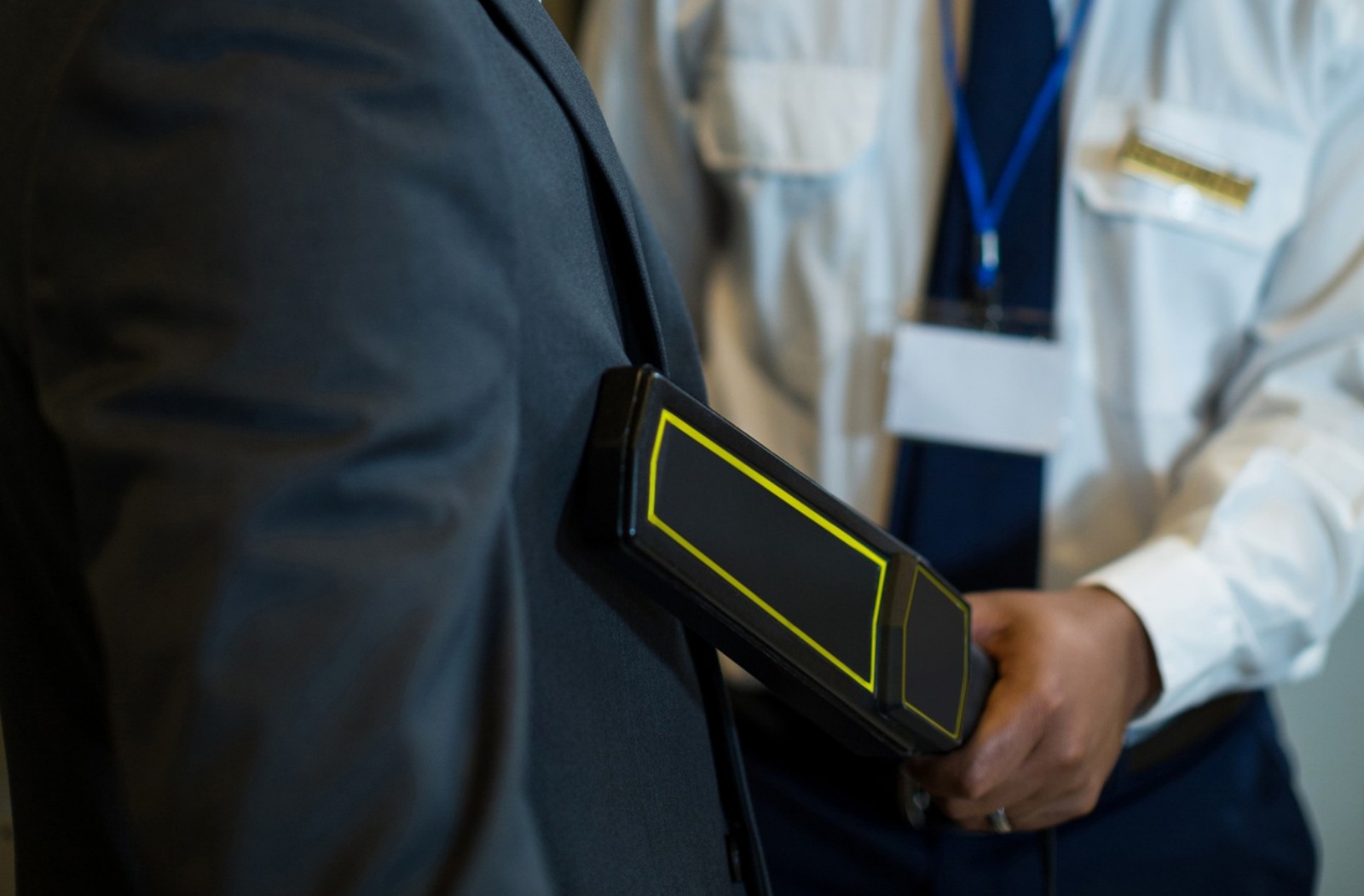
And he grabbed my wrist. Not a light touch. Two fingers and a thumb around my wrist, the grip of a man who has decided he is in charge of this corridor and that the uniform in front of him requires verification before it proceeds. I could feel my pulse under his fingers.
I did not pull away. I did not raise my voice.
There were perhaps thirty people in the lobby at that moment. I was aware of all of them with the peripheral awareness that twenty years of operating in high stakes rooms gives you. I was aware specifically of my mother and Frank, who were standing near the bar approximately twenty feet to my left, champagne glasses in hand. I had seen them the moment I came through the corridor, and I had registered Frank’s expression in the fraction of a second before he registered mine.
He was smiling. It was the smile of a man watching confirmation arrive. At last, here was his stepdaughter in her Navy uniform, being stopped at the entrance to a room by a captain who clearly knew she did not belong. Here was the universe providing the conclusion he had been carrying for twelve years. He lifted his glass.
“You’re going to want to let go of my arm,” I said. My voice was level.
He opened his mouth.
His radio crackled.
The frequency was set to project through a small speaker at his belt, a coordination function standard for event security. In the marble quiet of the lobby, it carried farther than he likely intended. The nearest cluster of officers, two rear admirals and a vice admiral standing in conversation near the corridor entrance, turned their heads toward the sound.
The voice belonged to Admiral James Merritt, Chief of Naval Operations. He had been in the command post on the hotel’s second floor, monitoring the lobby feeds. His aide had flagged the situation seventy seconds earlier. Merritt had not sent an aide. He had come to the radio himself.
“Captain Webb. This is Admiral Merritt. Release Rear Admiral Navaro. That is a direct order.”
The lobby went completely still.
Webb let go of my wrist. He took two steps back. He snapped to attention. The color left his face the way color leaves a room when a circuit breaker trips, not gradually but all at once. A junior lieutenant on his security team found a spot on the floor to examine.
The vice admiral extended his hand. “Claire,” he said, in the voice of someone completing something that was always going to be completed. I shook it. One of the rear admirals nodded. The other said quietly, “Good evening, Admiral Navaro.” Two more officers drifted over from the wall.
I did not look at Frank immediately. I kept my eyes where they needed to be, on the vice admiral’s face, on the next handshake, on the work of saying the next correct thing. But in my peripheral vision I saw his champagne glass tilt. The stem caught at his fingers, and the glass tipped sideways and hit the edge of the marble bar and landed on the floor. It did not shatter, but it landed with a clear, clean impact on marble that was audible in the silence Merritt’s voice had made. The guests standing nearest Frank turned to look at the glass and then at him.
I kept my eyes forward.
The ceremony was at 9:15. A vice admiral read the citation. The room stood. I gave a three minute speech that said everything necessary without crossing any line that matters. I looked out at the audience and found my mother in the fourth row. Her expression had changed from the one I had seen in the lobby. She was watching with the careful look of someone in the middle of revising something, some interior picture she had held for a long time that had just revealed itself to be the wrong shape. Frank was beside her, straight backed, looking at his event program.
Afterward, at the reception, Linda found me at the refreshment table. She had come without Frank. She was holding a glass of water in both hands.
“That was. I didn’t know it was that kind of event.”
“I sent you the program, Mom.”
“I know. I just didn’t understand what kind of program they meant.”
Frank appeared a moment later. He extended his hand and said, “Congratulations.” Two words. No mention of the lobby. No mention of twelve years. A handshake and a two word response. The minimum required acknowledgment, correct in the way that completing a required form is correct.
I drove home at midnight through the city. The Lincoln Memorial was lit against the January sky. I had waited for a night like this one. I had thought it would feel like an arrival. What I felt instead was tired in the particular way you feel when you have been carrying something for a long time and you set it down and realize the carrying was not the problem. The choosing to keep carrying was the problem, and I had been the one choosing.
He called eight days later on a Sunday morning. He said the event was impressive. He said the award was well deserved. He said he had no idea the NICG was held in that kind of regard. He spoke for three minutes in the careful, measured voice of a man offering professional acknowledgment to a subordinate who has overperformed. He did not say sorry. He did not mention the lobby or the glass or the twelve years. When he said, “Anyway, good. Really,” I recognized the ceiling I had been competing with. It had not moved. It could not move. It was the ceiling he had built over thirty years, and it was not going to change because a radio crackled in a hotel lobby.
“Thank you, Frank,” I said. “Take care.”
I called my mother the next day and told her, clearly and without cruelty, that I was not going to arrange access to my professional world going forward. Not to punish anyone, but because it had never helped either of us. She said he had been proud in his way. I said I knew what his way looked like, and I didn’t need it anymore. A long pause. “That’s fair,” she said quietly. It was the most honest exchange we had shared in years.
In early March, Linda began calling on Sunday mornings. Not about taxes or a neighbor’s garden or anyone’s health. Just a call. The first Sunday, four minutes. The second, forty. By the third I had started keeping my coffee warm and putting away what I was reading before she called. She told me she had looked up the Naval Foundation website and read the section about the NICG. She said the site described operations in four theaters simultaneously.
“Why did you never tell us?” she asked.
“You never asked,” I said.
I let that sit. She said, “I know.” The second Sunday, she asked me to explain the shape of my work, not the classified details, just what it meant at a human level. I told her it meant making sure the right people had the right picture in time to act on it accurately. “So lives depend on your analysis,” she said. “Yes, Mom,” I told her. “They do.” A long silence followed. “Your father would have understood that completely.” She hadn’t said his name like that in years, as a bridge between us rather than a wound.
The third Sunday, she talked about him more directly than she had in a decade. She said she had worried for years that I had become obsessed with the Navy as a way of staying close to a ghost, that she had pulled away from understanding my career because looking at it too clearly forced her to feel how much she missed him. “I couldn’t stand watching you love something that had taken him from me,” she said. “I thought if I kept it small, I could keep the missing small too.” She wasn’t excusing what she had done. She was explaining where it had come from. That is a harder thing to offer and a more useful thing to receive.
In late March she called outside of Sunday and asked me to dinner, just the two of us. “I don’t want Frank to come,” she said, which was the first time in sixteen years she had said those words to me. I said yes before I had fully processed the question. A small Italian place in Bethesda she had chosen from a list I had sent her two years ago that she had apparently kept. She was already there when I arrived, seated in a corner booth with a glass of water and a menu she hadn’t opened. She looked smaller than I expected and more careful with her hands.
She put down her bread and looked at the tablecloth and said, “I owe you something.” She told me she had spent years apologizing for me to Frank, to his friends, to people she barely knew at church, telling them I would come around, that eventually I would do something he could put on a shelf and recognize. She said she had chosen the easier direction. She said Frank made things feel stable, and I made things feel like my father, wonderful and terrifying at the same time, and that she did not know how to hold both for a very long time.
I reached across the table. I was not ready to say all was forgiven. Twelve years doesn’t compress without losing something real. But I was ready to eat dinner with her and mean it, to be in the same room without performing anything or asking her to perform anything for me.
Walking out, the street was cold and clear. She took my arm at the curb and we stood for a moment in the dark before the cars. She didn’t offer a formal apology with words that matched the size of what had been done. She had said what she said at the table and meant it, and she was standing here in the cold, her arm in mine, not leaving, until it was actually time to go. That was what she had to offer. It was the harder and more lasting thing.
I did not tell her that night about the promotion notification I had received the previous week. I was being considered for selection to Rear Admiral Upper Half, a second star. Nothing was confirmed, but the notification had come, and the career I had built had produced something I had not allowed myself to anticipate too clearly. I sat across from my mother and said nothing about it. I ate my pasta and listened and let the evening be what it needed to be, which was not about rank or titles or anything that could be put on a shelf. There would be time for the rest of it.
The promotion came through in writing the following week. I read the notification twice at my desk and filed it and called my mother on Sunday. She already knew somehow. Linda always knows, even when she does not ask directly. She said, “Good.” Then she asked if I wanted to come for dinner the following weekend. She made the pasta dish my father used to request on birthdays, which she had not made in twenty years, and which tasted exactly as I remembered it.
Monday, April 6th. No ceremony. No marble lobby. Just the Pentagon on a regular morning. I arrived at 07:15, nodded to the duty officer, passed three lieutenants deep in a briefing cycle at the long table. Near my office door stood Ensign Tyler Park, twenty two years old, four months into his assignment with the NICG, holding a manila folder with the expression of someone who has been waiting a few minutes and is trying to look like he just arrived.
He had been accepted to the NSA Advanced Analyst Program, the most competitive intelligence track in the Navy, the one I had completed at twenty eight, the one that had opened every door that followed. He told me he had applied because six weeks ago, reviewing a signals brief at the end of a long day, I had said in passing, “You think like someone who belongs in that program, so apply.” He had not told me he was applying. He had just applied.
“I wanted to say thank you, ma’am. You told me to, and I believed you because you weren’t trying to make me feel good about myself.”
I thought about that after he left. I thought about Rosa Delgado telling me in the fall of 2009 that I was underplaced. I thought about a girl sitting on a study floor in Norfolk reading her father’s fitness reports and folding the best one into her pocket. I thought about Ensign Park, wherever he would be in fifteen years, saying something true and direct to someone in a hallway, because someone had once said it to him.
“Good,” I told him. “Don’t waste the seat.”
He nodded and left. I watched the door close.
At midday, eating at my desk, a message arrived on my personal phone from my mother. Just a photograph, no text. A framed photograph of my father in his chief petty officer dress uniform. The frame was old, slightly water stained in one corner, the kind that has lived with a photograph through decades and several moves. It had hung in the hallway of our Norfolk house for as long as I could remember. I had not seen it since before Linda’s move to Frank’s house in 2010.
A line of text arrived a few seconds later. Found it in a box. I thought you should have it.
My father at twenty nine. The same age I was when I was promoted to commander. He is standing straight in dress uniform, looking directly into the camera with an expression that is serious but not severe. The expression of a man who takes his work seriously without needing anyone else to confirm that he should. He never made officer. He served in the enlisted world, the world of senior chiefs who run ships from the inside out. He was good at it. He would have understood mine completely.
I sat with that photograph for a long time. Long enough that one of my lieutenants knocked, took one look through the door, and pulled it gently shut without a word.
At 5:40 I locked my office and rode down. In the main corridor near the E ring, there is a wall of photographs. Admirals, joint chiefs, undersecretaries, secretaries of defense across decades. I have passed it hundreds of times. That evening I stopped. I stood in the corridor with my father’s photograph in one hand and his chief petty officer insignia in my pocket, the eagle and the chevrons, slightly tarnished, where it has been since the morning of my commissioning in May of 2004. I rubbed it once with my thumb the way I always do.
Then I walked out into the early April air. The city spread out in the last of the afternoon light, pale gold on the Potomac and the long low rooftops of Arlington beyond it. Somewhere in that building behind me, my team was producing analysis that commanders in four theaters would rely on tonight, and those commanders would make decisions that kept people alive, and the people kept alive would never know my name, and I would never know theirs. That is the arrangement. That is what I agreed to twenty two years ago when I raised my right hand.
I put my keys in one hand and the photograph in the other and walked to the parking structure. The air smelled like rain coming in from the west, the way it does in Washington in early spring when the season is turning and the evening carries just enough warmth to remind you that winter is over. I got in my car and set the photograph on the passenger seat, propped against my bag so my father faced the windshield, and I sat there for a moment in the quiet before starting the engine.
I drove home the long way, across the bridge, past the monuments glowing white against the darkening sky. The traffic was light. The radio was off. The insignia in my pocket pressed its small familiar weight against my thigh, and on the seat beside me my father looked out through the windshield at a city he never saw, wearing the uniform of a rank he never left, with the expression of a man who already knew exactly what his daughter was going to become.

Ethan Blake is a skilled Creative Content Specialist with a talent for crafting engaging and thought-provoking narratives. With a strong background in storytelling and digital content creation, Ethan brings a unique perspective to his role at TheArchivists, where he curates and produces captivating content for a global audience.
Ethan holds a degree in Communications from Zurich University, where he developed his expertise in storytelling, media strategy, and audience engagement. Known for his ability to blend creativity with analytical precision, he excels at creating content that not only entertains but also connects deeply with readers.
At TheArchivists, Ethan specializes in uncovering compelling stories that reflect a wide range of human experiences. His work is celebrated for its authenticity, creativity, and ability to spark meaningful conversations, earning him recognition among peers and readers alike.
Passionate about the art of storytelling, Ethan enjoys exploring themes of culture, history, and personal growth, aiming to inspire and inform with every piece he creates. Dedicated to making a lasting impact, Ethan continues to push boundaries in the ever-evolving world of digital content.