The Silver Box
There were two daughters in the Reed house on the Upper East Side, and only one of them mattered. This was not something anyone ever said aloud. It was simply the architecture of the family, as fixed and invisible as the foundation beneath the brownstone, and by the time I was old enough to understand it, I had already spent years living inside it. Evelyn was three years older, and she occupied the family the way a sun occupies a solar system, not through malice but through sheer gravitational force. She had the larger bedroom, the custom dresses, the private piano lessons, the dance recitals that both my parents attended without fail. I got what was left over. Her old clothes, her forgotten things, and a kind of silence that I learned to mistake for normalcy because I had never known anything else.
I understood my place on my tenth birthday. I had been counting down for weeks. Ten felt significant. Double digits. I imagined balloons, a cake with my name on it, maybe a party like the one Evelyn had the year before, with catered food and classmates laughing in the garden. That morning I ran downstairs and found the house quiet. My mother was on the phone discussing Evelyn’s upcoming debutante event. My father had already left for work. Neither of them looked up.
“Mom,” I said softly. “It’s my birthday.”
She covered the receiver. “I know, sweetheart. We’ll do something later.”
They didn’t.
But that evening there was a knock on my bedroom door. My grandmother, Margaret Reed. She stepped inside holding a small wrapped box and sat beside me on the bed and said, “Happy birthday, my beautiful girl,” in the voice she reserved for things she meant completely. Inside the box was a camera. Not a toy. A real one, metal body, leather strap, solid and heavy in my small hands. She brushed my hair back and said, “You see things differently. You have an artist’s eye. One day the world will see it too.”
I did not understand the weight of that sentence at ten. I understand it now. My grandmother had looked at her family and seen exactly what was happening, the quiet erasure of one child in favor of another, and she had decided, with the deliberate patience of a woman who understood that some things take years to unfold, to give me the one thing my parents never would. A sense that I was worth paying attention to.
The camera changed everything. I photographed obsessively through middle school and high school, filling binders with prints, teaching myself composition and light and timing by instinct and then by study. I graduated with a full scholarship to the Savannah College of Art and Design, one of the best art programs in the country, and for the first time I allowed myself to think that maybe now my parents would notice.
The ceremony was on a bright Saturday afternoon. I had been selected to give a speech. I practiced for weeks, imagining my mother in the audience, my father’s face showing something that looked like pride. That morning I came downstairs in my cap and gown. Evelyn was at the kitchen table scrolling through her phone. My parents stood nearby, focused on my father’s laptop.
“The ceremony starts at two,” I said. “We should leave by one.”
My mother didn’t look up. “Something came up.”
My father glanced at me. “Evelyn has a networking brunch with Morgan and Clark. It’s important for her future. We can’t miss it.”
I stood there holding my speech, wearing my gown. “It’s my graduation.”
“Photography isn’t a real career, Oilia,” my father said. His voice was flat, not cruel exactly, just utterly certain, the voice of a man stating something so obvious it does not require discussion. “You should consider something practical. Like business. Like your sister.”
Evelyn smirked but said nothing.
I went alone. I gave my speech to a room full of strangers. When they called my name and I walked across the stage, I searched the crowd hoping to see someone who had come for me. And I did. One face, front row, clapping louder than anyone else in the auditorium. My grandmother. Afterward, she took my hands and whispered, “Remember this, Oilia. The most valuable things in life aren’t always the ones people fight over. Sometimes they are the ones quietly given to the right person.”
I did not understand what she meant. Not then. But years later, standing outside my sister’s wedding with a small silver box in my hands, I finally did.
After graduation I moved to San Diego and built a photography business from nothing. I started with weddings, small ones at first, working alone out of a rented studio with secondhand equipment and a website I designed myself. I shot ceremonies in community gardens and on public beaches, carrying my own gear up staircases and across parking lots, editing until two in the morning at a desk I had assembled from salvaged furniture. The work was good. I knew it was good because the work kept coming, and the referrals multiplied, and within three years I had a company called Reed Visuals with a small team and a growing reputation and clients who booked a year in advance. By twenty seven I had photographed over two hundred weddings, been featured in several national publications, and crossed three million in annual revenue. I never told my family. They never asked. When my mother called, which was rarely, she asked whether I was “still doing the photo thing,” and I said yes, and the conversation moved on, and neither of us noted the silence where curiosity should have been. The distance between San Diego and New York was three thousand miles, and the distance between my life and their awareness of it was considerably greater.
My grandmother died on a Tuesday in February, quietly, the way she had done most things. I flew to New York for the funeral and sat in the front pew and held her photograph and felt the loss settle into me like something heavy being lowered into deep water, slow and final and irreversible. The church was full of people who had known her, neighbors and old friends and women from her garden club, and they spoke about her afterward with the specific tenderness that belongs to people who are mourned not for what they accomplished but for how they made others feel in their presence. Evelyn stood at the front of the reception line accepting condolences with practiced grace. My parents stood beside her. I stood near the back, by the door, and nobody seemed to find that arrangement unusual. The public will was read the following week. The house. The accounts. The expected distributions. Everything allocated with the measured precision of a woman who had planned carefully.
But a week later, I received a call from Daniel Whitaker, my grandmother’s estate attorney, asking me to come to his office. He sat across from me and placed a manila envelope on the table and rested his fingers on it for a moment before speaking.
“Your grandmother came to see me two years ago,” he said. “She was very specific about what she wanted. What I’m about to show you is separate from her public will.”
Inside the envelope were two documents and a letter. The first document was a notarized amendment to her estate. I read it once, then again. The Reed family jewelry collection, twelve pieces, valued collectively at over two million dollars. Pearls from another era. Art Deco diamonds. A sapphire brooch once worn by royalty. All of it belonged to me. Not to my mother. Not to Evelyn. To me.
My hands were not steady when I opened the letter.
My dearest Oilia, if you are reading this, then I am no longer there to say these words myself. But I need you to understand why I made this decision. Evelyn sees these pieces as trophies, symbols of status to display and impress. But you see something different. You see the stories behind them. You understand that beauty is not about possession. It is about preservation. Your mother and sister will be angry. They will say I made a mistake. But I have watched you grow into someone extraordinary, even when no one else chose to look. These pieces belong with someone who will honor them. They belong with you. All my love, Grandmother Margaret.
I pressed the letter to my chest and let the tears fall. Whitaker told me gently that my grandmother had asked for the bequest to remain private until I decided the right moment to reveal it. I placed everything back in the envelope and walked out of his office carrying a secret that would stay with me for six months.
Three months after the funeral, Evelyn announced her engagement. Adrien Cole. Old money from Connecticut. His family owned commercial real estate across the East Coast. It was exactly the kind of alliance my parents had always wanted, wealth joining wealth, status reinforcing status. The wedding was set for the Grand Aurelian Hotel in Manhattan. Four hundred guests. A six figure budget. Every detail calibrated to project the image Evelyn had spent her entire life constructing.
I waited for my invitation. Days passed, then weeks. I checked the mail every morning and refreshed my email more times than I could count. Eventually I called my mother.
“I haven’t received an invitation to Evelyn’s wedding.”
A careful pause. “Oilia, Evelyn asked me to speak with you. The wedding is going to be very intimate. She feels it would be better if you didn’t attend.”
“Intimate,” I said. “There are four hundred guests.”
Another pause. “You know how you can be at events like this. A bit awkward. We don’t want anything to take attention away from Evelyn’s day.”
I held the phone and listened to the particular quality of silence that follows a sentence designed to make you smaller. Then I said, “I understand. Thank you for telling me.” I hung up and sat for a very long time looking at nothing.
What neither my mother nor Evelyn knew was that two months earlier, Charlotte Whitmore, one of the most powerful wedding planners on the East Coast and my grandmother’s closest friend, had called me at my office. She told me she had a bride in New York who needed a photographer. Very particular, very demanding, wanted the best. She had recommended Reed Visuals.
“There’s something you should know,” Charlotte said. “The bride is your sister.”
Evelyn had seen my company’s portfolio and insisted on booking immediately. She had signed the contract and paid a fifteen thousand dollar non refundable deposit. She had no idea the company belonged to me. Charlotte had known exactly what she was doing when she made the recommendation, and when I asked her why, she said simply, “Your grandmother would have wanted it this way. She used to say the truth always finds its way to the surface.”
In the weeks before the wedding, I heard through Charlotte that Evelyn had been telling people she was inheriting the Reed jewelry collection. At her bridal brunch she had announced it to thirty women over champagne. “The pearls will be my something old. The collection is worth over two million.” My mother had nodded along. Neither of them knew the collection had already been mine for months. Evelyn had contacted Whitaker several times trying to claim the pieces, and he had delayed her each time, citing ongoing legal matters. She had already ordered a custom display case. She had already told Adrien’s family. She had built part of her public identity around something that had never been hers.
Three days before the wedding, I booked a one way flight from San Diego to New York. I packed a small bag and prepared the one thing I needed to bring. A silver box, small and simple, tied with a white ribbon. Inside it I placed a copy of my grandmother’s notarized amendment, her handwritten letter, a photograph of the two of us standing outside her favorite jewelry shop, and one more document: the Reed Visuals contract with my name printed clearly at the bottom.
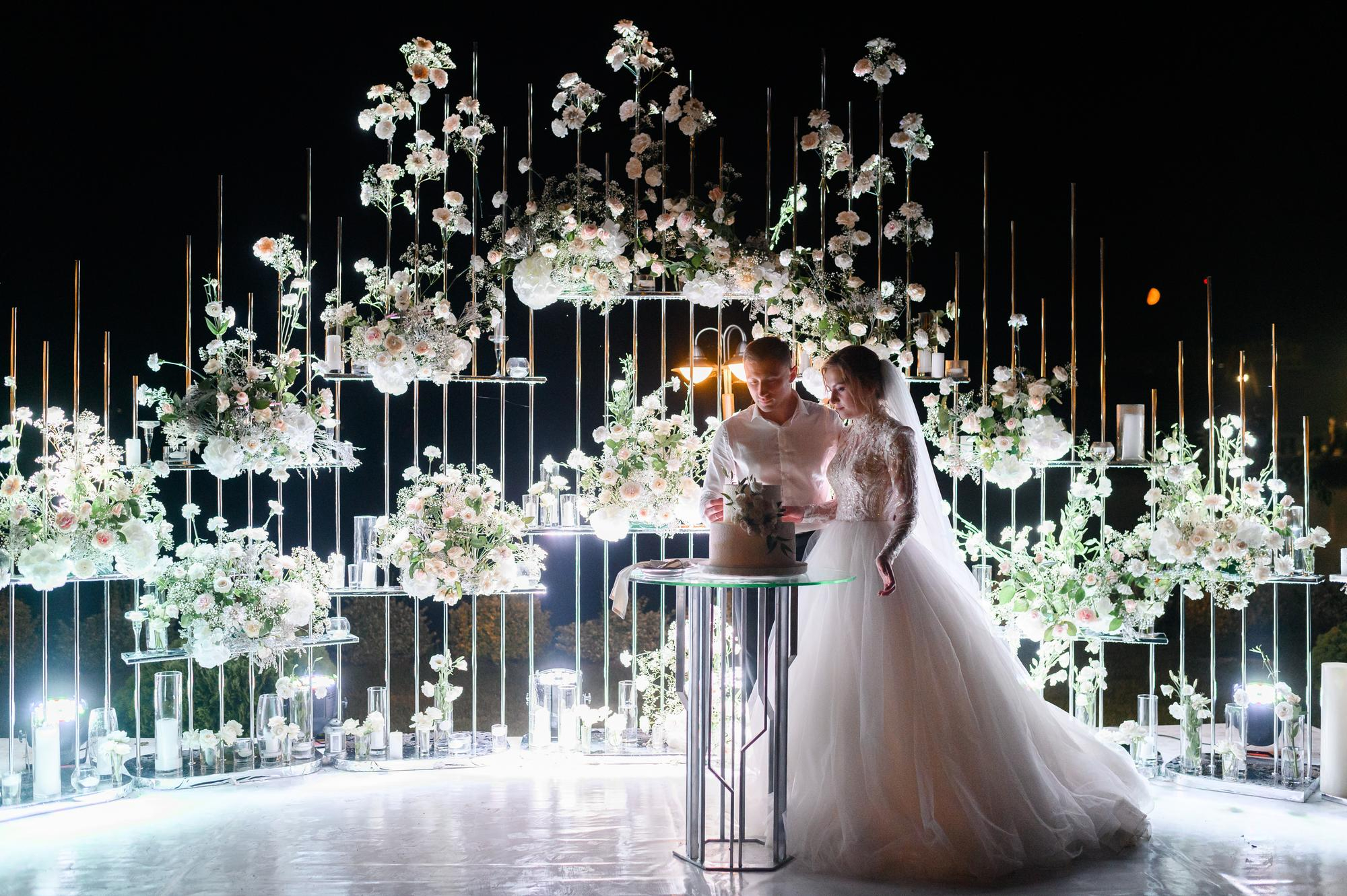
The Grand Aurelian was as extravagant as I had expected. Crystal chandeliers. Marble floors. Floral arrangements that probably cost more than most people’s monthly rent. I walked to the reception table in a rose colored dress and told the two women behind the guest list my name.
The woman’s finger traced down the list. Once, twice, a third time. Her smile faded. “I’m sorry, ma’am. Your name isn’t on the list.”
I stepped aside and called my sister. She answered on the second ring, impatient, the sound of the reception already humming behind her.
“I’m at the venue,” I said. “My name isn’t on the list.”
A short silence. Then a laugh, cold and sharp. “You really thought you’d be invited? This wedding is for people who matter, Oilia. Not someone who takes pictures for a living.”
I closed my eyes for a moment. “I just wanted to give you a gift.”
She scoffed. “What could you possibly give me that I don’t already have? Go home. Go back to your little life and stop pretending you belong in mine.”
“I understand,” I said. “I’ll leave it at the gift table.”
“Fine. Just don’t cause a scene.”
She hung up. I looked at my phone for a moment. Then I walked to the gift table, a long display overflowing with designer packages in Tiffany blue and Hermes orange and glossy white with gold ribbons, and I placed my small silver box at the edge, almost hidden among the extravagance. I slid a card beneath the ribbon. To Evelyn. From your sister, Oilia. Then I turned and walked out of the hotel without looking back.
I took a taxi to the airport and found a seat in the lounge and ordered a coffee and watched the planes rise into the fading sky. My phone sat on the table in front of me, silent. Not yet.
I thought about my grandmother. The way she looked at me when no one else did. The camera she put in my hands when I was ten. The sentence she said at my graduation that I had carried for years without understanding it, like a key to a lock I hadn’t found yet. The most valuable things aren’t always the ones people fight over. Sometimes they are the ones quietly given to the right person.
At the hotel, the reception was moving through its choreographed stages. Cocktail hour. Dinner. Speeches. And then, as tradition dictated, the bride began opening gifts. I know this because of what happened afterward, because several people in that room recorded what they saw, and because the account of those minutes was given to me later by Charlotte Whitmore with the measured precision of a woman who had watched the whole thing unfold from six feet away.
Evelyn reached my silver box near the end. She picked it up, read the card, and laughed loud enough for the nearest tables to hear. “A gift from my sister. The one who couldn’t even show up.” She untied the ribbon, still smiling for her audience, and lifted the lid. Inside was a thick envelope. Her smile faltered. She pulled out the legal document first, the notarized amendment, and read it. Her face drained of color. Then the letter in my grandmother’s handwriting. Then the photograph. Her hands began to tremble.
“This isn’t real,” she whispered. “Grandma loved me. She would never.”
My mother stood and reached her. She took the papers, read them, and went white. The notarized signature. The legal seal. The precise language declaring the entire Reed jewelry collection the sole property of Oilia Reed.
The room had gone quiet. The orchestra had stopped. Four hundred guests watched as Evelyn’s composure came apart, and from the nearest tables the whispers began. Isn’t that the collection she mentioned earlier? The two million? She said it was hers.
Then Adrien found the last document at the bottom of the box. The Reed Visuals contract. Client: Evelyn Reed. Owner: Oilia Reed. Amount paid: fifteen thousand dollars, non refundable. He looked at his wife. “You hired her company,” he said. His voice was quiet and sharp. “You told me your sister couldn’t keep a job. That she was struggling.”
Charlotte Whitmore stepped forward then. She examined the documents and said, clearly enough for the room to hear, “This is authentic. I was present when Margaret Reed signed this amendment two years ago. I witnessed her discuss it with her attorney.” She looked at Evelyn with something close to pity. “She told me Oilia was the only one who ever loved her for who she was, not what she owned.”
By the time the reception ended early, my phone had forty seven missed calls. Evelyn. My mother. My father. The messages came in waves, furious and panicked and demanding. You ruined everything. How could you do this. Call me immediately. I muted the phone and boarded my flight.
One message was different. It was from Adrien. He had gotten my number from the contract. He wrote that Evelyn had told him I was unstable, that I couldn’t hold a job, that the family had distanced themselves from me for good reason. He wrote that he had believed her without question and that he saw now that had been a mistake. He was not asking me to explain anything. He was saying he was sorry for believing her.
I replied: Thank you for reaching out. I don’t hold anything against you. Whatever you decide, I hope you find clarity.
He wrote back: The wedding is over. I just don’t know if the marriage is.
I turned off my phone as the plane began to move.
The weeks that followed were noisy in ways I had not anticipated. Someone at the wedding had filmed the gift opening and posted it online, and the video spread with the velocity that only public humiliation seems to generate. The comments were uniformly on my side, which should have felt validating but mostly felt exhausting. Strangers who did not know me were cheering for a version of me that was simpler and more triumphant than the real one. My inbox filled with interview requests. My company received hundreds of inquiries overnight. I deleted the requests and let my team handle the bookings and tried to remember that the point of what I had done was not to become a public spectacle but to stop being invisible.
Three days after the wedding, my mother appeared in my office lobby in San Diego. She was dressed immaculately, pearl earrings, silk blouse, but her eyes were red and uncertain, and she looked around at the reception desk and the framed magazine covers and the awards on the wall with the expression of a person who has walked into a room that contradicts everything they believed about the person who built it.
“All of this is yours?” she asked.
“Yes.”
“You never told us.”
“You never asked.”
She sat across from me in my office and clasped her hands tightly in her lap and tried to explain why she had come. She used the word stunt. She asked why I would humiliate Evelyn like that. I told her the documents were real, the will was valid, and everything in that box was true. I told her that Evelyn had spent months claiming something that was never hers, had lied to her fiance about me, had told everyone I was a failure.
“Mom,” I said quietly. “I spent twenty eight years being invisible to this family. I’m not asking for an apology. I’m asking for honesty.”
She looked around the room. The windows overlooking the city. The work I had built alone, without their help, without their knowledge, without their attention. Her gaze stopped on a photograph on my desk, me and my grandmother, both laughing.
And then she broke. Not the controlled tears she showed at events. Real ones, messy and uncontained. She said they had failed me. She said she had stayed silent and let Evelyn take everything. She said she had given Evelyn more attention because Evelyn demanded it, and that she had mistaken my quiet for contentment when what it actually was, she could see now, was the silence of a child who had learned that asking for love in that house was pointless.
“Your grandmother tried to tell me,” she said. “She said I was losing you. I didn’t listen.”
I did not offer forgiveness. It was too soon, and forgiveness given before it is ready is just another form of disappearing. But I nodded, and the nod meant something. It meant the door was not closed. It meant I was willing to stand in the same room and see what happened next.
She told me before she left that Adrien had postponed the honeymoon and was staying with his parents while he decided whether he still wanted the marriage. That Evelyn’s colleagues had seen the video. That Adrien’s family had called my father to ask if there were other lies. That Charlotte had confirmed everything. That the image Evelyn had spent her life building had come apart in a single evening.
“She blames you,” my mother said.
“I didn’t destroy anything,” I replied. “I just stopped pretending.”
Months passed. The video faded. The interview requests stopped. My name was no longer trending, and the version of my life that strangers had turned into a story gradually lost its hold on the public’s attention, the way all stories do when they are no longer new. But some things had changed beneath the surface, in the quiet space where families actually exist.
My mother began calling once a week. The conversations were careful at first, two people learning how to talk to each other after decades of not really doing it. She asked about my work, and for the first time, she listened. My father wrote me a letter, three pages, handwritten, apologizing for years he could not get back. I kept the letter in a drawer. I was still deciding what to say.
I arranged for the most historically significant pieces from the collection to be loaned to the Metropolitan Museum of Art, displayed with a plaque honoring Margaret Reed’s legacy. The rest I kept secured, not as possessions but as stories. My grandmother had understood the difference. Beauty is not about possession. It is about preservation. She had seen that in me before I could see it in myself, and the collection was her way of saying so in a language that would outlast her voice.
While arranging the loan, the bank manager handed me a sealed envelope that had been in the vault. Inside was one more note in my grandmother’s handwriting. She told me she had left Evelyn something as well, a small pearl bracelet that had belonged to her own mother. Simple, not valuable, but meaningful. If she ever understands it, I hope one day she will.
I stood there holding the note and let the tears come. Even in death, my grandmother believed Evelyn could change. She had left her the simplest piece in the collection, the one whose value could not be measured in dollars, and she had trusted that someday Evelyn might understand why.
Evelyn called me once, the first time since the wedding. She did not apologize, not exactly. But she did not attack me either. She said, “I’m trying to understand.” Her voice was stripped of the performance I had heard in it my entire life, and what was left beneath it was something smaller and more uncertain, something that sounded like a person at the beginning of a very long process of seeing herself clearly. I did not know if she would finish that process. I did not know if understanding would eventually become accountability or if it would remain a safe, permanent halfway point where she could acknowledge what happened without ever fully owning her part in it. But it was more than she had ever offered before, and I received it as what it was. A beginning. Not an arrival.
I keep a photograph of my grandmother on my desk, the one from outside the jewelry shop, both of us laughing at something I can no longer remember. Some mornings, when the office is quiet and the light is coming in through the east facing windows and the city below is just starting to move, I pick it up and look at her face and think about the ten year old girl who sat alone on her birthday until a woman with a wrapped box and a steady voice walked into the room and said, You see things differently.
She was right. I did see things differently. I saw the family I was born into, and I saw what it cost me, and I saw what I built with what was left over. I saw my sister’s wedding from the outside of a locked door, and I saw the silver box sitting on the gift table, small and plain among the luxury, carrying a truth that would not be contained any longer. I saw my grandmother’s handwriting on a letter she wrote knowing I would read it without her there, trusting me to choose the right moment and the right way.
She planted the seeds. I chose to grow.
Last Sunday my mother called and asked what I was working on, and I told her about a wedding I was photographing the following week, a small ceremony on the coast, sixty guests, a couple who had been together for eleven years and who were finally making it official. She asked if it was a big production and I said no, that the best weddings usually aren’t. She was quiet for a moment and then she said, “I’d like to see your work sometime. If that’s okay.”
I told her I would send her the link. After I hung up, I sat at my desk and looked at the photograph of my grandmother and thought about what she would say if she could see the two of us now, her daughter in law learning to ask questions she had never thought to ask, and me learning to let the answers be enough without needing them to fix everything at once.
I think she would have said, Good. That is how it starts.
Then she would have asked whether I had eaten, and I would have told her yes, and she would have believed me, and the conversation would have moved on to something ordinary and small and warm, the way conversations do between people who love each other and have all the time in the world, or who pretend they do, which in the end amounts to the same thing.
Specialty: Emotional Turning Points
Rachel Monroe writes character-driven stories about betrayal, second chances, and unexpected resilience. Her work highlights the emotional side of family conflict — the silences, the misunderstandings, and the moments when someone quietly decides they’ve had enough.