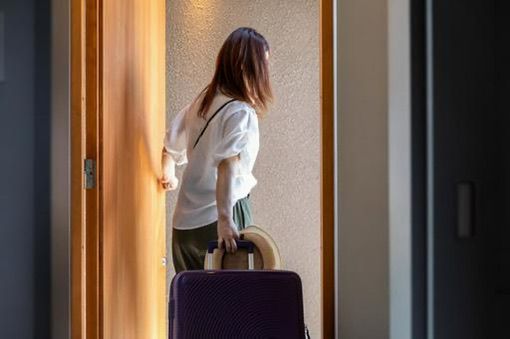
At Heathrow, Twenty-One Hours After Our Wedding
The first three words hit my screen while we were still standing in the customs line at Heathrow.
“Emergency family gathering.”
Harper leaned over and read them off my phone. I watched something change in her face — the last bit of honeymoon softness just… left. Replaced by something tighter. Something she’d been carrying for years now, ever since she figured out what my family actually was.
We had been married for exactly twenty-one hours.
Nine months of planning. Nine months of saving, cutting corners, skipping dinners out, dropping birthday money straight into a travel fund. $12,750 for thirteen days in Scotland — the Highlands, distillery tours, castle stays, winding roads through mist and green. Neither of us had ever taken a trip like that. It felt almost unreal that we were finally doing it.
Before I could even process the first message, another one came through.
“Your sister Madison fractured her leg. Someone has to babysit the kids. You need to come home today.”
Not can you. Not would you. Not even we need you. Phrased the way a manager pages a warehouse employee. Come in. Now.
I stared at the screen and felt something old and heavy settle back onto my shoulders. Something I thought I’d finally put down.
I had been the oldest of five children for twenty-nine years. But I had been functioning as a third parent since I was ten.
That was the year my mother went back to school for her master’s degree. Night classes three evenings a week, study sessions that swallowed most Saturdays. My father ran a sporting goods store — long retail hours, weekends, holidays. Someone had to stay home with the younger kids.
That someone was me.
Madison was seven. The twins, Carter and Dylan, were five. Sienna was three. I learned how to make macaroni and cheese before I learned long division. I changed diapers while the boys my age were playing Little League. I read bedtime stories and checked under beds for monsters.
By thirteen, I wasn’t helping anymore. I was running the house. I grocery-shopped with cash my mother left in an envelope marked food money. I cooked dinner most nights. I helped with homework, settled fights, handed out Band-Aids and Tylenol, and memorized which kid was allergic to strawberries and which one wouldn’t eat a sandwich unless it was cut into triangles.
My parents called me mature. Teachers called me an old soul. Nobody stopped to ask why a thirteen-year-old was doing the work of two adults.
It stayed that way through high school. I couldn’t join the basketball team because practice ran until 5:45 and someone had to be home when the kids got off the bus at 3:05. I missed parties because my parents had dinner reservations, or a movie, or a work trip they “couldn’t break.” Their idea of family time was me watching the kids while they went out together.
I got into Berkeley with a half scholarship. My dream school. My mother stirred her coffee and said, like she was commenting on weather, “That’s wonderful, but it isn’t realistic. The kids need you here.”
So I stayed local. State university. Lived at home, commuted thirty-five minutes each way, worked part-time in the campus bookstore, and came home every afternoon to make sure my siblings were fed and at least pretending to do their homework.
At twenty-three I graduated with a civil engineering degree and a real job. I moved into an apartment exactly seven miles from my parents’ house. Seven miles — as far as I could bring myself to go, because someone still had to be close.
That was when I met Harper.
She was a pediatric occupational therapist at the children’s hospital. Funny. Sharp. Unsettlingly observant. Four weeks in, we were eating Thai food when she looked up and asked a question that landed like a punch.
“So how often do your parents actually parent their own children?”
The night before, I had canceled our dinner plans because my mother needed me to watch the kids while she went to a retirement party. I answered defensively.
“They parent them. They’re just busy. It’s easy for me to help.”
Harper held my gaze for a long moment.
“You didn’t help last night,” she said. “You parented. There’s a difference.”
I had no answer.
She kept watching. She watched me cancel plans for emergencies that turned out to be inconveniences. She watched me spend weekends driving teenagers to soccer games while my parents attended their own social events. She saw the constant texts at all hours of the day.
Dylan needs poster board for an assignment due tomorrow. Can you pick up Sienna after gymnastics? I’m running late. Carter forgot his trumpet.
Always phrased as questions. Always functioning as commands. If I said no, I wasn’t refusing my parents. I was failing my siblings.
When I proposed to Harper after three years together, she said yes immediately. Then she looked me in the eye and said the more important thing.
“We need to talk about boundaries before we get married. Because I am not spending our marriage coming second to your parents’ convenience.”
We spent months in premarital counseling. Our therapist, Dr. Thornton, asked questions that made me sweat.
When was the last time I said no to my parents? Never.
Did they pay me for child care? No.
Had they ever thanked me? Not once in a way that meant anything.
Did I recognize any of this as exploitation?
That word hit me like cold water. Exploitation. Not help. Not family support. Not being a good son. Exploitation.
Five months before the wedding, I finally set limits. I told my parents I would no longer be available for routine child care. I could step in during actual emergencies — not Saturday soccer games, not forgotten lunchboxes.
My mother cried real tears.
“After everything we’ve done for you,” she whispered. “Now you’re abandoning your family.”
My father was colder.
“Fine. But don’t expect us to bend over backward if you ever need something someday.”
The message was plain. In our family, love was transactional.
The wedding was in April — eighty-five guests, a botanical garden Harper loved, a ceremony that felt clean and right. My parents smiled for photos. My mother cried through the vows. I wanted to believe it was real emotion instead of theater designed to make me feel guilty for growing up.
I thought the worst of it was behind us.
I was wrong.
Harper had wanted to see Scotland since she was a kid. She loved old history, ruined stone castles, the windswept loneliness of the Highlands. We planned every detail carefully — LAX to London to Edinburgh, a rental car, small inns, distillery tours, castle stops scattered across thirteen days.
$12,750. Paid for the hard way.
I told my parents about the trip eight months in advance. Eight months. My mother just nodded and said, “That’s nice, honey,” like I’d announced I was trying a new coffee shop. No questions about the itinerary. No recognition that this was the first time either of us was leaving the country. Just flat indifference.
Looking back, that should have been the warning.
The first real sign came four weeks before we left. Harper and I were making breakfast when my mother called in her crisp, school-administrator voice. She and my father had been invited to a wedding in Portland in September — on a date that fell squarely in the middle of our honeymoon. Could I watch the kids that weekend?
“I can’t,” I said immediately. “I’ll be in Scotland. I told you that months ago.”
A pause. Then: “So you can’t postpone? Just a few days? It would be rude to miss the wedding.”
The audacity stopped me for a second. They wanted me to reschedule my honeymoon so they could attend a distant cousin’s daughter’s wedding — someone I had met twice.
“Mom, we paid $12,750 for this trip. The flights are nonrefundable.”
Her voice shifted immediately into wounded martyrdom. “I just assumed family would come first. I didn’t realize we were such a burden now that you’re married.”
There it was. The accusation wrapped in self-pity. “Family comes first” always meant the same thing in her language: your needs don’t matter, ours do.
I stayed firm. She hung up without saying goodbye.
Six days of silence followed. Then a text: We found someone. A neighbor’s daughter. She’s charging us $240 for the weekend. Hope you enjoy your trip.
They didn’t hate paying for a sitter because they couldn’t afford it. They hated paying because the arrangement only worked when my labor was free.
We left LAX at 10:55 p.m. on August 28. I had already sent them our itinerary and warned them service would be limited in the Highlands. My mother texted back one word. Fine. My father said nothing at all.
The silence felt like a relief.
We landed at Heathrow on August 29. We were jet-lagged and planning to eat bad airport food and survive until our connection to Edinburgh. I turned off airplane mode out of habit.
It took less than a minute for the phone to connect.
Then it started vibrating. And again. And again. Other passengers glanced over. My stomach dropped before I even looked.
Thirty-plus messages. My mother, my father, Madison, family friends I barely knew. All marked urgent. All written in that shrill, catastrophic tone designed to make your chest tighten before you’ve absorbed a single word.
I opened my mother’s messages first. They’d started hours earlier, when our plane was somewhere over the Atlantic.
“Madison shattered her leg this morning and fell down the stairs. She’s in surgery. This is serious. Where are you? We need you home right now.”
Then: “I can’t believe you aren’t responding during a family emergency.”
Then: “Your sister could have died and you’re unreachable.”
My hands started shaking. Madison was twenty-two, still living at home while finishing nursing school. A broken leg was bad. Surgery sounded serious. I felt real panic rise in my throat.
Harper read over my shoulder, her face draining of color. “Oh no. Is she okay?”
“I don’t know.”
We found a quiet corner near a closed shop. I called my mother. She answered on the first ring.
“Finally,” she snapped. No hello. No grief. No tremor in the voice of a woman whose daughter had just come out of surgery.
“We were on a plane,” I said. “What happened? What kind of surgery?”
She sighed heavily. “She fell carrying laundry down the basement stairs. Shattered her tibia in three places. They had to put in a rod. She’ll be non-weight-bearing for at least seven weeks, maybe nine.”
“Okay. That’s awful. Is she out of surgery? Can I talk to her?”
“She’s in recovery and heavily medicated.”
Then came the real point.
“We need you to come home.”
Not: Madison is scared and wants to hear your voice. Not: we’re falling apart and just need support. It was this: someone has to watch the kids while we deal with Madison, and you need to cancel your honeymoon and fly home today.
Carter and Dylan were nineteen. Sienna was seventeen.
“Mom,” I said slowly. “The twins are adults. They can take care of themselves and help Sienna. Why do you want me to fly home from Scotland on the first day of my honeymoon to babysit teenagers?”
Cold silence. Then: “I can’t believe how selfish you’ve become.”
A beat.
“If you don’t come home, don’t bother coming back to this family.”
The words hung in the air the way they always did — familiar, ugly, effective. Emotional blackmail had always been her best weapon. She had decades of practice.
I swallowed and kept my voice steady.
“I hope Madison heals quickly. I’ll check in tomorrow. But we’re not coming home.”
I hung up before she could keep going.
Harper stared at me. “She threatened to disown you,” she said, slowly, “because we didn’t cancel our honeymoon to babysit teenagers.”
When she said it that plainly, the whole thing sounded ridiculous. But ridiculous doesn’t mean harmless. I had lived inside that pattern for nineteen years.
We boarded the short flight to Edinburgh. Fresh messages piled up the whole way. My father texted that my mother was distraught. Madison was asking for me. The kids were scared. By the time we checked into our first hotel — a renovated Victorian place in Old Town with uneven floors and a fireplace in the room — the trip already felt haunted.
I sat on the edge of the bed and called Madison directly.
She answered on the fourth ring, voice groggy and far away.
“Hey. Mom says you’re not coming home.”
“I’m in Scotland. I’m so sorry about your leg. How are you feeling?”
She was quiet for a second. I could hear hospital equipment beeping in the background.
“It sucks,” she said. “The surgery hurt and the pain meds are weird, but I’m okay. The doctor said it was a clean break, all things considered. I should recover fine.”
Relief hit me so hard my shoulders dropped.
Then I asked carefully: “So why is Mom calling this a family emergency that requires me to fly home?”
Madison sighed. “She’s freaking out because someone has to help me get around, and apparently she can’t handle that and the house. Carter and Dylan are adults. Sienna’s seventeen. I don’t know why she acts like they’re seven.”
There it was. The truth, blunt and infuriating. My mother didn’t want to parent. She wanted me back in my assigned role so she wouldn’t have to deal with her own household.
“I’m not flying home,” I said. “I gave them eight months’ notice. This is my honeymoon.”
“I know,” Madison said, sounding tired more than upset. “I told her that too. She’s on this whole family-obligation thing. It’s exhausting. Enjoy Scotland. Ignore the drama.”
We talked a few more minutes. I told her I loved her. She told me to have a good trip.
For a little while, I felt better.
Then it got worse.
The texts stopped being just from my parents. Aunts, uncles, cousins, family friends my mother had clearly recruited as backup. My aunt Marjorie told me she couldn’t believe I would abandon my family. Uncle Raymond said my mother was crying and I needed to fix it. Cousins I hadn’t spoken to in years suddenly had strong opinions about my cruelty and lack of values.
Every day brought a new flood of it. Bad son. Bad brother. Selfish husband. Family destroyer.
We were supposed to be walking the Royal Mile and sitting in cozy pubs drinking whisky. Instead I was in our hotel room staring at my phone, heart pounding, reading accusation after accusation and growing more unraveled by the hour.
On our third day, after I’d spent two hours responding to messages instead of hiking as we’d planned, Harper took my phone out of my hands.
“This has to stop,” she said. “They are ruining our honeymoon. We need help.”
That afternoon, from a hotel room overlooking Edinburgh, we connected with Dr. Marin Whitaker — a family systems therapist in Portland who specialized in emotional abuse, parentification, and toxic family dynamics.
I laid out nineteen years of history. She listened without interrupting. When I finished, she was quiet for a moment.
“What your parents did to you is called parentification,” she said. “It is a form of emotional abuse in which adult responsibilities are inappropriately assigned to a child. You were exploited from age ten onward.”
Hearing it named that plainly by someone with a license and sixteen years of experience changed something in my brain. Like a knot finally loosening.
She explained that the so-called emergency was a control tactic. A test to see whether I would break and return to my old role. She also introduced me to a term I’d never heard before.
“Flying monkeys. That’s what we call the family-wide attack when relatives are recruited to pressure and harass you. It’s deliberate.”
Then she gave me homework: document everything. Every text, every voicemail, every social media post, every timestamp, every exact phrase. If my parents escalated further, she said, I might need legal help. Evidence would matter.
I thought she was being overly cautious.
She wasn’t.
We drove north into the Highlands the way we’d planned. The scenery was extraordinary — rolling green hills, lochs clear as glass, old castles balanced on cliffs as if history had just dropped them there. Stirling Castle. Glencoe. Tiny distilleries smelling of peat and copper. It should have been perfect.
Instead my phone buzzed sixty times on some days.
Then, on September 4 — five days into the trip — my mother sent a message that made my blood go cold.
“Because you abandoned your responsibilities, we are filing a formal complaint with Adult Protective Services. The twins and Sienna are being neglected because you are not here to care for them properly. Enjoy Scotland while you can.”
My hands were shaking as I showed Harper.
“Can she even do that?” I asked.
Harper looked skeptical. “Adult Protective Services is for elderly or disabled adults. Your siblings are teenagers and young adults.”
That night we did an emergency session with Dr. Whitaker.
“She’s bluffing,” Dr. Whitaker said flatly. “She’s trying to scare you into coming home. But she’s also creating a paper trail that could backfire badly — because she is essentially documenting that she cannot parent her own children without her adult son’s unpaid labor.”
Three days later, on September 7, my phone rang from an unfamiliar Oregon number.
The man introduced himself as Troy Haldane from Child Protective Services.
Suddenly the bluff wasn’t just a bluff anymore.
“I’m sorry,” I said. “I don’t have minors in my household. I’m on my honeymoon in Scotland. Are you sure you have the right person?”
He sounded puzzled.
“The report identifies you as the primary caregiver for three minor siblings — Carter, Dylan, and Sienna Pierce — and states that you abruptly stopped caring for them without alternate arrangements, placing them at risk.”
The pieces snapped together with sickening clarity.
“My mother filed that report,” I said. “And she lied. Carter and Dylan are nineteen. They’re adults. Sienna is seventeen and lives with our parents, who are her legal guardians. I am their twenty-nine-year-old brother. I have no custody, no guardianship, and no legal responsibility for any of them.”
A long pause. Then Troy asked carefully if I could explain my actual role in the family.
So I did. All of it. The parentification starting at ten. The nineteen years of unpaid child care. The boundaries I set before the wedding. The honeymoon we’d planned for months. My mother’s demand that I cancel it to watch teenagers, and the weeks of harassment when I refused.
He listened. I could hear him typing.
When I finished, he said something that changed the shape of the entire situation.
“Mr. Pierce, in trying to make you sound neglectful, your mother made several concerning admissions about her own parenting.”
He told me CPS would be doing a home evaluation within seventy-two hours. They would interview the children, inspect the house, and assess whether the minors in the home were being adequately cared for.
“For the record — you are not in any legal trouble. You are an adult sibling with no custody arrangement. But your mother’s admission that she cannot adequately care for her children without your constant presence is deeply concerning.”
After we hung up, I called Dr. Whitaker.
“CPS is investigating my parents,” I said. “Because my mother tried to report me for not babysitting.”
A pause. Then: “If CPS finds problems, Logan, it is because the problems exist. Not because you stopped hiding them. You have been covering for your parents so long that no one could see what was underneath. The second you stepped away, the damage became visible.”
She was right. I had been a bandage over a wound that was never healing.
CPS did the home visit on September 9 while Harper and I were near Loch Ness, trying to enjoy a distillery tour. That evening Troy called with an update.
His voice was calm and professional as he listed the concerns. The house was dirty and disorganized. Very little fresh food in the refrigerator. Laundry overflowing. Dylan had answered the door because my parents were still asleep at 9:40 on a Thursday morning.
Sienna had missed four days of school with no documented excuse.
Then Troy told me what the children said in their interviews. Each one confirmed I had previously handled most of the household management, child care, and emotional support. The twins said they were now suddenly expected to fill that role without guidance. Sienna said she felt abandoned — not by me, he clarified, because she understood I was on my honeymoon — but by our parents, who seemed unable to parent now that I wasn’t there to hold everything together.
CPS opened a case.
My parents were ordered to complete parenting capacity assessments, attend mandatory family counseling, and demonstrate they could meet Sienna’s basic needs without relying on their adult son.
The weight of it nearly crushed me. My mother had tried to weaponize the system against me and accidentally turned it on herself.
After the home visit, my parents stopped calling directly. It didn’t last.
The flying monkeys got worse. Family members started calling Harper’s workplace, trying to get her fired for turning me against my family. Someone posted on my engineering firm’s Facebook page calling me an abusive brother who had abandoned his disabled sister. My mother had launched a full campaign — telling anyone who would listen that I had refused to help during a medical crisis, called CPS out of spite, and destroyed the family over money and a vacation.
The lies were polished enough that some people believed them.
Dr. Whitaker had warned me.
“When you stop enabling dysfunction, the dysfunctional people rewrite the story and cast you as the villain. Admitting they are the problem would require self-reflection. And that is often the one thing they cannot tolerate.”
I understood it intellectually. It still hurt to watch my name dragged through the mud by relatives who had never seen what my life actually looked like.
On September 11, I got an email from Daniel Cross of Cross Family Law Group. Dr. Whitaker had referred him to me after reviewing my documentation. He specialized in family law, harassment, exploitation, and parental retaliation.
We did the consultation from a corner booth in a small Highland pub, Harper and I huddled over my phone while rain streaked the windows outside.
Daniel’s bottom line was clean and unambiguous: my parents had no legal right to my time, labor, or money. I was not responsible for their children. I never had been. Any suggestion that I had a legal duty to provide child care was fiction.
He recommended a cease-and-desist letter ordering them to stop contacting us directly or through third parties and to stop making false statements about us.
Harper and I agreed immediately.
We finished the honeymoon, technically. We saw more castles. We hiked through landscapes that looked like they belonged in a painting. But every part of it was shadowed by the constant buzz of my phone, the guilt that had been drilled into me since childhood, and the feeling that my family was coming apart on the other side of an ocean.
When we landed back in Los Angeles on September 12 and I turned my phone on at baggage claim, I braced for the usual avalanche.
Instead there was one message from an unknown number.
“Hi. It’s Carter. I got a burner phone so Mom can’t monitor this. Can we talk?”
I called him from baggage claim. He answered immediately.
“Are you back?” he asked.
“Just landed. What’s going on? Are you okay?”
He was silent for a second. When he spoke, his voice sounded stretched thin.
“Mom and Dad are telling everyone you called CPS to destroy the family. They say you made everything up to punish them. Aunt Marjorie and Uncle Raymond were here yesterday. It was basically an intervention about what a terrible person you’ve become.”
A rough breath.
“Dylan and I know that’s not true. Since you left, it’s been a nightmare. Mom barely functions. Dad works and then zones out in front of the TV. Sienna is struggling and nobody is helping her. The CPS lady should have been here years ago, but Mom acts like you orchestrated all of it.”
“I didn’t call CPS,” I said. “Mom called them trying to get me in trouble. They investigated because of what she said and found real problems.”
Carter made a sound that was half laugh, half sob.
“I know. Dylan knows. We’re not stupid. We’ve been watching this our whole lives. You leaving just made it impossible to ignore anymore.”
Then he told me he and Dylan had already signed a lease together. Moving in six weeks.
“We can’t do this anymore,” he said.
I understood. I could hear it all in his voice — relief and grief and the strange maturity that comes from growing up in a house where someone always has to become the adult too early.
The next day, Harper and I met Daniel Cross in his downtown office. He was older than I expected, steady and precise, with the kind of calm professionalism that makes you feel less alone the minute he starts talking.
We laid out everything: the texts, voicemails, social media attacks, CPS report, fake emergency, workplace harassment — all of it. Daniel listened, took notes, and leaned back in his chair.
“This is one of the clearest cases of parental exploitation followed by retaliation that I’ve seen,” he said. “You have extensive documentation. The CPS findings support your account. If your parents threaten legal action, they have no standing. None.”
I asked if they could sue me for anything.
He shook his head. “They could file something frivolous. Anyone can try. But there is no legal concept that makes an adult sibling responsible for providing child care to younger siblings.”
He slid the cease-and-desist letter across the table. Crisp, formal, blunt. My parents were to stop contacting me or Harper. Stop recruiting relatives to harass us. Stop making false statements. Stop attempting to hold me responsible for my siblings’ care. Failure to comply would lead to restraining orders and defamation claims.
It felt severe. It also felt overdue.
Harper and I signed the authorization.
The letter was delivered on September 18 at 3:12 p.m.
Twenty-two minutes later, my mother called and left a voicemail that was three minutes of screaming, sobbing, and half-coherent rage. I caught fragments — “ungrateful,” “lawyer,” “destroying the family.”
Then my father called. When I answered, his voice was flat and cold.
“So this is what we’ve come to,” he said. “You’re threatening us with lawyers because we asked for help with your own family.”
The rewriting was masterful. A demand that I cancel my honeymoon had become a simple request for help.
“Dad, you didn’t ask for help,” I said. “You demanded I cancel my honeymoon to babysit teenagers. When I said no, Mom exaggerated a medical emergency, weaponized my siblings, recruited relatives to harass us, and accidentally triggered CPS on herself. That isn’t asking for help. That’s abuse.”
A long silence.
“If that’s how you see it,” he said, “I don’t think we have anything more to discuss.”
He hung up.
That was the last time I ever spoke to either of my parents.
The CPS case ran for five months. My parents completed parenting assessments and scored poorly on emotional availability and child engagement. They attended four sessions of mandatory family counseling and then quit, claiming the therapist was biased.
The condition of the house improved a little, mostly because Carter and Dylan were cleaning and cooking before they moved out. Sienna went back to school, but her grades dropped. She told her school counselor she felt emotionally neglected at home — that she got herself to school, made her own meals, managed her own schedule, and received almost no guidance from her parents.
In January, Carter called with more news.
“Madison’s moving out. Got a job at a hospital in Seattle. Transferring to finish nursing school there.”
I felt relief for her first. Then immediately: “What about Sienna?”
Carter went quiet.
“She’s counting down the days until she turns eighteen in May. She already got into state and wants to live in the dorms. Five more months and she’s out. She just has to survive until then.”
That word lodged in my chest like a stone. Survive. The little girl I had helped raise, now just surviving in her own parents’ house until she could legally escape.
“Is she safe?” I asked.
“Physically, yes,” he said. “Emotionally? Mom and Dad barely talk to her. They’re like roommates who ignore her. She eats dinner in her room most nights.”
In March, Sienna called me herself.
“Hey,” she said. Her voice was steadier than I’d heard it in a long time. Older somehow. “I wanted to tell you before you heard from someone else. I got into state on a full academic scholarship. Moving into the dorms in August.”
Pride hit me so hard it almost hurt.
“Sienna, that’s incredible. A full ride is amazing.”
She laughed, but there was sadness underneath it.
“I basically raised myself this year,” she said. “Did all my college applications alone. Wrote all my essays alone. Figured out financial aid alone. Mom and Dad didn’t help with any of it. They didn’t even ask.”
We talked for over an hour — her plans, her fears, the shape of the life she wanted once she was free. She told me she’d been seeing a therapist through her school counselor and was starting to understand that what happened in our house had never been normal.
“I get why you set boundaries,” she said quietly. “I’m going to do the same thing once I’m out. I’m going to build my own life, and they can figure out how to function without using their kids as unpaid labor.”
The CPS case closed in May, just before Sienna turned eighteen. Troy called me himself.
“We’re closing the case because all the children are adults now,” he said. “For what it’s worth — you didn’t cause this. Your parents did. You simply stopped enabling them to hide how inadequate they were. Your siblings are smart, resilient, and getting out. That’s the best outcome we could realistically hope for.”
Then he added: “What you did — setting boundaries, protecting your marriage, refusing to sacrifice yourself — that took courage. Your siblings learned from watching you that it’s possible to choose yourself. That matters.”
My parents still haven’t spoken to me. It’s been twenty months since the honeymoon. I’ve seen them only a handful of times from a distance — at family events where we stayed on opposite sides of the room, once at a grocery store where my mother turned her cart around the second she saw me.
They look older now. Smaller somehow. Like ordinary aging people who made catastrophic choices and are living with the weight of them.
Sometimes I feel sorry for them.
Mostly I feel nothing.
Madison is thriving in Seattle. Carter and Dylan share an apartment and are doing well in school. Sienna moved into the dorms in August and calls me regularly with stories about classes and friends and the strange joy of finally having a life that belongs to her.
She told me once that she barely speaks to our parents.
“They don’t know how to relate to me as a person,” she said. “They only knew how to relate to me as someone they could use. Now that I’m not available for that, there’s nothing left.”
It was sad. It was also true.
Harper and I celebrated our third anniversary with a long weekend at the Oregon coast. Small inn, long walks on the beach, fresh seafood, cold salt air. For the first time in what felt like years, we did the one thing our honeymoon never really let us do.
We relaxed.
No emergency calls. No guilt trips. No fake crises. Just the sound of the Pacific and the quiet simplicity of a life that no one else was allowed to control.
That night, watching the sun sink into the ocean, Harper asked if I regretted how everything happened.
“You lost your parents, basically,” she said softly. “That’s not nothing. Do you wish you’d handled it differently?”
I thought about Carter’s exhausted voice on a burner phone. About Sienna filling out college applications at the kitchen table, alone. About nineteen years of being a parent to children who were never mine to raise.
“No,” I said. “I regret that it was necessary. I regret that my parents chose control over a real relationship. I regret that my siblings got hurt. But I don’t regret protecting our marriage. Because if I had flown home from Scotland and stepped back into that role, it never would have ended. They would have owned me forever.”
Harper squeezed my hand.
“You chose yourself,” she said. “You chose us. And you gave your siblings permission to do the same.”
Two weeks ago, Sienna sent me a handwritten letter.
“Dear Logan,” it began. “I’ve been thinking a lot about what happened during the honeymoon. I was confused and angry at first, but now I understand. You weren’t abandoning us. You were showing us that it was possible to set limits. Watching you choose your own life while everyone accused you of being selfish taught me something I needed to learn — that my worth does not depend on how useful I am to other people. I’m allowed to want things for myself. Thank you for that. I hope you and Harper are happy. You deserve to be happy after everything you gave up for us. Love, Sienna.”
I called her that night. We talked about her psychology major, her plan to someday work with kids from dysfunctional families. At the end of the call she said something that caught in my throat.
“I’m glad you went to Scotland,” she said. “I’m glad you didn’t let them ruin your honeymoon. You deserved that trip.”
After we hung up, I sat in the living room of the house Harper and I bought last year and looked at the quiet life we’d built. No manufactured emergencies. No manipulation. No demand that I erase myself for someone else’s comfort.
My parents expected me to cancel my honeymoon and fly home to care for children who were never my responsibility. When I refused, they tried to destroy me. They staged emergencies, weaponized my siblings, recruited relatives to harass us, made legal threats, and accidentally invited a state investigation into their own home.
In the end, they lost far more than I did. They lost authority over their children’s lives. They lost real relationships with nearly all of us. They lost the version of me who had spent nineteen years quietly patching over damage they refused to face.
Some relatives still believe their version of events. Some probably always will. I don’t care anymore. Therapy records, CPS findings, legal documentation, and my siblings’ own words tell the truth plainly enough.
I was never supposed to be their parent.
I was supposed to be their son. Their brother. A family member with a life and limits and a marriage that mattered.
When I finally stopped being their unpaid servant, the entire structure they had built on my sacrifice collapsed under its own weight.
That was not my failure.
That was theirs.
And I am free.
Specialty: Emotional Turning Points
Rachel Monroe writes character-driven stories about betrayal, second chances, and unexpected resilience. Her work highlights the emotional side of family conflict — the silences, the misunderstandings, and the moments when someone quietly decides they’ve had enough.