My grandson arrived on a rainy Thursday afternoon in October, carrying a small duffel bag and wearing a navy coat that looked too expensive for the neighborhood I was living in.
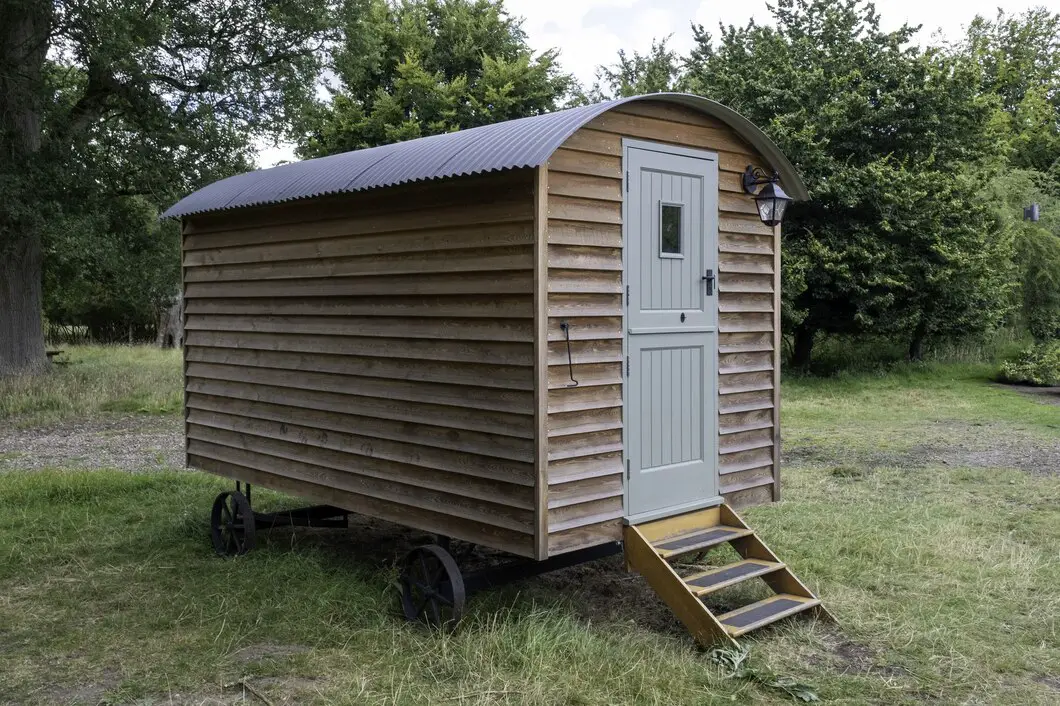
I was peeling potatoes in the tiny kitchenette connected to the back room my son referred to as my space. In reality, it had been a storage extension behind the garage before Brian decided it suited me. The ceiling was low, the walls thin, and whenever it rained I could hear every drop hitting the metal gutter outside my window like a small accusation. There was just enough room for a single bed, one dresser, a hot plate, and a chair with one uneven leg. Brian told people I preferred the privacy. He said it so often I had begun to wonder if I was supposed to believe it too.
I was still drying my hands on a dish towel when I heard the back gate creak open.
“Grandma?”
I turned so quickly I nearly dropped the knife. “Ethan?”
He crossed the narrow concrete path in a few long strides and hugged me the way you hug someone when you have been quietly worried about them for longer than you admitted. He was stronger than I remembered, broader through the shoulders, more settled in himself. At twenty-eight he had grown into the kind of stillness that serious people carry. I hadn’t seen him in nearly three years, not since he moved to Chicago after law school. He had called, sent flowers on my birthday, apologized for being busy in the way young people do when they are genuinely trying. But seeing him standing there in the October rain felt like something returning to a room that had forgotten what it was for.
“I wanted to surprise you,” he said.
“Well, you certainly did that.”
He stepped inside and his eyes moved across everything slowly. The worn curtain. The medicine bottles lined up on the windowsill like a small army. The portable heater angled toward the bed. The single overhead bulb. His smile didn’t disappear all at once. It went gradually, the way warmth leaves a room.
“Why are you out here?” he asked, quietly enough that it wasn’t quite a question yet.
Before I could answer, the kitchen door from the main house opened hard against the frame. Brian walked across the yard with his jaw already set, Melissa a step behind him with her arms crossed and the expression she wore when things weren’t going to plan.
“There you are,” Brian said to Ethan, aiming for cheerful and landing somewhere short of it. “We thought you’d come through the front.”
Ethan didn’t look away from me. “Grandma lives here?”
“It’s a guest suite,” Brian said.
Melissa added, “She likes having her own space.”
I started to speak. I had been smoothing moments like this for years, finding the phrase that made everyone comfortable and nothing honest. It had become as natural as breathing and as damaging. But Ethan spoke first.
“This is a converted storage room,” he said.
Brian’s face tightened. “Watch your tone.”
“Why is my grandmother living behind the house?”
Brian’s answer came out sharp, the way things come out when they have been compressed too long.
“Because the house belongs to my wife now. And if my mother complains, she’s out for good.”
The yard went quiet except for the rain on the gutters.
Melissa took a breath — not because she disagreed, but because he had said it openly, in front of a witness.
I felt the embarrassment before the anger, the way I always did. The kind of embarrassment that comes from having let something become normal that shouldn’t be. “Brian,” I said. “Stop.”
But Ethan had already moved past stopping.
He looked at me, then at the room, then at the cracked step, then at the prescription bag visible through the doorway. Then he looked back at his father with the expression of someone who has just finished adding up a long column of numbers and found the total offensive.
“Tell me whose name is actually on this property,” he said.
Brian laughed, the kind of laugh designed to make a question sound foolish. “That’s none of your concern.”
Ethan set his duffel bag down on the concrete path with great care. It was the kind of deliberate movement that takes the place of something louder.
That was when I noticed what was under his arm. A leather portfolio, dark and worn at the corners from use. And on his collar, a small gold bar pin I recognized from photographs he had sent me — the kind awarded by his firm for making partner.
Brian didn’t know. Brian had stopped paying close attention to Ethan around the time Ethan stopped needing things from him, which had been earlier than either of them wanted to admit.
Brian thought he was talking to his son.
He was actually talking to an estate and property attorney who had spent the past four years specializing in exactly the kind of arrangements that produce women living in back rooms behind the homes they once owned.
Ethan didn’t raise his voice. He didn’t make a speech. He simply said, “Grandma, would you get me a glass of water? And while you do, I’d like to sit down with Dad for a few minutes.”
I got the water. I sat at the small table in my kitchenette and looked at the rain coming down the gutter pipe and I did not try to hear what was being said in the yard.
Whatever it was, I knew one thing from the way Ethan had set his bag down.
He had not come to visit. He had come because he had been worried for months and had finally decided that worry was not enough.
Ethan stayed four days.
On the first evening, after Brian and Melissa had gone inside, he sat with me at the small table and asked me to tell him everything. Not with the urgency of someone looking for a fight, but with the patience of someone taking a deposition. He had a yellow legal pad and he wrote things down, dates and names and the general shape of what had happened, and he didn’t react to any of it in ways that made me feel worse than I already did.
What had happened was not dramatic. That was the thing about it. There was no single villain, no single terrible day. There was a period after my husband Harold died when I was very tired and very sad, and Brian had come to me with papers at a time when papers felt like one more thing I couldn’t manage, and I had signed things because he was my son and I trusted him and because the alternative was understanding what I was signing.
A transfer of title. A living arrangement agreement. Language I had not read carefully enough or had not understood well enough to know what I was giving up. The house Harold and I had paid for together over thirty-one years, the house where Brian had grown up, the house where Ethan had spent his summers and learned to ride his bicycle in the driveway — it was now, legally, Melissa’s.
“Did you have your own attorney when you signed?” Ethan asked.
“Brian said we didn’t need one. He said it was family.”
Ethan wrote something down.
“Did anyone explain to you what the documents meant before you signed?”
“Brian said it was just to protect the property. In case anything happened.”
“In case anything happened to whom?”
I thought about it. “He didn’t say exactly.”
Ethan wrote more. Then he set the pen down and looked at me, and I recognized his expression because I had seen it on Harold’s face in certain moments — not anger, not pity, but the concentrated attention of someone deciding that something needs to be fixed and they are the person who is going to fix it.
“Grandma,” he said. “I need to look at everything. Every document, every piece of paper connected to this house. Can you help me find them?”
I could. I had kept copies of everything in a manila folder in the bottom of my dresser drawer, the way Harold had always kept important papers, because Harold used to say that the documents you need most urgently are always the ones you can’t find.
Ethan spent the second day reading. All of it, carefully, making notes. I made him tea and left him alone. Melissa tried to come into the back room twice and found the door closed. Brian came to the back door once and knocked and Ethan opened it and said, “I’m working, Dad. I’ll find you when I’m done,” in a tone that Brian apparently recognized as not negotiable, because he went back inside.
On the third evening Ethan sat down across from me again.
“Tell me what you want,” he said.
“What do you mean?”
“I mean exactly what I said. Not what you think is realistic, not what you think Brian will allow. What do you actually want?”
I looked at the low ceiling of the room. The metal gutter outside the window. The single uneven chair.
“I want to have my house back,” I said. “Or enough of it that I can live like a person again.”
He nodded. “That’s what I thought.”
What followed I will describe only in general terms, because the details were complicated and Ethan explained them to me more than once before I fully understood them. The short version is that the documents Brian had presented to me were not fraudulent exactly, but they had been executed under circumstances that a court would find troubling. I had signed without independent counsel. Certain things had not been explained to me. There was a question about my capacity at the time, given that I had been dealing with Harold’s death and had been prescribed medication for anxiety that I had since stopped needing.
Ethan also found something Brian had apparently not considered: a clause in Harold’s original will, predating the transfer, that established certain rights for me regarding the property that the transfer documents had not properly extinguished. Harold, who had also believed in keeping careful records, had been more specific in his will than Brian had accounted for.
“This is actually a reasonable case,” Ethan said, on the fourth morning over coffee. “I’m not promising you anything. But it’s a reasonable case.”
He called Brian into the back room that afternoon. I sat in my chair with the uneven leg. Ethan sat on the edge of the bed with his legal pad. Brian stood near the door the way people stand when they are preparing to leave quickly.
Ethan walked him through it. The clause in Harold’s will. The questions about the transfer process. The options available, which ranged from negotiating a new arrangement to beginning formal proceedings.
Brian’s face went through several things. First the dismissive certainty he had worn through most of the past two years. Then something more uncertain. Then something that looked, briefly, like the face of the boy who had grown up in this house and knew very well what his father would have thought of the current arrangement.
“I didn’t do anything illegal,” Brian said.
“Maybe not,” Ethan said. “But a judge is going to have questions about the process. And a judge is going to see a woman in her seventies living in a back room of a house she paid for. That’s going to require some explaining.”
“This is my home,” Melissa said from the doorway. Neither of them had heard her come to the door.
“It’s a complicated question of whose home it is,” Ethan said, without looking away from Brian. “Which is why we’re going to work it out now, between us, instead of letting someone else work it out later.”
The conversation that followed lasted two hours. I was present for most of it and will say only that it ended with an agreement to revisit the property arrangement with all parties represented by counsel, and an understanding that my current living situation was going to change in the immediate term while the larger questions were resolved.
Brian did not apologize. I did not expect him to. There are some things in families that are too complicated for apologies to reach.
Ethan left on Saturday morning. He hugged me at the back gate the way he had arrived, tightly, and he said, “I should have come sooner.”
“You came when you came,” I said. “That’s enough.”
“It’s not enough,” he said. “But we’re going to fix it.”
He kept his word. The legal process took several months and was, as Ethan had said, complicated. What emerged from it was not a complete restoration but something real: a formal life tenancy agreement, properly documented, with my name on it, giving me the right to occupy the main bedroom and the primary living spaces of the house for as long as I lived. The back room, which Brian had called my space, was converted back to storage.
Brian and Melissa still live in the house. We are civil with each other in the way that people are civil when civility is all that remains. I do not pretend it is more than that.
But I sleep in a real bedroom now. I have my kitchen back. I tend a small garden in the side yard in the mornings, the way Harold and I used to tend it together, and sometimes when the light is right I can almost hear him saying something about the tomatoes.
Ethan visits when he can. He brings more warmth in a weekend than the house had held in two years.
When people ask me what changed, I tell them the truth. It wasn’t one dramatic confrontation. It wasn’t revenge or victory or anything that satisfying.
It was a young man arriving in the rain with a leather portfolio under his arm, asking a question I had been too tired to ask myself, and then refusing to accept an answer that wasn’t true.
One honest question, asked with care.
And someone with the knowledge and the love to do something with the answer.
That was all it took.
That was everything.

Laura Bennett writes about complicated family dynamics, difficult conversations, and the quiet moments that change everything. Her stories focus on real-life tensions — inheritance disputes, strained marriages, loyalty tests — and the strength people find when they finally speak up. She believes the smallest decisions often carry the biggest consequences.