My name is Bella Marsh. I am thirty-one years old, and I bought my lake house with money I earned, saved, and spent without asking anyone’s opinion about it.
That sentence should not need to be stated. It is the kind of sentence that ought to be so obvious it never requires saying out loud, the way you don’t announce that the shoes on your feet belong to you or that the car in your driveway is yours because you paid for it. But families have a particular talent for making the obvious require documentation, and this is a story about documentation, so I am stating it plainly at the start.
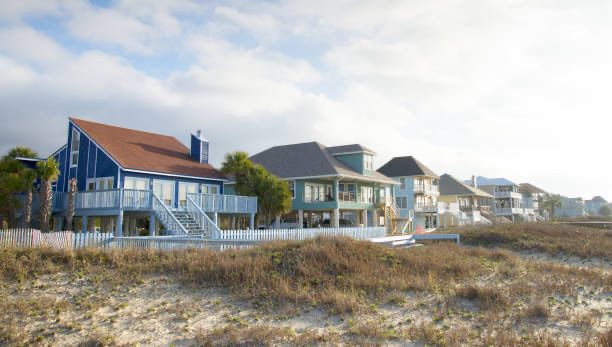
The house sits on Carver Lake in the hill country about two hours north of the city. I found it three years ago through a listing that had been sitting on a regional real estate site long enough to gather the particular digital dust of a property that hasn’t found the right person yet. Cedar siding gone silver from years of weather. A wraparound porch that needed two new boards. A kitchen that was functional and ugly in equal measure. A dock that extended twenty feet over the water and needed its pilings inspected before anyone stood on it with confidence.
I bought it because of the light.
I know that sounds like the kind of thing people say in movies, but I am not a sentimental person by nature and I say it as plainly as I say anything else. I stood on that porch on the afternoon of my second viewing, watching the October light come across the lake at the angle that only happens in the late afternoon of the kind of clear fall day that makes you remember summer is over and be grateful rather than sad about it, and I thought: this is the place I will go when I need to remember who I am outside of the office.
I paid three hundred and forty thousand dollars for it. I spent the following eight months and a not-insignificant additional sum repairing the dock, replacing the kitchen appliances, refinishing the floors, and making the porch into something that could hold a chair and a cup of coffee and the version of myself that needed to be somewhere quiet. Every contractor bill came to me. Every permit was filed in my name. The deed, which I have now read so many times I could recite it in the dark, has one name on it. Mine.
For three years, the lake house was the most uncomplicated thing in my life. Which is saying something, because my life outside of it has not been notably uncomplicated.
I work in corporate finance. The hours are long and the stakes are high and the work is the kind that follows you home whether you want it to or not, that sits with you at dinner and wakes you up at three in the morning with a detail you forgot to verify. I am good at it, which means I am asked to do more of it, which means I have spent my twenties and the beginning of my thirties in a sustained negotiation between ambition and exhaustion that I have not always won. The lake house was where I went to call a ceasefire in that negotiation. Cedar in the air. The old screen door that never quite closed without a specific lifted-and-pushed technique only I had perfected. The water in the morning when it was still enough to reflect the sky like a second sky laid flat.
My family came up occasionally. My parents twice in the first year, once in the second. My brother Jacob and his wife Victoria for a long weekend the summer after I finished the porch renovation, which Jacob had looked around and assessed with the expression he uses when he is cataloguing things, a slow survey that starts at the ceiling and ends at the floor and leaves you with the feeling that something has been measured.
I noticed the expression and set it aside because I had been setting Jacob’s expressions aside my whole life, which is a survival skill particular to younger siblings of a certain family configuration. Jacob is three years older than me and has been, for most of our lives, the axis around which family decisions naturally arranged themselves. Not because he demanded this. Not because he was cruel or grasping in obvious ways. But because he was the first, and firstness in families carries a gravitational pull that shapes orbits without anyone consciously deciding to let it.
He married Victoria six years ago. She is polished in the way of people who have decided very early on what impression they want to make and have maintained it without interruption since. She laughs at the right moments and remembers small personal details and deploys them at subsequent gatherings in a way that feels like warmth but operates more like filing. She has never said anything unkind to me directly. This is not the same as having been kind.
They had been trying to buy a house for two years. The market in the city had been unkind to them, and they had lost three bids and withdrawn from two others for reasons Victoria explained at length at a family dinner last spring while my mother listened with the focused sympathy she reserves for Jacob’s inconveniences and my father nodded at intervals. I listened too. I said the things you say. I meant them, or most of them. I had no idea that the conversation was, from some perspectives at the table, a problem in search of a solution, and that the solution was already sitting in someone’s mind with my deed number attached.
I left for the lake house on a Friday. The week had been long even by my standards, and I had been anticipating the drive with the physical relief of someone who has been holding their breath and is about to stop. I did not call ahead because I did not need to call ahead. I had never needed to call ahead in my own house. I turned off the main road onto the gravel drive, and the sound of the tires on the gravel was as restorative as I had expected it to be, and I took a breath and reached for the door.
The smell reached me before the sight did. Plaster dust and cut wood and something chemical I couldn’t immediately identify. Then I stepped inside and stopped.
The kitchen was gone.
Not damaged, not partially altered. Gone, in the sense that the cabinets had been removed and the countertops had been torn out and the walls behind them had been opened to the studs and then covered in plastic sheeting. The living room had been pulled apart in a different way, walls opened along one seam, the floor near the fireplace taken up to concrete. My reading chair sat buried under a stack of boxed fixtures with a product sticker for a bathroom vanity I had not ordered.
Sunlight came through the windows at the angle that usually made the room beautiful and instead lit up floating dust.
I stood in it and tried to make the room make sense.
Then I heard footsteps on the porch, and my mother came through the door with the ease of someone arriving somewhere familiar, wearing a linen blouse and a look of mild surprise at seeing me that did not reach the level of actual surprise.
“Bella, sweetheart. You’re here early.”
I turned and looked at her and then at the room and then at her again. “What happened to my house?”
She gave the small dismissive wave she uses to move past unpleasant observations. “Don’t focus on the mess. It’s going to be beautiful when it’s done.”
“Done,” I repeated. “When what is done? Who authorized this?”
My father came through the door behind her, wearing the expression he has worn my entire life in moments of family friction, a kind of preemptive diplomacy that consists of looking as though he would very much like everyone to lower their voices and discuss this over something warm to drink.
My mother said, “Your father and I have been planning this for months.”
I want to stay with that sentence for a moment, because it is the one that tells the whole story in the smallest space. Not “we wanted to talk to you about this.” Not “we know we should have asked.” Just: we have been planning this. As though planning constituted authorization. As though the months of thought they had given to my property were a form of ownership that superseded the deed.
I checked my phone. I went back as far as the search would go. Every message from every family thread. Nothing about a renovation. Nothing about contractors. Nothing about any decision involving the house I owned.
“There is nothing here from either of you about any of this,” I said.
My father said, in the careful tone of a man choosing his words in a minefield, that my mother had mentioned wanting to update the house at a dinner, and that I had said it sounded fine. I held his gaze until he looked away, because we both knew that a half-heard comment over a family dinner was not permission to gut a kitchen, and we both knew he knew that, and there was nothing left to say about it.
Then my mother said: “We’re doing this for the family. Jacob and Victoria need more space, and this house makes more sense for them.”
Not for a visit. Not for summers. For them.
I heard it, and I processed it, and something in me that was not quite anger and not quite grief settled into something colder and more useful than either. It was the clarity you reach when you have finally heard the thing that has been true for a long time said out loud.
“This is my house,” I said.
My mother’s expression did the thing it does when she believes she is being patient with someone who is being unreasonable. A slight tightening. A controlled exhale. “You’re hardly ever here. They’ll build a life here. They’ll make full use of it.”
There it was, assembled completely: the full argument. I work hard and so I do not need what I bought. Jacob wants it and so it was always going to become his eventually and I should have known that and now I was the one causing a scene by pointing it out.
I asked them to leave.
My mother began to say something. My father looked at the floor. I said it again, with the flat finality of someone who is not asking, and eventually the sound of their car on the gravel drive replaced the sound of my mother’s voice, and I stood in the wreck of my kitchen and looked at the studs and the plastic and the tile they had already begun removing and let myself feel, for exactly as long as it was useful, the full depth of what had been done here.
Then I called Jessica.
Jessica and I have been friends since we were twenty-two and working the same eighty-hour weeks at our first real jobs, and the reason I called her first is that she is the person in my life least likely to immediately suggest that I consider the other side of things. She listened without interrupting while I described the gutted kitchen and the boxed vanity and my mother’s linen sleeve catching the light as she waved off my question about authorization. When I finished, Jessica was quiet for a moment.
Then she said, “So your parents commissioned a renovation of your property to give your house to your brother.”
“Yes,” I said.
“Okay,” she said. “Call your lawyer tonight.”
I drove to the small inn near the water that I knew from the years before I owned the lake house, the place I had stayed on reconnaissance weekends when I was still figuring out whether this was the right area, and I got a room and opened my laptop and spent the evening pulling together everything that mattered.
The mortgage records, paid off eighteen months ago.
The tax records, four years of assessments, all in my name.
The insurance policy, renewed annually, owner of record listed clearly.
The permit history, every permit filed since purchase, all in my name, all signed by me.
The deed.
I read it twice, not because I doubted it but because there is something grounding about reading a clear legal document when the world has just demonstrated that not everyone is operating from the same understanding of reality. The language is plain and exact in the way that legal language is when the facts are uncomplicated. Property description. Consideration paid. Owner of record. My name. My name. My name.
I emailed my attorney, Gregory Walsh, at eleven forty-eight. I explained what I had arrived to find. I attached photographs I had taken before leaving the house that evening, a record of every torn surface, every removed cabinet, every box of materials that had arrived without my knowledge or consent. I asked him to call me in the morning.
He called at eight fifteen.
Gregory is the kind of attorney who does not perform gravity when the situation already contains it. He listened to my account in full, asked three specific questions about the timeline of my parents’ access to the property, confirmed that the deed and all associated records were clean and unambiguous, and then said, in the tone of a man who has spent thirty years being precise: “No further work happens on that property. We send formal notice to the contractors today. We document everything. And we make clear in writing to your family what the legal status of this property is and has always been.”
After I hung up, I sat for a moment with the hotel coffee cooling beside me and looked at the pale morning light on the window and thought about my mother’s certainty. The ease of it. The complete absence of doubt in her voice when she described months of planning for my property as though my ownership were a technicality she had already accounted for. I thought about how long it takes for that level of certainty to develop, and I understood, not for the first time but perhaps most clearly, that this had not arrived suddenly. It had been building on a foundation of smaller precedents, small moments when the family arithmetic had resolved in Jacob’s favor and no one had said anything, and the silence had been taken as endorsement.
I went back to the house early.
Jacob and Victoria arrived forty minutes after I did, without calling and without knocking, which told me everything the morning’s conversation confirmed. Jacob came through the door looking at the space the way he had looked at it that summer weekend two years ago, with the slow ceiling-to-floor assessment of someone cataloguing an inventory. Victoria came in beside him wearing a pale blazer and the gracious smile of someone who believes they are doing you a favor by wanting what you have.
“Once you see the plans,” Jacob said, “you’ll understand why this makes sense. The layout is inefficient. They’re opening it up, maximizing the lake views, adding—”
“Jacob,” I said. “This is my house.”
He gave the loose shrug that has always been his way of declining to take a position directly. “Sure, but you’re barely here. Mom and Dad explained the arrangement. It’s not like you’re losing anything.”
I looked at him for a moment. He is my brother and I have known him my entire life and I understood in that moment, cleanly and without drama, that he had genuinely not considered the possibility that I would push back. That it had been presented to him as settled and he had accepted it as settled because in our family, settled things involving Jacob had a history of staying settled once the initial arrangement was made.
Victoria said, in the softest possible voice, “This will be better for everyone. The space wasn’t being used to its potential.”
I thought about every hour I had spent on that porch. Every early morning on the dock with coffee before the day had started. Every weekend the city had taken too much and the lake had given it back. The potential of a space, I did not say, is determined by the person who owns it and what they need it for.
“Please leave,” I said.
Jacob kept talking. He has a quality in difficult conversations of continuing to speak as though the continuation itself will eventually produce agreement, as though if he simply keeps the words coming long enough, the other person will eventually capitulate out of exhaustion or the desire to stop having the conversation.
I looked at him and said, “Leave now, or I make the next call while you’re still standing here.”
Something in my voice communicated that the next call was not to another family member. His face changed by the small increment that means a person has registered that the situation has a different shape than they thought it did.
They left.
I stood on the porch after they were gone and looked at the lake. A great blue heron was standing motionless in the shallows on the far side of the cove, doing what herons do, which is to be so perfectly still that they become part of the landscape, and then to move with a sudden and absolute precision that takes whatever they were waiting for before it knows it has been taken. I watched it for a while.
Then I went inside and called Gregory, and while I was on the phone with him, I walked through every room of my house and photographed everything again with timestamps and sent the files to his office while we were still talking. He had already drafted the contractor notice. We discussed the family letter while he was finishing the language. The contractors received formal written notice before noon, with a copy to the general contractor’s license board, informing them that no work on the property had been authorized by the owner and that any further work would constitute trespass on private property.
In the afternoon I sat at the small desk in the corner of what had been the living room before the wall had been opened and I organized everything into folders. Ownership records. Permit history. Photographs with timestamps. Insurance documentation. The deed, scanned clearly and labeled. The contractor notice. Gregory’s letter to my family, which was formal and precise and said in legal language what I had already said in plain language, but said it in a way that made clear there was an infrastructure behind the plain language that was not going away.
I read the family message I had drafted three times before I sent it. I had spent the drafting process removing everything that was not strictly factual, all the parts that explained how I felt and what this meant to me and how long I had been patient with a dynamic I had never agreed to. None of that was in the final version, not because it wasn’t true but because facts are harder to argue with than feelings, and I was not interested in a conversation about feelings. I was interested in the house.
The lake house is my property. No work was authorized. All work stops immediately. Formal notice has been sent.
I sent it and put my phone face down on the desk.
The afternoon was quiet in the way that the lake is quiet after something has been decided. The water was doing what it always does, indifferent and continuous, and the light was moving across it in the pattern I had come to know over three years of weekends, and the screen door needed its specific lifted-and-pushed technique to close correctly, and the cedar smell from the surviving walls was still there under the plaster dust.
I made coffee in a saucepan on a camping stove I found in the hall closet because the kitchen no longer had functional anything, and I took the coffee to the porch and sat in the chair that had been moved out there when the living room was opened, and I watched the heron on the far bank that had not moved in two hours.
My phone lit up at four forty-three. My mother. I let it ring. It lit up again at four fifty-one. My father. I let it ring. At five seventeen, Jacob. At five forty-four, my mother again.
I did not listen to the voicemails until evening, and I listened to them in order, which turned out to be instructive.
The first was my mother, sounding surprised in the way of someone performing surprise rather than experiencing it, her voice carrying the mild injury of someone who cannot understand why the situation has become formal when it was always meant to be a family matter.
The second was my father, quieter, with the specific discomfort of a man who knows on some level that he has done something that doesn’t hold up to examination and is hoping the examination will somehow not happen.
The third was Jacob, and this one I listened to twice. He was not angry. He was reasoning, in the tone he uses when he believes the problem is that the other person doesn’t have enough information yet, laying out the logic of why the house made more sense for him and Victoria, why my level of use did not justify the asset, why a remodel would have increased the value and I should appreciate that rather than—and here his voice carried the faintest trace of the thing he had been managing all day—making things difficult.
The fourth was my mother again, and the surprise was gone and something more careful had replaced it, the voice of a woman who has realized that the conversation she expected to have is not the one that is actually available to her.
I put the phone down and looked at the lake in the last light.
I want to say something true about my family, because the story is not complete without it and because I have no interest in presenting a version that is more satisfying than it is accurate.
My mother loves me. I am as certain of this as I am of anything. She loves me in the way that some parents love their children, which is to say fully and without question and also in a way that has been shaped by a set of assumptions and priorities she has never examined closely enough to revise. She loves Jacob too, and she has loved him longer, and the love for him has a groove worn into it from decades of being the first and the primary and the one the family organized around. It is not that she wanted to take something from me. I genuinely believe she had constructed a story in which what she was doing was good for the family, which she had probably decided included me even without asking me, and in which the house being a better asset in Jacob’s hands was a conclusion she had reached without ever sitting with the question of whose conclusion it was to reach.
My father is a man who has spent his marriage choosing peace over precision, which is a choice that looks like kindness until you examine the accumulated cost of it over thirty-five years.
Jacob is a man who has received so many accommodations he can no longer distinguish them from entitlements, which is not entirely his fault and is also not my problem to solve.
None of this changes what happened. But I say it because accuracy matters more to me than narrative satisfaction, and a story in which my family are simply villains is easier and less true than one in which they are people who made a serious mistake from a position of long-standing assumption that no one had ever made them examine.
Gregory filed the civil notice the following Monday. The contractors, presented with formal documentation of unauthorized work on private property, ceased immediately and without argument. The general contractor called me directly that Monday afternoon, apologetic in the way of someone who had been told the owner had approved the project and now understood they had been given inaccurate information, and we had a brief and civil conversation about the situation and what remediation would look like.
My parents requested a family meeting. I agreed to one, at a location of my choosing, three weeks later. I brought Gregory’s summary document, not to read from but to have present, because sometimes the existence of documentation changes the quality of a conversation without a word of it being spoken aloud.
My mother arrived with the manner of someone who has had three weeks to revise her account of events into something more defensible. My father arrived looking tired in the way of people who have spent three weeks unable to avoid thinking about something uncomfortable.
The conversation was not short and it was not easy and it did not resolve everything. I did not expect it to. What it did was establish, in language that was said out loud and therefore harder to revise later, that the lake house belonged to me and had always belonged to me and that no family decision could be made about it without my knowledge and explicit consent. My mother said several things that were close to apologies but maintained enough plausible deniability to not quite be apologies. My father said less but meant more of what he said. Jacob was not present, which was a choice I had made in advance and which I do not regret.
Jacob and I had a separate conversation two weeks after that. It was the most honest conversation we have had as adults. He said things I had not expected him to say, not because I underestimated his capacity for honesty but because I had underestimated how much of the situation he had genuinely believed was already resolved before it became a conflict. When the assumption had been presented to him as settled, he had accepted it as settled. He had not asked. I understood this did not excuse it. I said so. He said he understood why. We did not hug at the end of the conversation, but we shook hands, which for us was something.
The kitchen was restored over eight weeks that fall, paid for through a settlement arrangement that Gregory handled with the brisk efficiency of someone who does this often and considers it uncomplicated. The walls went back up. The floors were relaid. I chose different cabinets than the ones that had been removed, because I wanted the finished room to be a decision I had made rather than a restoration of what had been taken.
The first weekend back, I drove up on a Friday evening. The gravel sound under my tires was the same as it had always been. The screen door needed its lifted-and-pushed technique and I performed it without thinking. The kitchen smelled of new wood and the specific clean nothing of a room that has been recently finished. The porch was where I had left it. The light was doing what it does in October.
I made coffee and took it to the dock and sat there while the day finished itself. The water was still enough to reflect the sky, which was the color that fall evenings over the lake get when the clouds are thin and the light comes through them sideways, a color I have never been able to name accurately but that I recognize immediately as the specific color of this place at this time of year.
My mother had called it something you were barely ever using.
She was wrong about that, but not in the way I thought she was when she said it. She was wrong not because I am there constantly. I am not there constantly. I am there when I need it, which is a different measure than frequency. Some things do not derive their value from how often you use them. Some things derive their value from what they mean when you do, from what they give back when you bring yourself to them emptied and leave with enough to continue.
The lake house is mine. It was mine when the gravel said so on the way in, and it was mine when the deed said so in the quiet of that hotel room, and it was mine when the screen door said so under my hands on the first evening of the winter after everything had been settled.
It will be mine next October too, when the light comes across the water at that particular angle that only happens in the clear fall afternoons, and I stand on the dock with coffee and remember what I kept and what it cost and decide, as I have decided every time I have stood there, that the cost was exactly right.

Ethan Blake is a skilled Creative Content Specialist with a talent for crafting engaging and thought-provoking narratives. With a strong background in storytelling and digital content creation, Ethan brings a unique perspective to his role at TheArchivists, where he curates and produces captivating content for a global audience.
Ethan holds a degree in Communications from Zurich University, where he developed his expertise in storytelling, media strategy, and audience engagement. Known for his ability to blend creativity with analytical precision, he excels at creating content that not only entertains but also connects deeply with readers.
At TheArchivists, Ethan specializes in uncovering compelling stories that reflect a wide range of human experiences. His work is celebrated for its authenticity, creativity, and ability to spark meaningful conversations, earning him recognition among peers and readers alike.
Passionate about the art of storytelling, Ethan enjoys exploring themes of culture, history, and personal growth, aiming to inspire and inform with every piece he creates. Dedicated to making a lasting impact, Ethan continues to push boundaries in the ever-evolving world of digital content.