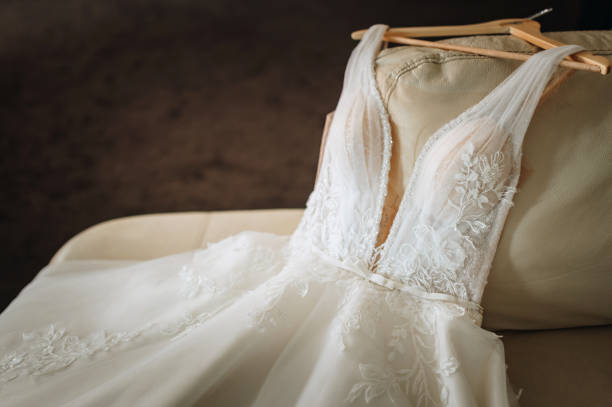
The Wedding Date My Sister Stole
My younger sister Ashley booked her wedding on my date on purpose. Our parents chose her. My mother looked me in the eye and said, “You’ll understand, Jenny. Ashley’s wedding is the one people will talk about.”
She was right. Just not the way she expected.
Ten minutes before my vows, my parents rushed into my venue late, still dressed for Ashley’s black-tie reception. They thought I was getting married in some small sad room somewhere. Then they walked through those doors.
My father went pale. My mother stopped cold.
They had no idea what I’d actually planned.
Let me back up.
My name is Jenny Curry. I’m thirty-one years old. I’m a pediatric ICU nurse at Children’s Memorial Hospital in Chicago. The night Ashley announced her wedding date — my wedding date — I was in the middle of a medication pass. PICU, second floor, 7:15 p.m. Three patients that shift. A four-year-old post-op cardiac repair, a seven-year-old with bacterial meningitis, a six-year-old drowning victim on a ventilator.
My phone buzzed in my pocket. I ignored it. Protocol. When you’re drawing up morphine, you don’t check texts.
It kept buzzing.
I finished the med pass, signed off the chart, stepped into the supply room.
47 messages. Family group chat.
I scrolled fast. Engagement photos — Ashley and Trevor, her hand extended, diamond catching the light, congratulations pouring in. Then I saw it.
Wedding date: June 14th, 2025.
My hands went cold.
June 14th. My date. The one I had announced eight months earlier. The one I had put a $2,500 deposit on in September.
My coworker Kesha stuck her head in. “You good?”
“Yeah,” I said. My voice sounded far away. “Just family stuff.”
She looked at my face. “You sure?”
“I need to recheck the morphine dose on bed three,” I said. “Can you double-check my math?”
My hands were shaking too much to trust myself.
That night, driving home at 7 a.m. after my shift, I kept replaying Christmas dinner. Ashley’s face when I announced my date. The way she’d gone quiet. The way her smile tightened at the corners.
Maybe it was a mistake. Maybe she really forgot.
No.
I’d seen that look before. When I got into nursing school and she didn’t get into her first choice. When I bought my first car with my own money. When I told them about Sam and she realized her own timeline was slipping.
Ashley didn’t forget. Ashley took.
I pulled into my building’s parking lot and sat in my car for ten minutes staring at nothing.
Sam was probably asleep. He’d worked a 48-hour shift at the firehouse, Engine 78. We crossed paths coming and going — two people who understood that the work mattered more than the schedule. I sat there and thought about a little girl I’d cared for three years ago. Mia. Six years old, leukemia, septic shock, admitted on a Tuesday night in October 2021.
One night specifically: 3:47 a.m. Her oxygen saturation dropping. 82. 79. 75. The respiratory therapist was in another code two floors down.
I manually bagged Mia for twenty minutes, squeezing air into her lungs, watching the monitor, talking to her even though she was sedated.
“Come on, sweetheart. Stay with me. Your mom needs you. I need you to fight.”
Her mother was standing beside me, gripping my other hand so hard my fingers went numb.
“Please don’t let her die,” she whispered.
I didn’t.
Eleven months of treatment. Remission. Recovery.
I had spent my whole life making myself smaller so Ashley could shine brighter — giving up space, attention, the front row at family dinners and holiday photos and every conversation that mattered. I thought about all of that sitting in that parking lot at 7 a.m.
This time I was done shrinking.
I went upstairs. Sam was asleep on the couch, still in his CFD shirt, remote in his hand. I put my hand on his shoulder.
He woke up, blinked. “You okay?”
“Ashley booked her wedding on our date,” I said.
He sat up fully awake. “What?”
“June 14th. She announced it in the group chat.”
He looked at me. “That’s not an accident.”
“No,” I said. “It’s not.”
“What are you going to do?”
I looked at him — this man who had saved people from burning buildings for fourteen years, who understood what it meant to run toward the fire while everyone else ran away, who had never once asked me to be anything other than exactly who I was.
“I’m keeping our date,” I said. “And I’m getting married exactly where we planned.”
“Good,” he said. He took my hand. “Then let’s make it count.”
To understand what happened on June 14th, you need to understand my family.
Ashley has always been the golden child. Not because she’s smarter or kinder or better. Because she’s successful in the way our parents understand. Money, status, visible achievement.
She’s a senior specialty pharmaceutical sales rep — oncology drugs, $180,000 a year, Audi Q5, Lincoln Park condo with exposed brick and floor-to-ceiling windows, 250,000 Instagram followers. She posts about her outfits and brunches and bonuses and weekend trips to Napa.
I make $68,000 a year. I drive a paid-off Honda Civic. My Instagram has 300 followers, mostly coworkers and high school friends. I post approximately twice a year.
At family dinners, the conversation always bends toward Ashley. Her latest sales quarter. Her new handbag. Her weekend in Michigan. My parents lean in when she talks. They ask follow-up questions. They beam.
When I talk about work, my mother says, “That sounds hard, honey.”
Then someone changes the subject.
I stopped expecting equal treatment somewhere around 2019. I stopped hoping they’d notice around 2021.
There’s a difference between accepting that your parents will always love your sister more and watching them choose her wedding over yours. One is resignation. The other is betrayal.
I announced our engagement at Christmas dinner, December 22nd. Small diamond, white gold band, beautiful. Sam had saved $400 a month for eight months. He’d gone to three different jewelers. He picked this ring because the jeweler told him the cut made it look bigger than it was.
My mother leaned forward to inspect it. “It’s lovely,” she said. “Small, but lovely.”
Small.
The word landed like a stone.
“When’s the big day?” Ashley asked.
“June 14th, 2025,” I said. “We’ve already put down a deposit.”
I watched her face. Something flickered. Her jaw tightened for half a second. Then she caught herself.
January 18th. 47 messages.
I typed slowly. Ashley, that’s my date.
Three dots appeared. Disappeared. Appeared again.
Ashley: “Oh. I thought yours was just tentative.”
I stared at the word. Tentative. I had put a deposit down in September. She had been at the dinner when I announced it.
I called her directly. She answered on the third ring.
“You need to change your date,” I said.
“Jenny, I can’t unbook the Jefferson. Do you know how hard it is to get?”
“You got engaged three weeks ago.”
“Twenty-one days, actually. I’ve been planning for four months.” A pause. “Maybe you should have picked a more flexible venue.”
“You did this on purpose.”
“That’s ridiculous.”
“Is it? You sat at that table at Christmas. You heard me say June 14th. You looked me in the eye.”
“I don’t remember every detail of every conversation,” she said. “I’m not changing my date. We’ve already put down fifteen thousand dollars.”
“I put down twenty-five hundred in September.”
“Well.” Her voice went cold. “I guess that’s the difference between our budgets.”
The line went quiet.
“Figure it out,” she said. Then she hung up.
I called my parents that night. My mother got on the line and said the sentence that broke something final in me.
“Jenny, sweetheart, Ashley’s wedding is important for the whole family. Trevor’s parents are very well connected. Your father’s business — we have opportunities here. You have to understand the bigger picture. Ashley’s wedding is the one people will talk about. You’ll understand when you’re older.”
I’m three years older than Ashley.
“So what am I supposed to do?” I asked.
“Pick another date,” my father said. “It’s just a date, Jenny. Don’t make this about you.”
You’ve always been so independent, my mother added. You don’t need us the way Ashley does.
I hung up.
Sam found me on the couch an hour later. He didn’t ask what happened. He just sat with me.
“You don’t have to prove anything to them,” he said.
“I’m not trying to prove anything anymore,” I said. “I’m just done begging to be seen.”
Three days later, I emailed our wedding planner and locked in the date. June 14th. No changes.
If they wanted to miss it, they’d miss everything.
Here’s what my family didn’t know.
In the fall of 2021, a six-year-old girl named Mia Hartley was admitted to the PICU — acute lymphoblastic leukemia, septic shock. She was dying. I was assigned as her primary nurse. Eight twelve-hour shifts in a row. I stayed with that family through the worst nights of their lives.
Mia’s father, Michael, sat beside her bed at 3 a.m. and looked at me with hollow eyes.
“Will she make it?” he asked.
“I’m going to do everything I can,” I said, “and I’m not going anywhere.”
She pulled through.
In early 2022, the Hartley family announced a $12 million donation to Children’s Memorial Hospital — a new wing, the Brennan Family Pavilion. Family overnight rooms. A healing garden. A conference center. And a ballroom. The Foundation Ballroom. Floor-to-ceiling glass overlooking the Chicago skyline. Capacity 200. Donor-funded, state-of-the-art, built for galas and milestone ceremonies and private events.
It opened in May 2024.
In March, I got an email from Michael Hartley.
“The pavilion opens in May. We’d be honored if you’d attend the dedication. And Jenny — the ballroom is available for private events. If you ever need it, it’s yours.”
When Sam proposed in September, I already knew where we’d get married.
I booked it September 16th. $2,500 deposit, standard nonprofit rate. The Hartleys waived the premium fees.
I told almost no one.
My guest list: 180 people. PICU colleagues. First responders. Fire department brass. Hospital board members. Donor families. City officials. Families of children I had cared for. Children who had survived. Sam’s family.
People who knew what mattered.
The hospital foundation offered to livestream the ceremony for off-shift medical staff and distant patient families. I said yes.
And instead of a registry, we set up a fundraiser. All donations would go to the pediatric cancer research fund. The hospital agreed to match the first $50,000.
If people were going to watch, we’d make it count for something.
I didn’t tell my family any of this. When my mother asked where the wedding was, I said it was handled. When Ashley made her snarky comments in the group chat — Are you doing a church ceremony or just city hall? Let me guess, park permit — I stayed quiet.
They assumed I was having some small sad ceremony. Maybe a hospital chapel. Something cheap. Something beneath them.
Let them think that.
June 14th would clarify everything.
June 14th, 2025. Wedding day.
I woke up at 6 a.m. in a hotel suite two blocks from the venue — complimentary room, the foundation’s thank-you. Sam had stayed at the firehouse the night before. Tradition.
My bridesmaids arrived at seven. Four PICU nurses and Sam’s sister. We had coffee, breakfast, no chaos. Just calm.
“Your family coming?” Rachel asked.
“We’ll see,” I said.
My phone had zero texts from my parents or Ashley.
At eleven, Mia Hartley arrived with her parents. She was eight now, two years cancer-free. She wore a white flower girl dress and a pink ribbon in her hair. Pediatric cancer awareness.
“You look like a princess,” she said.
I knelt down. “You look like a hero.”
Because she was.
By one o’clock, the street outside the pavilion was lined with fire trucks — 28 firefighters from Engine 78 and Truck 23, dress uniforms, an honor guard. An ABC7 news van was parked nearby. The hospital had invited them. Heart of the City segment. First responders marrying a PICU nurse. Local feel-good story.
By 1:30, the ballroom was filling. Fire Chief Daniel Martinez. Alderman Jeffrey Washington. Dr. Katherine Reynolds, hospital CEO. Board members, donor families, PICU colleagues, families of children I’d saved. Michael and Susan Hartley sat in the third row.
180 chairs. 165 filled by 1:45.
My parents’ seats — third row center — were still empty.
At 1:42, my phone buzzed.
Mom: so sorry honey. Traffic terrible. There by 2:15 latest.
Translation: They left late. Prioritized getting ready for Ashley’s black-tie event. Underestimated time.
I didn’t reply.
At 2:08, eight minutes after the ceremony started, their car pulled into the driveway.
I was in the bridal suite with Fire Chief Martinez, who was walking me down the aisle. He had saved my life six years ago, carried me out of a burning apartment building in Lincoln Park. I went back to work the next night. That was who I wanted beside me.
Through the window I watched my parents get out. My father in a tuxedo — dressed for Ashley’s wedding, not mine. My mother in a floor-length gown, hair done, makeup perfect.
They walked toward the entrance.
I couldn’t see their faces, but Lauren, the venue coordinator, told me later they froze the moment they stepped into the lobby. Donor plaques on the walls. The Hartley name prominent. Foundation Ballroom in gold lettering.
Then they walked through the doors.
180 people seated. Ceremony in progress. Father Ali, the fire department chaplain, speaking at the altar. Floor-to-ceiling glass. The Chicago skyline. White chairs, string quartet, professional lighting.
Front rows: the alderman. The hospital CEO. The Hartleys. A news camera in the corner.
My mother’s mouth opened. No sound came out.
My father went pale.
Lauren approached them. “Mr. and Mrs. Curry. We saved you seats. Third row center.”
They sat.
My father scanned the room. His face was the color of old paper. He recognized the alderman — the one he’d tried to network with two years ago. He recognized the fire chief. And then Dr. Reynolds, whose face had been in the news last month.
My mother opened the program.
Wedding of Jenny Curry and Samuel Brennan. Foundation Ballroom benefiting pediatric cancer research fund.
Then the music changed. Pachelbel’s Canon. Everyone stood.
The bridesmaids walked one by one, then Mia — eight years old, cancer survivor, pink ribbon, white dress, flower petals trailing behind her. People were crying. Many of them knew her story. Knew what she’d survived. Knew who had stayed with her family through the worst nights.
My parents didn’t know yet.
Then me.
Fire Chief Martinez offered his arm. “Ready, kiddo?”
“More than ever,” I said.
We walked.
I saw my mother’s face. Saw my father’s shock. I kept my eyes forward.
Sam was waiting. He took my hand. His grip was steady.
Father Ali began: “We gather in a place of healing to celebrate two healers.”
He explained the venue. The Hartley donation. The pavilion built because of one nurse’s heart.
Sam’s vows came first.
“Jenny, you’ve seen me at three in the morning covered in someone else’s blood, and you never asked me to be anything other than exactly who I am. You’ve held my hand through the worst calls. You celebrated the saves. You’re my home, my partner, my best choice. I promise to be yours every single day for the rest of my life.”
My turn. My voice didn’t shake.
“Sam, you understand what it means to run toward the fire. You’ve never asked me to choose between the people I love and the people I serve. You’ve stood beside me through every missed holiday, every hard loss. You see me — all of me — and you’ve never asked me to be smaller or quieter or different. I choose you today, tomorrow, always.”
Rings.
Father Ali smiled. “I now pronounce you husband and wife.”
We kissed.
The room erupted. Applause — genuine, warm, joyful.
My parents stood clapping mechanically. Faces pale.
The reception began. Tables set, same room. Michael Hartley stood to give a toast, Mia on his lap.
“Three years ago,” he began, “our daughter was dying.”
He told the story. The PICU. The night shifts. The nurse who stayed.
“This nurse didn’t just save Mia’s life. She gave us hope when we had none. She sat with us at three in the morning. She held our hands. She fought for our daughter like she was her own. When people ask why we donated twelve million dollars to this hospital, I show them a picture of Jenny holding Mia’s hand. That’s why today we are honored to witness her joy in the space her compassion built.”
He raised his glass.
Ninety-second standing ovation.
My mother’s face was white. My father stared at his hands.
Twelve million dollars. Inspired by their daughter. The one they dismissed.
Fire Chief Martinez stood next.
“I’ve known Sam Brennan for fourteen years. One of the finest firefighters in this city. And Jenny — I carried her out of a burning building six years ago. Lincoln Park apartment fire. She thanked me by going back to work the next night, saving kids.”
He looked at us.
“These two are Chicago’s backbone. The people who run toward the fire while everyone else runs away.”
The room roared.
My father hadn’t known I’d nearly died. I’d never told them. They’d never asked.
Meanwhile, at Ashley’s cocktail hour, 500 guests were on their phones.
My cousin Bryce texted: half the people here are watching Jenny’s livestream instead of celebrating Ashley.
The hospital foundation had set up professional cameras and an audio feed, posted live on their website. By 4 p.m. it hit 1,240 concurrent viewers.
At 4:15, my mother approached me.
I was talking to Dr. Reynolds and Alderman Washington.
“Sweetheart,” she said quietly. “We need to leave soon for Ashley’s.”
I turned, looked at her. “Of course,” I said, calm and steady. “Thank you for coming.”
Her face crumpled slightly. “We’ll call you tomorrow.”
“Sure,” I said.
She waited. Like she wanted me to beg her to stay. To acknowledge how gracious she was being.
I turned back to the alderman.
She walked away.
At 4:20, before the cake cutting, before the first dance, before the fundraiser total was announced, my parents slipped out.
Alderman Washington watched them go. He’d met my father at a dealership event two years ago — my dad had tried to network with him.
As my father passed, the alderman nodded. Cold. Barely polite.
“Leaving early, George.”
My father didn’t answer.
They left.
At 6:30, the fundraiser total was announced.
$145,000 from in-person guests. $40,000 from online donations through the livestream.
Total: $185,000.
The hospital matched the first $50,000.
Grand total: $235,000 for pediatric cancer research.
The room stood. Applauded. Cried.
Over the next week, the archived livestream would be viewed 8,500 times. Comments flooded in.
This is what a wedding should be.
Crying at my desk.
The world needs more people like Jenny and Sam.
Ashley’s Instagram post that night — her and Trevor cutting their cake — got 890 likes. Her usual posts got over 2,000.
The comments mentioned me.
Just watched your sister’s livestream. So beautiful.
Your sister raised $235,000 for pediatric cancer research at her wedding. Incredible.
Ashley didn’t respond to those comments.
The next morning, I had seven missed calls from my mother and twelve texts from Ashley.
I listened to Ashley’s voicemail first. Her voice was shaking.
“You did this on purpose. You knew people would compare. You made my day about you. I will never forgive you for this. Never.”
Four minutes. All rage.
I deleted it.
Two weeks later, I agreed to meet my parents at a Starbucks on Armitage. Neutral territory. Sam came with me.
My parents looked tired. My father wore a polo shirt, trying to keep it casual, like this was just coffee.
“We didn’t know, Jenny,” my mother said. “You never told us where.”
“You never asked,” I said.
My father leaned forward. “You made us look like fools.”
I stared at him.
“I didn’t make you do anything. You chose Ashley. You chose wrong.”
“That’s not fair.”
“You sat in that ballroom for forty minutes,” I said. “Long enough to not look completely heartless. Then you saw the fire chief and the alderman and the hospital CEO and the news camera and $235,000 raised for dying children. And you still left early for Ashley’s champagne tower.”
My mother’s eyes filled. “We had committed.”
“You committed to me first,” I said. “Eight months before Ashley even got engaged. The second she wanted my date, you picked her. You told me her wedding was the one people would talk about. You were right. Just not the way you expected.”
Silence.
“We made a mistake,” my father said quietly.
“You made a choice,” I said. “You’ve been making it for years.”
My mother reached across the table. I pulled back.
“I’m not cutting you off,” I said. “But I’m done accepting scraps. I’m done pretending it’s okay to be treated like the backup child. Ashley makes more money, so she matters more. She posts on Instagram, so she’s successful. I saved children’s lives. But that’s not impressive because I don’t drive an Audi.”
My father opened his mouth. Closed it.
“If you want to be part of my life going forward, here’s what I need. Real acknowledgement. Family therapy. Time. Proof that things have changed. I’m done with holidays where I’m an afterthought. Done with phone calls where you spend forty minutes on Ashley and five on me.”
I stood.
“Therapy first,” I said. “Then we’ll see.”
Sam and I left. My parents sat there in silence.
Three months passed.
In mid-July, my father sent an email. 1,200 words. Specific acknowledgements — Thanksgiving 2023, the dress comment, the you’ll understand line, the forty-five minute wedding appearance. He and my mother had started therapy.
In early September, my mother called. We talked for forty minutes. She asked about my life, my job, my honeymoon, Sam’s new position. She didn’t mention Ashley once.
“I told my therapist I always thought you didn’t need me,” she said quietly. “That you were the strong one. That Ashley was easier.”
“I needed you,” I said. “I just stopped showing it.”
A silence on the line.
“Can we meet?” she asked. “Just us?”
I agreed.
It wasn’t fixed. But maybe it wasn’t completely broken.
Three months after the wedding, I was back on night shift. Mia Hartley came in for a routine checkup. Cancer-free. Thriving. She hugged me in the hallway.
“Are you happy, Nurse Jenny?” she asked.
I smiled. “Yeah, sweetheart. I really am.”
Ashley hadn’t spoken to me since that voicemail.
I didn’t chase her.
Some doors close. Others open. You learn to tell the difference.
My mother was right about one thing. People did talk about June 14th, 2025.
They talked about the wedding that raised $235,000 for dying children. They talked about the firefighter and the PICU nurse who turned their ceremony into a statement about what actually matters. They talked about the family that showed up late and left early, and what that said about everything they valued.
Ashley’s wedding was beautiful. Expensive. Perfectly executed.
Mine was simpler. And it mattered in ways hers never could.
My parents chose image. I chose substance.
One of us slept well that night. The other had to face 500 guests who would rather watch my wedding on their phones than celebrate hers.
Have you ever been measured by your salary instead of your service? By what you display instead of what you give?
What did you choose?
Because in the end, that choice is the only one that stays with you.

Sophia Rivers is an experienced News Content Editor with a sharp eye for detail and a passion for delivering accurate and engaging news stories. At TheArchivists, she specializes in curating, editing, and presenting news content that informs and resonates with a global audience.
Sophia holds a degree in Journalism from the University of Toronto, where she developed her skills in news reporting, media ethics, and digital journalism. Her expertise lies in identifying key stories, crafting compelling narratives, and ensuring journalistic integrity in every piece she edits.
Known for her precision and dedication to the truth, Sophia thrives in the fast-paced world of news editing. At TheArchivists, she focuses on producing high-quality news content that keeps readers informed while maintaining a balanced and insightful perspective.
With a commitment to delivering impactful journalism, Sophia is passionate about bringing clarity to complex issues and amplifying voices that matter. Her work reflects her belief in the power of news to shape conversations and inspire change.