The Brass Key
The morning after my eighteenth birthday, I was rinsing coffee grounds out of a mug in my grandparents’ kitchen when I heard tires on the gravel outside the cabin. Not fast. Not frantic. Steady, deliberate, the kind of sound people make when they already think the day belongs to them. The lake behind the house still looked silver from the cold. A stack of paper plates sat beside the sink with blue frosting drying around the rims. The last of the party mess was still out, proof that less than twelve hours earlier the living room had been full of candles and forced laughter and my mother insisting we take one more picture in front of the stone fireplace. Then the moving truck came into view through the front window. It rolled up the drive like it had an appointment. Behind it came my parents’ SUV. Behind that, my uncle Ray’s car. And behind both of them, a dark sedan that parked slightly off to the side, where the gravel met the grass.
I dried my hands on a dish towel and stood there looking through the glass. My father got out first. Gary Bennett always moved like a man who believed volume could substitute for authority whenever the real thing ran low. He opened the back of the SUV and pulled out a thick manila envelope with both hands, smiling before his boots hit the ground.
“We got it all sorted,” he called toward the cabin in the cheerful, public voice he used with church greeters and salesmen. “This place is ours now.”
He said it like he was announcing the weather. My mother stepped out and started gathering flattened cardboard boxes from the cargo area. My brother Kyle climbed out of Ray’s car and immediately scanned the porch, already looking at the place the way boys look at bedrooms that do not belong to them yet. Ray stayed near the moving truck, directing the crew in clipped bursts, pointing toward the porch, toward the big oak table my grandfather had built by hand.
My father saw me in the window and lifted one hand. “Pack your things. We’ll need you out by the end of today.”
I stepped onto the porch barefoot, still holding the dish towel. The morning air had teeth in it. My father kept smiling. A mover walked up the ramp and paused halfway when he realized nobody had told him what exactly he was moving. My mother uncapped a marker and wrote KITCHEN on one of the boxes. Kyle bounced on the balls of his feet and looked past me into the cabin like he could already see his gaming setup near the lake facing windows.
Then I looked beyond them, toward the dark sedan.
Daniel Mercer was standing beside it in a charcoal suit, one hand resting on a folder tucked against his hip. Next to him stood a county deputy in a brown uniform and campaign hat, calm and unreadable, waiting in the kind of posture that says he is not here to escalate anything unless someone makes him. My family had not noticed them yet. They were too busy trying to take my grandparents’ life out through the front door.
I set the dish towel on the porch railing, walked down the steps, and headed toward Daniel and the deputy without saying a word.
I had known, in one form or another, that my family would come for the cabin the moment it legally became mine. What I had not known until that exact moment was how clean it would feel to stop pretending not to see it. Because the night before, while everyone sang to me in the living room and my mother held a lighter to the candles and Kyle filmed on his phone, I had stepped into the hallway for less than two minutes, opened the secure file Daniel had sent, and signed the final documents establishing the trust my grandparents had wanted. At 7:43 p.m., while my family thought they were celebrating the beginning of my adulthood, I made sure they would never control it.
That choice had not started at eighteen. It had started years earlier, in a much smaller kitchen, with a very different envelope.
When I was fourteen, a cream colored letter arrived at our house in Chattanooga from a private college prep academy across town. Full tuition scholarship. Books stipend. Leadership program. I carried it into the kitchen and said, “Mom, I got in.” She looked up halfway from a phone call and said, “That’s nice, sweetie.” My father did not mute the television. He glanced over the back of the couch, saw the envelope, and nodded once. “Good job.” Then Kyle came through the side door with a split lip from some middle school fight, and within five minutes every molecule of attention in the room had rearranged itself around him. My mother got off the phone to ask if he needed ice. My father stood up. Questions flew. I was still standing there holding my scholarship envelope. No one asked to see it. No one opened it. No one even moved it from the counter after I set it down.
That was the first time I understood the rules in our house. My accomplishments were expected. Kyle’s inconveniences were emergencies. He got suspended for fighting and my parents hired a tutor and told everyone he was going through a lot. He scratched a neighbor’s parked car showing off on his bike and my father wrote a check for the repairs and then bought him a better bike, because apparently consequences were for people without potential. When I broke one of my mother’s ceramic bowls by accident, I lost my phone for three weeks and received a speech about carelessness that somehow expanded into a meditation on my ingratitude for everything they had ever done.
So I adapted. I stopped announcing things the moment they happened. I stopped walking into rooms expecting warmth. I learned that silence is not always weakness. Sometimes it is how you keep other people from rearranging your reality before you have time to understand it yourself.
That was the version of me my grandparents noticed.
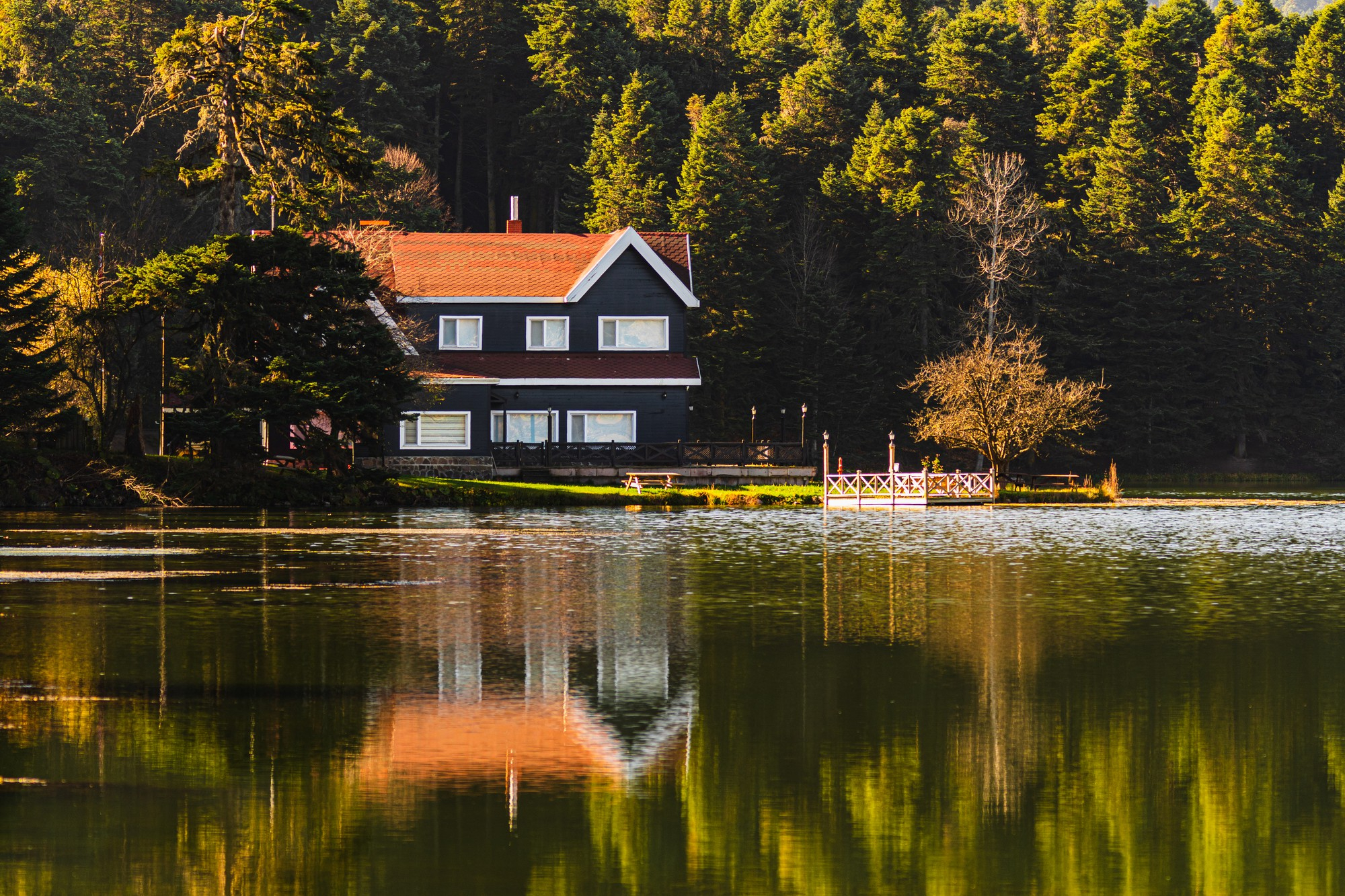
Warren and Evelyn Hail lived about ninety minutes north of Chattanooga, past Dayton, up a road that narrowed after the Dollar General and narrowed again after a little white church, then turned to gravel beneath a tunnel of hardwood trees. By the time the lake appeared through the branches, the cell signal was usually gone. Their cabin was plain in the best possible way. Cedar walls darkened by years of woodsmoke. A stone fireplace that held heat long after the fire went down. A heavy oak table with shallow nicks in the surface from decades of use. Quilts folded over the backs of chairs. A blue crock by the stove where my grandmother kept wooden spoons and, hidden beneath them, a brass key she once pointed out with a single sentence: “If I’m ever not here and you need the lock box, that’s where the key is.” No drama. Just information. I remembered that.
The first time I realized the cabin was more than a place to visit, I was fifteen and sitting on the back steps with a glass of sweet tea while my grandfather repaired a porch rail. No television. No one yelling. Just the lake, the woods, and the measured tap of a hammer. My grandparents never treated me like I needed to perform deservingness in order to be cared for. If I helped carry groceries, my grandmother thanked me like it mattered. If I held a flashlight while my grandfather fixed a hinge, he showed me how to angle it instead of grabbing it away. Responsibility could feel peaceful when it was not being weaponized.
As they got older, I spent more time there. Weekends, then school breaks, then whenever a doctor appointment or a storm or a broken gutter made extra hands useful. I read mail aloud when my grandfather’s eyesight worsened. I drove my grandmother into town for prescriptions. I sat at the kitchen table while bills were sorted, and somewhere in those ordinary hours I learned something my own house had never taught me.
One November night, the wind pushing hard enough off the lake to rattle the windows, my grandfather sat by the fireplace in the low orange glow of the coals. He was quiet so long I thought he had fallen asleep. Then he said, “Your father doesn’t handle money well.” He said it with the tired certainty of a man naming weather patterns. “And Ray always thinks the next deal is the deal. That kind of man can lose ten thousand dollars by calling it an opportunity.” He looked at me. “You’re steady. You finish what you start. You don’t need applause to do the right thing.” He rested both hands on the arms of his chair. “This place is going to you. The cabin, the land, the accounts. All of it.” He did not launch into a speech. He did not make me promise anything dramatic. He only added, “Protect it whole.” That was all. And somehow it was everything.
My grandparents died eleven months apart. My grandmother first, after a quiet decline. My grandfather the next year, as if his body had decided there was no work left once hers was gone. The will reading happened in Daniel Mercer’s office downtown. Daniel had been their attorney for years, a man who dressed plainly, kept a neat desk, and had the unnerving calm of someone who never wasted words because he already knew which ones would matter in court.
I sat at the end of the conference table. My father sat to one side, Ray to the other. My mother had a legal pad in front of her like she planned to take notes. Daniel opened the file and read. Everything went to me. Not divided. Not held for family discussion. The cabin. The forty two acres. The lake access. The investment accounts. The cash accounts. The brokerage portfolio. The life insurance proceeds. Total estimated value at the time of transfer: a little over three point two million dollars.
That number changed the air in the room. Not because the cabin had ever been about luxury, but because three point two million is the kind of number that makes people in ordinary zip codes sit up straighter, the kind that turns grief into math for people who were already halfway there. Ray’s eyebrows shot up. My father leaned back in his chair. My mother looked at me the way people look at lottery winners they are already explaining to themselves. My father laughed once, softly. “Well, obviously we’ll help her manage all that.” Daniel looked up. “That is not what the documents say.”
That was when things began to move. My father started asking about taxes and title. Ray started citing lakefront comps. My mother said phrases like family property and burden and too much for one girl. Nobody asked what I wanted. When the meeting ended, Daniel asked me to stay. He closed the door and slid a thin folder toward me. Inside was a summary of options: transfer upon eighteen, asset protection structures, trustee language, verification procedures. If I wanted the cabin insulated from family pressure, the strongest move was an irrevocable trust executed the moment I reached adulthood. Once the deed and accounts moved into it, control would sit with the trustee. Me.
“It is legal,” he said. “It is clean. And if you do it, they will react badly.”
“I know,” I said.
He gave one short nod, the kind people give when they realize advice is not the point because the decision has already been made. “Then we prepare now.”
From that point on, my family’s language around the cabin changed by the week. First sentimental. The cabin should stay in the family. Your grandparents would want us together up there. Then practical. Do you realize what insurance on a lake property costs? Are you planning to drive up every time a pipe freezes? Then, when neither approach melted me, speculative. Ray paced the property line with Zillow comps on his phone. My mother measured windows in the living room “for nothing.” Kyle posted lake photos with a caption about future plans and deleted it when I asked what he meant. My father texted that selling at the top of the market would be foolish to pass up. The word family appeared whenever someone wanted access without accountability. The number appeared too. Three point two million. Said carefully at first, in lowered voices, then casually, then as justification. Too much for a teenager. Dangerous in the hands of someone with no experience. Could change everything for this family.
Daniel and I met twice more. The paperwork grew more specific. The trust name, the funding instructions, the deed transfer language, the timestamp protocol. On my last visit before my birthday, he put the final packet in front of me and said, “When the moment comes, do not hesitate. Delay creates openings.”
The week before I turned eighteen, my parents insisted we celebrate at the cabin. My mother called it a fresh start. My father called it a family memory. They filled the living room with balloons and noise and the kind of determined cheer people perform when they need you not to ask what they are really planning. At one point, while my mother was arranging paper plates and Kyle was adjusting the playlist and my father was opening drawers he had no business opening, I stood in the kitchen and touched the brass key in the blue crock by the stove. Just one finger, just long enough to feel the cool metal. It felt like putting a hand on a pulse. At 7:42 that evening, my phone vibrated. Daniel’s message: Ready. I stepped into the hall, opened the file, and signed. At 7:43, the trust executed. I stood there for a second after the confirmation appeared, then slid my phone back into my pocket and walked into the living room and blew out the candles while my family cheered over plans they no longer had the power to make.
The next morning, the moving truck showed up. Of course it did.
By the time I reached Daniel and the deputy in the driveway, my father was still directing the movers in broad, confident motions. My mother had begun labeling boxes. Kyle stood grinning in his hoodie. Daniel called out to my father and identified himself as counsel for the trust. My father blinked, annoyed by the interruption, and lifted the manila envelope. “I don’t know what you think this is, but we’ve already got documents.”
Daniel took the envelope and read through it page by page, unhurried, in a silence that sharpened with each turn. Then he looked up. “This instrument is not valid.” He turned the next page. “This one is also not valid.” He turned one more. “And this notary stamp is unauthorized. The commission number does not exist in the state record. The platform listed is not registered for remote notarization in Tennessee. The signature attributed to Warren Hail is not consistent with known verified signatures.”
My mother’s grip tightened on the marker in her hand. My father’s face began to drain. “We were trying to protect her,” my mother said quickly. “She’s eighteen. She doesn’t understand any of this.” Daniel glanced toward me and then back. “She understands enough to have executed an irrevocable trust last night. The cabin, land, and associated accounts are titled to the Hail Family Irrevocable Trust. Mara Hail is the sole trustee.” The words moved through my family like a change in weather. My father stared at the page. Ray leaned in over his shoulder. My mother took one step toward me and stopped as though she had realized there was distance there she could not close by walking.
Then Kyle spoke, too fast and too honest. “I signed something too. Dad said it was fine.”
The second the words left his mouth he looked like he wanted to pull them back. Ray spun toward him. My father went still. The deputy made a note in a small pad. Daniel asked what Kyle had signed. Kyle swallowed. “I don’t know. Dad said it was just paperwork. Like witness stuff.” My mother shut her eyes briefly. That told me more than anything else. A lie had collapsed not because someone brilliant exposed it, but because the one person everyone assumed would stay quiet answered a simple question truthfully.
The deputy told everyone to pause what they were doing. The movers froze. Practical men understand uniforms. Daniel stated the facts on record. Approximate time of arrival. Purpose as declared. Presentation of purported transfer documents. Active direction of movers to remove furnishings. He did not embellish. Reality was doing enough. My father kept trying to reposition the conversation into feelings. My mother kept recasting it as help. Ray searched for loopholes through speed and irritation. Kyle sat down on a taped box near the truck ramp and stared at the gravel.
The deputy turned to me. “Ma’am, do you want them directed off the property?”
My mother flinched at the word directed. “Mara,” she said, using my name now because things had become serious enough for intimacy to be useful. “Don’t do this. We’re your family.”
I looked at her. Then at my father. Then at Ray. Then at Kyle, who still would not meet my eyes. “I want the removal stopped,” I said. “And I want them off the property today.”
The deputy told my father to instruct the crew to pack up and leave. My father held his hands out, palms open, performing calm. “We’ll go. But this isn’t over.” Daniel wrote that down immediately. My mother saw him do it and panic crossed her face. “He didn’t mean it like that.” “I’m recording what was said,” Daniel replied.
The crew moved fast, relieved to have clear instruction. The ramp came up. Boxes went back into the truck. The couch stayed on the porch, half wrapped in a moving blanket, one leg hanging off the edge. My father took the written notice from the deputy with visibly shaking fingers. They left in a line, Ray first, then the SUV, then the truck. My father stopped at the end of the drive and rolled his window down. “You think your grandparents would have wanted this?” he called. I stood on the gravel and answered with the only sentence that mattered. “They chose this.” He looked at me for one second, then drove away.
Once the vehicles disappeared past the trees, the air changed. Not magically, but the noise they had brought left behind an outline, and in that outline I could hear the ordinary sounds again. Wind touching the lake. The porch chain knocking once against the railing. A crow somewhere up the road. Daniel waited until it was quiet and said, “There’s more.” He showed me trace data from the notary platform. IP logs. Filing attempts. They had not just created one bad packet. They had tried multiple submissions, different date combinations, different forms. This had not been a spontaneous overreach after too much birthday cake. This had been a plan.
Daniel laid out next steps with the precision of a repair list. New locks. Camera coverage. Notice to the county recorder to flag any future filings. Full title history pull. Identity protection. Cease and desist letter. A petition for protective relief drafted and held ready. He said it without drama, because he never dramatized structure.
“What if I don’t want war?” I asked.
He sat one step below me on the porch. “Then don’t frame it as war. Frame it as boundaries with consequences.”
Later that afternoon, when the adrenaline wore off, I walked to the hallway closet that still smelled of cedar and mothballs. I knelt on the floor, reached behind a stack of old board games and winter blankets, and pulled out the metal lock box my grandmother had used for decades. The brass key was still in the blue crock by the stove, exactly where she had told me it would be. I brought it back to the table and turned the lock.
Inside were labeled folders in her handwriting. Taxes. Insurance. Medical. Correspondence. Deeds. One envelope with my name on it. And one folder I did not remember seeing before, labeled Family. Daniel opened it carefully. The first few pages were ordinary. Old cards. Notes about a contractor. Then a typed page appeared, single spaced, dated, signed by my grandfather. The title was simple: Family Requests and Responses. Each entry documented a time someone in the family had asked for access to, control over, or a share of the property. Gary asking whether family members could be added to the deed. Ray asking whether part of the acreage could be sold. My mother asking if the cabin could be converted into shared family property. After each request, my grandfather had written the same response: No. And at the bottom of each entry, some version of the same sentence: This cabin is to remain intact. This is not a family asset.
Daniel laid the memo beside his laptop and compared it to the demand letter that had already arrived from my family’s attorney, a man named Fields who was asserting that my grandparents had entered into a “family understanding” that the property would eventually be shared.
“They are claiming promise,” Daniel said. “This is proof of repeated refusal.”
Then he handed me the envelope with my name on it. Inside was a single sheet in my grandmother’s handwriting.
Mara. If anyone pressures you about the cabin or our savings, call Daniel Mercer. Do not sign anything. Do not give keys. Do not explain. Protect the cabin first. We trust you.
No extra sentiment. No burden disguised as love. Just instructions from people who knew exactly what might happen and trusted me to outlast it. I set the page down because my hands had finally started to shake. Not from fear. From relief. From the knowledge that my grandparents had seen the same currents I had and had put them in writing.
Fields withdrew all claims within three weeks. Daniel forwarded me the clean title report with a short note: No clouds. No liens. No surprise filings. I printed it, filed it in the lock box under a new folder labeled Boundaries, and put the brass key on my own ring. My grandmother had shown me where the key was. Now it lived with me.
Kyle called once from a parking lot, using an unknown number because he did not want to make the call from home. He said he was not asking for anything. He wanted to know if I was done with them. I told him I was done being easy to use. He was quiet for a long time. Then he said, very low, “Ray found the website. Dad just kept saying it had to be done before you got ideas.” Before I got ideas. Meaning before I acted like the person my grandparents had actually chosen. I told Kyle the one thing I wanted him to remember. “If someone needs to rush you, confuse you, or flatter you into signing, they know you would say no if you had time to think.” He let out a breath that sounded almost like a laugh. “You sound like Grandpa.” For the first time in the whole conversation, I smiled. “That’s probably the nicest thing you’ve ever said to me.”
Life found a rhythm after that. Morning coffee on the porch. A glance at the driveway camera. Work that made the place stronger rather than more impressive. I patched a section of roof with help from a local handyman. I planted herbs in the garden where my grandmother used to grow basil and thyme. I organized the tool shed. I made a spreadsheet for property expenses and set aside a conservative portion of the trust income for taxes, insurance, repairs, and education. I met with Daniel and a financial advisor once, just long enough to establish a sane structure and make sure no part of me confused inheritance with endlessness. Three point two million is a big number until you start treating it like land, taxes, time, roofs, healthcare, tuition, inflation, and the cost of preserving something for longer than your own appetite. Handled well, it was security. Handled badly, it was bait. My father and Ray had only ever understood the second category. I chose the first.
My family stayed away. My mother stopped posting about heartbreak. Ray found work farther south. My father became careful about how loudly he discussed inheritance in public. Kyle finished the school year quieter, some of the swagger burned off, and maybe that was not the worst thing. No one apologized. For a while that stung. Then it didn’t. Because what I had wanted was never an apology polished enough to sound good in the moment. I wanted predictability. I wanted the ability to exist without preparing to defend every inch of myself in my own home. I got that. And once you have it, performance starts to look very small.
The first anniversary of the driveway morning came on a cold, bright day with thin winter sun that made the lake look like hammered metal. I made coffee, pulled on my grandfather’s old flannel overshirt, and walked down toward the fence line where he used to stand and look at the water before deciding what needed repairing next. The brass key was on my ring. The trust folders were in the lock box. The cameras were boring. The title was clean. The place was quiet. And for the first time in my life, quiet did not feel like waiting for the next bad thing. It felt earned.
I went inside and found my grandmother’s note in the folder marked Boundaries. I read it again, not because I doubted it, but because some truths deserve rereading after they have proven themselves. Protect the cabin first. We trust you. I folded the note and put it back. Then I stood in the kitchen and looked around at the cedar walls, the oak table, the blue crock by the stove, the window facing the lake, and I understood something that had taken me years to name. The cabin was never only an inheritance. It was evidence. Evidence that love can be practical. Evidence that trust can be expressed in paperwork as honestly as in tears. Evidence that being chosen by the right people can teach you how to stop begging to be chosen by the wrong ones.
I put the kettle on and stood at the counter, waiting for the water, listening to the cabin settle around me with its familiar sounds. The creak of boards cooling. The tick of the old clock above the mantel. The small, distant lap of the lake against the dock my grandfather rebuilt the summer I was sixteen, the summer I held the boards in place while he drove the screws and neither of us said anything because the work itself was the conversation.
The kettle whistled. I poured the water, wrapped both hands around the mug, and carried it out to the porch. The lake was still. The trees were bare. The gravel driveway where my father’s moving truck had stood a year ago was empty, marked only by faint tire ruts that the rain had almost finished erasing. I sat down on the top step, the boards cool through my jeans, and drank my tea in the cold morning air, alone and unhurried, in a place that belonged to me because two people who loved me had made sure of it before they were gone.

Sophia Rivers is an experienced News Content Editor with a sharp eye for detail and a passion for delivering accurate and engaging news stories. At TheArchivists, she specializes in curating, editing, and presenting news content that informs and resonates with a global audience.
Sophia holds a degree in Journalism from the University of Toronto, where she developed her skills in news reporting, media ethics, and digital journalism. Her expertise lies in identifying key stories, crafting compelling narratives, and ensuring journalistic integrity in every piece she edits.
Known for her precision and dedication to the truth, Sophia thrives in the fast-paced world of news editing. At TheArchivists, she focuses on producing high-quality news content that keeps readers informed while maintaining a balanced and insightful perspective.
With a commitment to delivering impactful journalism, Sophia is passionate about bringing clarity to complex issues and amplifying voices that matter. Her work reflects her belief in the power of news to shape conversations and inspire change.