The Signature Page
Ihad been back from a twelve month deployment in the Middle East for exactly twenty minutes when my younger sister looked at me across my own kitchen island and told me to pack my bags. She did not raise her voice. She did not hesitate. She said it the way you ask someone to pass the salt, as though the request were so reasonable it required no particular emphasis. Ethan needs more space, Mallerie said, resting her manicured hand on the marble I had paid for. A bigger backyard, a better school district. This house makes sense for us, not you.
I stood there in my travel clothes, boots dusty, duffel bag by the door. My body was back in Colorado but my brain was still somewhere between time zones, operating on the residual alertness of a year spent in rooms where every detail mattered and the wrong assumption could cost you something you could not get back. I blinked once. “You’re serious?”
Mallerie gave me the look she had been giving me since she was twelve. The one that said the world owed her something and she was just waiting for it to catch up. “Of course I am. You’re never here. You’re single. You live on base half the time anyway. This house is wasted on you.”
I shifted my weight slightly, enough to feel the ground, and looked past her. My mother was sitting at the kitchen table. Beatrice Hayes. Perfect posture. Hands folded like she was in church. She was watching me, waiting, and when I met her eyes she gave a small nod, not even subtle, just agreement. That was when I realized this was not a conversation. It was a plan.
I set my bag down by the wall. The same wall I had painted myself three years earlier, soft grey, clean lines. Except it was not my wall anymore. The photos were gone. The frames I had hung were gone. The small shelf I had built with my own hands was gone. In their place, abstract art, oversized and loud and expensive looking in the way things look expensive when someone has spent money on appearance rather than quality. I turned slowly. Everything had changed. Different couch. Different rugs. New dining chairs. Even the light fixtures. They had not just moved in. They had erased me.
I walked deeper into the house. My house. The air smelled different, sweet and artificial, like one of those candles people buy when they want their life to look better than it is. “Where are my things?” I asked. Mallerie waved a hand dismissively. “Packed away. Storage. Don’t worry about it.”
I have been in army intelligence for over a decade. I have worked in rooms where people lied for a living, where every word carried a second meaning, where you learned to read patterns and body language and the particular quality of silence that tells you someone is performing rather than speaking. Everything in this room was off. Too confident. Too rehearsed. Like they had practiced this.
I turned back to the island. “My name is on the deed.”
Mallerie leaned forward, smiling like she had already won. “That’s why we need you to sign it over. Today.”
There it was. Not a request. A deadline. My mother spoke then, her voice calm and controlled, delivering instructions rather than talking to her daughter. “Mallerie is raising the golden boy of this family. Ethan deserves stability. A real home.” I looked at her. “You mean my home?” She did not flinch. “You have military housing. You don’t need this place. Be practical for once.”
Practical. I almost smiled. Twelve months in a war zone, coordinating intel, managing assets, making decisions that carried real weight, and now I was being told to be practical in my own kitchen by two people who had been living rent free in my house for a year.
My mother delivered the final line with the precision of someone who had considered it carefully and decided that cruelty, applied correctly, was a form of efficiency. “Sign the house over to Mallerie today. Or you are dead to us.”
I felt something settle in my chest. Not anger. Not hurt. Clarity. Because in that moment I understood something important. This was not about Ethan. It was not about space. It was not about the house. It was about control. They thought I would fold, the way I had folded when I was younger, before the military, before I learned that silence is not always submission and that the person who stays calm the longest usually wins. They were working with an outdated version of me.
I straightened up slowly. No sudden movements. No raised voice. Mallerie was watching me, waiting for the argument, the emotional reaction, the breakdown. She wanted a scene. I did not give her one. I walked to the front door, picked up my duffel bag, zipped it closed. The sound echoed louder than it should have. My mother shifted in her chair. Mallerie frowned. “This isn’t a negotiation, Audrey. We need your answer now.”
I looked at her. Then at my mother. Then I nodded once, not agreement, just acknowledgment, and I opened the door and stepped into the cold evening air. Behind me I heard Mallerie’s voice, sharp and confused. “Audrey, what are you doing?” I did not stop. I did not turn around. The door closed quietly behind me.
At the end of the driveway I paused and looked back once. The house lights were warm, inviting, as though nothing were wrong. I had bought that house four years earlier with money saved across a decade of military service. Not inherited money. Not family money. Money earned through deployments and long hours and the particular discipline required to live on a military salary while watching other people your age buy things they could not afford. I had paid cash. No mortgage. No leverage. No debt tied to the property. That was intentional, because I had grown up watching my mother spend money she did not have and my sister treat other people’s generosity like a natural resource that would never run out, and I had decided early that I would not build my life on the same foundation of wishful arithmetic that had defined theirs.
When Mallerie’s marriage fell apart and she needed somewhere to live while she got Ethan into a new school, I offered the house. I was deploying. It would sit empty for a year. She could stay rent free, no lease, no conditions, just a sister helping a sister. My mother called it generous. Mallerie called it practical. Neither of them called it what it was: trust extended to people who had not earned it, based on the assumption that blood meant something more than it actually did.
But something felt off. Not emotionally. Structurally. A detail that did not line up, a gap in the story I could not name yet but could feel, cold and calculating, in the place where instinct lives. They thought they had pushed me out. They thought I would come back in the morning, ready to sign whatever they placed in front of me. They did not understand what they had just set in motion. And more importantly, they did not understand that the real problem was not what they had demanded from me but what they had already done.
The hotel room was standard. Beige walls, generic art, a chair nobody sits in. I set my laptop on the desk and plugged it in, hands moving automatically through the same routine I use anywhere new. Check the exits. Listen. Quiet. Good. Something was bothering me. Not just what they said or how they said it. The timing. Sign it today. People like Mallerie do not do urgency unless they think they are about to lose something. So what were they trying to lock in before I could react?
I logged into my military financial portal. Multifactor authentication, token code, fingerprint. My credit score loaded, and for a second I thought the screen had glitched. Six hundred and twelve. That was not a fluctuation. That was a collapse. I had bought the house in cash. No mortgage. No debt tied to it. That was intentional, the kind of financial discipline the military teaches you or the world teaches you, depending on which classroom you attend first. My eyes moved down the page. Home equity line of credit. Two hundred and fifty thousand dollars. Opened recently. Balance nearly maxed.
I did not move. I read it again. Then again, because numbers do not lie, but sometimes your brain needs a second to accept them. I do not have a HELOC. I did not open one. I clicked into the details. Multiple withdrawals. Rapid. Clean. No hesitation. This was not one emergency expense. This was systematic.
I pulled my full credit report. New inquiries. Multiple addresses linked to my name. Accounts I had never opened. But the HELOC was the centerpiece, because it required collateral: my house. I pulled up the county clerk’s public records database and searched my address. The result came up instantly. A quitclaim deed, filed, processed, recorded. My house had been transferred to a trust controlled by Mallerie. The document was clean, professional, no obvious errors. The signature was mine, perfect, too perfect, every curve and angle exactly how I sign official documents. Someone had studied it. Then I saw the notary stamp. The date was October 14th.
On October 14th, I was at a forward operating base in Iraq. I pulled up my deployment records side by side. Location confirmed. Time zone confirmed. Zero chance I was anywhere near a civilian office. Zero chance I signed anything in person. Legally impossible. Which meant one thing. Forgery. Not a misunderstanding. Not a family disagreement. A federal crime.
I leaned back in the chair and let the picture assemble itself. The trust. The HELOC. The quarter million dollars drawn against a house I owned free and clear. The demand tonight was not about getting ownership. It was about cleaning up the mess. They needed me to sign a retroactive consent form to legitimize what they had already stolen. That was why it had to be today. Before I checked anything. Before I asked questions. Before I noticed.
I opened a new folder on my desktop. Named it Evidence. Downloaded the deed. Saved the credit report. Pulled the transaction history. Screenshots, PDFs, backups. Because once you move forward with something like this, there is no halfway.
Monday morning, 0800, I walked into the JAG office with a folder that did not leave my hand. The captain who saw me read through the documents without interruption, line by line, until he reached the notarization date. He looked up. “You were in Iraq on this date?” “Yes, sir. Documentation attached.” He went back to the file. Another minute passed. “This isn’t just fraud,” he said. “This is a violation of the Servicemembers Civil Relief Act. You were deployed. Your protections were active.” He started counting the charges. Forgery. Wire fraud. Bank fraud. Identity theft. SCRA violation. He told me not to go through local police. They would treat it as a civil dispute. “This is federal,” he said. “You build your case, and when you move, you move all the way.”
By noon I was on a call with a forensic accountant who specialized in fraud tracing. Within an hour he had mapped the spending. A luxury vehicle lease. Forty thousand in travel. Large payments to credit card accounts under my mother’s name, outstanding debt she had been carrying for years. Designer retail. Home furnishings. They had not just redecorated. They had funded it with a quarter million dollars tied to my name. They did not take my house because they needed it. They took it because it was the easiest asset they could exploit. No resistance. No oversight. Just trust. And they used that trust like a blank check.
Mallerie texted that afternoon. We’re waiting for the paperwork. Then: Stop being selfish for once. Then: Think about your nephew. Then: We have a massive housewarming party this Saturday. Housewarming. In my house. Using my money. I typed back one word. Understood. No argument, no pushback. Just enough to keep them comfortable, because the moment they sensed resistance they would adjust, and I needed them exactly where they were. Planning, spending, inviting people, building the perfect stage for something they could not see coming.
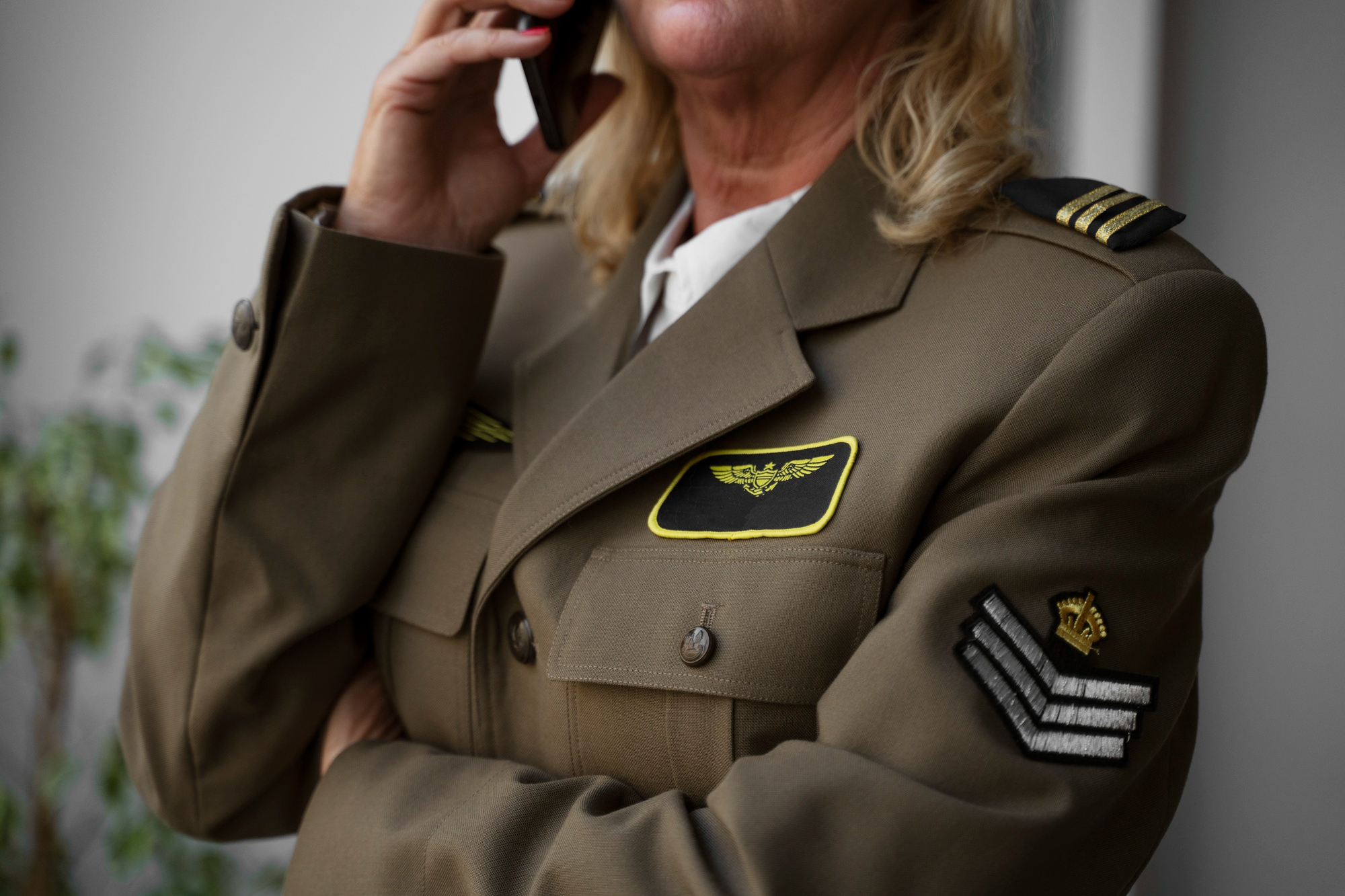
Saturday arrived under a grey Colorado sky. I parked two houses down in my dress uniform, dark blue, pressed, medals aligned, rank clear. The front door was open. Caterers moved in and out. Decorations were being arranged. Mallerie did not do small. She did spectacle. I stepped inside. A few people glanced over, not at my face but at the uniform. Mallerie found me near the hallway. “Didn’t expect you to actually show up,” she said. “Nice uniform. Very dramatic.”
She led me to the study. My mother was inside, sitting behind a new mahogany desk that had not existed when I lived here and that carried the particular weight of furniture purchased by someone who confuses the appearance of authority with the possession of it. Mallerie closed the door and locked it. Three of us. Small room. No witnesses. Controlled environment. They had planned this down to the staging, the way they planned everything, with attention to atmosphere and no attention to whether the person across the table might be operating three steps ahead of them.
My mother pulled a document from a folder and slid it across the desk. “Retroactive consent form,” she said. “Just a formality.” Mallerie stood behind me, arms crossed, blocking the door without being obvious about it. I picked up the document and read every line, because details matter, and because I wanted them to watch me reading, wanted them to feel the seconds stretch, wanted the silence to do the work that their words could not. The form was exactly what I expected. If I signed it, the forged transfer became legitimate, the debt stayed with me, and they walked away clean. A piece of paper designed to turn a crime into a misunderstanding.
“No,” I said.
Mallerie’s tone changed instantly. “Don’t do this. We’ve already built everything around this house.” My mother leaned forward. “If you don’t sign this, we will call your base commander. We will tell him you are financially abusing your family. That you’ve been unstable since your deployment.” Mallerie crossed her arms. “Paranoia, erratic behavior, all of it. Your career will be over by the end of the day.”
I let a few seconds pass. They were watching me, waiting for fear, panic, anything. I gave them nothing, because I have heard worse threats from people with actual leverage. This was noise, but it told me everything. There was no line they would not cross. They had already committed fraud. Now they were escalating to blackmail against a federal officer.
I reached into my pocket, slow and deliberate, and pulled out my phone. Screen on. Recording. I tapped it once, stopped it. The silence in the room changed instantly. “You’ve been talking for twenty minutes,” I said quietly. Mallerie’s expression shifted. First crack. “You can’t end my career,” I said. Then I looked at my mother. “But you just ended your own.”
I turned, unlocked the door, and walked out. The noise of the house came back instantly. Music, voices, movement, as though nothing had happened. But everything had. I walked past the kitchen, past the catering setup, past the guests who had no idea they were standing inside a crime scene. My boots hit the hardwood in sharp, steady clicks. I reached the front door, stepped outside, and called the federal financial crimes division from the sidewalk.
“This is Major Audrey Hayes, U.S. Army Intelligence. I’m reporting active bank fraud, wire fraud, and identity theft committed against me while deployed.” I gave them everything. The forged deed. The HELOC. The deployment records proving I was out of the country on the notarization date. The recorded blackmail attempt. They sent an encrypted upload link. I transmitted the evidence folder from my laptop in the car. “Upload complete.” “Received.” A pause. Keyboard sounds. Then: “This is substantial. We are initiating a federal fraud investigation effective now.”
Within the hour, the bank’s fraud department called. “Did you authorize a home equity line of credit in the amount of two hundred and fifty thousand dollars?” “No.” “We are freezing the account pending investigation.” I watched the house from my car. People were still arriving. Laughing. Parking. Walking inside without a second thought. Then the freeze hit.
I saw it happen through the window. Mallerie at the kitchen island, handing her card to the catering manager. The first swipe. Pause. Declined. She waved a hand, said something, tried again. Second card. Declined. My mother’s card. Declined. One after another, every piece of plastic they owned bouncing off the same invisible wall, and I watched the realization travel across Mallerie’s face in stages: confusion first, then irritation, then the beginning of something colder, the particular dread that arrives when you understand that the problem is not a glitch but a condition, not temporary but structural. The catering manager maintained professional distance. Her staff stopped setting up and started packing. Trays lifted. Equipment closed. Boxes sealed. Right there, in full view of every guest, the infrastructure of the celebration was being disassembled with the same efficiency with which it had been erected.
Guests started noticing. Conversations went quiet. Phones came out. The energy in the room collapsed the way energy always collapses when the surface of something beautiful breaks and what is underneath it becomes visible. My mother, grasping for the only weapon she had left, opened her phone and posted on social media: My cruel daughter Audrey has hacked our accounts to ruin her nephew’s special day. I read it in my car, still calm. Then I replied with a single image. A screenshot of the forged deed, October 14th, beside my deployment orders showing I was in Iraq on the same date. No caption. No explanation. No narrative. Just the evidence, because evidence does not need help. It only needs light.
The comments built fast. People reading, comparing, connecting. The tone changed within minutes. Inside the house, phones were everywhere. Guests checking, looking up, looking at Mallerie, at my mother. The energy collapsed. People started leaving. No announcements. No goodbyes. Just quiet exits.
Then the vehicles arrived. Two black SUVs. A marked military police car. No sirens. Lights flashing. Clean approach. The agents walked up the driveway and entered through the open front door. The music cut off. The lead agent found Mallerie first. He stopped directly in front of her and spoke clearly enough for the room. “Mallerie Hayes, you are under investigation for bank fraud, wire fraud, and aggravated identity theft.” He turned slightly. “Beatrice Hayes, you are being charged under the same federal statutes.” The cuffs went on one at a time. Same sound. Same finality. They were placed in separate vehicles and driven away.
I watched from the car. Did not get out. Did not step in. Because this was never about confrontation. It was about consequence.
The weeks that followed moved with the particular momentum of a federal case that has clean evidence and no ambiguity. The HELOC was wiped. The fraud was confirmed. Every record was corrected, every account restored. The deed was returned to my name. My credit was rebuilt. Mallerie and my mother were charged with multiple federal offenses. The range being discussed was five to ten years. Federal time. Not flexible.
On the morning the house was formally returned to me, a county sheriff stood near the front door with a clipboard. “We’re cleared to proceed,” he said. I nodded. Before we went inside, I noticed my mother standing on the lawn off to the side. She looked different. Smaller. Less constructed. The architecture of composure she had maintained for decades had given way, and what remained was a woman who looked older than her years and less certain than I had ever seen her.
She stepped forward when she saw me. “Audrey.” Her voice broke on my name. “We’re your family. How could you do this? How could you leave us with nothing?”
I looked at her. Really looked. Because this was the first honest moment she had offered in a very long time. Not honest in the sense of truth telling. Honest in the sense of exposure. There was no performance left. No strategy. Just consequence standing where control used to be.
“You demanded my house for the golden child,” I said. My voice stayed even. “Now you have nothing.” She froze. “I’m not punishing you,” I added. “I’m just letting you pay the bill.”
I turned and walked past her into the house. Most of their things were already gone. What remained was being processed. The sheriff moved through the checklist. Standard procedure. Inventory. Verification. Final confirmation. I walked through every room slowly. The house smelled neutral now. No artificial sweetness. Just air. It was mine again. Not visually, not yet, but structurally. Legally. No one else’s name attached to it.
The sheriff handed me the final document. I signed it. He stepped back. “House is secured.” That was it. I walked to the front door, paused, and closed it. Locked it. The sound was quiet, but final.
Over the following weeks I put the house back together. Not as it had been, because some things do not return to their original form and pretending otherwise is its own kind of dishonesty, but as something that was mine in a way it had not been before. I chose new paint, a warm white that caught the morning light differently than the grey I had used before, because the grey had been chosen by a younger version of me who associated seriousness with restraint, and I no longer needed my walls to prove anything about my character. I rebuilt the shelf I had originally built with my own hands and hung it in the same spot on the same wall. I brought my things out of the storage unit where Mallerie had dumped them and went through each box at the kitchen table, sorting what had survived and what had not. Some of the frames were cracked. A few books were water damaged. My deployment photographs had been thrown into a box without padding, and several had bent at the corners.
But most of it was intact, the way most things are intact if you give them enough time and a stable surface. I spent a Saturday afternoon reframing the photographs and hanging them on the walls. Me in uniform at graduation. Me at basic training, thinner and younger than I remembered, squinting into the sun with the particular expression of someone who has not yet learned how tired she will become but who already knows she will not quit. Me with my unit overseas, arms around people whose names I carry in a part of my memory that does not require photographs to access. And one photograph of my mother from years earlier, before all of this, before she became the person who sat at my kitchen table and told me I was dead to her if I did not hand over what I had earned. I kept that photo because the woman in it was someone I had loved, and loving someone who no longer exists in the person standing in front of you is a particular kind of grief that does not have a clean resolution. You carry it. You put the picture on the wall and you let it mean what it means and you do not ask it to mean less than it does.
I was promoted the following month. No complications. No questions. My record was clean. It always had been. I walked out of my commander’s office with the same steady pace I have always had. Nothing dramatic. Just forward.
That evening I sat at my kitchen island, the marble one, the one I had paid for, and I ate dinner alone. Not lonely. Alone. There is a difference, and the difference matters, because lonely is the absence of company you want, and alone is the presence of a quiet you have chosen. The house was still. The new locks were solid. The walls were the color I had picked. The shelf was where I had put it. The photographs were mine.
Outside, the Colorado evening was settling in, the sky going from blue to dark blue to the particular deep violet that happens in the mountains when the sun drops below the ridge line and the air cools fast enough that you can feel the temperature change on your skin between one breath and the next. I washed my plate. I dried it. I put it away. I stood at the counter for a moment, looking out the kitchen window at the backyard I had mowed before my deployment, the yard that had been part of someone else’s plan and was now, again, just a yard, ordinary and mine, lit by the last of the evening light.
I turned off the kitchen lamp and went upstairs. The house settled around me with its familiar sounds, the creak of the stairs, the hum of the heater, the small click of the thermostat cycling on. I lay in my bed, in my room, in my house, and I listened to the quiet. It was not the quiet of the hotel room where I had sat two weeks earlier staring at a credit report that told me someone had stolen my life while I was protecting theirs. It was not the quiet of the driveway on that first evening, standing outside my own door, watching my family celebrate their plan to erase me. It was a different quiet. The quiet of a place that had been taken and returned and secured, and the quiet of a woman who had spent twelve months in a war zone and twenty minutes in her own kitchen learning the same lesson in both places: that the most dangerous thing you can do to someone who underestimates you is nothing at all, until the moment you do everything at once.
I closed my eyes. The house breathed around me, settling into the night the way houses do when they are warm and locked and occupied by someone who intends to stay. Outside, the Colorado sky was dark and full of stars, the kind of sky you forget exists when you are deployed and the kind you notice immediately when you come home, because home is the place where the sky belongs to you, where the ground belongs to you, where the silence is not the absence of danger but the presence of something you built and defended and earned. I lay there and let the silence hold me, and I did not need it to mean anything more than what it was. A house. A bed. A woman who was home.

Laura Bennett writes about complicated family dynamics, difficult conversations, and the quiet moments that change everything. Her stories focus on real-life tensions — inheritance disputes, strained marriages, loyalty tests — and the strength people find when they finally speak up. She believes the smallest decisions often carry the biggest consequences.