The Vaughn estate blazed against the dark Atlantic sky the way arrogant men always build things — as if the light itself is a declaration of superiority. More than three hundred guests moved across the manicured lawn in the warm September evening, trailing Chanel and the metallic scent of fresh oysters, their voices carrying the particular bright confidence of people who have never had a reason to question their welcome anywhere.
I stood pressed against a Corinthian marble pillar at the edge of the terrace and tried to occupy as little space as possible. I was wearing my dress blues. To me, that uniform has always been sacred — the stiff fabric, the weight of tradition, the Bronze Star on my chest that I had traded for blood and dust and terror in the Kandahar Valley and the lives of men I still see in the dark when I wake at three in the morning. Here in the Hamptons, the medal was reading as costume jewelry. I could feel the gazes sliding over me, politely amused, the way people look at something that doesn’t quite belong in the frame.
Near the ice sculpture, a woman dripping in diamonds murmured behind her fan: “Is that the youngest Vaughn daughter? She looks like hired security. How tragic.”
I tightened my jaw and said nothing. Duty. Honor. Country. I built a bunker around the center of myself and held the walls up by sheer will.
Then the double mahogany doors opened and the room reorganized itself.
Malik walked in wearing Armani and that particular brand of ease that belongs only to men who have never once been told no. The crowd parted. My father abandoned a sitting senator mid-sentence and crossed the patio with his arms wide open and a pride in his voice I have never once heard directed at me.
“There he is. The future of Vaughn Holdings. The prince has arrived.”
As Malik passed my pillar he didn’t stop, but he let his shoulder drop just enough to catch mine. “Still alive, Captain?” he said, his breath carrying expensive scotch and something underneath it that I had stopped being able to name years ago. “I figured you’d be buried in a desert somewhere by now.”
My hands stayed at my sides. My fingers curled until my nails cut into my palms.
The cruelty in this family had long since stopped pretending to be subtle.
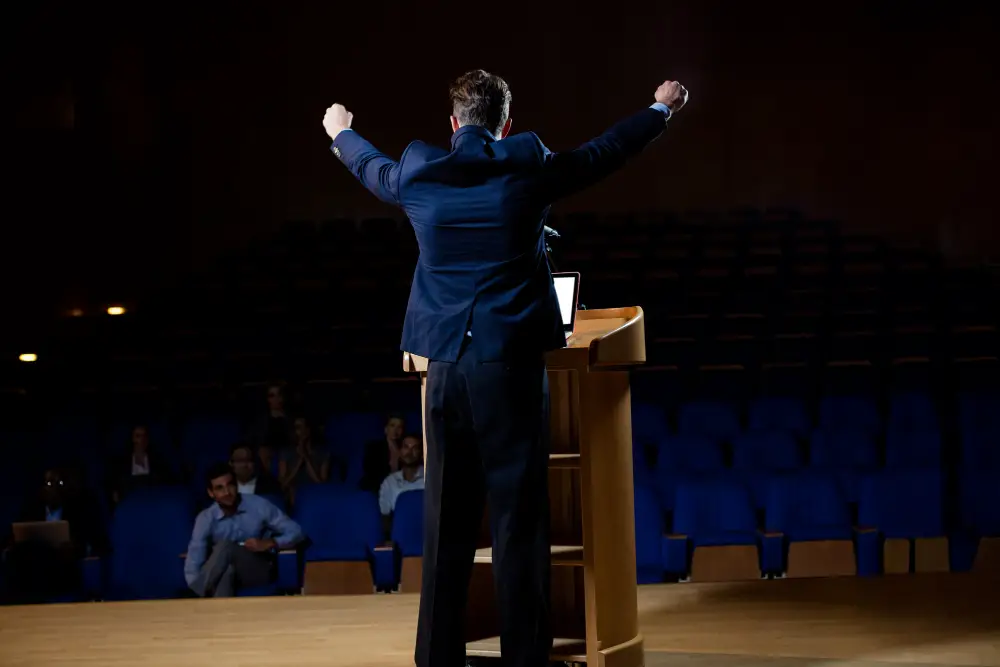
A sharp clink of spoon against crystal silenced the murmurs. My father stepped to the podium and spent five minutes delivering remarks about legacy, discipline, and hard work — words that tasted like ash in my mouth, coming from a man whose sole measure of human worth was what a person was worth. Then his eyes found me in the shadows and the warmth left his face the way water drains from a basin.
“Tonight I am handing full authority to Malik,” he announced, his voice dropping into steel. “As for Elena.”
He raised one finger and pointed it at me across the terrace like a loaded weapon.
“You are the greatest disappointment of my life. You chose to be a pawn on a battlefield because you knew you were too stupid for the boardroom. Let me be perfectly clear. You will not inherit a single dime.”
Silence fell hard enough to hear the ocean below the bluff.
He wasn’t finished.
“Honestly,” he said, and he smiled as he said it, which was the part I will never forget, the smile, “I wish that death notification we received years ago had been real. At least then I could have collected the death gratuity check. That would have been considerably better than having to see your coarse, shameful face standing here tonight.”
The words hit the way a punch hits — not in the place you expect but somewhere deeper, somewhere that had already been bruised so many times the flesh had never properly healed. The crowd froze for one half-second, and then the laughter started, unsteady at first and then rolling across the terrace in a wave.
They were laughing at a soldier being wished dead by her own father.
I turned toward my mother instinctively, the way you reach for something when you are falling. Renee stood beside Calvin with a glass of white wine in her hand. Her knuckles were white around the stem. I met her eyes and I begged her without words. Defend me. Just this once. Say something. She felt me looking. I saw the hesitation move across her face. Then she lowered her gaze to her shoes and took a sip of wine and stepped back into my father’s shadow.
She chose correctly, for her. She always did.
I snapped my heels together by reflex and locked my spine into the position of attention. I would not give them the satisfaction of watching me break. But inside, in the place where a child still lives in every grown person regardless of what they have survived, something finished dying.
I turned my back on the podium and started walking toward the front doors.
I had almost made it.
A hand closed around my forearm from the shadows of the grand staircase. Firm, precise. I spun with my instincts firing and found myself looking at Uncle Vernon.
Calvin’s younger brother, the family’s chief legal counsel for forty years, was a gaunt and gray-faced man who smelled of old law books and stale tobacco and who had spent four decades cleaning up Vaughn disasters with the silent efficiency of a man who has learned to regard catastrophe as simply another form of paperwork. He looked nothing like my father. Where Calvin was loud and flushed and expansive, Vernon had compacted himself over the years into something still and watchful and difficult to read.
“Don’t go just yet, soldier,” he said. His voice came out like gravel under tires.
He pulled me deeper into the alcove, out of the sight lines of the waitstaff.
“You walk out that door now,” he said, “and they win. You become exactly what they say you are.”
“They made their choice years ago, Vernon. I’m just the last one to accept it.”
“Correct. But before you accept it, you should know what Otis left you.”
He reached into the inner pocket of his charcoal suit and withdrew an envelope. It was not the crisp corporate stationery of Vaughn Holdings. The paper was cream-colored, textured, yellowed at the edges with age. But it was the seal that stopped me entirely.
Red wax. Pressed into it: a soaring eagle — the original family crest my grandfather had used before Calvin rebranded everything after the old man died.
“Three days before he passed,” Vernon said quietly. “He made me swear an oath to deliver it only when Calvin officially named his successor. Not before.”
He pressed the envelope into my hands. My name was written on the front in that familiar slanted, forceful script. Captain Elena Vaughn.
My rank. Not my name. My rank.
He had seen me as a soldier before he saw me as a grandchild.
“What’s inside?” I asked.
Vernon gave me a small, dry movement at the corner of his mouth that was as close to a smile as I had ever seen from him. “The truth,” he said. “And something with enough force behind it to take this entire evening apart at the seams. The question is whether you have the stomach for it.”
I looked at the envelope in my hands. Through the frosted glass of the ballroom doors, the blurred shapes of three hundred people who had just watched my father wish me dead moved and drank and laughed.
The Army Ranger Creed does not ask whether the objective is comfortable. It asks whether you have the will.
I pulled the tip of my keys along the sealed flap and opened the envelope.
The smell hit me before anything else.
Cherry Cavendish pipe tobacco.
I was six years old again, cross-legged on a Persian rug in front of a fire while a hard, quiet man told stories about Iwo Jima and Guadalcanal in a low voice that made war sound like weather — something you moved through, not something you survived. The smell of safety. The smell of Grandpa Otis.
My hands were not steady as I unfolded the letter.
The handwriting was sharp and slanted and pressed hard into the page with a fountain pen, the writing of a man accustomed to putting things down permanently.
To Captain Elena Vaughn.
Not Elena. Not granddaughter. Captain.
If you are reading this, Calvin has failed completely. He has chosen vanity over virtue, and I am forced to activate my final contingency.
I know they call you a failure, Elena. I know they look down on your service. But I did not build Vaughn Holdings for men who wear Italian suits and carry empty souls. I built it on discipline and honor — the very qualities you chose to forge in the fire of the Army.
You did not join the military to run away. That was the test. I needed to know whether you had the steel to survive without my money. I have watched every step. I saw you earn that Bronze Star. While your parents see a mistake, I see the only person left in this family with the spine to carry the weight of what I built. You are not the black sheep, soldier. You are the shepherd.
The documents enclosed will explain the rest. Do with them what needs to be done. I trust your judgment. I always have.
— Otis Vaughn, Major, USMC (Retired)
I stood in that alcove with tears cutting through makeup I had applied carefully that morning, reading the words of a dead man who had apparently seen me clearly for years while I had spent those same years believing myself invisible.
Beneath the letter was a dossier. Private investigator’s work, meticulous, assembled in the months before Otis died. I turned the pages and the grief in my chest hardened into something colder and more angular.
Forensic accounting. Bank statements. Unauthorized wire transfers. Shell accounts in the Cayman Islands and Luxembourg that connected back to the Vaughn Holdings emergency reserve fund.
Calvin had siphoned more than forty million dollars from the employee pension fund. Not investment losses. Not bad decisions. Deliberate, sustained theft from the retirement accounts of janitors and secretaries and line managers — the people who had actually built the company — to cover for his son’s catastrophic business failures and addiction treatment.
Medical records from a private clinic in Zurich. Patient: Malik Vaughn. Three admissions. Heroin addiction, 2014. Relapse, 2015. Methamphetamine psychosis, 2018. Each stay had lasted months. Each had been paid for with money that belonged to people who would never be able to retire comfortably because of it.
I closed the folder.
My hands had stopped trembling. The grief was still there, but it had organized itself into something functional, the way grief does when there is work to be done.
I looked at Vernon. “Do you have the original corporate bylaws?”
He tapped the side of his briefcase. “Certified and notarized.”
I folded my grandfather’s letter and placed it in the breast pocket of my dress blues, directly over my heart. Then I straightened my ribbons, smoothed the front of my jacket, and stood to my full height.
“Then we are going back in.”
Vernon moved to open the ballroom doors. I stopped him.
“I’ll open it,” I said.
The double doors swung wide.
No announcement. No applause. I walked across the threshold with Vernon on my right and let my heels find the marble floor in a hard, measured cadence that cut through the ambient jazz like a signal flare. Every conversation in the room died within four seconds. The crowd didn’t part out of respect. They parted out of something older and more instinctive — the recognition that the pressure in the room had changed.
My eyes went to Malik first.
He was leaning against the DJ booth with a magnum of champagne in one hand, still glittering with the residue of his coronation. He spotted me and his mouth curled.
“Oh, look,” he said into the microphone. “The toy soldier came back. What’s the matter, Elena? Did you come back to beg the kitchen staff for a doggy bag?”
A few guests laughed. The sound was thinner than before, nervous underneath.
I didn’t break stride.
I walked until I was close enough to see the sweat at his hairline. He stepped down from the platform and positioned himself in my path, all expensive shoes and inherited confidence, looking down at my uniform with the open contempt of someone who has never once had to earn anything he possessed.
Then he tilted the bottle.
I saw it happen the way you see things happen in a firefight — with a terrible, slowed clarity. The pale gold liquid rolled over the rim and fell across my left shoulder, soaked into the dark wool, ran across my ribbon rack, dripped onto the Bronze Star, and seeped down over the breast pocket where Grandpa Otis’s letter rested against my heart.
The room made a sound that was neither gasp nor silence. It was the sound of three hundred people realizing simultaneously that something irreversible had just occurred.
I stood still. I let the liquid drip from my hem onto the marble. Then I raised my eyes to my father.
Calvin had watched from five feet away. I waited. I gave him the chance.
He shrugged. He raised the microphone. “Come on, Malik, don’t waste the vintage. That’s a $300 bottle.” His tone was bored, dismissive, the voice of a man who had spent so long being certain of his position that he had entirely lost the ability to read a room. “Elena, go wipe yourself off in the servants’ quarters. You’re ruining the vibe.”
My mother lifted a lace handkerchief from her clutch. She did not offer it to me. She lifted it to her mouth to conceal a smile.
I took one breath. Under the champagne and the salt air, I could still smell the ghost of cherry tobacco from the letter against my chest.
I looked at Malik. Not with heat. With the thousand-yard stare — the look that comes from having seen things that don’t wash off. His performance of contempt faltered.
“You didn’t just spill a drink,” I said quietly. “You poured alcohol on a Bronze Star. That medal came from pulling a wounded sergeant out of a burning vehicle in Kandahar. It represents the blood of men who were better than everyone in this room. You didn’t stain my coat. You declared war on the only honest thing left in this family’s name.”
He scoffed, but the wobble in it was audible. “Does honor pay for the Ferrari out front?”
“No,” I said. “But the truth can take it away.”
I extended one arm and moved him aside with the flat of my hand. Not a shove. A clearing. He stumbled into the edge of a table, stunned that the person the family had spent thirty years treating as furniture had developed corners.
I walked past him. Past my mother’s fading smile. Past my father’s confused frown. Straight up onto the stage.
Calvin still held the microphone, mouth already opening. I took it from his hand with enough force that he stepped back, rubbing his fingers.
The feedback screech that tore through the speakers made the room flinch. Good.
“Listen up,” I said.
I used my command voice — built for live-fire exercises and sandstorms, designed to cut through explosions and carry orders to the back of the formation without ambiguity. It shattered the cocktail party atmosphere in a single sentence.
“You think this uniform is a costume. You think my service is a punchline. So let me tell you what this uniform actually means. While you sleep on goose-down pillows and dream about your portfolios, soldiers sleep in holes dug into foreign dirt. They eat dust. They call their families on satellite phones that cut out mid-sentence, and they go back to work anyway, in conditions you cannot imagine, to protect the freedom that lets you stand here tonight and behave as though decency is optional.”
The glamour had gone out of the room. The hors d’oeuvres trays had stopped moving.
I turned to my father.
“You spent my entire life telling me I was a failure because I didn’t know how to make money your way. I want to clarify something. I know exactly how you make money. I have the documentation.”
I stepped toward him and he stepped back. He was a larger man than me. He stopped anyway.
“You make money by stealing from pension funds that belong to your employees. By committing federal crimes to hide your son’s addiction while those employees worked their whole lives believing their retirement was safe. Forty million dollars, Dad. Shell accounts in the Cayman Islands. Wire transfers routed through Luxembourg. Forensic accounting assembled by a private investigator hired by your own father, who understood what you were before you understood it yourself.”
The room made a sound.
Calvin’s face had gone the color of old concrete. “That’s a lie,” he said, but the volume was wrong — too quiet, the voice of a man suddenly aware of the acoustics.
I held up the dossier. Then I set it on the podium and turned to the room.
“And the heir. The crown prince.” I found Malik against the far wall, his swagger completely evacuated. “Three admissions to a private clinic in Switzerland. 2014. 2015. 2018. All paid for with stolen pension money while my father told the board he was away on business travel.”
The silence was absolute.
My father exploded.
“Security!” His face had gone mottled red. “She’s delusional. She’s drunk. Get her off my property right now.”
Two large men came from the perimeter at a run.
I put my palm flat on the dossier. “Stop.”
They stopped.
Vernon stepped forward then. Forty years of Vaughn family legal counsel had given him a specific weight in a room like this — the authority of the person who has always known where the bodies are, which in this case was not a metaphor. He opened his briefcase and laid the papers flat with the calm precision of a man who has been waiting a long time to do exactly this.
“Ladies and gentlemen. Shareholders.” His voice was dry and carried the absolute certainty of certified documents. “This is the codicil to the last will and testament of Otis Vaughn, dated October 2010. It establishes that the controlling fifty-one percent of voting shares in Vaughn Holdings is not, and has never been, owned outright by Calvin Vaughn. It is held in an irrevocable family trust. Section Four, Paragraph C contains a morality clause stipulating that if the current trustee commits financial fraud, or attempts to appoint a successor who is mentally incapacitated or carries a criminal history, the trust automatically removes current leadership and transfers controlling interest to the reserve beneficiary.”
Calvin lunged toward the podium. I stepped into his path.
He stopped.
“I am his only son,” he said. His voice had lost its structure. “I am the only heir. This is fabricated. Vernon, you’ll be disbarred before morning.”
Vernon regarded him over the rim of his glasses. “You are his only son,” he said quietly. “You are not his only soldier.”
He placed the final document on the podium. The reserve beneficiary designation, signed by Otis Vaughn, witnessed by a judge and two attorneys, dated two months before his death.
The name on the line was mine.
Calvin read it. The sound he made was not a word.
I picked up the document.
“The company your grandfather founded,” I said to the room, “was built on the belief that the people who work hardest and live most honestly deserve to lead. He understood, long before anyone else was willing to say it, that you had abandoned that belief. He was waiting to see whether anyone else in this family had kept it.”
I held the document at my side.
“Effective tonight, pursuant to the terms of the Otis Vaughn trust, I am assuming the position of trustee and interim executive authority over Vaughn Holdings. The transfer of authority to Malik Vaughn announced this evening is void. The board will receive formal notification before nine tomorrow morning.”
No one moved.
Calvin’s mouth was working without producing sound. Malik had gone the color of old wax. My mother stood at the edge of the crowd with both hands pressed against her mouth.
I looked at each of them in turn, my father last.
“I want you to understand something,” I said, and I meant it without heat or performance, because that is the only way the truth lands cleanly. “I am not doing this for revenge. I am doing this because sixty-four hundred employees of Vaughn Holdings came to work faithfully for years and were stolen from. Their retirement accounts were raided to cover failures of character that none of them had any part in. That is the wrong I intend to fix. It is the only thing in this room that interests me.”
I stepped down from the stage.
The security personnel had retreated to the perimeter. The guests stood with their glasses held loosely, the party having become something none of them had RSVPed for.
Vernon fell into step beside me as I walked toward the exit.
“The forensic accountants are already on retainer,” he said quietly. “We can begin the pension restitution process as early as next week.”
“Good.”
I paused at the ballroom doors and looked back one last time.
Calvin stood at the podium in the way that men who have defined themselves entirely through power are left standing when that power is legally and publicly removed — not just smaller but structurally altered, as though something load-bearing had been taken out.
Malik had found a chair and was sitting in it with his face in his hands.
My mother had not moved from her spot at the edge of the crowd. She was looking at me across the length of the ballroom, and for the first time in my memory her expression held no calculation. Just something raw and undefended and too late.
I held her gaze for a moment.
Then I turned and walked out.
The Atlantic air hit me on the front steps, cool and salt-heavy and indifferent to everything that had just happened inside. I stood on the gravel and breathed it in. The sound of the party — what remained of it — filtered through the mansion walls, muffled and diminished.
In my breast pocket, slightly damp from the champagne that had soaked through the wool, my grandfather’s letter rested against my sternum. I put my hand flat against it for a moment, the way soldiers touch things that matter.
Forty years ago a Marine who had fought across the Pacific had looked at a small, serious girl cross-legged on a rug and seen something no one else in the family had bothered to see. He had been patient about it in the way that Marines and farmers and people who understand long timelines are patient — holding the structure quietly in place, waiting for the moment when it would be needed.
My phone lit up on the passenger seat of my old pickup. Vernon.
“The board chair has already called,” he said. “He says he’s been waiting for someone to do exactly what you just did for approximately four years.”
“Tell him Monday morning works.”
“There’s one more thing. Your grandfather left a second letter. A personal one, separate from the legal documents. I held it back tonight because the evening had enough in it already.” A pause. “He wrote: I am proud of you, Elena. I have always been proud of you. I could not say it while I was alive without it affecting the test. I am saying it now because the test is over and you passed it years ago. Take care of the people. That is the whole job. The rest is details.”
I sat in the dark in my old pickup truck outside the blazing estate and let that land.
The test is over.
He had known what this family was. He had watched anyway, from a distance, through the years in Afghanistan and the years of silence and the Bronze Star and the letters burned unopened in a fireplace, and he had known what I was too. He had trusted that judgment. He had bet everything on it.
I started the engine.
The mansion lights grew smaller in my rearview mirror, that ostentatious lighthouse built by arrogant men to admire themselves, receding as I turned out onto the road and pointed toward the real world, where sixty-four hundred people were going to have their retirement restored and where the work of making that happen would begin at nine on Monday morning.
I had led soldiers through ambushes. I had rebuilt things broken by fire and pressure and time. I had learned, in the hardest schools available, that the mission doesn’t wait for your grief to finish.
I rolled the window down and let the night air come in.
Somewhere behind me, the party was ending.
Somewhere ahead, the work was about to begin.
The road stretched out into the dark, and I drove.

Ethan Blake is a skilled Creative Content Specialist with a talent for crafting engaging and thought-provoking narratives. With a strong background in storytelling and digital content creation, Ethan brings a unique perspective to his role at TheArchivists, where he curates and produces captivating content for a global audience.
Ethan holds a degree in Communications from Zurich University, where he developed his expertise in storytelling, media strategy, and audience engagement. Known for his ability to blend creativity with analytical precision, he excels at creating content that not only entertains but also connects deeply with readers.
At TheArchivists, Ethan specializes in uncovering compelling stories that reflect a wide range of human experiences. His work is celebrated for its authenticity, creativity, and ability to spark meaningful conversations, earning him recognition among peers and readers alike.
Passionate about the art of storytelling, Ethan enjoys exploring themes of culture, history, and personal growth, aiming to inspire and inform with every piece he creates. Dedicated to making a lasting impact, Ethan continues to push boundaries in the ever-evolving world of digital content.