The church smelled like old wood and too much perfume, and by the time we got back to my mother’s house in Albany, everyone was exhausted in that specific way of people who have performed grief in front of an audience for several hours. Family I hadn’t seen in years was still hanging around picking at casseroles that had been reheated three times. I sat in the corner still in uniform, not because I wanted to make a statement but because I had flown straight from Fort Bragg and hadn’t had time to change.
My younger sister Megan was glowing.
That’s the only word for it. She moved through the rooms like she was hosting a party rather than attending a funeral, whispering into people’s ears, making sure everyone knew how she had been handling everything. She had worn that look since we were children — the one that said the world owed her something and she was simply waiting for the delivery.
I ignored it until the lawyer showed up.
Robert Chen was an old friend of my father’s. He walked in with a briefcase and the careful expression of a man who has delivered complicated news enough times to know there is no perfect way to do it. Everyone gathered around the dining room table. The air went heavy in a different way than it had been heavy at the church — not grief anymore, but anticipation. This was about money and property and who was about to find out they had been wrong about their assumptions.
Robert started reading. Megan was practically vibrating.
To my daughter Megan, I leave the Miami apartment and a minority share in Whitmore Construction.
She nodded as if this were simply confirmation of something she had always known. The Miami apartment had a view of Biscayne Bay and was worth several million dollars. The kind of place Megan had been photographing herself in front of her whole life.
Robert turned the page.
To my daughter Hannah, I leave the family cabin and the surrounding two hundred acres in the Adirondacks.
For a moment the room went quiet.
I kept my face blank. The army teaches you that — never let anyone read your reaction before you’ve decided what your reaction is. But Megan wasn’t interested in discipline or discretion. She leaned back in her chair, crossed her arms, and looked at me across the table.
“A cabin fits you perfectly, you stinking woman.”
She didn’t whisper. She wanted everyone to hear it. Some people gasped. My mother looked down at the table. Robert shifted but kept reading like pretending it hadn’t happened would make it disappear.
I clenched my jaw. It wasn’t the insult that got me — I’d been called worse in Afghanistan by people who actively wanted me dead. It was the fact that my sister sat across from me in our father’s house, on the day of his funeral, and thought that was acceptable. And the silence from my mother, from every person in that room, told me something I already knew but hadn’t wanted to confirm: nobody was going to say a word about it.
Megan continued, warming to her audience. “Come on, Hannah. You live out of a duffel bag most of the year anyway. That shack is perfect for you. No one will even notice if you disappear up there.”
I looked at my mother. She kept looking at the table.
That silence cut deeper than anything Megan said.
Robert closed the folder and cleared his throat. Megan was already talking about contacting Summit Realty, about management options, about people she knew who could help with the Miami property. She glanced at me one more time.
“Hope you like chopping firewood. Alone.”
I grabbed my jacket and stood up. Years of service had taught me when to fight and when to walk away. Walking away was the smarter move right then, but Megan followed me into the hallway, heels clicking against the hardwood.
“Don’t be mad, Hannah. It’s not like you ever cared about this family anyway. Always off playing soldier while I stayed here and took care of things.”
I turned around. “You mean you took care of yourself. Dad built this family. You just took advantage of it.”
Her smile never faded. “And now I get the reward.”
I walked out the front door. The cold Albany air hit my face and felt better than the suffocating room I’d left. I stood on the porch listening to the muffled voices inside, Megan’s laughter carrying through the walls, and I thought about my father. He had served before I was born. He knew what it meant to stand by your people. And yet somehow here I was, treated like unclaimed luggage at his own funeral.
When my mother finally appeared in the doorway, she didn’t look at me. She just pulled her sweater tighter.
“Megan didn’t mean it. She’s under a lot of stress.”
I almost laughed. “She just inherited a condo worth two million dollars. What’s stressful about that?”
Mom stepped back inside without answering.
That silence was its own statement. She had chosen her position without having to say a word.
The next morning she showed up at my apartment. She walked in without waiting to be invited, sat at my table, and told me Megan felt terrible. I asked whether Megan felt terrible or whether my mother felt terrible about how it had looked in front of the family. Her lips pressed into a line.
“She has responsibilities,” Mom said. “That condo isn’t just for her. It’s an investment for the family’s future.”
“And the cabin?” I asked.
She hesitated. “It’s out of the way. Difficult to maintain. Megan has connections in real estate. She could make it valuable. You have your career in the army.”
I stared at her. “So Dad left me something, and less than twenty-four hours later, you’re suggesting I hand it over to Megan.”
She folded her hands in her lap. “It would be simpler.”
“No,” I said. “She thinks of it as hers. And apparently so do you.”
Her face hardened. “I’m trying to keep this family together.”
“You’re trying to keep Megan happy. Those aren’t the same thing.”
She left without resolving anything. I sat at the kitchen table with my hands shaking — not from fear, but from that specific anger that comes when you realize the people who were supposed to see you clearly have been choosing not to for years.
The following week passed in the way weeks pass when you’re trying to stay busy enough not to feel things: work, training, paperwork, meetings, the rhythms of military life that had always been better at swallowing time than at healing anything. Every night when the lights went out, I heard Megan’s voice and saw my mother’s eyes looking at the table.
Then one evening Megan sent a text. How’s life in your shack?
I deleted it and threw my phone across the couch.
Days later, Mom called again. She said Megan thought I should spend some time at the cabin. Give everyone space. Things were tense. I recognized the machinery of this — Megan wanted me out of the way and had found a way to make my mother deliver the message. I wanted to hang up. Instead I breathed.
“Fine,” I said. “I’ll go. Not for Megan. For Dad.”
The drive north took hours. The highway eventually thinned into two-lane roads and then into something narrower, winding through forest and small towns that looked half-forgotten. With every mile, Albany faded. By the time I saw signs for Lake George, the anger in my chest had cooled into something harder and more useful: determination.
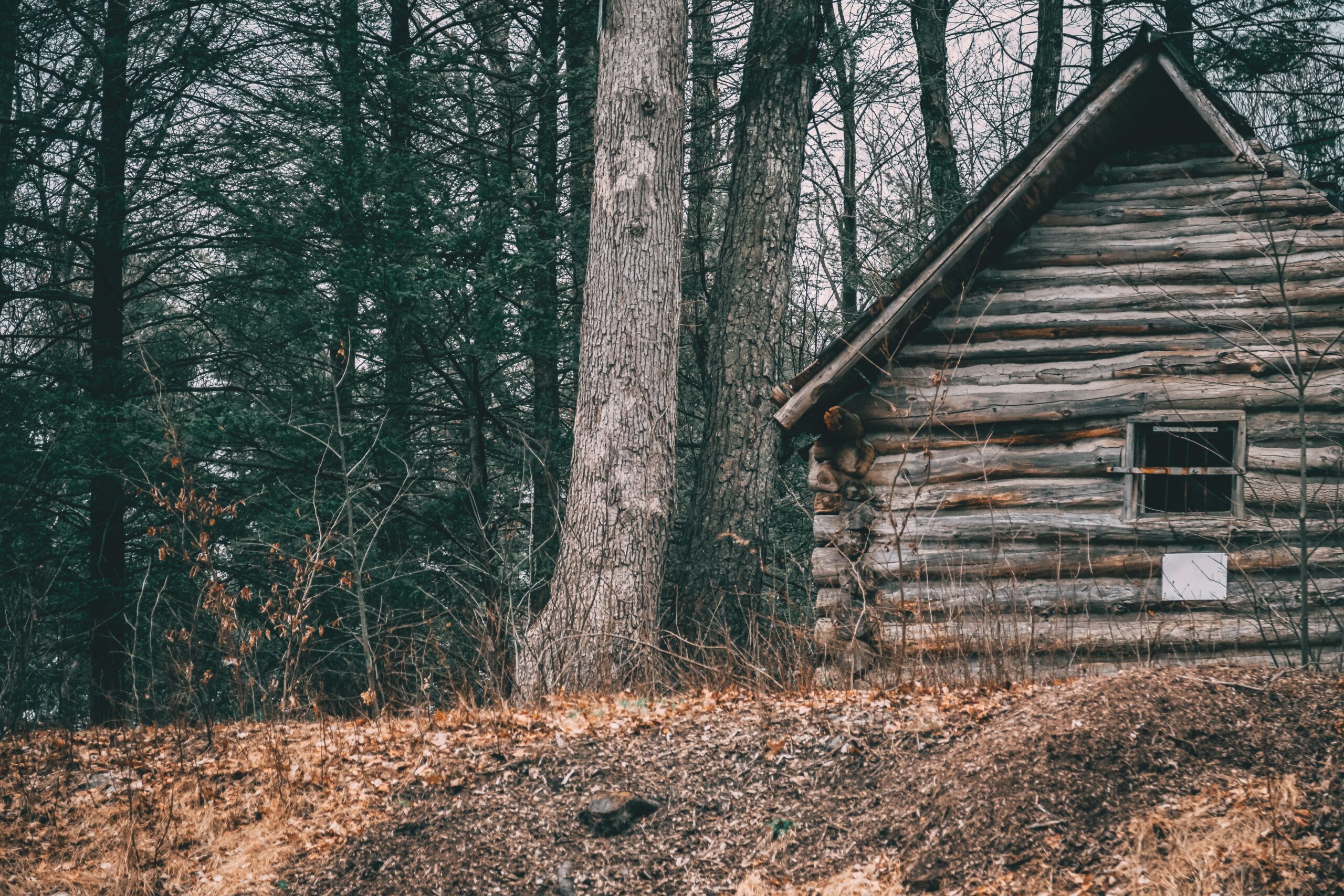
When I turned onto the dirt road and my headlights caught the silhouette of the cabin — sagging roofline, shuttered windows, the dark outline of two hundred acres pressing in around it — my heart tightened. This was my worthless inheritance.
I killed the engine and got out. The night pressed in with that kind of quiet that feels physical, that presses against your ears. I climbed the porch steps, the boards groaning softly, and fit the key into the old lock.
It turned smoothly.
The door swung open, and I braced for mildew and dead mice. Instead the air came out smelling of pinewood and faint coffee and leather. I found the light switch and the room filled with warm light.
Someone had been caring for this place.
The wood floors were polished. The furniture was worn but intact. A neat stack of firewood leaned against the stone fireplace. I stood in the doorway looking at it, trying to understand.
Then I noticed the photograph on the mantle.
My father, young, barely twenty, standing in front of this same cabin with an older woman I had never seen. I lifted the frame. On the back, in my father’s precise handwriting: With Grandma Rose, 1962. The place where everything began.
Grandma Rose. Dad had never mentioned anyone named Rose. He always said his parents died young, that there was no family left.
I studied her face. She had kind eyes and the particular expression of someone who wasn’t impressed by much and wouldn’t be talked out of anything she’d decided.
A knock at the door made me reach instinctively for where my sidearm would be before remembering I wasn’t on duty. I looked through the window. An older man on the porch, holding a casserole dish.
I opened the door.
“Mrs. Whitmore,” he said.
“Captain Whitmore. Who are you?”
He smiled, unhurried. “Jack Reynolds. Marine Corps, retired. Live two cabins down. Your father asked me to check in when the time came. Said you might need a friend out here.”
I looked at him — the straight posture, the haircut still sharp at seventy. Marine Corps. That explained everything.
He held out the dish. “Beef stew. Figured you’d be hungry after the drive.”
I took it. “You knew my dad?”
“Well enough. He came up here about a week before he passed. Spent three days organizing things. Told me his daughter might show up one day looking like the world had turned on her.” Jack paused. “Said I should remind you that sometimes the most valuable things are hidden in unexpected places. His words. Oh, and he said you should check under the kitchen floorboard when you’re ready.”
He tipped his cap and walked back down the steps before I could ask anything else.
I stood in the doorway holding warm stew in the cold night air, processing what had just happened. Dad had known. He had prepared for this. He had driven up here a week before he died and arranged things for a daughter he trusted with something he hadn’t trusted to anyone else.
I set the stew on the counter and got on my hands and knees on the kitchen floor. The boards were old pine, worn smooth by decades. I ran my hand along the seams until I found one plank that shifted. My heart hammered as I worked it up with a pocketknife.
A metal box, wrapped in oilcloth.
I carried it to the table and opened it.
Inside: documents, photographs, a letter addressed to me in my father’s handwriting. But what made me stop, what made the world go briefly silent, was the geological survey underneath. My training had me scanning data fast. Words surfaced like things coming up through water: granite, feldspar, high yield, estimated commercial value substantial.
I sat down hard.
Megan had sent me to a shack. Dad had left me land sitting on top of mineral deposits worth tens of millions of dollars.
I opened the letter with hands that weren’t entirely steady.
My dearest Hannah. If you’re reading this, I was right about Megan. I pray I’m wrong, but I saw the signs. The way she looks at things like they’re already hers. The way she dismisses you when she thinks I’m not listening. I need you to know about Rose. She wasn’t my blood grandmother, but she took me in when my parents died. This was her cabin, her land. She studied it her whole life. She knew what it held, but she told me to protect it. She said one day it might give my family what they truly needed: security, independence, and strength. Now it’s your turn.
He went on to write about Robert Chen, about the legal documents already prepared, about his trust in me specifically and his reasons for it. The handwriting wavered toward the end — he had been sick when he wrote it — but the message was clear.
He hadn’t left me scraps. He had left me exactly what he thought I needed, in the hands of the only person he trusted to handle it right.
I sat at that table for a long time. The stew went cold. Outside, the lake was invisible in the darkness. Dad had looked at both his daughters and made a decision — not an arbitrary one, not a cruel one, but a considered one. He had watched Megan her whole life. He had watched me. And he had decided.
My phone buzzed. Megan: How’s the shack, Hannah? Still smell like mold?
I set the phone face down and looked at the survey report.
If only she knew.
The days that followed moved with the particular rhythm of a campaign just beginning. Jack came by the next morning and introduced himself properly, explained more about Rose — a woman by all accounts tougher than most men, who had spent her life studying this land and fighting to preserve it, who had passed that fight to my father and intended it to continue. He told me that everyone in these parts knew the stories. That she could argue a county commissioner under the table and still have something baking before sundown. I found myself wishing I had known her.
When Megan called that afternoon — her voice syrupy sweet, offering to have her and Mom take the property off my hands, manage it for the family, give me holiday visits — I said no and hung up. When Summit Realty showed up the next morning, two men in windbreakers with clipboards and the too-quick smiles of people who expect to get what they want, I walked onto the porch and told them to get off my land before I called the sheriff. They left without arguing, which told me they’d been expecting more resistance from someone they thought was a pushover.
I called Robert Chen that afternoon. He had everything ready — deeds, titles, mineral rights documentation, all notarized and filed. “You are the sole legal owner,” he said. “No one can challenge this without burning through years in court and losing.” He told me my father had come to him months before he died and prepared for exactly this scenario. He had anticipated Megan’s response with the precision of someone who had spent a lifetime watching her.
I drove to Albany and met him in a glass-walled office overlooking the Hudson. He spread the documents across the conference table and walked me through each one. When he got to the lithium deposit report, he looked up.
“Your sister’s in for a surprise,” he said. “These mineral rights alone are worth tens of millions. Feldspar, granite — and this.” He tapped the lithium report. “In today’s market, this could make you wealthier than any penthouse ever could.”
I leaned back. “She’s already sent people to snoop around the property lines. She’s filing a legal challenge.”
Robert nodded. “I expected it. Lawsuits aren’t always about winning — they’re about wearing you down. She’s betting you’ll be too exhausted to fight. She doesn’t know you.”
“No,” I said. “She doesn’t.”
I drove back north with the folder in my bag and the legal protection of every document my father had prepared, and for the first time since the funeral, I felt the ground under me as something solid.
Back at the cabin, I started working. Not because I was running from anything, but because I needed to make the place into what it deserved to be. I hauled out broken furniture, scrubbed floors, cleared decades of accumulated debris from the corners. Jack brought tools and helped me replace a loose porch board and patch a drafty window. We worked side by side in the way that only happens between people who don’t need to fill silence, and by the end of the afternoon the place looked lived-in rather than abandoned.
Sitting on the repaired porch steps as the sun went behind the trees, he asked me what I wanted it to be.
I had been thinking about it since I first read Dad’s letter. I said it out loud for the first time.
“A foundation for veterans and women who’ve been pushed aside. Transitional housing. Job training. Counseling. A place to rebuild.”
Jack studied me. Then he raised his beer bottle.
“That’s one hell of an objective, Captain.”
“It’s not about revenge,” I said. “It’s about proving that what Megan called worthless can change lives.”
That night I painted the front door deep green and opened my laptop and began drafting the proposal. The Whitmore Veterans and Women Foundation. I listed objectives, programs, funding strategies. I wrote until midnight, then read my father’s letter again before sleeping — the part where he said I had been underestimated my whole life, by teachers, by commanding officers, by my own family. Don’t waste this chance, he had written. Use it to prove them wrong. Use it to help others who’ve been pushed aside. That’s Rose’s legacy. That’s your legacy now.
Megan’s legal challenge went nowhere. Robert dismantled it efficiently and without drama. The press coverage that Megan had hoped would embarrass me turned around when courthouse sources confirmed the will was airtight and her filings were described by legal observers as meritless. She called to threaten me — told me she would drag my service record into it, imply PTSD, question my stability. I told her to be very careful and hung up.
She eventually ran out of moves. Not because she stopped wanting to win, but because she had never had anything real to win with. The law was not on her side. The documentation was not on her side. And when I invited both her and my mother to dinner at the cabin and laid the surveys and deeds across the table in front of them and told my mother what the land was worth and what I planned to do with it, something shifted in the room that Megan couldn’t spin or litigate or Instagram her way out of.
Mom looked at the papers. She looked at my father’s letter. She looked at me.
“I didn’t realize,” she said. Her voice cracked. “I didn’t know what your father planned.”
“You didn’t want to know,” I said, not cruelly. “It was easier to believe Megan deserved everything.”
She covered her mouth. Then she followed Megan out.
But she came back the next day. Alone this time, in a simple sweater and no pearls, looking smaller than I had ever seen her. She sat at my table and said she had been wrong. Not as a performance, not as a maneuver — just plainly, the way people say things when they’ve finally stopped trying to manage how they appear.
She said she hadn’t known the extent of what Dad had prepared. She said she had let Megan’s version of events fill the space that should have been filled by asking me directly. She said she wanted to do better, if I’d let her.
I told her I would, but it wouldn’t be easy.
She said she wasn’t expecting easy.
It wasn’t forgiveness, not entirely. But it was a beginning, and beginnings are what you work with.
Megan didn’t come to the foundation opening. I hadn’t expected her to. The last I heard, she had moved on to another real estate venture, still chasing the next payout, still defining herself by what she could acquire. That was her inheritance, the one she had chosen — not the one Dad left.
The ribbon stretched across the glass doors of the new building snapped clean in the breeze when I cut it. Reporters took photos. Veterans in jacket patches talked with young mothers carrying toddlers. Kids ran in the courtyard. People signed up for programs, for housing applications, for job training. The place was alive in the way that only happens when something is built for genuine purpose rather than profit.
Jack stood at the edge of the crowd with his coffee, watching it all with the quiet satisfaction of someone who had believed in the objective before it had any visible shape.
“Your dad would be proud,” he said.
I nodded. My throat was too tight for more.
My mother sat in the front row. She had come to every planning meeting since the night Megan stormed away from the dinner table. She had organized supply donations, made phone calls, contributed in the small precise ways of someone trying to make a correction rather than a statement. When my eyes found her during the speech, she was sitting straighter than I had seen her in years.
I stood at the podium and told the truth.
“This land was supposed to be forgotten,” I said. “An old cabin, a piece of property no one cared about. Some people mocked it. Mocked me. They thought it was worthless. But what they didn’t see was what was hidden underneath.”
I talked about my father and about Rose, about the survey markers in the old photographs, about a woman who had studied this land her whole life and passed her belief in it forward through three generations. I talked about what the foundation would do — housing, training, support for veterans and women who had been told they didn’t matter. I talked about dignity over destruction.
The applause that followed wasn’t polite. It was the real kind.
Afterward I walked down to the dock alone. The lake was the same as it had been the first night I arrived — the same water, the same dark tree line, the same quiet pressing against my ears. Except now the dock had been repaired, the building behind me was full of voices, and I was not standing there wondering if I would survive. I was standing there knowing I had built something.
My mother came and stood beside me. She slipped her arm through mine.
“I’m proud of you, Hannah,” she said. Her voice cracked but held.
I nodded. Didn’t trust myself to speak for a moment.
Behind us, the foundation continued its first day of life — messy and loud and imperfect, exactly the kind of future my father had imagined for this land when he drove up here a week before he died and spent three days making sure it was mine.
I pulled his ring from my pocket and slipped it on my finger. The emerald caught the afternoon light off the water.
“We did it,” I said quietly, not to my mother, not to anyone standing beside me. Just into the air, toward wherever fathers go.
The wind moved across the lake.
I didn’t need an answer. The building behind me was the answer. The voices inside it were the answer. Two hundred acres of Adirondack land sitting on top of mineral deposits worth more than my sister could imagine, put to use in a way she never would have considered, was the answer.
Success doesn’t announce itself with a comeback line. It just becomes the thing that outlasts every bitter word anyone ever aimed at you.
And standing there with my mother’s arm in mine and the lake stretching wide and steady before me, I knew this one would outlast everything.

Lila Hart is a dedicated Digital Archivist and Research Specialist with a keen eye for preserving and curating meaningful content. At TheArchivists, she specializes in organizing and managing digital archives, ensuring that valuable stories and historical moments are accessible for generations to come.
Lila earned her degree in History and Archival Studies from the University of Edinburgh, where she cultivated her passion for documenting the past and preserving cultural heritage. Her expertise lies in combining traditional archival techniques with modern digital tools, allowing her to create comprehensive and engaging collections that resonate with audiences worldwide.
At TheArchivists, Lila is known for her meticulous attention to detail and her ability to uncover hidden gems within extensive archives. Her work is praised for its depth, authenticity, and contribution to the preservation of knowledge in the digital age.
Driven by a commitment to preserving stories that matter, Lila is passionate about exploring the intersection of history and technology. Her goal is to ensure that every piece of content she handles reflects the richness of human experiences and remains a source of inspiration for years to come.