I had been looking forward to that weekend for six weeks.
Three days at the lake house, no work emails, no client calls, no negotiations. Just the Hill Country air, the sound of water, and the particular silence that only exists two hours outside a city. I had earned it. The Henderson deal had consumed the better part of my year, and when it finally closed, the first thing I did was block my calendar and book myself a long weekend at the place I had spent five years making into the one space in my life that was entirely mine.
I pulled into the gravel driveway just after noon on a Friday in October. The drive had been good. Wildflowers along the highway, the sky that deep Texas blue that only happens in autumn. By the time I turned onto the lake road, my shoulders had dropped an inch.
I unlocked the front door and stepped into my house.
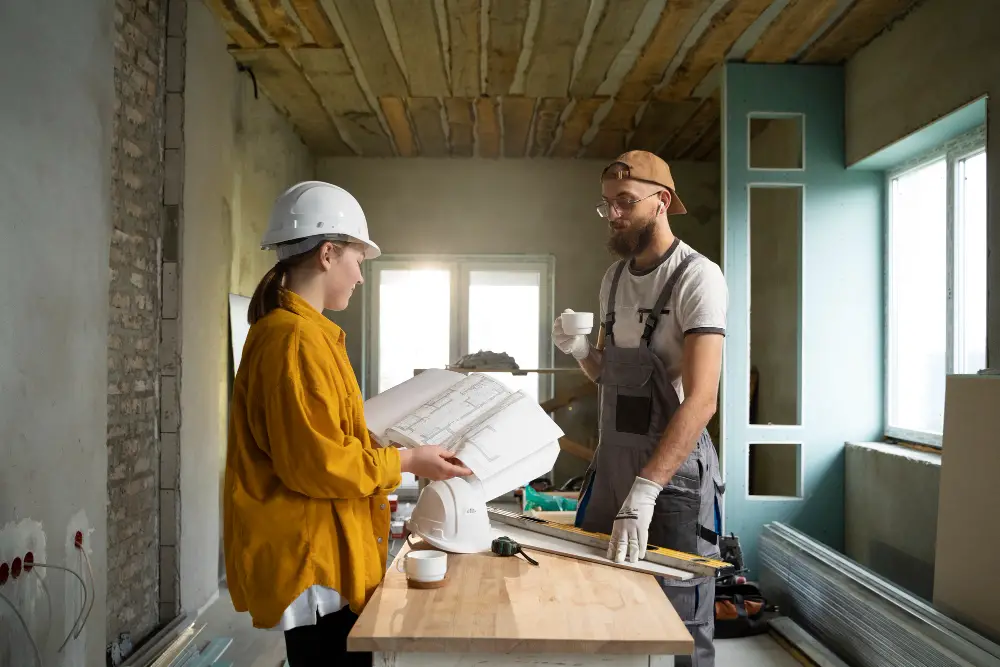
Dust hit me first, thick and gritty. I stood in the entrance blinking. The living room I had spent two years furnishing carefully, the cream sofas, the vintage photographs I had collected from local markets, the reading nook built into the east wall with its cedar shelves, was gone. Not rearranged. Not moved. Gone. In its place stood exposed beams and torn drywall, the hardwood floors I had refinished myself one long weekend scratched and gouged and covered in construction debris.
I walked forward slowly, my sneakers crunching on broken tile.
The kitchen was worse.
The custom cabinets I had saved for three years to afford were ripped out of the walls, leaving gaping wounds in the drywall. The marble countertops I had installed the previous spring were in pieces on the floor. My farmhouse sink, the one I had driven four hours to San Antonio to find because it was the exact width and depth I needed, was simply gone. In its place sat a concrete mixer and stacks of boxed cabinetry, new and expensive looking, still wrapped in plastic.
I stood in the middle of the wreckage and tried to understand what I was looking at.
This was my house. I had bought it five years ago. Ninety thousand dollars, fifteen of it a birthday gift from my parents that I had thanked them for and put toward the down payment alongside seventy-five thousand of my own savings, and every mortgage payment since had come from my account alone. I had chosen the paint colors. I had refinished the dock. I had planted the flower beds along the stone pathway to the water. I had spent more weekends than I could count driving back from Austin to fix, improve, and care for this place.
My phone was already in my hand when I heard footsteps on the porch.
“Bella, sweetie, you’re here early.”
My mother stepped through the doorway wearing white linen and a bright smile that faltered when she saw my face. Behind her, my father followed in cargo shorts and a fishing vest, looking like a man who already knew what was about to happen.
“What happened to my house?” My voice came out quieter than I intended.
Mom waved her hand through the dusty air. “Oh, don’t worry about the mess. The contractor says it’ll be cleaned up by next month. It’s going to look absolutely beautiful.”
“Who authorized this?”
She blinked at me with what seemed like genuine confusion. “Well, we did, honey. Your father and I. We’ve been planning this for months.”
I opened my texts and scrolled back through weeks of messages from her. Updates about my nephew’s baseball games. A question about Sunday dinner. A reminder about a cousin’s upcoming wedding. Not a single word about a renovation. Not a photograph, not a contractor’s name, not a question about whether I wanted my kitchen destroyed.
“There’s nothing here,” I said, holding up the phone. “Not one message about this.”
My father cleared his throat. “Your mother mentioned it at dinner three weeks ago. You nodded. You said it sounded nice.”
The memory surfaced faintly. I had been at their house for Sunday dinner after a brutal week, one eye on my phone answering an urgent client email, my mother talking in the background about something. I had probably made some noise of acknowledgment while staring at my screen. That was what they had built this on.
“Even if I nodded at dinner,” I said carefully, “which I don’t remember doing, this is my house. You cannot hire contractors and tear apart my property without my explicit permission. I own this.”
My mother’s expression shifted, something cooling behind her eyes.
“Bella, don’t be dramatic. We’re doing this for the family. Your brother and Victoria are going to need more space, and this house just sits empty most of the time. It makes sense to make it functional for when they use it.”
“When they use it,” I repeated.
“When they move in,” she corrected, as if the distinction were minor. “Jacob’s firm is expanding. He wants to open a satellite office out here. This place is perfect, plenty of room, privacy, and Victoria has always loved the water. And they’re trying for a baby.”
I felt the room tilt.
“Mom. This is my house. I own it. The deed has my name on it, and only my name.”
“Well, technically,” my father said, “we helped with the down payment.”
“You gave me fifteen thousand dollars five years ago as a birthday gift. I’ve been paying the mortgage by myself every month since then. That does not give you any legal claim to this property.”
My mother sighed with the patient exhaustion she had always used when she thought I was being unnecessarily difficult. “Nobody is taking anything from anyone. We’re just making it nicer for the whole family. You’re always so busy with work anyway. Jacob and Victoria will actually live here. They’ll take care of it properly.”
There it was. The implication that had been woven through my entire life: that my work, my ambitions, my choices made me less deserving than my brother, who had always been the one the family built its stories around. Jacob, who had our father’s charm and our mother’s talent for making you feel that accommodating him was simply what loving the family meant.
“Get out,” I said. I meant it quietly and I meant it completely.
“Bella—”
“Get out of my house. Right now.”
They left, my mother’s protests trailing behind her, my father’s hand on her back guiding her toward the car. I stood in the doorway and watched until their taillights disappeared around the bend, dust rising from the gravel.
I sat on the porch steps and called my best friend Jessica.
Twenty minutes later I had told her everything, and she had listened to all of it without interrupting.
“So let me make sure I understand,” she said. “Your parents hired contractors to demolish your kitchen and living room, without your permission, because they decided to give your house to your brother.”
“That’s correct.”
“Bella, that’s not a misunderstanding. That’s not a family disagreement. That’s trespassing and property destruction.”
“I know.”
“What are you going to do?”
I looked out at the lake, at the water catching the afternoon light the way it always did this time of year, smooth and gold and still.
“I’m going to call my attorney,” I said. “And then I’m going to make sure this never happens again.”
That afternoon I walked through every room with my phone camera, documenting everything methodically: the demolished kitchen, the exposed beams, the construction equipment scattered across what used to be my living room floor. I photographed the boxes of new cabinetry, clearly more expensive than what I had installed, and the high-end appliances still in their packaging. I photographed the missing farmhouse sink, the shattered countertops, the gouged floors.
Then I drove into town and checked into the small bed-and-breakfast near the lake run by an older couple who recognized me from my regular visits.
That night in the unfamiliar bed, I opened my laptop and pulled up my property files. The deed was clear and unambiguous. My name only. My parents had no legal claim. I drafted an email to Gregory, my attorney, and then opened my banking app and reviewed every mortgage statement, every property tax payment, every insurance record. All in order. All in my name.
Jacob arrived the next morning with Victoria.
He walked into my house without knocking, the way people walk into spaces they have already decided belong to them.
“Mom said you were upset about the renovation.” He was smiling. “I thought I’d come by and show you the plans. Once you see what we’re doing, you’re going to love it.”
I set down my phone.
“Jacob, this is my house.”
“Yeah, of course.” He was already pulling out his phone, flipping to architectural drawings. “But Mom and Dad explained the arrangement, right? It makes more sense for Victoria and me to be out here full-time. You’re barely here anyway.”
“There is no arrangement. This is my property. Nobody asked my permission before hiring contractors to demolish it.”
Victoria stepped forward with her sympathetic smile. “Bella, I know change is hard. But think about what we’re adding. French doors to the deck. A real master suite upstairs. We’re opening the whole space up—”
“I don’t care about what you’re adding,” I said. “You have no right to make those decisions.”
Jacob’s smile faded. “Come on. Don’t be like this. Mom and Dad are trying to help us, and it’s not like you’re using the place. You’re always working. Victoria and I actually want to be here.”
The implication was exactly what it had always been: I was the selfish career woman, too focused on the wrong things, while Jacob understood the true value of family. He had been handed that narrative his entire life and he carried it completely without examining it, which was perhaps the saddest part.
“Get out,” I said. “Both of you. Or I call the police.”
Victoria’s sympathy evaporated. “Your mother was right about you,” she said. “You’ve always been incredibly selfish.”
“I’m acting like someone whose property was illegally destroyed,” I said. “Leave now.”
After they left I sat on the front porch for a long time, looking at the lake. Then I called Gregory and told him everything.
“Here is what we do,” he said, his voice steady and methodical. “First, document everything, every piece of damage, every conversation, every text. Second, I’m sending cease-and-desist letters to the contractors and your family, making clear that no further work is to happen without your written authorization. Third, formal notice that anyone occupying or attempting to occupy your property is doing so illegally.”
“My parents are going to lose their minds,” I said.
“That’s not your problem. What they did is trespassing and destruction of property at minimum. You would be entirely within your rights to press charges. I’d recommend we start with civil action.”
“Can I hold them liable for the damage costs?”
“Absolutely. They hired contractors without your permission. They’re responsible for the cost of the unauthorized work and the full cost of restoring your property. Do you have documentation of what the house looked like before?”
I thought of the hundreds of photographs I had taken over five years, every improvement recorded, every finished room captured for the simple reason that I was proud of what I had made.
“I have everything,” I said.
That Sunday, I drafted a message to the family group chat and stared at it for a long time before sending.
I need to make something very clear. The lake house is my property. I purchased it with my own money. I pay the mortgage with my own money. I am the sole owner according to the deed. No one had my permission to hire contractors or begin any renovations. Effective immediately, all work must stop and all family members must vacate the property. My attorney will be sending formal notice shortly. Any further trespassing or damage will result in legal action.
The responses came within minutes. My mother, a long paragraph about how hurt she was. My father, shorter, saying I was overreacting. Jacob, furious, accusing me of ruining his plans out of jealousy. I muted the group chat, set my phone face down, and spent the rest of the afternoon gathering every piece of documentation I had into organized folders for Gregory.
I had barely driven back to Austin on Monday morning when my phone rang with a number I didn’t recognize.
“Is this Bella?”
A woman’s voice, professional and measured.
“Yes. Who is this?”
“My name is Patricia. I’m calling from Henderson Construction, the company doing work at your property before we received the cease-and-desist. Something about this situation has been bothering me, and I wanted to speak with you directly.”
I pulled over.
“When your parents hired us, they presented documentation they said proved they had the right to authorize work on the property. After your attorney’s letter arrived, I pulled our entire file and had our legal team verify everything.”
“What did you find?”
“The deed they showed us is in your name. Only your name, exactly as you stated. The power of attorney they claimed gave them authority to make decisions about the property was never properly executed. It was never filed with the county. As far as we can determine, it was fabricated.”
The cold that moved through me had nothing to do with the temperature.
“They presented forged documents to hire you.”
“They misrepresented their authority, yes. Deliberately and specifically. They told us they owned the property and were renovating it before transferring it to their son. If we had known the actual situation, we would never have accepted the job. We’re a legitimate business. We don’t take on work like that.”
“Why are you telling me this?”
A brief pause. “Because I’ve been in construction for twenty years, and I know the difference between a family spat and something more serious. You deserve to know what actually happened. And frankly, we want no part of a lawsuit if we were deceived about the basic facts of the job. Whatever documentation you need from us, we’ll provide.”
I sat in my parked car and absorbed this.
My parents had not acted impulsively. They had not assumed they had permission and gotten carried away. They had fabricated documents. They had deliberately constructed a false paper trail so that a contractor would take their money and tear apart my house. They had done this knowing exactly who owned the property.
I called Gregory the moment I hung up and told him everything.
“That changes the shape of this considerably,” he said. “If they knowingly misrepresented their authority to the contractors, we’re talking about fraud in addition to the civil trespass and destruction claims. Get a written statement from Patricia. Everything in writing.”
“Will they settle now?”
“Maybe. Probably. Most people don’t want to go to trial when there’s documented evidence of deliberate deception.”
My parents did not settle.
Their attorney, a friend of my father’s who was clearly in over his head, responded by claiming Patricia was fabricating her account to protect her company from liability, that my parents had implied permission based on my dinner table distraction, and that their fifteen-thousand-dollar contribution to my down payment gave them an equitable interest in the property.
Gregory called the legal arguments weak. I called them something less printable.
Three months after finding my house demolished, I sat in a conference room being deposed by my parents’ attorney. He was exactly what I expected: middle-aged, overconfident, wearing an expensive suit and a smile that was designed to make me feel like the problem in the room.
He asked about my relationship with my family. About how often I visited the lake house. About my finances. About whether I was jealous of my brother’s marriage. He tried every angle available to paint me as difficult and vindictive, a career-obsessed daughter who had blown a simple family disagreement into a legal catastrophe out of spite.
I answered every question calmly and factually, exactly as Gregory had coached me. When the deposition ended three hours later, Gregory told me I had done well. I felt hollowed out and exhausted and absolutely certain I was doing the right thing.
“They’re going to settle,” Gregory said, gathering his files. “Your testimony was consistent and clear. They have nothing to use against you. Plus, we have Patricia’s statement and documentation. They know what a jury is going to see.”
My parents rejected our counteroffer and went to trial.
Their attorney’s strategy rested almost entirely on emotion: the family photographs, the holidays, the image of two loving parents who had only wanted to do something nice for their children and been dragged into court by an ungrateful daughter. He called relatives to testify about what a close family we had once been.
When Gregory cross-examined those same relatives, none of them could explain how being a close family justified demolishing someone’s house. None of them could defend the fabricated power of attorney or the lie told to contractors about who owned the property.
Patricia testified on the third day. She brought every document her company had been given, every note from the initial consultation, every representation my parents had made about owning the property and their right to authorize the work. An expert witness confirmed that the power of attorney they had presented was never properly executed and had never been filed with the county.
By the time closing arguments concluded, my parents’ attorney had retreated almost entirely into appeals about family forgiveness and the tragedy of courthouse disputes among people who loved each other. Gregory’s closing was two minutes long.
“The defendants do not own this property. They did not have permission to authorize any work on this property. They deliberately misrepresented their authority to the contractors they hired. They caused nearly ninety thousand dollars in damage. The law is clear. They are liable.”
The jury deliberated for four hours.
They found in my favor on every count. Full restoration costs. All legal fees. Seventy-five thousand dollars in additional damages. A permanent injunction preventing my parents or my brother from entering the property or making any claims to it. And a court-ordered acknowledgment, to be filed with the county, that they had acted without authorization.
I sat in the courtroom and watched my mother cry and felt nothing that resembled triumph. I felt tired and relieved and very, very sad.
Outside the courthouse, Gregory shook my hand. Jessica, who had taken the day off work to be there, hugged me for a long time.
“What now?” she asked.
“Now I figure out what my life looks like without them in it,” I said.
That weekend I drove to the lake house.
The restoration was nearly finished, the contractor having worked steadily through the fall. The kitchen looked almost exactly as it had. The living room was complete, the floors refinished, the drywall painted, the reading nook rebuilt from my photographs. I walked through every room slowly, running my hands over the restored surfaces, and felt the place settle back into itself around me.
I made dinner in my kitchen, pasta with vegetables from the farmers market in town, and ate on the deck watching the sun go down over the water.
My phone buzzed. A text from Jessica.
How is it?
Peaceful, I wrote back. Finally peaceful.
The next morning I came back from a run to find a car in my driveway that I recognized: my grandmother’s old sedan. She was sitting on the front porch with a basket in her lap, eighty-six years old and looking it, her face more lined than I remembered.
“I brought blueberry muffins,” she said. “Your favorite.”
I sat on the step below her.
“Grandma. What are you doing here?”
“I came to apologize.” She looked out at the lake for a moment. “I said you were becoming someone I didn’t recognize. I took your mother’s account of events as the whole truth without once asking for yours. That was wrong.”
“She told you her version,” I said.
“She did. I believed it because I wanted to believe my daughter was incapable of doing something this harmful to her own child. And then I found out the truth, the actual truth about the documents and the lies told to the contractors, and I realized I had been defending something I didn’t actually know anything about.” She turned to look at me directly. “I’m proud of you, Bella. For not backing down.”
We sat together on the porch and ate muffins and watched the water without needing to fill the silence. It wasn’t forgiveness, not yet, not really. But it was honest, and honest was enough for the moment.
“Your mother isn’t doing well,” she said eventually. “The judgment hit them hard financially. And Jacob is furious with them.”
“Why Jacob?”
“He took out a loan based on the assumption that he was getting your house. When that fell through, the debt stayed. He’s been paying interest on borrowed money for a property that was never his to begin with.”
I let that settle. My parents hadn’t just tried to take my house. They had made promises to Jacob they had no right to make, setting him up for his own financial disaster on top of theirs.
“That’s unfortunate,” I said carefully. “But it’s not my responsibility to fix.”
“No,” Grandma agreed. “It isn’t. They made their choices. Now they’re living in them.”
The legal fallout continued longer than I expected.
Three months after the verdict, my parents filed for bankruptcy. Their home-equity loan, taken out to fund the renovation they had planned for my house, combined with the judgment against them and their legal fees, had destroyed their finances. Their house went into foreclosure. They moved into a rental apartment.
Gregory called to tell me we had grounds to argue the judgment shouldn’t be discharged, given that it arose from intentional wrongdoing rather than ordinary financial hardship. I told him to make the argument.
The bankruptcy judge agreed. In his written ruling, he noted that debts arising from deliberate fraud could not be discharged. My parents would be making payments to me for years, small ones given their circumstances, but the legal reality of what they had done was now a permanent feature of their financial life.
While the bankruptcy proceedings were still underway, Patricia from Henderson Construction called again.
“Your brother contacted us,” she said. “He’s asking for our documentation. He’s filing his own lawsuit against your parents.”
I sat down.
Jacob was suing them.
He was claiming they had defrauded him by promising him property they had no right to give away, causing him to take on debt and make plans that collapsed entirely when the scheme fell apart. He wanted compensation for the loan payments he had made, his canceled plans, and the disruption to his business.
My grandmother confirmed it when I called her. “Your mother is hysterical,” she said. “She can’t understand how her own son is doing this to her.”
“She couldn’t understand why I was doing it either,” I said.
“No,” Grandma said quietly. “But she thought that was different.”
“Why?”
A pause. “Because she thought you would back down.”
The family fractured through the winter. Cousins split between camps. Relatives who had called me vindictive were now watching Jacob and my parents sue each other and revising their assessments in silence. Sunday dinners stopped. Holiday gatherings became small, uncomfortable, and infrequent.
My mother called twice. I did not answer. She left voicemails asking me to intervene with Jacob, to help fix what was broken. I deleted them without responding.
In April, my boss called me into her office and offered me a promotion to senior broker with my own team and a significant raise.
“You’ve been one of our best performers,” she said, “even while managing circumstances that would have derailed most people. That tells me something about you.”
I accepted, and that night Jessica took me to dinner at a good steakhouse in downtown Austin where we ordered expensive wine and talked for three hours about everything that had happened and everything that was coming.
“You did it,” she said, raising her glass. “You fought for yourself and you won, and your life is genuinely better than it was a year ago. That’s not a small thing.”
“It doesn’t feel like winning, exactly,” I said.
“It’s not supposed to feel like winning. It’s supposed to feel like being free.” She looked at me across the table. “Does it?”
I thought about the lake house, restored and quiet and entirely mine. I thought about the promotion and the new team and the work I was excited to do. I thought about the grandmother who had driven two hours to apologize on my porch, and the small, real breakfast we had shared, and the water catching the morning light behind us.
“Yes,” I said. “It does.”
Jacob’s lawsuit against my parents settled out of court in September for an amount my grandmother described as a fraction of what he had asked for. Victoria filed for divorce around the same time, citing the debt, the lawsuits, and her realization that Jacob expected life to arrange itself around his preferences in ways she was no longer willing to accommodate.
The golden child had lost the gold.
In October, exactly one year after I had walked into my demolished house, I threw a party at the lake house. Not a family gathering. A party for the people who had chosen to be in my life: friends from Austin, colleagues, Jessica, neighbors who had been kind during the months the property sat in legal limbo. We grilled on the dock. Someone brought a guitar. People swam even though the water had turned cold, shrieking at the temperature and going in anyway.
I stood on my deck in the early evening, the sky turning amber and rose over the water, and looked at the people around me, all of whom were there because they wanted to be, not because obligation or blood had assembled them, and felt something loosen in my chest that had been pulled tight for a very long time.
Jessica appeared beside me with two glasses of wine.
“How does it feel?” she asked.
“Like mine,” I said. “Like it finally just feels like mine.”
Looking back now on everything that had happened, on the discovery and the legal battles and the long, expensive year of fighting for what was already legally mine, I understand that this was never really about a house. A house was the thing they chose, but the issue beneath it was older than that and had nothing to do with property law.
It was about the assumption, unspoken and persistent, that my work and my choices and my independence made me less entitled to what I had built than my brother was entitled to what he wanted. That my success made me a resource to be directed rather than a person to be consulted. That the word family could be used to justify anything, including taking from one child to give to another, including fabricating legal documents, including walking into someone else’s property and tearing out the walls.
I had spent my entire adult life trying not to make trouble in that family. Nodding at dinners when I should have been paying attention. Accommodating. Letting small violations accumulate into something that eventually became a contractor ripping my kitchen off the wall.
The lesson, if there was one, was simple: the cost of keeping the peace is sometimes paid all at once, in a very large sum, and when that moment comes, you find out whether the peace was ever actually real or whether it was just your own silence being mistaken for agreement.
I stood on my dock on a morning in November, the lake calm and cold and silver in the early light, and thought about none of this. I thought about the day ahead, about the new case on my desk, about calling Jessica to make plans for the weekend.
I thought about how much I had always loved this place, and how glad I was that I had not let anyone take it.
Then I went inside and made coffee in my kitchen, my farmhouse sink finally replaced, the cabinets exactly as I had always wanted them, the morning light falling through the windows onto a floor that was solid and whole and mine.
It was enough.
It was more than enough.
It was everything.

Lila Hart is a dedicated Digital Archivist and Research Specialist with a keen eye for preserving and curating meaningful content. At TheArchivists, she specializes in organizing and managing digital archives, ensuring that valuable stories and historical moments are accessible for generations to come.
Lila earned her degree in History and Archival Studies from the University of Edinburgh, where she cultivated her passion for documenting the past and preserving cultural heritage. Her expertise lies in combining traditional archival techniques with modern digital tools, allowing her to create comprehensive and engaging collections that resonate with audiences worldwide.
At TheArchivists, Lila is known for her meticulous attention to detail and her ability to uncover hidden gems within extensive archives. Her work is praised for its depth, authenticity, and contribution to the preservation of knowledge in the digital age.
Driven by a commitment to preserving stories that matter, Lila is passionate about exploring the intersection of history and technology. Her goal is to ensure that every piece of content she handles reflects the richness of human experiences and remains a source of inspiration for years to come.