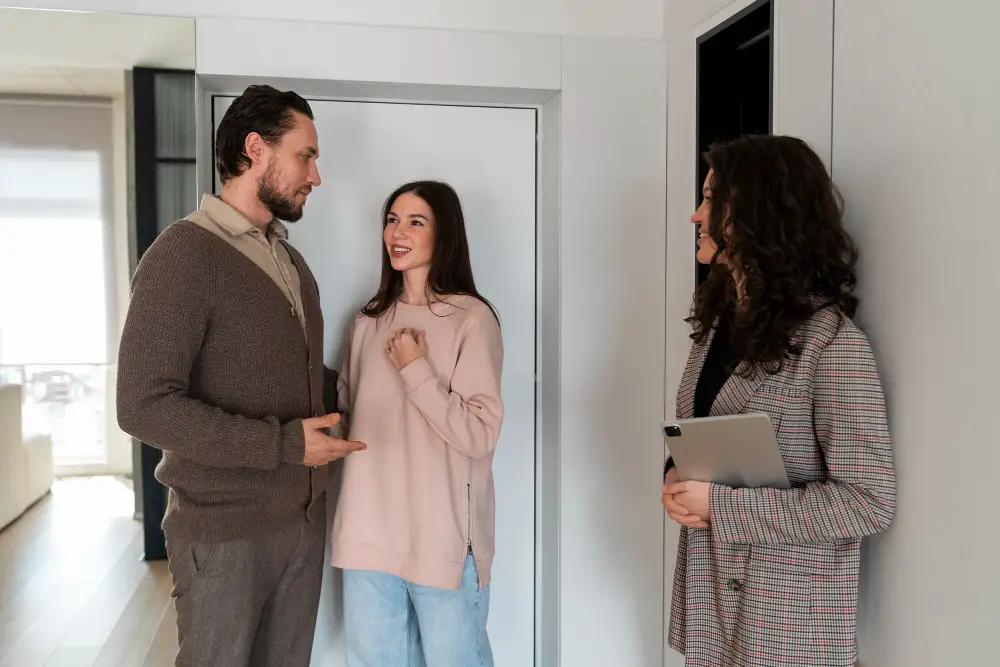
On the third stair from the kitchen, I learned the difference between the voice my husband used on me and the one he used when he thought I was gone.
“It’s done,” Garrett said into his phone. “No, she doesn’t suspect anything.”
I stopped with one hand on the banister. The late light from the west windows striped the kitchen floor in gold, and his glass clicked softly against the stone counter. He sounded relaxed, almost amused, and then he said the sentence that made the house feel suddenly unfamiliar.
“Margaret left everything to Eliza. Once I get access to those accounts, we’re set.”
I did not walk in. I did not speak. I stood in the narrow half-shadow of the back stairs and understood, in one brutal second, that grief had made me trust a man I had never really known.
Three days earlier, I had sat in Harrison Whitfield’s office off Main Street in St. Helena while he read my mother’s will in the calm, even tone men like him develop after decades of handling other people’s losses. My mother, Margaret Sullivan, had left me almost everything: a forty-seven-million-dollar trust, the Napa estate, the Carmel house, the San Francisco building, and Sullivan Vineyards itself. The office had smelled like lemon polish and old paper. Garrett sat to my right, warm hand over mine, perfectly composed. My younger sister Sienna sat to my left, leg bouncing so fast it shook the chair.
I should have felt stunned by the scale of it. Instead I felt tired. My mother had been gone for seventy-two hours, and all I could think was that every number Harrison said only proved she would never walk through the vineyard again.
Eight months earlier, I had buried my first husband, David, after a collision on Highway 29 that shattered my life so quickly I still sometimes woke convinced the phone was ringing with news that would somehow undo it. Before I could find steady ground again, my mother got sick. Appointments replaced plans. Test results replaced normal conversation. Every room became either a waiting room or a goodbye. By the time October settled over Napa, I felt like someone walking underwater.
Garrett had known how to step into that silence without disturbing it. He was polished, attentive, almost unnervingly patient. He knew when to bring coffee, when to answer calls on my behalf, when to sit beside me and say very little. In grief, gentleness feels like safety. It took me too long to understand that it can also be camouflage.
We had a courthouse wedding ten months earlier. No guests beyond two witnesses, no flowers, no speeches, just signatures and a quiet dinner afterward. It felt easy. It felt adult. It felt like the first decision I had made that wasn’t built around surviving the next hour.
At my mother’s funeral, Garrett stood beside me on the terrace in a dark suit while guests drifted between the tasting room and the garden with lowered voices and careful eyes. The estate looked beautiful in that impossible wine-country way: pale stucco walls, terracotta roof, long windows catching the late sun, vines pouring down the hillside beyond the olive trees. Inside, Sienna stood near the fireplace holding a glass she barely touched. She was three years younger than I was, but grief and the last few hard years had sharpened her face. She looked fragile and guarded at once.
When Harrison read her portion of the will, the room changed. She was left a restricted account with half a million dollars, protected until she completed a certified recovery program and documented twelve straight months of progress. It was not a small amount of money. It still landed like an insult.
“That’s it?” she asked, her chair scraping back hard enough to make me flinch. “That’s what she thought of me?”
I started to say her name, but Garrett rose first, all smooth concern and steady timing. “I’ll check on her,” he said. I told him she needed space. He kissed the top of my head and slipped out before I could argue.
The door had barely closed when Harrison’s expression changed. He removed his glasses and looked at me for a long moment. “Your mother was worried,” he said carefully, “about people close to you. People who might not want the best for you.” He told me she had left something for me to see alone, and asked me to come back the next morning at ten. Come alone, he said.
I thought about that sentence all the way home. Then I walked in through the side door and heard Garrett on the phone. After his call ended, I stayed hidden long enough to open the recorder on my phone. Through the open French doors, a woman laughed near the fountain. Soft. Familiar. I leaned just enough to catch the blur of dark green silk. Sienna. My stomach dropped so hard it hurt.
I did not confront either of them. I stood there until their voices faded, then went upstairs, locked myself in the bathroom, and listened to the recording again with the volume turned all the way up. That night I barely slept. Every detail of the past year reassembled itself under a different light: Garrett always offering to handle bills, Garrett memorizing account names I had never explained, Garrett asking careful questions about the vineyard’s corporate structure while pretending to be interested in easing my burden. Things I had filed under helpfulness now looked like reconnaissance.
The next morning, Harrison locked the office door before he sat down. A black tablet lay on the desk between us. When the video loaded, my mother appeared on-screen in her study, wearing the cream sweater she loved on cold mornings. She looked tired, but she was composed. Deliberate. The sight of her knocked all the air out of me.
“Eliza,” she said, “if you are watching this, I ran out of time before I could say what I needed to say in person. Listen carefully. Garrett did not come into your life by accident.”
My fingers tightened around the edge of the chair. She had hired a private investigator after seeing him leave the guesthouse with Sienna after the harvest dinner. He had known too much about the accounts and the business structure for a man who had only been in the family a short time. He had used another surname in the past. He had significant debts. He had a pattern of attaching himself to vulnerable women with assets. Do not confront him until your money is protected, she said. Harrison has the file.
When the video ended, Harrison slid a thin folder toward me. Inside were photographs. Garrett with Sienna outside a hotel in Yountville. Garrett standing near the vineyard gates weeks before he had supposedly met me at a fundraiser. Garrett signing a receipt under the name Mercer. Copies of emails sent from a spoofed address requesting internal financial documents from the vineyard controller. Phone logs showing Garrett contacting the accounting office twice when I was out of town. A civil complaint from years earlier accusing a man named Garrett Mercer of fraud in a divorce settlement.
I stared at the file until the letters blurred. Harrison told me my mother had not structured the trust carelessly. Any transfer of managerial power required independent counsel, a waiting period, and trustee review. Garrett had married me believing proximity would become ownership. My mother had built the paperwork so it never could.
Within an hour, Harrison had called Lucia Ramos, the vineyard’s longtime controller, and Martin Alvarez, the retired investigator my mother had hired before she got too sick to continue. By noon my passwords were changed, the trust accounts were flagged, Garrett’s remote access was cut off, and Lucia had confirmed that someone using a laptop from our guesthouse Wi-Fi had tried to pull internal routing information two weeks earlier.
Martin wanted me out of the house immediately. Harrison agreed. I surprised both of them by saying no. “I want him to think he still has a chance,” I said. The words tasted strange in my mouth, but once I said them, something inside me steadied. For the first time in months, I did not feel numb. I felt precise.
That evening Garrett met me in the kitchen with concern already arranged on his face. I told him the meeting with Harrison had been overwhelming, that I didn’t know how I was supposed to handle everything. He moved closer instantly. I told him Harrison was drafting documents so he could help manage things while I dealt with the estate, that I wanted Sienna there too, to settle everything at once. Garrett masked his excitement well, but not perfectly. For one second, something eager moved across his face before concern slid back into place.
The next afternoon, the estate library smelled like leather, dust, and cedar polish. Through a hidden interior door behind the bookcases, Harrison, Lucia, and Martin waited. Two sheriff’s deputies stood outside the study. Garrett arrived first. Sienna came two minutes later, pale and trembling.
“Before anyone signs anything,” I said, “I want honesty.”
Garrett gave me that patient, careful smile. “Eliza, you have it.”
I pressed play on my phone. His own voice filled the library. It sounded even uglier in that room. When the recording ended on the fountain’s splash and the faint sound of Sienna’s voice underneath the water, saying when she signs it, we’re gone, something in the room became permanently different.
Sienna broke before Garrett did. She told me she had met him at a recovery fundraiser. He said he understood her. He said she wasn’t the family screw-up everybody thought she was. She told him things about the vineyard, about our mother, about me. They were together before he ever met me. Then David died, and Garrett said I would be easier. He said widows cling to whoever makes life feel stable. He said if he married me and got inside the estate, he would take care of Sienna too. She pressed her hands to her mouth when she said it, as though the words had a physical texture she was ashamed to have released.
Garrett stood so fast his chair skidded back. He called her an addict. He said she twisted everything. Sienna flinched like she had heard that line many times before. “You said I was temporary,” she whispered. “You said she was the smarter path.”
The hidden door opened. Harrison entered first, then Martin, then Lucia. Garrett was charged. One deputy asked him to place his hands behind his back. He looked at me then, really looked at me, and for the first time I saw nothing gentle in his face. Not patience. Not care. Just calculation, furious that it had run out of room.
When they led him out, he kept turning as if he still expected me to stop it.
I didn’t.
After the doors shut, the silence in the library felt different from the one he had once learned to inhabit. This silence was aftermath. Raw and honest. Sienna sat back down very slowly, as if her body no longer trusted the floor beneath it.
I did not forgive her in that room. I did not tell her blood made betrayal smaller. But I also did not let Garrett be the final author of both our lives.
“The recovery account stays exactly as Mom structured it,” I said. “If you want a life after this, take it seriously.”
Two weeks later, Sienna checked into a residential program in Sonoma.
The legal fallout moved through its process with the unhurried pace of institutions. Harrison managed the civil proceedings. Lucia helped me lock down the business infrastructure. Martin gave everything to the sheriff and the district attorney. The old complaints under the name Garrett Mercer suddenly acquired the weight of pattern, which is what isolated incidents become when someone finally bothers to line them up in sequence. He was charged with identity theft, attempted fraud, and unlawful access to protected financial systems. There were discussions between prosecutors about the prior civil matter and whether its victims could be contacted. I was told these things in measured, professional language by people who had seen them before, which did not make them smaller but made them survivable.
I sat in my mother’s office through those months and learned the vineyard the way she had learned it, one document at a time, one conversation at a time, making myself uncomfortable with things I did not understand and staying in the discomfort until I did. Lucia was patient with me in the practical way of people who have built expertise over decades and can recognize when someone is genuinely trying to learn rather than merely performing the effort. She had worked for my mother for nineteen years. She had seen enough of the family to understand what the year had contained.
One afternoon she set a harvest projection on the desk and then sat down across from me in the chair I had always thought of as the visitor’s chair and said, “Your mother spent her first three years afraid she was going to ruin what her own mother built. She told me once she had to choose between performing confidence and developing it, and that she made the mistake of choosing performance first and it cost her two years of pretending to know things she could have just asked about.”
I looked at her. “Is that advice?”
“It’s a story,” she said. “You can decide what it is.”
I started asking more questions after that.
Winter settled over the vineyard in the particular way Napa winters settle, not dramatically cold but muted, the vines stripped and angular against pale sky, the valley floor soft and brown, the air smelling of rain and turned earth. I spent mornings in my mother’s office and afternoons walking the property, learning to see what she had seen, trying to develop the kind of attention that knows a block by its slope and its exposure and its history, not just its varietal. I found her notes in margins throughout the files, sharp and practical, sometimes impatient, occasionally funny in the dry way she had been funny in person. Messages to herself about contractors who needed watching and distributors who made promises they didn’t keep and the specific challenges of a soil composition in the lower blocks that had required fourteen years of amendment before the fruit came right.
Those margin notes did more for my grief than anything formal. She was still talking to me from inside the work she had left behind. All I had to do was pay attention.
The criminal case against Garrett moved toward trial in the late winter, and then shifted when his attorney indicated he would consider a plea arrangement. Harrison explained to me that this was not uncommon, that the documentary evidence was substantial and that a trial, while likely to produce the same outcome, would require testimony and the prolonged attention of litigation. He asked what I wanted to do. I said I wanted to know what the arrangement would look like before deciding anything.
What it looked like, in the end, was three years of prison on the identity theft and fraud counts, restitution payments, and the permanent revocation of his ability to serve in any fiduciary capacity. His attorney had the information about the prior complaints in Brooklyn and knew his client’s exposure without the plea was likely to be worse. Garrett took the arrangement. I was told he showed no visible reaction when the terms were finalized, which was the most honest thing anyone reported about him during the entire proceeding.
I asked Martin once what had driven men like Garrett, whether there was a psychology to it that made it comprehensible. He had been doing this long enough to have opinions. He said the ones who operated on the patient, slow, charming timeline were typically not primarily motivated by desperation or rage the way some fraud cases were. They were motivated by a genuine belief that the rules applied to other people, that anyone who trusted them deserved what followed, and that competence at manipulation constituted a kind of superiority. They did not see victims. They saw marks who had failed to be sufficiently suspicious.
“Does that help?” he asked.
“No,” I said.
“It usually doesn’t,” he agreed. “But it stops you from looking for something human in it that isn’t there.”
Spring came slowly, the way it always does in the valley, the cover crop going green first and then the vines following at their own pace, the buds breaking with a patience that has nothing to do with anyone’s urgency. The terrace roses bloomed. I had planted white ones near the fountain in early March, partly in tribute to my mother, partly because I needed something to tend that would bloom regardless of how the rest of the year arranged itself.
Sienna called me for the first time from the program in April. The call was brief and slightly stilted in the way of early recovery, the words careful and effortful, everything slightly too deliberate. She said she was doing the work. She said she was sorry in language that suggested she had been learning how to mean the word rather than just deploy it. I told her I had heard her and that the account was there waiting for the conditions her mother had set. There was a long pause, and then she said, “She wasn’t wrong about what I needed, was she?” I said no. She said she was beginning to understand that, and that it was one of the harder things to sit with.
That was more honesty than I had expected from her, and I took it for the beginning it was.
People who heard the story always had the same question. Not about Garrett, who was easy to name and easy to condemn. The harder question was always Sienna. Whether she was a sister who got used by the wrong man at the worst possible moment, or whether she was the person who opened the gate and watched him walk through it.
I have spent a year trying to hold both things at once, which is where the truth actually lives. She was not simply innocent, because she made choices that had my name on the consequences. She was not simply calculating, because the version of herself she had shown Garrett was the one that had been formed by years of feeling like the family’s disappointment, the one that was hungry for anyone who said she was more than that. He had known exactly where to press. That did not absolve her. It did not reduce her to a villain either.
What I came to understand, slowly and without any single moment of resolution, was that my mother had seen all of this more clearly than either of her daughters had. The restricted account was not punishment. It was a structure. A way of saying: you cannot have access to the money until you have built the internal architecture to hold it. She had understood that giving Sienna an inheritance without conditions would have been another form of abandonment, the generous-looking kind that leaves a person alone with something they are not yet equipped to manage.
I thought about that often while learning the vineyard. About what it means to love someone in the direction of their survival rather than their immediate comfort. My mother had done it for Sienna in the will. She had done it for me in the trust structure, the video, the file with Martin’s findings, all of it assembled against a future she was afraid she wouldn’t live to see.
She had not run out of time. She had used the time she had very carefully.
I walked the lower blocks on a morning in late April when the cover crop was tall and the air still had the cold in it that burns off by ten. The vines were just past bud break, the tiny leaves luminous in the early light, the color of growth that has not yet hardened into summer. I stood at the end of a row and looked back at the estate, the pale stucco walls and the terracotta roof and the long windows catching the valley light, and I did not feel like someone standing inside a place that had been fought over.
I felt like someone standing inside something that had been kept.
There is a difference. I had not understood it before the year I lost, in close succession, a husband and a mother and the particular innocence of believing that the people who love you most are also the people who mean you well. That last loss was the most disorienting, because the others had names and addresses. The innocent version of myself had no specific location, and its absence was everywhere.
But there was also this: my mother had known me well enough to prepare. She had done the difficult, unglamorous work of building structures around her love so that it would not simply vanish when she did. She had hired an investigator when she was sick and afraid and running out of time, because she trusted what she saw more than she trusted the story she was being told, and she had put everything she found into a file and left it with Harrison and made a video in her cream sweater in the study where she had worked for forty years.
That was the last act of a woman who paid attention.
I was learning to pay attention. To Lucia’s projections and the condition of the lower blocks and the thing my mother had written in the margin about the south-facing rows in dry years needing earlier irrigation than the estimates suggested. To Sienna’s careful phone calls and the small signs in them that something was rebuilding, tentatively and without guarantee but genuinely. To the particular quality of the valley at dawn when the world was quiet enough that you could hear the irrigation clicking awake and the birds starting in the creek drainage and the way the light arrived at a different angle each morning as spring pushed deeper into the year.
My mother loved white roses because she said they looked honest. I planted more along the garden wall in May, a long row of them that would take two seasons to fully establish, a project that required believing in a future far enough out that you wouldn’t see its completion for years. That seemed like the right kind of project.
The first harvest after everything was in September. It was a good year in the valley, the fruit coming in with the particular concentration that follows a dry summer and cool nights, the kind of vintage that the industry talks about in tones usually reserved for rare events. I was in the lower blocks at six in the morning on the first day of picking, standing in the cool air with a radio in my hand, watching the crew move through the rows with a practiced efficiency that made it clear how much knowledge lived in each person’s hands.
Lucia stood beside me with her clipboard and her reading glasses and the expression she wore when she was satisfied but unwilling to say so prematurely.
“Your mother started every harvest the same way,” she said.
“Standing here?”
“Standing somewhere she could see the whole block.” She paused. “She said the numbers came later. First you had to see it.”
I looked down the long rows of vines in the early light, the fruit dark and heavy, the leaves beginning to turn at the edges, the whole lower block filling with the sound of movement and voices and the particular industry of a harvest morning.
I saw it.
The case settled finally in October. Garrett received his sentence and was taken away and became, from that point forward, a person who existed only in documents. His name appeared in the restitution paperwork and the court filings and one brief news item in a regional publication, and then the world moved on from him in the way it moves on from things that were alarming when they happened and are only paperwork now.
I did not feel triumph when I heard. I felt the specific heaviness of a conclusion that does not restore what was lost, only closes what was open. David was still gone. My mother was still gone. The year I had spent being carefully deceived was still in me, not as an open wound but as a change in how I moved through rooms, a permanent shift in the specific quality of my attention to the people I allowed close.
That is not entirely a loss. Some kinds of watchfulness are earned rather than imposed, and they make you more accurate, if less comfortable.
Sienna completed the first phase of her program in November. She called from the facility on the day she was assessed as having met the initial requirements, her voice steadier than it had been in April, the careful deliberateness replaced by something that sounded more like herself. She said she was going to stay for the extended program, that she wasn’t ready to go back into ordinary life yet and that she was trying to be honest about what she needed rather than what looked adequate on paper. That sounded like our mother. I told her so. She was quiet for a moment, and then she said that was the most complicated compliment she had ever received.
I laughed. So did she.
We stayed on the phone for an hour, which was longer than we had talked uninterrupted in years. She told me about the group sessions and about a woman in her cohort who made her laugh in spite of everything and about the therapist who had told her something about self-protection and self-destruction being the same mechanism poorly aimed. She asked careful questions about the harvest. She asked whether I had been sleeping. She asked, very quietly near the end, whether I thought there was anything left between us that could be repaired.
I thought about my mother’s margin notes. About the long patience of the lower blocks and the fourteen years of amendment before the fruit came right. About the white roses along the garden wall that would take two seasons to fully establish.
“I think there’s a version of us that hasn’t existed yet,” I said. “I don’t know if we’ll get there. But I’m not interested in deciding we won’t.”
She said that was enough for now.
It was. Some things begin again in the smallest possible increments, and the beginning is the whole accomplishment, because it means you chose it rather than letting the damage choose for you.
December came cold and still over the valley, the vines dormant, the estate quiet in the particular way of a property that is resting between seasons. I sat in my mother’s office on the last Friday of the year with the finished harvest report on one side of the desk and a cup of coffee going cold on the other, and I read through the margin notes in a binder from eleven years ago when she had been managing a labor dispute and a drought simultaneously and had apparently found it useful to argue with herself in the margins of the production estimates.
She won both of her own arguments, as far as I could tell.
I put the binder back in its place on the shelf. Through the window the valley lay in the low winter light, silver and still, the bare vines in ordered rows down the hillside, the cover crop just beginning to green between them. Everything looked exactly as it had looked in photographs of this property from thirty years ago, from sixty years ago, from further back than that.
Nothing about it looked like something that had almost been taken.
That is what my mother built. Not just accounts and structures and files with private investigators’ findings. A thing that was worth protecting. A thing that outlasted the people who tried to diminish it. A thing that required only someone willing to stay and learn and pay attention and do the work each season brought without being discouraged by the seasons that were hard.
I closed the binder, picked up the cold coffee, and looked out at the valley for a long time. Then I opened a new document on my laptop and wrote the heading for next year’s harvest planning notes.
Outside, the vines waited in their rows, patient as they always are, keeping everything they had made underground until the right time to bring it up.
I had learned, over the past year, that I could do the same.

Lila Hart is a dedicated Digital Archivist and Research Specialist with a keen eye for preserving and curating meaningful content. At TheArchivists, she specializes in organizing and managing digital archives, ensuring that valuable stories and historical moments are accessible for generations to come.
Lila earned her degree in History and Archival Studies from the University of Edinburgh, where she cultivated her passion for documenting the past and preserving cultural heritage. Her expertise lies in combining traditional archival techniques with modern digital tools, allowing her to create comprehensive and engaging collections that resonate with audiences worldwide.
At TheArchivists, Lila is known for her meticulous attention to detail and her ability to uncover hidden gems within extensive archives. Her work is praised for its depth, authenticity, and contribution to the preservation of knowledge in the digital age.
Driven by a commitment to preserving stories that matter, Lila is passionate about exploring the intersection of history and technology. Her goal is to ensure that every piece of content she handles reflects the richness of human experiences and remains a source of inspiration for years to come.