Privacy Is How You Did This
At forty-five, I finally heard the words I had spent years begging for.
Your baby looks healthy.
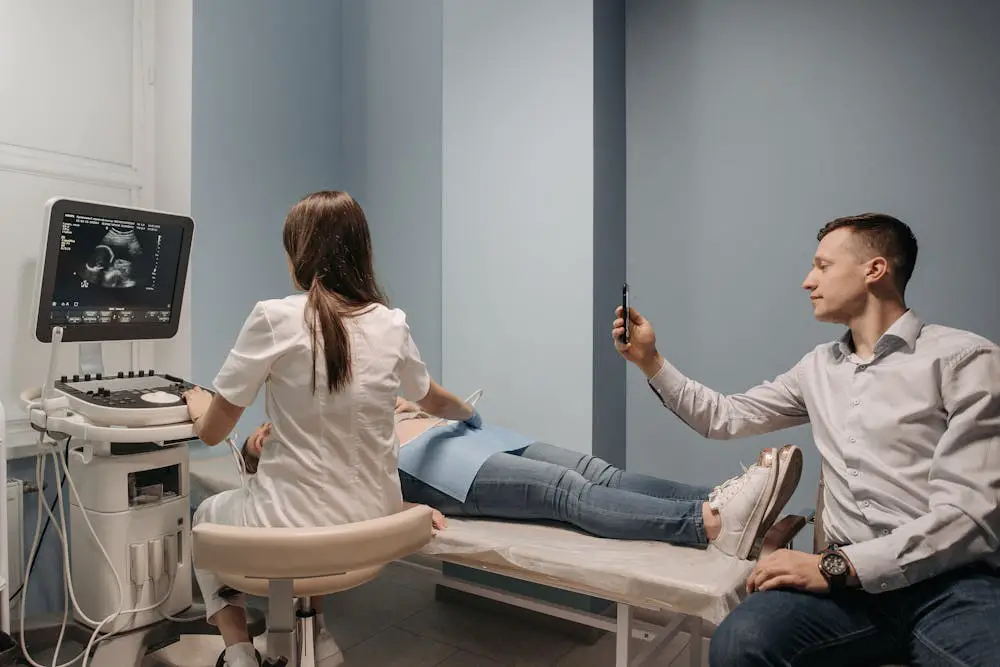
For one bright, impossible moment, that sentence was enough to erase everything that had come before it. The failed cycles. The injections that left bruises on my stomach. The appointments where I stared at doctors’ mouths moving and heard nothing after the word disappointed. The months when I stopped buying pregnancy tests because I couldn’t handle watching another blank answer appear in my bathroom. Twelve weeks. Strong heartbeat. Good position. I lay there on the exam table with tears gathering at the corners of my eyes, feeling older than most first-time mothers and more grateful than I had words for.
I thought I was finally stepping into the life I had nearly stopped believing I would get to have.
Then Dr. Petrova’s face changed.
It was slight at first. Just a tightening around her mouth. A pause that lingered too long. She finished the scan, printed the images, and covered my legs with the sheet again.
“The baby looks good,” she said carefully. “Very good.”
I smiled, still half crying. “Then why do you look like that?”
She hesitated. “I need you to come with me for a moment.”
She led me into her office, closed the door, and turned her computer screen toward me. “I can’t explain everything right now,” she said. “But when you get home, you need to start looking closely at a few things.” I felt the air leave my lungs. “Because I think this will help you understand what I can’t ethically spell out.”
Then she clicked open a security still from the waiting room.
My husband was sitting beside another pregnant woman. Not casually. Not as a stranger offering a seat. He was leaning in, close enough that his knee nearly touched hers. His body language was intimate in a way no one accidentally performs. Familiar. Protective. Claimed.
I stared at the screen until the image stopped looking real.
“That was today?” I asked.
She nodded once.
I didn’t scream. I didn’t demand details. I didn’t ask whether the woman was a patient, whether she knew their names, whether there was more. Some part of me understood that if I asked one more question before I was ready, I might not be able to walk out of that room.
So I thanked her. Actually thanked her. Then I walked through the lobby, out to the parking lot, and got into my car. I sat there gripping the steering wheel while a minivan idled nearby and a faded bumper sticker on its back window read BLESSED in cheerful blue script.
Garrett was supposed to pick me up twenty minutes later because he said he wanted to be part of this milestone. I started the engine and left before he arrived.
By the time I got back to Wilmington, I had a plan so simple it almost felt pathetic. Act normal. I washed my face. Changed into one of the soft shirts Garrett once said made me look peaceful. Practiced my expression in the mirror until I could pass for tired instead of shattered.
That evening he came home talking about work. Deliveries. A delayed shipment. A forklift problem. Pallets of bottled water stacked wrong at the warehouse. He was so casual, so fully relaxed inside his own lies, that listening to him felt surreal. He kissed my forehead and asked, “How’d it go?”
I made myself meet his eyes. “The baby looks healthy.”
His smile was immediate and warm. The exact same face I had seen turned toward another woman in that waiting room. He pulled me into a hug. “I knew it.”
I stood there in his arms and understood that love can rot long before it collapses.
That night, after he fell asleep, I took my phone into the bathroom and opened our joint bank account. At first I was just looking for something obvious. A hotel charge. A flower delivery. A rent payment with a name attached to it. What I found was worse.
Over eighteen months, nearly twenty-nine thousand dollars had been quietly siphoned out in small withdrawals. Two hundred here. Three fifty there. Four hundred from an ATM. A transfer marked household. A debit with no explanation. Nothing flashy. Nothing dramatic. Just small enough to disappear inside a marriage where the bills were always paid and the checking account was rarely empty. I sat on the bathroom floor until sunrise, going line by line.
The next morning I called my cousin Colleen in Philadelphia. She was a paralegal, a woman with a razor-sharp brain and the particular gift of hearing one sentence too many behind every lie. When I told her what Dr. Petrova had shown me, she went silent for three beats. Then she said, “Do not confront him.”
“I don’t know how not to.”
“You act normal,” she said. “You gather proof. You give yourself options before you give him warning.”
So that became my job.
I made his coffee. Packed his lunch. Kissed him goodbye. Smiled at neighbors on Lancaster Avenue. Printed bank statements at the library during my lunch breaks because I didn’t want a paper trail at home. Bought a paper road map and marked each withdrawal with a red circle. One town kept showing up. Vineland. The pattern was so consistent it made me cold. Tuesdays. Some Fridays. Once every few weekends. Never random. Never spontaneous.
Then the details started surfacing in places he had stopped bothering to hide them. A receipt in his glove compartment for a baby car seat purchased in Vineland. Another one at Dolores’s house, his mother’s, wedged under a coupon circular in the kitchen drawer, for a crib-and-stroller set bought months before I had even announced my pregnancy.
My mother-in-law had spent years making little comments about my age. Not openly cruel. Worse than that. Sweetly cruel. She would touch my wrist and say, well, miracles happen every day. Or smile over holiday dinner and say, some women are just meant to be grandmothers sooner than others. I had always told myself she was tactless, not malicious. Holding that receipt in her kitchen, I realized I had been giving her too much grace. She hadn’t been waiting for my baby. She had been helping prepare for another woman’s.
At sixteen weeks, my blood pressure spiked high enough that a different doctor checked it three times and told me I needed to reduce stress immediately. I almost laughed. Instead I promised to rest more, then sat in my car afterward and cried so hard my ribs hurt.
Colleen kept digging. The breakthrough came from a recurring charge neither of us had noticed at first because it looked routine: a monthly payment to Dr. Petrova’s office, processed through our joint account. I called and asked for a copy of my billing history under the pretense of insurance confusion. My charges were listed separately. That monthly payment wasn’t mine.
He wasn’t only cheating on me. He was using our shared money to fund another woman’s pregnancy.
Something inside me changed then. Up to that point I had still been moving through grief. Through shock. Through the stunned disbelief of someone trying to understand how their life had split open without warning. But that payment stripped the last layer of confusion away. This wasn’t chaos. It was a system.
Colleen and I built a file. Bank records. Withdrawal maps. Timestamps. Lease details tied to a Vineland address. Screenshots. Receipts. Dates cross-referenced with Garrett’s fake overtime shifts and weekend inventory checks. The more we assembled, the clearer it became. He had not stumbled into a betrayal. He had engineered one.
I want to say something about that period, the weeks of gathering and saying nothing, because people who haven’t lived it tend to imagine it as strategic or even powerful. It wasn’t. It was the loneliest experience of my life. I was pregnant, exhausted, and performing a version of myself I no longer recognized while the man sleeping beside me lived in the complete comfort of believing he had not yet been caught. I ate dinner with him. I answered his questions about the nursery colors I wanted. I listened to him complain about a supervisor at work and nodded at the right moments. Every conversation was a small performance, and at the end of each one I excused myself to the bathroom or the kitchen or the back porch and stood there for a moment reminding myself why I was doing it. Options. I needed options before he had warning.
I had watched too many women confront too early and lose too much. The joint account emptied. The savings redirected. The house deed transferred. Garrett was not a man who would panic and collapse. He was a man who would immediately begin managing his exposure. I needed him to have no time to do that.
Eventually there was only one person left I needed to speak to. Tanya. I found her through the lease. One cautious message. No accusations. Just enough truth to make ignoring me impossible. We agreed to meet at a diner halfway between Wilmington and Vineland. She was younger than I expected. Early thirties. Tired eyes. A soft beige cardigan despite the summer heat. One hand rested protectively over the curve of her stomach when she sat down, almost without thinking.
For a few seconds we simply looked at each other across the table.
Then she said, “He told me you were his ex-wife.”
I felt something hot and bitter rise in my throat. “He told me I was his only wife.”
She blinked, and I watched the first fracture appear in her face.
The waitress poured coffee. Neither of us touched it. Tanya told me Garrett said the marriage had been over for years, that we still shared some paperwork because of taxes and the house, that I was high-conflict and couldn’t accept the relationship was dead. He told her his mother adored her because she was bringing the family a second chance after a hard first marriage. Second chance. As if I were just a rough draft he had outgrown.
I opened my folder and laid out our marriage certificate, my ultrasound photo, and three pages of bank records showing the charges to her doctor, the baby-store receipts, and the withdrawals connected to the Vineland apartment. I watched her eyes move from one page to the next. Her face changed slowly, then all at once.
“Oh my God,” she whispered.
“I found out at my appointment,” I said. “Your appointment too, apparently.”
She looked sick. “He said he was there for paperwork.”
“Was Dolores part of this?” I asked.
Her jaw tightened. “She came with us to buy the crib.”
That answer settled something ugly and heavy into place.
Tanya looked up at me then, and what I saw in her face wasn’t guilt. It was devastation. She hadn’t been trying to steal my life. She had been living inside another lie. We sat there for almost two hours comparing timelines, screenshots, promises, and phrases he had repeated to both of us with only minor edits. The same jokes. The same excuses. The same hand on each of our backs guiding us toward a future he had no intention of telling the truth about.
By the end of the meeting, Tanya’s voice had gone flat in the way voices do when the pain has gone too deep to stay dramatic. “What do you want to do?” she asked.
I thought about my baby. About my blood pressure. About the months of deception. About Dolores smiling over potato salad while building a nursery for the child she thought would matter more.
“I want him to run out of room,” I said.
Two weeks later, Dolores hosted her annual Fourth of July cookout. Everything looked exactly the way it always did. White folding tables under the trees. Flags across the porch. Citronella candles burning against the mosquitoes. Kids racing through sprinklers. Country music playing too softly to offend anyone. Neighbors drifting in and out with bowls of slaw and baked beans. Garrett moved through the yard like a man with nothing to fear. He laughed too loudly. Carried a drink in one hand. Kissed my cheek in passing. Asked whether I wanted another lemonade.
I told him I was fine.
Dolores squeezed my shoulder and said, “You look pale, honey. Don’t overdo it in this heat.” I had to look away before my face gave me away.
Colleen arrived around two o’clock with a bowl of potato salad and the particular composed expression of a woman who has spent fifteen years in family law and knows how to look at ease in rooms where she absolutely is not. She worked her way around the yard, made conversation, refilled her drink. Nobody looked at her twice. That was the idea.
At 2:45, as the sun pressed hard over the yard and everyone had settled into that lazy holiday softness where nobody expects anything to happen, a dark blue sedan turned into the driveway.
Garrett saw it first. Then Dolores. The color drained from both of them in the same instant, though they were standing on opposite sides of the yard. I watched it happen and understood that whatever else they had managed to keep separate, their fear shared the same shape.
Tanya got out of the passenger side. From the back seat, an older man stepped out beside her. Gray suit despite the heat. Leather folder in one hand. A process server.
Garrett’s drink slipped from his fingers and hit the grass.
Conversation around us faltered in waves. A laugh died halfway through. One of the children screamed in the sprinkler, oblivious to everything. Tanya walked through the gate with a steadiness I admired more than I could say. She looked directly at Garrett, then at Dolores, and held up a small ring box.
“Do you want these back,” she asked, “or should I leave them with your mother?”
Garrett went white. “Tanya, not here.”
“Where would you prefer?” she asked. “At the apartment your wife pays for?”
Every sound in the yard seemed to stop at once.
Dolores took one sharp step forward. “This is not the place,””
“No,” I said quietly, and for the first time all afternoon, my voice carried. “It actually is.”
Heads turned. Garrett stared at me like he was seeing a stranger.
“Claire,” he started.
I took the folder from Colleen, who had materialized beside me with the efficiency of someone who had been waiting for exactly this moment. Then I handed Garrett copies of the bank withdrawals, the lease information, the recurring payments to Dr. Petrova’s office, and the purchase receipts for the car seat, crib, and stroller. His hand shook as he flipped through the pages.
“Say it,” I told him.
He swallowed. “This isn’t what it looks like.”
Several people in the yard made noise at that. A sharp inhale. A disbelieving laugh from someone near the grill. Tanya let out one broken, stunned sound that might have been a sob if it weren’t so full of disgust.
“Then tell them,” I said. “Tell them why your mother helped you furnish another nursery before you even knew whether my pregnancy would hold.”
Dolores snapped, “That’s not fair.”
I turned to her. “Which part?”
She opened her mouth and closed it again.
Garrett tried to step toward me, but Colleen moved slightly, just enough to redirect the path without touching him, a small and effective redirection that he seemed to register as something much more significant than it looked.
He looked around the yard at his cousins, neighbors, coworkers, at the aunt who had brought deviled eggs and was standing absolutely still with a paper plate in her hand, at the men from church near the grill who had gone quiet the way men go quiet when they understand the thing happening in front of them is not something they can joke their way past. He had built his whole life on appearing dependable. The clean-shirt, steady-paycheck man everyone trusted to help move furniture or fix a fence. And there he stood, exposed by his own paperwork.
Finally he said, “I was going to figure it out.”
The sentence landed with a thud.
Figure it out. As if two pregnancies and two households and twenty-nine thousand dollars and two women who had believed themselves loved were a scheduling problem. As if intention were the same as action and the timeline was simply inconvenient rather than deliberate.
Tanya laughed then, tears streaming down her face. “You told me she was unstable.”
He looked at her helplessly. “Tanya,” he said.
“You told me she couldn’t let go.”
I put one hand over my stomach and felt my daughter move for the first time. The sensation was so light I almost missed it. But I didn’t. And in that instant, with Garrett unraveling in front of everyone and his mother standing frozen beside the picnic table she had decorated for a perfect family afternoon, I felt something clear and hard settle inside me.
Not revenge. Release.
The process server stepped forward and handed Garrett the papers. Tanya had already filed her own civil claim for financial fraud connected to the apartment and medical payments. Colleen had helped me prepare my petition that morning. Separation, immediate financial restraint requests, and a demand for accounting of marital assets.
Garrett looked from one set of papers to the other like his life was splitting in real time. “Claire, please,” he said. “We can talk about this privately.”
I looked at him for a long moment.
Then I said the truest thing I had said all summer. “Privacy is how you did this.”
No one in the yard came to his rescue.
Not even Dolores. Especially not Dolores. Because when Tanya turned to her and said, “You came to my doctor appointments. You let me call you family,” Dolores finally broke. Her voice cracked on the first word. “I thought he was going to leave her.”
The yard went dead silent.
There it was. Not confusion. Not misunderstanding. Not an accident. Choice. She had known exactly what she was doing. She had weighed her daughter-in-law’s fertility treatments and her years of loss and her aging body trying to do something it found difficult, and she had placed her bet on a younger woman in Vineland and kept the information to herself with the practiced calm of someone who has decided that some lies are justified by the outcome they are meant to produce.
Garrett closed his eyes like he wanted the ground to open beneath him.
I didn’t stay for the collapse that followed. I didn’t need to. The truth was already standing in the middle of the grass with everyone looking at it.
Colleen walked me to my car. Tanya followed a minute later. We stood in the heat without speaking until she said, “I’m sorry.”
I believed her. “I know,” I said.
We stood there another moment, the two of us, in the particular shared silence of women who have been told the same lies in slightly different language and arrived at the same yard from opposite directions.
Then she went back to her car and I got into mine and Colleen drove behind me back toward Wilmington with her hand out the window, the same gesture she had used since we were children to signal I’m right here without saying it out loud.
The months that followed were not clean or simple. Divorce proceedings rarely are, and Garrett had enough composure to hire a competent attorney once the initial shock wore off. But the financial restraint order held, which meant the accounts he might have emptied stayed accessible to both parties under court oversight. The paper trail Colleen and I had assembled was thorough enough that his attorney’s attempts to characterize the Vineland expenses as personal discretionary spending did not survive the first deposition. The crib receipt alone, dated four months before my pregnancy was publicly announced, was difficult to contextualize as anything other than what it was.
The house sold faster than Garrett expected and for less than he wanted. The Vineland apartment emptied in a week. Tanya moved closer to her sister in a town I won’t name because her privacy is not mine to distribute. I moved into a small rental near the river with creaky floors, terrible kitchen lighting, and a nursery that held only the things I chose myself.
Dolores sent two letters. I never answered either one. There was nothing in them I needed to read, and I had reached the point where I could make that determination without guilt, which was itself a kind of progress.
Garrett asked for forgiveness before he asked about custody schedules.
That told me everything about what the next years would require from me.
My daughter was born in late winter, healthy and loud and furious at the cold, which I took as evidence of good character. When the nurse placed her on my chest, I cried so hard I shook. Not because the past had stopped hurting. Because it hadn’t won.
She is the child I spent years trying to have and nearly stopped believing was possible. She is not the resolution to what Garrett did, because she is not a resolution to anything. She is her own person, already opinionated at an age when opinions are expressed mostly through volume and refusal to sleep. She will grow up knowing her mother’s name, knowing Colleen, knowing the particular women who showed up when it mattered and the ones who chose differently. She will make her own assessments.
Sometimes people hear this story and ask whether I regret exposing him publicly.
I always think of that yard. Of the lies he fed two women while his mother helped him arrange the details. Of the money taken quietly from our future, a hundred dollars at a time, patient and systematic and invisible until it wasn’t. Of how carefully he had depended on silence. Of how much the whole architecture required that neither Tanya nor I would ever be in the same room at the same time with the same information.
He was right to worry about that. The architecture collapsed the moment it was no longer structurally supported by our not knowing.
I think about Dr. Petrova sometimes, the risk she took in showing me that camera image, the careful language she used that stayed just inside what she could ethically offer while pointing me as clearly as she could toward what I needed to find. She did not have to do that. She could have scanned my baby, pronounced everything healthy, and sent me on my way. Whatever she believed about what she had seen, she could have decided it was not her role to complicate a patient’s joy.
She decided differently. I sent her a note after my daughter was born, just a few lines. I don’t know what she did with it. I like to think she kept it somewhere.
And I wonder, when people ask about the cookout, what anyone thinks a man like that deserves more than truth spoken where everyone can hear it.
He had organized his life around the assumption that I would be too afraid of the scene to make one. He had counted on my desire to be graceful, to protect the marriage’s appearance, to absorb rather than expose. He had watched me absorb for years, absorbing the fertility disappointments and the quiet comments from his mother and the patient labor of a woman who has decided love is worth maintaining even when it costs her something.
He miscalculated.
I am not a woman who avoids scenes. I am a woman who waits until the scene will mean something. There is a difference, and it took me a long time and a bathroom floor and a paper road map and a cousin who answered the phone on the first ring to fully understand it.
My daughter is asleep in the next room. The floors here creak when I walk past her door, which is inconvenient at two in the morning and oddly reassuring the rest of the time.
The nursery smells like the lavender lotion I use when I change her and the specific warmth of a room where someone small is sleeping and everything, for this moment, is exactly what it should be.
I chose everything in it myself.
That turns out to matter more than I expected it to.

Laura Bennett writes about complicated family dynamics, difficult conversations, and the quiet moments that change everything. Her stories focus on real-life tensions — inheritance disputes, strained marriages, loyalty tests — and the strength people find when they finally speak up. She believes the smallest decisions often carry the biggest consequences.