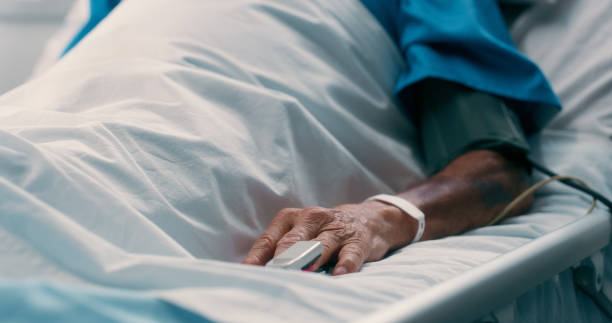
The Stone
The boy had been watching the hospital for three days.
He slept in the narrow gap between the parking structure and the building’s east wall, where a heating vent kept the concrete warm enough to survive the October nights. He had learned to read the rhythm of the place — which entrance the security guards covered least carefully at shift change, which elevator required a keycard and which one didn’t, which floor had the fewest nurses between seven and eight in the morning.
His name was Mateo. He was eleven years old. He had been sleeping outside for fourteen months, since the shelter on Crestfield Avenue closed and the group home before that had been something he preferred not to think about. He was small for his age, which had always worked against him in most situations and occasionally worked for him in others. His eyes were dark and quick and had the particular alertness of someone who had learned that missing details cost you.
He had not come to this hospital by accident.
He had come because of what he had seen at another one, six months earlier, two cities away, in a room that still appeared in his dreams with the specific clarity of things witnessed rather than imagined.
The man in the private room on the fourteenth floor was named Richard Calloway. If you followed financial news, you knew the name. If you didn’t, you might have seen his face on the side of a building or attached to a headline about a construction project or a charitable foundation. He was sixty-one, self-made in the way that word is used about men who started with less than they ended with, and he had been a patient at Meridian Medical Center for nineteen days following what the hospital’s press office described as a serious fracture to the left femur sustained during a fall at a construction site inspection.
Nineteen days was a long time for a fracture.
Mateo knew this because he had spent those three days of watching not only observing the hospital’s rhythms but also listening. He sat near the main entrance during visiting hours with his hood up and his eyes open. He heard a woman in a yellow coat tell someone on her phone that her uncle Richard was still not walking and they kept extending his stay. He heard two men in suits discussing whether the board meeting would need to be postponed again. He heard a nurse at the coffee cart mention to a colleague that the patient in 1407 had the most visitors of anyone on the floor and that his doctors changed their story every few days.
That last part was what made Mateo’s chest tighten in a specific way.
Because he had heard almost exactly those words before.
In another city. In another hospital. About another man.
And that man had died.
His name had been Franklin, and he had been nobody important in the way the world measured importance — a retired electrician who spent his weekends at the community garden and kept hard candies in his jacket pocket for the children in his building. Mateo had known him for the eight months he lived in the building on Orchard Street before the group home situation fell apart. Franklin had been the kind of adult who didn’t ask too many questions and didn’t make Mateo feel like a problem to be managed. He brought him food when the building’s communal dinner ran short. He showed him how to fix a bicycle chain with a piece of wire.
When Franklin went into the hospital with what they called a fracture, Mateo had visited twice. The second time, something had felt wrong in a way he couldn’t articulate at eleven years old but felt with complete certainty in his body. The doctors kept changing the timeline. The cast had been on for nearly a month. Franklin’s color was wrong.
Mateo had told a nurse he thought something was being missed. She had been kind but dismissive — sweetie, the doctors know what they’re doing. He had tried to tell the attending physician in the hallway and been guided firmly away from the corridor by a security guard.
Three weeks later, Franklin was dead.
The official cause listed a complication Mateo didn’t fully understand, but the word that stuck with him was delayed — delayed detection, delayed intervention. By the time they found what was actually happening under the cast, it had been spreading for weeks. What they had called a fracture was covering something else. A rare infection, he eventually pieced together from the fragments of conversation he had overheard and the medical pamphlets he had read in waiting rooms because he had nowhere else to be and reading had always been his way of making sense of things.
He had carried that knowledge around for six months.
He was carrying it when he climbed the hospital stairs to the fourteenth floor on a Tuesday morning with a smooth stone in his jacket pocket, the kind found near the drainage ditch behind the parking structure. He had chosen it carefully. Not too large, not too small. The right weight for what he needed.
He had one specific plan and no backup.
The door to room 1407 flew open at 7:43 a.m.
The room held Richard Calloway in the adjustable bed, a physician named Dr. Gerald Marsh standing to the left of the bed reviewing something on a tablet, and a second doctor, Dr. Elena Vasquez, who was updating a chart near the window. A nurse had been in the room moments earlier but had stepped out. The timing was not entirely luck — Mateo had watched the nursing patterns for three days.
He was dirty and breathless from the stairs. His jacket had a tear along one sleeve from the chain-link fence he had climbed the previous evening while scouting. His eyes were burning with something that was not quite fear and not quite courage but the specific focused intensity of a person who has decided there is no other available option.
He crossed the room in four steps and brought the stone down hard against the plaster cast encasing Richard Calloway’s left leg.
The impact was significant. The cast cracked on the outer surface, a starburst fracture spreading from the point of contact.
“There’s no fracture,” Mateo said, loudly, not looking away from Dr. Marsh. “You’re lying to him.”
What happened in the next thirty seconds was chaos of the compressed, airless kind that fills small rooms. Dr. Marsh lunged from the left, dropping his tablet. Dr. Vasquez made a sound and stepped backward. Richard Calloway flinched from the blow and stared at the boy with complete confusion, the expression of a man whose mind has not yet caught up with his circumstances.
“What are you doing?” Dr. Marsh shouted, reaching for the stone.
Mateo did not step back. He held the stone with both hands and kept his eyes on the doctor. “You’re keeping him in that cast on purpose. I know it. It’s not a bone in there. It’s something else.”
The words landed in the room with a weight that surprised everyone including Mateo. He had practiced them for three days in the space between the parking structure and the heating vent, but he had not known until this moment whether they would sound like the truth or like the raving of a dirty child with a stone.
From the expression that passed between the two doctors — quick, involuntary, the flicker of people who have been holding something they were not supposed to hold — he understood that they landed as the truth.
Richard Calloway said quietly, almost to himself, “What is he talking about.”
It was not quite a question.
Mateo raised the stone again.
Dr. Marsh made a grab for his arm, but the second blow had already landed. This one was harder, more precise, aimed at the thickest section of the cast near the mid-shaft. The crack that resulted was not a surface fracture but a structural one — the cast split along its length with a sound like a branch snapping, and a large curved piece fell to the floor and broke into three pieces on the polished linoleum.
Dr. Marsh caught Mateo’s wrist on the backswing. He held it firmly. Mateo let him. He didn’t need to strike again. The cast had done what he needed it to do.
The room was silent.
Everyone was looking at the leg.
Dr. Vasquez moved first. She stepped forward slowly, as if the floor might be unreliable, and crouched beside the bed. She began removing the remaining cast material with her hands, peeling away the cracked plaster sections carefully. Pieces crumbled. Others came away in curved fragments. The inner layers of padding followed, and then the gauze beneath, and then—
She stopped.
Dr. Marsh, still holding Mateo’s wrist, turned to look.
Richard Calloway pushed himself up on both elbows and looked at his own leg.
What was visible where the cast had been was not the clean surgical site of a healing femur fracture. The skin beneath was wrong — darkened in a dense, mottled pattern that spread outward from the mid-thigh region in a shape that had nothing to do with impact trauma. The tissue was raised in places, sunken in others, with a texture that suggested something happening beneath the surface rather than on it. In the harsh morning light from the window, it had a quality of depth, as if whatever was occurring there had been occurring for some time and had developed its own geography.
Dr. Vasquez covered her mouth with one hand. She did not speak for several seconds.
Richard Calloway said nothing either. His face had gone the particular pale of someone whose body has understood something that the mind is still refusing to process.
Dr. Marsh released Mateo’s wrist.
Mateo stood beside the bed and looked at the leg with the calm recognition of someone seeing a thing they had seen before and had hoped never to see again.
“I’ve seen this before,” he said quietly.
Everyone turned to look at him.
“In another hospital,” he added. “They said it was a fracture there too. Until it was too late.”
The room was very quiet.
No one moved to stop him or guide him away from the corridor or tell him the doctors knew what they were doing. The stone was still in his hand, and no one asked for it. The two doctors were looking at the exposed leg with expressions that had moved past shock into something more clinical and more urgent, the faces of people reconfiguring everything they had assumed and working quickly toward what needed to happen next.
Dr. Vasquez stood and moved to the room phone. Her voice when she spoke into it was controlled and precise — the voice of a physician who has encountered an emergency and is now managing it rather than experiencing it. She requested an immediate consult from the infectious disease department and an oncology specialist and asked for a portable imaging unit brought to 1407.
Dr. Marsh picked up his tablet from the floor. He looked at Mateo with an expression that contained several things at once.
“What’s your name?” he said.
“Mateo.”
“How old are you, Mateo?”
“Eleven.”
“How did you know?”
Mateo told him about Franklin. He kept it brief because brevity was a habit he had developed out of necessity — most adults gave you a limited window before they stopped listening, and he had learned to fit the essential information into that window. He told him about the month-long cast, the changing timelines, the color of Franklin’s skin in the last weeks, the delayed detection, the word that had attached itself to him and refused to let go.
Dr. Marsh listened without interrupting. When Mateo finished, the doctor was quiet for a moment.
“The man you’re describing,” Dr. Marsh said carefully. “The one who died.”
“Franklin Reyes,” Mateo said.
Dr. Marsh set his tablet on the window ledge. “Do you have family here, Mateo? Someone I can call?”
“No.”
The doctor looked at him for a long moment. Then he looked at Richard Calloway, who had been listening to everything from the bed with the focused attention of a man reassessing the last nineteen days of his life from the ground up.
“Someone should have listened to you before this,” Richard said. His voice was rough. He was still looking at his leg, at the dark mottled landscape of whatever had been growing under the plaster while everyone called it a fracture.
“Yes,” Mateo said simply.
What followed was the organized urgency of a hospital responding to a situation it had failed to identify earlier. The imaging unit arrived. The infectious disease specialist arrived twelve minutes after Dr. Vasquez’s call. The oncology consultant arrived thirty minutes after that. The room filled and emptied in cycles of professionals, each one spending time with the leg and the charts and the history of the previous nineteen days, and from their faces and their careful language Mateo understood that what was happening was serious and that it had been happening for longer than nineteen days and that the cast had been, in some combination of negligence and possibly something worse, a mechanism for not seeing it.
He sat in the chair by the window while all of this happened, because no one told him to leave and he had nowhere else to go.
At some point a hospital security guard appeared in the doorway. Richard Calloway looked at the guard and said he should stay, and the guard left without argument.
At some point a nurse brought a tray with food on it, looked uncertain about who it was for, and then set it on the small table beside Mateo’s chair. He ate everything on it.
The diagnosis that emerged over the following hours was not a simple one. The infection that had been growing beneath the cast was a rare and aggressive form of necrotizing fasciitis, a tissue-destroying bacterial infection that had likely been present and misattributed for weeks. In combination with a separate mass discovered in the imaging that suggested something the oncology consultant described with the careful language of someone managing a patient’s capacity to absorb information, the picture was serious but — and this was the word the infectious disease specialist used with a specificity that Mateo understood was meaningful — treatable. Treatable in a way it would not have been treatable in another few weeks.
The cast had been extended twice. Each extension had been authorized by Dr. Marsh, whose explanations for the decisions became significantly less coherent as the day progressed and the hospital’s administration became involved.
By afternoon, there were people in suits in the corridor outside 1407, and Mateo understood without being told that whatever had been happening in that room over the previous nineteen days was now being examined by people whose job was to determine whether it had been negligence or something with a more deliberate name.
He was not involved in those conversations. He sat by the window and watched the city outside the fourteenth floor, the traffic moving far below, the October sky going from bright to overcast to bright again.
Richard Calloway spoke to him again around three in the afternoon, after the last of the medical consultants had left and the room was quiet.
“You slept outside last night,” he said. It was not quite a question.
“Yes.”
“For how long?”
“Fourteen months.”
Richard was quiet for a moment. The leg was wrapped now in proper dressings, an IV running antibiotics, the treatment plan established and moving forward with the efficiency of a system that was now correctly oriented toward what was actually wrong.
“Franklin Reyes,” Richard said. “The man you told Dr. Marsh about.”
“Yes.”
“Did he have family?”
Mateo thought about this. “A sister. In Phoenix.”
“Do you know her name?”
“Margaret, I think. He mentioned her.”
Richard reached for the notepad on his bedside table and wrote the name down. He set the pen aside and looked at Mateo for a long moment with the expression of a man taking inventory of something larger than the room they were both sitting in.
“Why did you come here?” he asked. “You didn’t know me. You don’t know anyone in this building. You had no reason to—”
“I had a reason,” Mateo said.
“What was it?”
Mateo considered how to explain it. He was eleven and he had been sleeping outside for fourteen months and he had carried the weight of what had happened to Franklin for six months without anyone to carry it with him, and there had been a specific moment three days ago when he had been sitting near the hospital entrance listening to the woman in the yellow coat talk about her uncle Richard who still wasn’t walking and the doctors kept changing their story, and something in his chest had simply resolved. Not into courage or heroism or any of the words adults would use later when they described what he had done. Into the specific quiet certainty of a person who knows what they have to do and understands that the cost of not doing it is something they have already paid once and cannot pay again.
“Someone didn’t listen when I tried to tell them,” he said. “So I needed to make it impossible not to listen.”
Richard was quiet for a long time.
Outside the fourteenth-floor window, the city moved through its afternoon rhythms, indifferent and continuous.
“Where will you sleep tonight?” Richard asked finally.
“The parking structure has a warm vent on the east side.”
“No,” Richard said. He picked up his phone from the bedside table. “No, it doesn’t. Not tonight.”
What happened in the weeks and months after that Tuesday morning in room 1407 happened gradually, the way consequential things often do — not as a single dramatic event but as a series of smaller decisions that accumulated into something that changed the shape of a life.
Richard Calloway spent eleven more days at Meridian Medical Center and emerged with a treatment plan, a legal team working through the questions that had been raised about his care, and a changed understanding of what had been done to him and what had nearly been allowed to happen. The infection was brought under control. The mass was addressed. The prognosis, while requiring ongoing management, was described by his oncologist as significantly better than it would have been in a month’s time.
Dr. Marsh resigned before the hospital’s internal investigation concluded. The investigation itself produced findings that were reviewed by the state medical board and resulted in a formal inquiry that Mateo did not follow in detail but heard about in fragments.
Margaret Reyes, Franklin’s sister in Phoenix, received a call from Richard Calloway’s office requesting a meeting. Mateo did not know what was said in that meeting, but he knew that Richard had written down the name and had not forgotten it, and that seemed to him like the right outcome for something that could not be undone.
As for Mateo — it did not happen instantly. These things rarely do, and he was suspicious of speed in the way that people who have been let down quickly learn to be. There was a hotel for the first weeks, which felt disorienting in the specific way that warmth feels disorienting when you have been cold for long enough. There were conversations with people whose job was to determine what the right next step was, conversations he had mostly sat through with the patient watchfulness he had developed over fourteen months of paying attention to the world from its margins.
There was a school, eventually. A small apartment near a park, managed through a foundation that Richard had established and then significantly expanded after the events of that Tuesday morning. There were adults who were not trying to manage him so much as understand him, which was a different experience than most of what had come before.
He kept the stone for a while. Not as a trophy. As something to hold when the nights were long and the unfamiliarity of having a room and a bed and a consistent address felt more frightening than the parking structure vent had felt, because the parking structure had been known and rooms have a way of being taken away.
Eventually he put it on the windowsill of his room and stopped needing to hold it.
He was eleven when he walked into room 1407 with a stone and the stubborn unreasonable conviction that what he had seen once he could not allow to be repeated. He was eleven years old and homeless and completely ignored by every system that should have been paying attention to him, and he had walked through a hospital room door with nothing except a smooth stone and the weight of a dead man’s name.
People called it brave later, when the story became something that was talked about. He was not sure brave was the right word. Brave suggested a choice between courage and its absence, and he had not experienced it as a choice. He had experienced it as the only remaining option once everything else had been exhausted.
Franklin Reyes had died because no one would listen. Mateo had made sure that would not happen again by making it impossible to look away.
Sometimes that is all there is to do.
You walk through the door. You bring what you have. And you make enough noise that the truth finally has to be seen.

Specialty: Quiet Comebacks & Personal Justice
David Reynolds focuses on stories where underestimated individuals regain control of their lives. His writing centers on measured decisions rather than dramatic outbursts — emphasizing preparation, patience, and the long game. His characters don’t shout; they act.