Blue Light
The first text came in while I was standing in the checkout line at Target with a gallon of milk under one arm and my phone in the other hand.
We need your apartment for the weekend. Jason’s parents are visiting. You can stay at a hotel.
For a second, I genuinely thought I had misread it.
Not because my sister Megan had never asked for something ridiculous before. She had spent most of her adult life turning ridiculous requests into family obligations before anyone had time to object. But this message was so blunt, so stripped of even the fake politeness people usually attach to taking something that isn’t theirs, that my brain refused to accept it on the first pass.
It did not say, Can we stay? It did not say, Would it be okay? It read like a notice from a building manager announcing the water would be off between noon and four. My apartment, apparently, had become scheduled maintenance.
I typed back, I’m not home.
What I meant was no.
What I meant was: I am not giving up the first quiet weekend I have had in a month so you can impress your in-laws by handing them my bed, my kitchen, my son’s room, and the last shreds of privacy I have left after a divorce that already split my life down the middle.
Megan replied in less than ten seconds.
Perfect. I’m using your key.
I stared at the cart. Milk. Pizza. Coffee. A Lego city set for my son Liam, on impulse, because he had been asking for it for three weeks and because I missed him when he was at his mother’s more than I ever admitted out loud.
My son was with Jules that weekend. It was my forty-eight hours alone, the kind divorced parents pretend is freedom but is mostly a strange mixture of relief, guilt, silence, and the sudden ability to eat cereal over the sink without explaining nutrition to anyone. I had planned something so boring it felt luxurious: write code for a side project, order Thai food, sleep past seven, watch a terrible action movie without a six-year-old asking whether explosions were scientifically accurate.
Instead I was counting heads.
Megan. Her husband Jason. Jason’s parents. His brother Trevor, his fiancée, their two kids. Maybe a cousin, because Megan never traveled in a straight line; she collected people, bags, assumptions, and expected someone else to provide the square footage.
Eight bodies minimum. In my two-bedroom apartment in Capitol Hill.
I stepped out of the checkout line and pushed my cart against a wall of red baskets.
No, you can’t stay at my place this weekend, I texted.
The typing bubble appeared instantly.
Caleb, you’re being dramatic. We already told them. Bags are in the car. We’re ten minutes away.
I checked the time. 5:18. My apartment was eleven minutes from Target if traffic cooperated. Megan was not asking. She was timing me.
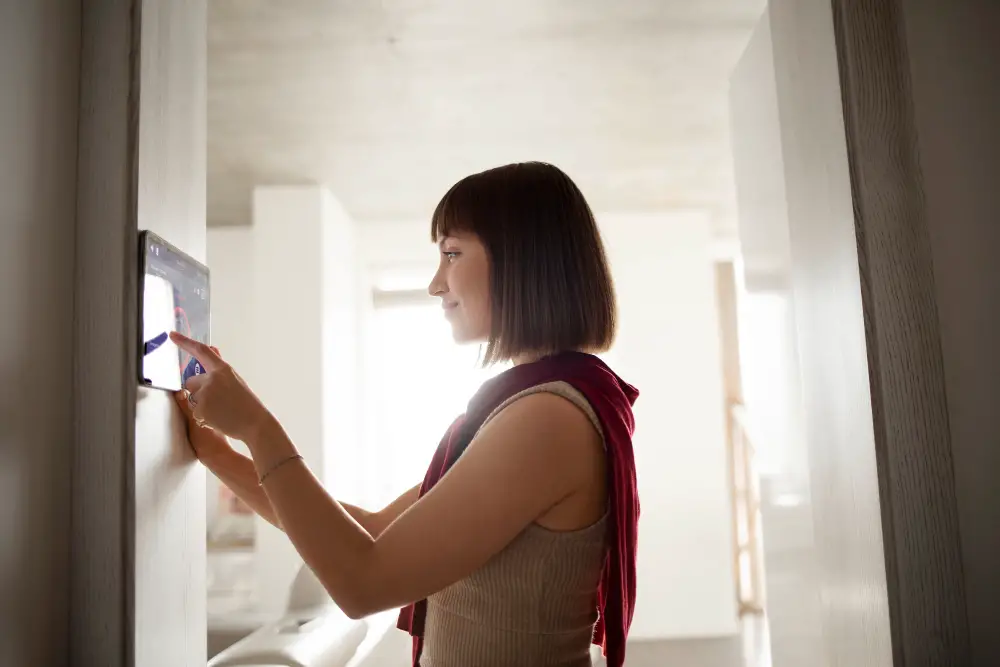
I opened the smart lock app so fast I nearly dropped the phone. I had installed it eight days earlier after coming home from Liam’s soccer practice to find my gaming monitor angled toward the couch, a half-drunk energy drink sweating on my kitchen counter, and glittery hair ties on my bathroom sink. My mother had cheerfully admitted she had lent my old spare key to Megan because some friends needed somewhere central after a festival. No one had asked me. Everyone had acted offended that I minded.
The app loaded slowly. Three eternal seconds. Then the dashboard appeared.
Front door: online. Auto-lock: enabled. Camera: active.
My breathing steadied.
Mom doesn’t have a key anymore, I wrote.
Three dots. Then: What are you talking about?
I changed the locks last week. Smart lock now. No one gets in without a code.
A full minute passed. Long enough for me to picture the scene in her car: Megan reading the message, her face tightening, Jason asking what was wrong, Jason’s mother making a confused remark from the back seat, the children already hungry, every assumption already arranged around the idea that Caleb would fold. Because Caleb always folded.
Finally: You didn’t tell anyone. That’s selfish.
Selfish. In my family, selfish meant refusing to be useful on command. It never meant taking over someone else’s home.
Instead of answering Megan, I opened the family group chat.
I typed: Heads up. Megan is trying to move eight people into my apartment for the weekend without asking. I said no.
Mom replied first. Caleb, don’t make a scene. Family helps family.
Dad: Single guy. You’ll be fine for one weekend.
Single guy. Not father. Not tenant. Not the man trying to give his son one stable room after the divorce. A placeholder with Wi-Fi.
My phone buzzed. Motion detected: front door.
I opened the feed.
They were there. Megan in a camel coat, the irritated expression of a woman already preparing to tell the story in a way that made herself the victim. Jason behind her with two rolling suitcases. Jason’s parents, Frank and Carol, looking tired from the drive. Trevor with AirPods in, checking his phone as if the hallway were an airport lounge. His fiancée with a Stanley cup large enough to hydrate a soccer team. Two kids dragging roller suitcases shaped like animals.
Eight people. Exactly.
Megan dug into her purse, pulled out the old silver key, and jammed it into the deadbolt. It turned uselessly. The smart lock glowed a calm blue. She tried again, harder. Jason stepped in, took the key, twisted the handle, leaned his shoulder into the door, and achieved exactly nothing.
The kids complained louder. Frank said, “Are we sure this is the right unit?” Megan snapped, “Yes, Frank, I know where my brother lives.”
Then: Open the door. This is ridiculous.
I thought about my family. The way they knew how to work my face, the old reflex in me that explained too much, apologized too quickly, folded when someone used Liam or the word family with enough pressure. The camera had flattened everything. On screen there was only a door, a demand, and the fact that I had said no.
I hit Share on the doorbell feed and sent it live to the family group chat.
Within seconds, viewer icons appeared. Mom. Dad. Cousin Nick. Aunt Linda. Uncle Joe. My younger cousin Brianna.
On screen, Megan yanked the handle and glared directly into the camera. “Caleb,” she said, loud enough for the microphone to catch every syllable, “if you can hear me, stop being childish and let us in. Don’t embarrass us.”
Mom typed: Just give them the code. We’ll talk about boundaries later.
Boundaries later. Access now. The entire family constitution in six words.
When I pressed the mic icon, my voice came out calmer than I expected. “Hi,” I said through the speaker. “The apartment is not available this weekend. You’ll need to get a hotel.”
Every person in the hallway jumped and looked up at the camera.
Frank blinked. Carol pressed a hand to her chest. Trevor pulled out one AirPod. Megan’s face flushed so quickly it looked painful.
“You’re seriously doing this?” she hissed.
“Yes.”
“We drove three hours.”
“I didn’t invite you.”
Jason stepped toward the camera. “Dude, come on. This is not cool.”
“What’s not cool,” I said, “is showing up with eight people and a key after I said no.”
I looked at the screen, at the family members watching, at my sister standing outside the door to my home with suitcases and outrage, and felt something inside me shift. Not break. Lock.
“No,” I said. “You’re doing that yourself.”
I want to say that moment was clean and satisfying and immediately final. It wasn’t. People are always more shocked by the first visible boundary than by the hundred invisible violations that came before it.
My name is Caleb Mercer. I’m thirty-two, a backend software engineer in Seattle, father to a six-year-old named Liam, divorced almost two years, and in my family I have always been infrastructure. Not a person exactly. More like hidden plumbing beneath the floorboards. Necessary, expected to work without complaint, noticed only when someone wanted water and nothing came out.
Megan was the chandelier. Megan was the conversation piece. Megan was three years older and born with a talent for making need look like importance. As a child she could turn a forgotten permission slip into a household emergency. A bad grade into evidence that teachers were unfair. My mother called her sensitive. My father called her spirited. I learned early that being easy was valuable. Easy children are praised because they cost less attention.
I did my homework without being asked. I ate whatever was served. I figured out how to fix the Wi-Fi before I could drive. I remembered birthdays, reset passwords, carried boxes, assembled furniture, stayed sober enough at family parties to drive whoever had overestimated themselves, and learned to say it’s fine with enough conviction that people stopped checking.
By the time I was an adult, easy had become dependable. Dependable became available. Available became assumed.
My father borrowed my truck for one afternoon and returned it two days later with an empty tank and a new scratch on the bumper and a comment about how trucks were meant to be used. My mother volunteered me to assemble a church friend’s patio furniture because Caleb is good with systems. Megan dropped her kids at my apartment for an hour that became seven because brunch ran long and she lost track of time.
Every incident followed the same choreography. The decision got made without me. I found out too late to refuse gracefully. If I objected, I became the difficult one who cared more about rules than relationships. After enough repetitions, you stop arguing each event and start doubting your own scale. Maybe this is what close families do. Maybe I am rigid. Maybe home is supposed to feel permeable.
That belief nearly ruined my marriage.
When Jules said during one of our final counseling sessions, “I was never just married to you. I was married to every obligation your family decided you had,” I heard accusation instead of fear. When Megan asked to stay just one weekend, I gave in because refusing seemed harder than disappointing Jules again. That is a special kind of failure: choosing the people who punish refusal most dramatically, over the people who love you and have learned to absorb the consequence of your not choosing them.
Our divorce was not caused by Megan, or my mother, or spare keys. That would be too simple and too generous to me. Jules and I had our own cracks, long hours, exhaustion, a child who did not sleep through the night until age three, money stress, the slow erosion of two decent people surviving instead of repairing. But my family lived in those cracks like water. They widened them.
After Jules moved out, my parents co-signed the Capitol Hill apartment. I needed help. My credit had taken a hit during the separation. Legal fees had eaten through savings. My parents stepped in with the lease paperwork, and I was grateful in the raw, embarrassed way adult children feel grateful when independence fails in front of witnesses.
“You’re lucky,” Mom told me the day I got the keys. “Most parents wouldn’t do this. We’re giving you a fresh start.”
I believed her. For about three weeks.
Then the fresh start became leverage.
The first incident: Megan needed somewhere for two friends during a music festival. She texted on a Thursday night while I was helping Liam cut out construction paper planets for a school project. They’re super chill. We already told them yes. Don’t make it awkward. I changed the sheets in Liam’s room, moved his stuffed fox onto my dresser so it wouldn’t get touched, left a key under the mat because my mother said it was fine. When I came home Sunday, the apartment smelled like weed and Axe body spray. My router was unplugged. A half-eaten burrito sat on Liam’s train table. My toothbrush was wet. Megan texted: Sorry, they’re messy. But see? No harm done. I spent three hours cleaning.
The second incident: at a Sunday dinner in Shoreline, my mother announced my father’s cousin and his wife would stay at my place that night because it was too nasty to drive back to their hotel. I had Liam. He had school in the morning. My father said: put him in bed with you, it’s one night. I gave in. Liam slept in my bed. My father’s cousin thanked me like I worked at a front desk. My mother texted the next day: See? That wasn’t so hard. This is what family does.
The third: Megan announced to the family group chat that Thanksgiving would be at my apartment because Caleb’s place is central and easy. Not her townhouse in Tacoma with the oversized kitchen island. She did not ask. She announced. Twenty-three people came. Someone spilled cranberry sauce on Liam’s rug. One of Megan’s kids opened a Lego set Liam had been saving for Christmas and cried when I said it was not his. My mother told me not to be harsh. My father complained about my serving platters.
After everyone left, I found Liam sitting on the floor of his room holding the torn Lego box. His face was not angry. That was worse. It was resigned.
“Daddy,” he asked, “do people come here when they want?”
“No.”
He looked at the doorway.
“Sometimes they do.”
I sat beside him and said, “I’m sorry.” He nodded as if accepting an apology for weather.
Later that night, standing in the living room surrounded by garbage bags, I realized I had become the adult I used to resent: the one who apologized to a child but did not change the conditions that made the apology necessary.
The lock changed after the energy drink incident. Megan had stopped by for a quick concert after-party. Nobody asked. My mother gave her the spare key again. I came home to find my underwear drawer open and Liam’s soccer medal on the kitchen counter. I ordered the smart lock that night. I watched installation videos like a man studying emergency medicine. When the app asked me to name the device, I typed Front Door, then deleted it, then typed Home.
Back in that parking lot outside Target, I listened to Megan try the handle again as if the door might get tired of resisting. The lock stayed blue and silent.
She looked up at the camera. “If you don’t let us in, don’t ever ask this family for help again.”
There it was. The lever. The threat always hiding under the smiles. Help was never help. It was a subscription plan with penalties.
I ended the livestream.
I drove home by back streets. By the time I got there, Megan’s group had left. My apartment smelled like nothing. Clean laundry, citrus counter cleaner, coffee grounds. Home. It should have felt normal. Instead it felt fragile, like I had only just realized how long I had been leaving my life unlocked.
The next morning, my building manager Michelle emailed. A group had come to the leasing office claiming family standing permission and co-signer status, requesting access. She had refused them.
I replied with screenshots, doorbell footage, and a request: no one except me, ever, without written authorization from me personally.
Then I attended the mandatory family Zoom my mother organized for that evening. Mandatory family Zoom, 7 p.m., was the exact phrase she used. As if consensus among people who were not me carried legal authority.
At seven sharp, I logged on. Mom and Dad sat side by side on their living room couch, performing concerned adulthood. My mother had a mug of tea she would not drink. My father sat with his arms crossed, the television paused on a baseball game behind him. Megan was at her kitchen island with Jason standing behind her like backup security. She had done her makeup for the call, which meant she expected to cry at some point.
“Let’s be adults,” Mom began.
“You tried to break into my apartment,” I said.
Megan’s face hardened. “Break in? We had a key. You changed the locks without telling anyone. That’s shady.”
“It’s my lease. I’m allowed to secure my home.”
“We co-signed. That gives us some rights.”
“No,” I said. “It doesn’t.”
My father’s voice came in low and deliberate. “Careful, Caleb.”
The old reflex moved in me, the instinct to soften, to make sure Dad did not go quiet for days afterward in the particular silent way that cost everyone else. I looked at the printed notice from Michelle beside my laptop and read the relevant line aloud. Any further unauthorized access attempts may be treated as trespassing and referred to law enforcement.
The silence on the call was harder than any yelling would have been.
My mother’s tears appeared quickly. Too quickly. “You’re weaponizing the system against your own family,” she said.
A week earlier that sentence would have gutted me. Now it clarified everything. For years, they had weaponized help, guilt, housing, childcare, co-signing, holidays, and the simple fact that saying no made me look cold. All I had done was move the conversation onto paper where their logic sounded as bad as it actually was.
“Effective today,” I said, “none of you have access to my home, my keys, or my codes. That is not negotiable.”
Megan’s eyes flashed. “You’re cutting us off?”
“No. I’m cutting off access to my apartment.”
My mother looked at me like she did not recognize me. “Caleb, what happened to you?”
For years, that question would have made me feel guilty. It suggested the real me was the useful one, the available one, the one who swallowed inconvenience and called it love.
“I became a father,” I said.
The call went silent.
“I became a father, and I realized Liam was learning from what I allowed. I let all of you treat my home like shared storage because I didn’t want conflict. But he lives here too. This is his room too. His safety matters more than your convenience.”
Then I left the meeting.
My hands shook afterward. I won’t pretend they didn’t.
The first weekend Liam came back, he walked into the apartment carrying his stuffed fox and stopped just inside the door. He looked around the living room, down the hallway, toward his bedroom. As if checking for hidden guests.
“No one’s here,” I told him. “Just us.”
He relaxed so visibly it made my throat hurt.
“Can we build the Lego city?”
“All weekend.”
“What if someone comes?”
“No one is coming unless we invite them.”
He looked at the front door. “Grandma doesn’t have a key anymore?”
“No.”
“Aunt Megan?”
“No.”
He nodded once, satisfied.
“Good.”
That single word hit harder than any fight with adults. Not sad. Not confused. Good. My son had been waiting for safety more patiently than I had.
We spent two days on the floor building roads, storefronts, a crooked fire station, a hospital with a roof that kept falling off, and a pizza shop Liam insisted needed sixteen delivery scooters. No mystery footsteps. No tensing at my phone. No fear that someone might come in with luggage and a story about why their need mattered more than ours.
Jules came by that week to drop off Liam’s rain boots and stood in the living room while he searched for a library book.
“It feels different in here,” she said.
“I changed the locks.”
“I noticed.” She studied me. “Was that hard?”
“Yes.”
“Good. I mean good that it was hard and you did it anyway.”
After Liam ran off to show her the Lego city, she lowered her voice. “Your mom texted me. Said she was worried about you, that you weren’t thinking clearly.”
“What did you say?”
“That I’ve seen you more relaxed this week than in years.” She picked up her bag. “Also that Liam’s room is not a guest room.”
For a second I couldn’t speak.
“Don’t undo it when they get sad,” Jules said.
That sentence carried for months. Because they did get sad, or at least performed it with skill.
Mom sent a long message three days after the Zoom. Megan is willing to forgive you. Your father is very hurt. We love you and Liam. Please don’t let strangers convince you your family is the enemy.
Megan is willing to forgive you.
I saved a screenshot and did not reply.
My relationship with my mother is careful now. We meet at parks, restaurants, Liam’s soccer games. She asks before buying Liam things, which is both good and sad because asking should not feel revolutionary. My father still has not apologized. He sends occasional texts about baseball and weather. I answer some of them. Silence, I have learned, does not always belong to him.
Megan and I do not speak. I don’t hate her. That surprises people when I say it. I think Megan has spent her whole life being rewarded for need and may genuinely experience refusal as abandonment. That explains her. It does not obligate me.
Jason sent me a separate note months later. Short and direct. He said he should have asked more questions before showing up, that Megan had told him I agreed and then changed my mind, but after thinking it through, they shouldn’t have been there. He apologized.
I replied: Thank you for saying that.
He sent a thumbs-up. Not deep reconciliation. But I respected the economy of it.
A few weeks ago, Liam brought home a drawing from school.
It showed our apartment building, a tall rectangle with too many windows and a crooked roof. A little red car outside. A tree. A blue sky. Two stick figures holding hands near the entrance. One tall. One small. Both smiling.
And this time, the door was enormous. Bright green. Right in the center. With a circle where the lock should be.
I asked him about it.
“That’s our door,” he said.
“I see that.”
“It locks.”
“Yes.”
“But people can come if we say yes.”
I looked at him for a long moment.
“That’s exactly right.”
He went back to coloring like he had not just summarized six months of therapy I hadn’t paid for. I hung the drawing on the refrigerator. It is still there.
Sometimes when I make coffee in the morning, I look at it and think about the old version of me standing in Target with milk under one arm, reading Megan’s text, feeling the familiar collapse begin. That man thought the choice was between being a good brother and being selfish. Between family and conflict. Between giving in and becoming cruel.
He did not yet understand there was another option.
Being honest. Being done. Being the owner of his own yes.
Every night before bed, I check the lock. Not from fear. Because the click reminds me.
This is my home. This is Liam’s home. People can be invited. People can be welcomed. People can be loved from the other side of a locked door.
But nobody gets to walk in just because they decided my life was available.
The light stays blue.
That is enough.

Lila Hart is a dedicated Digital Archivist and Research Specialist with a keen eye for preserving and curating meaningful content. At TheArchivists, she specializes in organizing and managing digital archives, ensuring that valuable stories and historical moments are accessible for generations to come.
Lila earned her degree in History and Archival Studies from the University of Edinburgh, where she cultivated her passion for documenting the past and preserving cultural heritage. Her expertise lies in combining traditional archival techniques with modern digital tools, allowing her to create comprehensive and engaging collections that resonate with audiences worldwide.
At TheArchivists, Lila is known for her meticulous attention to detail and her ability to uncover hidden gems within extensive archives. Her work is praised for its depth, authenticity, and contribution to the preservation of knowledge in the digital age.
Driven by a commitment to preserving stories that matter, Lila is passionate about exploring the intersection of history and technology. Her goal is to ensure that every piece of content she handles reflects the richness of human experiences and remains a source of inspiration for years to come.