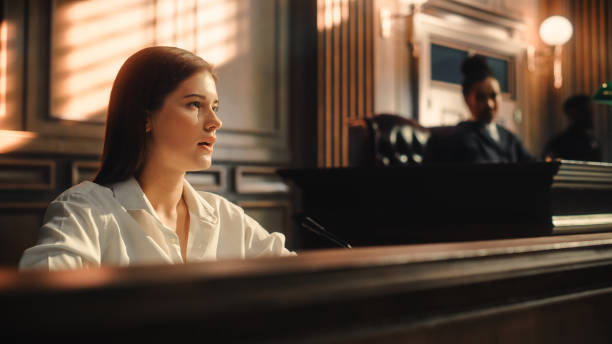
The Name on the Documents
I thought the hardest part would be walking into Hartford District Court alone.
My eight-month-pregnant body felt impossibly heavy that morning, and my swollen ankles throbbed with every step across the cold marble lobby, turning what should have been a short walk into something that felt like crossing a great distance. I had told myself, before I left Megan’s couch where I had been sleeping for six weeks, that I could survive the humiliation of arriving alone. After all, I had already survived the collapse of my marriage. What was one more difficult morning compared to the months of difficult nights I had already gotten through?
People imagine divorce as explosive and dramatic. Mine had looked like sorting through unpaid hospital bills after midnight, squinting at numbers on Megan’s kitchen table while my daughter kicked quietly inside me as if to remind me to keep going. It had looked like prenatal appointments paid for in small, carefully counted installments, and grocery runs planned to the dollar. It had looked like the particular exhaustion of a woman who has been slowly, methodically ground down and is now trying to remember what she was before the grinding started.
My name is Sarah Jane Miller Prescott, and I want to tell you about the day the Miller part of that name saved everything.
Harrison J. Prescott was the kind of man people trusted instantly. As CEO of a major tech company, he gave polished speeches at charity galas and appeared at cancer fundraisers and scholarship dinners with the practiced warmth of someone who understood that public generosity was an investment in reputation. He was good at it. Even now, knowing everything I know, I can acknowledge that he was genuinely gifted at making rooms full of strangers believe he was exactly the man he presented himself to be.
Behind closed doors, generosity had conditions.
Money was control. Even basic things — groceries, a doctor’s visit, a replacement for the winter coat I’d had since before we married — became negotiations in which I had to justify my existence as something other than a financial liability. Silence had consequences I had learned to anticipate and manage. I got very good at managing things. Managing emotions, managing expectations, managing the careful maintenance of an outward life that looked functional while everything underneath was being quietly dismantled.
I didn’t come to court seeking revenge. I want to be precise about that because it matters. I came for child support and a reasonable share of the house we both legally owned — the house where I had planned to bring my daughter home, where I had painted the nursery during one of Harrison’s business trips, where I had assembled the crib alone on a Tuesday evening while he was in Chicago and sent him a photo he had responded to with a single thumbs-up. I needed stability, not luxury. A place to land.
That was all I wanted.
Then the courtroom doors opened.
Harrison walked in wearing a charcoal suit and the expression of a man for whom this hearing was a minor administrative inconvenience — a thing to dispatch efficiently before the real business of his day could begin. He was calm. Almost bored. Beside him stood Tiffany Rhodes, his assistant, his closest professional ally, and the woman I had found evidence of on three separate occasions before I finally allowed myself to stop explaining it away.
She stood close to him with the easy confidence of someone who has already won a game the other player didn’t know they were losing. Neither of them looked ashamed. They looked comfortable together, and that particular comfort — the comfort of people who have stopped hiding — was its own kind of cruelty.
I had processed the betrayal. I had cried about it in private, worked through it in the long nights on Megan’s couch, made a kind of uncomfortable peace with the fact of it. What hurt now was something different. What hurt was that he didn’t even bother to hide it anymore. I had become someone whose feelings no longer warranted the effort of concealment.
I sat at my table and gripped my worn folder, which contained the pieces of my life reduced to documentation: ultrasound reports, unpaid bills, bank statements, a series of text messages I had saved because some part of me had known, even when I didn’t fully know, that I would eventually need evidence of what was happening.
Simon Fletcher’s seat beside me was empty.
I had been told something had been filed late the night before, disrupting the schedule, and that I would need to wait. Then I was told the hearing would proceed anyway. In the space between those two pieces of information, I understood what Harrison had done. He had maneuvered my attorney out of the room. He had wanted me here without representation, without preparation, without anyone beside me. He wanted me exactly as I was: alone, eight months pregnant, and facing his full legal apparatus with a worn folder and shaking hands.
He leaned across the aisle and told me I should sign the settlement and walk away while I still had some dignity. He told me I should be grateful for what he was offering.
My daughter moved inside me. I put one hand on my stomach and told him I wasn’t asking for anything unreasonable.
Tiffany’s laugh was sharp and immediate. She said something about it being strange to talk about fairness when someone had trapped a successful man with a pregnancy.
I told her not to speak about my child.
My voice was shaking, but it was steady enough to carry.
Her smile disappeared.
And then she slapped me.
The sound of it moved through the courtroom in a way that made time feel different for a moment — everything suspended in the ringing of it. My cheek burned instantly. I tasted blood at the corner of my mouth. My hand moved to protect my stomach before I had fully processed what had happened, some older, more animal instinct operating below conscious thought.
No one moved.
Harrison didn’t intervene. Tiffany didn’t apologize. Even the bailiff stood frozen, as if the world had briefly stopped accepting new information.
Then Harrison laughed quietly and said this was exactly the kind of instability he had been dealing with.
I looked down at my trembling hands. The folder was shaking against the table. In that moment I felt something specific and particular that I had not expected: not humiliation, not rage, but a profound invisibility. A pregnant woman had just been struck in open court, and the man who was supposed to have been her husband was using it to build his narrative.
Then I noticed the judge.
Judge Randall Thompson was no longer looking at his papers. He was looking directly at me, and his expression had changed in a way I couldn’t fully interpret — focused and serious, but also something else. Something almost like recognition.
“Bailiff,” he said, his voice cutting through the silence with absolute clarity. “Seal the courtroom.”
The doors closed with a sound that felt permanent.
Harrison’s casual confidence shifted into something more cautious. He was a man who lived in controlled environments, and this had just stopped being one.
The judge said my full name slowly and deliberately.
“Sarah Jane Miller Prescott.”
Harrison went very still. He had spent years telling me the Miller didn’t matter anymore, that it belonged to a past I should release. He had been so consistent about it, so patient in his erosion of that part of my identity, that I had almost believed him. I had introduced myself as Sarah Prescott for so long that Miller had begun to feel like something that belonged to someone else.
But the judge had said it. And the room had heard it.
“Mr. Prescott,” Judge Thompson said, “are you familiar with the contents of an emergency filing submitted to this court this morning?”
Harrison straightened his jacket. He said something about my emotional instability.
The judge interrupted him. “I did not ask for your opinion.”
The silence that followed was different from the silence after the slap. That silence had been shock. This was the silence of a room in which the balance of power had just shifted and everyone present could feel it.
The judge turned to me, his voice lowered.
“Mrs. Prescott, did you submit this evidence?”
I told him I wasn’t sure — that my lawyer was supposed to handle the filings. And I was telling the truth. I didn’t know what was in those documents yet.
Harrison laughed.
The judge warned him once. That was all it took.
The documents had been delivered that morning by private courier. They contained medical records, bank statements, corporate filings, and an affidavit from Simon Fletcher. Simon hadn’t been blocked from this hearing because he had abandoned me. He had been deliberately prevented from arriving — someone had blocked his car and stolen his phone, a fact he would explain when he finally walked through the sealed courtroom doors an hour later, his tie loosened and a bruise forming along his jaw. It was not an accident. It had been planned.
But Simon had spent the previous weeks preparing something Harrison couldn’t control. Something that didn’t depend on Simon’s physical presence in a courtroom.
The judge read through the documents with the careful attention of someone encountering a situation that has expanded beyond its original parameters. He read the request for emergency protective orders. He read the motion for an immediate freeze on marital assets. And then he said the name that changed everything.
“Miller Manor Group.”
My mother’s company.
She had built it over thirty years, acquiring and managing residential properties across three counties with the patient discipline of someone who understood that value compounds slowly. When she died, I had been so deep inside my grief, and so deep inside my marriage, that I had signed the papers Harrison put in front of me without fully understanding what I was signing. He had told me it was estate administrative paperwork. He had been patient and reassuring and had held my hand while I signed, and I had trusted him the way you trust the person you have promised your life to.
“Did you present documents transferring her inheritance into a shell corporation under your sole control?” the judge asked Harrison.
Harrison tried to deflect with the language of legal complexity and estate planning and tax efficiency. The judge did not accept the deflection.
What emerged over the next hour dismantled the life Harrison had constructed with the methodical, unstoppable quality of a proper audit. Evidence showed Tiffany had attempted to access my medical records without authorization. Messages documented threats — the kinds of threats that had been delivered quietly, over months, in the privacy of our home, designed to be impossible to prove and impossible to forget. Attempts to isolate me from my own family. Control over my access to money. The threat to lock me out of the house during a prenatal appointment, delivered with the cold casualness of someone who knows you have nowhere else to go.
“This is no longer a simple divorce case,” the judge said. “This involves coercion, abuse, and potential fraud.”
Harrison’s confidence didn’t collapse all at once. It came apart in pieces, each new piece of evidence removing another support until what remained was the actual structure underneath — a man who had spent years building a public persona of generosity and competence on a private foundation of control and deception.
When he leaned toward me during a brief procedural pause and said something low and threatening, the judge intervened before I had finished processing the words.
“You just threatened a protected individual in my courtroom,” Judge Thompson said.
Harrison tried to argue.
“She is not just your wife,” the judge said. “She is a citizen under the protection of this court.”
I want to remember the exact quality of that moment, because I had not heard anything like it in years. Not in years of marriage, not in the long slow erosion of my sense of my own standing, not in the months of trying to figure out how to protect my daughter and myself from a man who had mastered the art of making his cruelty invisible. Someone in a position of power had looked at what was happening to me and named it clearly.
I was not invisible. I was not unstable. I was not a burden or an inconvenience or an obstacle in someone else’s narrative.
I was a citizen under the protection of this court.
By the time the hearing concluded, the judge had ordered a full protective order, granted me exclusive use of the house, restored my medical insurance, frozen all accounts connected to Harrison, and initiated a formal fraud investigation into the transfer of Miller Manor Group. Each order issued over Harrison’s objections, each objection overruled, each defeat compounding until what had begun as his carefully engineered ambush had become the most complete collapse of his carefully engineered life he had ever experienced.
Simon helped me stand when it was over. My legs were unsteady, my cheek was still swollen, and the weight of the morning had settled into my body in a way that made every movement effortful. At the hospital, they checked the baby. She was fine. Her heartbeat was steady and strong, and the technician who did the ultrasound told me she looked perfect and healthy.
For the first time in years, I felt something close to peace.
Simon told me later about the judge’s history with my mother. Years earlier, before his appointment to the bench, Randall Thompson had represented a tenant in one of Miller Manor Group’s buildings — a woman facing eviction during a medical crisis she hadn’t caused and couldn’t afford to manage. My mother had refused to evict her. She had extended the lease, waived several months of rent, and helped the woman find assistance resources. It was the kind of thing my mother did quietly, without announcing it, because she believed that having resources came with obligations that didn’t require an audience.
He had never forgotten.
The next morning, I returned to the house with a police escort. I hadn’t been inside in six weeks. In the nursery, I found what Tiffany had done during the months she had been spending time there — furniture replaced, the arrangement changed, everything reoriented toward someone else’s vision of what the room should be. My mother’s old rocking chair, the one I had moved from her house after she died and placed by the window where it would catch the morning light, had been moved into the garage.
We found it in the back corner, dusty but intact.
I carried it back inside myself. I wiped it down and set it by the window where it belonged and sat in it for a while as the sunlight moved through the room. My daughter moved inside me, turning slowly, settling.
I saw Harrison’s wedding ring on the counter. I left it there.
But I picked up the Miller Manor documents.
There would be a long legal process ahead. There would be the fraud investigation, the asset recovery proceedings, the slow, complicated work of untangling what he had taken and establishing what was mine. None of it was resolved in a single morning. The truth is that mornings like that one are beginnings, not endings — the point at which the direction changes, which is not the same as arriving at the destination.
But something had been given back to me in that courtroom that no legal process had delivered and no legal process could take away. It was not the house, though the house mattered. It was not the investigation or the protection order or the frozen accounts, though those mattered too.
It was the name.
Sarah Jane Miller.
I said it out loud, standing in the nursery with the morning light on the rocking chair and my daughter turning slowly inside me.
Not Prescott. Not the name I had been encouraged to let swallow the other. Not the name attached to the public reputation and the charity galas and the man who had learned, very precisely, how to make a person forget who they were before he got there.
Miller.
My mother’s name. My grandmother’s name. The name of the woman who had refused to evict a tenant in a medical crisis, who had built something real and lasting out of patience and discipline and genuine care for the people whose lives touched hers, and who had somehow, through a chain of events she couldn’t have planned and would never know about, sent her protection into a sealed courtroom thirty years after planting it.
My daughter moved gently, once, the way she moved when she was comfortable.
I put my hand on my stomach and told her we were going to be just fine.
And for the first time in a very long time, I believed it.

Specialty: Quiet Comebacks & Personal Justice
David Reynolds focuses on stories where underestimated individuals regain control of their lives. His writing centers on measured decisions rather than dramatic outbursts — emphasizing preparation, patience, and the long game. His characters don’t shout; they act.