The Annex
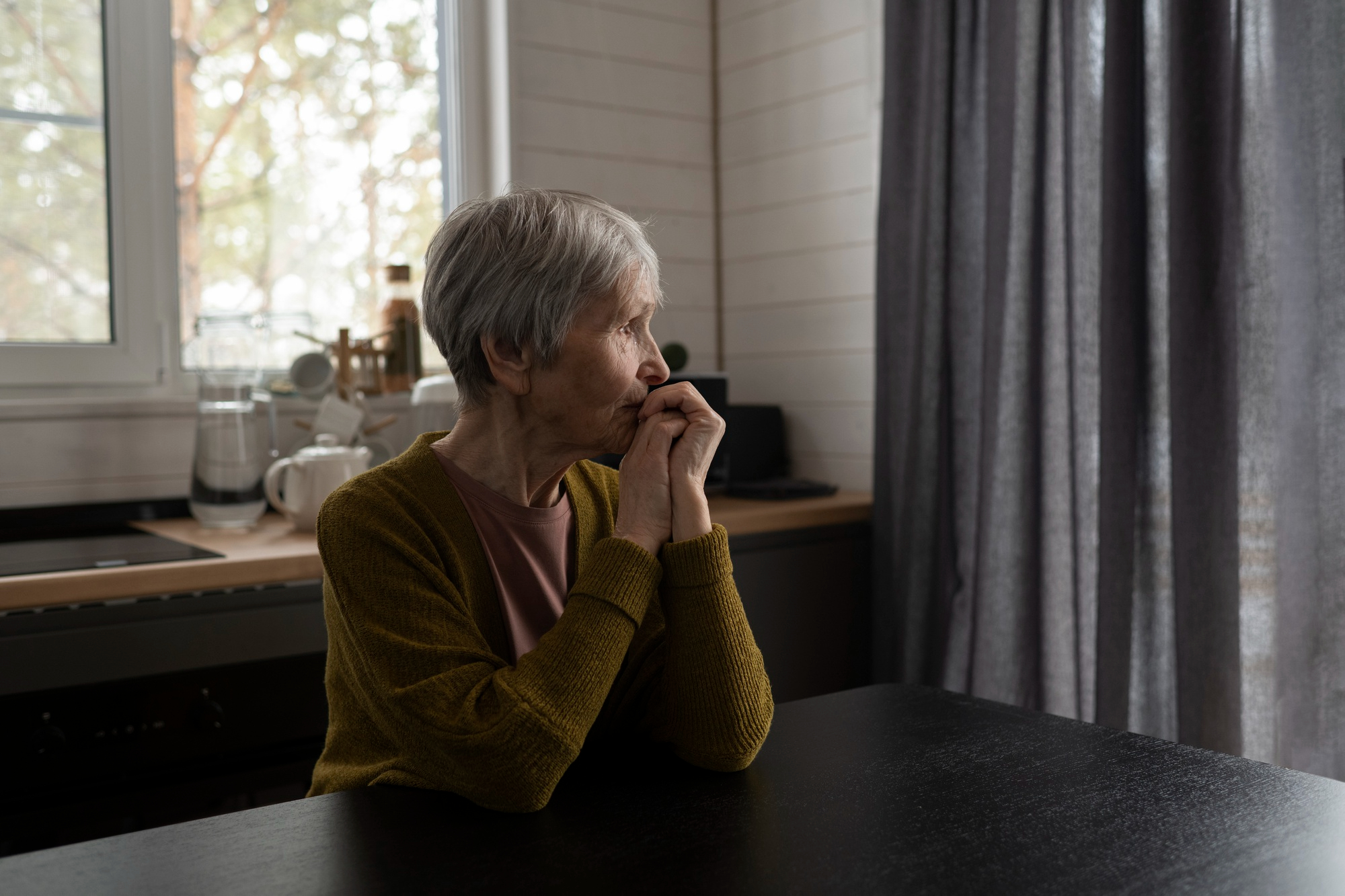
When my grandson asked why I was living in the back room, I almost lied. The lie was already formed, polished from years of repetition, sitting on my tongue like a stone worn smooth by use. I liked the quiet. I wanted less space to clean. My knees made the stairs difficult. Melissa needed room for her home office. Brian and Melissa hosted guests now and then. I was comfortable enough. Those lies had kept the peace for three years. They had become so familiar that some mornings I almost believed them myself, which is the most dangerous thing about the kind of lying you do to survive inside your own family. It stops feeling like lying and starts feeling like accommodation, which is the word people use when they mean a woman has agreed to need less than she deserves.
Then my son said, in front of all of us, standing in the yard with the rain coming down on the annex roof and his wife beside him and his own child watching, “Because the house belongs to my wife now. If my mother complains, she can leave for good.”
I felt the words the way you feel a blow you have been expecting for a long time and are still not ready for. Not the shock of something new but the confirmation of something you have known in your body for years and have been refusing to let your mind assemble into a sentence. He had said it. He had finally said it out loud. And now the sentence existed in the air between us, and his son had heard it, and nothing that followed could undo the hearing.
Ethan stood in the yard, still and straight, his coat dark with mist, his eyes moving from Brian’s face to mine. He was twenty eight years old. He had driven down from the city that morning because I had mentioned on the phone, in the small, careful voice I used when I was trying not to alarm anyone, that my back had been bothering me and I was having trouble reaching the shelf where I kept my medications. He had not said he was coming. He had simply appeared, the way he did sometimes, pulling into the driveway in the middle of a Saturday with a bag of groceries and the quiet, attentive energy of a person who has learned to listen for what is not being said.
He had found me in the annex. Not in the main house, not in the bedroom where I had slept for thirty years, not in the kitchen where I had cooked ten thousand meals, but in the converted storage room at the back of the property, a space roughly the size of a large closet, with a narrow bed whose springs poked through on damp nights, a portable heater that tripped the outlet if I ran it longer than two hours, and a shelf where I lined up my pill bottles like a row of small reminders that my life had been reduced to something managed in corners.
He had looked at the room. He had looked at me. And then he had walked into the main house without knocking and asked his father a question, and Brian had answered it with the sentence that ended three years of careful, elaborate pretending.
Melissa’s jaw flexed once when she heard it. She looked irritated, not ashamed. That was the difference between her and Brian. Brian still possessed enough residual decency to be embarrassed by what he had done, even if the embarrassment never translated into action. Melissa had moved beyond embarrassment years ago. She had crossed into the territory of a person who has decided that the arrangement benefits her and who has therefore stopped evaluating it morally.
“Dad,” Ethan said, his voice calm in a way that made me more nervous than shouting would have, “whose name is on the deed?”
Brian folded his arms. “I told you, that’s not your business.”
“It became my business the moment you admitted you’re threatening to throw your mother out of her own home.”
Melissa let out a sharp laugh. “Own home? Mary hasn’t owned anything here in years.”
I looked at the ground. That reflex, the downward gaze, the averted eyes, the instinct to make myself smaller when someone said something that exposed the shape of my humiliation, was so deeply practiced it happened before I could stop it. And it was that reflex, more than anything Melissa said, that made Ethan turn to me fully.
“Gran,” he said softly, “what papers did you sign?”
My throat tightened. “I don’t know.”
Brian stepped forward. “You’re upsetting her. Knock it off.”
Ethan ignored him. “What did they tell you?”
He was choosing each word with the precision of a person walking through broken glass, and that precision frightened me more than anger would have, because it meant he already suspected what he was going to find and was simply gathering confirmation.
I pressed the damp dish towel between my hands and stared at the frayed edge. “They said it was for taxes,” I murmured. “A few years after your grandfather died. Brian said the county paperwork needed updating because of probate and insurance. Melissa had some forms. They came already marked where I had to sign.”
The yard went quiet. The only sound was water dripping from the roof of the annex and the faint hiss of tires on the wet road beyond the fence.
“When was this?” Ethan asked.
“Three years ago. Maybe a little more.”
“Were there witnesses?”
I shook my head. “Just us.”
Brian spread his hands in the theatrical gesture of a man who believes a display of exasperation can function as a closing argument. “There you go. She signed the transfer. End of story.”
Ethan looked at him. “You just said transfer. She said tax forms.”
Brian’s mouth tightened. Melissa stepped in before he could recover. “She knew what she was signing. Don’t start rewriting history because you want drama.”
“Then you won’t mind if I take a look at the recorded deed,” Ethan said.
Brian scoffed. “Do whatever you want.”
“I intend to.”
He bent and lifted his duffel bag and looked at me. “Gran, pack what you need for tonight.”
I blinked. “Tonight?”
“You’re not sleeping out here again.”
Brian barked a laugh. “And where exactly is she going?”
“With me.”
“No, she isn’t.”
That came too fast and too loud. Brian knew it. The words had arrived with the velocity of panic rather than authority, the reflexive shout of a man who senses that something he has been controlling is about to leave his grip. Ethan heard it too. He took one slow breath.
“You don’t get to decide that.”
Melissa said, “This is still our property.”
Ethan’s eyes moved to her. “That is exactly what I’m going to verify.”
I should have spoken then. I should have done what women like me are taught to do, what I had been doing for three years, what I had been doing for most of my life. Smooth it over. Minimize it. Tell him not to make things worse. Tell him the annex was fine, that I was comfortable, that I did not want to be the cause of a family rupture. Take up less room. Need less. Ask less. Endure more.
But I looked through the open door of the annex and saw the bed with the broken springs. The heater that could not run through the night. The cracked mug I drank my morning tea from. The winter coat hanging from a nail because there was no closet. The biscuit tin where I kept the cash I set aside each month because Brian had told me I should contribute to utilities if I wanted to stay. Contribute to utilities. In the house my husband and I had paid for over thirty years. The house where I had raised my children and buried my marriage and planted the garden and scrubbed the floors and replaced the roof and painted every room at least twice. I was paying rent to live in a storage room attached to my own property, and I had been doing it so quietly and for so long that the arrangement had begun to feel normal, which is the final victory of the people who put you there.
I looked at the annex and I was tired. Not the everyday kind. A deeper tiredness, the kind that settles into your bones when you realize that your silence has not been keeping the peace. It has been feeding someone else’s cruelty.
So I nodded.
Brian stared at me as though I had struck him. “Mom.”
I did not look at him. I went into the annex and packed one small suitcase while Ethan stood in the doorway. He did not hurry me. He did not speak. He simply watched the room, and his watching made every humiliation inside it visible in a way that my own eyes had long since learned to avoid. The cracked mug. The nail with the coat. The biscuit tin. When he saw the tin he asked what it was.
“Utility money,” I said.
“For what utilities?”
I swallowed. “Brian said I should contribute if I wanted to stay.”
He closed his eyes for one second. That was all. One second of stillness in which something moved across his face and was contained. And that single second frightened me more than anything Brian had said, because I understood that what lived behind Ethan’s composure was not indifference but control, and that the control was not for my benefit or Brian’s but for his own, because without it he would say or do something that could not be taken back.
He drove me to a hotel near the interstate. It had soft yellow lamps in the lobby and fresh coffee by the front desk and clean sheets on the bed and a window that looked out over a parking lot, which was not beautiful but was mine for the night, a space I occupied not because someone had decided I could stay but because someone had decided I deserved to leave.
I kept apologizing. For the trouble. For the expense. For the scene in the yard. On the third apology he reached over at a red light and took my hand.
“Gran,” he said, “you have nothing to apologize for. Nothing.”
I looked out the window because I was too old to start crying over kindness and too worn down not to.
In the hotel room he unpacked my medications, set a bottle of water on the bedside table, and ordered soup I could barely touch. Then he opened a leather folder I had noticed him carrying in the yard. Inside were business cards. His name was printed in dark blue above the words Elder Law and Probate Litigation. Beneath that, in smaller type, the word Partner.
I stared at the card. “Partner?”
He gave me a small, almost embarrassed smile. “I made partner early. We had a few big cases.”
“Brian doesn’t know?”
“He knows I’m a lawyer. He doesn’t ask many questions unless the answers help him.”
That sentence landed between us and stayed there, carrying more weight than its words.
He spent the next two hours on his laptop and phone. County records. Tax filings. Deeds. Probate summaries. Archived scans. He worked with the focused, unhurried precision of a person who knows exactly what he is looking for and is simply following the trail to where it ends. Every few minutes he would ask me something. When did Grandpa die? Did he leave a will? Who took you to the lawyer afterward? Did anyone explain survivorship rights? Did you ever receive a copy of anything?
I answered as best I could. My husband Frank had died nine years earlier. He had been a careful man, the kind who kept instruction manuals for appliances we no longer owned, who filed every receipt in a labeled envelope, who understood that the house was not just a building but a record of a life built slowly and maintained with attention. After his funeral I moved through months like someone underwater. Brian came often then. He brought groceries. He fixed the loose fence. He drove me to appointments. Melissa was almost tender in those days, which now seemed harder to forgive than her later cruelty, because the tenderness had been strategic. They were patient with me until I signed what they wanted. Then the patience ended.
At first the displacement was subtle, so subtle that I mistook it for concern. Melissa suggested I move my bedroom downstairs because climbing the stairs at night was unsafe. It sounded reasonable. It sounded like caring. I moved into the downstairs guest room and told myself it was practical and that the stairs really had been getting harder and that it was nice to be closer to the kitchen in the mornings. Then Melissa said her sister needed a place for a few months, so perhaps I could sleep in the den instead. The den was smaller but it had a window that faced the garden and I told myself it was only temporary. Then the den became renovation space for a project that never materialized. Then they fixed up the annex “just for a season,” a phrase Melissa used with the bright, reasonable tone of a woman describing a minor logistical adjustment rather than the removal of an elderly person from her own home. Each step was small enough to seem harmless. Each step moved me further from the center of the house and closer to the margin. And each time I agreed, because agreeing was what I did, because it was what I had always done, because the cost of refusing felt larger than the cost of losing one more room, which is how they do it. Not all at once. Inch by inch. Until you are standing in a converted storage shed paying rent on your own property and wondering, in the honest hours before dawn, how you arrived here. By the time I understood that temporary had become permanent, my belongings were boxed and stacked in the garage and Melissa had turned my old bedroom into a nursery for a child she never ended up having. All that remained of me in the main house was a framed wedding photograph in the hallway, and even that disappeared when they repainted.
Around ten that night, Ethan sat back in the desk chair and went still. He turned the laptop screen toward me. There was the property parcel number, the tax history, and the deed transfer filed three years and four months earlier. Grantor: Mary Whitmore. Grantee: Melissa Kane Whitmore, married woman.
The air left my chest. “I signed that.”
“You signed something,” Ethan said. “This may not hold.”
“Why not?”
He tapped the screen. “Because the notary’s commission number on this deed belongs to a woman whose commission had expired almost a year before the filing date. That means either the deed was notarized improperly or the acknowledgment was fabricated.”
I stared at him.
“And there’s more,” he said, more gently now. “Grandpa’s probate records show he left the house to you outright in his will. Not jointly to you and Brian. Not in trust for anyone. To you. Solely.”
I sat down on the edge of the bed. The room seemed to tilt. “I never knew.”
“I know,” he said. He said it without blame or pity or the particular softness people use when they are handling something fragile. He said it as a fact, the way a doctor states a diagnosis, and the absence of judgment in his voice was the thing that nearly undid me, because it meant he understood that my ignorance had not been stupidity but isolation, the deliberate, systematic isolation of a grieving woman from the information she needed to protect herself.
The next morning he moved quickly. He met with a local real estate litigator he knew from a conference. He filed an emergency petition to prevent any further transfer of the property. He arranged for a locksmith. Everything he described sounded like it belonged to a different life. Court. Petition. Possession. Fraud. Undue influence. Elder financial abuse. Words I associated with newspaper stories about other people’s families, not with my own son and his wife and the house where I had hung curtains and planted roses and watched my children grow.
By noon we were in a small courtroom with dull wood benches and stale air. Brian and Melissa arrived late, dressed with the careful formality of people who believe appearance can substitute for innocence. When Brian saw Ethan seated beside me at the counsel table, something flickered across his face for the first time. Not guilt. Uncertainty. The expression of a man who has just realized that the person sitting across from him is not the child he remembers but a professional operating inside a system he does not control.
“You’re suing your own father?” Brian said.
“No,” Ethan said. “I’m protecting my grandmother.”
Melissa leaned toward me. “Mary, this is obscene. Families don’t do this.”
I heard my own voice answer before I had time to soften it. “Families don’t put mothers in sheds.”
She recoiled as though the words had been physical.
The hearing was brief but every minute stretched. Ethan spoke clearly and without theatrics. He laid out the age difference, the isolation after bereavement, the misrepresentation of the document’s purpose, the expired notary commission, the pattern of displacement from the main residence, the extraction of utility payments, the threat of eviction. He never raised his voice. He never once looked at Brian while he spoke, and that refusal to look was more devastating than any accusation, because it communicated something beyond legal strategy. It communicated that Ethan had stopped seeing his father as someone whose reaction mattered.
Brian’s lawyer argued that I had willingly transferred the property out of gratitude for years of care. Melissa dabbed at dry eyes and spoke about stress and sacrifice and the burden of caregiving. She made herself sound almost saintly.
Then the judge asked the simplest question of the day. “Mrs. Whitmore, when you signed this document, what did you believe it was?”
I looked at my hands. I looked at the tissue box near the stand. I looked at Ethan. He did not nod. He did not coach. He just waited, the way he had waited in the doorway of the annex while I packed my suitcase, the way he had waited at the red light before taking my hand. Patient. Present. Willing to let me arrive at the truth at my own speed.
“For taxes,” I said.
The room went still.
“And if you had understood that you were transferring ownership of your home to your daughter in law, would you have signed it?”
“No.”
The word came out stronger than I expected. Stronger than I felt. But once it was in the room it belonged there, and I understood that I had been waiting years to say it, that the word had been living inside me the whole time, pressed flat beneath the weight of compliance and habit and the particular kind of love that teaches you to protect your children from the consequences of what they have done to you.
The judge granted a temporary order restoring me to the residence and freezing any sale, refinance, or transfer until a full hearing. Brian surged to his feet. “This is insane. She’s confused.” The judge looked at him over his glasses. “Sit down, sir. You are not helping yourself.”
Outside the courtroom Brian caught us near the exit. “Mom,” he said, and for the first time in years the word sounded almost sincere, “you can’t do this to us.”
To us. Not to me. Never to me. Always to them.
Ethan stepped slightly in front of me, not touching Brian, not threatening, simply placing himself there the way a wall places itself between weather and the thing it protects. “What exactly is she doing to you?”
Melissa’s composure cracked. “Enough for what? To steal the house back? To put us on the street?”
I looked at her. At the expensive boots. The fresh highlights. The new handbag she had carried into court while I was counting pills in a back room and paying rent to sleep on a broken bed in my own house. And I understood with a clarity that felt almost physical that they had never feared my pain. They had only feared losing the benefits of it.
The full hearing took six weeks. Ethan found the notary whose commission number appeared on the deed. She signed an affidavit stating she had never notarized any document for me and had not worked in the county in years. He subpoenaed bank records showing Brian had taken a home equity line on the property less than eight months after the transfer, with funds going to Melissa’s boutique business and two vacations they had lied to me about. He found text messages between Melissa and her sister discussing “getting Mary settled in the shed before winter.” That line alone made Ethan go very quiet in a way that I had learned to recognize as the sound of a man holding something back that would not help anyone if he let it out.
Brian tried several versions of the truth before abandoning truth altogether. He said he had earned the house by caring for me. He said Melissa needed security. He said I had chosen the annex because I was difficult and old fashioned and disliked noise. He said the utility payments were my idea. Each version contradicted the one before, and the contradictions accumulated in the courtroom record like layers of sediment, each one revealing the shape of what lay beneath.
The day of the final hearing I wore the blue dress I had saved for church holidays. Ethan drove me himself. He brought coffee I did not drink and a packet of crackers he knew I might. In the car he said, “You don’t have to be afraid.”
I smiled. “Of course I do.”
He smiled back. “All right. Then you don’t have to be afraid alone.”
The judge reviewed the evidence methodically. The invalid notarization. The misleading circumstances. The vulnerability after bereavement. The financial benefit to Brian and Melissa. The displacement from the main residence. The threat of eviction. By the time he finished the room had the heavy, settled silence of something irreversible arriving.
The deed was set aside. Ownership reverted fully to me. The court referred the matter for investigation into elder financial exploitation and ordered Brian and Melissa to vacate the property within thirty days.
Melissa made a sound I will never forget. Not a sob. Not rage. Something between them, the sound a person makes when entitlement meets consequence for the first time and discovers that consequence does not negotiate.
Brian turned to me. His face was pale. “Mom,” he said. That was all. Just the word. As though it might still unlock something in me. Mercy. Habit. The old instinct to step between him and the results of his own choices.
I looked at my son. I looked at my grandson. And I understood that love is not always the same thing as shelter. Sometimes love is the moment you stop covering a person from the weather they created.
Thirty days later they were gone.
The first night I slept in my own bedroom I woke at two in the morning because the silence felt unfamiliar. No gutter dripping above my head. No draft under the annex door. No heater clicking on and off. Just the house Frank and I had paid for over three decades, breathing around me the way houses breathe when the people inside them are the people who belong there.
I got out of bed and walked barefoot down the hall. The floorboards still gave that soft sigh near the linen closet. The kitchen window still rattled faintly when the wind shifted. My teacups were back in the cabinet where they belonged. The wedding photograph Ethan had found boxed in the garage stood on the mantel again. Frank’s face looked out from it with the calm, steady expression I remembered from forty years of marriage, the expression of a man who trusted that the things he had built would be cared for by the people he had built them with.
I stood there in my robe with my hands around a mug of tea and let the relief arrive. It hurt. Relief does hurt, sometimes. It hurts to feel the full weight of what you have been carrying only after you have set it down. It hurts to understand how little you had allowed yourself to expect.
Ethan came on weekends for a while after that. We sorted papers. Repainted the annex into storage space, which was all it had ever been meant to be. Replanted the front bed with marigolds because Frank had liked them and because I wanted something bright by the porch. One Sunday, while he was replacing the rusted mailbox post, I asked the question I had been circling for months.
“Do you hate your father?”
He tightened the last bolt before answering. “No,” he said. “That would be easier.”
I waited.
He stood and brushed the dirt from his hands. “I hate what he chose when no one was stopping him.”
That stayed with me. Not because it was dramatic. Because it was precise. People reveal themselves most clearly in the spaces where they believe there will be no consequences. Brian had believed there would be no consequences because he had looked at his mother and seen a woman too old and too tired and too conditioned by a lifetime of accommodation to resist. He had been right about the old and the tired. He had been wrong about the rest.
Brian wrote twice after moving out. The first letter was angry, full of justifications and accusations and the particular kind of self pity that men produce when they have been caught doing something they believed they had the right to do. The second letter was shorter. No excuses. Just a line saying he did not know when he had become the kind of man who could do that to his mother.
I read that one three times. Then I put it in a drawer. I have not answered. Maybe that makes me unforgiving. Maybe it makes me sane. At my age the difference between the two is smaller than people think.
This evening the house is quiet. The marigolds have finished for the season but the stems are still standing, dry and brown, waiting to be cleared. The kitchen window is dark. The hallway is lit by the lamp I leave on at night because I like the way it catches the edge of the wedding photograph on the mantel, the way it makes Frank’s face visible from the kitchen doorway, steady and familiar and still, after all these years, the first thing I see when I come downstairs in the morning.
I make my tea. I sit at the table. The floorboards sigh near the linen closet. The wind presses lightly against the window. The house settles around me with the small, habitual sounds of a structure that has been standing for a long time and intends to continue, and I sit inside it and drink my tea and let the quiet be what it is, which is not loneliness and not emptiness but the sound of a woman sitting in her own home, in her own chair, at her own table, needing nothing from anyone, and owing no one an explanation for the peace.

Specialty: Quiet Comebacks & Personal Justice
David Reynolds focuses on stories where underestimated individuals regain control of their lives. His writing centers on measured decisions rather than dramatic outbursts — emphasizing preparation, patience, and the long game. His characters don’t shout; they act.