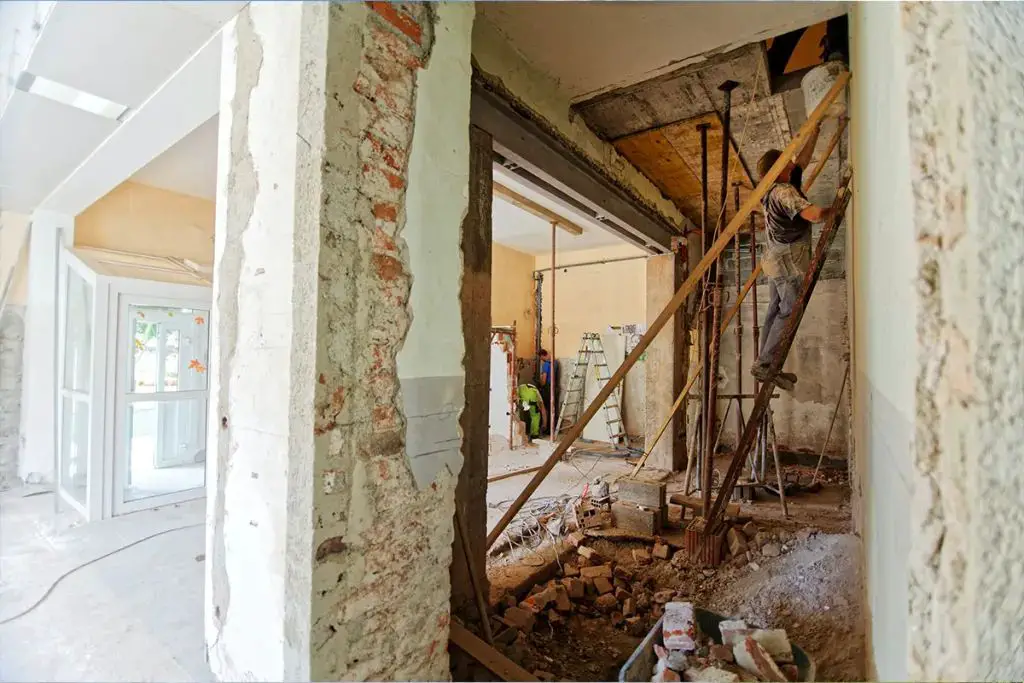
The first thing I heard was the sound of my house being taken apart.
Not the birds that usually greeted me on the drive up, the red-winged blackbirds that worked the cattails along the road before the lake came into view. Not the particular sound the gravel made under my tires when I turned in, that familiar crackling that meant I had arrived somewhere I had chosen and built and paid for myself. Not the wind through the white pines that lined the east edge of the property, which on good mornings came through the sunroom screens carrying the smell of the water and made it possible to sit with a cup of coffee and believe, for a little while, that the world was a manageable size.
A saw. A diesel engine somewhere nearby. Men shouting to each other over the noise of machinery that had no business being anywhere near my property.
I came around the last bend in the road and saw the yellow dumpster first, squatting on my lawn with the indifference of something that has been placed without any consideration for what was already there. It had been positioned directly on top of the flower bed I had planted in May of the previous year, a Saturday project involving four hours of work and soil that kept getting under my fingernails, and a trip to the nursery where I spent more time than was strictly necessary choosing between varieties of echinacea. The flowers were gone. In their place, four steel wheels had pressed the ground into two parallel tracks of compacted earth.
My name is Isabella Hail. I am thirty-two years old, and the lake house in northern Michigan was the first thing I had ever owned that was entirely, unambiguously mine.
I want to be careful about what I mean by that, because I have owned things before. I own the equipment in my office. I own the furniture in my apartment. I have a car and a reasonable amount of savings and a business I built without help from anyone who later wanted credit for it. But the lake house was different in a way that took me a while to understand and then, once I understood it, seemed so obvious I was almost embarrassed it had taken time.
I grew up in a family where resources moved in one direction. Not in the way that resources move in a healthy family, where they flow toward children when children need them and then gradually equalize as the children become capable of their own provision. In my family, resources moved toward whoever asked for them most persistently and with the least regard for whether the asking was reasonable. I had spent the better part of my adult life being the person who had resources and the people I came from being the people who needed them, and the word that was used to make this arrangement feel natural was family.
Family meant that when my parents’ credit was too damaged to qualify for a mortgage on their own, I bought them a bungalow and they lived in it without paying rent, because family takes care of family. Family meant that when my brother Marcus quit his fourth job in three years for reasons that were always someone else’s fault, I covered his rent for four months, and then six months, and then stopped counting months because the counting made me feel like a bad sister. Family meant my father’s dental work and my mother’s car repairs and my brother’s phone plan and, on one occasion I still find difficult to think about without a specific variety of exhausted fury, flights for a vacation to Cancun that I was told about after the tickets were purchased and to which I was not invited, because it was a family trip and I was always working.
I had said yes to all of it, over and over, because I loved them and because saying no required a confrontation that always cost more energy than writing a check, and because there was always a next time, a next need, a next reason why this particular ask was different from the pattern it was clearly part of.
The lake house was the place where I had decided to stop.
I bought it three years ago with money I had earned from my marketing agency, which I had started at twenty-six on a laptop in a coffee shop with two clients and a business plan I had revised seventeen times and a very firm intention not to fail. By the time I was twenty-nine the agency had twenty employees and enough revenue that I could afford, if I was careful, to buy a modest property somewhere outside the city and have a place that was mine without any competing claims on it. I did not tell my family about it until after I had closed. I did not tell them what I paid for it. I did not offer any portion of it as a family resource or suggest that anyone might use it for anything. I simply bought it and started fixing it up and went there on weekends when the city noise and the family obligations and the constant ambient drain of being someone everyone counted on became too much to carry without setting something down.
The paint was peeling when I bought it. The porch had a soft spot that needed replacing. The sunroom, a narrow glassed-in room running along the east side of the cottage that looked out over the water through a stand of birches, leaked along one seam when it rained and had a heating element that functioned as more of a suggestion than an actual heat source in winter. I fixed all of it, mostly myself, on weekends and occasional weekdays when I could work remotely, and in the process of fixing it I learned things about the property that you can only learn by spending time on your knees on a floor you are repairing, understanding the structure from the inside.
That sunroom was where I wrote my best thinking. It was where I drafted the business plan for the agency’s second phase, and where I worked through the decision to bring on a partner, and where I sat on winter mornings with frost on the glass and a space heater at my feet and felt, possibly for the first time in my adult life, that I had made a place where I was not available for anyone else’s needs.
My neighbor Mrs. Gable called on a Tuesday afternoon in October while I was in a client meeting.
I let it go to voicemail. She called again. Then texted: Call me when you can, it’s about the house.
I stepped into the hallway and called her back.
“Isabella,” she said, and her voice had the quality it gets when she is trying to be careful with information, low and deliberate, the way you speak when you aren’t sure how much the other person already knows. “I wasn’t sure whether to call. I didn’t want to alarm you if you knew about this already. But there are workers at your property. I can see them from my kitchen window. They’re taking down the sunroom.”
I asked her to repeat it.
She did.
“Your brother is there,” she said. “He seems to be directing them. And I think your parents are there too. Your mother is sitting in one of your lawn chairs.”
I stood in the hallway of my office while my client meeting continued behind the closed door and understood, word by word, what Mrs. Gable was describing.
“How long have they been there?” I asked.
“Since about eight this morning,” she said. “I thought you must have authorized it. I almost didn’t call.”
I thanked her. I went back into the meeting, said something about a family emergency, and was in my car eleven minutes later.
The drive to the lake house takes two hours on a clear day. I made it in ninety minutes, which I am not recommending as a general practice but which felt, at the time, like the minimum acceptable response to what was happening to a building I owned.
I heard the machinery before I turned into the driveway. I saw the dumpster and the crushed flower bed and two work trucks parked on the grass rather than on the gravel, because whoever parked them had not considered that the grass wasn’t there for parking on. I turned off my engine and sat for one moment looking at the east side of the cottage.
The entire sunroom wall was gone.
Not damaged. Not partially dismantled in the careful way of renovation work that intends to replace what it removes. Gone. The framing was exposed, the insulation visible in patches, a blue tarp flapping where the glass used to be. My sunroom, the room where I had sat in the mornings and written and thought and felt like myself, was a hole in the side of my house.
My father was near the crew wearing a hard hat and holding a set of blueprints in both hands, studying them with the posture of a man reviewing plans he has a right to execute. My mother was seated in one of my lawn chairs, the green canvas ones I had bought at a shop in town, with a glass of iced tea that she had presumably made herself in my kitchen with my things. Marcus was laughing at something with a man I didn’t recognize who was holding a measuring tape, both of them relaxed in the way of people for whom the day is going according to plan.
I got out of the car.
I walked across the lawn stepping over a piece of window framing, then a section of the screen I had replaced in August, and I called out once, then louder, and when the machinery swallowed my voice I kept walking until I was close enough that ignoring me required actual decision.
Marcus turned first.
He had the expression of someone who has been interrupted at a reasonable activity by a person with an unreasonable objection, a certain practiced tolerance for my reactions that he had been deploying since we were children and that I had, for most of my life, responded to by moderating myself rather than him.
“Bella,” he said, in the voice he used when he wanted to signal that I was the one creating difficulty. “What are you doing up here?”
“At my house,” I said.
My father walked over from the crew, unhurried, wearing his patient expression, the one designed to make me feel like a child who has misunderstood something adults understand.
“Lower your voice, Isabella. These men are working.”
“Stop the work,” I said. “Right now. All of it.”
My father sighed in a way that communicated a great deal of weary tolerance.
“We’re improving the property. The sunroom was too small and poorly insulated and was costing you money every winter. Marcus and Jennifer are going to need space when the baby comes, and this house makes much more sense for a family than that apartment in the city.”
I stood completely still for a moment.
“I’m sorry,” I said. “What did you just say?”
My mother set down her iced tea and looked at me with the gentle brightness she used when she was about to present something she expected me to accept gracefully.
“Jennifer is pregnant. About twelve weeks. We’re so excited. And your father and I thought, with everything being so expensive in the city, and this house just sitting empty half the week, it made so much sense. Marcus and Jennifer can raise the baby here near the water, and your father and I can use the garage apartment once it’s finished, which really gives us all more room and keeps everyone together.”
Garage apartment.
Finished.
Everyone together.
I looked at my mother’s expression, which was the expression of someone sharing genuinely wonderful news about a plan that has already been decided, and I understood that the decision had not been made that morning or even that week. The conversation I was standing in the middle of had been happening without me for long enough that contractors had been hired and deposits paid and permits applied for and blueprints drawn, and the only role that had been allocated to me in the whole plan was the one I was apparently playing right now, which was the difficult one, the one who needed to be managed.
The contractor, a heavyset man in work boots with a clipboard under his arm, approached looking uncertain.
“Is there a problem here?”
“Yes,” I said. “My name is Isabella Hail and I own this property. I didn’t authorize any construction work.”
He looked at my father with the expression of someone hoping to receive a clarification that will resolve the situation.
My father gave a short, dismissive laugh.
“My daughter is upset,” he said. “Give her a minute.”
I held out my hand toward the contractor.
“I’d like to see your contract.”
He hesitated. He looked at my father again. My father’s expression said this was a minor inconvenience and the man should simply wait it out. The contractor, to his credit, handed me the clipboard after a moment’s deliberation.
The contract was thorough. The scope of work was detailed. And at the bottom, on the signature line where the property owner’s authorization was required, was my name.
Isabella Hail.
Written in a hand that was clearly trying to replicate something, close enough to read as a confident signature, not close enough to be mine. Beneath it, paper-clipped to the contract, was a power of attorney document. My father’s name as authorized agent. My name as the property owner granting authority. A notary stamp. A filing date from three weeks earlier.
I looked at my father over the clipboard.
“You forged my signature,” I said.
It came out flat. Not a question.
He looked back at me with an expression that contained, extraordinarily, a shade of impatience rather than any kind of recognition that this was a serious thing he had done.
“I signed on your behalf,” he said. “Which is what the power of attorney covers. You would have overthought it and delayed everything for months. This way it gets done.”
Marcus had come over by this point and was standing with his arms crossed in the posture he adopted when he felt the situation was being mismanaged by someone other than him.
“We’re adding value to your property, Bella. You’re acting like we did something to hurt you. The renovation is going to be worth significantly more than the cost once it’s finished.”
“Who is paying for it?” I asked.
There was a brief pause of the kind that precedes information someone was hoping not to have to provide yet.
“The deposit was charged to your emergency card,” my father said. “Ten thousand. There’ll be another twenty when the framing phase starts. We’ll sort out the details once the structure is up.”
Ten thousand dollars. From a credit card I had given my parents access to for genuine emergencies, because my father had a heart condition and my mother had episodes of low blood pressure and I had wanted to know they could reach me financially if something happened at a moment when I couldn’t be reached directly. I had given them that access in good faith, as I had given them most things.
I stood there holding the contractor’s clipboard and I felt the thing that the old version of me would have done rise up out of habit, the impulse to find some angle from which this was manageable, some concession that would reduce the temperature of the situation without requiring anything as confrontational as what was actually necessary. The impulse to say something that would give everyone a way to step back from the worst of what had happened and return to a version of normal that required me to pretend I wasn’t standing in front of a hole where my sunroom used to be.
I looked at the blue tarp flapping in the wind.
The impulse passed.
I handed the clipboard back to the contractor without speaking, walked to my car, and drove to the offices of Miller Construction, which was the name on the contract and the name on the truck and presumably the name of the company that was going to understand, in the next several minutes, exactly what they had gotten themselves into.
Mr. Miller was a practical man, which I appreciated. I showed him my driver’s license, my property deed showing sole ownership with no liens and no additional names, and three documents from my cloud storage that I had printed at a FedEx on the way. I told him calmly and specifically that the power of attorney used to authorize the contract was fraudulent, that I had not signed it or instructed anyone to sign it on my behalf, that the signature on the construction contract was not mine, and that every moment his crew continued working on my property increased his company’s legal exposure.
He did not argue. He did not ask me to wait while he consulted someone. He picked up his phone while I was still standing at his desk and told whoever answered to stop all work at the lake house property and have the crew off-site within the hour.
On my way out, I asked him to send me a complete accounting of what had been charged to my card and what remained outstanding on the contract. He said he would have it to me by end of day. He looked the way people look when they understand they have been used as a tool in someone else’s plan and are now facing the consequences without having been the one who made the choice.
I told him I didn’t hold his company responsible, which was true, and that my attorney would be in touch, which was also true.
I drove back toward the city with the phone ringing on the seat beside me.
My father. My mother. Marcus. My father again. A text from my mother that read: What did you do?? Call us. Then another from Marcus: You embarrassed dad in front of the workers. Then one from my father that was longer and used several words about family obligation and ingratitude that I read once and then set the phone face-down on the passenger seat.
I did not answer any of them.
My attorney’s name is Patricia Cho, and she has been handling my business contracts and property matters since the agency’s third year. She is precise and unexcitable and very good at separating what is emotionally true from what is legally actionable, which is a distinction that matters more in some situations than others and mattered enormously in this one.
I was in her office at eight the following morning.
By Friday she had the assessments completed. The structural damage to the cottage from the demolition work, assessed by an independent contractor she referred me to, came in at fifteen thousand dollars. The credit card charge was documented at ten thousand. The power of attorney document had been notarized by a notary whose registration I had asked Patricia to look into, and the findings were not favorable to my father’s position. The construction contract bore a signature that a handwriting comparison, which Patricia had expedited through a professional she worked with, identified as not matching my signature on any document I had legitimately signed.
We were no longer in the territory of a family disagreement about boundaries.
We were in the territory of fraud.
I spent Friday evening sitting in my apartment thinking about that word and what I intended to do with it. I thought about my parents in the bungalow I had bought for them, under the roof I paid for, in the furniture I had chosen. I thought about Marcus and Jennifer and the baby, who had nothing to do with any of this and who I was already inclined to feel a separate, uncomplicated warmth toward. I thought about every time I had written a check or covered a bill or extended access to something of mine because the word family had been deployed in a particular way, and I thought about how many times I had believed that the next ask would be the last one, that the pattern was not a pattern but a series of isolated circumstances that happened to resemble each other.
I thought about my sunroom.
On Saturday at two in the afternoon I drove to my parents’ bungalow.
The living room had been arranged in a way I recognized immediately as intentional. My father in his recliner, which I had bought for his back, with the footrest up. My mother on the sofa with a box of tissues on the cushion beside her. Marcus and Jennifer on the loveseat, Jennifer’s pregnancy just visible, Marcus with one hand resting on her knee in the posture of a man who has positioned himself as the reasonable one by association with a pregnant woman. A single wooden chair had been placed in the center of the room, forward of all the others, angled slightly toward the television, which was off.
I recognized the chair from my grandmother’s house. It was not comfortable. It was not positioned in the room naturally. It had been placed there for me, as a signal about where I was expected to sit and what kind of conversation this was going to be.
I walked past it to the dining table, set my folder down, and pulled out a chair that put me perpendicular to all of them and gave me a flat surface to work with. I sat down. I placed my hands on the folder.
My father leaned forward in the recliner with the expression of a man preparing to set someone straight.
“Isabella, this behavior has gone far enough. You humiliated me in front of the construction crew, you’ve threatened legal action against your own family, and your brother and Jennifer are under enormous stress because of decisions you’ve made this week that did not need to be made this way.”
I opened the folder.
“I’d like to go through these documents,” I said.
“I’m talking to you,” my father said.
“And I’m showing you something,” I said. “We can do both.”
The quality of my voice apparently communicated something, because he sat back.
I placed the damage report on the table first. The contractor’s letterhead, the itemized assessment, the total. Fifteen thousand dollars to repair the structural damage caused by demolition work performed without the property owner’s authorization.
My mother looked at the number and then at the table.
I placed the credit card statement beside it. The ten-thousand-dollar charge, the date, the merchant name, the account it had been drawn from without my knowledge or consent outside the stated purpose for which I had granted access.
Marcus stopped rubbing Jennifer’s knee.
I placed the power of attorney document in the center of the table. The notary stamp. The signature in my name. The legal analysis Patricia had prepared, which ran to four pages and used the word fraudulent eleven times in contexts that were specific and not metaphorical.
My father’s jaw tightened.
“I acted on behalf of the family,” he said. “That’s what parents do. I made a decision that needed to be made because you were going to delay it indefinitely and Marcus and Jennifer needed somewhere to land.”
“You used my name on a legal document without my permission,” I said. “That is the definition of fraud.”
“It is not fraud when a father is trying to help his family.”
“That’s not what the law says,” I told him. “And it’s not what my attorney says. And it’s not what the handwriting analysis says.”
The word handwriting analysis landed in the room and changed the texture of things. My mother picked up the box of tissues. Marcus looked at Jennifer and then at the floor.
I reached into the folder and removed the last document.
It was a blue-covered packet, the kind used for formal legal submissions, and I set it in the center of the table where everyone could see it but where no one had been given it yet.
“This is a civil claim,” I said. “Prepared by my attorney. It names my father and my brother as defendants. It includes claims for property damage, unauthorized use of a financial instrument, forgery of a legal document, and filing a fraudulent power of attorney with a municipal permit office.” I let that sit for a moment. “It is ready to be filed Monday morning.”
The room was very quiet.
Jennifer looked at Marcus with an expression that was not performing anything, a person trying to understand how she had arrived at a moment that was significantly more serious than she had been prepared for.
My father looked at the blue packet and then at me, and I watched him cycle through the responses available to him: denial, which the documents foreclosed; authority, which the legal language foreclosed; and the appeal to family feeling, which was the one I had been expecting and which arrived now in his voice, lower than before and stripped of its usual confidence.
“You would do this to your family,” he said. “After everything.”
I had expected to feel something more turbulent when he said it. The phrase after everything had worked on me for most of my adult life, a reliable mechanism for producing the guilt that would make me renegotiate whatever position I’d taken. But sitting at that table with the documents spread in front of me, I felt something that I can only describe as a kind of settled clarity, the particular calm of a person who has finally said the thing she has known for a long time needed saying and is no longer managing her own truth for other people’s comfort.
“I’m not doing anything to my family,” I said. “I’m holding my family accountable for what they did to my property and my finances. Those are different things.”
Marcus said, “Bella, come on,” and I looked at him and he stopped.
“Marcus,” I said, “you stood in my yard and directed workers who were tearing down my house. You knew whose house it was. You knew I hadn’t been asked. You made a joke about picking tile.”
He looked away.
“Jennifer,” I said, and she looked at me with wide, careful eyes. “I have nothing against you. I want things to be okay between us and I want the baby to be healthy and I will be glad to be an aunt. None of this is about you.”
She nodded, once, and I believed she understood.
I looked at my mother.
She was crying in the way she cried when she had run out of alternatives, and I had seen it enough times to know the difference between the performance version and the real version, and this was the real version, which made it harder than the performance version would have been. My mother was not an uncomplicated villain. She loved me in the way that people love their children even when they fail them, imperfectly and with self-interest woven into it, but real. That didn’t change what had happened. But it meant I could look at her crying and feel grief alongside everything else, grief for the version of the relationship that could have existed if different choices had been made.
“Mom,” I said, “I’ve been paying for things in this family for a long time. The house you’re sitting in, the repairs, the bills. I’ve done it because I love you and because I had the means and because every time I considered stopping I thought about what it would mean for everyone. But what happened at the lake house wasn’t an emergency. It wasn’t a need. It was a decision made without my knowledge using my money and my name, and those are not things I can let go.”
She pressed the tissue to her face and didn’t say anything.
I closed the folder.
“I’m not filing this on Monday,” I said. “Not automatically. I’m filing it if we can’t come to an agreement about restitution for the damage and the card charges, and a written understanding about what my property is and what it isn’t.” I looked at my father. “If you want to have that conversation, call Patricia’s office next week and we’ll do it properly. With everyone’s lawyers in the room.”
My father looked at me for a long moment.
He had the expression of a man who has organized his internal world around a particular version of himself, a version that involves being the authority, the patriarch, the person who makes decisions and solves problems and expects gratitude, and who is confronting, perhaps for the first time in a serious way, the possibility that the version doesn’t hold.
He didn’t say anything.
I picked up the folder and stood.
I thought about saying something else, something about love or about the possibility of something better on the other side of this, and I decided against it. Not because those things weren’t true but because this was not the moment for them, and I had learned, slowly and at some cost, that saying the right thing at the wrong moment was not the same as saying nothing.
I walked out through the kitchen and out the back door and across the small yard to my car.
The drive back to the city was quiet. The October light was doing something beautiful to the trees alongside the highway, and I watched it for a while without thinking about anything in particular, which was its own kind of relief.
The settlement agreement was signed five weeks later.
My father and Marcus agreed to pay the assessed damages in a structured arrangement that Patricia negotiated with their attorney, a process that was uncomfortable and slow and required several conversations I would not describe as enjoyable. The power of attorney was formally revoked and the fraudulent filing withdrawn from the permit office. The credit card access I had granted was closed and a new account issued in my name only.
The lake house repairs took three months.
The contractor I hired was local, recommended by Mrs. Gable, and he was methodical and honest and showed me the work at each stage so I understood what I was paying for. We rebuilt the sunroom with better insulation and a new heating element and glass that didn’t flex in the wind. I chose the materials myself, on weekends when I drove up to check the progress, standing in the exposed framing and making decisions about what this room was going to be.
I was there the morning they installed the last panel of glass.
It was a Saturday in January, cold enough that my breath showed, and the lake was frozen at the edges and the pines were holding about four inches of snow and the light was the particular thin winter light that makes everything look both fragile and very clear. I stood in the finished sunroom and looked out at the water and the birches and the sky, and I understood something that I had known in an abstract way for a long time but had perhaps not fully believed until that moment, which is that the thing you build twice, with your eyes open and your choices made deliberately and the full understanding of what it cost you, is more yours than the thing you built the first time without knowing what you had.
I made coffee in my kitchen and brought it to the sunroom and sat in the chair I had placed there for exactly this purpose, and I stayed for a long time without working, without answering anything, without being available to anyone.
The house was quiet.
The lake was still.
Everything in it was mine.

Lila Hart is a dedicated Digital Archivist and Research Specialist with a keen eye for preserving and curating meaningful content. At TheArchivists, she specializes in organizing and managing digital archives, ensuring that valuable stories and historical moments are accessible for generations to come.
Lila earned her degree in History and Archival Studies from the University of Edinburgh, where she cultivated her passion for documenting the past and preserving cultural heritage. Her expertise lies in combining traditional archival techniques with modern digital tools, allowing her to create comprehensive and engaging collections that resonate with audiences worldwide.
At TheArchivists, Lila is known for her meticulous attention to detail and her ability to uncover hidden gems within extensive archives. Her work is praised for its depth, authenticity, and contribution to the preservation of knowledge in the digital age.
Driven by a commitment to preserving stories that matter, Lila is passionate about exploring the intersection of history and technology. Her goal is to ensure that every piece of content she handles reflects the richness of human experiences and remains a source of inspiration for years to come.