The Chandelier
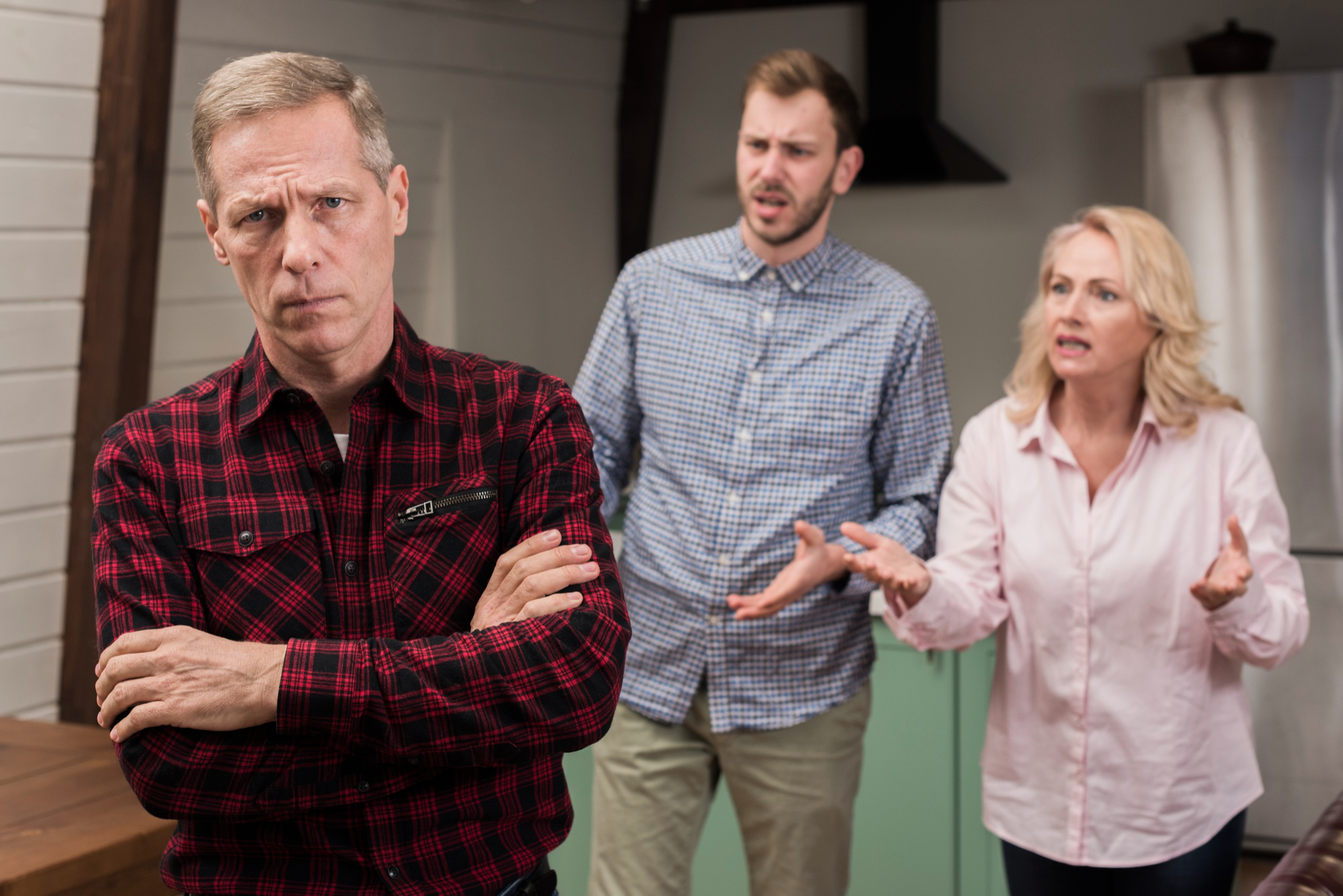
Nobody moved. The grandfather clock in the corner ticked through the room like it was counting down for someone, and my mother’s fingers stayed curled against the pearls at her throat, and my father’s hand hovered over the deed close enough to touch it but not brave enough to take it, and my brother Logan’s eyes jumped between the Porsche keys I had set beside my water glass, the small black recorder I had placed face up on the tablecloth, and the front windows where a dark county vehicle had just parked behind my car in the driveway. The dining room smelled like wax and coffee and something metallic from the old heating vents, and the chandelier my grandmother had chosen thirty years earlier cast its usual light over the table where four members of my family sat in a silence that was not peace but the particular breathless quiet that precedes the moment when the room learns it has been misunderstanding the situation for a very long time.
I picked up my phone and tapped the speaker button. My attorney’s voice filled the dining room, calm and precise, the voice of a woman who charged four hundred dollars an hour and was worth every cent of it. “Caroline, do not hand them the original.”
My father’s mouth tightened. “You brought a lawyer into our home?”
“Our home?” I said, and looked at the deed resting under his fingers.
His face changed in the smallest way. Not fear yet. Calculation. The rapid, practiced recalibration of a man who has spent his life controlling rooms and has just noticed that the geometry of this one has shifted without his permission.
The doorbell rang again.
My mother stood too quickly, her chair legs scraping the hardwood. “This is unnecessary. We are having a private family conversation.” She said it with the bright, clipped authority she deployed whenever the boundary between what was actually happening and what she needed other people to believe was happening had begun to dissolve.
“No,” I said. “You were asking me to sign a two hundred and forty eight thousand dollar repayment agreement under threat of public accusations. That stopped being private the moment Dad slid the folder across the table.”
I should tell you what was in the folder, because the folder is where the story begins, even though the story really begins much earlier than that, in a house that was never theirs, with a woman who saw everything they did not want her to see and made her preparations accordingly.
My name is Caroline Hayes. I was thirty four years old. I had driven two hours that morning because my mother had called and said the family needed to discuss something important, that it involved finances, that my presence was required. She used the word required the way she used most words, as an instrument of control disguised as a courtesy, and I recognized the tone because I had been listening to it for my entire life. I came anyway. I came because my attorney had told me to, because I had been expecting this moment for six months, and because the documents I needed to end it were already in the envelope in my bag.
Growing up in this house had been an education in the particular cruelty of families who believe their own presentation. From the outside we looked close, functional, fortunate. A white columned house in a good neighborhood. A father who wore pressed shirts and spoke in measured sentences. A mother who hosted dinners and served on committees and wore pearls to the grocery store because she believed that appearance was not vanity but discipline. A son, Logan, who was given every latitude for every failure because he was the boy, the future, the one whose ambitions were treated as investments rather than expenses. And a daughter, me, who was given the role of useful one, the quiet one, the one whose competence was rewarded not with respect but with increased expectation, because in families like mine the child who performs best is not celebrated but consumed.
My grandmother was the exception. She saw me the way certain people see others, clearly, without agenda, with the patient attention of someone who understands that what a child needs most is not instruction but witness. She had built this house with forty years of work running a commercial laundry service, a business she started in 1971 with a single industrial machine in a rented garage, and she had maintained it with the same steady, unglamorous discipline she applied to everything she touched. When I was small she let me help her in the garden. She taught me how to check the soil with my fingers and how to prune roses without damaging the cane and how to read a property tax bill, which seemed like an unusual thing to teach a child but which I now understand was her way of saying, This is yours. Learn what it costs to keep it. She never said my parents were wrong about me. She simply treated me as though I were right about myself, and the difference between those two things was the difference between suffocation and air.
The folder my father had prepared was navy blue, the color he associated with professionalism, and inside it was a repayment agreement itemizing what he claimed I owed my family for the cost of raising me. College tuition. Dental bills. Something he had labeled reputation repair, a phrase I had never heard before and which he declined to define when I asked. Logan’s failed business loan, which I had not cosigned, not been consulted about, and not known existed until thirty minutes earlier. And at the very end, beneath the dotted line where my signature was supposed to go, a category called emotional damages, as though the act of growing up inside their household and eventually leaving it had injured them in a way that could be invoiced.
The total was two hundred and forty eight thousand, six hundred dollars. They had already signed it, all three of them, my father, my mother, and Logan as witness. They had prepared the trap before they called me. They had printed it on heavy stock and organized it with tabbed dividers and highlighted subtotals, as though the act of formatting cruelty into a spreadsheet could make it legitimate.
What they did not know, what they had never known, was that three years earlier my grandmother, my father’s own mother, had changed the beneficiary designation on her trust. The house we were sitting in, the house my grandmother had built with forty years of work running a commercial laundry service, the house my father believed he would inherit and that he had already been using as collateral for Logan’s loans without disclosing the trust structure to anyone, had been transferred to me. The deed had been recorded. The trust was irrevocable. My father did not own the dining room table he was leaning on.
My grandmother had done this because she saw what I saw, which was that her son had mistaken access for ownership and had begun treating the house not as a legacy but as a credit facility. She had done it twelve days before she died, with a capacity evaluation on file confirming she was fully competent, and she had left a note in her own handwriting at the bottom of the attorney’s statement. One sentence. Not long. Not dramatic. Caroline knows what silence costs.
I had found that sentence in the documents my grandmother’s estate attorney mailed me six months after the funeral, and I had read it so many times the paper had begun to soften at the edges from being held, and each time I read it I understood more clearly what she had been telling me, which was not I am sorry but I saw everything and I made sure it would not be wasted.
My mother walked to the foyer with small, stiff steps. Her shoes clicked on the floor. When she opened the front door the damp April air rolled into the house carrying the smell of rain on the driveway and the sharp green scent of the hedges outside. A uniformed sheriff’s deputy stepped into the dining room. Behind him, a process server. And just outside the threshold, Ethan. My husband. He stood in his dark jacket with his phone in his hand, not entering, because he understood that this room had teeth, but present, visible, waiting for a signal from me.
The deputy removed his hat. “Caroline Hayes?”
“That’s me.”
“I’m here to keep the peace while civil documents are served.”
My father stood. “This is my residence.”
The process server looked at the paperwork in his hand, then at my father. “For now.”
That was the first crack. It went through the room without sound but I could see it in every face, in the way my mother’s hand dropped from her pearls, in the way Logan’s neck flushed red above his collar, in the way my father stared at the server with the expression of a man who has been addressed by someone he considers beneath him and cannot locate the mechanism to dismiss. The process server placed the envelope on the dining table beside my father’s repayment agreement. The two documents sat there touching corners. His fabricated debt. My grandmother’s real deed. The contrast between them was so stark the table itself seemed to be staging an argument about what was owed and what was owned and who had the right to claim either.
My attorney continued through the phone. “The trust transfer was recorded two weeks ago. Notice of ownership has been mailed, emailed, and is now being physically served. Mr. and Mrs. Hayes have thirty days to vacate unless they negotiate a lease with the owner.”
“The owner?” Logan said, his voice climbing.
My father looked at me. His smile returned, but it was different now, thinner, stretched over something that was no longer confidence but the memory of confidence, the way a face holds an expression a beat too long after the feeling behind it has gone.
“Caroline,” he said softly, “you don’t want to do this.”
That tone. I had grown up inside that tone the way a plant grows inside a pot, shaped by the boundaries of the container, never knowing there was a world outside it until someone breaks the clay. It was the smooth, reasonable voice he used before consequences became my fault. The voice that had turned every birthday into a debt, every achievement into evidence of what the family had invested in me, every holiday into a performance I was expected to fund and attend and be grateful for. It was the voice that said I love you while meaning I require you, the voice that said we’re family while meaning you belong to us.
I opened the second envelope. Inside were copies of bank records from the trust account, a letter from my grandmother’s estate attorney, and a printed email chain from three years before her death. My grandmother had written to my father asking why property tax payments were being routed through his business account. He had replied that it was “simpler.” Then, in a subsequent exchange she was not included on, he had discussed using the house as collateral for Logan’s business loan without disclosing the trust structure to the lender.
Logan saw the bank name first. His mouth opened, then closed. My mother whispered, “Don’t.” One word. Directed not at my father. At me. And that was when I understood, with a clarity that arrived not as surprise but as the final settling of something I had suspected for years, that she had known. Not all of it perhaps, but enough. Enough to be complicit. Enough to have chosen.
Then I slid one more page out of the envelope. The signed statement from my grandmother’s attorney, dated twelve days before her death, confirming the beneficiary change. And at the bottom, in her handwriting, the sentence that had kept me steady through six months of preparation. Caroline knows what silence costs.
For the first time in the conversation, my mother sat down without looking for the chair first. She lowered herself into it the way a person sits when the strength goes out of their legs, not gracefully, not with the composure she had practiced for fifty years, but suddenly, as though the words on the page had reached across the table and pressed her into the seat.
My father read the line again. “She was confused,” he said.
My attorney’s voice sharpened for the first time. “The capacity evaluation from that week says otherwise.” Another page landed on the table. The neuropsychological assessment, confirming my grandmother was cognitively intact and legally competent. My father had been telling people for three years that the trust change was the product of a dying woman’s confusion. The document said otherwise, and it said it in the language of medicine and law, which are the two languages that cannot be talked away with charm.
Logan stepped around his chair. “This is disgusting. After everything Mom and Dad did for you?”
I turned to him. “Name one thing.”
The room held still. The clock ticked. Rain continued against the windows.
“Name one thing they did for me that they didn’t later turn into an invoice.”
His jaw flexed. He looked at our parents, searching for the argument that had always been available to him, the claim that they had raised me, that I owed them, that family was family and obligations ran in one direction. But the folder was open on the table with the numbers visible, and every item on the list was a thing they had done not out of love but out of the ordinary duty of parenthood, repackaged as a debt and presented for collection on the day they decided I had enough money to be worth billing.
“You always thought you were better than us,” he said.
“No,” I said. “I thought if I became useful enough, you might remember I was family.”
My mother made a small sound, but no tears came. She was reading the eviction notice.
Ethan moved beside me and placed a folder of his own on the table. “Caroline also asked me to bring copies of the wedding vendor list.”
My mother looked up. I had not planned to use this part. Not originally. But the house was full of ghosts now, and three empty chairs were standing in every room whether anyone mentioned them or not.
Ethan opened the folder. Printed emails. Delivery receipts. The seating chart from our wedding. The hotel block confirmation. And the message my wedding planner had sent my mother two weeks before the ceremony asking for final meal selections, to which my mother had replied: We will not be attending. Please do not mention this to Caroline until after the ceremony. It will be easier.
Easier. That word. It sat on the page with the quiet precision of a blade sharpened in advance. Not a conflict. Not an emergency. Not a sudden illness or a scheduling disaster. A decision, made in calm, communicated to a stranger, concealed from me with the explicit instruction that I not be told until it was too late to feel the full weight of it in front of the people I loved. My mother had not missed my wedding. She had scheduled her absence.
I remembered the vineyard in Oregon. The late afternoon light sliding over the rows of vines. The quartet playing something I had chosen because it reminded me of my grandmother’s kitchen. Checking my phone between photographs until the photographer gently asked me to put it away. Ethan’s mother adjusting my veil with hands so careful and so tender that I had to press my face into her shoulder for a moment so I would not cry in front of the guests. I had spent the entire reception believing my family had been delayed, that something had come up, that they would call. The reason was on the table now, printed on paper, in my mother’s own words.
She folded the email copy with the slow, deliberate care of a woman handling something fragile, though it was not the paper that was fragile. “You were marrying beneath what we expected,” she said.
There it was. Clean at last. No confusion. No misunderstanding. Just a verdict they had passed in private and hidden under silence. Ethan, the man who had driven two hours with me and stood outside the door of this house without entering because he understood what this room could do, was beneath what they expected. And so the chairs had been empty. And so the phone had not rung. And so I had stood at the altar in a vineyard three thousand miles from this dining room and married the right person in front of the wrong absence.
I took the repayment agreement and turned to the last page. Their signatures were already there. My father’s. My mother’s. Logan’s as witness. They had signed the document before they called me. They had prepared the trap, baited it with the language of family obligation, and waited for me to walk through the door and sit down and feel the familiar pressure of guilt close around me the way it always had.
I held the page up so the attorney could hear it move. “Do you need the original?”
“Yes,” she said. “Place it in your folder. Do not leave it in the house.”
My father lunged. One step. One instinctive reach of a hand that had spent decades taking things it believed it was entitled to. The deputy lifted his palm. “Sir.” My father stopped. The word was small. The authority behind it was not.
I slipped the agreement into my folder. Logan said I could not throw them out. I told him I was not throwing them out today. My mother looked up quickly, and I saw hope move across her face before she could suppress it. I let her have it for one second.
“I’m giving them thirty days. After that, the locks change. Any items left behind go through legal storage. Any contact with my workplace, my investors, my employees, or Ethan’s family goes through my attorney.”
The hope left her face the way light leaves a room when someone flips the switch.
I gathered the deed, the emails, the recorder, and my keys. My mother watched the Porsche key fob disappear into my palm. The car had been my grandmother’s last gift, purchased with trust funds my father did not know existed, delivered to me six months after her death by an attorney who told me, with a small, tired smile, that my grandmother had said I would need something fast when the time came to leave.
At 4:29 in the afternoon I stood from the dining table. The deputy stepped aside. Ethan opened the front door. Behind me, my father spoke without polish for the first time.
“Caroline.”
I stopped at the threshold. He looked smaller in that chair. Smaller under the chandelier his mother had chosen, beside the folder he had built to frighten me, in the house he had never owned and had treated as though it were his by right rather than by the grace of a woman who had finally, twelve days before she died, decided that grace had been misplaced.
“You would really do this to your parents?” he asked.
My mother’s fingers were around the eviction notice. Logan stood behind her with his phone half raised, wanting to call someone but unable to determine who still had power in the room. I looked at the three of them, the family I had grown up inside, the people whose approval I had spent decades trying to earn with a currency they never intended to accept, and I understood that the woman who had driven here that morning hoping some part of her still wanted their love was not the woman who would drive away. The woman who would drive away was someone they had never met, someone my grandmother had seen and believed in and prepared for with a trust and a deed and a single sentence written in blue ink at the bottom of a legal document.
“You called a family meeting,” I said. “This is how it ended.”
Then I walked out.
The rain had stopped. The hood of the Porsche was beaded with water. Ethan opened the passenger door for me and then stood beside the car for a moment, looking back at the house. The white columns. The lit windows. The boxwood hedges trimmed into neat geometry. The brass knocker polished to a shine. Everything maintained to the standard my grandmother had set and my parents had preserved not out of love for her but because appearances were the only currency they never stopped spending.
For the first time in my life the house did not look like home. It looked like property. It looked like what it was. A building on a piece of land, owned by someone whose name was on a deed, and the name was mine.
Ethan started the car. We pulled down the driveway and onto the road, and in the mirror the house grew smaller, the columns narrowing, the windows shrinking to bright points, until the road curved through the trees and the house disappeared and there was nothing behind us except wet asphalt and gray sky and the last of the daylight draining from the clouds.
I did not cry. What came instead was quieter and harder to name, a feeling like setting something down after carrying it for so long that you have forgotten it was heavy until the weight is gone and your arms begin to ache with the memory of holding it.
Thirty days later, my attorney met them on the porch at nine in the morning. My father had packed the silver. My mother had packed the pearls. Logan had packed nothing and arrived late, sweating through a dress shirt, still insisting there had been a mistake. The locksmith changed the front door while I stood in the circular driveway where, thirty days earlier, my family had looked at my car before they looked at me.
My mother stopped at the edge of the gravel and turned back toward the house. She stood there for a long moment, clutching her purse, the pearls visible at her throat, her face composed into the expression she wore for public consumption. She did not speak to me. She looked at the house the way a person looks at something they are losing and cannot admit they did not earn. Then she got in Logan’s car and they drove away.
My father was last. He carried a single box to his sedan, set it in the trunk, and stood in the driveway with his hands at his sides, looking not at the house but at me. For a moment I thought he might speak. An apology. An accusation. One final attempt at the smooth, reasonable voice that had governed my childhood and that I had spent my adult life learning to hear for what it actually was. He said nothing. He got in the car and drove away, and the gravel crunched beneath his tires, and then the driveway was empty and the road was quiet and the house stood behind me in the pale morning light, white and still and no longer theirs.
Inside, the dining room table was bare. No folder. No repayment agreement. No family meeting. Just four chairs, one chandelier, and the faint rectangular mark on the wall where my grandmother’s portrait had been hanging. They had taken it. Of course they had. The one thing that actually mattered, the one object that contained not value but the face of the woman who had built all of this and understood, before anyone else, what was being done to it and who could be trusted to stop it.
I had the portrait back within a week. My attorney sent a letter. The portrait was trust property, inventoried and documented. My father returned it without comment, wrapped in a moving blanket, delivered by a courier who set it against the wall and drove away.
I unwrapped it in the dining room. My grandmother looked out from the frame with the expression I remembered best, not smiling, not stern, just present, the steady gaze of a woman who had worked for everything she owned and knew the difference between what things cost and what they were worth, which are not always the same number. I hung it on the wall. The nail was still there. The rectangle of lighter paint disappeared behind the frame, and the portrait settled into its place as though it had never been moved, as though the wall had been waiting for it, as though the house itself had known all along who it belonged to and had simply been patient while the rest of us caught up.
That evening I stood in the kitchen with a cup of tea and listened to the house settle. The floorboards sighed in the hallway the way they had sighed for thirty years. The window above the sink rattled faintly when the wind shifted. The chandelier in the dining room cast its light across the empty table and the four chairs and the portrait on the wall, and the light fell in the same patterns it had always fallen in, because light does not care who owns the room it enters. It simply arrives, and stays, and illuminates whatever is there.
Ethan came in from the porch where he had been replacing a loose board. He set his tools on the counter and stood behind me and put his hands on my shoulders and we looked out the window together at the yard my grandmother had planted and the trees she had chosen and the fence she had mended every spring because she believed that maintenance was a form of love and that the things you take care of are the things that take care of you.
“How do you feel?” he asked.
I thought about it for a long time. Outside, the April light was fading, and the hedges were dark against the sky, and somewhere down the street a neighbor’s dog barked once and went quiet, and the house held all of it, the sound and the silence and the fading light and the two people standing in the kitchen, gently, the way good houses hold the lives inside them, without asking for anything in return except that you stay, and that you remember who built the walls, and that you do not confuse the inheritance with the debt.
“I feel like I’m home,” I said.

Ethan Blake is a skilled Creative Content Specialist with a talent for crafting engaging and thought-provoking narratives. With a strong background in storytelling and digital content creation, Ethan brings a unique perspective to his role at TheArchivists, where he curates and produces captivating content for a global audience.
Ethan holds a degree in Communications from Zurich University, where he developed his expertise in storytelling, media strategy, and audience engagement. Known for his ability to blend creativity with analytical precision, he excels at creating content that not only entertains but also connects deeply with readers.
At TheArchivists, Ethan specializes in uncovering compelling stories that reflect a wide range of human experiences. His work is celebrated for its authenticity, creativity, and ability to spark meaningful conversations, earning him recognition among peers and readers alike.
Passionate about the art of storytelling, Ethan enjoys exploring themes of culture, history, and personal growth, aiming to inspire and inform with every piece he creates. Dedicated to making a lasting impact, Ethan continues to push boundaries in the ever-evolving world of digital content.