The House Evelyn Left Behind
When I came home from the cemetery, four people were sitting in my living room as if they had been waiting for my grief to walk through the door.
My husband. My son. My sister-in-law. And a lawyer I had never seen before.
The February rain had followed me inside. My funeral shoes left dark wet prints across the entryway, and for a second that was all I could look at. Those little marks. That evidence that I had entered my own home like an intruder.
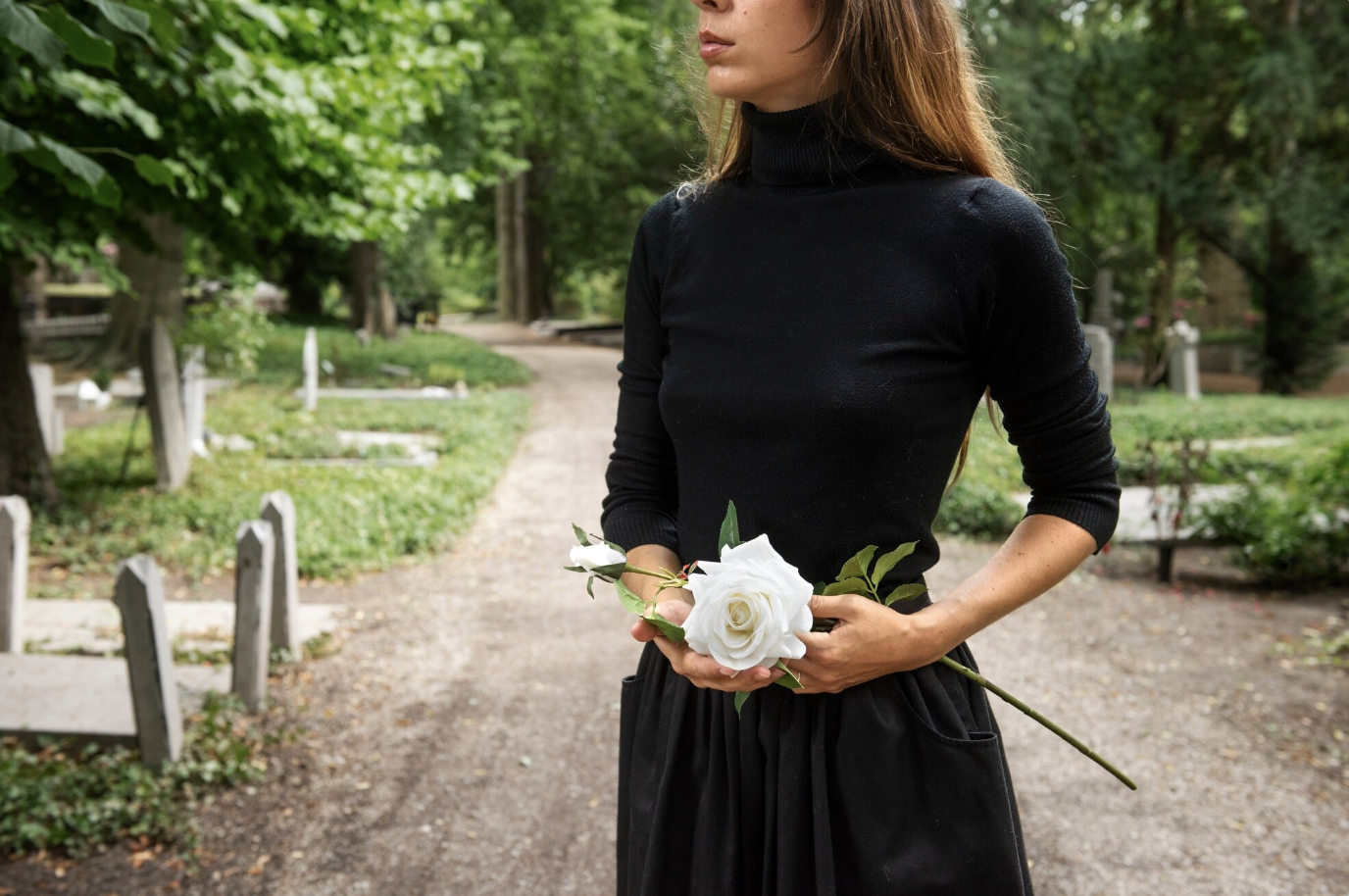
I had just watched my mother-in-law lowered into the frozen ground.
Evelyn Margaret Whitmore, seventy-nine years old. For the last ten years of her life, she had been the person I washed, fed, dressed, lifted, medicated, comforted, and carried through every small humiliation illness can invent. I had held her hand while the cancer took what the strokes had left behind. I had slept in a chair beside her bed so often that the shape of my body had become part of the cushion. I had learned the sound of her pain before she made a noise.
And now, before my coat had even come off, my family had gathered without me.
My husband Mark sat in Evelyn’s favorite chair.
He had never sat there while she was alive. Not once. He had called it “Mom’s throne” with a laugh, as if affection could be performed from a distance. He had walked past it for years without stopping, past the woman curled under a blanket, past the pills on the side table, past the body that had carried him before he became too important to return the favor.
Now he sat there like a man claiming a throne after a funeral.
Ethan, my son, sat on the couch with his elbows on his knees, twenty-four years old and staring at his hands. Mark’s sister Paige sat beside him with a leather folder in her lap. She was still wearing the sunglasses from the cemetery, though the sky had been gray and the rain steady. She wore them now too, indoors, in the dim living room where I had changed Evelyn’s bandages at two in the morning more times than I could count.
The fourth person was thin and pale in a gray suit. He held a pen and papers and looked at me the way a bank looks at an overdue account.
Mark did not stand when I entered.
He had stood for strangers at restaurants. He stood when his boss entered a conference room. But for me, after I had buried his mother, he stayed seated.
“We need to talk,” he said.
I stood in the doorway, still holding my purse. My hands were shaking from the cemetery, not from cold entirely. There is something about watching a coffin disappear into the earth that makes your body forget how to be steady.
“Can I at least take off my coat?” I asked.
Paige opened the folder. “This won’t take long.”
I hung my coat on the old oak rack Evelyn had bought at an estate sale forty years ago. She had told me the story during the third year after her first stroke, when I was changing her bedding and trying to distract her from the embarrassment of needing help like a child.
Now the rack held my wet funeral coat while four people waited to remove me from the life I had built around that woman’s decline.
Paige pulled a document from the folder. “I found Mom’s will,” she said. “In her bedroom. In the drawer with her medications.”
My chest tightened.
Evelyn and I had talked about her will many times. Not dramatically. At night, when the house was quiet and Mark had gone upstairs. When Ethan had stopped visiting regularly because work was busy and his grandmother’s slow dying made him uncomfortable. When Paige had stopped answering Evelyn’s calls unless she needed something.
“You have to be protected,” Evelyn had told me once.
I had smiled at her because I thought she meant emotionally.
I did not know then that she had already begun preparing for a war.
Paige adjusted the papers. “She left the house to Mark.”
I stared at her. My mind did not understand the sentence at first. The house to Mark. This house. Where I had cooked, cleaned, lifted medical equipment, scrubbed blood from sheets, and held Evelyn through nights when she begged God to take her and then apologized to me for saying it.
“Along with her savings,” Paige added. “Approximately four hundred and eighty thousand dollars.”
Rain ticked against the windows. The clock ticked in the hallway.
“And for you, Grace?” Paige looked up. The sunglasses reflected my face back at me. “She left five thousand dollars. For your service.”
For my service.
Not for my sacrifice. Not for my care. Not for my love.
Ten years became two words in Paige’s mouth.
Ten years of waking every three hours to turn Evelyn so she would not develop bedsores. Ten years of puréeing food, crushing pills into applesauce, learning to clean a feeding tube. Ten years of insurance calls, emergency rooms, hospice nurses, bed baths, oxygen tubes, and mornings when I stood in the kitchen with no memory of how long I had been there.
Five thousand dollars. Less than the price of Paige’s purse.
“That’s not possible,” I said. “Evelyn told me she wanted me protected.”
“Mom was on a lot of medication,” Mark interrupted.
I looked at him. He did not look ashamed.
“She wasn’t always clear about things,” he said.
“She was clear,” I said. “She told me the house would be mine. She said it was only fair after everything.”
Paige gave a soft laugh. “Well, that’s not what she put in writing.”
The gray-suited man cleared his throat. “Mrs. Whitmore, my name is Colin Price. You have forty-eight hours to vacate the property.”
I turned to my son. “Ethan.”
He kept looking at his hands.
“Dad said this is what Grandma wanted,” he whispered.
“Your grandmother begged for you,” I said. “She asked about you on Christmas Eve when you said traffic was bad from Boston. She asked about you the night before her final decline.”
His face crumpled. He said nothing.
I turned to Mark. “You didn’t visit your mother’s room for six months before she died unless a nurse was there to see it. You asked me to text updates so you wouldn’t have to hear her breathing. You told people at work you were handling everything at home while I slept in a recliner.”
“Grace,” Mark said sharply.
I turned to Paige. “And you came twice a year. Always with flowers. Always with a camera. Always long enough to post something about family and gratitude before you left me to change the sheets.”
Paige’s jaw tightened. “This is emotional manipulation.”
“No,” I said. “This is memory.”
Mark stood then.
“This is what my mother wanted,” he said. “You’ll get your five thousand. Pack your things and leave.”
I stood slowly. My legs felt weak, but I did not let them see it.
I had been a nurse before I became a full-time caregiver. I had watched people panic, bleed, deteriorate, collapse, and die. I had learned that inside disaster there is sometimes one narrow corridor of calm where decisions can still be made.
I stepped into that calm.
“I understand,” I said.
They stared at me. They had expected screaming. Begging. But grief had taught me something pride never could: you cannot fight every battle the moment it begins. Sometimes you have to leave the room alive.
I walked upstairs and packed a suitcase. Socks. Sweaters. My old nursing scrubs. Jewelry Evelyn had given me. The photo albums Mark had wanted to throw away. My birth certificate, passport, nursing license, social security card. Some instinct told me to take every paper that proved I existed.
Last, I packed the envelope.
It had been inside the lining of my handbag for three days, since the morning Evelyn had pressed it into my palm during one of her final clear moments. The hospice nurse had stepped out to call the doctor. Mark had gone to work even though his mother was actively dying because, in his words, there was nothing he could do by standing around. Paige had sent a heart emoji from Palm Beach. Ethan had promised to come that evening and did not.
Evelyn’s eyes had opened with a force that startled me.
“My children are not good people,” she whispered.
“Don’t say that,” I told her automatically.
Her grip tightened around my wrist. “Do not defend them to me. You have spent your life defending everyone else. It is time someone protected you.”
With trembling effort, she pulled an envelope from beneath her pillow.
“Don’t open this until after I’m gone. Promise.”
“I promise,” I said.
Now the envelope sat at the bottom of my suitcase. Still sealed. I zipped the suitcase closed, sat on the edge of the bed for one minute, then carried it downstairs and walked past all of them without saying goodbye.
The motel was called the Pine Crest Inn, though there were no pine trees. It sat off Route 17 between a gas station and a tire store. The room smelled like bleach and old carpet. The heater rattled every time it kicked on.
I sat on the edge of the bed and listened to the cars hiss past on the wet road.
I was not crying. That frightened me more than crying would have.
For years I had cried into dish towels and pillowcases and my own sleeves. But that first night at the Pine Crest, I felt emptied out. I lay down on top of the blanket without turning off the light, and at two in the morning I woke with my heart racing because I thought I heard Evelyn calling. I sat upright before I remembered. No monitor. No oxygen machine. Only the heater rattling. Only me.
The next day, Paige transferred five thousand dollars into my checking account with the memo line: Final distribution.
I stared at those two words until they blurred.
On the third day, I opened Evelyn’s envelope.
I did it at the little motel table, beneath a yellow lamp with a crooked shade. My hands shook badly enough that I used the room key to slit the paper.
Inside was a smaller envelope, a brass key, and a handwritten note.
The key had a tag attached: First Commonwealth Bank. Safe Deposit Box 314.
The note was written in Evelyn’s shaky hand.
Grace, I know my children. I know what they may try. I am sorry for that. The real will is in the box, along with a video statement and the name of the attorney who prepared everything properly. Call Arthur Bennett at Bennett & Lowe. Do not let them make you doubt what I told you. The house is yours. The money I saved is yours. Not because you served me, but because you loved me when love was inconvenient. Forgive me for needing to protect you this way. With all my love, Evelyn.
I read it three times, my thumb resting on the place where her handwriting dipped as if her strength had failed near the end.
Something inside me changed shape.
I was not crazy. I had not invented those late-night conversations. I had not misunderstood the woman I bathed and fed and held while she wept from pain. Evelyn had known. Evelyn had prepared. And somehow, even as death approached, she had found the strength to fight a battle I had not known I was already in.
Arthur Bennett’s office was downtown above a bakery that made cinnamon rolls the size of salad plates. Evelyn used to love that bakery before swallowing became dangerous. I used to bring her one every December and cut it into pieces smaller than sugar cubes so she could taste the frosting on her tongue.
Arthur Bennett was in his early seventies, with silver hair, kind eyes, and a handshake firm without being performative. He opened his office door himself.
“Mrs. Whitmore,” he said. “I have been expecting you.”
Those five words nearly broke me. Not because they were dramatic. Because they were practical. Someone had expected me somewhere. Someone had known I would come.
He led me to a conference room. The safe deposit box sat on the table. He placed Evelyn’s key beside it, added his own, and turned them both.
Inside was a thick folder, a sealed envelope, a USB drive, and several handwritten journals tied with ribbon.
“Evelyn executed her final will on June eighteenth of last year,” he said. “She was evaluated two days prior by a physician who confirmed she was mentally competent and of sound mind. The will was witnessed by myself and two colleagues, notarized, and filed properly with the county.”
He opened the sealed envelope.
“The house at 48 Hawthorne Lane is left entirely to you, Grace Whitmore.”
The house. Not Mark’s. Not Paige’s. Mine.
“The sum of four hundred thousand dollars from Evelyn’s savings is left to you. Mark and Paige are each left twenty-five thousand dollars, provided neither contests the will. Your son, Ethan, is left one hundred thousand dollars in trust, accessible at twenty-five.”
He looked over his glasses at me. “There is a no-contest clause. If either of them challenges the will or attempts to interfere with its execution, they forfeit their inheritance entirely.”
He inserted the USB drive into a laptop.
Evelyn’s face appeared on the screen.
I inhaled sharply.
She was sitting in this same conference room, wearing the soft blue cardigan I had given her two Christmases before. Her hair was brushed neatly. She looked thin, tired, and terribly alive.
“My name is Evelyn Margaret Whitmore,” she said, voice weak but clear. “I am making this statement voluntarily, with full understanding of my property, my family, and my wishes.”
She took a breath. “My son Mark and my daughter Paige have been largely absent from my care for many years. I do not say this with hatred. I say it because it is true. They call when it is convenient. They have made clear, through action if not through words, that my illness is a burden they prefer someone else to manage.”
Her voice steadied.
“My daughter-in-law, Grace, has been my primary caregiver for ten years. She has bathed me when I could not lift my arms. She has fed me when I could not swallow without fear. She has managed my appointments, my medications, my pain, and my dignity. When I cried at night, she came. When I was afraid, she stayed. When my children looked away, she looked directly at what was happening and did not abandon me.”
She looked into the camera.
“I am leaving my house and the bulk of my savings to Grace because she should have had a home long before this. She gave me years of her life. I cannot give those years back. This is what I can give.”
Then: “If you are watching this, Grace, I am sorry. I should have defended you more while I was alive. You were not hired help. You were not invisible. You were the person who loved me best at the end.”
The video stopped.
Arthur set a folder in front of me.
Care logs. Receipts. Medical invoices. Notes in Evelyn’s handwriting, recording visits promised and missed.
Mark called. Said he would come Sunday. Did not come.
Paige came for forty minutes. Took photographs. Did not ask Grace if she needed rest.
Grace slept in the chair again.
Grace is tired. No one sees it.
I began to cry then. Quietly. Tears simply fell onto my hands.
“I didn’t keep track,” I said.
“No,” Arthur said softly. “Evelyn knew you wouldn’t.”
He told me what would happen next: the official will filed with probate court, all beneficiaries notified, Colin Price informed that the document he had participated in presenting appeared fraudulent.
Three days later, I returned to Hawthorne Lane with Arthur beside me and a locksmith behind us.
Mark opened the door before I could use my key.
He saw Arthur, and color drained from his face.
Paige appeared behind him holding one of Evelyn’s porcelain figurines wrapped in newspaper.
Arthur handed Mark a formal notice. “Evelyn Whitmore’s official will has been filed with the county. This property belongs to Grace Whitmore. You are both required to leave immediately.”
Mark looked at me. “Grace. Let’s not do this in front of strangers.”
He had brought a strange lawyer into my living room to evict me. Now he wanted privacy.
“No,” I said. “We’ll do this exactly the way you started it. In front of witnesses.”
Paige pointed at Arthur. “Whatever she signed with him can’t possibly be valid. Mom was confused.”
Arthur produced the competency evaluation. Paige’s mouth shut.
“And if we contest?” Mark asked.
“You receive nothing,” Arthur said. “Additionally, the document you presented to Mrs. Whitmore appears fraudulent. Law enforcement has been notified.”
That was when Paige gripped the figurine so hard I thought it might break.
“You called the police?” Mark asked.
“Yes.”
His voice rose. “On your own husband?”
“On the man who tried to steal my home while I was burying his mother.”
The silence that followed was complete.
The arrests happened two days after that. Detective Mills called to tell me. Mark and Paige had been found at Paige’s rental sorting through Evelyn’s jewelry and small antiques to sell online. They found the forged document. They found the emails.
Paige had written to Mark three weeks before Evelyn died: We need something dated after her last “sentimental” phase with Grace. If Mom told her anything, Grace may try to make trouble.
Mark had replied: Find someone who can make it look official. Grace won’t fight if there’s a lawyer in the room.
He had been right for twenty-three years. He simply failed to realize Evelyn had taught me how.
Mark accepted a plea deal. Two years. Paige received eighteen months. Colin Price, who was not licensed to practice law in Massachusetts, faced charges of his own.
Ethan called me the night of the arrests.
“I didn’t know,” he said immediately. “I swear, I didn’t know the will was fake. Dad said Grandma wanted him to handle everything. Aunt Paige said you were upset and unstable because of the funeral.”
“What did you think?” I asked.
“I thought you were tired. I thought maybe you’d misunderstood Grandma.”
There it was. The story they had told him, neat and convenient. Grace is emotional. Grace is confused. Grace should leave.
“Did you help create the will?” I asked.
“No. Never.”
I believed him. Not because he deserved it yet, but because I knew the sound of Ethan lying, and this was not it.
“But you sat there,” I said. “You sat there while they told me to leave. You did not ask if I was okay. You did not follow me upstairs. You did not come to the motel.”
He began to cry.
“I know.”
“You should have visited your grandmother,” I said. “Not when guilt dragged you through the door. You should have sat with her. You should have learned what love looks like when it is inconvenient.”
“What do I do?” he asked.
“You start by telling the truth to yourself. Then you show up. Not with speeches. With time.”
He sniffed. “Can I come see you?”
“Not tonight,” I said. The answer surprised both of us.
The house slowly became mine in ways a deed alone could not accomplish.
I donated Evelyn’s medical supplies. I kept her blankets. I moved her favorite chair to the front window and sat in it one morning with coffee, watching cardinals hop across the snow. The first time I sat there, guilt flashed through me. Then I heard Evelyn’s voice in memory, dry and amused: Well, someone ought to enjoy the view.
So I did.
Ethan began visiting every Sunday. At first he brought groceries and flowers, offerings building a bridge faster than words could. Then one Sunday he stopped pretending.
“Tell me about Grandma,” he said. “Everything I missed.”
So I started small.
I told him how Evelyn insisted on lipstick even after she could no longer get out of bed, because if death was coming it could find her presentable. I told him how she once laughed so hard at an old episode of television that her oxygen tube slipped out and scared me half to death. I told him how she loved cardinals because her late husband George used to say they were red flags from heaven.
I told him about the bad things too. The panic. The confusion. The mornings she called me by her sister’s name. The nights she asked for Mark and pretended it did not hurt when he did not come.
Ethan cried quietly. I let him. For once, I did not rush to make his pain easier.
Over time he stopped bringing flowers and started bringing himself. He fixed the porch railing. He cleaned the gutters. He sat with me in Evelyn’s room while we sorted through her clothes and asked before taking anything and listened when I said no.
A hospice nurse named Marlene called two months after the sentencing.
She had a patient’s daughter who was drowning, she said. Her brothers thought caregiving was just what women do. She asked if I knew anyone who might understand.
I almost said no. I was tired. I was still rebuilding.
Then I thought of the motel room. The envelope. Arthur saying, I have been expecting you. Sometimes survival becomes a debt you can only repay sideways.
“Give her my number,” I said.
Her name was Linda. Then came Marisol, June, Patricia, Carol. We met in my living room on Thursday nights. At first we just talked. Then we started sharing resources. Elder law attorneys. Respite care programs. Medication charts. Questions to ask doctors. How to document expenses. How to insist on written agreements before sacrificing income and sleep for family members who might later call it just helping out.
I told them Evelyn’s story.
“She kept records because she knew I wouldn’t,” I said one night. “Documentation is not greed. It is protection.”
Evelyn’s House grew from there. Ethan built the website. A retired paralegal helped file nonprofit paperwork. Arthur Bennett agreed to host a monthly legal clinic. The living room became a meeting space. The guest room became a place where exhausted caregivers could sleep for one night while volunteers stayed with their loved ones.
The house that Mark tried to steal became a shelter for people he would have overlooked.
Ethan turned twenty-five on a warm Sunday in June. There was a small party in the backyard beneath string lights he had hung himself. The roses we had planted on the first anniversary of Evelyn’s death were blooming along the fence.
Halfway through the afternoon, Ethan found me in the kitchen.
“The trust transferred,” he said.
“How do you feel?”
“Terrified.”
“That’s reasonable.”
He pulled an envelope from his back pocket and handed me a printed proposal.
The Evelyn Whitmore Caregiver Scholarship Fund. A program to help family caregivers pay for training, legal consultations, respite care, and emergency housing.
“For people who get pushed out,” he said quietly. “Like you almost did.”
I looked at him over the paper.
“You did this?”
“Arthur said he’d advise. I thought Evelyn’s House could be the pilot site.” He looked down. “If it’s too much, just say so.”
I pulled him into my arms.
He was taller than me, but he folded like a boy.
“It’s not too much,” I said into his shoulder. “It’s exactly enough.”
He held me tightly. “I’m sorry I didn’t show up sooner.”
“I know.”
“I’m going to keep showing up.”
I pulled back and looked at him.
“That’s the apology I needed.”
On the third anniversary of Evelyn’s death, I woke before dawn. Made tea. Carried it to the back porch.
The roses were bare for winter, thorned branches black against the gray morning. The yard looked asleep, but roots do their work underground long before anyone applauds the bloom.
My phone buzzed.
A text from an unknown number.
This is Mark. I know I don’t have the right to ask for anything. I wanted you to know I’ve started running financial literacy workshops at the community center. Seniors and people coming out of prison. We talk about scams, power of attorney, wills, and not signing anything you don’t understand. I thought you should know.
I stared at the message.
Then typed: That sounds like good work.
A minute later: Tell Ethan I’m proud of him, if you think that’s appropriate.
I looked out at the roses.
Tell him yourself, I typed.
I set the phone face down.
For most of my life, I had thought love meant carrying what other people refused to carry. I thought being good meant being useful. I thought patience was the same thing as forgiveness, and forgiveness was the same thing as access.
Evelyn taught me otherwise.
Not gently. Not in time to spare me.
But she taught me.
She taught me that family is not the person who shares your name while leaving you alone in the hard hours. Family is the person who comes when the call bell rings. The person who sits through the ugly parts and does not demand applause afterward.
She also taught me that love without boundaries becomes a door everyone else walks through while you stand outside in the rain.
The house that had tried to swallow me was now full of other people finding their way out of that same rain. A calendar of meetings. A legal clinic. A scholarship fund. A guest room with clean sheets and someone always saying, sit down, you look exhausted.
Evelyn had left me a house.
What she really left me was proof.
Proof that someone had seen me. Proof that love could defend as fiercely as it could comfort. Proof that a woman who had spent years caring for everyone else could still stand up, take back her name, and build a door strong enough that only the worthy were allowed through.
One week after the anniversary, I got a dog.
Ethan found me sitting on the living room floor with a small brown mutt curled against my leg.
“Mom,” he said from the doorway, already smiling. “You got a dog.”
“I did.”
The dog lifted her head. One ear stood up. The other flopped sideways as if it had given up on symmetry.
“This is Rosie,” I said.
He crouched down. “Hi, Rosie.”
She studied him suspiciously, then wagged her tail once.
“She’s cautious,” I said. “We understand each other.”
He laughed, and the sound filled the room cleanly.
I looked around. Evelyn’s chair by the window. Folding chairs stacked near the wall. The photographs on the mantel. The roses visible beyond the glass.
For years, this house had been a place where I disappeared into service. Then it became the place where I was betrayed. Then evidence. Then shelter. Then work.
Finally, it had become something I never expected.
Mine.
Not just legally. Not just because a will said so or a judge confirmed it or Evelyn had loved me enough to plan for my protection.
Mine because I no longer moved through it like a woman waiting for permission.
Mine because I had stopped shrinking.
Mine because when someone knocked on the door now, I knew I had the right to decide whether to open it.
Ethan sat beside me on the floor, and Rosie moved carefully from my knee to his.
We sat quietly for a while.
Outside, the winter light moved across the yard.
Inside, the house held.
And for the first time in more years than I could count, I did not listen for someone calling my name in pain. I did not wait for footsteps from people arriving to take. I did not brace for the next demand.
I sat in my own living room with my son, my dog, and the life I had built from the ruins of the one they tried to steal.
It was enough.
It was, finally, enough.

Specialty: Legal & Financial Drama
Michael Carter covers stories where money, power, and personal history collide. His writing often explores courtroom battles, business conflicts, and the subtle strategies people use when pushed into a corner. He focuses on grounded, realistic storytelling with attention to detail and believable motivations.