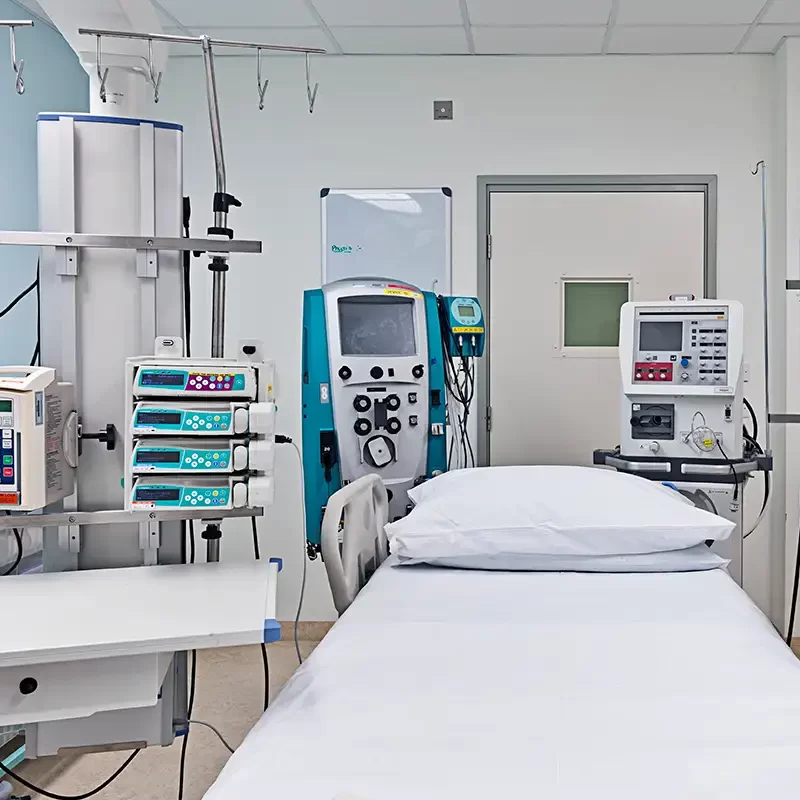
The first thing that pulled me back was a steady, rhythmic beeping.
It cut through the darkness like something calling me up from far below. My body felt heavy, as if it didn’t belong to me anymore. I tried to move, but nothing responded. My eyelids felt sealed shut. I couldn’t speak. But I was awake and aware, hovering in that strange space between darkness and the world.
Then something small, warm, and shaking slipped into my hand.
“Mom. If you can hear me, don’t open your eyes.”
Bruce. My eight-year-old son.
My heart lurched, but I forced myself to stay still.
His trembling breath brushed my ear as he leaned closer, his fingers wrapped around mine. “You have to listen to what Dad is planning. Please. Just pretend you’re still asleep.”
Something in his voice stopped me from reacting. I didn’t understand it yet, but I trusted it. I trusted him.
So I stayed still, even as panic started creeping in.
Before I could make sense of what he’d said, the door opened. I heard two sets of footsteps. I didn’t need to see them to recognize them.
Arthur, my husband. And Chloe, my sister.
“Are you sure she’s still out?” Arthur’s tone was flat and impatient. Not worried, not tired from nights of vigil beside my bed. Just annoyed. He sounded nothing like the man who had once sworn he’d never leave my side.
“The doctor said she won’t wake up,” Chloe said, as if she were commenting on the weather.
Then I heard it. A soft sound. A kiss.
Something inside me clenched.
“Good,” Arthur exhaled. “Everything’s falling into place.”
My pulse quickened. What was he talking about?
“Once they take her off life support, it’s over,” Chloe added. “No one will question it.”
Bruce’s grip tightened around my fingers.
“We have to be careful,” Arthur said. “We can’t afford mistakes now.”
A pause. Then Chloe lowered her voice.
“And the boy?”
Everything inside me went still. I nearly forced myself upright. But I trusted my son.
Arthur didn’t hesitate. “We do exactly what we planned for Bruce.”
My son’s hand started shaking.
I couldn’t breathe.
I heard something being unzipped right beside my bed, and Bruce’s fingers dug into my skin.
“Is that all of it?” Chloe asked.
Arthur sighed. “Insurance confirmation. Updated beneficiaries. And the forms were filled in for boarding school. Everything’s ready.”
“Good,” Chloe said. “Once Brenda’s gone, everything else should move fast.”
My husband lowered his voice. “We just need to show we’re prepared. The doctor already agreed to discuss options.”
That’s when I understood it fully. Arthur and Chloe weren’t just waiting for my death. They were pushing for it.
The door opened again. Different footsteps this time.
“Ah, Dr. Anderson,” my husband said smoothly. “You’re just in time. We have something we’d like to discuss with you. We have documents from another specialist recommending discontinuing intensive care based on the low probability of recovery. You can have a look.”
Papers shifted.
A quiet sigh.
“I see,” Dr. Anderson said. “I understand you don’t want to prolong something that won’t improve, but for the sake of the child, maybe we should hold off on any major decisions until tomorrow, end of day?”
Arthur made the sound he always made when he didn’t like something. A short exhale through his nose. When he spoke, he sounded perfectly calm.
“Of course, Doc. Who knows, maybe a miracle will happen and she’ll wake up just in time. That would be the exact blessing we hope for.”
He sounded convincing if you didn’t know him.
That’s when it hit me fully. My husband was saying all of this in front of our son because he believed Bruce wouldn’t understand. Or wouldn’t say anything even if he did. Arthur had always underestimated him.
I never had.
I couldn’t move much. But I could think. I could listen. And I knew one thing with absolute certainty. If I didn’t act, I wouldn’t get another chance.
The room quieted as Arthur and Chloe followed the doctor out. The moment the door clicked shut, I focused everything I had and moved my hand just slightly.
Bruce froze. Then he leaned closer.
“Mom?” he whispered.
I forced my lips to move. “H… hi… baby.”
My voice barely came out.
Bruce sucked in a breath. “You’re awake—”
“Don’t,” I whispered. “Listen. We don’t have much time.” My son’s hand tightened around mine, and this time it wasn’t fear. “I need you to take pictures of those documents they have. Bring them to me tomorrow. Don’t get caught. Don’t say anything.”
A short pause. Then: “I’ll do it.”
That was my son. Careful, quiet, always watching everything.
Arthur returned a few minutes later. “Hey. Time to head home.”
Bruce leaned down and kissed my cheek. “I’ll get the pictures for you, Mom,” he whispered.
Arthur didn’t notice.
That night I didn’t sleep. I stayed in that space between awareness and stillness, listening to machines and footsteps and distant voices. Thinking about everything.
My husband and sister weren’t just planning around my death. They intended to remove Bruce too. Ship him away to boarding school, out of sight, out of the way. He was eight years old and he had figured out what was happening while the adults around him managed their paperwork.
By morning I knew exactly what I had to do.
I couldn’t wake up too early. I needed them to commit.
So I waited.
I heard Bruce before I felt him the next day. “I’ve got them, Mom,” he whispered, pretending to kiss me.
I stayed still when Arthur and Chloe walked in. Stayed still when Dr. Anderson followed.
My husband stepped closer to the bed. His voice took on the particular quality I recognized from fifteen years of marriage, the tone that meant he was performing. “My wife wouldn’t want to stay like this.”
That was my moment.
I opened my eyes.
Silence.
Arthur stepped back as if he’d seen something that couldn’t be explained.
Chloe’s voice came out sharp. “That’s not possible.”
I didn’t rush. I looked at Bruce and he understood. Then I looked at Dr. Anderson.
“I heard everything,” I said. My voice was still weak but steady. “I’d like to consult my lawyer in private.”
Arthur recovered fast. “Brenda, you’re not in any condition—”
“Yes,” I said, sounding stronger. “I am.”
“Let’s not make rushed decisions—”
“I’m not. You were.”
Dr. Anderson stepped closer. “Brenda, can you tell me where you are?”
“I’m in the hospital. ICU.”
He nodded slowly. Arthur opened his mouth again, and Dr. Anderson cut him off. “I think we should give her a moment. She’s just regained consciousness.”
That shut him down.
Nicole, my lawyer, arrived soon afterward. She walked in fast, phone still in hand, eyes sharp. Arthur and Chloe trailed behind her.
“Why didn’t I know about this?” she asked, looking straight at Arthur.
My husband forced a smile. “It all happened quickly—”
“She’s my client,” Nicole said. “And her emergency contact for legal matters. You had time.”
Arthur didn’t answer that.
Nicole turned to me, her tone softening slightly. “Brenda. Can you tell me what’s going on?”
My throat was dry, but I pushed through it. “Bruce,” I said.
My son stepped forward, holding his camera.
Nicole crouched to his level. “Hey, buddy. Can you tell me what you heard?”
Bruce glanced at me first. I nodded. That was all he needed.
“Dad and Aunty said Mom wasn’t going to wake up,” he began. “And that once she was gone, everything would move fast. They talked about papers and sending me away. And they said the doctor would help decide things.” His voice stayed steady, but his grip on the camera tightened. Then he handed it to her.
Nicole stood and started scrolling through the images.
Her expression changed almost immediately.
“These are signed,” she said quietly. “Prepared consent forms. Transfer authorization. And alternative medical recommendations.” She looked up at Dr. Anderson. “Did you request an outside specialist’s opinion?”
Dr. Anderson frowned. “No. He’s not from our team.”
Arthur stepped in. “We just wanted to explore all options—”
Nicole raised a hand without looking at him. “I’m not speaking to you right now.”
Arthur and Chloe were not in control anymore.
Later that afternoon I was moved out of the ICU and declared stable. I was strong enough to speak without fading. My lawyer and Bruce joined me, but Nicole told Arthur and Chloe we needed privacy. They pushed back, and she threatened to involve the police. They went quiet.
“Start from the beginning,” Nicole said once we were settled.
I told her everything significant I remembered from before I collapsed. The fatigue. The mornings that kept getting heavier. How my body had been slowing down for weeks before I lost consciousness.
Then Nicole asked one question. “Did anything change in your routine?”
I almost said no.
But then Bruce spoke.
“You always looked tired and not yourself in the morning after having breakfast, Mommy. And you used to give me a sip of your special tea, but when Daddy started making them, he’d get angry when I asked for a taste.”
The room went quiet.
I thought it through slowly. Arthur had started acting differently several months ago, hovering in the kitchen, making my health shakes. At the time it had felt supportive. Now it felt different.
“My husband started making my morning shakes a few months ago,” I told Nicole. “Said he didn’t mind doing it while he made his protein shakes.”
Nicole nodded slowly. “And after that?”
“I started feeling sick. Not all at once. I became tired and foggy. I thought it was stress.”
Dr. Anderson, who had stepped back into the room, spoke carefully. “That could explain a delayed systemic response. If something was introduced in small amounts over time, the accumulation rather than a single dose would cause that kind of gradual decline.”
Nicole looked at him. “Would that show up in standard tests?”
“Not necessarily. Not unless we were looking for something specific.”
“Then we’ll start looking.”
The next two days were a blur of detailed, focused testing. Nicole pushed for everything. And for the first time, the questions weren’t about what was wrong with me. They were about what had been done to me.
Arthur tried to visit once. Nicole had arranged with hospital security to stop him. Chloe didn’t return at all.
On the third day, Dr. Anderson came in. “We found traces of a compound. Something that, over time, could interfere with neurological function. In isolated doses it wouldn’t raise alarms. But repeated exposure over months would produce exactly the symptoms you described.”
He didn’t need to finish. I understood. Nicole did too.
“Consistent with ingestion?” she asked.
“Yes.”
Everything clicked into place. This had been planned. Not impulsive, not a moment of desperation. Planned, over months, with careful timing and paperwork already prepared. The insurance documents updated. The boarding school forms filled out. A second opinion from a doctor who wasn’t on the hospital’s team, recommending that intensive care be discontinued.
My husband had not panicked when I collapsed. He had been ready.
Arthur didn’t get another chance to speak to me. He tried through messages and calls, and Nicole intercepted everything. What mattered was already clear. The photos of the documents, the timing, the test results. Everything lined up undeniably. Chloe was tied to it through the paperwork, through the planning, through the coordination with Arthur.
A week later I sat up on my own for the first time.
Bruce was staying with Nicole temporarily while the investigation was ongoing. He sat beside me on the bed, legs tucked under him, in the particular way he had always sat since he was small.
“You did well, my angel,” I told him.
He shrugged a little. “I was scared, Mom.”
“I know. But you still did it. And you saved my life.”
My son looked at me then. “Are we okay now?”
I reached for his hand. “We are.”
And for the first time since I woke up, I meant it. Not because everything was fixed. The road ahead was long. There would be more tests, more doctors, more lawyers, more days of piecing myself back together physically and otherwise. But we weren’t alone anymore. The truth hadn’t stayed hidden.
And when it had mattered most, my eight-year-old son had looked at his mother in a hospital bed and chosen to act.
I have thought about that moment many times since. The moment he slipped his hand into mine and told me not to open my eyes. He was afraid. He told me so himself. But he did it anyway. He held the information carefully, moved quietly, got the pictures without being caught, and handed the camera to my lawyer without flinching.
Arthur had always underestimated Bruce. Treated him like furniture, like background, like a child who would absorb whatever he was told and not look too closely at the edges.
He had never understood that children see everything. They notice the things adults stop noticing because they’ve grown used to them. The morning routine that changes. The tea that suddenly becomes off-limits. The way a parent’s energy shifts and dims week after week without explanation.
Bruce noticed. He remembered. And when the moment came, he knew exactly what to do.
A few days later they discharged me. Slow recovery ahead, more follow-ups, more careful months of rebuilding. But I was walking. I was alive.
Nicole met us outside the hospital. “You’ve got a long road back,” she said. “But you’re on it.”
I nodded.
Bruce slipped his hand into mine.
This time it was warm and steady.

Adrian Hawthorne is a celebrated author and dedicated archivist who finds inspiration in the hidden stories of the past. Educated at Oxford, he now works at the National Archives, where preserving history fuels his evocative writing. Balancing archival precision with creative storytelling, Adrian founded the Hawthorne Institute of Literary Arts to mentor emerging writers and honor the timeless art of narrative.