The phone rang as Leah was walking to her car after a ten-hour shift, and she stood in the clinic parking lot outside Portland with her keys in her hand and looked at her father’s name on the screen for a moment before answering.
She had been doing this lately, taking that extra beat before picking up, not because she did not want to talk to her father but because she had learned that the conversations required a kind of preparation. They had a way of covering ground that looked like connection while functioning as something else, a current of information that flowed consistently in one direction and carried, almost always, some element of news about Tristan. Tristan’s plans. Tristan’s situation. The particular challenges Tristan was navigating and the ways in which the family was orienting itself around those challenges. Leah had learned to brace for this the way you brace for cold water, not to avoid it but to be ready.
She answered.
Her father’s voice was bright in the particular way it got when he was delivering information he had already decided was uncomplicated.
“Just checking you got the invitation for Tristan’s wedding next Saturday.”
Leah stopped walking.
“Next Saturday,” she said. “I never received an invitation.”
“We mailed it weeks ago,” he said, with the breezy confidence of someone describing a thing he had definitely done. “Must have gotten lost somewhere.”
Something in the tone was slightly over-calibrated, the way a story sounds when the teller has practiced its delivery. But it was her brother’s wedding, and whatever had been accumulating between her and her family over the preceding months, she wanted to be there. She had grown up with Tristan. She remembered him at seven years old constructing elaborate forts from couch cushions with the serious concentration of a small engineer. He was not the same person now, and their relationship had been complicated by years of a family dynamic that protected him and expected her, but he was still her brother and she wanted to stand in the room when he married someone.
“I’ll come,” she said. “Send me the venue details.”
He said he would.
By Thursday evening the details had not arrived, and Leah called her mother.
The pause that followed her question was long enough to be its own answer before any words filled it.
“About that,” her mother said.
Leah gripped the steering wheel.
“Your father gave you the wrong date by mistake. The wedding was yesterday.”
Leah pulled into the nearest parking lot because the road ahead of her had done something she could not trust. She sat in the car looking through the windshield at a grocery store entrance and thought about the kitchen package she had ordered four days earlier. The stand mixer she had researched for two evenings, reading reviews with the careful attention she brought to gifts for people she loved. The cookware set. The additional appliances, chosen because she had known that Veronica cooked and had wanted to give something useful, something that would be used daily, something that would exist in their kitchen for years. She had ordered it as a person who was attending a wedding. She had spent money and thought and care on a gift for a celebration she was not invited to, and her family had watched her do it and said nothing.
“You let me buy them a wedding present,” she said, and her voice was so quiet it barely qualified as speaking. “After the wedding already happened.”
“Don’t make this dramatic,” her mother said.
Leah ended the call.
She sat in the parking lot for a while. She was not crying, which surprised her slightly. She was experiencing something that would become grief later but was, in that moment, something closer to the specific clarity that arrives when a thing you have been half-knowing for a long time becomes fully known. She had been half-knowing this for years. The way Tristan’s difficulties were absorbed by the family’s emotional resources and her own difficulties were returned to her with suggestions for improvement. The way her accomplishments registered as background facts while his struggles became communal projects. The way she had built a stable professional life, paid every obligation she had ever incurred, conducted herself with consistency and reliability, and been described by her parents as lonely in a tone that made the description sound like a verdict.
She had been half-knowing that she was not quite inside the family in the way Tristan was inside it.
Now she knew completely.
She went through every inbox she had that night. Every spam folder, every deleted messages archive, every voicemail she had not yet cleared. She was thorough because she wanted to be fair, wanted to confirm before she concluded anything. If an invitation had been sent and genuinely lost, she wanted to know that. She looked for two hours.
There was nothing.
No invitation had ever been sent. The wedding had not been misscheduled. There had not been an error. Her family had made a decision, and they had made it deliberately, and the explanation about the wrong date was the story they had constructed afterward when the decision needed to be presented as something less intentional than it was.
Her brother had gotten married without her because her family had arranged for him to get married without her, and then they had offered her a logistical error as an explanation because a logistical error was easier to absorb than the truth.
Leah went to work the next day. She was good at her work. She had been a dental hygienist for eight years, having completed her certification and then her additional training with the same methodical effort she applied to everything, and she had built a patient list that trusted her specifically, people who requested her by name and who she knew well enough to ask about their children and their recoveries and the things happening in their lives. She found satisfaction in this that was real and not something she had to perform. She went to work the day after learning she had been excluded from her brother’s wedding and she cleaned teeth and reassured anxious patients and made careful notes and came home and cooked dinner and went to bed.
She did this for several weeks.
Not because she had resolved anything, but because she had learned, over a lifetime of being in her particular position in her family, that action taken from the raw center of pain tends to produce less useful outcomes than action taken after the pain has settled into something you can see clearly. She let it settle. She went to work and came home and sat with what she knew and let herself grieve it fully, which took longer than she would have preferred and which she allowed anyway because grief that is not fully experienced tends to resurface in less manageable forms.
Then her mother called.
The warmth that came through the phone was the performed kind, the variety deployed when something is being asked rather than given. Leah recognized it the way you recognize a particular weather pattern, not with surprise but with the quiet noting of a person who has seen this before.
Her parents were going to the Bahamas. Tristan and Veronica’s apartment building needed fumigation, a scheduling overlap that had created a housing problem for the newlyweds. The lake cabin, her mother explained, would be perfect. Two weeks. Very peaceful. Just what a new couple needed.
The cabin.
Leah had bought it three years earlier with the inheritance her grandmother Ruth had left her. Ruth had been her father’s mother, a woman with a precise and unsentimental quality that Leah had always found clarifying, who had lived in the same house for forty years and read every contract she ever signed and kept meticulous records of everything she owned. She had died at eighty-one and left the bulk of her estate to her grandchildren in individual amounts specified by name, and the amount she left Leah was notably larger than what she left Tristan, which Leah’s parents had never commented on directly but which had produced a particular atmosphere in the family for a period after the estate was settled.
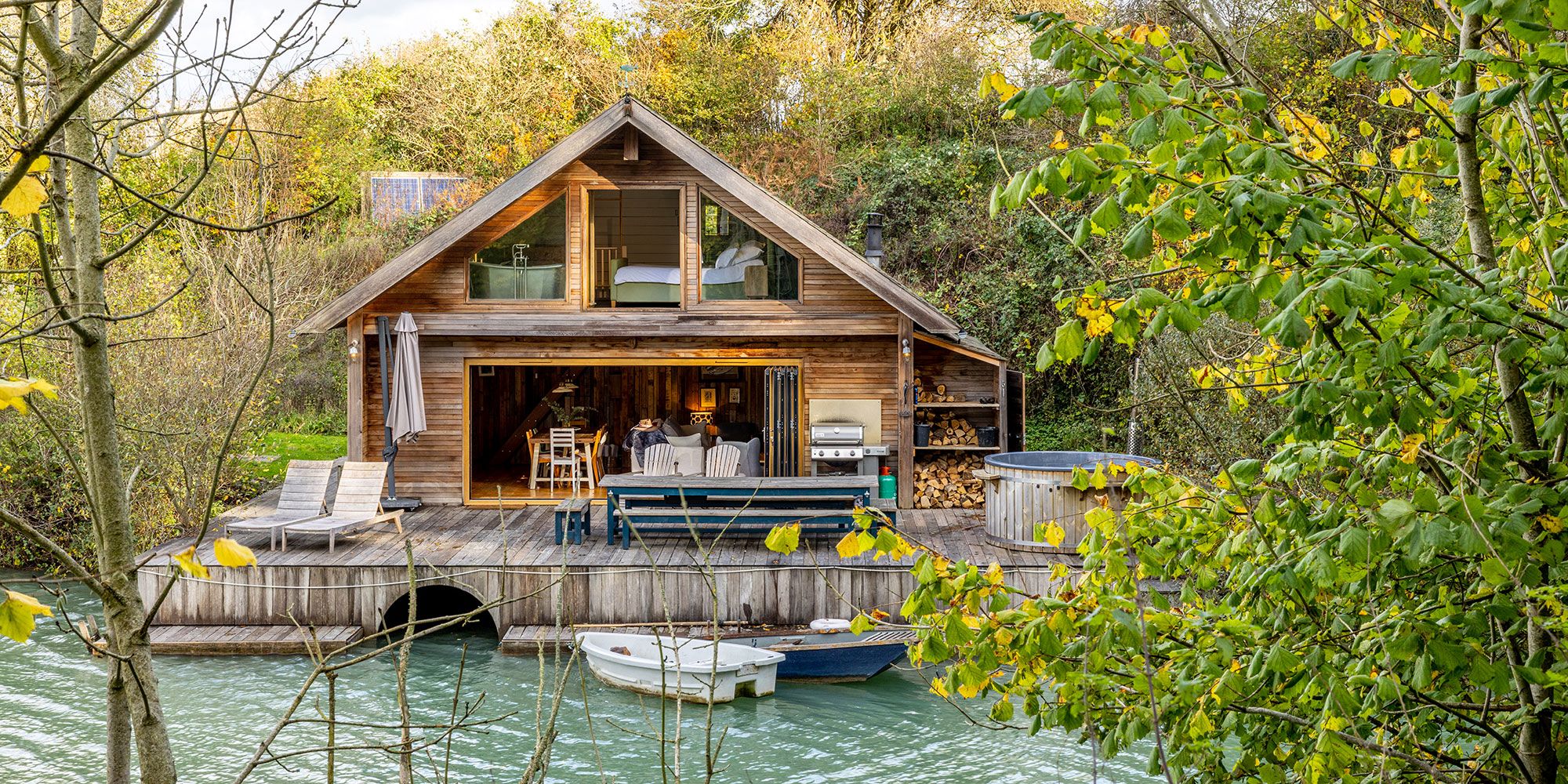
Leah had taken her portion and bought the cabin. It was north of Portland, accessible by a two-lane road that wound through pine trees for the last several miles before the property, and it sat on a quiet lake with a private dock and a wraparound porch and a stone fireplace that she had used every autumn weekend since the purchase. Her family had described it, when she bought it, as impractical. Too isolated. Too expensive for what it was. Her mother had said it seemed like a lot for one person, which was the family’s characteristic way of making her aloneness sound like an architectural problem. Leah had bought it anyway. It was the first thing she had ever owned that felt entirely like herself, that carried no negotiation with anyone else’s preferences, that was shaped around her own needs without apology.
“No,” she said.
Her mother cycled through several approaches. Family helped each other. Tristan had nothing to do with what happened at the wedding. It was just two weeks. It was an unusual situation. The cabin was sitting empty anyway.
“No,” Leah said to each of them.
Her father called an hour later. His approach was more direct, which she had always found marginally less tiring than her mother’s indirections, even when the directness was hostile.
“You’re being petty over a misunderstanding,” he said.
“It wasn’t a misunderstanding.”
“You’re jealous,” he said. “You’ve always had a problem with Tristan’s happiness.”
These words had a history of working on her. She knew their history precisely, could trace it back to specific conversations over specific years where they had found the right internal angle and produced the self-doubt her father was reaching for. She sat with them for a moment and waited to feel that angle.
She did not feel it.
“Tristan cannot stay at my cabin,” she said.
She blocked both of her parents after the call. Then she sat in her apartment in the quiet that followed and noticed that the quiet felt different than it usually did. Lighter. She had been bracing against something for so long that she had stopped being able to distinguish the bracing from her own posture, and now that she had stopped, the absence of the effort was a kind of relief she had not expected.
She drove to the cabin on Saturday because she needed the lake and the pines and the specific quality of silence that existed there, which was the active silence of a natural place rather than the heavy silence of an apartment where someone has recently had a hard conversation. She packed a bag and drove up on Friday evening and sat on the porch that night with tea and the sounds of the water, and she slept well for the first time in several weeks.
Saturday afternoon she was reading in a chair on the porch, wrapped in the wool blanket she kept there for exactly this purpose, the lake bright with afternoon light and the trees doing their slow movement in a mild breeze, when she heard the sound of gravel in the driveway.
She heard the car before she saw it. Then she saw it, a vehicle she recognized as Tristan’s, pulling into the space beside the cabin with the confidence of a car arriving at a known destination. Tristan got out first. He was wearing the relaxed expression of someone on the beginning of a vacation. Veronica got out of the passenger side and looked toward the porch with an expression that was harder to read, something between uncertainty and the neutral forward movement of someone who has decided to follow the situation rather than lead it.
And in Tristan’s hand was a key.
Leah recognized it from ten feet away. The cabin had two keys. The original, which hung on a hook inside the front door, and a spare she had cut when she first bought the property and had kept in a specific drawer in her apartment for circumstances where she might need someone to access the property on her behalf. She had never given the spare to anyone in her family. She had never given it to Tristan and she had never told her parents where it was kept.
She stood up from the porch chair.
“What are you doing here?” she said. She kept her voice level the way she had learned to keep it, not performing calm but actually operating from a relatively calm place, which was the difference that mattered.
Tristan held up the key with the gesture of someone presenting a credential.
“Mom gave it to me,” he said. “We’re staying here.”
“Your mother gave you a key to my cabin,” Leah said.
“The spare,” he said. “She said you kept it at the apartment. Said it was fine.”
“She said it was fine,” Leah repeated. “She does not have authority over my property, Tristan. Neither do you.”
He was still moving toward the porch steps, his posture carrying the assumption of a person who has encountered objections before and navigated around them successfully.
“It’s a family cabin,” he said.
“It is not a family cabin. I purchased it with money my grandmother left specifically to me. It is my cabin. My name is on the deed. I have never described it as family property because it is not family property.”
“Leah.” He said her name with the slightly exasperated patience of someone who believes the objection is a negotiating position rather than an actual position.
“You are not welcome here today,” she said. “I need you to get back in your car.”
Veronica had not moved from the driveway. She was watching the porch with the careful expression of someone who is gathering information before deciding what to do with it. Leah noticed this and found herself, in some abstract way, respecting it.
“We have a key,” Tristan said, and he had reached the bottom of the porch steps now, which put him close enough that the conversation had become something other than a conversation across a yard.
“Having a key to a property you do not own and were not authorized to access does not give you the right to be here,” Leah said. “It makes this a trespassing situation.”
He stopped.
“Trespassing,” he said.
“That is the legal term for being on private property without the owner’s permission,” she said.
“You’re serious.”
“I have been very clear about not wanting you here,” she said. “You came anyway. You came with a key that was taken from my apartment without my knowledge. Yes, I’m serious.”
She went inside. Tristan did not follow her up the steps, which told her something about where his actual confidence ended. She found her phone on the kitchen counter and she called the county sheriff’s non-emergency line and reported that she had two individuals on her property who had been asked to leave and had not left. She gave her name and the property address and explained that one of them had a key to the property that had been taken without her authorization. The dispatcher was calm and said someone would be out.
She went back to the porch.
Tristan was sitting on the bottom step. Veronica had moved to the side of the car and was leaning against it with her arms folded, not with hostility but with the body language of someone who has decided she is a bystander rather than a participant.
“You called the police,” Tristan said.
“I called the sheriff’s office, yes.”
“Over a key.”
“Over trespassing,” she said. “The key is a separate issue. I’d like to understand how your mother accessed my apartment to take it.”
He was quiet for a moment.
“She has a key to your apartment?”
“Apparently,” Leah said. “Which I also did not authorize.”
She had given her parents a spare apartment key three years earlier for a specific and temporary reason, a period when she had been traveling for a dental continuing education conference and had needed someone to water two plants. She had given it to them for that week and had asked for it back and had believed she received the one she gave. She had not confirmed this with sufficient care. She had trusted, because she was someone who operated from a baseline of trust even with people who had given her reasons to operate otherwise, that the key had been returned and that her apartment was her own.
“I didn’t know any of this,” Tristan said. He said it in a different register than he had been speaking in, lower and less confident. She looked at him for a moment and believed him, which was not the same as it changing what had happened.
“I know you didn’t plan this,” she said. “But you came here after I said no. You came with a key and you said you were staying whether I approved or not. Those are your choices, Tristan. Not Mom’s.”
He looked at the key in his hand. He set it on the step beside him.
The sheriff’s deputy arrived twenty-two minutes later, a woman in her forties who approached the property with the unhurried professionalism of someone who has responded to more complicated situations than this and is reserving judgment until she has the relevant information. Leah met her in the driveway and explained the sequence quietly. Her property. Her brother, asked to leave and not leaving. The key, accessed without her authorization from her apartment by her mother. She had the property deed on her phone, the document scanned and stored in a folder she maintained for exactly this kind of reference, and she showed it.
The deputy looked at the key on the porch step. Then at Tristan.
He explained his version in the shorter and less confident way of someone whose version has become harder to maintain over the preceding thirty minutes.
The deputy looked at Veronica.
“I think we should go,” Veronica said. It was the first time she had spoken since they arrived and she said it with the direct simplicity of someone who has assessed the situation and reached a conclusion that requires no further deliberation.
Tristan picked up the key from the step and held it out toward Leah. She took it.
“The apartment key as well,” the deputy said. “If you have it.”
He went to the car and came back with a key ring and removed one key and handed it to the deputy, who handed it to Leah. It was her apartment key. She could tell by the small green mark she had put on it years ago with a paint pen so that she could find it quickly on her own key ring, a mark she had assumed was on the key she received back from her parents three years ago and had never verified.
Tristan and Veronica drove away.
The deputy gave Leah a report number and explained that she could pursue the matter further if she chose, that the unauthorized possession of the apartment key was something she could report as a separate issue, and that the property situation had been resolved for today but that changing her locks would be a reasonable precaution given the circumstances.
Leah thanked her and watched her drive back down the gravel road.
Then she sat on the porch in the late afternoon light and looked at the lake.
She had the two keys in her hand. The cabin spare and her apartment key. She held them for a while, not thinking about anything specific, just sitting with the afternoon and the water and the pines moving in the breeze.
The following Monday she had a locksmith change the locks on both the cabin and her apartment. She changed her apartment building’s lobby code as well, and she notified the building manager that her parents were not authorized to access the building on her behalf.
She did not call her parents. She did not write to them. She did not send a message explaining what she had done or why. There was nothing to explain. The sequence of events explained itself clearly enough for anyone who was willing to read it accurately, and whether her parents were willing to read it accurately was not her responsibility.
She returned to her life.
She went to work and cleaned teeth and knew the names of her patients’ children. She came home to an apartment that was hers in a way it had not fully felt before, that had a different quality in the evenings now, the specific quality of a space where the only person responsible for the terms is the person who lives there. She drove to the cabin on weekends and sat on the porch with the wool blanket and the tea and the lake light, and she read, and she went to bed early, and she woke to the sound of water and pines.
She was not happy in any simple sense. The loss of what she had wanted her family to be was real and not something she pretended had resolved itself. She had wanted a brother who would have called her when the wedding date was set. She had wanted parents who would have noticed her absence from the preparations and corrected it. She had wanted to stand in a room and watch Tristan make a promise to someone and feel the ordinary gladness of a sister at her brother’s wedding. She had not received any of these things and she was not going to receive them. She let this be true.
But she was also not performing anything. She was not maintaining a version of family that required her to be smaller or quieter or more forgiving than the circumstances warranted. She was not leaving space at a table where her place card was blank. She was sitting in a chair on a porch above a lake that was hers, on land that her grandmother had trusted her to own, in a life she had built without anyone’s help and at some cost to relationships that had asked her to be less than she was.
Her grandmother Ruth had left her more than the others. Leah had thought about this occasionally over the years and had understood it as affection, as the expression of a closeness between them that had been real. Ruth had spent time with her in a particular way, asking her questions and listening to the answers and taking her seriously in the manner of an adult who respects a young person rather than merely managing them.
She understood it differently now. Ruth had known. The way Evelyn Grant had known, the way any clear-eyed woman who has watched a family operate for long enough comes to know its actual mechanics beneath its performed ones. She had left Leah more because she understood that Leah would need more. That the family would give her less. That the inheritance might be the one material fact that could not be reframed or redirected or administered in a way that minimized her.
She had been right.
Leah sat with this on a Sunday evening in early spring, the lake beginning to show the first signs of the season turning, the light lasting a few minutes longer than it had the week before.
She was thirty-four years old. She had a career that was hers and a property that was hers and a key ring with the right keys on it. She had peace that she had not manufactured or performed but had arrived at through the specific route of finally accepting what was true and stopping to try to make it otherwise.
This was enough.
It was, she thought, watching the light move on the water, more than enough.
It was everything she had actually built, as opposed to everything she had been hoping someone else might eventually give her.
She went inside when the air got cold and built a fire in the stone fireplace and made dinner and ate it on the couch reading a book she had been meaning to finish for weeks, and outside the lake was dark and the pines were still and the road in was quiet, and the only key that opened her door was the one on her own ring.

Ethan Blake is a skilled Creative Content Specialist with a talent for crafting engaging and thought-provoking narratives. With a strong background in storytelling and digital content creation, Ethan brings a unique perspective to his role at TheArchivists, where he curates and produces captivating content for a global audience.
Ethan holds a degree in Communications from Zurich University, where he developed his expertise in storytelling, media strategy, and audience engagement. Known for his ability to blend creativity with analytical precision, he excels at creating content that not only entertains but also connects deeply with readers.
At TheArchivists, Ethan specializes in uncovering compelling stories that reflect a wide range of human experiences. His work is celebrated for its authenticity, creativity, and ability to spark meaningful conversations, earning him recognition among peers and readers alike.
Passionate about the art of storytelling, Ethan enjoys exploring themes of culture, history, and personal growth, aiming to inspire and inform with every piece he creates. Dedicated to making a lasting impact, Ethan continues to push boundaries in the ever-evolving world of digital content.