The first time Tom Whitaker planted pine trees in his pasture, the whole town of Miller’s Bend laughed.
Not politely, either.
Men laughed with their mouths open at the feed store. Women laughed behind church bulletins on Sunday morning. Boys laughed from pickup beds as they rattled past his north fence, pointing at the thin green seedlings standing in crooked rows across land that had once carried Black Angus cattle.
“Tom’s growing Christmas trees for cows,” Buck Harlan said one morning at Clay’s Feed and Seed, and the men around the coffee pot nearly spilled their cups.
It was April of 1982, and Miller’s Bend, Kansas, was not the sort of place where a man could do something different without every porch, counter, and church pew having an opinion about it.
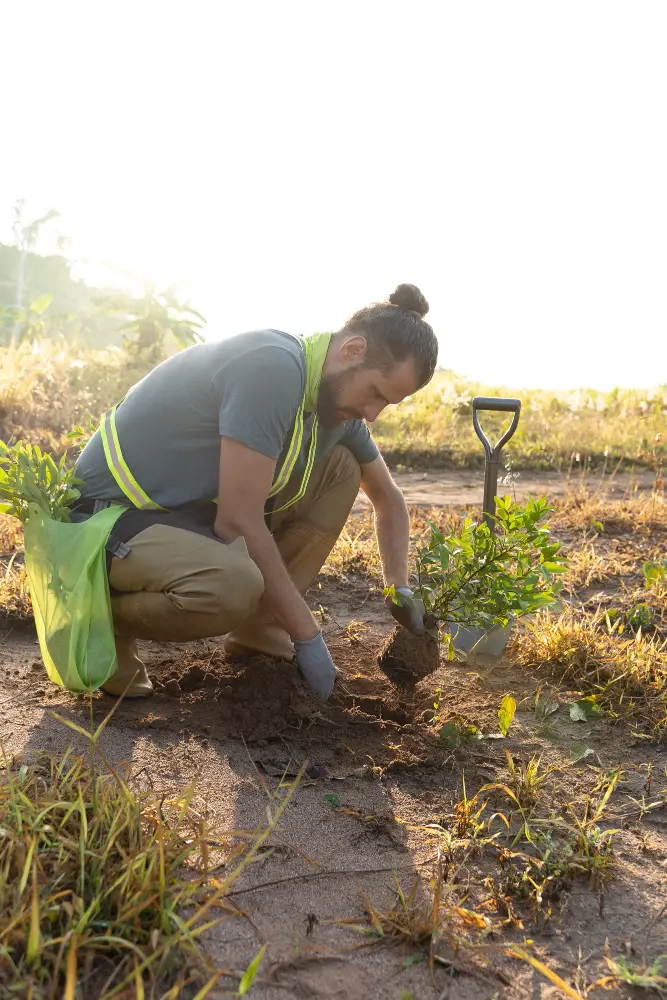
Tom Whitaker, thirty-nine years old, widowed, quiet, and stubborn as a fence post, had taken forty acres of his best grazing pasture and planted it with tiny pine seedlings. A thousand of them. He planted them with his own hands, kneeling in the dirt with a shovel and a bucket of water, his twelve-year-old daughter Emily walking behind him, pressing soil around the roots.
“Daddy,” Emily asked on the third day, wiping sweat from her forehead, “why does everybody keep slowing down when they pass?”
Tom looked toward the road. A red Ford pickup had rolled nearly to a stop, two men inside staring through the open window. One shook his head like he was watching a barn burn.
Tom turned back to the seedling in front of him. “Because folks like a show.”
“Are we the show?”
“For now.”
Emily frowned at the little pine, no taller than her boot. “They think you’re wrong.”
Tom pushed dirt around the roots and pressed it down firm. “Most people think different means wrong until it saves them.”
Emily did not understand that then. No one in Miller’s Bend did.
Tom had inherited the Whitaker place from his father. The ranch was not large by county standards, but it was good land. Two hundred acres of pasture, a shallow pond, a windmill, a red barn, and a farmhouse with white paint peeling from the west wall. When his wife Rachel died of pneumonia in the winter of 1980, the place seemed to go quiet in a way no house should. Her apron still hung behind the pantry door. Her rose bushes bloomed the next spring as if they had not heard the news.
For almost a year, Tom moved like a man walking underwater. He fixed fences, fed cattle, cooked burned eggs for Emily, and sat at night at the kitchen table staring at numbers that did not add up.
The ranch was struggling.
The topsoil on the north pasture had been thinning for years. The wind came hard across the open fields, tearing moisture from the ground, flattening the grass, pushing dust through every crack in the house. Calves froze against open wire fences in snowstorms. In drought, the north pasture dried first. Tom had seen the land changing long before anyone else wanted to admit it.
He kept a notebook hidden in the drawer under the flour sacks. Inside it were old articles from county extension offices, soil conservation pamphlets, sketches of windbreak patterns, and rainfall notes going back twenty years. He had not gone past high school, but he read like a man trying to listen to the dead.
Rachel had encouraged it. “Your mind works like weather,” she had told him once, smiling across the kitchen table. “Slow, quiet, and then all at once.”
The idea came during a winter storm in January 1982. Tom found three calves dead along the north fence after a night of cutting wind, snow packed hard against the wire with no shelter anywhere. He knelt beside the smallest calf, his glove on its frozen hide, and something inside him settled into decision.
He would plant windbreaks. Not one row, not two. A living wall. Pines, cedars, and a few hardy cottonwoods in strategic strips across the north pasture, leaving alleys of grass between them. Trees to stop the wind. Trees to trap snow. Trees to shade cattle, hold moisture, and protect soil.
He ordered seedlings from a conservation nursery and paid for them with money he had been saving to repair the tractor.
When the boxes arrived, Miller’s Bend noticed. When Tom started planting, Miller’s Bend judged.
By the end of the first week, Buck Harlan had given the project a name. “Whitaker’s Forest.” He said it like a joke, and it stuck. Buck owned the neighboring ranch to the east. He was big-bellied, loud, red-faced, and rich enough to mistake volume for wisdom.
He stopped at Tom’s fence one evening as Tom and Emily finished watering the last row.
“Whitaker!” Buck called. “You planning to raise squirrels now?”
Tom kept working. Buck leaned out his truck window. “Pasture’s for cattle, son. Trees drink water. You know that, don’t you?”
Tom stood slowly, wiping dirt from his hands. “I know what I’m doing.”
“That so?” Buck nodded toward the seedlings. “Your daddy would’ve whipped you for wasting grassland like that.”
Tom’s face changed. Only a little. But enough that Emily noticed.
“My daddy isn’t here,” Tom said.
Buck’s smile faded, then came back meaner. “No. He ain’t. And Rachel ain’t either. So maybe you ought to be careful before you lose what’s left.”
For a moment, the only sound was the wind moving through dry grass.
“Drive safe, Buck,” Tom said.
Buck snorted and drove away in a cloud of dust.
Emily stared after him, furious. “Why don’t you say something back?”
Tom looked over the rows of tiny trees, each one fragile and ridiculous against the open pasture. “Because some men aren’t worth your breath.”
That became the pattern. Every spring, Tom planted more. Every summer, he watered what he could. Every winter, he wrapped the smallest trunks to keep rabbits from chewing them. Every year, Miller’s Bend laughed. In 1983, a group of boys hung a cardboard sign on his fence. Tom took it down and used the cardboard to start the stove. In 1984, someone entered a jar of pine needles in the county fair vegetable competition under his name.
Emily came home red-eyed and angry that day. “They all laughed. Even Mrs. Danvers from church.”
Tom was repairing a gate hinge. He paused, hammer in hand. “Did you laugh?”
“No.”
“Then I’m all right.”
“But I’m not.”
He set the hammer down. She was fourteen then, tall and thin like her mother, dark hair braided down her back. She loved the ranch, but she hated being pitied.
Tom touched her shoulder. “I’m sorry they made you carry my choice.”
She looked toward the north pasture. The oldest pines had reached her waist by then, thickening, dark green, strange against the golden grass. “Are you sure they’ll help?”
Tom wanted to give her certainty. A father should. But land did not care about certainty. Weather did not care about hope. Trees took time, and time was the one thing debt did not like to give.
“I’m sure enough to keep going,” he told her.
That same year, the bank started watching him more closely. Frank Leland, a narrow man who wore gray suits even in August and kept his office cold enough to make farmers uncomfortable, had known Tom since they were boys, but banking had polished every memory out of him.
“Your operating note is behind,” Frank said, folding his hands on the desk. “You purchased nursery stock again.”
Tom said nothing.
Frank sighed. “Trees.”
“Windbreaks.”
“The numbers don’t show that.”
“They will.”
“When?”
Tom looked at the window behind Frank’s desk. Outside, Main Street shimmered under afternoon heat. A woman crossed toward the bakery, one hand holding her hat against the wind.
“When it gets hard enough,” Tom said.
Frank gave him until harvest. Harvest came thin. Then came another extension. Then another warning. By 1985, Tom had sold twenty-three head of cattle to keep the bank quiet. Buck Harlan bought twelve of them at auction and made sure Tom knew it.
Emily stood beside him at the sale barn, fists clenched. “I hate him,” she whispered.
Tom watched his cattle move through the ring. “Hate makes you carry people who don’t deserve a ride.”
The money from the sale paid the bank, but it did not fix the ranch. The tractor smoked. The barn roof leaked. Tom patched everything and bought no new clothes for two years. Emily learned to mend jeans and stretch meals. They ate beans, cornbread, and whatever vegetables she coaxed from Rachel’s garden.
Still, the trees grew.
Slowly. Stubbornly. Their roots reached down. Their branches thickened. Their needles caught snow that would otherwise have blown clean into the ditch. In spring, the grass between the rows came up greener than the exposed pasture beyond them. Tom measured it all with stakes and wrote it in his notebook. Wind speed, soil moisture, snow depth, grass height, calf survival. He showed the numbers to no one except Emily.
At the kitchen table one November night, she helped him calculate. “You really think in six years people will see it?”
Tom ran his thumb along the edge of the notebook. “Six years is enough for trees to become visible.”
“And if nothing bad happens?”
He looked up. “Something bad always happens on land. That’s why you prepare before it comes.”
Emily studied him. “Is that what you did when Mama got sick?”
The question hit him harder than Buck Harlan ever had. Tom closed the notebook. “No,” he said. The kitchen clock ticked. “I thought we had more time.”
Emily’s eyes shone, but she did not cry.
“So now you plant things early,” she said.
Tom reached across the table and covered her hand with his. “Yes.”
In 1986, Buck came to the farm with an offer. Tom found him leaning against the porch rail one evening, hat pushed back, smile too friendly.
“I’ll buy the north forty,” Buck said.
“No.”
“You didn’t hear the price.”
“No.”
Buck chuckled. “Pride doesn’t pay the bank.”
Tom looked past Buck toward the pasture. The evening sun lit the pines from the side, turning them almost black against the grass.
“Then come back when I’m desperate.”
Buck’s expression hardened. “You think those trees make you special?”
“No.”
“Then what, Tom?”
Tom stepped closer. “I think the wind doesn’t care who laughs first.”
Buck stared at him, then spat into the dirt beside the porch steps. “You’ll lose this place. And when you do, I’ll bulldoze every one of those damn trees.”
He drove away before Tom could answer.
Emily came out after the dust settled. “Will the bank take it?”
Tom leaned against the rail. “Not if I can help it.”
“What if you can’t?”
He looked tired then. Older than forty-three. “Then we’ll still know we did right by the land.”
Emily shook her head. “I don’t want a lesson, Daddy. I want our home.”
Tom looked at her, and for the first time she saw fear in him. “So do I,” he said.
In 1987, rain came late, then too hard, then not enough. Wheat yields dropped across the county. Pastures browned early. Men who had laughed at Tom grew quieter, not because they respected him, but because worry had occupied their mouths.
That fall, Tom got a second job hauling grain at night. Emily took over more chores than any teenager should carry. She fed calves, checked fences, balanced schoolwork, and kept the house running. The trees grew through all of it, indifferent to gossip, indifferent to bank notes. One night in December, Tom came home so exhausted he fell asleep at the kitchen table with his boots still on.
Emily stood beside him, looking at his bent head, and understood something that frightened her.
Her father was not unbreakable.
In January 1988, the winter came dry. Snow fell north and east of Miller’s Bend, but the town got mostly wind. Cold, empty wind that scraped across the fields and lifted dust in months when dust should have been locked under frost. By April, the county extension office sent out drought warnings. By May, the wheat began to curl. By June, the sky turned cruel.
Days came hot and hard, with no softness at the edges. The sun rose white, burned through noon, and dropped red behind fields that looked more gray than green. Cattle stood in shrinking shade near barns and water tanks. Dust devils spun across roads. Men watched the weather reports like gamblers watching dice.
No rain. No rain. No rain.
Every week, another pond dropped. Every week, another pasture browned. Every week, another farmer drove to town with his face set in a way that told everyone not to ask.
At the Whitaker place, the exposed south pasture suffered like everyone else’s. Grass thinned. The ground cracked. The pond shrank until the muddy banks showed rings like an old bathtub.
But the north pasture held longer.
Not magically. Not perfectly. But visibly.
The rows of pine trees broke the wind. Their shadows moved across the grass in dark bands. The snow they had trapped during the sparse winter storms had soaked into the soil instead of blowing away. The ground between the rows stayed cooler. The cattle bedded there in the afternoons, chewing slowly under shade that had not existed six years earlier.
Emily noticed first. She had come home from the community college in Hays for the summer and stood one evening near the north gate.
“Daddy, look.”
Tom already had.
The grass between the pines was stressed, but not dead. Beyond the last row, toward Buck Harlan’s fence, the pasture turned brittle and pale. The difference was a line. A green line. A living line.
Emily whispered, “They’re working.”
Tom did not smile. Not yet.
“Some.”
“Some?” She laughed, almost angry with relief. “Daddy, look at Buck’s side.”
Across the fence, Buck’s cattle were gathered around a dry water trough. Dust rose every time they moved. His pasture had been grazed short through spring, and now the hot wind took what was left.
The next morning, three trucks slowed on the county road. No one laughed.
By July, Miller’s Bend was in trouble. The Miller Creek stopped running in places where no one remembered seeing it dry. Shallow wells began to fail. Hay became expensive, then scarce. Ranchers sold cattle early because they had nothing left to feed them. The sale barn ran extra days, packed with bawling animals and silent men.
Buck Harlan took a hard hit. He had always stocked heavy because heavy herds made him look successful. Now his pastures could not carry them. His main pond dropped to mud. One of his wells started pumping sand.
At Clay’s Feed and Seed one morning, Buck slammed a hand on the counter. “Anybody with sense knows trees don’t make rain.”
No one argued. No one agreed either. That was new.
Clay Mercer, the feed store owner, wiped his glasses and said, “No, but they might stop the wind.”
“What you saw?” Buck asked.
“I drove by Whitaker’s yesterday.” The room quieted. “His north pasture’s still got color.”
A farmer named Dennis Cole looked up. “How much?”
“Enough.”
Buck laughed, but it sounded forced. “Then maybe we should all grow forests and stop ranching.”
Clay put his glasses back on. “Maybe we should’ve planted a few rows ten years ago.”
That sentence did what six years of Tom’s silence had not. It made the room uncomfortable.
One afternoon in late July, a dust storm rolled in from the west. Not the towering black wall from old photographs, but enough to turn daylight copper and send people running to close windows. Wind slammed doors, lifted trash cans, and pushed dust through screens. On open land, it stripped loose soil and carried it in stinging sheets.
Tom and Emily were in the barn when it hit. They pulled bandanas over their mouths and went outside.
It hit like thrown gravel. Dust filled Tom’s eyes. He could barely see the fence line. But as they fought their way north, the wind changed.
Not stopped. Changed.
Inside the pine rows, the storm broke apart. The trees bent and thrashed, but they slowed the blast. Dust dropped in the needles and along the trunks. The cattle had crowded into the corridors between the rows, heads low, bodies shielded. Calves pressed against their mothers instead of scattering blindly toward the fence.
Emily stood in the shelter of the trees, breathing hard through her bandana.
Beyond the last row, Buck’s pasture was a moving brown blur. Then they heard it. A sound beneath the wind. Metal screaming.
Through the dust, across the fence, a section of Buck Harlan’s old windmill twisted violently. One blade had torn loose and jammed the wheel. The tower shuddered, jerked, then buckled. It came down in a crash swallowed by dust.
Emily grabbed Tom’s sleeve. “Buck’s cattle don’t have water.”
Tom stared across the fence. For six years, Buck had mocked him. For six years, Buck had called him a fool, a failure, a man ruining his father’s land. Tom thought of Rachel. He thought of the smallest calf frozen along the fence in 1982. Then he turned toward the barn.
“Get the truck.”
Emily’s eyes widened. “What?”
“Get the truck. Hook the portable tank.”
They worked in a storm that made every breath taste like dirt. Tom hitched the old water tank trailer while Emily opened gates. They filled from the Whitaker well, slow but steady, then hauled the tank to the east fence line where Buck’s cattle had gathered in confusion.
Buck arrived twenty minutes later, face streaked with sweat and dust. He jumped out furious and frightened.
“What the hell are you doing?”
Tom opened the valve and water rushed into a long metal trough. “Your windmill’s down.”
Buck looked at the trough, then at Tom. His mouth opened but nothing came out.
Emily stood beside the truck, arms crossed, daring him to say the wrong thing.
Buck looked away first. The cattle pushed toward the water.
Tom hauled three more loads before dark. By then the dust storm had passed, leaving the world coated in powder. As Tom closed the valve after the last load, Buck walked over and removed his hat.
It was the first time Emily had ever seen him do that in front of her father.
“I’ll pay you,” Buck said.
Tom wiped his hands on his jeans. “I know.”
Buck shifted. “I didn’t ask.”
“No.”
“Why’d you do it?”
Tom looked toward the pine rows, dark against the evening. “Because cattle shouldn’t suffer for a man’s mouth.”
Buck’s face tightened. For a moment Emily thought he might get angry. But something in him had been knocked loose by the day. He looked old.
“I said things about Rachel I shouldn’t have.”
Tom’s eyes turned hard. “Yes, you did.”
Buck swallowed. “I’m sorry.”
The words hung there. Six years late. Still, they had arrived.
Tom nodded once. Not forgiveness exactly. But not rejection either.
“Fix your well,” he said.
The next morning, Miller’s Bend knew.
By noon, everyone had heard that Tom Whitaker had watered Buck Harlan’s cattle after the storm. By evening, people were talking less about the water and more about what the storm had shown. Buck’s open pasture had lost soil in ribbons. Tom’s north pasture had held. The pines were dirty and battered, but they stood.
At church that Sunday, Mrs. Danvers, the same woman who had laughed at the county fair jar of pine needles, approached Tom near the steps.
“Tom, my son bought that eighty acres south of Route 9. He wants to plant windbreaks. Could you tell him where you got your seedlings?”
Tom looked at her for a long second. “Yes, ma’am.”
Then Dennis Cole asked if he could walk the north pasture. Then Clay Mercer wanted to see the layout. Then two younger farmers asked about spacing.
Emily watched from beside the church door, stunned.
For years, people had looked at her father like a warning. Now they looked at him like an answer.
Tom did not gloat. That almost irritated her. She wanted him to stand on the church steps and remind them of every joke, say “I told you so” loud enough for Main Street to hear. Instead, he took an old envelope from his truck and wrote down the nursery address for Mrs. Danvers.
“Plant in double rows if you can,” he told Dennis. “Leave room for equipment. Mulch the first two years if you’ve got the time.”
On the drive home, Emily finally said, “You’re really just going to help them? After everything?”
Tom kept his eyes on the road. “Yes.”
“Why?”
He drove past the grain elevator, past the old baseball diamond browned by drought. “Because being right is useful only if you use it right.”
She folded her arms. “I wanted them to feel bad longer.”
He glanced at her. “They will.”
That was enough to make her smile.
In late August, Frank Leland called an emergency meeting at the bank for ranchers whose notes were in danger. He asked Tom to attend, not as a borrower this time, but to explain his windbreak system.
Tom almost refused. “I’m not giving a speech,” he told Emily.
“You don’t have to give a speech. Just tell the truth.”
“Truth sounds like bragging when people are hurting.”
“Not if it helps them.”
So on a Wednesday night, Tom walked into the bank community room wearing his cleanest work shirt. About thirty farmers and ranchers sat in folding chairs, the room smelling of coffee, dust, and fear. Buck Harlan sat in the back with his arms crossed, his face serious.
Tom drew his pasture roughly on the chalkboard. He showed where the prevailing winds came from, explained the rows, spacing, and species, talked about shade, soil temperature, moisture, and cattle stress. He used plain words because plain words had built everything he knew.
“Trees won’t save a bad plan,” he said. “They won’t make rain. They won’t pay your note next week. They’re slow. They’re work. Some will die. You’ll replant. Folks may laugh.”
A few men looked down.
“But land remembers what you do for it. Maybe not today. Maybe not next year. But it remembers.”
Someone asked how many years until results.
“Some in three. More in six. Best in ten.”
A bitter laugh came from the side of the room. “Ten years? Half of us are trying to survive ten days.”
Tom nodded. “I know.”
He set down the chalk. “I’m not here to sell hope. I’m here because six years ago I needed someone to tell me that looking foolish for a while is cheaper than being unprepared forever.”
No one laughed.
Buck stood. Chairs creaked as men turned. For a moment Tom thought Buck might challenge him.
Instead, Buck cleared his throat. “I gave Tom more grief than any man here.” Silence thickened. “I was wrong.” He looked around the room. “His trees saved grass. Mine’s gone. His herd’s still standing. I sold half of mine Monday.” He looked at Tom. “And when my windmill went down, he watered my cattle.”
Tom looked at the floor.
Buck sat. The meeting changed after that.
Rain finally came in September. Not enough to erase the damage. Enough to make people cry.
It started on a Thursday afternoon, a soft ticking on the roof that Emily mistook for insects. She was in the kitchen washing jars when she froze. She ran outside.
Tom stepped out of the barn just as the rain strengthened. For a few seconds, neither of them spoke. Drops darkened the dust around their boots. The smell rose warm and sharp from the ground. The pines trembled under the rain, releasing months of dust from their needles.
Emily laughed. Then she cried.
Tom stood bareheaded in the rain, face lifted, eyes closed. He did not say a prayer out loud. He did not need to.
By November, Tom’s north pasture was known across three counties. A reporter came from the regional paper. Men with notebooks walked the pasture and asked questions. One afternoon, a pickup pulled in carrying a father and son from two counties west, their farm badly damaged by wind erosion. The boy was about twelve, thin and watchful, the same age Emily had been when she helped plant the first seedlings.
The father shook Tom’s hand. “Heard you were the man to talk to about planting trees where people say trees don’t belong.”
As they walked the rows, the boy touched the branches of the pines with quiet wonder. “Did people laugh at you?”
Tom smiled faintly. “For six years.”
The boy looked worried. “What did you do?”
“Kept planting.”
The boy nodded as if that answer mattered.
The following spring, orders for seedlings through Clay’s Feed and Seed filled three pages. Farmers who once mocked “Whitaker’s Forest” now argued about spacing and species. The county created a shelterbelt program. Frank Leland offered loan adjustments for conservation improvements.
Tom helped, but he never became loud. He remained a man more comfortable with dirt than applause.
By 1992, the north pasture had become something beautiful. The pines stood tall enough to change the sound of the wind. Grass grew thick in protected lanes. Birds nested where there had once been only fence wire. Calves were born in sheltered corners. Soil stayed where it belonged. Tom paid off the restructured note that year and walked into Frank Leland’s office with the final check folded in his shirt pocket.
Frank signed the release and slid it across the desk. “Congratulations, Tom.” He paused. “I misjudged you.”
Tom looked at him. “You judged the numbers you had.”
“No,” Frank said quietly. “I judged the man.”
Tom folded the paper. “Then don’t do it twice.”
Emily was waiting when he got home, back from college for the weekend. She had become confident in a way that reminded him painfully of Rachel. She threw her arms around him when he handed her the release.
“We kept it,” she whispered.
Tom held her tight. “Yes.”
That evening they walked the north pasture together. The sun lowered beyond the trees, casting long shadows across the grass. Emily touched the trunk of one of the first seedlings they had planted. It was taller than both of them now.
“Remember how small it was?” she asked.
“Smaller than your boot.”
“I wanted you to fight everyone,” she said.
“I know.”
“I thought silence meant weakness.”
Tom leaned against the tree. “And now?”
She looked across the pasture toward Buck’s land, where new rows of young windbreaks had begun to rise. “Now I think silence is dangerous when it’s empty. But yours wasn’t empty. You were working inside it.”
Tom smiled. “That sounds expensive. College teaching you that?”
They stood quietly. After a while, Emily said, “Do you ever wish Mama had seen it?”
Tom’s smile faded. “Every day.”
“She would’ve believed you.”
“She did.”
He reached into his coat pocket and pulled out a folded piece of paper, old and soft at the creases. Emily took it carefully. It was a note in Rachel’s handwriting, dated February 1980, months before she died.
Tom, if you’re reading this when I’m gone, don’t let grief make you small. You see things early. That has always made people impatient with you. Plant what needs planting, even if nobody understands it yet. Emily will understand someday. Love, Rachel.
Emily pressed the paper to her chest. “She knew about the windbreak idea?”
“She knew about everything.”
Emily looked toward the trees, and for the first time the pasture felt less like her father’s stubborn dream and more like a conversation her parents had continued after death.
Years later, on a quiet evening, Tom sat on the farmhouse porch, older now, his hands stiff with weather and work. Rachel’s roses still grew beside the steps. Emily’s children chased fireflies in the yard, their laughter rising into the warm air.
Emily came onto the porch with two glasses of iced tea and sat beside him.
“County wants to bring another group out next month,” she said.
Tom groaned. “What story?”
She looked at him knowingly. “The one where everyone laughed.”
He sipped his tea. “That story’s old.”
“No,” she said. “It’s useful.”
He smiled a little.
Across the pasture, the pine rows moved gently in the wind, their branches whispering with the patient sound of things that had taken years to be understood. Tom thought of 1982, of Emily’s small hands pressing dirt around seedlings. He thought of 1988, of dust turning the sky copper, of cattle sheltered between trees, of Buck standing hat in hand. He thought of Rachel’s note.
Plant what needs planting, even if nobody understands it yet.
The sun dropped lower, gilding the pasture in amber light.
Emily leaned her head against his shoulder. “Daddy?”
“Hmm?”
“Did you ever know for sure?”
He looked at the trees. The same trees they had laughed at. The same trees that had held the land when the summer of 1988 came like judgment.
“No,” he said softly. “I just knew enough to begin.”
The wind crossed Buck Harlan’s old pasture, now lined with pines of its own. It crossed the road, moved through Miller’s Bend, and reached the Whitaker place with its force broken, softened, changed.
Tom sat in the shelter he had planted before anyone believed in it, and for the first time in many years, he let himself feel not vindicated, not proud, but peaceful.

Laura Bennett writes about complicated family dynamics, difficult conversations, and the quiet moments that change everything. Her stories focus on real-life tensions — inheritance disputes, strained marriages, loyalty tests — and the strength people find when they finally speak up. She believes the smallest decisions often carry the biggest consequences.