The old man had been sitting at the bus stop for nearly twenty minutes, silently staring at the rain-soaked road.
The gray sky hung low over the street, pressing down on everything beneath it. A cold wind moved through the gaps between buildings, carrying the smell of wet asphalt and the distant sound of traffic from the main road two blocks over. People passed the bus stop in both directions, collars turned up, heads down, moving with the particular purpose of people who have somewhere to be and no interest in anything that might slow them down.
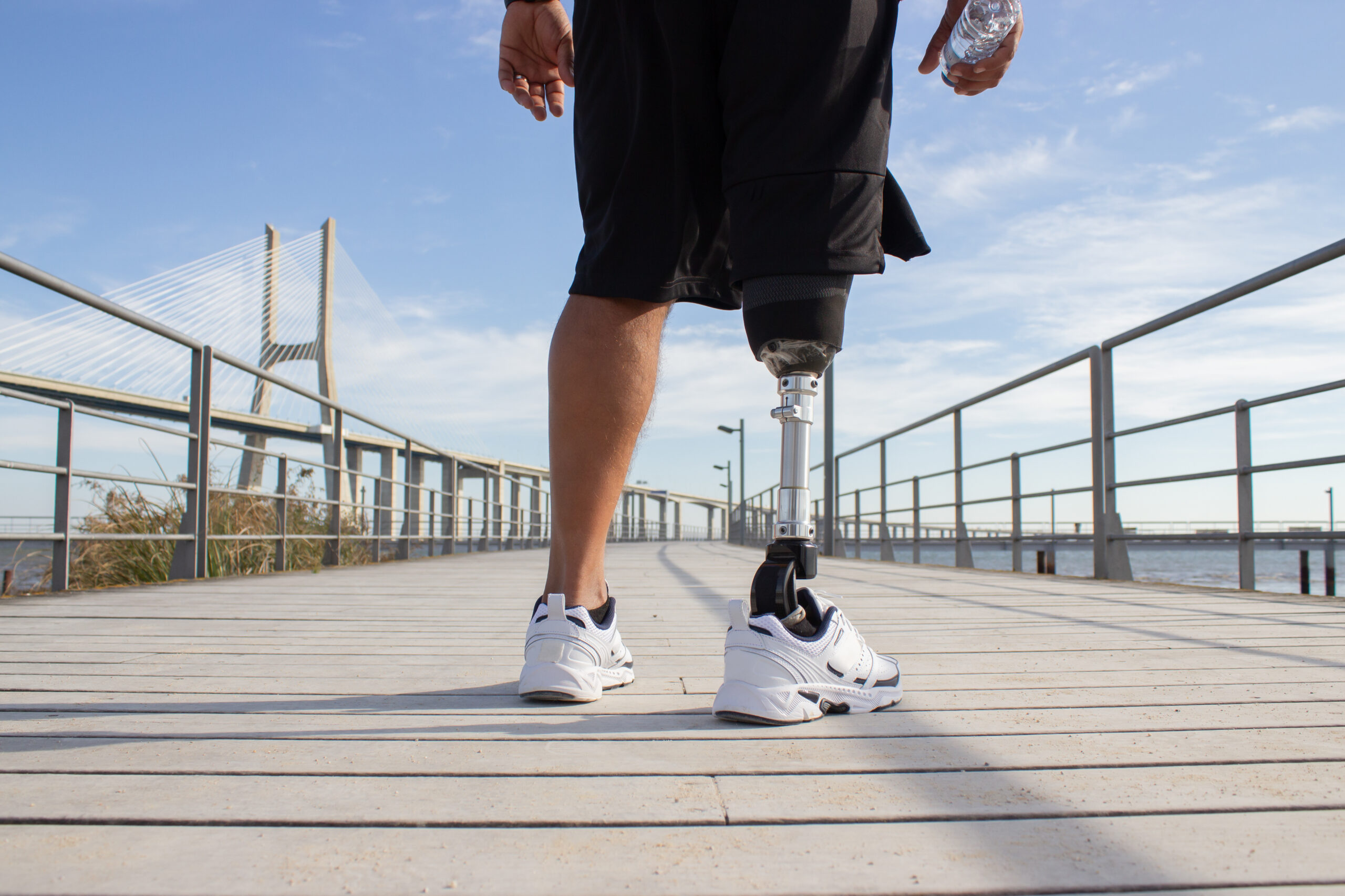
He sat on the bench at the far end, away from the small shelter that offered partial protection from the rain. Maybe the shelter had been full when he arrived. Maybe he simply preferred the open air, the habit of a man who had spent years in environments where closed spaces were dangerous. He wore an old dark jacket, the kind that had been good quality once and still held its shape despite years of washing. A faded cap sat on his head with the word Veteran printed across the front in letters that had once been gold and were now a dull pale yellow. His hands rested on his knees, weathered hands with thick knuckles, the hands of someone who had spent decades doing physical work. From beneath his worn shorts his prosthetic leg was clearly visible, the dull metal and plastic of it extending down to a shoe that matched the one on his other foot.
He had long grown used to the way people looked at him.
Some turned away quickly, as if the sight of him created an obligation they didn’t want. Some looked with a particular expression he had learned to recognize as pity, which was its own kind of burden, the weight of being someone’s reminder of something difficult. Most simply pretended he didn’t exist at all, which was in some ways the easiest to absorb, though it had its own particular sting after a while. You could tell yourself that invisibility was neutral, that it was better than the alternatives, and mostly you could make yourself believe it.
But what hurt him most was never his leg. He had made his peace with his leg in the long years since the battlefield took it. The battlefield had taken far more than that. His friends, the ones who hadn’t come home at all, whose names he still thought about on certain mornings without meaning to. His youth, which had ended so suddenly and so completely that it sometimes felt like it had belonged to a different person. His health in ways that were less visible than the prosthetic but no less present. And the version of normal life he had once expected to have, the life that had seemed entirely possible before everything changed.
He had come home afterward and tried to rebuild something. His wife had tried too, for a while, but there are some distances between people that cannot be closed no matter how much both people want to close them, and eventually she left. There were no children. His old comrades had scattered over the years, some to other cities, some to illness, some to the same darkness that took a lot of men who carried too much for too long. Now he lived alone in a small apartment and kept to his routines and sat at bus stops and waited for the bus like everyone else.
He asked for nothing from anyone.
He was still staring at the road when the three young men arrived at the stop.
They were around twenty years old, maybe younger. Caps turned backward, the easy loud laughter of people who have not yet encountered anything that has made them quiet. They carried themselves with that particular arrogance that belongs to young men in groups, the way being observed by each other amplifies everything, the way cruelty becomes performance when there is an audience of your own friends watching to see what you will do.
They noticed the prosthetic immediately. He saw the moment they did, the slight shift in attention, the way one of them nudged another.
“Hey, old man, what’s that?” the first one asked, pointing, a smirk already forming.
Another one laughed. “He looks like a robot.”
“I bet airport metal detectors go crazy when he walks through,” the third one offered, and all three of them laughed together, the laughter of people encouraging each other to go further.
The old man slowly lifted his eyes. He said nothing.
That silence only encouraged them. To boys like this, silence from someone they were mocking read as permission or as helplessness, and neither interpretation gave them reason to stop.
“Does your leg get cold in the winter?”
“Do you plug it in to charge at night?”
“Watch out, guys, his battery’s about to die. He won’t be able to walk at all.”
The laughter got louder. They looked at each other as they spoke, checking reactions, building on each other, the way this kind of thing builds when no one stops it. A few people passing on the sidewalk glanced over. None of them slowed down. Some walked faster. The bus stop had become a place where something uncomfortable was happening, and the easiest response to that, the response almost everyone chose, was to not be there for it.
The old man remained silent. His eyes dropped back to the ground in front of him. His fingers, resting on his knees, slowly tightened into fists. Just that. Nothing else visible from the outside.
He had been twenty-two years old when he enlisted. He had believed in something then, believed it with the full uncomplicated conviction that is possible when you are young and the world still seems navigable through the application of the right values. He had carried wounded men across terrain that no one who hadn’t been there could adequately describe. He had made decisions under conditions of terror and exhaustion that he still reviewed in the quiet hours of the night, turning them over, asking whether he had done the right things, whether the things he had done had been enough. He had held men while they died. He had lost his leg in a moment that lasted less than a second and had restructured every second that came after it.
These boys had no idea who they were laughing at. They didn’t know any of it. They saw an old man with a prosthetic leg sitting alone at a bus stop in the rain, and they saw something to perform cruelty at because the performance was free and the audience was their friends and the old man appeared to have no way of making it cost them anything.
They could not have imagined what was about to happen.
The biker had been standing behind them the entire time.
He was tall, broad-shouldered, wearing a black vest over a dark jacket, the kind of vest that carries patches and insignia and tells a story to anyone who knows how to read it. He had a thick beard and the particular stillness of a man who is not easily rattled, who has learned through experience to let things register fully before responding to them. He had been watching since the first comment, his eyes fixed on the three young men, his expression shifting with each new joke the way a sky shifts when weather is building.
Finally he stepped forward. One slow step, then another.
The laughter began to fade before he had even spoken. The boys registered his presence, the change in the atmosphere around them, the fact that the situation had acquired a new element they hadn’t anticipated. They turned toward him and the smiles slipped off their faces with the speed of things that were never particularly solid.
The biker stopped close enough that there was no possibility of misunderstanding that he was addressing them directly.
“Don’t you have any shame?” he said. His voice was quiet. Not the quiet of someone trying not to make a scene. The quiet of someone who doesn’t need volume to be heard.
One of the boys tried to recover. The social instinct to perform confidence in front of his friends was still operating even as the situation changed around him. “What’s it to you?”
The biker looked at him without any change of expression. “It’s my business because this man didn’t lose his leg from drinking or stupidity. He lost it for people like you. So that you could walk these streets and open your mouths like this.”
The bus stop went quiet. Even the people nearby who had been trying to ignore everything found themselves still. The wind moved through, carrying rain, and nobody spoke for a moment.
The biker turned briefly to the old man and gave him a nod. Not a pitying nod, not the careful nod of someone managing an awkward situation. The nod of one person acknowledging another person directly, as an equal, with full recognition of who that person was. Then he turned back to the three boys.
“While you’re filming your stupid videos and laughing, people like him were pulling the wounded out from under bullets. And the worst part, the part that should make you think, is that he sits here in silence. He doesn’t ask you for anything. He doesn’t demand the respect that he is owed. He just sits here. And the three of you decided to use that silence as an invitation.”
No one was smiling anymore. The boy who had tried to smirk was looking at the ground. Another had his hands shoved deep in his pockets, his shoulders pulled in, the body language of someone who has suddenly become very aware of themselves. The third one muttered something that was meant to be an exit from the situation without having to fully enter the shame of it.
“We were just joking.”
The biker cut him off without raising his voice.
“No. That is not a joke. A joke is something that doesn’t require a victim. What you were doing is something else, and the word for it is shameful.”
The three boys stood there. The performance was over, the audience had turned, and there was nothing left to do but stand in the uncomfortable truth of what they had done and who had seen it.
The old man had not moved during any of this. He sat with his eyes on the ground, his hands still resting on his knees. But something had shifted in the atmosphere around him. For the first time since the boys had arrived, and perhaps for the first time in a longer while than that, someone had stood beside him instead of turning away. Someone had looked at what was happening and decided that it was their business, that it mattered, that the man on the bench was worth standing next to.
The boys left before the bus arrived. They went quietly, without looking back, which was perhaps the first quiet thing they had done since they arrived.
The biker sat down on the other end of the bench. He didn’t make a production of it. He didn’t offer a speech about what he had done or invite the old man to express gratitude. He just sat down the way you sit down when you are waiting for a bus, and the two of them sat there together in the rain.
After a while the old man spoke. His voice was low, a little rough, the voice of someone who doesn’t use it as much as he once did.
“You didn’t have to do that.”
The biker looked at the road. “I know,” he said. “I wanted to.”
They sat in silence after that, which was not an uncomfortable silence. It was the silence of two people who understand each other without needing to explain themselves, who have both been places and seen things that leave a particular mark, and who recognize that mark in each other without it needing to be named.
The bus came fifteen minutes later. The old man stood, and the biker stood with him, and they boarded together. They sat in different seats because they were going to different places, but before the old man found his seat he paused in the aisle and looked at the biker for a moment.
The biker nodded. The same nod as before. Direct, simple, full of recognition.
The old man nodded back.
The bus pulled away from the stop and moved into the rain-soaked street, carrying all of them forward. The boys were long gone. The passersby who had hurried past were somewhere else by now. The bus stop stood empty in the grey afternoon, just a bench and a shelter and the sound of rain.
What had happened there was a small thing and a large thing simultaneously. Small because it lasted only minutes, because no laws were changed by it, because the world continued exactly as it had before. Large because dignity, when it has been threatened, is restored by exactly this kind of thing and nothing else. Not by silence. Not by people looking away and walking faster. By someone deciding that what is happening in front of them is their concern, and stepping forward, and saying so clearly.
There are men who gave everything they had for a version of the world where people could move through their days freely, without fear, with the ordinary dignity that human beings are owed. Some of them sit at bus stops now, wearing old jackets and faded caps, their sacrifices worn quietly on their bodies, asking for nothing.
The least the rest of us can do is notice them. The least we can do is stand beside them when someone treats their silence as an invitation to cruelty.
It costs nothing. And it means everything.

Adrian Hawthorne is a celebrated author and dedicated archivist who finds inspiration in the hidden stories of the past. Educated at Oxford, he now works at the National Archives, where preserving history fuels his evocative writing. Balancing archival precision with creative storytelling, Adrian founded the Hawthorne Institute of Literary Arts to mentor emerging writers and honor the timeless art of narrative.