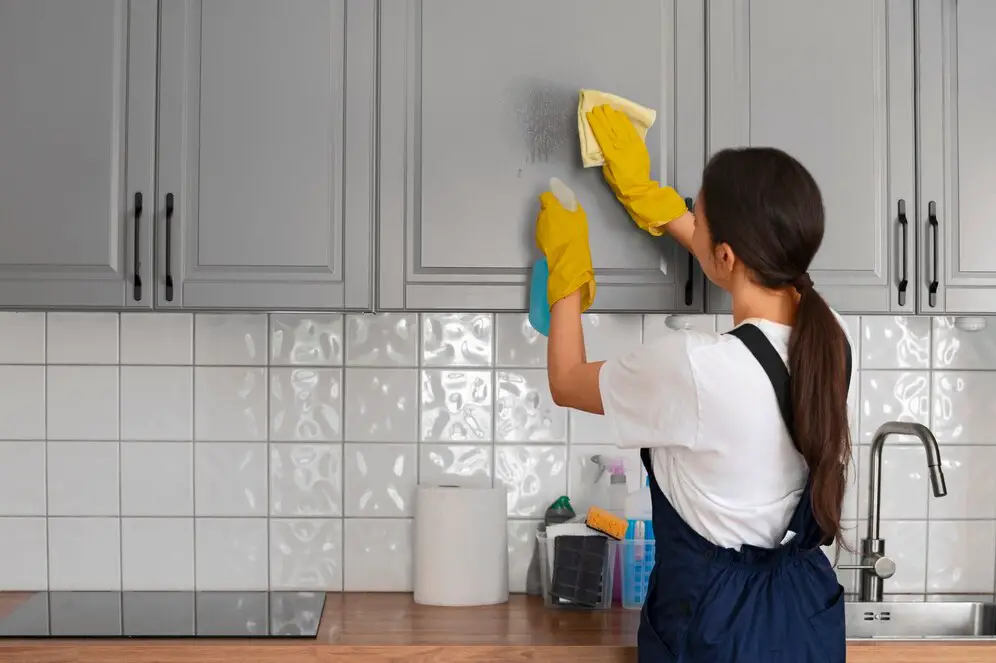
My husband gave me money every week to pay the cleaning lady.
What he didn’t know was that the cleaning lady was me.
At first, when Bruno handed me that first envelope on a Thursday evening, I had let myself feel something close to relief. I had imagined it. Sitting with a cup of coffee that hadn’t gone cold, watching something on television without one eye on the clock, feeling for the first time in years like a person in my own home rather than the person responsible for maintaining it. I had been cleaning that apartment for eleven years. The grout between the bathroom tiles, the film on the windows, the dust that settled on the baseboards within days of being wiped away. I knew every surface of that place the way you know something you have attended to for a long time without thanks.
So when Bruno said he wanted to hire someone to come twice a week, I had felt something loosen in my chest. Maybe he had finally noticed. Maybe the years of quiet work had finally registered.
I opened the envelope and counted the money. It was enough for a few hours of professional cleaning, nothing more. I looked at the amount for a long time.
Then I thought about our bank account, and what I actually knew about it, which was less than I should have known after eleven years of marriage. Bruno handled the finances. Bruno always said I didn’t need to worry about it, that managing money wasn’t my strength, that he had it taken care of. I had believed him the way you believe someone you live with, which is to say I believed him because it was easier than the alternative.
I put the money in a shoebox under the bed. The following Tuesday I got up early, put on my yellow gloves, and cleaned the apartment myself the way I always had. When Bruno came home that evening and commented that the place looked good, I said the cleaning lady had done a nice job.
He nodded and went back to his phone.
That was week one. By week four I had stopped thinking of it as a small deception and started thinking of it as information. The money was accumulating in the shoebox. Bruno never asked for receipts. He never asked the cleaning lady’s name. He never wondered why the apartment always looked exactly as clean as it had when I was doing it myself, which should have been a question but wasn’t because Bruno had long ago decided that anything to do with the house existed in a category of things he didn’t need to think about.
I was in that category too. I understood this gradually and then all at once.
The afternoon everything changed, I was cleaning the bathroom. Bruno was on his phone in the bedroom, door half open, voice low in the way it gets when he’s talking to someone he doesn’t want overheard. I had learned not to think about that particular habit. There are things you train yourself not to look at directly when you’re trying to keep a life functioning.
But that afternoon I heard a name I didn’t recognize, and then I heard my husband laugh in a way he hadn’t laughed with me in a very long time.
I stayed still. The mop was in my hands. The bleach water was going cold.
“The transfer papers,” Bruno said. “My wife will think they’re for refinancing the mortgage. She signs everything without reading when I tell her it’s urgent.”
I pressed my back against the wall of the hallway. My hands were wet. My heart was doing something that felt like it wanted to leave my chest entirely.
“What if she suspects something?” The woman’s voice was thin through the phone, curious rather than worried.
Bruno made a small sound, dismissive and almost amused. “Suspect? Please, Sarah. If I give her an envelope and tell her it’s for the cleaning lady, she doesn’t even ask questions. That woman lives on crumbs and gratitude.”
I stood there with the mop and heard my husband describe me to another woman the way you describe a piece of furniture you’ve stopped noticing. Not cruel exactly, because cruelty requires some acknowledgment of the other person’s existence. This was something worse. This was the tone of a man who had decided a long time ago that his wife was not a person whose perception of events mattered.
That woman lives on crumbs and gratitude.
I gripped the mop handle hard enough that my fingers ached.
“But the cleaning lady did see the papers, right?” Sarah asked.
“Yeah. And if my wife asks, I’ll just say the girl probably moved them. Besides, she doesn’t even know her name. I handle everything.”
I almost laughed. Silently, in that hallway, I almost laughed. Of course he knew my name. My name was me. The cleaning lady was me. The girl who couldn’t read the papers was me. The fool in this story was me, and I had been playing the role so completely that I had convinced everyone, including apparently myself, that it was my natural state.
Bruno came out of the bathroom and found me standing in the hallway. His face shifted for a fraction of a second. Just a fraction. Then the familiar smile, easy and practiced, a clean curtain hung over a rotten window.
“Honey, everything okay?”
I looked at the mop on the floor where I had let it drop. “Yes. I dropped it.”
“Be careful. You’ll scratch the floor.”
The floor. Not my face, which had gone pale. Not my hands, which were trembling. The floor.
“Of course,” I said. “I’ll take care of it.”
He kissed my forehead in the way he had been kissing my forehead for years, a motion so habitual it had long since stopped being affection, and went to the bedroom. I heard him opening drawers and humming softly and then closing the closet door.
That night I cooked noodle soup and roasted chicken and red rice. Bruno ate while looking at his phone. I sat across from him and watched him and tried to locate the exact moment, years ago, when I had started watching him the way you watch a stranger rather than the person you chose. How many times had he touched my shoulder with the same hand he was using right now to plan my removal from my own home. How many times had I refilled his coffee and ironed his shirts and stayed up late finishing things he had started and not finished, while he was somewhere making lists.
“I need you to come with me to a notary’s office tomorrow,” he said without looking up.
There it was. The trap with a date attached.
“What for?”
“Some house paperwork. Nothing complicated.”
“What kind of paperwork?”
He sighed. That particular sigh, the one he deployed whenever I asked for an explanation I was apparently not entitled to. “Honey, I told you. It’s to improve the loan terms. Don’t worry about it. I handle this stuff.”
“Sure.”
“Just sign and that’s it.”
I looked straight at him. “And then?”
He finally looked up. “Then what?”
“After I sign. What happens after?”
He smiled slowly, with the patience of someone who believes they are managing a simple situation. “Then we can rest.”
He said rest the way someone says exit door.
That night I waited for him to fall asleep. Bruno snored lightly with one hand on his chest and his phone tucked under his pillow, which I had long ago stopped interpreting and now understood completely. Before, I would have thought: poor man, he’s exhausted. That night I thought: even unconscious, he keeps his evidence close.
I got up without a sound and pulled the shoebox from under the bed. Twelve weeks of envelopes. Twelve payments for a woman who did not exist outside of Bruno’s story about me. Twelve installments of a humiliation I had been unwittingly saving as evidence.
I counted the money at the kitchen table. There was enough for a legal consultation. Enough to have documents copied. Enough to change the locks and still buy myself a coffee without needing to account for it to anyone.
I put on a hoodie and took the car keys and left. New York City at two in the morning has a strange texture of silence that isn’t actually silence, just a lower register of the same constant noise. I drove to a twenty-four-hour print shop near Union Square and I made copies of everything I had found in Bruno’s study that afternoon.
Because the cleaning lady had seen the papers. She had not merely seen them. She had photographed them.
There was a supposed authorization to sell the house. A transfer of rights. A power of attorney with my name misspelled in a way that suggested it had been typed by someone who did not need to spell my name carefully because I was not a person whose details required precision. A preliminary contract with a buyer named Sarah Villalobos.
And a separate page, printed in small careful type, where I apparently accepted that Bruno could dispose of the property due to my voluntary abandonment of the marital home.
I read that word three times. Abandonment.
The plan wasn’t only to take the house. The plan was to make it appear that I had left it. That I had walked away from my marriage of my own choosing. As if a woman could spend eleven years cleaning a house and be accused of having abandoned it. As if the work I had done for over a decade could be rendered invisible and then used as the very evidence of my absence.
I stood in the fluorescent light of that print shop at two thirty in the morning, and I understood the full shape of what had been built around me. And then I took my copies and I drove home.
In the morning, while Bruno showered, I put the originals back exactly where they were. Then I put on my yellow gloves and cleaned. But not the way I had been cleaning. I cleaned the way a detective processes a crime scene. Methodical, attentive, looking for what had been left in plain sight by someone who believed the person doing the cleaning was not someone who read.
Under a pile of receipts I found deposits made to Sarah. In a notebook in his desk drawer I found a list in Bruno’s handwriting.
Notary signature. Move clothes out little by little. Talk to Mom. Change the locks. Sarah moves in in June.
June. Three weeks away. I was cleaning up my own eviction and had been doing it for months without knowing it.
I photographed everything. Then I went to the kitchen and made coffee and served it to Bruno in his favorite mug, the black one that said The Boss across the front. I set it in front of him and sat down.
“I can’t go to the notary today,” I said.
His face tightened. “Why not?”
“I don’t feel well.”
“It’s not optional, Laura.”
There was my name. Not honey. Laura, spoken with the flat authority of someone issuing an instruction to staff.
“Then you go,” I said. “If it’s just routine paperwork, ask if I can sign later in the week.”
Bruno put the mug down too hard. “Don’t be difficult.”
“I’m not being difficult. I’m sick.”
He examined me looking for the crack, the point of entry where pressure would produce compliance. He had found that point reliably for eleven years. “Sick with what?”
I smiled faintly. “Exhaustion.”
He stood up. “Always the same with you. That’s why I hired someone, so you wouldn’t spend your life complaining.”
“Yes,” I said. “The lady works very hard.”
“Tell her to come today. The house is full of dust.”
“I’ll let her know.”
Bruno left with the door shut hard behind him. I waited ten minutes, counting them. Then I made three calls.
The first was to my cousin Sandra, who worked at a law firm in Brooklyn and who I had not called nearly enough in recent years because Bruno found her abrasive and I had spent a long time smoothing his preferences over my own.
The second was to the bank.
The third was to a locksmith.
Sandra arrived at two in the afternoon wearing dark sunglasses and carrying a red folder with the energy of someone who had been waiting to be called for this particular reason for longer than I had been ready to make the call.
“Show me everything,” she said.
I showed her the copies, the photographs, the deposit records, the list. She read without interrupting. Her mouth got tighter as she read.
“Laura, this isn’t just an affair. This is attempted fraud.”
“Can he actually sell the house?”
“Whose name is it in?”
“Both of ours. But I paid the down payment with my father’s inheritance.”
She looked up from the papers. “Do you have the receipts?”
I went to the closet and pulled out the blue folder. That folder was something I had kept quietly for eleven years without ever having a name for why I kept it. Bruno always said I didn’t understand money. But I had kept every receipt. Every transfer. Every property tax payment. Every month I had made the mortgage payment myself during the six months Bruno was between projects and I had sold desserts to neighbors and done manicures door to door because the house needed the payment and someone needed to make it.
Sandra went through the folder and after a few minutes she looked up with the particular smile of a lawyer who has just seen the case become something other than difficult.
“Your husband is stupider than he thinks.”
“Why?”
“Because he tried to move your assets without checking that you have half the Public Registry’s archives in your closet.”
My legs started shaking. I sat down at the kitchen table, the same table where Bruno had been eating dinners and planning this for however many months it had been in motion. “Sandra. He wants to move this woman into my home.”
“He is not moving anyone in.”
“His mother knows about it too.”
“Good. More witnesses to his own mess.”
At six that evening, the locksmith changed the locks on the front door and the gate. I paid him with the money from the cleaning envelope, which felt like completing a circle I hadn’t known I was drawing. When he left I stood in the hallway and looked at the new keys in my hand. They were small and ordinary and they felt like the first things that had been entirely mine in longer than I could immediately account for.
Bruno arrived at eight. His key went into the lock. It did not turn. He tried again. Nothing. He knocked.
“Laura!”
I was sitting in the dining room. The table was clean and shining and completely bare except for three items I had placed in the center. The blue folder. The shoebox with the twelve envelopes. His forged papers.
I opened the door with the chain still on. “Yes?”
Bruno looked at the chain. His expression moved through annoyance toward something that recognized the situation had changed. “What is this? Let me in.”
“First tell me who Sarah is.”
His face shifted. The anger, then underneath the anger, fear. Then the rapid calculation of someone deciding how to manage a problem. “I don’t know what you’re talking about.”
I held a copy of the contract up to the gap in the door. “Interesting. She seems to want to buy my house.”
He went quiet. When he spoke his voice had dropped to the register he used when he wanted to contain something before it became visible. “Laura, don’t make a scene.”
“That’s funny. I thought the same thing when you gave me money every week to pay a woman you never actually hired.”
His eyes moved past me to the box on the table. He understood. Finally. The cleaning lady wasn’t invisible. The cleaning lady had a memory and a phone camera and a cousin who was a lawyer and eleven years of receipts in a blue folder in the closet.
“You saved the money.”
“Every cent.”
“That was for the house.”
“No. It was for you to mock me with your mother.”
He clenched his jaw. “You were spying on me.”
“No. I was cleaning. You were the one who left everything in plain sight.”
He tried to push the door. The chain held.
“Open the door, Laura.”
“No.”
“This is my house too.”
“And tomorrow a judge is going to hear about how you tried to remove me from it using documents that have my name spelled wrong.”
His confidence fractured. “What did you do?”
“What you didn’t expect. I read.”
He looked toward the elevator as if checking whether anyone was watching. “We can talk.”
“You talked enough from the bathroom.”
He went pale. “You didn’t hear everything.”
“I heard enough.”
Then his mother appeared behind him.
Mrs. Mireya arrived with her enormous purse and her careful hair and the expression of a woman who has decided that age entitles her to deliver judgments. She always arrived at the exact moment her son needed an audience or a reinforcement, and for eleven years I had watched her walk into rooms and watched rooms reorganize themselves around her.
“Laura, open the door and stop with the drama.”
I had spent so long managing my responses to this woman. Softening my voice, choosing careful words, absorbing her comments about my cooking and my housekeeping and my clothes and my background with the patience of someone who has decided that keeping the peace is more important than being heard. I was done with that calculation.
“Good evening, Mrs. Mireya.”
“Don’t give me that fake politeness. Bruno told me you’re acting out.”
“He called you quickly.”
“A decent wife doesn’t change the locks on her own house.”
“A decent wife doesn’t sign away her own home either.”
The woman pressed her lips together. “Oh, honey. This is why men get tired. They try to improve things and you treat it as an attack.”
I opened the door a little further, as far as the chain allowed. “Did you know about Sarah?”
Mrs. Mireya blinked. A fraction of a second too slow. “Who?”
“The woman your son is planning to move in here in June.”
Bruno turned toward her. “Mom.”
“I didn’t say anything,” she snapped at him.
I almost smiled. “Thank you. That was a yes.”
She straightened herself. “My son deserves peace. You have always been cold and lazy and difficult. This house only looks the way it does because Bruno pays for help.”
I looked at her steadily. “I am the help.”
Her mouth opened. Bruno closed his eyes. For the first time in eleven years I had watched her be at a loss for an immediate response.
“What?” she said. Barely above a whisper.
I picked up one of the envelopes and held it up. “Every week your son gave me money to pay a cleaning lady. I did the cleaning. I saved the money. I heard his phone calls. I found the papers. I gathered the evidence. I am the cleaning lady, Mrs. Mireya. I have always been the cleaning lady. I just didn’t know until recently that he was paying me to clean up after his own plans.”
Bruno hit the door with his fist. “That’s enough.”
“No, Bruno. I’m just getting started with the sweeping.”
The elevator doors opened behind them. Sandra stepped out with a man in a suit and a police officer. Bruno froze.
Sandra came to stand at my side, her red folder under her arm, her voice completely even. “Good evening. I am Sandra Aguilar, attorney at law. We are here to formally notify you that Mrs. Laura is initiating proceedings for forgery, attempted asset fraud, and economic abuse. A protection order has been requested to prevent the disposal of the property or removal of any common assets pending legal review.”
Mrs. Mireya clutched her chest. “What an exaggeration. This is a couple’s misunderstanding.”
Sandra looked at her without blinking. “Forging a signature is not a couple’s misunderstanding, ma’am.”
The officer told Bruno to remain calm. Bruno was sweating. “I didn’t forge anything.”
Sandra raised one eyebrow. “Perfect. Then you won’t have any difficulty explaining the power of attorney bearing Laura’s name spelled incorrectly and a signature that does not match her official identification.”
“It was a draft.”
“And the deposits to Sarah Villalobos were also drafts?”
Mrs. Mireya turned to her son. Something was shifting on her face as the picture assembled itself. “Deposits?”
Bruno said nothing. I answered. “He was paying for his new life before he had finished stealing mine.”
Mrs. Mireya went red. Not the red of shame for what had been done to me. The red of a woman whose son had made her look uninformed in a situation she had apparently helped arrange.
“Bruno, tell me that isn’t true.”
He put his hand through his hair. “Mom, it’s not that simple.”
“You were going to give the house to someone else?”
“I was going to fix things.”
“And what did you tell me?” Her voice was rising now. “That Laura had you trapped? That you were the one making all the sacrifices?”
I stood very still. The lies had branches I hadn’t known about. Bruno had been distributing versions of the story to different audiences for a long time.
He turned to me, and what was on his face now was desperation. “Laura, please. I swear Sarah doesn’t mean anything to me.”
“That’s a terrible thing to say about someone you’ve been paying to wait for my house.”
“It was a mistake.”
“No. A mistake is forgetting to buy something at the grocery store. You made a written list with a timeline. You wrote down the date you planned to change my locks.”
Sandra allowed herself the smallest sound.
Bruno lowered his voice. “What do you want from me?”
That question turned something cold in my chest. Not what have I done to you. Not how do I make this right. What do you want. As though my dignity had a price he could pay to make this a transaction rather than a reckoning.
“I want you to take your belongings under supervision. I want you to never come near me again. I want the forgery to have consequences that last. And I want a divorce.”
Mrs. Mireya let out a sound. “No divorce. You’ll destroy the family.”
I looked at her. “No, ma’am. The family was already destroyed. I just found the dust under the rug.”
Bruno tried to cry. I had watched him move through his emotional sequence enough times to know the order. First the arrogance. Then the wounded offense. Then the tears, always arriving just before the performance stopped working. I watched him move through the stages and felt nothing I needed to manage.
“Laura. Think about everything we’ve built together.”
I thought about it. I thought about the Christmases spent in his mother’s kitchen while he played cards in the living room. The expenses he had hidden and the explanations I had accepted. My birthday he had not remembered two years in a row. His shirts pressed for meetings where he told colleagues his wife didn’t really work. His mother’s laugh when she said I would probably spend the cleaning money before the end of the week.
I had been thinking about it for eleven years. I was done thinking about it.
“That’s exactly what I’m doing,” I said. “And that’s why I’m not willing to keep living it.”
The officer explained that Bruno could enter to collect his clothes and personal documents but could not remove furniture or papers that had not been individually inventoried. Bruno walked in with the careful steps of a man who has realized the territory has changed and hasn’t yet mapped the new boundaries.
He looked at the apartment. The clean kitchen. The windows without a mark on them. The floor. Everything he had used to measure me for eleven years. Everything he had never once thanked me for.
“You really do clean well,” he said. He said it without thinking, the way you say something that has been true for so long it becomes automatic, like commenting on the weather.
“No, Bruno,” I said. “I hold things together. Cleaning was the least of it.”
He went to the bedroom with Sandra and me following. Mrs. Mireya tried to enter behind us and the officer stopped her.
“Only the gentleman.”
“I’m his mother!”
“Precisely,” Sandra said.
Bruno stuffed clothes into a suitcase with the focused unhappiness of someone who has imagined this scene going differently. He took his colognes and his belts and the papers from his desk drawer. When he reached for the house folder I put my hand on it.
“That stays.”
“I need those documents.”
“You’ll receive certified copies through legal channels.”
He looked at me with the face that had been underneath the performing face for a long time, the one that had been hidden behind the tired husband and the responsible manager and the patient explainer. Pure and simple hatred that I had finally become something other than manageable.
“Sarah was right about you,” he said, his voice low and mean. “You are impossible.”
“Then I did her a favor by sending you to her.”
His face fell. Not because the words hurt him, but because they didn’t seem to hurt me, and he had been counting on the pain to give him something to work with.
He left with two suitcases. At the elevator, Mrs. Mireya tried to reach for him and he pulled away. “You put ideas in my head too,” he said at her, sharp and ugly. “Always telling me Laura wasn’t enough.”
She stiffened. “Me?”
The elevator came. They went into it together, blaming each other before the doors had finished closing, the guilt looking for a new house to sleep in now that mine was unavailable.
I closed the door. I heard Mrs. Mireya’s voice continuing on the other side, but I could no longer make out the words. Maybe because the new door sealed better. Maybe because the part of me that had been translating her cruelty into something I needed to respond to had finally gone quiet.
That night I did not clean. I left a glass in the sink and looked at it like it was a small flag planted in new territory. I made coffee and sat on the sofa and turned on the television and then turned it off again because I didn’t need the noise. The apartment had a different quality of silence than it had ever had. The silence of a house after a party where you didn’t enjoy anyone’s company. Strange and large and entirely mine.
I cried a little. Not for Bruno. For myself. For the woman who had thought an envelope of money was help. For the woman who put on yellow gloves thinking she was buying herself time, not understanding she was accumulating evidence. For the woman who had to become invisible to see clearly what was happening around her.
In the morning I went with Sandra to the bank and then to the district attorney’s office and then to the Public Registry. Justice smelled like ink and reheated coffee and old carpet and the specific exhaustion of bureaucratic processes that move forward in increments too small to feel like progress until suddenly they do. But they moved. The notary Bruno had planned to take me to received a notification. The operation was suspended. The sale could not proceed.
Sarah called three days later. Her voice was soft and almost rehearsed, the voice of someone who had decided on a particular approach before dialing. “We need to talk,” she said. “Bruno lied to me too.”
“We have nothing to talk about.”
“He told me you were separated.”
“And that’s why you agreed to move into my home in June.”
A pause. “I didn’t know you were like this.”
“Like what?”
“Resentful.”
I looked at my reflection in the kitchen window. Dark circles under my eyes. Hair pulled back. And a new quality in my expression that I recognized after a moment as the absence of bracing. The absence of the permanent anticipatory flinch I had been carrying for so long I had stopped noticing its weight.
“I’m not resentful, Sarah. I’m the owner.”
I hung up and blocked her number.
Bruno sent apologies through the following weeks from various numbers. Then threats when the apologies produced nothing. Then more apologies. Then the story that his mother had pressured him. Then the story that Sarah had manipulated him. He distributed the blame generously to everyone except the person who had made the list and set the date and given his wife money to clean her own eviction.
A month later I came home from the market to find Mrs. Mireya sitting on the curb outside my building. No makeup. No enormous purse. None of the neighborhood-empress posture. She looked older in the way that people look older when the architecture that has been holding them up is no longer available.
“I need to talk to you,” she said.
“Talk to Sandra.”
“Bruno is doing badly.”
I kept walking toward the door. “Buy him some tea.”
“Laura, please.”
I stopped. Not for her sake. Out of a curiosity I couldn’t entirely suppress. “What do you want?”
She took a breath that seemed to cost her something. “Sarah left him.”
“What a surprise.”
“His father found out everything and told him to leave the house.”
“What a traditional family. Everyone removing someone from somewhere.”
She looked at the ground. “I was unfair to you.”
Those words in her mouth sounded like a word spoken in a language that didn’t have the right muscles for it. Like something that had been learned very recently and was not yet comfortable.
“Yes,” I said.
She had expected the other thing. The of course not, don’t worry about it, the social lubricant that makes uncomfortable moments pass. I didn’t offer it.
“I treated you badly.”
“Yes.”
“I thought a wife should endure.”
“No,” I said. “You thought I should endure so your son wouldn’t have to face what he was doing. There’s a difference.”
Her eyes filled. “Is there no way to fix it?”
I opened the gate. “Yes. Everyone cleans up the mess they made.”
I went inside. I didn’t shout at her or deliver the speech that part of me had been composing for years. I didn’t forgive her and I didn’t condemn her. I just went inside, because the most complete thing I could do was simply not allow her back into my living room to dirty it again.
The divorce took time in the way that everything real takes time. Bruno fought for the house until the documents he had tried to use against me spoke against him instead. The expert confirmed the irregularities. The bank acknowledged the alerts. The notary distanced himself from the process. Sarah testified in a deposition that Bruno had promised her she could live in the apartment when Laura was gone.
That phrase entered the official record. When Laura was gone. As if I were an inconvenience to be managed. As if the woman who had paid the down payment and made the mortgage payments and kept the receipts and cleaned the floors and cooked the dinners and held everything together through the years of his between projects could be disposed of like something that had outlived its purpose.
At the hearing Bruno sat with a wrinkled shirt and the expression of a man who has just understood the difference between losing a servant and losing a person. The judge asked if reconciliation was possible.
I answered first. “No.”
Bruno looked up. He was searching my face for the crack, the hesitation, the residual hope he could reactivate with the right words. He found nothing of the kind.
“I don’t want to return to a man who paid me to clean his conscience while he planned to steal my home,” I said.
Sandra touched my arm under the table. Bruno closed his eyes.
The settlement secured the house. He acknowledged my contributions, assumed the debts he had been hiding, withdrew the attempted sale. The criminal complaint continued its slow progress through the system. I am not going to pretend it ended in dramatic music and maximum sentences. Real justice is more stubborn and more incremental than that. But my name was protected. My door was locked with my keys. My home was mine.
One Saturday I opened the shoebox one last time. One envelope remained, the very first one, which I had kept apart from the others as a kind of record. I opened it and took out the bills and counted them.
I used them to hire a woman named Lupita to come on Tuesdays. A real woman with a name and a schedule and coffee before she started work.
When she arrived the first morning, I moved to help her shift a table. She stopped me. “No, Mrs. Laura. You sit for a bit.”
That word, Mrs., sounded different than it had in a long time. Not a title. Permission. Permission to be a person in my own home rather than the person responsible for its maintenance.
I sat on the balcony with my coffee. The apartment smelled of soap and toast and the wet bougainvillea climbing the railing. Lupita sang something soft while she swept. I looked at my hands. The detergent marks were still there. But they were not shaking.
By midmorning Sandra sent a message. How is the new life going.
I looked at the clean floor, the new door, the curtains moving in the air coming through the window I had opened myself because I felt like having it open.
Impeccable, I wrote back.
And I meant it. Bruno had been right about one thing. The cleaning lady worked very well.
He just never understood what she had been cleaning.
Not windows. Not floors. Not bathrooms.
She had been cleaning her name. Her home. Her future. And when she finished, she took out the trash.
Including him.

Sophia Rivers is an experienced News Content Editor with a sharp eye for detail and a passion for delivering accurate and engaging news stories. At TheArchivists, she specializes in curating, editing, and presenting news content that informs and resonates with a global audience.
Sophia holds a degree in Journalism from the University of Toronto, where she developed her skills in news reporting, media ethics, and digital journalism. Her expertise lies in identifying key stories, crafting compelling narratives, and ensuring journalistic integrity in every piece she edits.
Known for her precision and dedication to the truth, Sophia thrives in the fast-paced world of news editing. At TheArchivists, she focuses on producing high-quality news content that keeps readers informed while maintaining a balanced and insightful perspective.
With a commitment to delivering impactful journalism, Sophia is passionate about bringing clarity to complex issues and amplifying voices that matter. Her work reflects her belief in the power of news to shape conversations and inspire change.