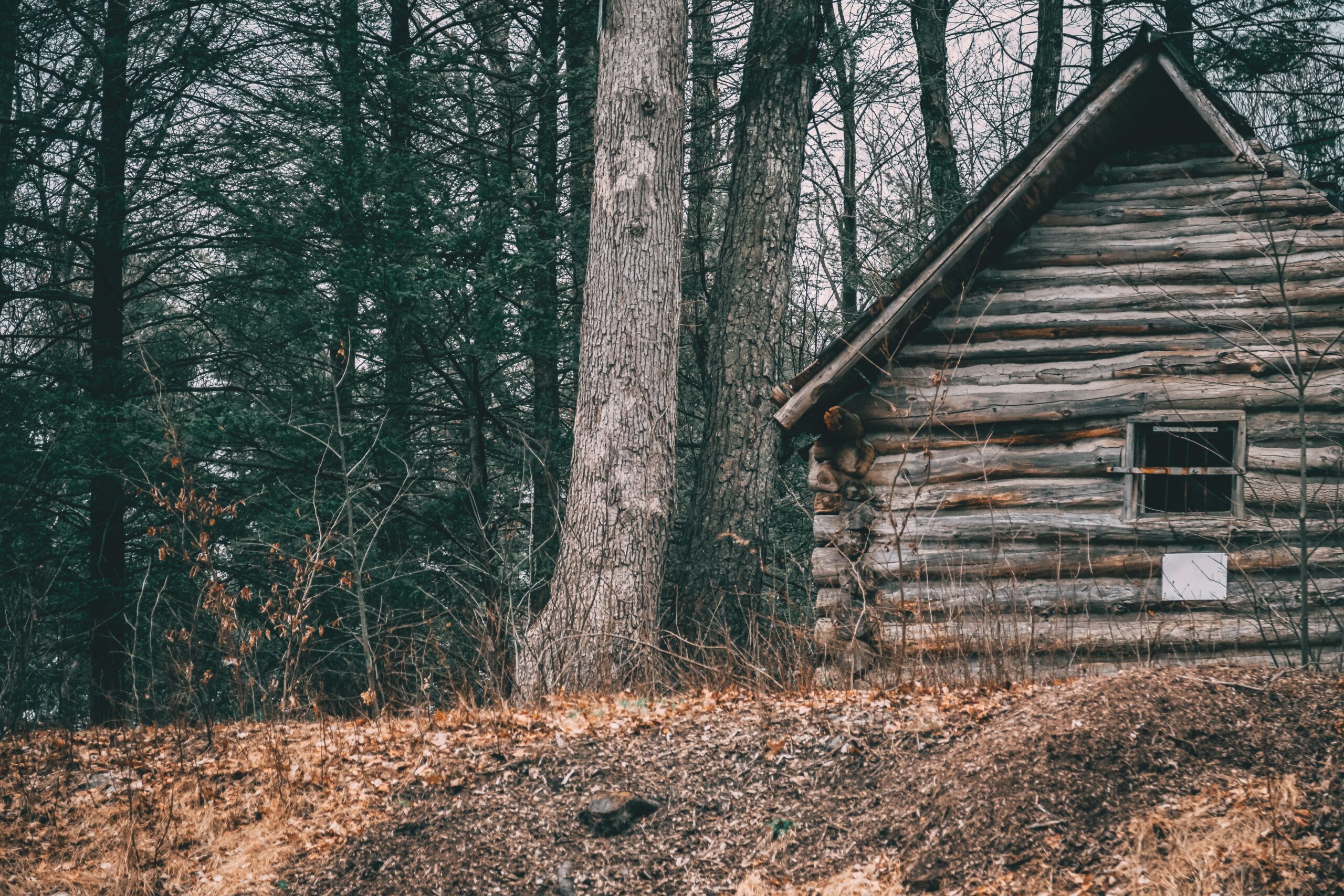
My grandfather bought this land seventy years ago, when the nearest paved road was three miles east and the only neighbors were other dairy farmers who understood that the smell of a working farm was just the smell of honest living.
He paid cash for sixty acres of rolling pasture, a timber-frame barn that needed a new roof, and a ridgeline view that he said on clear mornings looked like someone had painted it specifically to remind you that the world was worth getting up for. He ran cattle on it for thirty years. My father ran it after him, converted to row crops and hay, kept one corner of the lower pasture as kitchen garden until my mother passed and the garden went to clover. I took it over at thirty-two when my father’s knees gave out, and I have been here since, doing what farmers do, which is work until dark and wake up before light and try not to let the land get ahead of you.
The crown of the whole property is the oak tree on the eastern ridge.
Two hundred years old, give or take a decade. The trunk is wider than my arm span and then some. The canopy spreads forty feet in every direction, and in summer it puts out a shade so deep and complete that the ground beneath it stays damp on the hottest days of July. My grandfather used to say that tree was there before the county was a county, before the state was a state, before most of the families in the region had a great-great-grandmother to remember. He was not a sentimental man, my grandfather, but he talked about that tree with something close to reverence.
The ridge it sits on backs right up to the eastern property line. On the other side of that line is Whispering Pines.
There are no pines in Whispering Pines. There is vinyl fencing and professionally seeded lawns and a homeowners association with an aesthetic guidelines document that runs to forty-seven pages, or so I was informed later. The development went in about eight years ago, built on land that had been corn and soybean fields belonging to the Hadley family until old Frank Hadley decided he was done and sold to a developer from the city who correctly identified that people with money were increasingly interested in the idea of country living without any of the country’s actual inconveniences.
The houses are nice enough. Large, with good finishes, three-car garages. The kind of houses that photograph well. The people who moved in were, for the most part, not unreasonable. They waved when you passed. A few of them came by in the early years to introduce themselves, bring a pie, ask questions about the farm with genuine curiosity. I have no quarrel with any of them.
Then there was Brenda.
I met Brenda on a Tuesday morning in early April, the year before the wedding. I was fixing a fence post near the property line, the unglamorous work of driving a steel post driver in increments while sweat gathered under my collar, when I heard gravel crunching and looked up to see a woman crossing from the development side toward me with the stride of someone who has never in their life been walking somewhere without a purpose.
She was wearing white capri pants and a salmon blouse and a visor and she was clutching a plastic clipboard to her chest like it was documentation she intended to use. She stopped exactly at the fence line, looked down at her spotless tennis shoes with visible concern, and then looked up at me.
She did not say hello. She did not extend her hand.
She held up the clipboard and tapped it with one manicured finger. “You have a commercial vehicle parked in plain view of the subdivision. It is a violation of neighborhood aesthetic guidelines.”
I looked over my shoulder. Parked fifty yards away, entirely on my property and not within a hundred yards of her subdivision’s visible sightline, was my tractor. A big faded green machine that had been running since the Eisenhower administration. I turned back.
“That’s a tractor,” I said.
She sighed the way a kindergarten teacher sighs at a child who keeps eating paste. “Whatever it is, it is an eyesore. We have an open house at the model home this weekend and prospective buyers cannot be looking at agricultural debris. I am the president of the homeowners association. This is a formal warning. Next time, it is a fine.”
I looked at her. I looked at the tractor. I looked back at her.
“I don’t live in Whispering Pines,” I said, keeping my voice even. “I’m not in your association. This is a working farm and has been for seventy years.”
She adjusted her visor. Her smile was tight and completely without warmth. “We will see about that,” she said, and turned on her heel and marched back toward the subdivision, navigating the mud puddles with the precision of someone who had trained specifically for this moment.
I figured that was the end of it. I was wrong.
Over the following three months my mailbox became a repository for Brenda’s grievances with reality. I received printed notices about the height of my grass in the south pasture. I received a strongly worded letter about the smell of livestock, which was remarkable given that I had not kept livestock in four years and the only animal on the property was one elderly barn cat named Harold who had opinions about everything but kept them largely to himself. I received a notice about the visual impact of my hay bales, which are large cylindrical objects wrapped in white plastic that have been a feature of agricultural fields in this county for forty years and are, whatever else you might say about them, not something a homeowners association president gets to have opinions about.
I threw every letter into the wood stove without responding. I figured if I gave the situation no oxygen it would eventually burn itself out.
That was my first real mistake. Patience, with a person like Brenda, reads as permission.
The Friday in late September started like a normal day. Crisp air, the sky that particular shade of deep blue that only happens in the fall, long list of chores. I drove into town to pick up some parts for the baler, stopped at the diner for a sandwich, spent two hours at the feed store talking to people I had known for twenty years. I got back to the farm around two in the afternoon, turned up the gravel driveway, and looked toward the ridge the way I always do when I come home, checking the property the way farmers check things, automatically, out of habit.
I stopped the truck. I left the engine running.
There was a tent on my ridge.
Not a camping tent. A massive white marquee tent with peaked roofs and little pennant flags catching the afternoon breeze. I sat there for a moment with my hands on the wheel and let my brain process what my eyes were reporting. Then I put the truck in park and got out.
I walked up the hill with the dry September grass crunching under my boots. The closer I got the worse the accounting became. One hundred white folding chairs in perfect symmetrical rows under the oak tree. Floral arches wrapped in pink roses, four of them, positioned at the tent corners. A portable dance floor being assembled by four men in matching polo shirts who glanced at me and went back to work without any indication that they thought they were doing anything unusual.
And in the middle of it all, directing traffic with the focused energy of a general conducting a siege, was Brenda. She was wearing a beige pantsuit and carrying her clipboard and she was shouting at a teenager struggling with a stack of linen tablecloths.
I walked to the edge of the dance floor assembly.
“Brenda,” I said. My voice was very quiet.
She spun around. For one moment, a brief fraction of a second, her eyes went wide. Then her face settled back into its familiar arrangement of condescension and certainty.
“Oh, good, you’re here,” she said, as if she had been expecting me and was mildly annoyed at my tardiness. She waved one hand at my truck still sitting down the hill. “You’re going to need to move that. It’s ruining the sightlines.”
I stared at her for a long moment. Around me the assembly crew continued their work with the focused obliviousness of people who have decided that whatever is happening between these two adults is definitively not their problem.
“What is this, Brenda,” I said. It was not really a question.
“It’s a wedding,” she said, as if speaking to someone slow. “My niece is getting married tomorrow afternoon. I decided this ridge was the perfect venue. The sunset views are the best in the county.” She crossed her arms. “You have sixty acres. You’re not using this spot. It’s just weeds. We’ll be gone by Saturday night, cleanup crew Sunday morning. You need to learn to be a good neighbor for once in your life.”
There is a specific kind of rage that comes from having someone stand on your land, land your family has paid taxes on for seventy years, and explain to you in measured tones why they are perfectly entitled to be there. It is not the hot rage of an argument. It is cold. It settles in the back of your throat and behind your eyes. It is the rage of someone who has just been told that the rules do not apply to the person telling you about the rules.
I breathed through it.
“You have one hour,” I said.
“Excuse me?”
“One hour to get this tent and these chairs and that dance floor off my property. After that, I’m calling the sheriff.”
Brenda squared her shoulders and stepped toward me. She smelled aggressively of synthetic lavender. “Call them,” she said, and her voice dropped to something almost intimate in its confidence. “We have an easement. I checked the county records. This ridge falls under a historical scenic overlook provision. You cannot legally bar us. And the tent anchors are already in the ground. You can’t make us leave.”
I looked at her for a moment. Then I turned and walked down the hill and called the sheriff.
Two deputies arrived forty minutes later. I knew the older one vaguely from town. The younger one looked like he had passed his academy finals the previous week. We walked up the hill together and found Brenda waiting with her clipboard and a smile so constructed it could have been made in a factory.
She handed the older deputy a stack of papers. He squinted at them. He looked at the tent. He looked at me. He looked at the papers again.
I knew there was no scenic easement on that ridge. My grandfather had been meticulous about that when he sold the eastern parcels. What Brenda had printed out was a selection of highlighted HOA bylaws that had no bearing on my property whatsoever. But the deputy was not a property attorney, and the county clerk’s office was closed on a Friday afternoon, and he was not going to make a decision on a civil property dispute without documentation he could verify.
He handed the papers back to Brenda and told us both that this was a civil matter and we would need to take it to a judge on Monday. He could not pull down a rental tent without a court order. If he was wrong, the county was liable. If I touched it, I was liable for property damage. His advice was to let them have the party and sue the association next week.
He looked genuinely apologetic about this, which I appreciated, but apologies do not move tents.
The deputies left. Brenda went back to directing her setup crew with renewed energy. I walked down to the barn.
I sat on an overturned bucket in the dim light for a while, listening to the sound of the place. The barn had a particular quality of silence in the afternoon, full of the smell of old wood and motor oil and the accumulated dust of decades, and I had always found it easier to think in there than almost anywhere else.
The deputy was right about one thing. If I put a chainsaw to those tent poles I would be the one in handcuffs for property destruction. The law had just told me to wait my turn while someone held a party on my land without permission. The law was not wrong, exactly. It was just slow.
I heard a diesel engine on the driveway and looked up to see my neighbor Dave’s faded blue pickup pulling in.
Dave is in his sixties, built the way men get built when they have been doing physical labor their whole lives, and he uses words at roughly the rate of a dollar a piece, which means everything he says tends to be worth listening to. He came into the barn without knocking, because that is the kind of friendship we have, produced two cold bottles of root beer from his jacket pockets, opened his own with a pair of pliers he kept in his shirt pocket, and handed me mine.
He looked out the barn doors toward the ridge for a long moment.
“Big tent,” he said.
“Yeah.”
“Yours?”
“No.”
Dave took a slow drink of his root beer. He looked at the tent again. He looked down at his boots. Then he looked at the back corner of the barn.
In the shadows, where I kept it between the fall spreading season and the spring one, sat my manure spreader.
It is a beautiful machine in the way that honest agricultural equipment is beautiful, functional and powerful and purpose-built. It hooks to the power take-off shaft on the back of the tractor. It holds two thousand gallons of liquid dairy fertilizer. When you engage the shaft, a heavy steel auger spins at high speed and takes whatever is in the tank and throws it thirty feet into the air in a wide continuous arc. It is, in its intended use, one of the most effective ways to put nitrogen back into pasture grass.
Dave looked back at me.
“Grass looks a little thin up on that ridge,” he said.
“It does,” I agreed.
“Needs fertilizer.”
“It’s the right season for it.”
Dave nodded once, slowly, with the judicious manner of a man confirming a meteorological observation. “Need a hand greasing the auger bearings?” he asked.
“I’d appreciate that, Dave.”
We spent two hours getting the spreader ready. We greased the bearings and checked the auger and tested the hydraulic connections and hitched the whole rig to the old green tractor with the methodical attention of men who believe equipment should be treated with respect. When everything was in order, I drove the rig over to the dairy operation three miles down the road, owned by a man named Tom who had himself been on the receiving end of Brenda’s complaints about his trucks on the county highway. When I told Tom what I needed and why, he stood there for a moment with his thumbs in his front pockets and then he said he did not need any payment and fired up his pumps and filled my tank to the absolute brim with the most concentrated, pungent, eye-watering liquid dairy slurry his operation could produce.
This was not solid manure. Liquid dairy slurry is a different category of agricultural experience entirely. The smell does not simply occupy the air around you. It coats the back of your throat. It makes your eyes produce tears as a reflexive protective measure. It bonds to fabric and hair and upholstered surfaces in ways that require industrial solvents to address. It is, by most objective measures, one of the most aggressively olfactory substances produced by the normal operations of a working farm.
We parked the tractor in the barn and waited.
Saturday afternoon came in like a gift. Seventy-two degrees. A sky without a single cloud. A gentle, steady breeze blowing out of the west at about eight miles an hour, which, from my barn facing east, meant it was moving straight up the hill toward the ridge with the precision of something designed for a specific purpose.
The guests started arriving around three. They parked down in the subdivision and walked up the little path Brenda had mowed through my lower pasture, which was itself a trespass I had chosen to store away for later rather than address in the moment. I watched them through my binoculars from just inside the barn door.
They were dressed beautifully, the way people dress for outdoor weddings they have been anticipating for months. Men in sharp navy and charcoal suits. Women in pastel silk dresses with wide-brimmed hats. There were probably a hundred and twenty guests in total by the time the arrivals tapered off. A string quartet had set up in the corner of the tent and was playing something I recognized vaguely as Vivaldi, and the music drifted down the hill on the western breeze in a way that, under any other circumstances, would have been genuinely pleasant.
At three forty-five Brenda arrived.
She was wearing a floor-length silver gown that caught the late afternoon sun and she had clearly spent considerable time on her hair, which was lacquered into a structure of impressive architectural ambition. She moved through the assembled guests with the energy of someone who has built this moment in her imagination for months and is finally inhabiting it, pointing things out to the catering staff, adjusting centerpieces, beaming at the people she had assembled in this place she had taken without asking.
Dave checked his watch from the hay bale where he had situated himself.
“Four o’clock,” he said.
“Showtime,” I said.
I climbed into the tractor seat. The metal was warm from the afternoon sun. I put the key in and turned it and the old diesel engine woke up the way it always does, with a full-body shudder and then a steady chugging that you feel more in your chest than you hear with your ears. I let it warm up for thirty seconds. I put it in low gear. I rolled out of the barn into the afternoon light.
I did not hurry. I drove at exactly the pace you drive when you are doing agricultural work, slow and deliberate and entirely unremarkable, a farmer running equipment on his own property on a Saturday afternoon, which is not an unusual or suspicious thing in any respect.
The engine announced my approach well before I crested the ridge. As I came over the rise I could see the heads beginning to turn. The string quartet lost the thread of its melody for a moment. The men in suits shaded their eyes and squinted, trying to determine what a large green tractor was doing moving toward their wedding venue.
I drove parallel to the tent, maintaining a line about twenty feet from the nearest pole, close enough to be an undeniable presence, far enough that I was clearly on my own land doing my own work. The pasture under my wheels needed spreading. Anyone familiar with agricultural practice would have recognized immediately that this was the appropriate equipment for the task.
I reached down and engaged the power take-off.
Behind me the auger picked up speed with a rising mechanical whine, a sound that means business, a sound that means two thousand gallons of liquid dairy fertilizer are about to be introduced to the surrounding atmosphere at high velocity.
I pulled the release valve.
The slurry hit the spinning blades and erupted from the back of the spreader in a wide, high arc, a rich dark brown fan that the afternoon light caught in a way that was almost beautiful if you could divorce it from its immediate practical implications. The auger threw it thirty feet into the air and the westerly breeze caught it there, at the top of its arc, and carried it east.
The way liquid fertilizer spreads when dispersed at that height and caught by an eight-mile-an-hour wind is not dramatic in the way a fire hose would be dramatic. It is subtler and, in many ways, worse. It disperses into a fine mist that settles over a large area like an invisible fog. It does not arrive with a crash. It arrives like weather. Like a change in the atmosphere that you sense before you fully understand what it is.
The first indication the guests had was olfactory.
I watched through the corner of my eye as the front rows began to register it. A man in a light gray suit wrinkled his nose and looked at the shoes of the person next to him, as if searching for the source at ground level. The woman beside him put her hand over her mouth. A second later, the rest of the tent was doing the same.
The string quartet stopped playing. The cellist actually lowered his bow and looked at it, then looked at the air around him, as if the problem might be coming from the instrument.
Then the mist began to settle.
It freckled the white linen tablecloths with hundreds of tiny brown specks. It settled on the polished portable dance floor in a thin even coat. It touched the pink roses on the floral arches and beaded on the tent canvas above. It found the silk of the women’s dresses and the shoulders of the men’s suits and the carefully arranged hair of one hundred and twenty people who had come to celebrate a wedding in a meadow on a hill and had not, in any of their planning, accounted for this.
I kept driving. I did not look angry. I was not performing anything. I was a farmer operating equipment on his own property during the appropriate season for this type of work, looking straight ahead with the focused attention of a man who takes his agricultural responsibilities seriously.
The chaos had its own architecture. First the sounds of confusion, voices asking questions of each other, what is that, where is it coming from, is that, oh god is that. Then the scraping of chair legs as people stood. Then the first scream, high and brief, from a woman in pale yellow who felt a drop land on her bare shoulder and looked at it and understood instantly what it was.
The exodus was not orderly. People were grabbing each other’s arms, collecting purses and jackets, lifting the hems of silk dresses, moving in every direction at once in the way crowds move when the exit is unclear and the urgency is immediate. The catering staff were backing away from their tables. The string quartet was packing their cases with the focused speed of musicians who have decided that no hourly rate is sufficient for this situation.
Then there was Brenda.
She came out of the side of the tent like something launched. The silver gown was already acquiring its spots, small dark constellations appearing on the fabric as she crossed into the open air. Her hair, that architectural achievement, had received a generous fine-mist application and was beginning to reflect its altered condition in the afternoon sun. She was running toward the tractor with the focused intention of a woman who has decided that she can physically stop two thousand gallons of liquid dairy fertilizer through sheer force of will.
She was wearing four-inch wedge heels.
She was running across unpaved pasture ground that a farm animal had been digging up earlier in the week, which meant the surface included, at irregular and unpredictable intervals, gopher holes.
I watched it happen with the helpless inevitability of watching something fall.
Three strides. Four. On the fourth, her right heel found a hole with the precision of something that felt, in the moment, almost engineered. Her ankle rolled. Her arms went wide. Her body’s relationship with vertical was suddenly and catastrophically negotiated. She described a brief airborne arc, the silver gown catching the light one last time, and then she landed face-first in the pasture grass with a sound that I will not attempt to describe.
She slid perhaps two feet. She lay still.
My hand moved toward the throttle out of genuine reflex concern. But then she pushed herself up on her hands and knees. Her face was carrying a new layer of information. Her dress had made the intimate acquaintance of the soil and everything the soil had recently received. She looked up at me from a foot off the ground with an expression that went beyond rage, beyond humiliation, into some territory that did not have a name that I know.
I did not stop. I did not smile. I was a farmer doing his afternoon spreading, and I drove to the end of the ridge and made a wide slow turn and shut the valve and let the auger wind down and shifted into a higher gear and drove back down the hill to the barn.
When I cut the engine the silence was extraordinary.
Dave was still on his hay bale. He had not moved the entire time. He finished his root beer, set the empty bottle carefully on a wooden crate, and looked up at the ridge for a while.
“Looks like the party’s over,” he said.
“Looks like it,” I said.
I walked out to the driveway and looked up the hill. The guests were not walking down the mowed path. They were moving at a pace that could fairly be described as retreat, dresses hiked, shoes in hands, navigating the pasture with the frantic energy of people who have had an experience they intend to describe for years. The string quartet was hauling their cases in a tight formation, moving with the purposeful speed of people who have packed up under difficult conditions before and developed a system.
Brenda was not visible. She had apparently retreated to her house, which was the most sensible decision she had made in months.
An hour later the white box trucks arrived from the rental company. The crew was wearing industrial face masks. They worked at approximately twice the speed of the original setup, dismantling the floral arches and ripping up the dance floor panels and pulling the tent stakes and collapsing the marquee with a total absence of the careful attention they had probably been trained to apply. They loaded everything into the trucks with the focused efficiency of people who want to be somewhere else and understand that speed is the only variable they control.
By six o’clock the ridge was empty.
Just the oak tree standing in the early evening light, the pasture grass around it, the sky going orange at the horizon. The way it always looked. The way it had looked for two hundred years.
I never received a lawsuit. Farmers have the right to farm their own agricultural property with standard equipment during appropriate seasons, and I had not touched her tent, her chairs, or her dance floor, or anyone’s person. I had operated a spreader on pasture ground that genuinely needed nitrogen. The law is a complicated instrument but it tends, in such cases, to align with the farmer.
The rental company charged Brenda a cleaning fee that I heard through various channels was substantial. Several thousand dollars to decontaminate the tent canvas and the dance floor panels and the chair cushions. The niece married three days later in the community center banquet hall downtown. Brenda apparently did not attend, having contracted what mutual acquaintances described as a severe stomach illness that required her to remain at home for several days.
The HOA letters stopped. My mailbox returned to its rightful function of receiving utility bills and seed catalogs. I have not seen Brenda at the property line since.
About a week after the wedding, I got up early on a morning when the sky was still purple and there was frost on the truck windows. I made black coffee and put on my boots and walked up the driveway and all the way to the ridge.
I stood under the oak tree for a while and drank my coffee and looked out at the valley the way my grandfather used to look at it. The morning was coming in slow and quiet the way fall mornings do, the light changing by degrees.
I looked down at the grass under my feet.
Dave had been right. The pasture had needed it.
The grass was coming in thick and deep, the most intense shade of green I had seen on that ridge in years, growing up strong around the roots of a two-hundred-year-old oak tree that had been standing on this land since before anyone alive had a great-great-grandmother to remember.
I finished my coffee.
I walked back down to the barn and got to work.

Laura Bennett writes about complicated family dynamics, difficult conversations, and the quiet moments that change everything. Her stories focus on real-life tensions — inheritance disputes, strained marriages, loyalty tests — and the strength people find when they finally speak up. She believes the smallest decisions often carry the biggest consequences.