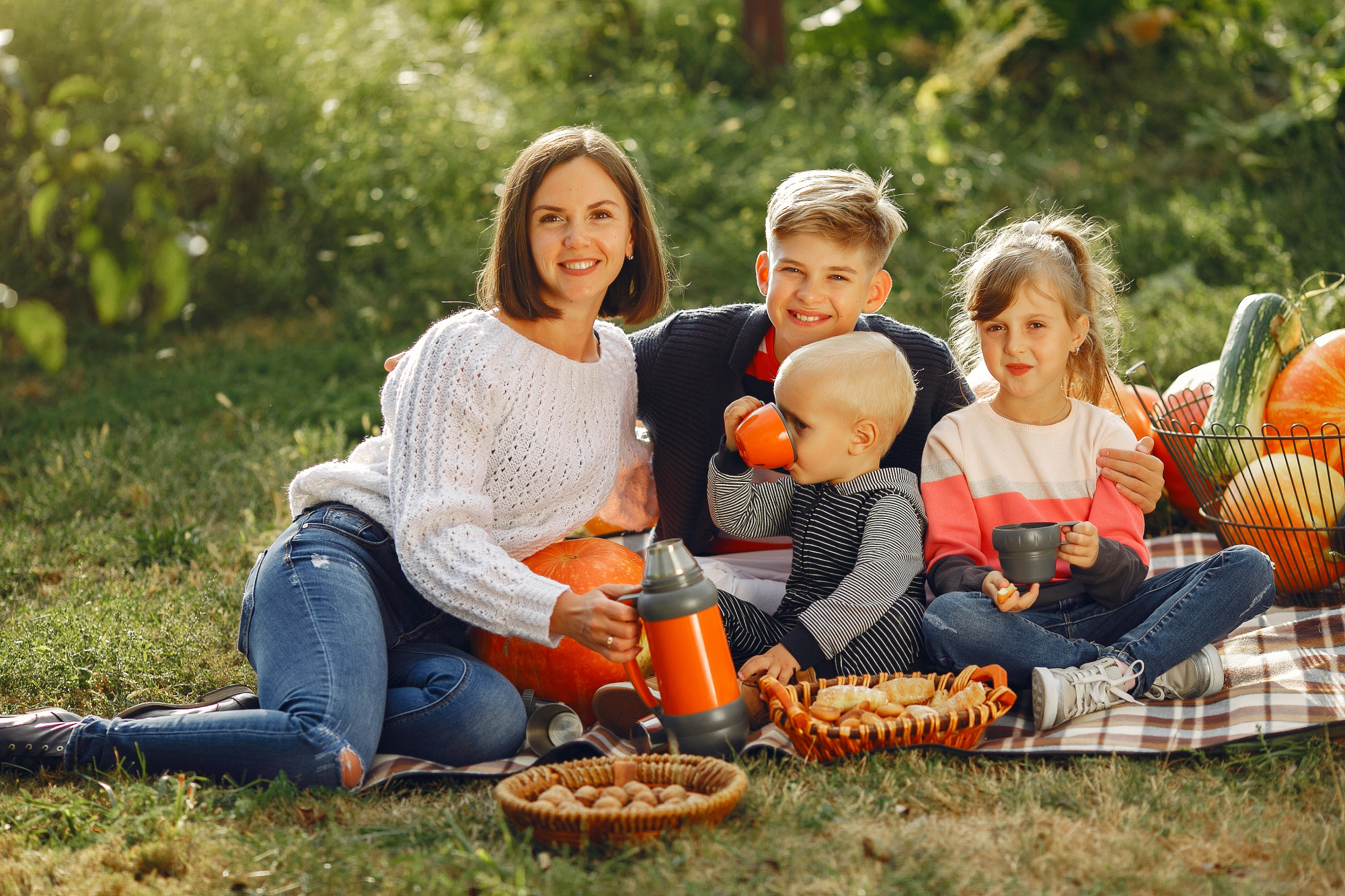
At the picnic, my seven year old daughter looked up from her paper plate with ketchup on the corner of her mouth and said, “I can’t wait for the beach.”
She said it the way children say things they believe completely, with the whole weight of her small body behind the words, as though summer itself belonged to her and the only question left was how soon it would arrive. She had been talking about Myrtle Beach for weeks. She had made a paper chain countdown out of construction paper strips, blue and yellow and pink, each loop uneven and shining with too much glue, each one numbered in purple marker with the careful, wobbly handwriting of a girl who treated every craft project like a legal document. Every morning she tore one loop off and announced the new number to the kitchen as though reporting from the front lines of joy. Twelve days. Eleven. Ten. She had seashell stickers in her purse to “practice beach feelings.” She had asked me four times whether the ocean was warmer than a bathtub and seemed genuinely disappointed when I said it depended.
My father was sitting across the patio table, one hand wrapped around a sweating can of Diet Coke, the other holding a burger he had not earned the right to enjoy at a family gathering he had not paid for at a house he still referred to as though he had built it with his own hands. He gave this low, easy chuckle, the particular sound certain men produce when they want cruelty to pass as common sense, when they want the room to receive something vicious as something practical, when they need everyone to laugh so that no one has to call what just happened by its real name.
“Kid,” he said, “you’re not invited.”
For one second, the backyard went still.
Then the table laughed.
My mother laughed behind her napkin, a soft, muffled sound that provided just enough deniability if anyone later accused her of participating. My uncle Ronald snorted into his potato salad. And my husband, Derek, smiled. Not a full laugh. I want to be precise about this because precision turned out to matter. He smiled the way a man smiles when he is relieved someone else has said the thing he was thinking, the way a coward smiles when the bully handles the dirty work and all he has to do is stand nearby looking agreeable.
My daughter’s face changed in real time. I watched it happen the way you watch something fall from a shelf, too fast to catch but slow enough to see every stage of the descent. The excitement drained first. Then confusion arrived, because she was seven and the sentence did not make sense to her yet. Then something worse. Recognition. The beginning of understanding that she had been excited about something the adults in her life had already decided to take from her, and that her excitement, which she had carried to this table like a gift, was funny to them.
That was the sound that ended my marriage, my obedience, and the last soft part of me that still believed my family might one day choose us back.
I did not yell.
I helped Lily put on her denim jacket. She had insisted on bringing it despite the ninety degree heat because she believed restaurants were “always winter inside” and had extended this logic to cover all buildings and most outdoor situations involving adults. I zipped it carefully, my hands performing the only task they could manage without shaking, and I picked up my purse, and I said, “We’re leaving.”
Nobody followed us.
My name is Adeline Moore, and I was thirty four years old the summer my father laughed at my daughter and my husband agreed with him at a patio table while I stood there holding a plate of brownies I had baked at six that morning because my mother said store bought desserts looked “sad.” I lived in a brick ranch house outside Charlotte, North Carolina, in a neighborhood where everyone had a Ring camera, a Costco membership, and a HOA with opinions about grass height that bordered on theological. My house was nothing spectacular. Three bedrooms, one old oak tree in the front yard, a kitchen with white cabinets I had repainted myself over a long weekend while Lily sat on the floor passing me painter’s tape like a tiny contractor who took her work very seriously. But it was mine. I signed the mortgage before Derek moved his sneaker collection into my hall closet and before my parents decided my income was a family resource.
I ran a small online consulting business. Marketing strategy, sales funnels, brand positioning, client retention for small companies. I had built it with a used laptop, terrible coffee, and the kind of exhaustion that makes your bones hum. I worked at a dental office during the day, waited tables three nights a week, and finished my degree one online class at a time after Lily went to bed. There were nights I answered client emails from the laundry room because it was the only spot where the baby monitor got a clear signal and I could fold onesies between invoices.
Nobody clapped when I started earning real money. They just started calling more often.
My father, Gene, believed every conversation had a winner and a loser. He used to run a construction supply business, back when he still had the energy to show up somewhere at seven in the morning instead of sitting in his recliner narrating the decline of civilization to anyone who could not escape the room. By the time I was in high school, the business was limping. By the time I was in college, it was mostly a story he told men at cookouts to explain why he understood the world better than people who still worked in it.
My mother, Patricia, made submission look like manners. She had a pearl necklace for church, a casserole recipe for every emergency, and a talent for making any wound seem like an inconvenience to the person who caused it. “Don’t make a scene, Adeline.” “You know how your father is.” “Family helps family.” Those three sentences built the cage I lived in for most of my life, and I did not realize it was a cage until I watched my daughter’s face crumble across a patio table and understood that they were building one for her too.
The Myrtle Beach trip had started as a phone call on a Wednesday evening in late May. I was at the kitchen table surrounded by invoices and Lily’s second grade homework. She was across from me, carefully coloring a sea turtle purple because, as she explained, “real turtles are probably bored of green.”
My father called with the voice he used when he wanted something, bright and expansive, like a man selling timeshares to someone who had not yet realized the ocean view was painted on a wall. He and my mother wanted a family beach week. Whole family. Myrtle Beach. A big rental house, right on the water. And of course, since I was “better with all that internet stuff,” I would handle the booking. He had dates. He had preferences. He had restaurant opinions and fishing charter research and a rental house with five bedrooms and a screened porch and a walkway over the dunes. He had everything except a credit card he intended to use.
I should have said no. The word was right there. Two letters. One syllable. A complete sentence. Instead I looked at my daughter’s face, lit up at the mention of a beach, and said, “Send me the link.”
I booked the house that night. Five bedrooms. Oceanfront. $3,800 deposit. Nonrefundable after forty eight hours. I stared at that line longer than I should have while Derek leaned over my shoulder eating cereal and said, “Nice. Your parents are gonna love that.”
“Lily is going to love it,” I said.
“Yeah, sure. Her too.”
I should have heard it then. The way my daughter was an afterthought even in the sentence about a trip I was booking for her joy. But I clicked confirm because I was still the version of myself who believed that enough generosity might eventually produce enough gratitude, that if I kept building the table bigger and better someone would finally notice who was paying for the lumber.
The next morning, Lily came out of her room with construction paper, safety scissors, and a glue stick she had already uncapped. She made the countdown chain in strips of blue, yellow, and pink. She wrote one number on each link. She taped it to the refrigerator and made me count out loud to fifteen while she stood on a chair beside me, bouncing with each number.
I should have known that joy that visible makes certain people want to break it.
At the picnic, the conversation had turned to the trip while Lily was near the hydrangeas, crouched over a beetle, close enough to hear everything the adults swore they were whispering. My father looked at Derek instead of me, which was the first indication that whatever was coming had been discussed before I arrived.
“We were thinking,” he said. “Might be better if it’s just the four of us. Me, your mother, you, and Derek.”
“What about Lily?” I asked.
My mother studied her napkin with the focused attention of a woman who had been told her lines and was waiting for her cue to not say them.
“Come on, Adeline,” my father said. “She’s seven. She won’t appreciate a house like that. She’ll get bored. She’ll want snacks and cartoons. Your mother needs to relax.”
I looked at Derek. I gave him a chance before I knew I was giving him his last one.
He leaned back in his chair. “Your dad’s got a point, babe. Stacy could watch her for the week. We’d get some time away.”
“Some time away from my child.”
“Don’t twist it.”
My father pointed at Derek with his burger. “See? He understands.”
That was when Lily ran over, breathless and bright, holding one of her seashell stickers. “Mom, I can’t wait for the vacation.”
And my father said what he said, and the table laughed, and my husband smiled.
I buckled Lily into her booster seat in the driveway while she tried not to cry. She was seven and she was trying not to cry in the back seat of my car because the adults in her life had treated her excitement like an inconvenience, and the effort she was making to be brave about it was the most violent thing I had ever witnessed at a family gathering.
“Mommy,” she said, voice small. “Did I do something?”
“No.”
“Grandpa said I’m not going.”
“I heard him.”
“Is it because I ask too many questions?”
I held the steering wheel until my knuckles went white and said, “It is not because of you. It is because some grownups forget how to be kind.”
She sniffed. “Derek didn’t say I could come.”
No. He did not.
I backed out of the driveway with my daughter crying quietly behind me and my husband still sitting at the table.
That night, after Lily was in bed, after she asked me twice if the beach was still happening, after she said she did not want to tear a loop off the chain tonight, after she asked me to close her door almost all the way, I sat at the kitchen table and stared at the paper chain hanging from the refrigerator. Twelve loops left. Twelve pieces of construction paper waiting for a trip my family had already decided to steal from her.
I called my cousin Brenna. She answered with, “Is he dead or are you crying?” I told her everything. She listened without interrupting, which scared me more than if she had cursed.
Then she said, “Cancel it.”
“It’s nonrefundable.”
“Consider it tuition.”
“For what?”
“For the class you keep failing called These People Do Not Love You Correctly.”
I looked at the refrigerator. Twelve loops.
“She made a paper chain,” I whispered.
“I know. That’s why you cancel. Not because you’re petty. Because you are not going to fund a beach week where your child is treated like luggage they decided not to bring.”
“It feels dramatic.”
“That’s Patricia talking out of your mouth. Spit her out.”
I pulled up the booking on my laptop. The cancel button was blue and small and it felt like detonating a bridge.
“What if they lose it?” I asked.
“They will.”
“What if Dad calls me selfish?”
“He will.”
“What if Derek…”
“Especially him.”
I clicked. The site asked if I was sure. I clicked again. A spinning circle appeared. For three seconds, I felt the old version of myself standing behind my chair, begging me to be reasonable, to smooth it over, to not become difficult to love.
The page refreshed.
Reservation canceled. Deposit forfeited.
I canceled the rental car next. Then the seafood restaurant my mother had requested. Then the fishing charter. Then the grocery delivery order for the first day. With every confirmation email, something unclenched in my chest.
I took the paper chain down from the refrigerator and tucked it into my dresser drawer. Not in the trash. Into the drawer. Because it was no longer a countdown. It was evidence.
For three days, I said nothing.
Derek talked about swim trunks. My mother texted sunscreen links. My father texted Derek about a fishing guide who knew “all the good spots.” The family hummed along in the key of assumption, and I let them, because for once I wanted my mother to experience the specific sensation of a silence she could not fill with my labor.
On Tuesday night, Lily asked about the chain. We were making spaghetti. “Mommy, where did the beach countdown go?”
I told her I put it away. I told her we were not going with Grandpa and Grandma. She asked if it was because of her. I knelt on the kitchen floor and said, “Because of them.”
She nodded with the gravity of a child joining a small resistance movement and whispered, “Can we still do something fun?”
“Yes.”
“Just us?”
“Yes.”
On Wednesday morning, the calls began.
My mother called at 9:04. Then 9:07. Then 9:11. By the time my client meeting ended at 9:42, I had eight missed calls, three voicemails, and six texts. The full name, Adeline Ann, appeared at 9:51, which was always the signal that Patricia had escalated from concerned to furious.
I poured myself coffee. The calls kept coming. Nine, ten, eleven, twelve. I reread the cancellation confirmation. Thirteen. I stared at the forfeited deposit amount. Fourteen. Fifteen.
At fifteen, the calls stopped.
I waited one hour. Then I typed one text.
No Lily, no trip. Hope you enjoy your summer.
I sent it and turned off my phone.
That was not the satisfying part. The satisfying part came later. The terrifying part came first.
Derek came home that evening furious enough to forget his usual charm. Lily was at a friend’s house, a mercy I had arranged because some instinct told me the evening would not be peaceful.
He slammed the door hard enough to rattle the window. “What did you do?”
“I canceled a reservation.”
“Are you insane?”
“No.”
“Do you have any idea what you just messed up?”
That sentence made me turn from the sink. Not ruined. Not canceled. Messed up. Like there had been gears moving beneath the beach house that I was not supposed to see.
“What did I mess up, Derek?”
His face flickered. Marriage teaches you the microexpressions of someone who lies badly and often.
“The trip,” he said.
“No. You said I messed something up.”
“Your dad had plans. Fishing. Dinner. Plans.”
“You came home shaking because of a fishing charter?”
He looked away.
That night, after he fell asleep, I did something I am not proud of and not sorry for. I opened his phone. His passcode was Lily’s birthday, which somehow made me hate him more.
The text thread with my father was near the top. Weeks of messages, not days. Screenshots of real estate listings near Myrtle Beach. A duplex. Then another. Someone named Curtis who “knew a guy at the bank.” Voice memos I did not play because I could already hear my father’s pitch in my head.
Then I found my name.
Gene: She listens better when she’s relaxed.
Derek: I can soften her up first couple days.
Gene: Good. Need her thinking family investment, not handout.
Derek: She’ll ask about risk.
Gene: That’s why the kid can’t be there. Distraction.
I stopped breathing.
Distraction.
My daughter, with her purple sea turtle and her paper chain and her brave little face in the back seat, was a distraction. They had discussed me like inventory. My father knew the beach house was on my card. Derek knew the trip was a setup. My mother, at minimum, knew Lily was being excluded before I did. And all of them expected me to arrive at the ocean, soften under sunshine and wine, and sign away money while my daughter sat home wondering what she had done wrong.
I took screenshots. I sent them to myself. I deleted the evidence from Derek’s sent folder. Then I put the phone back exactly where he left it.
Documentation, my attorney would later tell me, is not bitterness. It is memory with receipts.
The next evening, I asked Lily how she felt when Derek was home. Her hand stopped moving over Pancake the rabbit’s ear.
“I don’t like when he says I’m dramatic.”
“He says that to you?”
“Not like yelling. Just when I cry or ask for two chapters. He says, there she goes, just like your mom.”
I swallowed carefully.
“What else?”
“He eats my lunch snacks. When you buy the cheddar crackers, he eats them at night. And then you think you forgot to buy them.”
A tiny thing. A huge thing. A man does not need to hit a wall to make a house unsafe. Sometimes he just takes a child’s crackers and lets her mother blame herself for forgetting.
Lily’s eyes filled. “I didn’t want to tell you because you liked him.”
She climbed into my lap like she had been waiting months.
“I love you more than I have ever liked anyone,” I said into her hair.
She whispered, “Are we the bad guys?”
That sentence broke me in a clean line.
“No. We are absolutely not the bad guys.”
“I didn’t like pretending to like him.”
I had thought the picnic was the moment everything changed. I was wrong. It was that sentence, spoken in a dim bedroom by a child who had been carrying a truth too heavy for her because the adults around her had not been safe enough to receive it.
The next morning, I called a divorce attorney named Gloria Hutchins. Her office was in a converted house near Dilworth with hanging ferns on the porch and a conference room that smelled like coffee and printer toner. She was in her late fifties, silver hair cut blunt at her jaw, and she had the calm expression of a woman who had heard every variation of betrayal and no longer wasted energy being surprised by the plot.
She reviewed everything. The house, mine before the marriage. The business, mine. The savings, mine. The car Derek drove, in my name because his credit was “temporarily recovering” in the same way seasons are temporary on planets with no rotation.
“He contributes what monthly?” she asked.
“Groceries sometimes. Gas occasionally. Maybe a few hundred toward utilities twice in six months.”
She looked up over her glasses. “Mrs. Moore, he is not your partner. He is a dependent with a wedding ring.”
I showed her the screenshots.
Her expression changed for the first time. Not shock. Interest.
“Send those to me securely. Do not confront him. Do not negotiate without counsel. Change passwords. Separate what you can legally separate. And when the papers arrive, he will become either charming or frightening. Sometimes both in sequence. Do not mistake either for truth.”
The papers arrived on a Tuesday. Derek was at the kitchen table eating Lily’s cereal from one of the bowls she had picked out at Target, the pink one with tiny white clouds around the rim. A woman in slacks handed him the envelope on the porch. He tore it open in the hallway.
“No,” he said.
I held my coffee.
“You’re not serious.”
“I am.”
“Over a vacation?”
“Over all of it.”
He tossed the papers on the table. They landed beside the cereal bowl. “You think you can just throw me out?”
“I think you should call an attorney.”
“This is my home too.”
“No. It is where you live.”
From the hallway came a small voice.
“I’m fine.”
We both turned. Lily stood there in her pajamas, Pancake the rabbit tucked under one arm.
She looked at Derek. Then at me.
“I am fine,” she repeated.
Two words from a seven year old. A verdict delivered in pajamas. Derek did not know what to do with a child who refused to be his prop.
He moved out by Friday. To my parents’ house. The three people most offended by losing access to my money formed a household and called themselves victims. Brenna texted: So the parasites started a book club? I replied: Don’t insult book clubs.
While the divorce processed, my parents unraveled in small, noisy ways. My mother borrowed other people’s phones after I blocked her. Calls came from Megan, Uncle Ronald, a number I did not recognize that turned out to be Patricia’s friend Linda from church. I let them all go to voicemail. My uncle left a message informing me that my father had “made a joke” and that “everybody’s out money because you got emotional.” Everybody. As though the $3,800 had been a communal fund rather than my card, my account, my labor.
Megan came by the house unannounced. I opened the door but did not invite her in.
“Mom is really upset,” she said.
“I figured.”
“And Dad is under a lot of financial stress.”
“That is unfortunate.”
I told her what actually happened. The setup. Curtis. The duplex. Lily being excluded because my father called her a distraction. In writing. The color left Megan’s face.
“Mom didn’t mention that part,” she said.
“I am shocked.”
She left without getting what she came for.
The divorce finalized two months later. Derek kept his personal belongings. I kept my house, my business, my accounts, and my car. He received no share of the company he had never touched, no claim to the savings he had tried to help my father access. In the hallway outside the conference room, he caught me and said, “I did love you, you know.”
I looked at him. “I believe you loved what I made easy for you.”
He looked away first.
I picked Lily up early from summer camp and took her for ice cream. She ordered the absurd blue flavor that stained her tongue and asked, “Are we divorced now?”
“Yes.”
“Does that mean Derek can’t eat my cheddar crackers?”
I laughed so hard I cried.
My father, surprisingly, was the one who changed. Or began to. The distinction matters because change is not a single gesture. It is sustained behavior observed over time, and I had learned to measure it that way.
He emailed me weeks after the divorce. A long email, which was unlike him. He said he was wrong at the picnic. Wrong before the picnic. That what he said to Lily was cruel and what he planned with Derek was worse. He said he had told himself he was trying to save his house and his pride and his wife from worry, saving everything except the relationship he was burning down. He said he was not asking for money. He was asking if, someday, when I decided it was safe, he could apologize to Lily. Not explain. Not ask her to make him feel better. Apologize. If the answer was no, he would accept that.
I did not answer for a week. When I did, I wrote four sentences. I received your email. I am not ready for you to see Lily. If that changes, it will be on my timeline and with boundaries. Do not contact her or me through anyone else.
He replied: I understand.
Two words. And then, for the first time in my life, my father did what I asked. No follow up. No guilt. No uncle calling to lecture. No Megan dispatched to soften me.
My mother did not come around. Eventually a sympathy card arrived in the mail. On the front, a watercolor bird beside the words In Difficult Times. Inside, she had written: I hope one day you understand how painful this has been for all of us.
I laughed so sharply Lily called from the living room. I put the card in the recycling bin under a pizza box. That felt right.
By fall, the house felt like ours in a way it never had before. I painted the downstairs bathroom a soft green Derek once called “old lady soap.” Lily helped and got paint on her elbow, her sock, and somehow Pancake’s sailor hat. We rearranged the living room so the couch faced the windows instead of the television. I changed the locks, the passwords, the emergency contacts, and the streaming profile Derek had named Big D, which should have been grounds for divorce on its own.
My business grew. Not dramatically. Not in some cinematic montage. It grew because I had more energy when I stopped donating half my nervous system to other people’s emergencies. I took on new clients. I raised my rates. I stopped answering emails after six unless something was actually on fire.
Lily changed too. She slept better. She laughed louder. She started correcting adults again, which I took as a clinical sign of recovery. Her teacher, Mrs. Alvarez, pulled me aside at parent night and said, “She seems lighter this year.” The word hit me. Lighter. As though my daughter had been carrying a weight visible to everyone except the people who placed it on her.
In November, my father sent a handwritten letter addressed to Lily, sealed but enclosed in a larger envelope to me. On a sticky note he wrote: Please read first. If you think it would hurt her, throw it away.
The letter was short: Dear Lily, I said something unkind to you at the picnic. I laughed when I should have protected your feelings. That was wrong. You did not do anything to deserve it. You were not a problem or a distraction. I am sorry. Grandpa Gene.
No request. No invitation. No “I hope you can forgive me.”
I asked Lily if she wanted to hear it while we were making tacos, because hard conversations felt less sharp when somebody was dropping shredded lettuce on the floor.
“He remembered the distraction part?” she said.
“You knew that word?”
“I heard Derek say it on the phone one time.”
Another small knife, discovered late.
“Can I keep it?” she asked.
She folded the letter and placed it in the drawer with crayons, tape, and takeout menus. Then she went back to her taco. Children do not always need grand closure. Sometimes they need proof that the bad thing was real and not their fault.
My father saw Lily for the first time the following spring. My terms were clear. Public place. One hour. No gifts. No discussion of adult conflict. No Patricia.
We met at Freedom Park on a Saturday morning. My father was already there, sitting on a bench near the lake. He looked older. Not dramatically. Like a man who had finally encountered consequences with no one available to absorb them on his behalf.
Lily stayed close to my side. They talked about ducks and whether you could feed them bread. You could not, my father said, then glanced at me like he was checking whether answering was permitted. Oats were better. Lily said she liked oats in cookies. He said he did too.
It was ordinary. Ordinary felt enormous.
Near the playground, he asked if he could say something. He crouched, knees cracking, and told Lily he was sorry for what he said at the picnic. That he had been selfish and unkind. That adults are supposed to be careful with children’s hearts and he was not.
Lily looked at him for a long time.
“It made me feel bad,” she said.
“I know. I am sorry.”
“And I was excited.”
“I know.”
“And Mommy paid.”
His eyes flicked to me, then back.
“Yes. She did.”
Lily hugged Pancake tighter.
“Okay,” she said.
Not forgiveness. Not love. Okay. It was more than he deserved and exactly as much as she chose to give.
We stayed fifty two minutes. On the drive home, Lily said he seemed smaller. I told her sometimes people seem smaller when we stop being scared of them.
“Can we get donuts?” she asked.
“Yes.”
A year after the picnic, Lily and I went to Myrtle Beach ourselves.
I almost chose somewhere else to avoid the symbolism, then decided that avoiding a place because other people had stained it was another way of letting them keep something that belonged to us. I booked a condo. Two bedrooms. Not oceanfront, but close enough to hear waves through the balcony door. Fully refundable until a week before checkin, because I had become the kind of woman who read cancellation policies the way I used to read horoscopes: looking for warnings.
We made a new paper chain. Ten loops. Purple marker. On the last loop, instead of a number, Lily drew a tiny table.
“What’s that?” I asked.
“Our table,” she said.
“At the beach?”
“No. Just ours.”
I had to walk into the laundry room and pretend to check the dryer.
We drove down on a Friday morning. Lily packed Pancake, three books, a sketchpad, and cheddar crackers she announced were “not for husbands.” We ate at a seafood place with paper napkins and a waitlist scribbled on a clipboard. She ordered chicken tenders because children enjoy making coastal cuisine irrelevant. I ordered shrimp and grits and tipped twenty five percent because our server looked tired and kind.
Halfway through dinner, Lily looked around the restaurant, then back at me.
“Mom?”
“Yeah?”
“Nobody is missing.”
I followed her gaze. Two plates. Two waters. Pancake propped in the booth beside her wearing the ridiculous sailor hat we had bought him at a gift shop in Wilmington months earlier.
Nobody was missing. Because the people absent were not supposed to be there. “You’re right,” I said.
After dinner, we walked on the beach. The sky was streaked pink and orange and the water rushed over our feet, cool and foamy. Lily ran ahead and turned back, shouting for me to hurry. For a moment I saw the ghost of the other trip, the big house, the five bedrooms, my mother’s hat, my father’s pitch, Derek’s hand on my back guiding me toward a decision they had already rehearsed. Then a wave pulled back and the ghost went with it.
Lily found a shell shaped like a tiny broken heart.
“Can I keep it?” she asked.
“Yes.”
She put it in her pocket.
That night in the condo, after she fell asleep with sand still in her hair despite my best efforts, I sat at the small kitchen table and opened the notebook I had started keeping after the divorce. Not every day. Just when memory needed somewhere to go.
I wrote: Fifteen calls taught me I was allowed not to answer. $3,800 taught me freedom can look like a loss on paper. A paper chain taught me children remember who includes them.
Then I stopped, because the rest did not need polishing. It only needed living.
The last time I saw the original paper chain, Lily and I were cleaning out closets before third grade. She found it tucked in the dresser drawer beneath old birthday cards, held it up carefully, and said, “Is this the bad beach chain?”
“Yes.”
“Can we throw it away?”
I had kept it for a year. My proof. My artifact. My reminder not to soften history until it became usable against me again. But Lily was not asking to erase what happened. She was asking whether we still needed to carry it.
“Do you want to?” I said.
She nodded.
So we walked to the kitchen trash can and dropped it in on top of coffee grounds and a paper towel. The blue and yellow and pink loops collapsed into themselves. Lily dusted her hands.
“Can we make a new one for my birthday?”
“Yes.”
Fifteen loops, because her party was fifteen days away. When I saw the number I felt the old echo. Fifteen calls. Fifteen loops. Fifteen chances to answer guilt and choosing silence instead. But Lily was humming at the table, drawing balloons on the last link, and the number changed shape in my hands. It was hers now. Not theirs.
That is what healing did. It did not erase the math. It gave the numbers back.
People sometimes ask what the final straw was, expecting one clean answer. My father’s joke. Derek’s nod. The text messages about Curtis. The word distraction. My mother’s fifteen calls. The $3,800 deposit I set on fire so my family would understand that the wallet they had mocked was no longer sitting at their table.
But life rarely breaks at a single point. The final straw was all of it, stacked over years. Every unpaid loan renamed family help. Every insult softened into teasing. Every time my mother told me not to be dramatic when what she meant was, please do not make your pain visible enough to inconvenience us.
And yes, the picnic mattered. Because sometimes you do not realize how hot the water has become until someone tries to lower your child into it.
I climbed out. I wish I had done it sooner. I also know that sooner is a word people use when they are standing safely outside the maze. Inside, you move when you can. I moved when my daughter’s face crumbled across a patio table and the people who should have protected her laughed. That was late. It was also in time.
Boundaries are not magic. They do not make toxic people vanish. They make the door heavier. They make the lock louder. They make your own hand steadier when someone knocks with the old rhythm and expects you to open because you always have.
My mother still has not come around. My father is learning, slowly, imperfectly, without applause. Derek faded the way men like him do when the supply line closes. And Lily grew into a girl who corrects adults, argues about bedtime with the confidence of a seasoned negotiator, and writes stories about queens who build tables in the woods where only kind people can find them.
I kept one of those stories. I keep a lot of things now, but not the way I used to. I keep proof of love that does not charge interest. I keep receipts when I need them. I keep the shell shaped like a broken heart from Myrtle Beach. I do not keep people simply because they are family.
That used to sound cruel to me. Now it sounds like oxygen.
Because family is not the table where everyone eats your food and laughs when you bleed. Family is the person who helps you stand up from that table. Family is the cousin on the phone saying cancel it. Family is the child in the hallway saying I’m fine, even when she should never have had to be that brave. Family is the small kitchen where tacos are messy and the chairs do not match and nobody has to earn their place by being useful.
My daughter and I found that table. We built it ourselves, out of construction paper and cheddar crackers and one terrible blue ice cream cone and a rabbit in a sailor hat and every quiet evening where nobody raised their voice or made her feel like a problem to be solved. And the next time someone tells you that you are being dramatic for leaving a place where your child was mocked, remember this: a person who benefits from your silence will always call your boundary an overreaction.
Let them.
Pack the jacket. Cancel the trip. Block the number. Take your child home.
There are better tables waiting. Sometimes you have to lose $3,800, fifteen phone calls, and an entire false family to find the one where nobody laughs when your little girl says she cannot wait for the beach.

Specialty: Legal & Financial Drama
Michael Carter covers stories where money, power, and personal history collide. His writing often explores courtroom battles, business conflicts, and the subtle strategies people use when pushed into a corner. He focuses on grounded, realistic storytelling with attention to detail and believable motivations.