The Device
Part One: The Color of Her Face
It was not the tone of her voice that told me something was wrong. It was the color of her face.
Dr. Beatriz had been moving the transducer across my belly with the calm professionalism of someone who has performed this procedure thousands of times, narrating quietly as she went, the way experienced sonographers do when they want a patient to feel present rather than observed. The baby’s heart was strong. The spine was forming correctly. Seven months along and everything, she said, looked exactly as it should.
I had been holding my breath without realizing it, and when she said those words I felt something in my chest loosen, the particular relief of a woman who has been carrying a quiet, sourceless dread for weeks and is suddenly told she imagined it. I was about to cry. Not from grief, from the simple physical release of fear that has been held too long.
Then she moved the transducer a few centimeters to the left, and her face changed.
She did not speak. She narrowed her eyes at her own monitor and enlarged the image, and then she did something I had not expected. She turned off my screen. The one facing me went dark. She kept looking at hers.
She set the transducer down and turned to face me.
“Who followed your previous exams?” she asked. Her voice was quiet and deliberately controlled, the kind of voice that is working hard not to alarm.
“My husband,” I said. “Ricardo. He’s a gynecologist. He has his own practice.”
She looked at me for a moment with an expression I could not fully read. Then she said the words that changed everything.
“I need to run tests on you right now. There is something inside you that should not be there.”
I had come to that clinic alone, using a different name, paying with cash. I had told no one. I had told myself I was simply being cautious, that I wanted a second opinion to quiet the part of my mind that had been asking small, uncomfortable questions for months. I had told myself I was probably being too sensitive, that first pregnancies do this to women, that the anxiety was normal and the suspicion was not.
Sitting on that exam table with my screen turned dark and Dr. Beatriz already moving toward the phone, I understood that the anxiety had not been irrational. It had been correct.
Part Two: What Love Looked Like
My husband Ricardo had always presented his attentiveness as love, and for a long time I had accepted that presentation without examining what was underneath it.
He controlled my vitamins. He controlled my diet and my schedule and the temperature of the air conditioning at night because he said cold air could interfere with the quality of my sleep and he wanted me rested. He insisted on performing all of my prenatal examinations himself, in his own private practice, because he said he did not want another man examining me. I had understood this, in the beginning, as a form of devotion, the slightly suffocating but ultimately harmless protectiveness of a man who loved his wife very much and happened to have the professional credentials to act on that love in direct and practical ways.
I had mistaken surveillance for care. It is a mistake that is easier to make than people imagine, particularly when the person performing the surveillance is skilled at naming it as something else.
His mother Helena was the second element of a household I had been slowly trying to understand for the duration of my pregnancy. In public she was composed and gracious, the kind of woman who knew exactly how to perform warmth without producing it. In private she came to our house nearly every day, arriving with herbal tonics that smelled faintly medicinal and that she pressed on me with a persistence I found difficult to refuse. She touched my belly with a familiarity that made me uncomfortable in ways I could not articulate, because the gesture looked, from the outside, like the ordinary enthusiasm of a grandmother-to-be.
One afternoon she rested her hand on my stomach, smiled at a point somewhere past my shoulder, and murmured, almost to herself: “We have to take good care of this asset.”
I heard the word and something shifted in me. Asset. Not son. Not grandson. Not miracle, not child, not baby. Asset. I filed the word away in the part of my mind where I had been quietly collecting things that did not quite fit, things I had been telling myself had other explanations.
That was the word that finally sent me to Dr. Beatriz.
Part Three: The Shadow on the Screen
Dr. Beatriz brought in a colleague for the MRI she ordered that afternoon. She did not explain in detail what she had seen on the ultrasound, only that she wanted more imaging before she said anything definitive. I lay on the table and submitted to the machine’s noise and told myself that whatever she had found was probably something innocuous, a calcification, a cyst, something with a long technical name and a simple solution.
When she came back to speak with me, she brought a man from the hospital’s legal department. That was when I understood it was not going to be something simple.
The object visible in the imaging was not biological. It was not a tumor or an anomaly of tissue. It was a subcutaneous tracking device, a small capsule designed to collect and transmit biometric data, implanted in an internal region near my uterus through an invasive procedure performed while I was under sedation.
I stared at her while she said this and felt the words arrive one at a time, each one requiring its own moment of processing.
She told me she had found, attached to my registration with a biotechnology company, power of attorney documents and insurance agreements in which I was not listed as the primary beneficiary. The primary beneficiaries were Ricardo and his mother Helena.
I went back through my memory of the previous months, looking for the moment. She helped me find it. My fourth month, a day when Ricardo had given me medication and told me I needed rest, a day when I had woken several hours later with a gap in my recollection that he had explained as normal fatigue, as the body doing what it needed to do. It was recorded in my file as a preventive procedure. Nothing about that notation had alarmed anyone, because my husband was the doctor who had written it.
Dr. Beatriz explained the rest carefully, the way you explain something to a person who needs time to absorb each piece before the next one can be placed beside it. Ricardo and Helena had entered into a partnership with a private biotechnology company that was developing prenatal monitoring technology. The company needed demonstration data. They needed a real pregnancy, a real body, measurable biometric responses across months of gestation. I was not their wife and daughter-in-law. I was their research subject. My baby was not their son or their grandchild. He was their proof of concept.
The asset, I understood, had been the pregnancy itself. My body. Our data. All of it.
What they still needed, on the day I had gone to Dr. Beatriz, was my signature. Helena had planned to bring me to sign medical and property authorizations under the pretext of a gestational emergency, documents that would have retroactively legalized the procedure that had already been performed on me without my consent. If I had signed, the illegal would have become legal, and they would have had everything.
I had not signed. I had gone to a different clinic under a different name and paid with cash. And the woman who answered my ultrasound had been paying close enough attention to see the shadow on the screen.
Part Four: Behind the Door
That night, home in the bed I shared with Ricardo, I lay still and I thought about how I had been living inside a structure whose actual shape I had never been permitted to see.
I could not sleep. At two in the morning, I heard him get up and move through the dark hallway to his office. I waited a few minutes and then I followed, and I stood outside the door with my hand against the frame and I listened.
He was talking on the phone. The voice on the other end was his mother’s. I could tell from his side of the conversation, the particular shorthand of people who have had the same discussion many times.
He said she had gone to see another doctor. He said she did not suspect anything. There was a pause and then his voice shifted, became more urgent. He said if the other doctor had been suspicious they would need to anticipate everything. He said she could not leave the house alone tomorrow. He said he would take her himself. And then, almost in a whisper, the sentence that I pressed my hand to my mouth to keep from responding to: if they discovered the device before the signing, they would lose everything.
Device. Signing. Lose everything.
I stood in the hallway and felt my baby move inside me, the small private communication of a person who has no language yet and does not know what is happening on the other side of the warmth. I made myself walk back to the bedroom calmly and lie down and close my eyes before Ricardo returned. He lay beside me and placed his hand on my stomach.
“Our future depends on tomorrow,” he said quietly, to the dark.
He thought I was asleep. He thought tomorrow would unfold the way he had planned it. He did not know that I had been in the hallway. He did not know that I had already been to Dr. Beatriz. He did not know that a woman he had believed was manageable had spent months quietly noticing things she did not have words for yet, and that the word asset, spoken by his mother over my belly in the afternoon light, had finally given all those noticeless things somewhere to land.
I waited until his breathing settled into the rhythm of sleep. Then I reached for my phone.
Part Five: The Message
I sent Dr. Beatriz a message at 2:30 in the morning. I told her what I had heard. I told her what tomorrow was supposed to bring.
She replied in under two minutes: do not stay at home in the morning. Go straight to Santa Isabel Hospital. I have already prepared everything. Take someone you trust.
I thought of Lívia. My older cousin, a woman I had let recede from my life precisely because Ricardo had never liked her directness and I had accommodated his discomfort by gradually seeing her less. The last time we had argued, years earlier, she had held my face in her hands and said something I had dismissed at the time and thought about often since: coldness does not scare me. What scares me is control disguised as care.
I called her. She answered on the third ring, her voice thick with sleep.
I whispered: “Lívia, help me.”
Two seconds of silence. Then: “Send me your location. I’m on my way.”
At six in the morning, I told Ricardo I needed more sleep and listened to his footsteps move through the house and heard the gate close behind him. I dressed in the first clothes I found and left through the back. Lívia was already at the corner with her car, a rosary hanging from the rearview mirror, her eyes wide when she saw me.
“Oh my God, Clara,” she said.
Only then, hearing my own name spoken by someone who had simply always loved me without complication, did I finally break open. I cried in the passenger seat of her car while she drove, not asking me to explain, not saying anything, just driving toward the hospital with one hand on the wheel and one hand covering mine.
Part Six: Santa Isabel
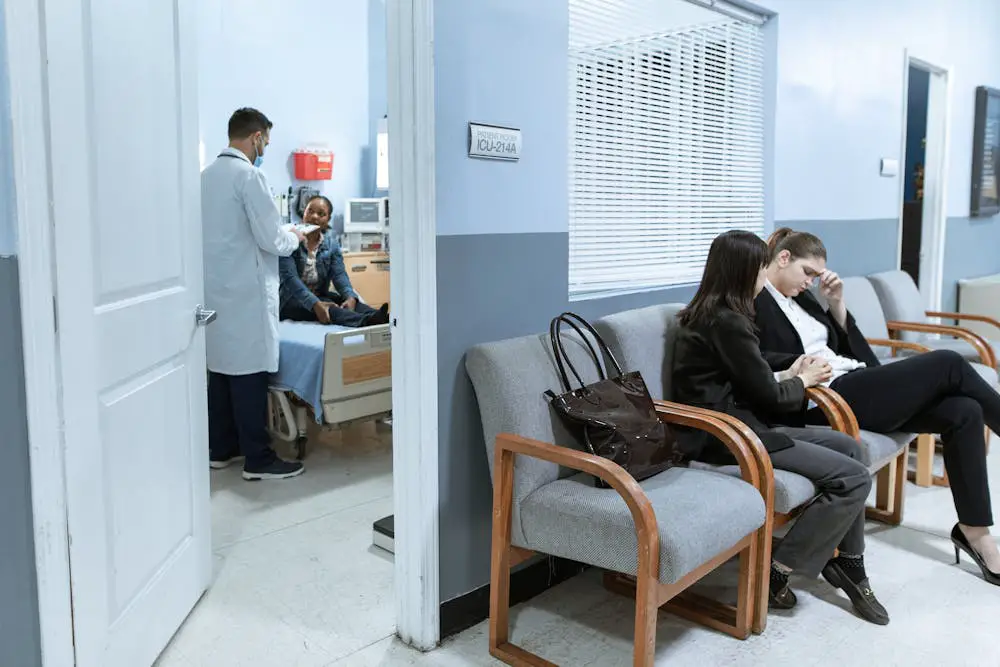
Dr. Beatriz was waiting when we arrived. She had a team prepared. The MRI they had scheduled the day before was performed that morning, and when she came back to speak with me afterward she brought the legal representative again, and this time there were two additional people, a woman from the public prosecutor’s office and a police officer who sat quietly at the side of the room and took notes.
The full account of what Ricardo and Helena had done was assembled in that room over the course of several hours. The device, its specifications, its manufacturer, the company that had commissioned its use. The contract between that company and a shell organization Ricardo had established two years before our wedding. The payment records. The documentation that identified my pregnancy as a research demonstration with commercial value attached to the outcome data.
They had placed a tracking and biometric monitoring device inside my body while I was sedated, recorded it in my medical file as a routine preventive procedure, and spent the subsequent months collecting data they had agreed to deliver to a private company in exchange for money I had never known existed. The emergency authorization Helena planned to have me sign the following day would have extended their rights over the data retroactively and transferred certain property interests in ways that I would not have understood until it was too late to undo them.
I had been, in the technical language of the documents in front of us, a research subject who had not consented.
The device was removed that day. I was afraid beforehand in a way that I have difficulty describing, the particular fear of a person who is about to go under anesthesia in a context where anesthesia has already been used against her. Dr. Beatriz held my hand until the sedative took effect and told me that when I woke up I would be safe.
When I woke up, Lívia was asleep in the chair beside the bed still holding my hand. She had not left.
Dr. Beatriz came in not long after, looking tired in the way of someone who has been working for a very long time without stopping. She told me everything had gone well. She told me the baby’s heart was strong. She smiled the careful, genuine smile of a woman who had understood what was at stake and had chosen to act before it was too late.
That afternoon, police arrived at Ricardo’s house with a warrant. They found contracts, patient records that had been concealed, money received through companies whose actual purpose had been obscured behind legitimate names. They found evidence that I was not the only woman who had been monitored, only the first to find out while there was still time to do something about it.
Ricardo told investigators it had been an innovative protocol. Helena said I was emotionally unstable. Neither explanation survived contact with the documents found in his office.
The preventive detention order was issued two days later.
Part Seven: Learning to Sleep
The months that followed were not linear. Recovery rarely is. I moved into Lívia’s apartment, into the room she had cleared for me without being asked, and I spent the first weeks relearning things I had apparently forgotten how to do without supervision. Eating without wondering who had chosen what I was eating. Sleeping through the night without listening for footsteps in the hallway. Making small decisions, where to walk, what to wear, which window to open, without performing the automatic internal calculation of how Ricardo would respond.
My father came from the countryside when he heard what had happened. He was a plain man, a farmer, someone who had always felt slightly out of place in the environment Ricardo had created around our marriage, and I think he had not known how to name his unease during the years when it had been only an unease. When he saw me at Lívia’s door, he cried in a way I had never seen from him, silently and completely, the crying of a person who is absorbing information they cannot revise.
He said: “Forgive me for not realizing, my daughter.”
I held him for a long time in the doorway and felt, for the first time in longer than I could trace, like someone’s child rather than someone’s subject.
Gabriel was born on a clear morning in November.
The room contained Lívia, Dr. Beatriz, two nurses, and my father sitting in the hallway outside with his hat in his hands. There was no Ricardo. There was no Helena. There was no one in that room who had any interest in the data my body was producing.
When Gabriel arrived he announced himself loudly, with the kind of fury that seems, in newborns, like an opinion about the world. When they placed him on my chest, I put my forehead against his and I whispered a sentence I had been forming for months without knowing it.
“You were never an asset. You were always a miracle.”
Part Eight: What She Said in the Park
Six months after Gabriel was born, I was sitting in the park on a quiet afternoon with the stroller beside me when a young woman approached. She was visibly pregnant and she had the eyes of someone who has been frightened for a long time and is not sure what to do about it.
She asked if I was Clara. She said she had seen the interview I had given after the trial, and that she had been Ricardo’s patient, and that because of what I had said publicly she had gone to have tests performed at a different clinic. They had found abnormalities in her records. She said that if I had not spoken, she would have continued to believe that whatever she was feeling was in her own head, that the small wrong notes she had been noticing were the product of anxiety and not of anything real.
I stood up and I held her.
In that embrace I understood something I had been arriving at slowly since the morning in the hospital hallway when Dr. Beatriz had turned off my screen. Surviving what had happened to me was the minimum. Surviving was necessary but it was not the thing. The thing was what came after surviving. The door I had found my way through had to stay open. Other women needed to be able to see it.
Part Nine: The Verdict
The trial concluded approximately a year after Gabriel’s birth.
Ricardo was convicted. Helena was convicted. Their medical licenses were revoked. Part of the compensation ordered by the court was allocated to a fund for victims of obstetric violence, women who had experienced harm within medical relationships that were supposed to protect them.
Dr. Beatriz brought me to the hospital one afternoon and showed me a new wing that had been partly funded by those reparations. On the door was a small plaque with a name I did not recognize.
“Espaço Aurora,” I read aloud.
She smiled. “It means a new beginning. Lívia suggested the name. She said it suited you.”
I stood in front of that door for a moment. I thought about the woman I had been on the morning I left through the back of the house in the first clothes I could find, walking toward a car on the corner, leaving behind a version of my life that had been constructed around my compliance. I thought about the hallway outside Ricardo’s office at two in the morning, standing with my hand against the doorframe, listening to the shape of everything I had not wanted to know. I thought about the ultrasound screen going dark.
That woman had been terrified. She had also been paying attention, for months, to the small things that did not quite fit, filing them away in a part of her mind that refused to be fully quieted even when the rest of her was doing everything she could to believe in the structure around her.
She had not been wrong. She had been correct, and her correctness had been the thing that saved her life and her son’s life and, eventually, the lives of women she had never met.
Today Gabriel runs through the apartment calling for me with his mouth full of crackers and his opinions fully formed and his understanding of the word no still entirely theoretical. He is loud and willful and healthy. He looks, sometimes, at the world with an expression of pure uncomplicated curiosity that I find extraordinary, the face of a person who has not yet learned to edit what he sees before he responds to it.
I am learning from him.
There are moments, still, when I hear a particular kind of silence in a room and feel the old alertness come back, the trained attention that developed across months of living inside a carefully managed environment. It passes more quickly now than it used to. The alertness belongs to a different life, a life that ended in a hospital room with a device being removed from my body and a woman I barely knew holding my hand while I went under.
The new life began when I woke up.
Lívia was still holding my hand. Gabriel’s heart was strong. Dr. Beatriz was standing in the doorway with tired eyes and an honest smile.
And outside the window of Santa Isabel Hospital, on a morning in the year that changed everything, the light was doing what it does at that hour in that city, arriving at a low angle across the rooftops, falling on ordinary streets with the particular quality of light that belongs to the very beginning of a day, before anything has been decided about it yet.
Before anyone has had a chance to rewrite it.
I named my son Gabriel. I named him for the announcement, for the moment when something arrives that changes the order of things and cannot be taken back.
He was never an asset.
He was always the beginning.

Lila Hart is a dedicated Digital Archivist and Research Specialist with a keen eye for preserving and curating meaningful content. At TheArchivists, she specializes in organizing and managing digital archives, ensuring that valuable stories and historical moments are accessible for generations to come.
Lila earned her degree in History and Archival Studies from the University of Edinburgh, where she cultivated her passion for documenting the past and preserving cultural heritage. Her expertise lies in combining traditional archival techniques with modern digital tools, allowing her to create comprehensive and engaging collections that resonate with audiences worldwide.
At TheArchivists, Lila is known for her meticulous attention to detail and her ability to uncover hidden gems within extensive archives. Her work is praised for its depth, authenticity, and contribution to the preservation of knowledge in the digital age.
Driven by a commitment to preserving stories that matter, Lila is passionate about exploring the intersection of history and technology. Her goal is to ensure that every piece of content she handles reflects the richness of human experiences and remains a source of inspiration for years to come.