What Grew After
Part One: The Year of Endurance
My name is Amy Jackson. I am fifty-two years old, and the story I am about to tell you did not begin with my husband calling to tell me he had demolished my mother’s house. It began much earlier, in the quiet accumulation of a marriage where I kept confusing endurance for peace.
I married Scott when I was thirty. He was stable, employed, polite in public, and good enough at playing the role of a dependable man that I did not question what sat underneath until the cost of not questioning it became too high to bear. We built the kind of life that looks ordinary from every angle: school pickups, soccer games, flu seasons, tax seasons, birthday cakes from the grocery store. We lived in corporate housing tied to Scott’s employer, a regional construction supplier that offered apartments to senior staff. The rent was low and the commute was manageable and I did not think very hard about the fact that the roof over our heads was not truly ours.
Scott was an only child, and his parents made it clear from the first year of our marriage that they considered our current life a temporary arrangement before we eventually folded ourselves into theirs. His mother liked to call herself direct. His father liked to call himself traditional. What they were, in practice, was selfish with an air of authority that had never once been challenged by anyone with the legal means to do it.
My parents lived forty minutes away in the house my brother and I grew up in. A modest split-level with cedar siding gone silver over the decades, a deep front yard, and a narrow back deck my father rebuilt twice with his own hands. A dogwood near the driveway. Lilacs along the back fence. Yellowed vinyl in the kitchen my mother always meant to replace. An upstairs bathroom door that stuck in humidity. A basement that smelled like cardboard and old winters.
It was not a fancy house. It was home.
My father died on a winter afternoon, on an icy road, with a state trooper at the hospital and a doctor whose mouth kept moving while my mind stalled out somewhere between had an accident and we did everything we could. He was sixty-eight. He was supposed to have more time.
Three weeks after we buried him, my mother’s jeans hung loose on her hips and her cheekbones had sharpened to something frightening. I took her to the hospital assuming grief. The oncologist was kind in the brutal way doctors develop after too many years of bad news. Advanced cancer. Inoperable. Treatment could buy time. Not much. Maybe a year if everything went well.
I sat in the hospital parking garage with both hands on the wheel and did not start the car for twenty minutes.
My brother wanted to come back from across the country. We talked for hours. We cried. We worked through options like practical adults, which is just another name for heartbroken children doing math. In the end there was no real choice. I was the one who could stay.
That night I told Scott I wanted to move into my mother’s house.
He looked at me as if I had announced something faintly offensive.
“Now you want me dragged into another year of your family’s problems?”
There was a weariness in his voice that sounded rehearsed, as if my grief had inconvenienced him on a scheduling level.
I told him she was sick, that she could not be alone, that it was more than appointments. He asked whether it had to become our whole life, and when I offered to stay there most nights and come back when I could, he said the quiet part aloud. Who was going to cook? Clean? Do laundry?
That was Scott in one line. Not worried about me. Not sad for my mother. Just a man startled by the possibility that his own socks might become his responsibility.
I should have told him to go to hell.
Instead I softened my own pain so the room would stay calm. That is what women like me have been trained to do for generations. I thanked him. I hate that I thanked him.
Part Two: The House on the Good Side of Town
The next year became a blur of casseroles, pill organizers, insurance calls, and the slow humiliations that illness brings to proud people. I learned how to time nausea medication, which soups she could tolerate, that on good mornings she liked the blinds open but on bad ones even the sound of dishes hurt. I learned how to make a bed with a body still in it. I learned how to smile in front of her and then sit in the garage afterward with both hands over my mouth so she would not hear me breaking apart.
Scott came and went like a resentful tenant. He complained about the shower pressure, the medicine smell, the local news she watched in the afternoons. When he came home from work he wanted dinner waiting, the remote within reach, and an atmosphere free of grief, as if sadness were something I was tracking in on my shoes.
His parents visited twice and managed to make both visits feel like inspections. His mother touched the lace curtain with two fingers and said she supposed it was roomy. His father stood in the kitchen and declared there was no resale value. My mother was sitting ten feet away. Scott said nothing.
Late at night when my mother finally slept, I sat at the kitchen table with a legal pad writing down medication times, billing due dates, and once, in the margin without thinking, the sentence I am alone in my marriage. I tore that sheet off and threw it away. But it was true.
The last winter of her life was the hardest. She deteriorated in steps. Her voice thinned. Her hands became bird-light and cold even under blankets. She apologized for things that needed no apology.
Sorry I am so much trouble. Sorry I do not look like myself. Sorry you have to see me this way.
I would sit on the edge of her bed and say you are not trouble, you are my mother, stop apologizing for needing me.
Once, very late, after a bad pain day, she held my wrist and said: “Don’t let anyone make you small just because you know how to endure.”
At the time I thought she was delirious from medication.
Later I realized she had never been clearer.
She died five days after being admitted to the hospital. I was with her. My brother made it in time. My children made it in time. Scott was there technically, in the way some people can be present in a room and absent in every way that matters.
At the funeral home, while I was choosing a casket and trying not to think about the fact that my mother loved blue and everything in the sample room was beige or pink, Scott stood in a corner with his parents laughing over something on his father’s phone.
At the visitation I asked him to sit with the family. He said he was fine in the back. He was not blood. I told him he was my husband. Before he could answer, his mother stepped in to explain that it was more appropriate for him to remain with the relatives, that he was not my mother’s son.
Appropriate. There are words so cold they make your skin feel thin.
People noticed. One elderly cousin asked me gently whether Scott and I were having trouble. I smiled through my own mother’s funeral and said no, nothing like that.
After the burial, everyone came back to the house. I brought tea to Scott’s parents because that was the kind of woman I was then. His mother took the cup, sipped, and said with a little laugh that at least that was the end of it. His father added something about funerals being expensive and people not thinking about the burden on everybody else. Everybody else. As if my parents had died at them.
I put the tray down very carefully and walked into the hall because I could not trust my face. That is where I heard them talking in the den. Scott’s father said something about living with outsiders being a pain. Scott laughed and said Amy always expected everyone to rearrange their lives around her emotions. His mother said a husband should refuse whatever did not suit him. And Scott said exactly.
That was the moment something in me stopped begging for fairness.
Then his mother walked back into the living room carrying my mother’s purse. My mother’s body had not been gone from the house twenty-four hours.
“Can I keep this?” she asked, turning the leather over in her hands.
I took it back.
“No.”
Her face changed instantly, not with shame, but with the outrage of someone who has been contradicted.
“We are not sorting through my mother’s belongings today,” I said.
She drew herself up and said she was an outsider now, apparently. I heard myself say that she had declared Scott an outsider at the funeral, so which was it: he was an outsider, but she got to shop through my mother’s things?
The room went still.
Eric said the grandparents needed to stop talking to me that way. Judy stood beside me with her jaw set and said nothing at all, which was more condemning than shouting would have been.
Scott left with his parents in a storm of injured pride.
He did not come home for days. I did not call him.
Part Three: The Spa Trip
When he finally returned he brought travel vouchers. He stood in the kitchen with an envelope and the emotional range of a man returning a defective appliance, said it had been rough, suggested I take the kids somewhere, and handed me the envelope.
Inside were vouchers for a resort spa in the mountains. Enough for me and both children, several nights.
I cried. I am almost embarrassed to admit that now. But exhaustion makes fools of decent people. When you have been starved of tenderness long enough, even a dry crust of it feels like something. I thought maybe grief had cracked something open in him. Maybe he was trying clumsily to find his way back to me.
The trip itself was beautiful in the quietest way. Steam over mineral pools. Pine trees against morning mist. Judy sleeping late for once. Eric teasing us over breakfast. One afternoon we sat in Adirondack chairs wrapped in hotel robes and talked about my parents until the conversation stopped hurting and started warming us. I thought maybe this was the beginning of something softer.
I did not know that while I was soaking in hot springs with my children, my husband was arranging to erase the last house on earth where I had ever been fully loved.
Part Four: What I Came Home To
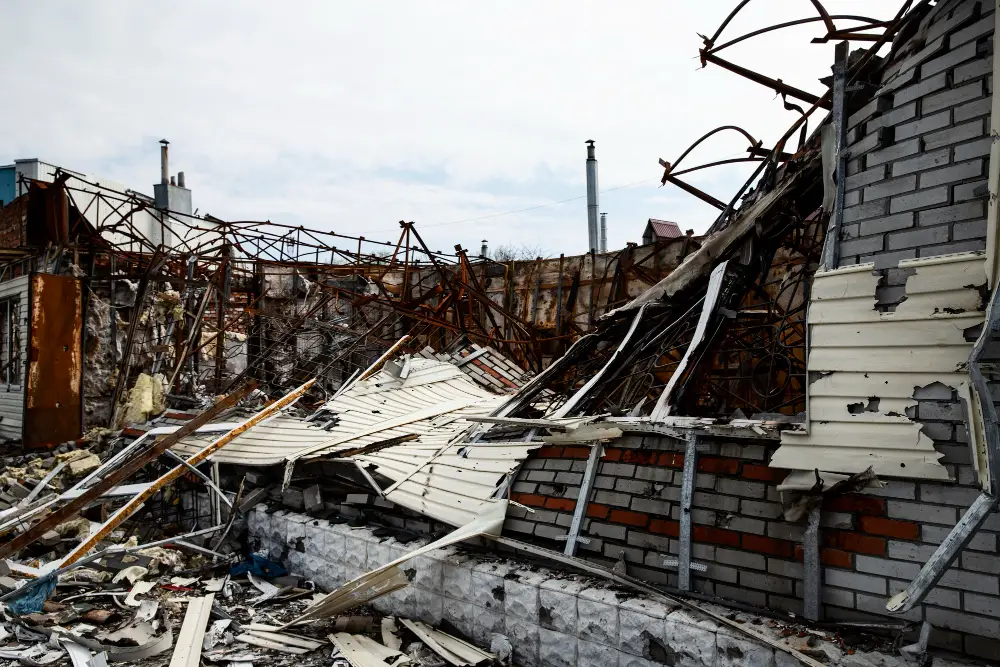
I came back on a gray afternoon. The first thing I noticed was the sky looking wrong over the neighborhood. Then I understood it was not the sky. It was space. Too much of it. I slowed before I had even turned fully onto my mother’s street, hands tightening on the wheel, eyes rejecting what they were seeing.
The dogwood near the driveway was snapped in half. The front steps were rubble. The roofline was gone.
The house was gone.
Not damaged. Not boarded up. Gone. The lot was a wound of churned mud, broken lumber, insulation, bent pipes, and crushed memory. I saw blue bathroom tile in a pile of debris. The metal skeleton of my mother’s kitchen table shoved sideways under splintered beams. A cabinet door with its brass knob still attached. Part of the hallway banister my father had refinished when I was twelve.
I could not breathe.
Then I heard clapping.
Scott stepped out from beside a pickup truck with the expression of a man proud of having solved a problem. His parents came with him. All three were smiling.
If they had been frightened or ashamed or even defensive, something human, I might have fallen apart. But they were pleased. Pleased with themselves.
“Finally free of that burden,” Scott called, arms spread toward the ruined lot.
His father said there was no point hanging onto old junk.
His mother smiled with a bright expectant greed that made my skin crawl. “Now hurry up and bring the inheritance over. No reason to drag this out.”
I got out of the car because my legs moved before my mind did.
He told me the house was falling apart, that this solved everything, that he was done pretending, that his parents were moving in with us, that we would use the inheritance properly.
“Inheritance,” I said. “And where exactly would we all be living?”
“My house,” he said.
My house. He was standing on my mother’s demolished lot, talking about my house, as if destruction itself were a form of ownership.
I asked what he thought he was doing.
He said he had made a decision I was too emotional to make.
His father crossed his arms and told me I should be thanking them.
His mother said at least now I would not cling to it.
It was too much. The greed. The certainty. The way they had all spent days imagining my estate money sliding neatly into their hands. Something in me flipped, and I laughed. Not because anything was funny. Because they had just destroyed the wrong fantasy.
Scott looked offended. “Why are you laughing?”
I laughed harder.
Here were three adults standing in front of wreckage they had caused, waiting to be rewarded for it, and they did not understand how badly they had miscalculated.
There was no inheritance. I told them so. My brother and I had discussed my mother’s estate months earlier while she was still lucid enough to make her wishes known. I had taken none of the liquid assets. He had taken the cash and stocks because he lived across the country and I could manage the house in person. The property still belonged to my mother’s estate when they demolished it. Probate was not even finished.
The silence that followed had a specific quality.
Then Scott said I was lying.
I told him I was not. His mother’s face drained.
When his father stepped forward and told me to get the money from my brother, my laughter disappeared entirely.
I looked at the mud. At the snapped lilacs. At the debris pile that had been the kitchen where my mother hummed while washing grapes. At the crushed frame of the porch swing my father hung the summer after I left for college. I felt something cold and solid settle into place.
“What I am getting,” I said, “is a lawyer.”
Then I got back in my car and drove away before the shaking started.
Part Five: Linda Mercer
I parked in the lot behind a pharmacy two towns over and finally let myself sob so hard my chest hurt. It was not just the house. It was what the act meant. He had used my absence and my grief and the one gentle gesture I thought he had made to stage the perfect betrayal. He had smiled while he did it.
When I could breathe again, I called a lawyer. A real one, not a friend of a friend. A probate and property attorney named Linda Mercer whose office was in a brick building downtown over a coffee shop. She had the kind of sharp, calm face that makes you believe bad men lose sleep after meeting her.
She listened without interrupting. Really listened. I cannot explain how startling that felt after so long with Scott.
When I finished she folded her hands and said, “Let me make sure I understand. Your mother’s estate still held title at the time of demolition?”
“Yes.”
“Were permits pulled?”
“I don’t know.”
“Was a licensed contractor used?”
“I don’t know that either.”
“Did you authorize any demolition?”
“No.”
She nodded once. “Then let’s begin with the fact that your husband and his father are either remarkably arrogant or remarkably stupid.”
That was the first time I felt anything close to relief.
By the next afternoon, Linda had more answers than I had thought possible. No permit had been issued. No licensed demolition company had been hired. Scott’s father had borrowed equipment through a former coworker and recruited two old contacts from a demolition crew. They had spent three days taking the house down while I was away. A neighbor’s security camera caught enough to establish who was on site. Another neighbor had filmed part of the demolition from her back porch because she could not figure out why there was no official vehicle present.
Linda played the footage for me in her office. There was my husband in work gloves, standing on the front lawn giving directions while an excavator clawed through my parents’ roof.
I watched my entire marriage leave my body in one clean movement.
My brother signed whatever Linda put in front of him within forty-eight hours. If it helped bury Scott, he said on the phone, his voice thick with a rage I had not heard from him since we were teenagers, he would hand me the whole estate.
Part Six: The Marketplace Listings
Then Judy found the app.
She was scrolling through a local marketplace on a Saturday morning when she called out that something looked like my mother’s apron. I looked over without particular interest. Then I took the phone from her.
A blue cotton apron with tiny white strawberries and a crooked pocket I had sewn myself because my mother said store-bought ones never sat right on her. Underneath it were other listings. A ceramic mixing bowl with a hairline crack. A recipe tin covered in faded cherries. A lamp from the guest room. My mother’s hand mirror. Her sewing basket. Her winter casserole dishes. Nearly fifty listings under an account created two weeks earlier, with photos taken in what looked unmistakably like Scott’s parents’ den.
I called Scott immediately.
He denied knowing what I was talking about.
I went to his parents’ house with Judy.
His mother came out of the den when she heard us and actually smiled when she saw my daughter. Then Judy held up the phone with a screenshot of the listings, and Scott’s mother looked from the screen to me.
Then she laughed. Not nervously. Not defensively. Brightly.
“As if Scott would do all that work,” she said. “I’m the one selling them.”
Judy started crying. Not loudly. Just the stunned tears of someone watching an older person reveal themselves as smaller than she ever imagined.
Scott’s mother kept talking, cheerfully describing the photographs, the tedious back-and-forth with strangers, the inconvenience of it all, as if she were describing a pleasant hobby rather than confessing theft. When Judy said those were her grandmother’s things, Scott’s mother shrugged. She had kept some pieces, sold some, used some. Better than letting it rot in boxes.
I took Judy by the arm and said we were leaving.
We drove straight to the police station. An officer took the report. Another helped us document the listings before they disappeared. Because the account was active and the items identifiable, the platform froze the seller account that same day pending investigation.
On the way back I called Scott.
“I filed a police report,” I said.
He said that was over family stuff.
“Over theft,” I said.
“We’re family.”
“No. We are people who share a legal problem.”
Before I hung up I told him his father looked sick. He should see a doctor. Scott was so surprised he forgot to lie. A week later his father went to the hospital anyway.
Terminal cancer.
Scott called me in a panic. I thought of my mother in the recliner. My father’s casket. The purse in his mother’s hands. The excavator through my childhood roof.
“What did your father tell me?” I said. “He said he wasn’t frail or short-lived like my parents. I suppose he should follow his own advice.”
His father died not long afterward.
Eric attended the funeral because Eric was trying to be the kind of man who honors family even when family makes that difficult. The will left the house not to Scott and not to his mother, but to Eric.
Part Seven: The Survey Stakes
At first I told Eric to disclaim it. Let it go. The house was a burden. Taxes, repairs, his grandmother living in it. He shook his head and I saw something working in him. Not rashness. Moral calculation, which is a different and more serious thing.
Around this same time, my civil case gained momentum. The neighbor videos were devastating. The lack of permits was indisputable. The theft report over my mother’s belongings gave Linda leverage we had not anticipated. Linda deposed Scott in a conference room so cold I kept my cardigan on through the whole thing.
She asked whether I had authorized demolition of the property.
He said he believed I would have wanted it done.
She said that was not what she had asked.
He said no.
She asked whether the estate had authorized demolition. No. Whether he owned the property. No. Whether he had removed personal belongings from the home before demolition.
He said he did not remember.
She slid photographs of the marketplace listings across the table.
He remembered very quickly.
Eric asked me one Thursday afternoon to meet him outside his grandfather’s house. When I arrived there were survey stakes in the yard. He leaned against his truck with his hands in his pockets, looking for a moment like the little boy who used to stand on my back porch in baseball cleats asking for orange slices. Then he turned, and there was something hard and adult in his face.
The house had a bad foundation, a ruined roof, mold in the basement. His grandfather had left him a problem, not a gift. He was selling it.
That was when I understood, and watched a licensed demolition company truck back into the driveway.
Scott’s mother was visible through the front window, pacing. Scott stepped onto the porch, saw me, and his face did something that might have been shame if the man had been built for it.
“What is this?” he shouted coming down the steps.
“My property,” Eric said. “I can do what I want with it.”
Scott stopped short. There it was. The same sentence, thrown back in his face with legal authority and younger eyes.
Scott’s mother came outside and called Eric an ungrateful boy. Eric looked at her and said it was Grandpa’s house, now it was his, and he did not want it. She looked at me as if I had engineered the whole thing. Maybe I had, in the deepest sense, by finally telling the truth and refusing to absorb consequences quietly.
Scott tried the bullying chest-forward posture men use when they think size can do the work their character cannot.
Eric did not move. He was taller than his father now.
“Did you apologize to Mom?” he asked.
Scott’s mouth opened.
“Did you apologize to Mom?”
No answer.
“That’s what I thought,” Eric said. Then he stepped aside and signaled the crew.
The machinery started.
Scott’s mother made a sound I have no polite word for. Not quite a scream, not quite a sob, more the raw noise of entitlement meeting reality at full speed. Scott stood frozen beside her, staring as if he had forgotten that actions are not magical when they come from your own side. He had believed demolition was power. He had not considered it might one day become consequence.
I felt release. Not joy, not triumph exactly. Something cleaner. Balance. The universe rarely delivers it so neatly, which is why when it does, you stand very still and let it happen.
Part Eight: The Settlement
Scott settled. Not because he had become honorable but because Linda had him cornered. The videos. The police report. The estate records. The marketplace listings. The lack of permits. The deposition transcript where he admitted in his own voice that he did not own the property and had no authority to destroy it.
He signed the settlement agreement without looking at me. Compensation for the estate damage. Return of all identifiable property taken from my mother’s house. Payment terms. Interim spousal support. Storage and appraisal fees. Attorney’s fees. Enough to make the check sting every time he thought about what it had cost him to be exactly who he was.
Linda slid the final document toward me after he signed. “You did well,” she said.
I looked at the signature line. No, I thought. I survived well. That is not quite the same thing.
The divorce itself was almost anticlimactic after everything else. Scott caught me once in the parking lot outside mediation. He said he had never meant for any of it to get so out of hand.
“You didn’t mean for consequences to get out of hand,” I said. “That is different.”
He asked whether there was any chance we could repair things.
Repair. As if he had cracked a window instead of taking an excavator to the center of my life.
“No,” I said. “But you taught me something useful. Love without respect is just unpaid labor.”
Then I got in my car and drove away.
Judy framed the recipe card from my mother’s handwritten peach cobbler recipe after we recovered it. Eric found the blue apron in a sealed evidence bag and brought it to me himself. I washed it by hand and cried into the sink when the water ran clear. My brother flew in for a weekend and the three of us drove past the lot where the house had stood. It had already been cleared and graded. Fresh dirt. No house. No lilacs. No dogwood. Just sky.
I expected it to break me all over again. It did not. What had broken me was the betrayal. The land was just land now. And land, unlike people, can hold anything you build next.
Part Nine: What Grew After
For a while I stayed with Judy. She was gentle without being suffocating, which is a rare skill. We developed a rhythm. She worked. I cooked more than she needed. We watched crime dramas and yelled at the television when characters made obviously terrible decisions. Sometimes that helped more than therapy. Sometimes I went to therapy too.
Eric got engaged. Her name is Claire. She has a practical face, kind eyes, and the quiet competence that makes a room feel steadier the moment she enters it. The first time she came to dinner after everything, she brought flowers and did not say she was sorry for what happened. She said Eric told her my mother had made the best peach cobbler in three counties and she was hoping I would teach her someday.
That is how good women speak to one another. Not by circling wounds with pity, but by building a bridge across them and inviting you to walk.
When Eric and Claire started talking about building a place of their own, the sale of the cleared lot from my parents’ former property helped. It hurt to sign those documents. But it also felt right in a way I cannot fully explain. That land had held one family. Then it held wreckage. Then, through the strangest route imaginable, it helped begin another.
One evening Eric sat across from me at Judy’s kitchen table and said he wanted me to come live with them when the house was done.
I said I was not moving in to become everyone’s extra responsibility.
He said I would not be.
Claire, who had been drying dishes, turned and said: “Then you know exactly what not to become.”
I looked at her and she smiled. Not performative, not strategic. Just warm. And that was that.
I moved in after they married. A clean, light-filled house with a broad kitchen island, a small downstairs bedroom for me, and a back porch that catches evening sun. Basil pots near the steps. Eric grills year-round like the Midwestern man he is. Claire leaves mystery novels facedown all over the house. Judy comes whenever she can and never leaves without leftovers.
We laugh. A lot.
Sometimes late at night when the house is quiet I think about the woman I was standing in my mother’s kitchen thanking Scott for allowing me to care for my dying mother. I want to go back and take her face in both hands and say: stop apologizing. Stop calling it peace when you are the only one paying for it. Stop mistaking endurance for duty. Stop handing your softness to people who use it like a crowbar.
But life does not work that way. You do not get to warn your former self. You only get to become someone your future self can live with.
As for Scott and his mother, they ended up back in corporate housing after the inherited house came down and the settlement took what it took. I hear things occasionally through the channels small towns provide, enough to know that life narrowed for them, enough to know his mother hates the apartment, enough to know Scott’s name carries a particular hush now in the circles where he used to perform.
I do not savor that the way I once thought I might.
What I savor is quieter.
A door that closes gently behind me in a house where nobody dreads my presence.
My mother’s apron hanging in my closet.
My father’s hammer in Eric’s garage.
The sound of Claire in the kitchen asking whether I think the roast needs another twenty minutes.
The knowledge that I did not let what they did define the shape of my ending.
People love stories where justice arrives with fireworks. Mine did not. Mine arrived in documents and witness statements, in a marketplace account frozen on a Thursday afternoon, in a son standing straight in front of a demolition crew, in a lawyer with sharp eyes saying the word straightforward in a cold conference room.
That is justice too.
Just less cinematic. And in my experience, more satisfying.
I used to think the worst thing that could happen to a woman was losing her home.
Now I know the worse thing is living in one where your dignity is always negotiable.
I lost a house. I lost a marriage. I lost the version of myself that believed love could be earned by making myself smaller.
Good. Some things should be demolished.
What grew after was better built. And this time, nobody gets to tell me where I belong.

Lila Hart is a dedicated Digital Archivist and Research Specialist with a keen eye for preserving and curating meaningful content. At TheArchivists, she specializes in organizing and managing digital archives, ensuring that valuable stories and historical moments are accessible for generations to come.
Lila earned her degree in History and Archival Studies from the University of Edinburgh, where she cultivated her passion for documenting the past and preserving cultural heritage. Her expertise lies in combining traditional archival techniques with modern digital tools, allowing her to create comprehensive and engaging collections that resonate with audiences worldwide.
At TheArchivists, Lila is known for her meticulous attention to detail and her ability to uncover hidden gems within extensive archives. Her work is praised for its depth, authenticity, and contribution to the preservation of knowledge in the digital age.
Driven by a commitment to preserving stories that matter, Lila is passionate about exploring the intersection of history and technology. Her goal is to ensure that every piece of content she handles reflects the richness of human experiences and remains a source of inspiration for years to come.