My phone buzzed on the coffee table while I was sitting beside Claire on the couch, helping her debug a Python script that had been fighting her for most of the afternoon. The apartment was quiet except for the soft tapping of her keyboard, the hum of the dishwasher finishing its cycle, and the occasional frustrated exhale she released whenever the same error message reappeared on her screen like a patient, mocking adversary. When the notification lit up, I glanced at it without much thought, expecting another photograph from my nephew Tyler’s soccer game or one of my niece Emma’s marker drawings, the kind my mother always reacted to with the breathless enthusiasm of a woman who has discovered a previously unknown Rembrandt in her attic.
Then I saw Vanessa’s name.
She had posted in the Harrison family group chat with a heading that read 2025 Beach House Guidelines. The message was neatly formatted, complete with numbered rules, little checkmark emojis, and the particular tone certain people use when they are trying to make control sound like helpfulness. Rule one said all visits had to be booked at least two weeks in advance. Rule two said the house had to be cleaned before checkout, which was almost funny because Vanessa had never once left that house in better condition than she found it. Rule three was the one that made me stop breathing for a moment. No kids equals no access. Family homes are for families. She had written the word families in capital letters, as though emphasis could transform an insult into a policy.
Derek’s like appeared almost immediately. Then my mother’s comment, cheerful and encouraging. Very organized, Vanessa. This will help everyone so much.
I stared at the screen until the letters seemed to lose their meaning and become just shapes on glass. The beach house Vanessa was making rules for was not hers. It was not Derek’s. It was not some communal Harrison family property governed by committee. It was mine. Had been for eight months, since my grandmother died at eighty seven, sharp minded until the end and apparently more aware of our family’s true architecture than anyone wanted to acknowledge. Her lawyer told me she had been specific when she updated the will. The beach house went to Marcus Harrison alone. Not to be split, sold, or shared unless I chose otherwise.
Claire looked over from her laptop. “Everything okay?”
I handed her my phone without speaking and watched her expression move from confusion to disbelief to the careful, controlled anger she only displayed when she was trying not to involve herself in my family’s dysfunction unless I specifically asked.
“She made rules for your house,” Claire said slowly.
“Apparently.”
“And the no kids thing. You don’t have kids, so by her logic you don’t have access to your own property.”
“That seems to be the family math.”
Claire set the phone down on the coffee table with the deliberate care of someone placing down something unpleasant. “What are you going to do?”
For several seconds I did not answer. The old version of me would have typed something immediately, something polite but pointed, something carefully worded to make everyone understand the obvious without creating discomfort. That version of me had spent thirty two years softening every sentence so my parents would not accuse me of bitterness or ingratitude or whatever word they reached for when I failed to absorb the latest indignity with appropriate silence. But I had learned something after my grandmother died, a lesson she had tried to teach me when I was twenty four and sitting beside her on the porch of that same beach house while everyone else was down at the water. She had looked at me with those clear, knowing eyes and said, “Marcus, you keep giving people access to your life because you think that’s the same as love. It isn’t.”
I had laughed it off then. Eight years later, I opened my phone, took a screenshot of Vanessa’s post, and saved it to a folder I kept labeled family receipts, a collection I had started about a year earlier after Derek borrowed money from me and then told our parents I had offered it as a gift. Since then I had been saving evidence of every favor rewritten, every guilt trip deployed, every lie polished into family narrative before it could harden against me.
I placed the phone face down on the table. “Nothing,” I said. “Not yet.”
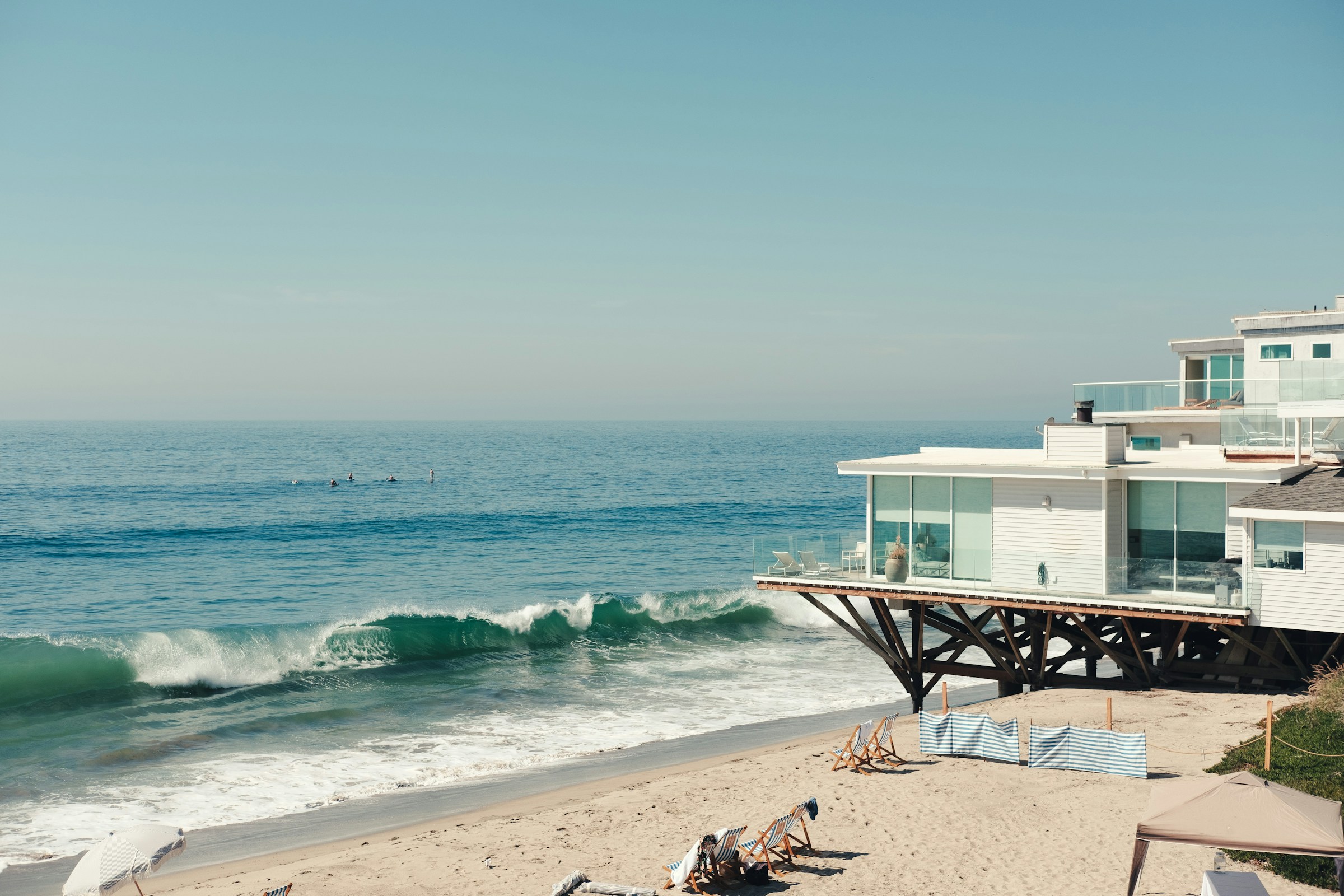
The beach house had been a quiet source of tension since the reading of the will. It sat two hours from the city, a weathered but beautiful coastal home with cedar shingles, wide porches, and windows that turned the color of fire at sunset. Not a mansion. But valuable, worth roughly eight hundred thousand dollars, and in our family anything valuable became communal the moment I possessed it. Derek had been furious when the will was read, though he concealed it beneath a stiff smile and vague comments about family fairness. He had always been the golden child, the eldest son, the husband, the father, the man who provided our parents with grandchildren and therefore occupied, in their estimation, the center of the family universe. I was the quiet one. The unmarried son with no children, the one who worked in tech and paid his own bills and remembered birthdays and fixed printers and never generated enough noise to be treated as a priority.
I had let Derek and Vanessa use the house six times since inheriting it. Never charged them. Never complained when they left sand tracked through the hallway, sticky fingerprints on the refrigerator handle, damp towels balled in the laundry room, and half empty juice boxes shoved under the guest bed. I had said nothing when Vanessa posted photographs online with captions calling it our family beach house and making memories in our special place, as though my name were not the only one on the deed and the insurance. I had been generous because I believed generosity might preserve peace, which was my mistake, because people who interpret kindness as weakness do not respond to more kindness. They respond to doors that stop opening.
A week passed and I did not acknowledge Vanessa’s post. I watched relatives add their likes. I watched my mother comment again about how helpful it was to have things organized. I watched Derek contribute nothing except that initial like, which told me everything I needed to know, that he understood exactly what Vanessa was doing and approved of it as long as he could keep his own hands looking clean.
That Saturday morning I drove two hours to the beach house with a duffel bag of tools and a box containing a new smart lock system. I changed every lock on the property. Front door, back door, garage, storage room. I installed keypad entry that only I could control, changed the wireless internet password, logged out every streaming account, and took timestamped photographs of every room to document its condition. The guest room Vanessa liked to call “their room” had three candy wrappers behind the nightstand and a sunscreen stain on the comforter that had not been there before my last visit. I photographed that too. Then I cleaned the kitchen, locked the windows, stood for one silent minute in the living room where my grandmother used to read in the afternoon light, and drove home. I posted nothing. I told no one. I had dinner with Claire like it was an ordinary Saturday.
The following Wednesday, Vanessa texted. Hey, trying to book the house for spring break but the code isn’t working??
I typed back three words. Changed the locks.
Her name appeared on my screen thirty seconds later. I let it ring until voicemail took it. Another text. Why did you change them? My house, my locks. Three dots appeared, disappeared, appeared again. Can you send me the new code? No. Marcus, we had spring break planned.
I typed slowly, choosing each word with care. You posted guidelines for my house without asking me. That showed me exactly how you see this situation. So I am clarifying. It is my house, not available for bookings.
The family group chat detonated within minutes. Vanessa posted first, all capital letters and exclamation points. Marcus changed the locks on the beach house without telling anyone. Derek arrived immediately. Dude, seriously? We had plans. My mother’s message was softer but saturated with that familiar disappointed confusion she deployed whenever I did something that made her uncomfortable. Marcus, honey, is everything okay?
I let the messages accumulate. Let the panic build. Then I typed one response. Check the guidelines Vanessa posted. Rule three. No kids, no access. I do not have kids, so per your rules I do not have access to my own house. I fixed that. No one has access now. Problem solved.
Ten seconds of silence. Then Vanessa. That is not what I meant.
Then you should have been clearer when making rules for property you do not own. House is unavailable for bookings. Appreciate your understanding.
My mother called immediately. I answered on speaker because Claire had looked up from the kitchen, already sensing the storm. “Marcus, what is going on?” I explained calmly. She defended Vanessa. I asked whether making access to my property contingent on having children seemed fair. She said I was twisting words. I asked if I was twisting them or simply reading them. My father took the phone and called me childish. I told him I was controlling access to property I owned, which was the opposite of childish. He could not explain the rule when I asked him to, so he mumbled about needing time to calm down, which was Harrison family code for needing a few days to reconstruct the story so I became the villain.
Derek texted later. You are being a child over a stupid social media post.
I am being clear. You wanted rules. I am following them.
He did not respond. Two days of silence. Then my phone buzzed with a notification that made my entire body go still. Someone had added me to a new group chat. For about four seconds I could see the name before I was removed. Real Harrison family. But four seconds was long enough to read three messages. Vanessa had written that I thought I was better than everyone because I made six figures and did not have kids. Derek had written that I was punishing them for having a real family and responsibilities. My mother had written that she did not know what she had done wrong raising me.
I took screenshots of all three before the chat vanished. Saved them to the same folder. Did not text anyone. Did not call. Did not confront. Just documented and continued my day, because I had learned by then that evidence is more valuable than arguments, and arguments with people who have already decided you are the problem are just performances staged for an audience that is not listening.
Three weeks later, meteorologists began tracking a hurricane system forming in the Atlantic, unusual for the season but not unprecedented, tracking northward along the coast. Derek and Vanessa lived in a coastal suburb, a nice neighborhood with good schools but situated squarely in a flood zone. I had mentioned this when they bought the house three years earlier and Derek had waved me off, saying insurance covered it and they had gotten a good price.
Mandatory evacuation orders went out on a Friday. I checked the map. Derek’s zip code was highlighted in red. I texted him during my lunch break. Evacuation order is mandatory. Get out.
His response came twenty minutes later. We have been through this before. They always exaggerate. We are fine.
I called him. He answered distracted and impatient. I told him the storm surge projections were eight feet or more. He said they had heard that two years ago and gotten three inches. I told him this was different, category three and possibly four. In the background I heard Vanessa ask who it was, and then her voice, clear and dismissive. Tell him we are fine. We do not need his advice.
I made one more call that evening, the one I knew would probably explode in my face but that I could not leave unmade because my niece and nephew were in that house. I told Derek I had a two bedroom apartment, inland, safe zone. He and Vanessa and the children could stay with me during the evacuation, free, no conditions.
Silence on the line. Then muffled conversation. Then Vanessa’s voice, not muffled, speaking to Derek but intended for me. We are not staying with him. Derek came back on and told me they were fine. I said the offer stood for twenty four hours. After that, they were on their own. I set a timer on my phone, labeled it Derek evacuation offer, and let it run.
My parents evacuated to a hotel in Pennsylvania. My mother called that night asking if I had spoken to Derek. I told her I had offered them my apartment and they refused. She said she was relieved they would have somewhere to go, and I said they did not have somewhere to go because they had refused the only offer they received. She panicked. I told her I had done what I could. Derek was an adult making his own choices.
Saturday morning the timer went off. I texted Derek. Offer expired. Good luck. Read receipt showed he saw it immediately. Typing dots appeared, vanished, appeared, vanished. No message came through.
The hurricane hit Sunday evening, upgraded to category four six hours before landfall. Claire and I watched the coverage from our apartment with Chinese food and mounting dread. Storm surge was not eight feet. It was twelve. Derek’s suburb took the worst of it. News helicopters showed streets converted to rivers, cars floating, water reaching second story windows. The footage was the kind of thing you watch without fully believing it is real, because the alternative is accepting that this is happening to people you know, to children you love, and that you offered help and it was refused and there is nothing you can do about that now.
Tuesday, Derek texted. We are okay. Got evacuated to a shelter. House is bad.
Wednesday they were allowed to return. My mother called me crying, which she reserved for genuine catastrophe. Derek’s entire first floor was destroyed. Everything. The family was still at the shelter. Insurance adjusters were saying months to process the claim. They needed somewhere to stay.
She asked me to take them in. I said no. She told me I had two bedrooms. I told her I had offered those bedrooms before the storm and the offer had been declined. She tried guilt. Family obligation. Think of the children. Be the bigger person. I said no three times and she gave up.
Derek’s family moved into my parents’ three bedroom house. Six people in a space built for two retirees. My mother’s daily updates, which I had not requested, described a household collapsing under the weight of itself. The children were acting out from instability. Vanessa and my mother fought about bedtime. My father started staying late at work to avoid the chaos. Everyone was miserable.
I had a second bedroom with a futon that converted to a bed. I had an office that could have been converted in an hour. I had the space. Everyone knew I had the space. And every day I did not offer it was a deliberate, conscious choice.
Claire asked me one evening if I felt guilty. We were eating pasta I had made, drinking wine she had brought. She had been quiet through most of the meal.
“About what?” I asked, though I knew.
“Derek. His family. Your parents’ house.”
“Should I?”
“I don’t know. That’s why I’m asking.”
I thought about it honestly. “No. I offered help before the storm. Real help, safe shelter, no conditions. He refused because Vanessa could not stomach accepting anything from me. That is not my problem.”
“It’s your nephew and niece on the floor.”
“Because their parents made bad choices. I am not responsible for shielding them from consequences.”
Claire nodded slowly. “Okay.”
“You think I’m wrong?”
“I think you’re consistent. Vanessa made rules for your house. You made rules for your help. She didn’t like yours any more than you liked hers.”
Six weeks in, my parents called asking me to take Derek’s family. I said no. A week later Derek called me directly for the first time since before the flood, his voice rough with exhaustion, and asked if his family could stay with me temporarily. I said no. Three days after that Vanessa called, and her voice was not angry but desperate, shaking with the particular tremor of someone who has reached the bottom and discovered it is still falling.
“The kids are miserable,” she said. “Your parents can’t handle this. We just need a few months.”
“Why are you calling me, Vanessa?”
Confusion. “Because you have space. Because we’re family.”
“What were the beach house rules you posted?”
“What? Marcus, that’s not relevant right now.”
“Rule three. Repeat it for me.”
Silence long enough that I could hear her breathing change.
“Vanessa. Rule three.”
Her voice came out quiet. Defeated. “No kids equals no access.”
“You decided I was not family. You posted it publicly. You made a group chat called Real Harrison Family and removed me from it. You told Derek I was punishing you for having a real family. And now you are calling me, asking for help, asking me to open my home to you, after making it perfectly clear that I was not part of yours.”
She started crying. Actual sobs, the kind that come from somewhere deeper than performance. “I was wrong. I’m sorry. I didn’t think about how it sounded.”
“You were not trying to organize, Vanessa. You were trying to control property that was not yours. You were trying to decide who counted as family and who did not. And you decided I did not count.”
“Marcus, please. Emma cries every night. Tyler is acting out at school.”
“You said family homes are for families.”
Silence.
“You are not my family. You made that rule. I am following it.”
The sob that came through the phone was raw and broken. She tried to say something, choked on it, and hung up. My phone rang again immediately. Declined. Again. Declined. Three more times. Declined each one. I set the phone on the table and went back to the dinner Claire had made. She had heard the entire conversation from the kitchen and stood in the doorway watching me.
“That was brutal,” she said quietly.
“It was necessary.”
Derek’s texts arrived within the hour. You no longer exist to me. I cannot believe you would say that to my wife while we are homeless. You are not my brother anymore. I opened my phone, found the screenshots from the Real Harrison Family chat, the ones where Vanessa said I thought I was better than everyone, where Derek said I was punishing them for having a real family, where my mother said she did not know what she had done wrong raising me, and forwarded all three to Derek. Then I typed one message. You are right. I was never part of your real family. You made that clear months ago. I am just following the boundaries you established.
He blocked me within thirty seconds.
That evening my parents appeared at my apartment door. My mother’s face was blotchy from crying. My father looked like he wanted to break something. I opened the door but did not invite them in.
“How can you be so cruel?” my mother asked.
“I offered help before the storm. Derek refused.”
“That was before,” she shouted, and it was the first time in my life she had raised her voice at me. “Before the hurricane. Before they lost everything.”
“Before they lost everything because Derek refused to evacuate when ordered. I am not responsible for his decisions.”
My father stepped forward. “Those children don’t deserve to suffer because of your pride.”
“Neither did I. When Vanessa made rules for my house. When you created a group chat without me. When Derek borrowed twelve thousand dollars and you all acted like I was unreasonable for wanting a contract.”
I pulled out my phone and showed them the screenshots of the Real Harrison Family chat. Watched my mother’s face drain of color. My father’s jaw tightened until the muscles stood out along his temples.
“Vanessa was upset,” my father tried.
“Vanessa made choices. Derek made choices. You made choices when you joined that chat and said you didn’t know what you’d done wrong raising me. I am making mine now. The answer is no.”
I stepped back and closed the door. Locked it. They knocked for another minute before leaving.
Months passed. Derek’s insurance payout arrived. Contractors began repairs. Vanessa posted photographs of the reconstruction on social media with captions about resilience and fresh starts, positioning herself as a survivor of circumstances beyond her control, never once mentioning the refused evacuation, the declined shelter, the choices that had placed her family in that situation. She posted one line that made my jaw tighten when Claire showed it to me. Survived the storm and the heartless family members who abandoned us when we needed them most.
A cousin sent me a screenshot and asked if it was about me. I told her half the story was missing. She said I should respond. I sat with that for two days. Then I put together a post of my own. Screenshots of everything, arranged in chronological order. Vanessa’s original beach house rules with the no kids line highlighted. The Real Harrison Family chat messages. My text offering Derek shelter before the storm with his refusal. A brief caption explaining the timeline. Full context matters.
The narrative flipped within hours. Extended family, college friends, coworkers, people I had not spoken to in years, all of them reading the screenshots and understanding, for the first time, what had actually happened beneath the surface of the story Vanessa had been telling. My grandmother’s brother commented that she had left the house to me for a reason and that she had known exactly what she was doing. My father called and demanded I delete the post. I said no. He said I was destroying the family. I said the truth was destroying it, and if the truth was destructive, the family had already been broken. My mother got on the line and told me I needed to choose between my grudge and my family. I told her it was not a grudge. It was boundaries. And I was choosing myself, the way she had chosen Derek my entire life.
My father said if I did not delete the post I was no longer welcome at family events. Christmas. Thanksgiving. Any of it.
“Okay,” I said.
“Okay? That’s all you have to say?”
“Yeah. Okay. I’m not welcome. Got it.”
He hung up. My mother called back three times. I did not answer.
Claire and I spent that Christmas at the beach house. Just the two of us. We cooked dinner together, watched the ocean turn dark and silver through the big windows, walked on the beach Christmas morning in the cold wind while the sun came up over the water and turned everything the color of copper. It was the best Christmas I could remember, not because of what it contained but because of what it did not contain, no performance, no obligation, no careful navigation of other people’s resentment, no measuring my words to avoid triggering accusations of bitterness. Just quiet and Claire and a house my grandmother had left to me because she understood something about our family that I had taken thirty two years to see.
I proposed to Claire in October at that same beach house. Small, private, just the two of us at sunset. She said yes before I finished the sentence, which everyone I told later found romantic and which I found fitting, because Claire had never needed a long explanation to understand what I was offering. She saw it clearly the first time.
Work promoted me to lead engineer with a salary that put me well into six figures. I used the beach house almost every weekend. The cedar shingles weathered beautifully. The roses my grandmother had planted along the south wall came back every spring with a persistence that felt personal, as though she were making a point about what survives when you let it grow without interference.
Zero contact with Derek or Vanessa. Occasional brief texts from my mother asking how I was, which I answered with a word or two because I was not cruel but I was no longer available for the kind of open ended emotional labor she had always expected from me. Nothing from my father. The silence was not painful. It was the particular kind of quiet that settles over a life when you stop performing for an audience that was never going to applaud.
I learned through my mother’s occasional updates that Derek had been laid off. That the house repairs had been done cheaply and mold kept returning. That Vanessa had taken a retail job. That the children were struggling in school. My mother delivered these bulletins with the expectation that I would feel something, do something, offer something. I listened and said I was sorry to hear it and did not offer, because I had already offered once, clearly and without conditions, and the offer had been refused by people who could not tolerate receiving help from a person they had classified as lesser.
A year after the flood, on a December evening when Claire and I were sitting on the beach house deck watching the last light drain from the sky, she asked if I had any regrets.
I thought about it. Really thought about it, the way you think about something when the person asking deserves an honest answer and the silence is large enough to hold one.
“One,” I said.
“What?”
“That I didn’t set boundaries sooner. Could have saved myself years of feeling like I wasn’t enough.”
“You think they’ll ever apologize?”
“Maybe. When they need something again. That’s usually how it works.”
“And if they do?”
“Depends on what they’re apologizing for. If it’s because they are genuinely sorry, we can talk. If it’s because they want something, the answer is already no.”
She nodded. We watched the water darken from blue to black. The wind had died and the ocean moved with that slow, heavy patience it takes on in the evening, as though it has nowhere particular to be and all the time in the world to get there. Somewhere inside the house my phone sat on the kitchen counter, silent, no notifications from Derek, no texts from my parents, no family drama requiring my attention or sacrifice or compliance. Just the sound of waves and the warmth of Claire beside me and a house my grandmother had left to me because she understood that love is not the same as access, that family is not defined by who needs you but by who respects you, and that sometimes the most important thing a person can inherit is not property but permission to stop pretending.
Vanessa had written the rules. Clear, numbered, formatted with little checkmark emojis, posted to a group chat for everyone to see. Family homes are for families. She had defined who counted and who did not. She had drawn the line with confidence and precision, certain that it would only ever apply in one direction, certain that the person she was excluding would absorb the insult the way he had always absorbed everything, quietly, without consequence, without cost.
She had not anticipated that I would read the rules carefully. That I would accept them. That I would apply them with the same clarity and precision she had used to create them, and that once applied, they would prove to be far less comfortable from the other side.
Family homes are for families. She made that rule. I followed it. And my family was right here. Not thirty miles away managing the wreckage of choices I had not made. Not in a group chat I was never meant to see. Right here, in a house that belonged to me, beside a woman who had chosen me without conditions, under a sky that was turning from orange to violet to the deep unbroken dark of a winter evening on the coast.
The porch light came on automatically as the last light faded. I had set it on a timer months ago so the house would never look empty when we arrived after dark, so there would always be a warm glow waiting when we pulled into the driveway, visible from the road, steady and unambiguous, the kind of light that says someone lives here and the door is theirs to open.
Claire squeezed my hand.
“Home,” she said.
“Yeah,” I said. “Home.”

Sophia Rivers is an experienced News Content Editor with a sharp eye for detail and a passion for delivering accurate and engaging news stories. At TheArchivists, she specializes in curating, editing, and presenting news content that informs and resonates with a global audience.
Sophia holds a degree in Journalism from the University of Toronto, where she developed her skills in news reporting, media ethics, and digital journalism. Her expertise lies in identifying key stories, crafting compelling narratives, and ensuring journalistic integrity in every piece she edits.
Known for her precision and dedication to the truth, Sophia thrives in the fast-paced world of news editing. At TheArchivists, she focuses on producing high-quality news content that keeps readers informed while maintaining a balanced and insightful perspective.
With a commitment to delivering impactful journalism, Sophia is passionate about bringing clarity to complex issues and amplifying voices that matter. Her work reflects her belief in the power of news to shape conversations and inspire change.