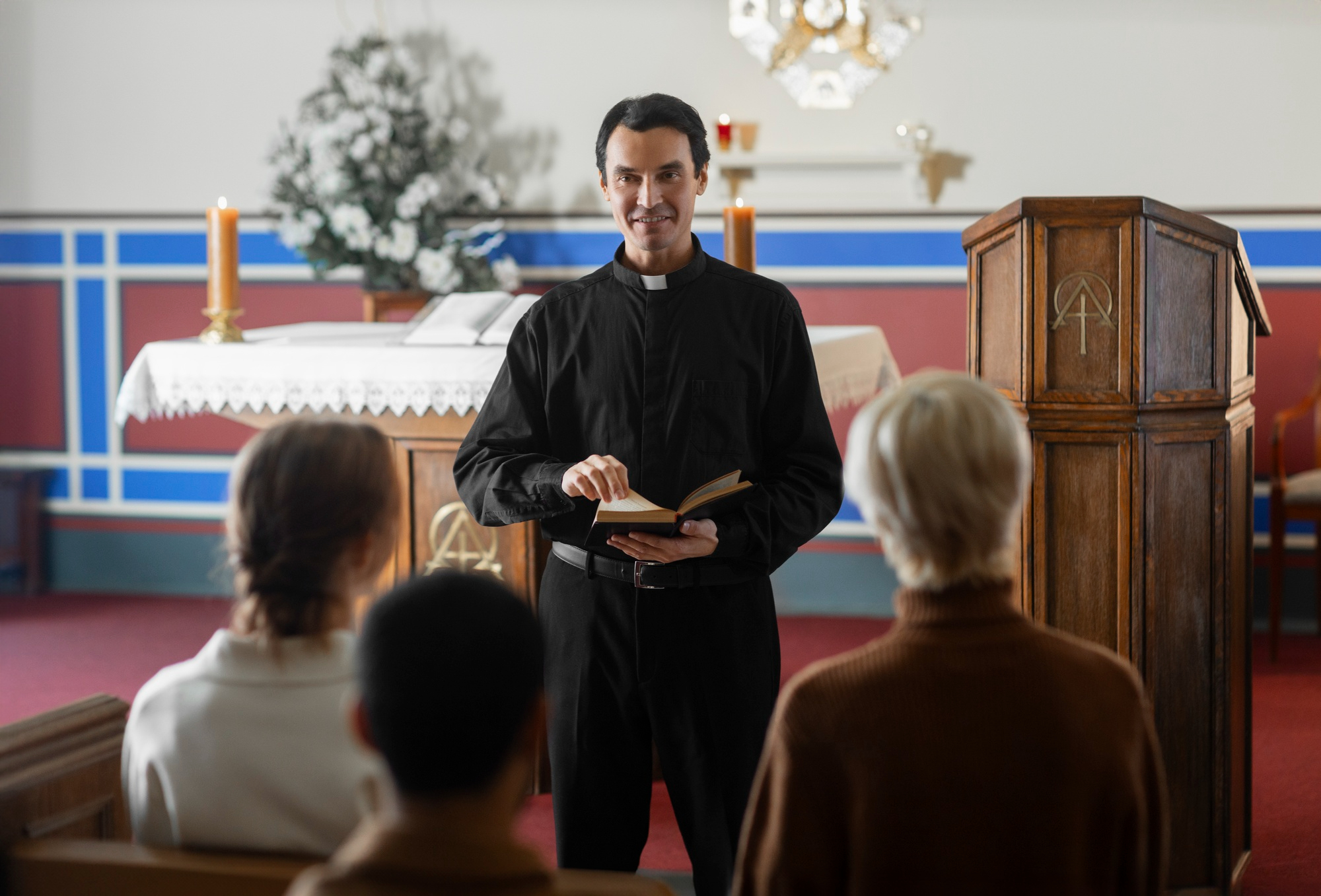
The day we buried Grandma Lizzy, the church hall smelled like lilies, rain soaked wool, and the lemon polish she used on every wooden surface in her house. That smell was so particular to her that for a moment, standing beside her framed photograph with her handkerchief balled in my fist, I almost believed she had walked through the room ahead of us and wiped down the pews herself, one last time, because she could not stand the idea of people gathering in her honor in a room that had not been properly tended to.
I stood near the front with my back straight and my eyes dry because Grandma had taught me that grief and performance are different things, and the people who need to see you cry are rarely the people who will help you when the crying stops. The lace of her handkerchief bit into my palm. Around me, mourners whispered soft things they had never found the courage to say when she was alive, the way people do at funerals, complimenting the dead with the urgency of students who have left their essay until the morning it is due.
Then I saw my parents.
They stood at the back of the hall in expensive black coats, heads bowed just low enough to look respectful and not low enough to mean it. My father had his hands clasped in front of him with the solemn posture of a man who has watched other people grieve on television and is doing his best to reproduce the stance. My mother stood beside him with her face arranged into an expression of delicate sorrow, the kind that requires a mirror to perfect and a audience to sustain.
The same two people who left me on Grandma’s porch when I was eight years old. The same two people who missed fevers, school assemblies, birthdays, report cards, and every quiet night when I sat at the kitchen table doing homework with two empty chairs across from me and pretended their absence did not have weight.
My name is Samantha. I am eighteen. And the first time my parents broke me, they did it in broad daylight on a Tuesday afternoon in October while the leaves on Grandma’s maple tree were turning gold.
I still remember the porch boards creaking under my shoes. I remember my pink backpack sliding off one shoulder because the strap was too long and I had not yet learned to adjust it myself. I remember my fingers wrapped around a suitcase handle that was too big for my hand, a suitcase someone had packed for me because I was eight and did not yet know how to fold my own clothes for a trip I had not been told I was taking. My mother did not kneel down to my level. My father did not explain. They said I would be better off here, and the way they said here made Grandma’s house sound like a facility, a place where inconvenient children were deposited when their parents had somewhere more important to be.
Then they drove away.
Grandma Lizzy stood in the doorway with flour on her sleeve because she had been baking when they arrived without warning, and I watched her face move through confusion and shock and fury before settling on something harder and more permanent, which was determination. She pulled me inside the house with both hands on my shoulders as though she could shield me from the whole world with one thin body, and she closed the door, and she made tomato soup when I refused to eat, and she sat with me on the kitchen floor when I cried and did not tell me to stop because she understood that some pain needs to be expressed before it can be survived.
The sound of that car fading down the road was the sound of my childhood being sealed behind glass.
For years afterward, I thought Grandma was simply Grandma. Plain navy coat. Old sedan with a dent in the rear fender she never bothered to fix. A coupon folder in her purse organized by store and expiration date. A modest house with creaky floors, chipped mugs, and a garden she worked with bare hands until her knuckles turned red in the cold. She clipped articles from the newspaper and left them on the kitchen table for me to read. She made soup from whatever was in the refrigerator and called it invention stew. She drove me to school every morning and picked me up every afternoon and never once made me feel like the work of raising me was something she resented or endured.
She clapped the loudest at school assemblies. She wrote notes and tucked them into my lunchbox. You are stronger than you think. I believe in you today and every day. Your Grandma loves you bigger than the sky. I carried those notes in my pockets until the paper went soft, and when they fell apart I kept the pieces in a shoebox under my bed because I could not bear to throw away evidence that someone thought I was worth a sentence written by hand.
Then, when I was twelve, I heard her voice through the study door at nine forty three on a Wednesday night. I was supposed to be asleep, but I had come downstairs for water, and the light was on in the room she called her office, a small space off the hallway where she kept a desk, a filing cabinet, and shelves of books whose titles I did not yet understand. She was speaking on the phone in a voice I had never heard before, calm and precise, using words like trust instruments, estate schedules, beneficiary restrictions, and audited asset ledgers. On her desk, visible through the gap in the door, lay a manila folder labeled guardianship, three sealed envelopes, and a thick document with my name typed in the margins.
When she caught me staring, she did not scold me. She closed the folder, removed her reading glasses, and looked at me with the expression of a woman who has been carrying a secret for years and has just realized that the person she is protecting is old enough to begin asking questions she deserves answers to.
“Some things are kept quiet,” she said, “because money makes people hungry.”
I did not fully understand that sentence at twelve. I understood it at her funeral.
Grandma told me more as I grew older, in pieces, the way you tell a child a difficult story by giving them one chapter at a time and waiting to see whether they are ready for the next. She told me that she had built something substantial over the course of her life, investments and property and a foundation she managed with the help of attorneys and advisors whose names I would eventually learn. She told me that my parents had always known about her wealth. That they had not left me on the porch because they were desperate or overwhelmed or struggling in the way that some parents genuinely struggle, the kind of struggle that deserves compassion even when it causes harm. They left me because raising a child was inconvenient, and they believed that Grandma would do the hard years while they lived their lives unencumbered, and that when she eventually died, whatever she had built would flow to them through the natural gravity of family, because they were her son and his wife and because in their understanding of the world, blood was a claim that operated automatically regardless of whether you had earned it or even shown up.
“The day they come back,” she told me once, sitting in the garden with soil on her gloves and that thin, steady voice she used when she was telling me something she needed me to remember, “it will not be love. It will be hunger wearing black.”
So when I saw them at the funeral, standing at the back of the hall in their expensive coats with their bowed heads and their practiced grief, I did not feel surprise. I felt the cold, clarifying sensation of a prediction coming true, the particular chill that arrives when someone you love has warned you about a danger and you discover they were exactly right.
After the burial, they did not ask whether I had eaten. They did not ask how I was sleeping. They did not ask about school or friends or the garden or any of the thousand small things that constitute a young person’s life when they are grieving the only person who ever made them feel chosen. Their eyes moved over the photo table, the silver jewelry box, the guest book signed by neighbors and church members and the quiet network of people Grandma had supported through scholarships and charitable contributions that most of the world never knew about because she believed generosity was not a performance.
My father’s hand landed on my shoulder as though ten years had not passed. My whole body stiffened, an involuntary response so deep and so immediate that it bypassed thought entirely, the body remembering before the mind can intervene.
“Don’t forget,” he murmured, low and certain, bending close to my ear with the casual authority of a man who believes ownership is communicated through proximity, “everything she had belongs to us now.”
My mother appeared beside him, her perfume sharp and expensive and entirely wrong in that room full of lilies and lemon polish, and she smiled at the mourners with the warm attentiveness of a woman already choosing curtains for a house she had never kept warm.
I gripped the handkerchief harder. I wanted to slap his hand off my shoulder. I wanted to ask him which of my birthdays he thought he had attended. Which fever he had sat through. Which school assembly he had clapped at. Which night he had tucked me in or read to me or held me when I was afraid of the dark. Instead I stepped back and swallowed every ugly word, because Grandma had taught me that restraint is not weakness when you are waiting for the right door to open.
Then the doors opened.
Mr. Harris, Grandma’s attorney, walked into the church hall with a leather briefcase, a blue probate folder, and a stack of sealed envelopes marked in Grandma’s careful handwriting. The room quieted so quickly I could hear rain ticking against the stained glass windows and the soft creak of folding chairs as people shifted to face him.
My parents straightened like actors hearing their cue. They slid into the front row, eyes gleaming, bodies angled toward the briefcase with the focused hunger of people who have been waiting for this moment and believe it belongs to them.
Mr. Harris set the briefcase on the table and opened it. The locks clicked one after the other, each sound landing in my chest like a heartbeat.
He removed the first page. Adjusted his glasses. Then he looked at my parents and said, “Before I read Elizabeth Whitmore’s will, there is one statement she required me to place on record.”
My mother’s smile tightened at the edges.
My father’s chin lifted.
Mr. Harris unfolded the paper slowly. When he read the first sentence aloud, I watched the color begin to leave their faces.
“If Daniel and Marissa Whitmore are present at the reading of this will, let the record show that their appearance is not a reunion, not repentance, and not grief. It is calculation.”
The hall went so quiet the rain sounded like applause.
Mr. Harris continued reading in the steady, unhurried voice of a man fulfilling an obligation he had been entrusted with by someone he respected deeply. “Ten years ago, my son and daughter in law brought Samantha to my front porch with one suitcase, one backpack, and no legal plan for her care. They said she would be better off with me. They were correct, but not in the way they intended.”
My father shifted in his chair. “This is inappropriate.”
Mr. Harris did not look up. “Mr. Whitmore, your mother’s instructions were explicit. The statement is to be read in full.”
My mother reached for my father’s wrist. Not lovingly. Warningly. The gesture of a woman who understands that the next few minutes will determine whether they leave this room with what they came for, and that her husband’s temper is the greatest threat to that outcome.
He sat back.
Mr. Harris read on. “During the years I raised Samantha, Daniel and Marissa contacted me only when they needed money, signatures, explanations, or silence. They did not ask about her report cards. They did not attend her recitals. They did not call when she had pneumonia at age nine. They did not come when she cried herself sick on her birthday because she believed their absence meant she had done something wrong.”
A sound escaped me. Small and broken, the kind of sound that comes from a place so deep inside you that you did not know it was there until the air finds it. Mrs. Bell, my neighbor, reached over and squeezed my hand. I had not even noticed she was beside me, but her fingers were warm and steady and they held mine without requiring me to be anything other than what I was in that moment, which was a girl hearing her own childhood read aloud in a room full of witnesses.
Mr. Harris paused long enough to let me breathe. Then he continued.
“I kept records. Not because I enjoyed documenting cruelty, but because people who abandon children often return later with polished stories. I wanted Samantha to have the truth when lies became expensive enough to tell.”
My father stood. “That’s enough.”
Uncle Robert, Grandma’s younger brother, eighty two years old and walking with a cane, rose from his seat with a speed and authority that made several people in the room reconsider their assumptions about what an elderly man with a walking stick is capable of. He did not speak. He simply stood and looked at my father with an expression that communicated everything words would have diluted.
My father did not leave. Of course he did not. The money was still in the room.
Mr. Harris turned the page.
“To my granddaughter Samantha, who became my daughter in every way that mattered, I leave not only my estate, but my faith. She is the sole primary beneficiary of the Whitmore Family Trust, including all real property, investment accounts, charitable foundations, private holdings, and liquid assets, presently valued at approximately eighty million dollars.”
The sound that moved through the room was not a gasp exactly. It was the collective exhalation of people absorbing a number too large to process quickly, the kind of number that rearranges the air in a room simply by being spoken. My mother’s face went gray. My father stared at Mr. Harris as though the words had been delivered in a language he was still translating. Eighty million dollars. I had known Grandma had money. I had known since I was twelve that her life contained a dimension she kept hidden from the world. But hearing the number spoken aloud in a church hall, with rain on the windows and my parents in the front row and Grandma’s photograph watching from the table, made something inside me shift so profoundly that for a moment I was eight years old again, standing on the porch with a suitcase too heavy for my hand, except this time the car driving away did not take everything from me. It took everything from them.
My mother stood halfway from her chair. “Samantha is eighteen. She’s a child. She can’t manage that.”
Mr. Harris looked at her. “She is legally an adult.”
“She’s emotional.”
“She is grieving.”
“She needs guidance.”
My father seized the opening with the instinct of a man who has spent his life recognizing moments when other people’s vulnerability creates space for his advantage. “Exactly. We’re her parents. Obviously we’ll help manage things until she’s ready.”
From the back of the room, Mrs. Bell laughed. A short, sharp, incredulous laugh that she did not bother to disguise or apologize for. My father’s face reddened.
Mr. Harris removed another document from the folder. “Mrs. Whitmore anticipated that request as well.”
My mother slowly sat back down.
He read: “If Daniel or Marissa attempts to claim stewardship, guardianship, management authority, emotional influence, family reconciliation, or any other language designed to place their hands near Samantha’s inheritance, they are to receive the sealed file marked Porch Record.”
My stomach tightened. I knew that file. Not fully, but I had seen the label once, written in Grandma’s handwriting and locked inside the study cabinet with the care reserved for documents that are too important to leave accessible and too necessary to destroy.
Mr. Harris placed a thick envelope on the table. My father’s eyes narrowed.
“What is that?”
“Documentation. Copies of the original abandonment incident report, notarized witness statements, financial requests made to Mrs. Whitmore over the past decade, recorded voicemails, returned birthday cards, and a signed letter from Elizabeth explaining why she petitioned for full legal guardianship when Samantha was eight.”
The room shifted. Because now everyone understood. This was not just a will. It was an architecture of protection, built over years by a woman who loved me enough to anticipate the precise shape of the threat her own son would pose to my future and who constructed, document by document, a wall high enough and strong enough to keep him on the other side of it.
My father’s composure cracked for the first time. “You can’t call it abandonment.”
Mr. Harris looked at him over his glasses. “Your mother did.”
My mother’s eyes filled. But I recognized those tears. I had waited ten years for them and I knew what they were. They were not for me. They were not for the birthdays missed or the letters unanswered or the child who cried herself sick wondering what she had done wrong. They were for the money moving out of reach, for the inheritance receding like a tide, for the future she had counted on and was watching disappear in a church hall that smelled like lemon polish and rain.
She turned toward me with trembling lips. “Samantha, sweetheart.”
I flinched at that word. She had not called me sweetheart since before the porch.
“I know we hurt you,” she said, her voice calibrated to carry just far enough for the room to hear its softness. “But we were young. We were overwhelmed. Your grandmother never understood how hard things were for us.”
For us.
There it was. Even in what she intended as an apology, I was not the wound. I was the weight. The inconvenience. The thing that made their lives difficult, the thing they had to set down in order to walk freely.
I looked at her carefully. I had imagined this moment for years. Sometimes in those imaginings I screamed. Sometimes I cried. Sometimes I ran into her arms because the child inside me wanted a mother more than she wanted justice, and the wanting was so large and so old that it could override everything I knew to be true about the woman standing in front of me.
But now, standing beside Grandma’s photograph with her handkerchief in my fist and the lemon polish scent fading slowly from the room, I felt something I had not expected. Not rage. Not grief. Clarity. The clean, cold, unshakable clarity of a person who has been told for years that a particular moment will arrive and has watched it arrive exactly as described.
“You left me on a porch,” I said.
My mother closed her eyes.
My father’s voice came fast and sharp. “We left you with family.”
“No. You left me with the person you thought would raise me for free while you waited to inherit.”
A few people in the room inhaled audibly. My father’s face darkened.
“That is a cruel thing to say.”
I turned to face him fully. “You taught me cruelty first.”
He had no answer. Not one. His mouth moved but nothing came out, and for the first time in my life I saw my father confronted with a silence he could not fill with confidence or volume or the easy authority of a man who has always believed that his version of events is the only one that counts.
Mr. Harris continued reading. “Daniel and Marissa are not forgotten in this will. I leave each of them one dollar, not as an insult, but as evidence that they were considered and not overlooked. I also leave them copies of every letter Samantha wrote between ages eight and eleven asking why they had not called. They may read those letters if they ever develop the courage to know the cost of their choices.”
My mother covered her mouth with one hand.
Mr. Harris lifted two envelopes from the stack. One marked Daniel. One marked Marissa. My father did not take his. My mother did. Her hand shook as she held it.
I remembered writing those letters. At the kitchen table with Grandma’s good pens, on paper she bought me from the stationery shop downtown because she said letters deserved real paper. Dear Mom, Grandma says you’re busy but maybe you can call on Sunday. Dear Dad, I got an A on my history project. Dear Mom and Dad, did I do something wrong? Grandma mailed some of them. Kept copies of all. The ones that came back unopened she placed in a folder in the study cabinet alongside the rest of the evidence, because she understood that unanswered letters from a child are not just sad. They are proof.
Mr. Harris finished reading the terms. The trust included structured access until I turned twenty five, with full provisions for education, housing, healthcare, and living expenses available immediately. The charitable foundation remained active under my oversight with professional trustees in place. The family home was mine outright, protected from claim, lien, pressure, or transfer to any person named Daniel or Marissa Whitmore.
My father erupted. “This is insane. She poisoned my mother against us.”
Uncle Robert’s cane struck the floor once. The sound silenced the room more effectively than any gavel.
“No, Daniel,” he said, his voice rough but clear. “You did that yourself. I watched your mother age ten years the day you left that child on her porch.”
My father looked away. Not with shame. With irritation. The distinction between those two responses told me everything I needed to know about who he was and who he would remain.
The reading ended in fragments. People came to hug me. Some cried. Some apologized for not doing more when I was younger, for not speaking up when they saw a child being raised by a grandmother while her parents lived three states away and never called. I accepted the embraces I wanted and stepped away from the ones that felt like obligation rather than love.
My mother approached me alone as the room emptied. She held the envelope of letters against her chest.
“We should talk,” she said.
“No.”
The word left me before hesitation could soften it. She blinked.
“I’m your mother.”
“No,” I said quietly. “Grandma Lizzy was.”
Her face crumpled, and maybe that was cruel, and maybe it was the truest thing I had ever said, and maybe the truth is sometimes both of those things at once and you have to decide which matters more to you, kindness toward the person who hurt you or honesty toward the child inside you who deserved better.
My father appeared behind her. “This isn’t over.”
Mr. Harris turned immediately. “It is, legally.”
My father ignored him and looked at me. “You think money makes you untouchable?”
“No,” I said. “Grandma did.”
He looked genuinely stunned, and I stepped closer because the next words needed to land at close range.
“She knew you would come back. She knew you would say family. She knew you would claim I was too young, too emotional, too confused. She prepared for every argument you would make because she had spent ten years listening to you make them about other things, about money you wanted, about favors you needed, about the mortgage payments you asked her to cover while you ignored the child she was raising for you.”
My voice shook then. Not from fear. From grief. “She knew you better than I did, and that hurts more than I can explain.”
My mother whispered, “We made mistakes.”
“You made choices. Every birthday you did not call was a choice. Every Christmas you did not come was a choice. Every year you waited, banking on the assumption that Grandma would do the work and you would collect the reward, was a choice. You chose every single time. And every single time, you chose yourselves.”
I walked away. Not because I had nothing left to say. Because I finally understood I did not owe them the rest of my grief.
That night I returned to Grandma’s house alone. The house felt impossible without her. Her gardening clogs sat by the back door, one of them tipped slightly on its side as though she had kicked it off in a hurry on her way to something that needed doing. Her reading glasses were on the kitchen table beside a crossword puzzle half finished in blue ink. A dish towel hung over the oven handle, folded the way she liked, in thirds with the pattern facing out, because she believed even towels deserved to be treated with intention.
I stood in the doorway of her kitchen and fell apart. Not quiet, dignified tears. The kind that bend your body, that come from so deep inside you they feel geological, as though the grief has been compressed under pressure for years and has finally found a fissure through which it can escape. Mrs. Bell stayed until midnight, making tea I did not drink and sitting with me in the living room while I held Grandma’s cardigan against my face and sobbed with the helpless intensity of a child who has been strong for as long as she can remember and has finally been given permission to stop.
After Mrs. Bell left, I went into the study. The file cabinet was unlocked now. Mr. Harris had given me the key that afternoon. Inside were labeled folders organized with the meticulous care that characterized everything Grandma did. House. Foundation. Education. Medical. And one labeled simply Samantha.
I pulled it out and sat on the study floor and opened it. Inside were drawings I had made in third grade, watercolor flowers and lopsided houses with smoke curling from chimneys. Report cards with teachers’ comments I had forgotten. Photographs of me at various ages, gap toothed and braided and serious and occasionally, in the later ones, smiling with the full unguarded joy of a girl who has been loved consistently enough to trust the world again. My first library card. A hospital bracelet from when I had pneumonia at nine. A note I had written in purple marker on construction paper: Grandma, thank you for keeping me.
At the bottom of the folder was one sealed envelope. For my Sammy, when the hungry ones come back.
My hands shook as I opened it. Grandma’s handwriting filled three pages, and I read them sitting on the floor of her study at one in the morning with the desk lamp making a warm circle around me and the rest of the house dark and silent.
Sammy, she wrote. If you are reading this, then I am gone, and they came exactly as I feared. I am sorry. Not for leaving you what I built. That was never a question. I am sorry because no amount of money can repay a child for being made to feel unwanted. I tried to give you a home, but I know I could not erase the sound of that car leaving. Please do not let them convince you that forgiveness is the price of being good. Forgiveness is yours to give, not theirs to invoice. Your parents will say they were young. They will say life was hard. They will say I kept you from them. Remember this: I left every door open for years. They chose not to walk through. The money is not a reward. It is a shield. Use it to live freely. Use it to learn. Use it to build something kinder than what they gave you. And when you miss me, go to the garden. I am in the roses, in the lemon polish, in the soup pot, in every note I tucked into your lunchbox. You were never left behind by me. You were chosen. Always. Grandma Lizzy.
I pressed the letter to my chest and cried until dawn.
The lawsuit came four weeks later. Of course it did. My parents contested the will, claiming undue influence, mental decline, emotional manipulation, and a phrase from their legal filing that I will carry with me for the rest of my life as evidence of who they are: estrangement caused by third party interference. Third party interference. That was what they called the woman who raised me when they would not. Mr. Harris had warned me. Hunger does not leave the table quietly. He was right. But Grandma had prepared for that too.
There were medical evaluations documenting her cognitive clarity conducted annually for the last five years of her life. Video recordings of trust amendment meetings in which she discussed her wishes with lucidity and precision. Witness statements from neighbors, friends, church members, and her physician. Proof of every invitation she sent my parents to visit me, documented by certified mail. Proof of every financial request they made while ignoring the child she was raising.
And one voicemail from my father, saved when I was thirteen. His voice filled the conference room during mediation, tinny through the speaker but perfectly clear. “Mom, we’re not in a position to take Samantha back. You’re better at that nurturing stuff anyway. But we do need help with the mortgage this month.”
I watched my father stare at the table while his own voice destroyed him. My mother cried. The mediator looked exhausted by them before lunch. The contest collapsed within months. They received their dollar each. And the letters. Nothing else.
I did not become happy all at once. People imagine inheritance as a golden door that opens onto a life without difficulty. It is not. Money makes survival easier. It does not make grief polite or memory painless or the sound of a car leaving a driveway any quieter in the hours before sleep. I went to college that fall because Grandma had already chosen the school with me before she died, sitting together at the kitchen table with brochures spread across the surface the same way we had once spread out homework. I studied nonprofit management and finance because the foundation needed someone who understood both compassion and accounting, and because Grandma had taught me that the most dangerous thing in the world is money managed by people who care about nothing but the money itself.
Every week I visited her grave. Every week I brought yellow roses. I talked to her headstone about classes, about the foundation, about the garden, about small things that would have made her laugh. I told her about the scholarship house I was planning, and I swear the wind moved differently through the cemetery on the days I talked about that.
My parents sent messages for a while. First angry, then pleading, then nostalgic. Photographs of me as a baby. Stories about how sweet I had been. Claims that they wanted to heal, to reconnect, to be a family again. I did not respond for a year. Then, on my nineteenth birthday, my mother sent one sentence: I read the letters.
That one stopped me. I stared at my phone for a long time, sitting at the kitchen table in Grandma’s house, which was now my house, with morning light falling across the crossword puzzle I still had not put away because some things are too sacred to tidy.
Another message came. I don’t know how to live with what I did.
I almost replied. Almost. Instead I placed the phone face down and went into the garden. The roses were blooming. Grandma had planted them before I was born, and they returned every spring with a faithfulness that felt intentional, as though she had chosen a species that understood the assignment. I stood there with dirt under my shoes and sun on my face and understood something she had tried to teach me all along. Not every apology needs immediate entry. Some can remain outside the gate until you decide whether the person holding it has learned to knock instead of demanding the door be opened.
Five years after the funeral, the Whitmore Foundation opened its first scholarship house. Not a dormitory. A home. For young people aging out of foster care who had nowhere safe to land between high school and the rest of their lives. The house had a large kitchen because I believed that people think more clearly when they are fed. It had a library because Grandma believed that books are the cheapest form of travel and the most expensive form of freedom. It had counseling rooms with comfortable chairs and warm light. And it had a garden in the back with yellow roses along the fence.
On opening day I wore Grandma’s pearl earrings and carried her handkerchief in my pocket. Reporters came. Donors came. Mr. Harris came, older now, his hair fully silver, smiling with the quiet satisfaction of a man who has spent his career protecting documents and has finally seen one of those documents become a building with a front door and windows and people standing inside it looking cautiously hopeful.
During the ribbon cutting, someone asked why this project mattered to me. I looked at the young people gathered near the entrance, trying to look unimpressed while hope betrayed them in their eyes and their posture and the way they kept glancing at the kitchen as though they could not quite believe it was real and available and meant for them.
“Because no child should have to wonder whether being left means being unworthy,” I said.
My voice held. Barely.
Afterward I walked alone through the garden. The yellow roses were open. Lemon polish scented the wooden benches inside because I had insisted on it, had purchased the same brand Grandma used, had applied it myself to every surface in the building the night before because some traditions are too important to delegate. On the front wall, a plaque read: The Elizabeth “Lizzy” Whitmore House. For every child who deserved to be chosen sooner.
I touched the plaque lightly with my fingertips. “Look what we did, Grandma,” I whispered.
The wind moved through the roses with a sound that was almost language.
Years later I met my mother once for coffee. She looked older. Smaller. Less sharp around the edges, as though life without the money she had expected had worn her down in ways she could not repair with creams or stylists or the careful maintenance of an image that no longer had an audience. She apologized without asking for money. Without mentioning the will. Without blaming Grandma. She said she was sorry, and she said it looking at her hands rather than at me, which was how I knew she meant at least some of it, because people who are performing look at your face to gauge the effect of their words and people who are ashamed look at their own hands because they cannot bear to see themselves reflected in the eyes of the person they hurt.
I did not forgive her fully that day. But I listened. And listening, I had learned, is sometimes the first brick in a bridge you are not yet sure you want to build.
My father never apologized. He sent one letter through his attorney challenging the trust’s charitable distributions, and Mr. Harris responded with a filing so thorough and so devastating that no further correspondence arrived. That told me everything I needed to know. Some people are not capable of seeing their children as anything other than extensions of their own needs, and no amount of time or loss or evidence will teach them otherwise. The kindest thing you can do for yourself in the presence of such a person is to stop expecting them to become someone they have never been.
I kept Grandma’s house. Not because of its value, though it was worth more than any structure I would ever own. Because every floorboard knew the sound of someone staying. Because the kitchen table still held the faint impressions of a thousand homework sessions and soup dinners and early morning conversations over coffee and cereal. Because the garden still bloomed every spring with the stubborn, beautiful persistence of a woman who believed that what you plant with love will outlast everything planted with greed.
Sometimes, late at night, when rain tapped the windows and the hallway smelled faintly of lemon polish, I would stand beside Grandma’s photograph and remember the church hall. My parents in black. The briefcase on the table. The locks clicking open. Their faces turning pale. But that was not the victory. The victory was not in their defeat. It was in the fact that I was standing in a house that belonged to me, wearing pearl earrings that had belonged to a woman who chose me, running a foundation that bore her name, and holding in my chest a love so deep and so durable that ten years of abandonment and one contested will and a lifetime of being underestimated had not managed to diminish it by a single degree.
They left me behind when I was eight. They drove away on a Tuesday afternoon while the maple leaves were turning gold and I stood on the porch with a suitcase too big for my hand. And somehow, because one woman loved me fiercely enough to prepare for the day hunger came back wearing black, I did not stay behind. I grew. I learned. I built. I became the kind of woman who understood the difference between blood and family, between inheritance and love, between a dollar left as evidence and eighty million left as a shield.
Every morning, when sunlight crossed the kitchen table where Grandma once tucked notes into my lunchbox, I said the same words to the quiet room. Not because I needed to hear them anymore. Because she would have wanted them spoken aloud, in the house she kept warm, by the girl she kept safe, on another ordinary morning in a life she made possible.
“I was chosen.”
Then I opened the door to the day she had spent a lifetime building for me, and walked through it.

Laura Bennett writes about complicated family dynamics, difficult conversations, and the quiet moments that change everything. Her stories focus on real-life tensions — inheritance disputes, strained marriages, loyalty tests — and the strength people find when they finally speak up. She believes the smallest decisions often carry the biggest consequences.