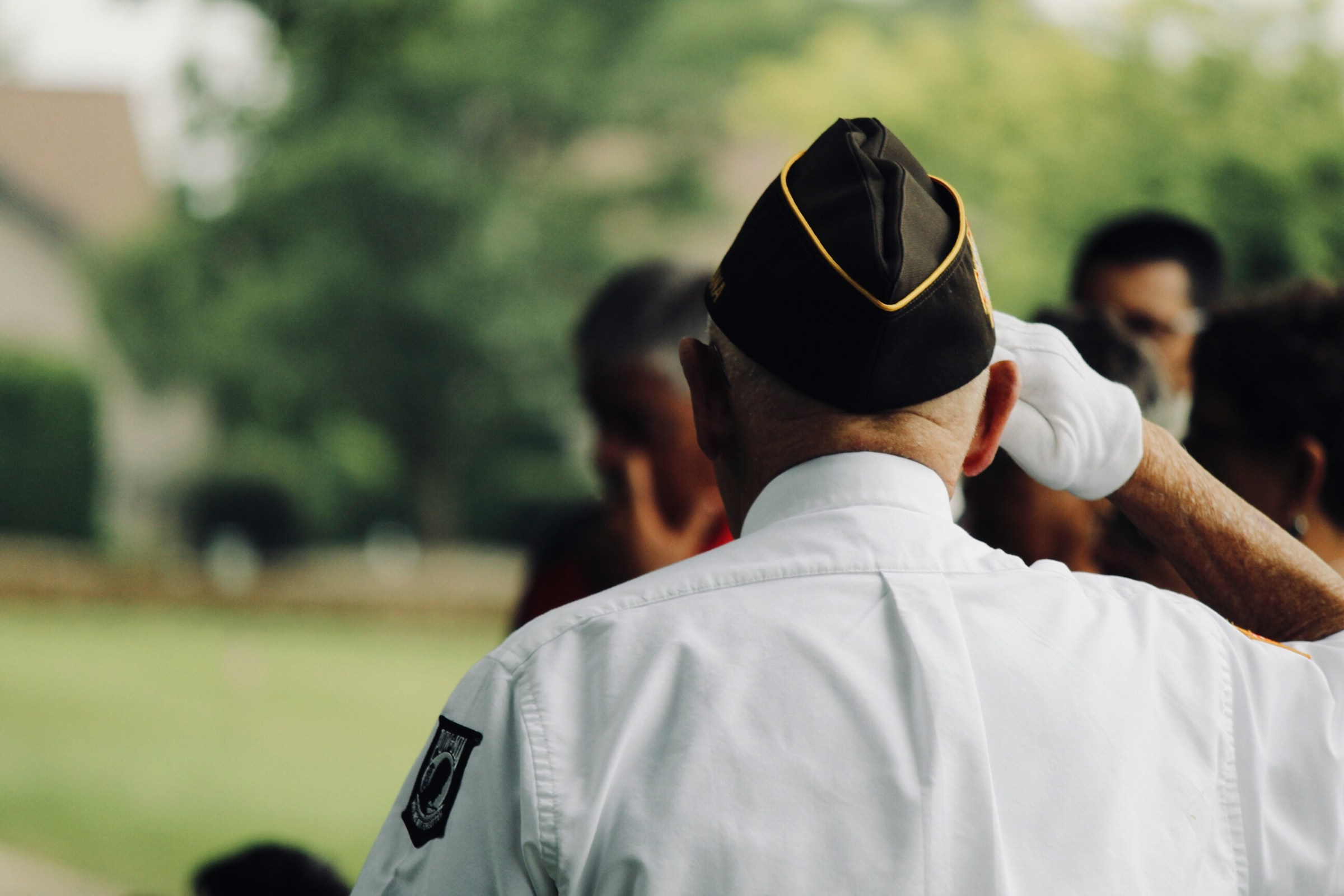
I came home to Virginia with one plan so plain it should have been impossible to ruin. I wanted to sit in the back row, clap when my father’s name was called, and leave before anyone decided my uniform, my absence, or my life belonged to them for public discussion.
That was all.
The flight had been late, the rental car smelled of lemon cleaner and old cigarette smoke, and my sweater still held the stale chill of the cabin when I turned off the highway toward the town where I had grown up learning to keep my face calm. Small towns greet you before the people do. The storefront windows looked the same as they had looked for as long as I could remember. The church sign still leaned a few degrees to the left. The diner off Main Street still had the same bell above the door that made every head turn when someone walked in, which was the whole point of it.
Miss Donna saw me first. She was behind the pie case with a coffee pot in one hand, and for one second her face softened in the way faces do when they are remembering you as a child rather than seeing you as you are. She had known me since the third grade. She had given me extra whipped cream on pie when I was upset about something and had never asked what the something was. For a moment I thought that recognition, that old warmth, would just be that. Then it changed.
“Clare?” she said. “Honey, I heard you were done with the Navy.”
I smiled because smiling was easier than opening a file cabinet of facts in the middle of a diner at three in the afternoon. “No,” I said. “I’m not done.” She looked embarrassed before she looked curious, which told me the embarrassment was about something she had repeated rather than something she had invented herself. That told me enough about where the story had originated.
At the gas station, two men stood near the ice freezer. They did not try to look as though they were not watching me. “She couldn’t handle it,” one of them said. The other answered, “Shame. Her father must be crushed.” They were not whispering to hide it. They were whispering to make sure I understood I had been discussed carefully and filed under disappointing. I walked out with the water bottle sweating cold in my hand, sat behind the steering wheel, and gave myself a moment before starting the car.
My orders were in my duffel. My military ID was in my wallet. My phone had three missed calls from a restricted number and one message I could not answer from a normal line because the work attached to it was not the kind you discuss in a rental car in a town you left at eighteen. I had not left the Navy. I had only learned that some parts of service are quiet by design, and that the quiet, back home, had been filled in by someone who had found it useful.
When I pulled into my father’s driveway, Evelyn already had the front door open.
She had married my father four years after my mother died, and for years she had treated our house like a room she was redecorating while I was still standing in it. She changed curtains, moved photographs, relabeled cupboards, and told people she was helping the family move forward while quietly moving me out of every visible corner of the home. My mother’s blue pitcher disappeared from the kitchen shelf. The photograph from my high school graduation migrated first to a closet and then, I assumed, to a box somewhere. The shelves where my father had kept the small trophies I had won in junior ROTC were repainted and given over to Evelyn’s decorative plates, which she had chosen for their historical theme and which she described, at every dinner party I attended, as representative of American military heritage. She had a particular talent for this: using the language of things I cared about to fill the spaces from which I had been removed.
I had told myself at first that these were the ordinary adjustments of a new marriage, that grief made people rearrange, that a woman coming into a home established by someone else needed to make it feel like her own. Later I understood that this was not grief management. It was possession in careful stages, the way a slow tide takes ground, each wave seeming small until you look back and see how far the line has moved.
Evelyn had a particular gift for turning concern into control. If I called my father too rarely, she told him I was ashamed of home. If I called too often, she said I was trying to upset his blood pressure. If I sent short texts from a ship or a base, she read them aloud with a sigh and translated my brevity as coldness. My father believed logistics before he believed emotion, and Evelyn had learned to package emotion as logistics. She could make cruelty sound like planning. She could make erasure sound like tidying up.
She looked me up and down on the porch, taking in my jeans and sweater and travel-wrinkled face, and said, “Oh. That’s what you’re wearing.” “I came straight from the airport.” Her eyes moved to my duffel with the quick calculation of a woman reassessing whether the evening could still be managed. “Well,” she said, “try not to draw attention to yourself tonight. Donors will be there. The mayor. Pastor Lewis. Your father wants everything perfect.” What she meant was simpler than that: do not embarrass him by existing too visibly. That sentence had followed me longer than she knew.
It was there when she stopped putting my boot-camp photo on the mantel because it “clashed with the room.” It was there when she told my father not to mention my deployments at church because people asked too many questions and it made conversations awkward. It was there when I came home once with a bruise from a training accident and she told visitors I was tired from traveling around. She did not like anything she could not narrate on her own terms, because anything she could not narrate she could not control.
She stepped closer and lowered her voice. “I told people not to ask questions,” she whispered. “It’s already hard enough that you left the Navy.” The porch seemed to narrow around us. The late-afternoon air smelled of cut grass and a neighbor’s charcoal grill down the block, and I felt the duffel strap bite into my palm where my fingers had closed too tightly without my noticing.
“I didn’t leave,” I said.
Evelyn smiled as if I had corrected the wrong part of the conversation. “Tonight is not about you.” That was the first honest thing she had said to me since I arrived.
Inside, my father stood at the kitchen table with seating charts, printed programs, donor cards, and name tags arranged in careful columns. He had always trusted paper. Orders, invoices, appointment cards, award programs, tax folders, church calendars. If something was printed neatly enough, he seemed to believe life could be organized by it. He looked up when I walked in, and for half a second I saw my father rather than the ceremony honoree, the man who had once taught me how to change a tire in the rain and told me that fear was information and not instruction. Then the moment passed.
“You made it,” he said.
“I said I would.”
He nodded, and the nod hurt more than it should have. I wanted him to hug me. I wanted him to ask where I had been. I wanted him to ask why people in his town believed I had left the service and why his wife had appointed herself curator of my reputation. Instead he looked back down at the seating chart. “Evelyn’s been working hard on this,” he said.
“I can see that.”
He missed the edge in my voice because my father had spent years mistaking restraint for agreement.
The ceremony was held in the church fellowship hall, a long room with beige walls, patriotic bunting, and folding tables covered in white plastic cloths. The smell hit me before anything else did: coffee, sheet cake, floor wax, starched collars, the faint dust of hymnals stacked near the wall. It was the smell of civic goodwill, of a community honoring one of its own, and it should have been entirely comfortable. It was not, for reasons that became clearer the moment I looked at the slideshow screen.
Evelyn had made sure the projector caught every image she wanted people to remember. My father in uniform when he was young, jaw set, eyes straight ahead. My father at a veterans’ food drive, laughing with a man in a Korean War hat. My father with the mayor at something that had merited a ribbon cutting. My father and Evelyn at a charity luncheon, her hand on his arm with the possessive ease of a woman who had decided long ago that this was her story. I watched the rotation complete three times before I accepted what I was looking at. I was not in a single photograph. Not as a child. Not at graduation. Not in uniform. Not even cropped badly at the edge of some forgotten holiday snapshot.
Evelyn had not erased me accidentally. Accidents leave fingerprints. Plans leave patterns. The absence was too complete, too consistent, too perfectly aligned with the version of the family she had been curating for years to be anything except deliberate.
I took the last row as I had promised myself I would. From there I could see my father near the podium, the mayor checking his notes, Pastor Lewis greeting guests, and Evelyn moving through the room with the bright, polished confidence of someone who has already decided the evening’s emotional weather and expects everyone to comply with the forecast. People glanced back at me. Some smiled. Some looked away too quickly. Some wore the soft pitying expression reserved for people who have accepted a rumor because accepting it costs them nothing.
Then I heard it. “That’s the daughter who quit.” The woman in the row ahead said it without trying to hide it, and her friend made a small sound of sympathy. My jaw locked hard enough to send pain toward my ear. I had sat through briefings in rooms where the wrong sentence could get people hurt. I knew how to keep my face still. But there was something uniquely corrosive about hearing strangers mourn a failure that had never happened, assembled around a version of me that someone else had built, maintained, and distributed while I was offshore and unavailable to dispute it.
The pastor opened with prayer. The town councilman thanked my father for a lifetime of example. A retired chief told a story about duty. Everyone clapped in the right places. Evelyn stood near the front in a navy dress with pearls at her throat, hands folded, mouth lifted in a smile that suggested she had arranged even the applause. The whole room let her.
Then the back doors opened.
It was a small sound, just hinges and air, but it changed the room faster than a shout would have. The councilman was midway through a sentence about community and sacrifice, and the sentence simply stopped, the way a river stops when something large and unexpected crosses its path. A cooler draft moved across the linoleum floor, lifting the edge of one program near the aisle, and the heads in the room turned not all at once but in a slow wave, row by row, from back to front, people following the attention of the people beside them until the whole room had turned. A cooler draft moved across the floor and lifted the edge of a program near the aisle. Heads turned in stages. The councilman paused mid-sentence.
A man in dress whites stepped into the hall.
He was tall and broad-shouldered and so formal in his bearing that even the people who understood nothing about rank understood authority. His medals caught the overhead light. His cap was tucked beneath his arm. His shoes made a clean, measured sound against the floor as he came down the center aisle, and he did not look at the podium, did not acknowledge the councilman, did not stop when Evelyn’s smile flickered. He walked straight toward the last row.
Straight toward me.
The room went so quiet I could hear my own pulse.
Evelyn laughed once, thin and uncertain. “There must be some mistake,” she said.
The officer stopped at the end of my row, turned to face me fully, and lifted his hand in a formal salute. “Lieutenant Commander Clare Whitaker,” he said, “I have direct orders concerning you, and they could not wait until morning.”
The rank moved through the room on its own.
It hit the front row. It hit the mayor. It hit Evelyn so visibly that her face emptied for one unguarded second, the polished surface giving way to something rawer underneath, before she reassembled herself. Lieutenant Commander. The words had length and weight and specificity that rumor did not. Someone in the middle rows whispered it back to the person beside them.
I stood. Every chair leg seemed too loud against the floor. I returned the salute, and the old muscle memory was steadier than I was.
“Sir,” I said.
He lowered his hand only after I lowered mine. Then he opened the flat leather folder under his arm. “This is not a social call,” he said.
My father had stepped away from the podium by then. His face had gone pale in a way that made him look suddenly much older than the framed photographs in the slideshow had allowed. “Concerning Clare?” he asked. The officer did not glance at Evelyn. “Concerning Lieutenant Commander Whitaker.”
I heard Miss Donna exhale. Someone behind me whispered the rank again, as if trying to find the shape of it with their mouth. Evelyn’s lips moved around the beginning of a sentence and found nothing useful.
The officer removed a sealed packet with a Navy Personnel Command cover sheet and a red routing label that I recognized. It was not the set of orders in my duffel. It was the next piece, the one I had been expecting since I landed. He handed it to me. My thumb broke the seal. Paper has a particular sound when a room is waiting for it to mean something, small and unbearable. I read the first line silently. Then again.
My father took another step forward. “Clare,” he said, and this time my name was not a placeholder.
Evelyn finally found her voice. “But she left,” she said. “She told me she left.” I looked at her steadily. “No,” I said. “You told them.” The words were not loud. They did not need to be.
I read the first line aloud. “By order of the Secretary of the Navy, Lieutenant Commander Clare Whitaker is hereby directed to report to Naval Station Norfolk no later than 0600 hours for command assumption proceedings under sealed operational orders.”
The sentence ended and the room did not know what to do with itself. There was no dramatic music. There was only the collapse of a lie that had been repeated so casually, for so long, that people had forgotten it could break.
The councilman sat down slowly. Pastor Lewis looked at Evelyn as if he were seeing her for the first time under better lighting. Miss Donna had both hands over her mouth. My father stared at the paper as if it were something alive.
“Command?” he said.
“The details are restricted,” the officer said. “The rank and reporting requirement are not.”
That line did more damage to Evelyn than shouting could have managed. It drew a boundary she could not decorate or revise. Restricted meant there were things she did not get to know. Rank meant there were things she could no longer deny. Reporting at 0600 meant I was not a woman drifting home in failure. I was a naval officer between assignments, and the Navy had sent someone in dress whites on a Thursday evening to make certain that was understood.
Evelyn tried to recover because control is a reflex in people who survive by it. “Well,” she said, with a brittle little laugh, “Clare has always been private. We can hardly be blamed for not knowing what she refuses to share.”
My father turned toward her. For once, he did not look tired. He looked awake in a way I had not seen in years. “Did she tell you she left the Navy?” he asked.
Evelyn blinked. The question was simple enough that she had nowhere elegant to go. “I said people shouldn’t pry,” she said. “That is not what I asked,” he said.
The room shifted at the sound of his voice, not because it was loud but because it was clear.
Evelyn’s pearls moved slightly at her throat as she swallowed. “I was protecting you,” she said.
My father turned to look at the slideshow behind him, at the photograph that had just appeared: himself and Evelyn at a charity luncheon, her hand on his arm. He looked at it for a moment. The slideshow advanced. Another photograph without me. Then another. I watched the moment he understood that my absence from the screen was not an oversight. It was a record.
“You told this town my daughter quit,” he said.
Evelyn said, very quietly, “I never used that exact word.”
Miss Donna spoke before I could. Her voice shook but she kept going. “Yes, you did. You said she couldn’t take the pressure anymore. You said it at the diner last Tuesday.” One of the men from the gas station was standing near the side wall, suddenly very interested in the floor. A woman across the room said, “She told the prayer circle Clare needed privacy after leaving.” Evelyn looked around with the expression of a woman who has discovered that the witnesses she had assumed were loyal were simply people who had heard her and were now being asked to remember accurately.
I folded the orders back into the packet. My hands were steady.
The officer leaned slightly toward me. “Ma’am, we need to depart within the hour.”
“Understood.”
My father heard that and the calculation of time returned to his face. “Within the hour?” he asked. “I have to be at Norfolk before 0600.” His mouth opened and then closed. For years he had let hard things pass through rooms as long as nobody asked him to catch them. Now one had landed at his feet with a timestamp and a seal.
“I should have asked you,” he said. The apology arrived in his eyes before the words did. The room was still full. The mayor was still there. Pastor Lewis was there. Evelyn was still standing near the front, losing ownership of every silence she had purchased over the years. But my father spoke to me as if nobody else were present. “I should have asked you myself.”
A bitter part of me wanted to hand him every missed birthday call, every edited photograph, every conversation where Evelyn had translated my life for him and he had accepted the subtitles without checking the original. But I was tired, and I had a report time, and some truths are best given plainly rather than at volume.
“Yes,” I said. “You should have.”
He flinched. Then he nodded. That mattered. Not enough to erase the years, but enough to begin.
Evelyn took one step toward him. “Richard,” she said. He did not turn. “Not now.” Two words. They did what all my careful silence had not done. They moved her from the center.
The ceremony did not recover after that. Someone attempted to restart the program but the room had changed shape and no longer fit the agenda Evelyn had written for it. People clapped when my father returned to the podium but the applause was uneven and uncertain. He did not finish the speech she had helped him prepare. He set the printed pages aside and looked at me in the back row.
“My daughter did not leave the Navy,” he said into the microphone. “She is serving now. She has served with more discipline and courage than I had the decency to understand.” Evelyn stood frozen beneath the flag. He turned back to the room. “If I accepted anything less than the truth about her, that is on me.” No one knew whether to applaud. I was grateful when they did not. Some moments should not be decorated.
I slipped out before the reception line formed. The officer waited near the door while I collected my duffel from the kitchen. My father followed. Evelyn did not.
In the kitchen, the coffee urn hissed and the name cards sat in their careful stacks. My father stopped near the table. “I let her handle too much,” he said. “Yes.” “I thought she was making things easier.” “She was making them hers.” He looked at the table. That sentence hurt him because it was precise. My father was not a cruel man, and that had been part of the problem. Cruel people announce themselves. Weak people can do damage for years while insisting they meant well.
He reached toward my duffel as if to carry it, then stopped himself. “May I walk you out?” I nodded.
Outside, the night air was damp and cool. The fellowship hall windows glowed yellow behind us. Evelyn appeared once in the doorway but did not come out. My father saw her. Then he looked back at me. “I don’t know how to fix this before you leave.”
“You don’t,” I said. “But you can stop letting her speak for me.”
“I will.”
“And you can call me when you want to know something, instead of listening to whoever gives you the easiest version.”
“I will.”
He reached toward my duffel as if to carry it, then stopped himself, and I understood both the impulse and the restraint. There were things between us that would not be repaired tonight, things that required more than one parking lot conversation, more than one honest sentence spoken into a microphone in a fellowship hall. But this was a start. The kind of start that requires the long work of follow-through to mean anything.
The officer opened the rear door of the car. I put my duffel in and then stood for a moment with my hand on the door frame. My father stood under the parking lot light looking smaller than he had at the podium and more like the man I remembered from before the house got redecorated and his silence got recruited. The parking lot light caught the gray at his temples and the lines around his eyes that had been there since my mother died and had deepened in the years since.
“I was proud of you tonight,” he said.
That almost broke something in me. Not because it fixed anything. Because I had wanted to hear it for so long that hearing it late still found the exact place where it belonged, and the place was not as scarred as I had believed.
“I was proud of you when you finally told the truth,” I said.
He looked down. Then smiled once, a small and honest expression I did not remember having seen from him before. “I suppose that’s fair.”
Miss Donna came out of the hall as we were about to leave, her purse under one arm, eyes wet. “Clare,” she called. I turned. “I’m sorry,” she said. “I should have asked.” A simple apology is heavier than an excuse because it carries no decoration. “Thank you,” I said. My father was standing alone beneath the light. Evelyn was still in the doorway, but for the first time since she had entered my life, she was not framed like the hostess of anything. She was just a woman beside a door, holding the remains of a story that no longer obeyed her.
At Naval Station Norfolk, the morning came gray and sharp. By 0600, I was in uniform. By 0700, my phone had begun filling with messages from people in town who suddenly wanted to explain themselves or congratulate me or tell me they had always known, which is what people say when they want credit for a truth they had been too comfortable to speak. I answered almost none of them.
My father called three days later. He did not ask for forgiveness. That would have been too easy and too soon. He asked if I had eaten. He asked if I could talk for five minutes. He asked one question at a time and listened to the answers without passing them through Evelyn first. It was not a repaired relationship. It was the first plank across a very wide break, and I knew the difference between the two.
Weeks later, he told me he had sent a corrected version of the slideshow to the veterans’ association archive. The new version included my boot-camp photo. My promotion photo. A picture of him and me standing in the rain beside my first car, both of us soaked and laughing after the tire finally came loose. He had not asked Evelyn to curate it. That mattered too.
People think truth arrives like thunder. Sometimes it arrives as a man in dress whites walking down a center aisle while a room full of gossip forgets how to breathe. Sometimes it arrives as a father finally asking the question he should have asked years earlier, before the lie had furniture and lighting and a microphone. Sometimes it arrives with a timestamp and a rank spoken clearly enough that shame has nowhere left to hide.
I had not left the Navy. I had left behind the version of myself that believed silence would protect everybody equally. It does not. Silence protects whoever benefits from it first.
That night in the fellowship hall did not give me my dignity back. The Navy had not taken it. Evelyn had not owned it. The town had not been authorized to vote on it. But that night did something I had not realized I still needed. It made the truth stand up in a crowded room, salute me by name, and refuse to sit down until the record was corrected.
That was enough.

Specialty: Quiet Comebacks & Personal Justice
David Reynolds focuses on stories where underestimated individuals regain control of their lives. His writing centers on measured decisions rather than dramatic outbursts — emphasizing preparation, patience, and the long game. His characters don’t shout; they act.