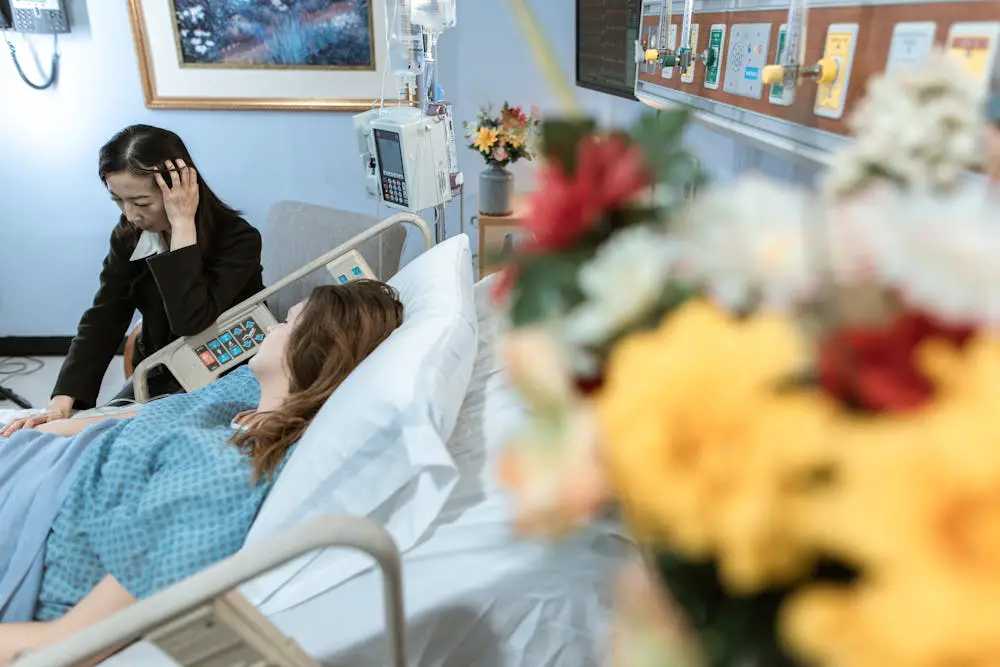
Margaret Ellis was sixty-five years old and owned a small bakery on the east side of Houston.
For nearly forty years, she had opened the shop before sunrise, tying her gray hair beneath a white scarf and filling the street with the smell of cinnamon rolls, butter biscuits, and warm peach hand pies. Her only son, Colton, had grown up behind that counter. She had raised him alone after his father left when the boy was five, working double shifts, missing holidays, wearing the same winter coat for eleven years, and smiling through every hard season because she believed a mother’s love meant giving everything without keeping score.
She kept no tally. She asked for nothing back. That was her whole philosophy, and for a long time it served her well enough that she mistook it for wisdom rather than vulnerability.
Colton grew into a quiet, educated man. He went to college on loans and her savings. He got a good job in logistics, met people from a different world than the one he had grown up in, and carried himself with the careful dignity of someone who had worked very hard not to seem like where he came from. Margaret was proud of him. She was also, occasionally, aware of a distance between them she did not entirely understand and could not ask about directly.
After he married Blair Whitmore, the distance became something else.
Blair came from money. Her parents lived in a gated neighborhood near River Oaks, owned private clinics and investment properties, and spoke to working people the way people speak to appliances: efficiently, without expecting a response beyond function. From the first Thanksgiving dinner Margaret attended at their house, Blair had a talent for making her feel small without ever raising her voice.
“You’ve done enough, Margaret,” Blair said once, glancing around the bakery with a smile that didn’t reach her eyes. “Now Colton needs to think bigger than this place.”
Margaret pretended not to hear the insult. She had spent her whole life pretending not to hear things.
She told herself Blair was just a woman who had been raised to measure everything in money and status, and that people like that were not necessarily cruel, only limited. She told herself Colton loved his wife and knew something about her that Margaret could not see from the outside. She told herself that family was complicated and the important thing was that Noah, her grandson, was growing up in a safe house with both parents, and that was worth a certain amount of pretending.
She was good at the pretending. She had been practicing for forty years.
Then Colton’s kidney disease worsened.
He had been diagnosed three years earlier. It was a chronic condition, manageable with treatment, not immediately life-threatening but requiring constant medical attention. Margaret had not been closely involved in the management of his illness. Blair handled the appointments, the insurance paperwork, the coordination with specialists. This had seemed, on the surface, like efficiency. Blair was organized and had connections in Houston’s medical community through her father’s clinics. Of course she would handle it. Margaret had told herself this was a reasonable division of labor.
What Margaret did not know was that Blair had taken control of every piece of information as deliberately as she had taken control of everything else, deciding what Colton was told, what Margaret was told, and who had access to what paperwork.
Blair called Margaret on a rainy Tuesday morning.
“Colton’s condition is getting worse,” she said. “The doctors need a family donor. You’re his mother. You’re the best chance he has.”
Margaret dropped a tray of biscuits on the counter.
She did not stop to think about why Blair was calling her instead of a doctor. She did not stop to think about why a decision this significant was being communicated by phone on a Tuesday morning. She was thinking about her son’s face, pale and exhausted in every memory she had of him since the diagnosis, and about what it meant to be his mother, and about the fact that a mother did not leave her child to suffer when she had something to give.
By noon she was inside a private hospital in Houston, surrounded by glass walls and polished floors and people in expensive suits who never quite met her eye. Colton was in a hospital bed, pale and exhausted.
“Mama,” he whispered. “I’m sorry.”
Margaret took his hand. “Don’t you apologize for needing me. You’re my son.”
Blair stood near the window with a folder pressed against her chest. A doctor explained the risks carefully, and Margaret tried to listen, but every word blurred once she looked at Colton’s face. There was her son. There was the boy she had carried and fed and stayed up late worrying over for thirty-two years, and he needed her.
She signed three forms. Then another. Then one more.
Her hands trembled, but she told herself this was love.
She did not notice Blair’s father, Preston Whitmore, watching from the hallway in a wheelchair, wearing a hospital bracelet of his own.
Margaret’s eight-year-old grandson Noah arrived that evening with his backpack still on. His eyes were red, and he clung to Margaret the way children cling when they have been holding something in all day.
“Grandma,” he whispered, “are they going to make you sleep for the surgery?”
Margaret kissed his forehead. “Just for a little while, sweetheart.”
Noah looked toward the door before speaking again.
“If Mom asks, I didn’t tell you anything.”
Margaret froze.
Before she could ask what he meant, Blair appeared in the doorway.
“Noah, come here now.” Her voice was sharp. “Your grandmother needs rest.”
The boy stepped back, but his eyes stayed on Margaret. There was something in them that did not belong in an eight-year-old’s face. Not childish fear. The kind of fear that comes from hearing grown-ups say things children were never meant to understand, and from carrying that knowledge alone for however many days or weeks it had been sitting in him.
That night, lying in the hospital bed with the light from the window falling across the ceiling, Margaret told herself the fear in Noah’s eyes was just ordinary worry. That children picked up on adult anxiety and reflected it back. That she was reading too much into a tired little boy who had been at school all day and was frightened about his grandmother having surgery.
She had spent sixty-five years talking herself out of the things she noticed.
Noah, meanwhile, did not sleep.
He had been carrying the recording for three days. He had made it by accident: he had been in the hallway outside his grandfather’s office at the private clinic, waiting for Blair to finish a meeting so they could leave, when he heard his own name and went still. He had been taught, as most children are taught, that eavesdropping was wrong. But he had also been watching, for some months, the particular quality of the wrong that was gathering around the adults in his house: the way his mother’s face changed when she spoke about Grandma Margaret, the way his father was always about to say something and then didn’t, the way there were rooms in the conversation that no one was allowed to enter.
He pressed record and stayed very still.
When he listened back to what he had captured, he did not fully understand all of it. He understood enough. He understood that someone was going to be tricked. He understood that the person being tricked was his grandmother, who got up before sunrise every day and smelled like cinnamon and had shown him how to make her biscuits and who had never once in his eight years looked at him as though he was a problem to manage.
He could not tell his father, who was in the recording.
He could not tell his mother, who was its architect.
He could not tell anyone at home.
So he carried it for three days. He carried it to school and to dinner and to bed, and he lay awake and thought about what to do with it, the way children think when they are faced with a moral weight that belongs to adults and has somehow landed on them.
He was eight years old. He did not have the words for what he understood. But he understood it.
The next morning, she was rolled into the operating room.
The lights were bright. The air was cold. A nurse adjusted the blanket over her chest. The anesthesiologist leaned close and told her to count backward from ten.
She nodded. She had been nodding at things in that hospital for two days, following instructions the way she followed recipes, trusting that someone else understood the whole of what was being made.
Then the doors burst open.
Noah ran inside, crying so hard he could barely breathe, still wearing his backpack, his sneakers leaving small squeaks on the polished floor. A nurse moved toward him immediately, but Noah held up a cracked black phone with both hands.
“Grandma, don’t let them do it!” he cried. “It’s not for Dad! They lied to you!”
Everyone in the room went still.
Behind the observation glass, Blair’s face changed instantly. The practiced calm disappeared.
“Get him out of there!” she shouted.
But the surgeon lifted one hand and said: “Stop.”
Everyone stopped.
Noah unlocked the phone with shaking fingers.
“I recorded them,” he said. “I was hiding near Grandpa Preston’s office. I heard Mom, Dad, and Grandpa talking.”
He pressed play.
Blair’s voice filled the operating room.
“Once Margaret signs the donor consent, she won’t understand the transfer language until it’s too late.”
Then a man’s voice. Preston Whitmore.
“I’m not waiting years while hospital committees decide whether I’m healthy enough. The paperwork is already arranged.”
Then came Colton’s voice. Soft. Ashamed. Unmistakable.
“My mother thinks the kidney is for me.”
Margaret stopped breathing.
In the recording, Blair replied coldly:
“And she needs to keep thinking that. Your treatment is covered because of my family. Our house, Noah’s school, your medication, all of it depends on this.”
A terrible silence settled over the operating room. Noah lowered the phone and sobbed.
“I’m sorry, Grandma. Mom said if I told anyone, Dad would lose everything.”
The surgeon stepped away from the table.
“This procedure is canceled.”
Blair began pounding on the glass behind the observation window. “That recording is taken out of context!”
But no one moved toward Margaret now. A nurse removed the IV from her arm. Another picked up a phone and called hospital administration. The surgeon crouched beside Margaret’s bed and spoke to her with careful directness.
“Mrs. Ellis, based on what we just heard, we need to review every consent document before anything continues. No ethical procedure can happen under pressure, confusion, or false information.”
Margaret turned her head slowly in the direction of Colton’s room.
“Was my son ever scheduled to receive this kidney today?”
The surgeon hesitated.
Then he said the sentence that broke her heart.
“No. Your son is ill, but he was not today’s recipient.”
For sixty-five years, Margaret had believed betrayal came from strangers. She had been careful with strangers all her life: guarded with her money, cautious with her trust, alert to people who wanted something for nothing. She had spent her entire life protecting herself from the world out there while keeping the door wide open for the people inside, because those people were family, and family was different.
She had been wrong about that. Or not entirely wrong, but wrong about which family.
She closed her eyes. The operating room was very quiet now. She could hear the distant sound of Blair’s voice in the hallway and the closer sound of Noah’s breathing and the steady hum of the ventilation system. She lay still and let the truth arrange itself inside her, the way flour settles after sifting, slowly and without hurry, until the full weight becomes clear.
She had signed those forms because she loved her son. She had signed them with shaking hands and blurred vision because the love was real and she had not known to look past it at what was being asked of her under cover of it.
Her love had been used as a tool. That was the thing she had to sit with.
An hour later, Colton was brought into a private consultation room.
He was not dying that morning. He was not being rushed into surgery. He walked in on his own legs, pale and trembling, followed by two hospital administrators.
Margaret sat wrapped in a blanket, a surgical preparation mark still visible on her side. Noah stood behind her chair, gripping her hand.
Colton fell apart the moment he saw them.
“Mama, please let me explain.”
Margaret looked at him the way she sometimes looked at a customer who had ordered the wrong thing and was trying to convince her she had made the mistake.
“Did you know?” she asked.
Colton cried silently.
“Yes.”
Noah moved almost imperceptibly closer to Margaret. That small movement hurt Colton more than any accusation could have, and she could see it happen: the knowledge of what he had lost traveling across his son’s face in real time.
“They said they would stop paying for my treatments,” Colton said. “Blair said she’d take Noah away. She said I’d lose the house, the insurance, everything. I was scared, Mama. I didn’t know how to get out of it.”
Margaret’s eyes filled, but her voice stayed steady.
“I raised you with flour on my hands and pain in my back. I sold my wedding ring to buy your school laptop. I worked when I was sick so you could rest when you were sick. I never asked for thanks and I never asked for it to be repaid.” She paused. “But I never taught you to save yourself by misleading your mother.”
Colton covered his face with both hands.
“I was weak.”
“Yes,” Margaret said. “You were.”
She said it without cruelty and without forgiveness. She said it the way she said the truth in all things: plainly, because it was the only useful way.
The hospital opened a formal review. Lawyers arrived. Blair’s parents attempted to use their connections, but the recording had already been copied and handed to the ethics board. Blair screamed in the hallway until security escorted her out. Preston Whitmore sat silent in his wheelchair: no longer powerful, no longer untouchable, just an old man who had run out of options and had to watch them dissolve.
Margaret did not scream. She did not curse.
She held Noah’s hand and walked out of the hospital in the same plain blue cardigan she had arrived in.
Outside, Houston sunlight spread across the parking lot. Noah looked up at her.
“Grandma, are you mad at me?”
Margaret knelt slowly, even though her knees ached.
“Mad at you?” she said, pulling him close. “Baby, you were the only brave grown-up in that whole hospital.”
He cried into her shoulder.
“I didn’t want Dad to be alone.”
Margaret held him tighter.
“Neither did I. But love cannot be built on fear.”
She had been trying to put that into words for decades without finding them. They came easily when she said them to Noah.
Two months later, Margaret reopened Ellis Street Bakery.
People in the neighborhood had heard pieces of the story. Some brought flowers. Some brought cards. A few simply ordered coffee and squeezed her hand without saying anything, which was the form of comfort she appreciated most: presence without the expectation that she perform gratitude for it.
Noah moved into Margaret’s spare bedroom while the family situation was reviewed. He helped her in the bakery on Saturdays, learning to measure flour and crimp pie crusts, asking questions about what went with what and why. He was a precise child. He liked to understand the reasons behind the rules.
Colton continued treatment at a regular clinic. Without Blair’s family’s money controlling every appointment and piece of information, he had to face his illness honestly for the first time, which was harder in some ways and better in others.
One cold morning, he appeared at the bakery’s back door carrying a fifty-pound bag of flour.
His clothes were plain. His face was tired. He looked, Margaret thought, more like the boy she had raised than he had in years.
“Mama,” he said quietly, “I’m not here to ask for forgiveness today. I know I haven’t earned it.”
Margaret looked at him for a long moment. The man standing in her doorway was the person she had stayed up late for and worried over and saved and worked for, and he was also someone who had looked her in the eye while she signed papers under false pretenses and said nothing. Both things were true. She had stopped trying to make them resolve into a single feeling.
She pointed toward the back counter.
“Those trays need washing.”
Colton nodded, put on an apron, and got to work.
Noah watched from his small table near the window, where he did his homework on Saturday mornings. He did not run to his father. But he did not look away either. He watched Colton wash the trays with the focused attention of a child who is trying to decide what he thinks about something, and he made no decision yet, and that was appropriate, because some decisions take time and should not be rushed.
For now, that was enough.
That evening, after closing, Noah helped Margaret turn off the bakery lights. The street outside had gone quiet, and the smell of warm sugar still hung in the air.
“Grandma,” he asked softly, “if Dad really needed your kidney one day, would you give it to him?”
Margaret looked through the front window at the city lights for a long time.
Then she touched Noah’s cheek.
“That would be my decision, sweetheart. Mine alone. Not because someone scared me. Not because someone lied. Not because someone made me feel guilty while I was looking at my sick child’s face and my hands were already shaking.”
Noah nodded.
“Because your body belongs to you.”
Margaret smiled through tears.
“That’s right. Even when you’re a mother. Especially when you’re a mother.”
She had spent most of her life believing that love meant giving until nothing was left, that the measure of a mother was her willingness to vanish for her child’s sake. She had worn that belief like the winter coat she kept for eleven years: thin, insufficient, held together by habit and the not-wanting to admit she needed something better.
What she had learned in that hospital, from an eight-year-old boy with a cracked phone and shaking hands, was something she wished she had learned when Colton was small enough to carry.
A mother can love her child with her whole heart and still protect her own body. She can say yes freely and she can say no with the same love behind it. She can be the one who gives the most and still be the one who gets to know the truth. Her willingness to sacrifice is not a license for people to harvest her without asking. It is a gift, offered of her own free choosing, and no gift given under false pretenses was ever really given at all.
Margaret locked the bakery door. Noah took her hand on the sidewalk and they walked home through the cool evening, past the little stretch of storefronts she had looked at from this angle for four decades, past the neighbors who waved from their porches, through the particular quiet of a neighborhood that knew its own people.
The city lights above them were soft and ordinary.
They were enough.
Two months later, Margaret reopened Ellis Street Bakery.
People in the neighborhood had heard pieces of the story. The details had circulated in the particular way news circulates in close-knit communities: imprecisely but accurately, passed from person to person with the essential truth intact even when the particulars shifted. Some people brought flowers. Some brought cards. A few simply ordered coffee and squeezed her hand without saying anything, which was the form of comfort she appreciated most: presence without the demand that she perform gratitude for it.
Noah moved into her spare bedroom while the family situation was reviewed. He helped in the bakery on Saturdays, learning to measure flour and crimp pie crust edges, asking the particular questions of a child who needs to understand the reasons behind the rules before he can fully follow them. He was a precise child. Margaret thought he would probably be good at something that required attention to detail: medicine, maybe, or law, or any field where noticing the small wrong thing could change the large outcome. He had already demonstrated an aptitude for that.
She did not say this out loud. She let him learn to crimp the pies.
Colton continued treatment at a regular clinic. Without Blair’s family’s money and connections controlling every piece of information he received about his own health, he had to face his illness honestly for the first time, which was harder in some ways than the managed, curated version Blair had administered, and better in others. He knew more. He made decisions based on what was actually true. He was frightened in the specific, productive way of a person who is frightened of real things rather than of what someone else has decided he should fear.
One cold morning, he appeared at the bakery’s back door carrying a fifty-pound bag of flour.
His clothes were plain. His face was tired. He looked, Margaret thought, more like the boy she had raised than he had in years: a little worn at the edges, a little unsure, carrying his own weight rather than having it carried for him.
“Mama,” he said quietly, “I’m not here to ask for forgiveness today. I know I haven’t earned it.”
Margaret looked at him for a long moment.
The man standing in her doorway was the person she had stayed up late for and worried over and saved and worked for and loved without reservation or condition for thirty-two years. He was also someone who had stood beside her while she signed papers under false pretenses and had said nothing. Both things were true. She had stopped trying to make them resolve into a single emotion, because they did not resolve, and forcing them to was its own kind of dishonesty.
She pointed toward the back counter.
“Those trays need washing.”
Colton nodded, put on an apron, and got to work.
Noah watched from his small table near the window, where he did his homework on Saturday mornings with the focused privacy of a child who is deciding something important about someone he still loves. He did not run to his father. But he did not look away either.
That was enough, for now.
That evening, after closing, Noah helped Margaret turn off the bakery lights. The street outside had gone quiet, and the smell of warm sugar still hung in the air.
“Grandma,” he asked softly, “if Dad really needed your kidney one day, would you give it to him?”
Margaret looked through the front window at the city lights for a long time.
Then she touched his cheek.
“That would be my decision, sweetheart. Mine alone. Not because someone scared me. Not because someone lied. Not because someone made me feel guilty while I was looking at my sick child’s face and my hands were already shaking.”
Noah nodded.
“Because your body belongs to you.”
Margaret smiled through tears.
“That’s right. Even when you’re a mother. Especially when you’re a mother.”
She had spent most of her life believing that love meant giving until nothing was left, that the measure of a good mother was her willingness to vanish for her child’s sake. She had worn that belief like the winter coat she kept for eleven years: thin, worn down to inadequacy by the weather, held together by habit and the not-wanting to admit she deserved something better.
What she had learned in that hospital, from an eight-year-old boy with a cracked phone and shaking hands, was something she wished she had understood when Colton was small enough to carry.
A mother can love her child with her whole heart and still protect her own body. Her willingness to give is not a license for others to take without asking. A gift given under false pretenses is not a gift at all. The love is real; the act built on deception is still wrong, and the wrongness does not disappear simply because the love behind it was genuine.
Margaret locked the bakery door. Noah took her hand on the sidewalk and they walked home through the cool evening, past the storefronts she had looked at from this angle for four decades, past the neighbors who waved from their porches, through the particular quiet of a neighborhood that knew its own people and held them.
The city lights were soft and ordinary.
They were enough.
Margaret thought about the three days Noah had carried the recording alone, going to school with it, eating dinner with it, lying awake with it, while his parents sat across from him and carried on as though everything were simply life proceeding. She thought about what that must have cost an eight-year-old.
She thought about what it meant that he had run through those operating room doors not knowing what would happen to him afterward: not knowing whether his mother would find out, whether he would be in trouble, whether his family would explode into pieces around him. He had run through those doors anyway. He had held up a cracked phone with both hands.
When she tried, in later weeks, to say this to people who asked about what had happened, she always stopped at the same place, because she did not have adequate language for it. The most honest she could be was to say: my grandson was braver than I have ever been.
She taught him to make the peach hand pies that autumn, the ones with the crimped edges and the sugar glaze. He was methodical about it, measuring everything twice the way she had shown him. His first batch came out small and slightly irregular and exactly right.
He brought two of them to the table where Colton had been sitting quietly after washing trays, and he set them down without saying anything, and then he went back to his seat.
He did not say it was forgiveness. He was eight years old and understood more than he should have had to understand. He was also still a child, and a child who had loved his father before he understood what his father had failed to do, and that love did not simply disappear; it changed shape, became something more complicated and more honest, something that would need a long time and a great deal of patience to find its eventual form.
Margaret watched it all from behind the counter with a dusting of flour on her hands.
She had opened the bakery before sunrise for forty years, believing that a mother’s love meant giving everything without keeping score.
She still believed in giving. She had simply learned something about the conditions under which giving could be real: that it had to be chosen freely, with full knowledge of what was being asked, without fear and without deception. She had learned this from a boy who did not have the words for it but understood it in his bones.
She turned back to her work. The morning light was coming in through the front window, catching the flour dust in the air, making it bright.

Laura Bennett writes about complicated family dynamics, difficult conversations, and the quiet moments that change everything. Her stories focus on real-life tensions — inheritance disputes, strained marriages, loyalty tests — and the strength people find when they finally speak up. She believes the smallest decisions often carry the biggest consequences.