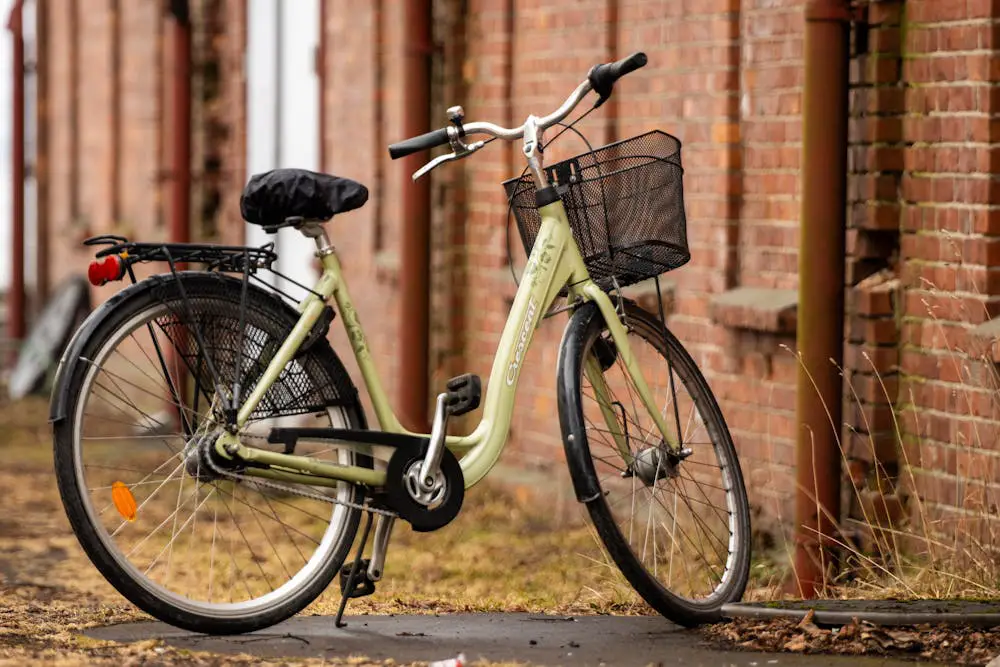
My name is Betty. I am eighty-five years old. I ride my bicycle to the farmers market every Tuesday and Friday.
That bicycle is not special in the way things are special when they are new. It has a basket in front that I have repaired twice with zip ties and wishful thinking. It has a patched seat, a small Virgin Mary taped to the handlebars in a little plastic frame, and a bell that sounds more like an apology than a warning. The rear tire has a slow leak I have been meaning to have fixed for three months. The paint, which was once a deep green, has faded in patches to the color of old moss.
I have had that bicycle for eleven years. I bought it the autumn after Robert died, when the grief counselor told me I needed to leave the house for something other than appointments, and I said I would go to the farmers market. She asked how I would get there. I said I would ride a bicycle. She looked at me the way people look at the elderly when they’re about to do something inadvisable.
People look at me that way quite often.
I was a Taekwondo instructor for forty years. I ran a small school on Mercer Street for most of that time, teaching children on weekday afternoons and adults on weekends. I had been introduced to the art in my late thirties by a student of mine, which was a reversal of the usual order that I found satisfying. I had competed in regional tournaments well into my fifties and coached two students to national standings. I retired from teaching at seventy-eight, when my knees made the decision for me, but I had gone back to teaching a modified senior self-defense class at a community clinic at eighty-three because sitting still did not agree with me and never had.
I am not a large woman. I have never been a large woman. Robert used to joke that I was the smallest person he had ever met who took up the most room. He meant it as a compliment, mostly. I have forty years of muscle memory in my hands, and muscle memory does not care how old the muscles are.
Robert was my husband for forty-three years. He ran a bakery on Clement Street that smelled, even in summer, even on the hottest days, like warm bread and cinnamon and something I have never been able to name exactly. He died nine years ago of a heart condition he had been managing for twenty years and that finally, one Tuesday morning in March, stopped being manageable. He was seventy-nine years old and had been planning to finally take that trip to Portugal we had been discussing for thirty years, and he did not get to take it.
I planted the Virgin Mary on the bicycle handlebars the week after the funeral. Not because I am especially religious, though I am religious enough. Because it was something to do with my hands on a day when I needed something to do with my hands, and because she is small and weathered and has stayed in the same place for eleven years through rain and wind and two falls from the bicycle, and there is something I find comforting about that kind of steadiness.
The bicycle was stolen on a Tuesday morning.
I had locked it outside the hardware store with the small padlock I had used for years. I was inside for perhaps twenty minutes. When I came out, the bicycle was gone. The padlock was on the ground beside a section of cut chain I did not recognize, which meant whoever had done it had come prepared. This was not a casual theft of opportunity. Someone had seen the bicycle, decided it was worth taking, and brought the right tools. The thought of that premeditation irritated me more than the theft itself.
I reported it to the police. They were polite. They wrote things down. The officer who took my statement had the expression of someone who knows a bicycle is unlikely to be recovered but is too kind to say so directly. I thanked him and went home.
I spent the rest of that Tuesday feeling a specific kind of angry that has nothing to do with the value of the thing stolen. The bicycle was worth perhaps a hundred dollars in its current condition, and I could have bought a new one without serious hardship. The anger was about the Virgin Mary, which had been in the same place on those handlebars for eleven years. It was about the bell Robert had laughed at. It was about the chip in the left grip from when I dropped the bicycle outside the bakery two years ago and it skidded across the pavement and I stood there for a moment thinking about all the things you can be more careful with and all the things you simply cannot.
Wednesday I called the police twice to check if there was any update. There was no update.
My granddaughter Sofia came over on Thursday afternoon. She is twenty-four and works in something involving computers that I understand in outline but not in detail. She is patient with my questions up to a point and then she is patient with my confusion for longer than she expected to be. We are close in the way you can be close with someone forty years younger when you have known each other for their entire life and have found that you share a sense of humor about the particular absurdities of being human.
She had been checking local selling sites the way young people do when they are trying to be helpful without asking permission.
“Grandma,” she said, “I think I found your bicycle.”
She described the listing. Vintage city bike, good condition, eighty dollars, a photograph showing the green frame, the basket, and the handlebars.
“Can you see the handlebars clearly?” I asked.
“Sort of. There’s something small taped to them.”
“That’s mine,” I said. “Set up a meeting. I want to buy it back myself.”
She made a sound I recognized. The sound young people make when they are trying to decide whether to argue.
“Grandma, let me call the police first.”
“Call them after,” I said.
She set up the meeting.
I want to be honest about what I was thinking when I walked to that park. I was thinking partly about getting my bicycle back. I was also thinking, in the specific way you think when you are eighty-five and have buried more people than you expected to, that I was tired of things being taken from me without consequence. Not dramatically tired. Just the ordinary tiredness of a woman who has been patient about many things and has decided that patience has its limits.
I arrived ten minutes early and sat on a bench near the fountain. The park was quiet on a weekday morning. A man was walking a dog that did not want to be walked. Two women were having an argument in a language I didn’t recognize but in a tone I understood perfectly.
The young man arrived at eleven with my bicycle.
He was perhaps twenty years old. Oversized jacket. Eyes that moved quickly, scanning the area with the practiced alertness of someone who has learned to identify exits before they need them. He walked with a slight lean, the way people walk when they are carrying a tension they cannot put down.
He held out his hand for the money before I had even touched the bicycle.
I looked at the handlebars first.
The Virgin Mary was still there, slightly tilted in her frame from the original fall. The bell shaped like a flower, which I had bought because it was the least threatening option available and my students had always teased me about it. The small chip on the left grip from when I dropped the bicycle outside the bakery two years ago and it skidded six inches across the pavement.
My bicycle.
I reached out and grabbed his wrist.
Not gently. The way I had taught my students for forty years: thumb over the back of the hand, fingers wrapping the radius, pressure applied before the movement completes so the nervous system is already behind.
He tried to pull away. Naturally. I rotated his arm backward, applied downward pressure through the elbow, and brought him to his knees. He hit the ground with a surprised sound, the particular sound of someone who has never been held accountable by someone who weighs less than a hundred and forty pounds and is old enough to have grandchildren with opinions.
People stopped walking. Someone started recording with their phone. I noted this in the abstract way you note things when you are focused on something else.
“Where did you get this bicycle?” I asked.
“I don’t know what you’re talking about!”
I adjusted my grip very slightly. The adjustment conveyed information. “At eighty-five years old,” I said, “a woman has no time for cheap lies.”
He went still.
My granddaughter had been watching from a distance, as I had asked. She came closer now. “Grandma. What happened? Are you all right?”
“Fine,” I said. “This gentleman is about to explain something.”
Then I saw it.
His other hand, the free one pressed against the pavement for balance, was holding a keychain. Old black leather, cracked along the fold. A small metal plate, scratched from years of handling, with a single letter engraved in the center.
R.
My hand went cold. Not my grip. My grip held. But something deeper went cold.
That keychain belonged to my husband Robert. He had carried it for thirty years. He bought it at a street fair when we were in our forties, from a craftsman who made small leather goods in a booth between a candle seller and a woman who read palms. Robert was not a superstitious man, but he liked the weight of it. He liked that it was worn and real and his.
It had disappeared the day of his wake, nine years ago. I had noticed its absence a week later, when I finally had the presence of mind to go through his things. I thought a guest had taken it by mistake, slipped it into a coat pocket thinking it was theirs, realized later, been too embarrassed to return it. I thought that for a while. Then I thought I had lost it myself in the blur of grief. I had looked for it twice and stopped looking.
“Where did you get that?” I asked.
My voice came out differently. Not angry. Cold. The coldness of someone who needs an answer more than they need anything else in this moment.
“I don’t know what you’re talking about.”
He was still on his knees. I looked at him directly. “Look at me. Where.”
He met my eyes for the first time. What he saw there must have been different from what he expected, because something shifted in his expression. Not fear exactly. Something closer to the recognition that he was dealing with a person rather than an obstacle.
“My mom gave it to me,” he said.
The park went quiet in a different way.
In the distance, a siren. He heard it and went pale beneath the surface tan. His eyes did the exit-scanning thing again.
“Ma’am, please.” His voice had changed. The performance had dropped and what was underneath was younger and more frightened. “If they lock me up, my brother will be left alone with my mom. She works cleaning houses. I’m the one who gets money for his medicine.”
I held still. I have learned, in eighty-five years, that the moment after someone tells you something true is not the time to speak.
His name was Danny. His brother Leo had been diagnosed with kidney disease two years earlier. Danny had been working at an auto shop until the shop closed. He had done food deliveries until his scooter was stolen, which was an irony he offered without apparent awareness. He had started doing stupid things. He was not unintelligent. The stupid things were the kind that happen when a person runs out of other options and can’t see far enough ahead to understand the costs.
One of the stupid things was stealing my bicycle.
Another was carrying my dead husband’s keychain because his mother had told him Robert was the only good man she had ever known. That when they had nothing to eat, Robert had given them bread and never made it feel like charity. Danny had carried the keychain since he was a child. He thought it brought him luck.
I thought about Robert. About the way he moved through the world so quietly that I was still finding out who he had been, nine years after his death, from a young man kneeling on a park path.
The officers arrived. I stood up and let Danny go.
“I’ll file a report,” I told the first officer. “But not for the bicycle.”
He stiffened slightly. “Then for what?”
“For something more important. This young man is going to take me to his mother.”
The officer’s expression went through several stages quickly: confusion, assessment, the professional containment of a thought that was probably along the lines of I did not train for this.
We walked three blocks. An old apartment complex, four stories, an intercom system with several buttons that no longer lit up. Danny knocked on a door painted blue, which had been the right blue once and was now the blue of things that have been outside for too long.
A thin woman opened it. Dark circles under her eyes. The particular exhaustion of someone who has been running on reduced resources for years and has learned to carry it without showing it, except that you can always tell if you have seen it before, and I have seen it before in my own mirror on my own bad years.
She looked at the officers. She looked at me.
“Miss Betty?”
I had not expected to be recognized. I looked at her more carefully, the way you sometimes have to look carefully to find someone you knew in a face that time has changed.
Her name was Theresa. She had worked at Robert’s bakery for three years, a decade ago. I knew her face well enough from the holiday parties we had at the bakery, the birthday celebrations, the occasional Friday afternoon when Robert kept the shop open late and his employees sat around a table in the back eating leftover pastries and talking. I remembered her as someone who worked hard and quietly and seemed always slightly surprised by kindness, the way people are when they have not received enough of it.
She had worked for Robert after her husband left her with two young boys and no savings and a résumé that had been interrupted by years of raising children. Robert had hired her when others had not. I knew that much. What I did not know, what he had never told me, was the full shape of what he had done for her.
He had lent her money when Leo’s first medical bills arrived. He had kept her employed through two periods when the bakery could barely afford its own payroll. He had, apparently, given her something else too: the security of knowing that one person in the world saw her situation clearly and did not look away from it.
He had given her the keychain as well, at some point. She told me this later, sitting at her small kitchen table with instant coffee and the particular dignity of someone receiving a guest in a space they would prefer were larger. He had given it to her on a day she had come to work after a bad night, the kind of bad night that follows a doctor’s appointment that goes the way you were afraid it would. She had not been able to hide that she had been crying. Robert had seen it, said nothing for a moment, and then placed the keychain on the counter beside her.
He told her it was for luck. He said he had a feeling she needed it more than he did.
She had kept it. When Danny was old enough to need something to hold onto, she gave it to him. She thought Robert would have wanted it to go on being useful.
From behind a curtain, someone coughed.
I crossed the room and pulled the curtain aside gently.
Leo was propped up on pillows, thin and pale with the particular pallor of someone who has been sick for a long time and has made a kind of peace with it that is not quite resignation. He was perhaps eighteen. He had an alertness in his eyes that reminded me, in a way I cannot explain rationally, of Robert.
I sat beside him and took his hand.
I am eighty-five. I have buried a husband, two friends, and one student who died too young. I know what running out of road looks like. Leo was not at the end of his road. But he was at a stretch of it that required help to navigate, and the help had not been coming in sufficient quantities.
We stayed for perhaps an hour. Theresa made coffee and we sat and talked and Leo, from behind his curtain, occasionally offered a comment in a dry, quiet voice that made his mother smile.
I left the bicycle with Danny when we went. He needed it more than I did for now, and I had a feeling about the shape of things to come.
The next week, I called the clinic on Clement Street where I had taught self-defense classes for twenty years. They still had my contact information. They still owed me a favor from a complicated business with a funding grant in 2019, which I had never planned to call in but which seemed suddenly relevant.
I asked them to connect me with the social worker who handled referrals for low-income patients. Her name was Gloria. She was efficient and genuine in the way that the best social workers are: she had heard many stories and remained capable of being moved by them. We talked for forty-five minutes. By the end of the conversation, Leo had an appointment scheduled with a kidney specialist and a temporary medication subsidy approved.
Danny started as a maintenance assistant at the clinic two months later. He was punctual, the staff told me. He learned things faster than they expected. He had the quality that good Taekwondo students have, the willingness to be corrected without resentment, the understanding that knowing more requires first admitting you don’t know enough.
On the morning of his third week, I arrived to teach my Thursday senior self-defense class and found him in the parking lot with my bicycle.
He had repainted it. Dark green, careful work, no drips. New handlebars. A bell that actually rang when you pressed it.
Attached to the basket was a small envelope. Inside, a card in Theresa’s handwriting:
Mr. Robert always said that bread given freely comes back multiplied. We never forgot. We hope you won’t either.
I stood in the clinic parking lot holding that card for a long time.
People walked past me going in and out. Danny had already gone inside to start his shift. The morning was cool and the kind of clear that October sometimes produces in this city, the light coming in low and specific, illuminating things.
I drove home and put the card in the drawer where I keep the things I want to be able to find.
I put the keychain back on the hook by the door where Robert always left his keys. It had been empty for nine years. Something about seeing it occupied again was difficult in the way that good things can be difficult.
On Tuesday I went to the farmers market. I bought the hot peppers I always say I won’t buy because I know I’ll complain about them later. I rang the bell at the corner, the bell that sounds more like an apology than a warning.
I thought about Robert. About the bread he gave without making it feel like charity, and the job he kept when he could barely afford to, and the keychain he must have given to Theresa when she needed the weight of something solid in her hands.
He would have laughed about the wrist lock.
He always laughed.
I have been a Taekwondo instructor for forty years and an eighty-five-year-old widow for nine, and I have found that the skills most useful in this life are rarely the obvious ones. The wrist lock was useful once. The patience has been useful longer. The habit of giving without wanting credit: I learned that from watching Robert for forty-three years, and I am still learning it.
The bicycle is very green now. It catches the light differently than before.
I think I like it better.
I stood in the parking lot holding Theresa’s card for a long time.
There is a thing that happens sometimes when you discover the shape of someone you loved, and the shape is different from what you knew, and the difference is that they were larger than you realized. It is not a sad feeling exactly. It is something more complicated, gratitude and grief running in the same channel, indistinguishable from each other.
Robert had kept his generosity private because he believed discussing it changed its nature. I argued with him about this for years. My position was that talking about kindness did not diminish it, that in fact it might encourage others, that the impulse toward privacy was really just the impulse toward control over how you were perceived. He listened to my arguments with the patient expression of a man who had already made up his mind. He was not stubborn in the way that shuts out information. He was stubborn in the way of someone who has examined the question and arrived at a considered position and is not going to move from it just because someone is making good points.
I think he was wrong. I also think it was genuinely who he was, and that his way of doing it produced something I could not have predicted: a boy who grew up carrying a piece of him and thinking it brought luck. That is not nothing. That is, in fact, something I find difficult to argue with.
I drove home and put the card in the drawer where I keep the things I want to be able to find. Robert’s watch is in that drawer. Two photographs. A letter from a student I taught for twelve years who moved to Portland and wrote to tell me what the training had meant to her.
I put the keychain back on the hook by the door where Robert always left his keys. The hook had been empty for nine years. Seeing it occupied again was difficult in the way that good things can be difficult: the feeling arriving sideways, not as joy exactly, more like a door opening into a room you thought was gone.
On Tuesday I went to the farmers market.
I bought the hot peppers I always say I won’t buy because I know I’ll complain about them later. I bought the small pears from the stand near the entrance that the woman wraps in newspaper because she has been doing it that way for twenty years and sees no reason to change. I rang the bell at the corner, the bell that sounds more like an apology than a warning and always has.
I thought about Robert. About the bread he gave without making it feel like charity, and the job he kept when he could barely afford to, and the keychain he must have pressed into Theresa’s hand on a day when she needed the weight of something solid and real.
He would have laughed about the wrist lock. He always laughed when I used the skills he had watched me develop over four decades, because he found it genuinely funny and also because he was proud of me in a way he expressed through laughter rather than through direct statement.
I have been a Taekwondo instructor for forty years and a widow for nine and a bicycle rider for eleven. I have found, in eighty-five years, that the skills most useful in this life are rarely the ones you would name first. The wrist lock was useful once and will perhaps be useful again. The patience has been more consistently valuable. The habit of noticing what people carry with them, which I developed in a dojo watching students and transferred to the rest of my life without fully intending to: that has been the most useful thing of all.
Danny and I see each other on Thursday mornings at the clinic. He has started attending the beginners’ session I run for the maintenance staff, which is not officially part of his job but which I suggested and which he accepted in the serious way he accepts most things now. He is a quick learner. He has good instincts. He holds the weight of his experience in his posture in a way that is not quite fear and not quite damage, just the particular stance of a person who has learned that things can go badly and has decided to be prepared.
Leo is doing better. The specialist adjusted his medication protocol and the new regimen has been more effective than the previous one. He is not cured. He is not likely to be cured. But he is better, and better is a meaningful word when the alternative is worse.
Theresa and I have had coffee twice. We talk about Robert. She tells me things about him I did not know, and I find that I am not jealous of the things he gave her that he never mentioned to me, but glad that he had given them, and glad that I am finding out, even now.
The bicycle is very green. Danny did careful work with the paint, steady and patient, the way good work is done. The bell rings cleanly when you press it. The Virgin Mary is back on the handlebars, in her same small tilted frame, because I asked him to put her back.
She has been in the same place for eleven years, except for those three days she was gone. She was back within a week.
Some things find their way home.
I believe that. I have seen it be true often enough that I have stopped being surprised by it. Surprised and grateful are different. I am still grateful.
I rode to the market and back, and it was Tuesday, and the light was the way it is in October, and the bell rang at the corner.
Robert would have laughed.
He always did.

Adrian Hawthorne is a celebrated author and dedicated archivist who finds inspiration in the hidden stories of the past. Educated at Oxford, he now works at the National Archives, where preserving history fuels his evocative writing. Balancing archival precision with creative storytelling, Adrian founded the Hawthorne Institute of Literary Arts to mentor emerging writers and honor the timeless art of narrative.