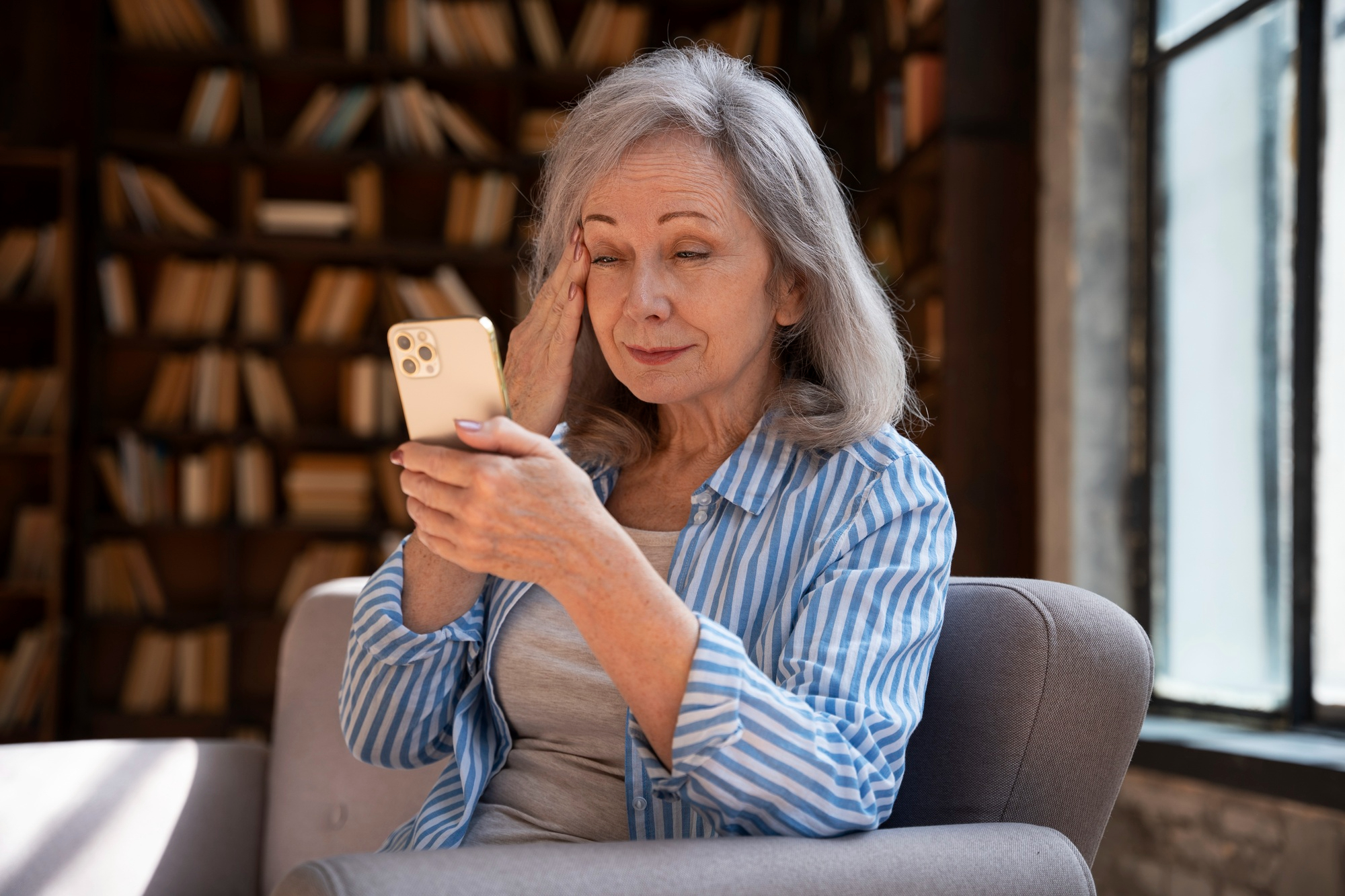
The invitation had arrived on a Tuesday afternoon, three words long and entirely ordinary on its surface: anniversary dinner, 8:30, Ivy Garden. Don’t miss it, mother-in-law. A small detail Valerie had appended at the end, that almost-affectionate suffix, as if she had added it as an afterthought, a gesture of inclusion that cost nothing and meant less.
I had read it twice, then set my phone on the kitchen counter and stood for a moment looking out at the street. Something in me had noticed the strangeness of 8:30, the lateness of it for a dinner, but I pushed the thought aside. I pressed my good blouse, polished my shoes, and arrived at the Ivy Garden in Brooklyn at exactly the time I had been told.
The hostess recognized me and started to say something, then stopped herself, eyes dropping to her reservation sheet in the way people do when they know something they have been instructed not to share.
I walked toward the back of the room.
The table was destroyed in the way that tables only look after a long, lavish, deeply enjoyed dinner. Empty plates scraped clean. Wine glasses ringed with dried red at the bottom. Crumpled napkins heaped in the center. Lobster shells, steak bones, the remains of desserts involving chocolate and cream. Several champagne bottles stood tilted at various angles, each one empty. Nine people sat among the wreckage, and every one of them turned to look at me at the exact same moment, as if they had been watching the entrance and waiting.
Valerie was dressed in black, her hair arranged in that particular way that requires an hour and a stylist and is meant to look effortless. She had a champagne flute in her hand, empty, and she raised it in my direction with the small, pointed smile of someone who has been rehearsing this moment.
“Just in time to pay the bill,” she said pleasantly.
My son Sebastian sat beside her. He did not look at me. He was laughing at something she had said a moment before, or pretending to, and the sound of it was wrong in my chest, hollow and practiced.
“Always so clueless, Mom,” he said. “How do you even manage to show up when we’re already done?”
I stood at the edge of the table with my brown purse pressed against my chest and my hand inside it, fingers wrapped around my phone. I pulled it out and opened the message chain. There it was on the screen, unchanged from Tuesday: 8:30 p.m. I had not misread it. I had not confused myself. I had not arrived confused or scattered or in the wrong place at the wrong time.
I had arrived exactly where and when they wanted me.
Valerie’s mother Patricia was seated at the far end of the table, wearing her fake pearls and an expression of quiet, satisfied triumph. Her daughter Rachel sat beside her, a cousin I barely recognized on her other side. There were two other people I could not name at all, faces I had never seen in my son’s life before tonight, present for reasons I did not yet understand but was beginning to.
Nobody stood. Nobody greeted me. Nobody moved to make room or offer a chair or ask if I wanted anything to eat.
A waiter appeared at my elbow and extended a small black folder.
I took it and opened it.
Three thousand four hundred dollars.
I stood there with that number in my hands and understood several things at once. They had ordered everything on the most expensive tier of the menu. The champagne was French and imported. The cuts of meat were listed with the names of their regions of origin. There were appetizers I could not pronounce and desserts that were described in three languages. They had eaten for more than two hours, at a table booked for six o’clock, and they had sent me a message telling me to arrive at eight thirty.
The arithmetic of it was not complicated.
My name is Eleanor Robles. I am sixty-eight years old, and for nearly four decades I was a senior accountant at an auditing firm in Manhattan, which means I have spent the better part of my adult life looking at numbers and understanding exactly what they are saying. I know how to read a column of figures and find the story inside it. I know when the numbers on the page are describing something different from what the words around them claim. I have been paid well, for a long time, to know the difference.
And standing in that restaurant at eight thirty in the evening, I knew exactly what story the bill in my hands was telling.
I raised my hand. Not toward the waiter with his folder. Toward the back of the room, where a man in a navy blue suit was moving between tables with the particular composure of someone who runs the place because he built it.
“Rodrigo,” I said. “Can you come here for a moment?”
The change in the table’s atmosphere was immediate and physical, like a shift in air pressure before a storm. Valerie’s smile flickered. It lasted less than a second, that flicker, but I had been watching Valerie for three years and I knew every variation of her expressions and that one was new. That one was uncertainty.
Rodrigo Santillan crossed the room and reached me in twelve steps. He was forty-one now, dark-haired, impeccably dressed, with the steady courtesy of a man who has learned that dignity is the most valuable thing a restaurant can offer. I had known him when he was twenty and carrying plates for other people and his mother was sick and their family’s small restaurant in the neighborhood was drowning in debt.
His mother Mercedes had worked at my firm for eleven years, processing payroll and keeping the kinds of careful, meticulous records that nobody notices until they are gone. When she was diagnosed and had to step back, Rodrigo came to me quietly and asked if I could look at the restaurant’s accounts. He had nothing to offer in exchange. He said so plainly, without embarrassment, which told me more about his character than anything else he could have said. I spent three weekends untangling their finances, restructuring their debt schedule, and finding two grants for small family restaurants that he had not known existed. The restaurant survived. It grew. It became, eventually, the Ivy Garden, which was now one of the most respected dining rooms in Brooklyn.
I had not traded on that history in eleven years.
Tonight I would.
“Good evening, Mrs. Eleanor,” Rodrigo said, and the warmth in his voice was entirely real.
The table went completely silent. Not the polite quiet of people waiting for a conversation to end, but the stopped silence of people who have suddenly found themselves in a scene they did not write and do not know the lines for.
Valerie set her empty flute down. “You two know each other?”
I did not answer her. I kept my eyes on Rodrigo.
“What time was this table reserved for?” I asked.
“Six o’clock,” he said, without hesitation and without any particular expression.
Sebastian’s head came up sharply.
I showed Rodrigo my phone screen. He looked at it, then looked at me. “The message inviting you says eight thirty,” he said.
“Yes,” I said. “Thank you.”
Valerie pushed her chair back slightly, repositioning herself. “Eleanor, this is just a misunderstanding. There’s no need to involve management in a simple family dinner.”
Rodrigo’s voice was composed and perfectly polite. “Mrs. Eleanor, your private table in the side lounge has been ready since six o’clock. We were expecting you there as usual.”
Patricio frowned. “Her private table?”
“Of course,” Rodrigo said. “Mrs. Eleanor has been a minority partner in this restaurant for eleven years. She holds an eighteen percent stake in the Ivy Garden.”
There is a particular quality to the silence that falls over a room when something that has been hidden for a long time becomes suddenly, irreversibly visible. It is not like the silence of shock, which is sharp and reactive. It is more like the silence of understanding, slower and deeper, the sound of people recalculating everything they thought they knew about the situation they are in.
That was the silence that fell over the table at the Ivy Garden.
Valerie’s color left her face in stages, beginning at her temples and moving inward.
Sebastian stared at me with his mouth partially open. “A partner?” he said. The word came out like a question he had not known he needed to ask.
I sat down in the chair they had left empty at the end of the table, the chair that had been positioned there as a kind of prop, a seat that would exist in the scene but have nothing in it, present only to underline my absence from the meal that mattered. I sat in it deliberately and placed my purse on the table in front of me.
I reached inside and drew out a wine-colored notebook.
I had been keeping it for three years. It was not a dramatic object. It was the kind of notebook you buy in sets of three from any stationery store, with a plain cover and narrow-ruled pages. The writing inside was ordinary too, the careful, specific handwriting of someone who has spent a career recording figures that matter: dates and amounts and descriptions and outcomes. I had not kept it as a weapon. I had kept it because I had learned, at some point in those three years, that the only protection available to me was accuracy, and accuracy requires documentation.
“I am not paying this bill,” I said.
Valerie let out a short, brittle sound. “What do you mean you’re not?”
I opened the notebook to the first marked page. “Because I did not come tonight to pay a bill. I came to settle accounts.”
What they did not know, sitting across from me in the wreckage of their expensive dinner, was how long I had been preparing for this particular evening. Not the restaurant itself, not the specific table or the specific bill, but the broader reckoning that this night represented. I had known something like it was coming for nearly a year. I had been gathering what I needed slowly and carefully, the way I had always done things, without announcement and without drama.
Let me tell you what the notebook contained.
The wedding had come first. Sebastian had looked at me with the eyes he had when he was small and wanted something he was embarrassed to ask for outright, a look that had never failed to produce exactly what it was intended to produce. Valerie had framed it as a simple request for help with a portion of the costs, and I had written a check for sixteen thousand dollars for a venue on Long Island. The promise of repayment had a timeline attached to it. Eighteen months. Nothing came back.
Then the honeymoon in Key West, thirty-seven hundred dollars. Another signed note, another date, another silence where the repayment should have been. An online boutique Valerie described in detail over three separate dinners, the suppliers she had already contacted, the branding she had designed, the market research she had done. Nine thousand dollars, with a signed agreement. The boutique did not open. When I asked about it six months later, she said the market had shifted and it was no longer viable.
The surgery that turned out to be a cosmetic procedure described as medically necessary. The credit card balance that had become “unmanageable.” The trip that was described as a professional obligation. The back rent that would apparently result in eviction if not covered immediately. The car down payment. Each item arrived dressed in urgency and wrapped in the language of family obligation, and I had paid each one with the particular resigned love of a woman who wanted her son to be happy and believed, for too long, that his happiness and his wife’s demands were the same thing.
Thirty-two thousand dollars in thirty-six months. Written down. Every cent of it.
The money was not the worst of it.
The worst was the year they spent in my house.
They had moved in during the supposed water damage to their apartment. Two months, they said. It became twelve. Valerie rearranged my home with the confidence of a woman who had already decided it was hers: curtains replaced, furniture shifted, the tablecloth my mother had embroidered over one winter folded away somewhere I never found. She packed Arthur’s photographs into boxes she stored in the garage, and when I asked about them she described it as decluttering. When I found my engagement ring, the one Arthur had given me in Central Park when we were both young enough to believe that the future was something you could hold in your hand, sitting in the kitchen trash under vegetable peelings, Valerie said she had thought it was costume jewelry. Sebastian told me not to overreact.
I did not overreact. I went to my bedroom and sat on the edge of the bed where Arthur had slept for twenty-two years, and I held the ring in my palm, and I began to wake up.
Waking up is not the same as deciding. It took several more months before I was ready to act, and several more before I knew exactly how to. I hired Julian Martinez, a former detective who had built a small, discreet investigative practice in lower Manhattan. He was methodical and thorough and entirely without sentiment, which was exactly what I needed. What he found took three weeks to compile and arrived in a manila envelope that I carried home on the subway without opening until I was sitting at my own kitchen table.
Sebastian and Valerie had twenty thousand five hundred dollars in a savings account they had never mentioned during any of the conversations in which they described themselves as financially struggling. Valerie’s spending records showed a consistent pattern of designer clothing, jewelry, spa treatments, and expensive dinners with people I did not know. Julian had also obtained, through means I did not ask him to specify, screenshots of messages between Valerie and her sister Rachel. In one of them, Rachel had written that I was an ATM with legs. Valerie had responded that I never said no.
The final item in the envelope was a written document, handwritten in Valerie’s script, that laid out a plan for transferring my house in Brooklyn into Sebastian’s name. The stated reason was tax efficiency. The actual purpose, made clear by the numbers in the margins, was sale. The house was estimated at seven hundred thousand dollars. The planned disbursement included a new apartment for Sebastian and Valerie, a car, payments toward Patricia’s debts, a startup fund for Rachel’s business, and a remainder for personal use. My life, that is to say, had already been divided up and distributed in someone else’s imagination, in advance of my departure from it.
I read the document three times. Then I called Andrew Salgado, who had been my attorney for twenty years, and I told him what I needed.
That had been two months before the dinner at the Ivy Garden.
I had called Rodrigo the following week. He had listened without interrupting and had agreed to everything I asked. He was the only person I told, and he kept the confidence completely.
Now, sitting at the wreckage of the table, I opened the notebook and began to read.
The dates, the amounts, the stated reasons, the signed promises. I read them in the order they had occurred, in the flat, informational voice I had used for decades when presenting numbers to clients. Sebastian’s face moved through several colors. Rachel stopped laughing before the third entry. Patricia’s posture changed, the triumphant rigidity softening into something more cautious, as she began to understand that the situation she had come here to witness was not going the direction she had expected.
When I finished with the notebook, I placed the printed screenshots on the table. The words ATM with legs sat on white paper in the center of the table between the empty champagne bottles and the crusted dessert plates. Valerie did not look at them. She was looking at the window.
I put the document about my house last, smoothing it flat with my palm before sliding it across the linen.
Sebastian looked at it for a long time. “Mom, I didn’t know about all of this,” he said.
I looked at him steadily. “You knew enough,” I said. It was the truest thing I could offer him in that moment, and we both understood it.
Valerie pressed her hand flat on the table. “This is a complete invasion of our privacy. We are family.”
I leaned forward slightly. “Family does not invite an elderly woman to arrive at the end of a dinner in order to humiliate her and hand her the check. Family does not plan to take away her home. Family does not keep a ledger of how many times they can press someone before she stops being useful.” I straightened. “What you have been running is not a family. It is a system. And systems, in my experience, eventually get audited.”
Rodrigo placed a card reader on the table with the quiet efficiency of someone completing a routine transaction.
“The bill for this evening must be settled tonight,” he said. “Mrs. Eleanor did not authorize any charges to her account.”
Patricia turned to Valerie with an expression that had abandoned all pretense of social grace. “You said she would pay,” she said.
Four credit cards appeared on the table. The first declined immediately. The second did not have sufficient limit for the full amount and had to be used for a portion. Rachel cried, not from remorse but from the particular frustration of someone who has been caught in someone else’s plan and is now personally inconvenienced by it. Sebastian sat with his hands flat on the table in front of him and said nothing at all.
Before I stood up, I laid the manila envelope on the table in front of my son. It contained copies of everything Julian had compiled, along with the civil claim Andrew had drafted for the recovery of thirty-two thousand dollars plus interest, and a formal notice to vacate my property. Fifteen days to sign the payment agreement. Everything out of my house by six o’clock the following evening.
Sebastian looked at the envelope and then at me. His eyes were wet. “Mom, please don’t do this.”
“No,” I said, and I picked up my purse and my notebook. “You did this. All of you. I am simply the one who stopped helping you hide it.”
I walked out through the dining room, past the tables of people who had been trying not to watch and had watched anyway, past the hostess who had known something was wrong from the moment I arrived, and out through the front door into the cool night air of Brooklyn.
I stood on the sidewalk for a moment. The street sounds rose around me, car engines and voices and the distant mechanical rhythm of the city that has always been home. I pressed the notebook against my chest and breathed.
The following afternoon, they arrived with a moving truck. Valerie moved through my house with the angry efficiency of someone who is furious at being caught rather than sorry for what she did, throwing things into boxes with more force than necessary, muttering words she did not quite direct at me because Andrew was present and she had enough legal instinct to understand that this was not the moment. Sebastian moved more slowly, carrying things with a heaviness that was not physical.
Andrew stopped Valerie when she reached for my mother’s china. “That is not your property,” he said, and she stopped, and she said something sharp and small that nobody responded to.
At twenty minutes to six, they were gone.
I locked the front door and changed the deadbolts myself, which I had been meaning to do for longer than I wanted to admit.
I walked through my house the way you walk through a place after something has happened in it, slowly and with attention, taking stock. There were marks on the walls where things had been moved. Drawers emptied. Spaces where photographs had hung, their outlines faintly visible in the slightly different shade of paint. In the study, under a folder Valerie had apparently forgotten in her anger, I found a notebook that was not mine.
I sat down and read it.
The debt she carried was larger than I had known, forty-five thousand dollars across credit cards and personal loans and money owed to her own mother from a clothing business that had failed. There were also messages, printed and tucked into the back pages, from a man named Ethan. His most recent message told her that as soon as the old woman’s house sold, they would move to Miami.
I sat on the floor of my study for a while, not crying, because there were no tears left that belonged to Valerie. The hurt that remained was for Sebastian, and it was the specific, quiet hurt of watching someone you love lose themselves so completely that the person sitting across from you in the restaurant had barely resembled the boy who used to fall asleep against my arm on long car rides.
A mother’s love does not mean rushing to rescue an adult from the consequences of choices they made while they were looking you in the eye and calling you their family.
Sebastian signed the payment agreement twelve days later. Fourteen hundred dollars a month for nearly two years. He sold his car. He closed his credit accounts. He moved into a small apartment in the neighborhood and started seeing a therapist, which I learned from the brief notes he attached to the monthly payments. Month five paid. Still in therapy. Month eleven paid. I am sorry for calling you clueless. Month eighteen paid. I did not deserve your patience.
I kept every note in a box beside the letters Arthur wrote me when we were young.
Valerie refused to sign initially. She threatened a public campaign, a social media account, a claim of elder abuse delivered with enough volume to cause trouble even if it never went anywhere. Andrew sent her legal counsel the full evidence file and the countersuit, and she signed the following day. She was in Miami within three months, with Ethan, who discovered the extent of her debts and did what people like Ethan do when the calculation no longer works in their favor.
I did not feel satisfaction at that. I am not sure what I felt, exactly. Something more like the absence of a weight I had been carrying for so long that I had stopped registering it as weight.
I remodeled the kitchen that spring. I hung the photographs back on the walls, not all of them in exactly the same positions as before, which turned out to feel right in a way I had not expected. I found Arthur’s photos in the garage, a little dusty in their bubble wrap, and I chose the three I loved most and put them where I could see them from the table where I had my morning coffee. I rescued the plants Valerie had let go dry. I adopted a dog, a golden retriever mix the shelter had named Bella, who slept under my desk with her chin on my foot and required nothing from me except presence and reliability and the occasional long walk.
I went to Savannah in October, alone, something I had never done in my life. I walked through the old market district and looked at paintings by artists I didn’t recognize and bought a piece I couldn’t entirely explain but felt something when I stood in front of it. I ate dinner at a restaurant on the waterfront without looking at the prices on the menu, which sounds like a small thing and is not. I sat on a bench in Forsyth Park in the afternoon and cried, not from grief exactly, but from the particular relief of a person who has arrived somewhere they did not know they were trying to reach.
Living for yourself, I discovered in Savannah, is not selfishness. It is what happens when you finally stop trying to justify your existence through other people’s gratitude.
Sebastian completed his payments on a Tuesday morning. He sent a short message: the final deposit had been made. He was not asking for anything. He would understand if she did not want coffee, but if she ever did, he would be there.
I took three days before I replied. On the fourth day I sent him the address of a small coffee shop two blocks from my house.
We met on a Sunday. The weather was the kind of mild gray that feels restful rather than gloomy. We sat across from each other at a corner table and there was no hug, not yet, just two people with their coffee cups and the kind of silence that exists between people who have too much to say to begin with any one thing.
He did not blame Valerie. He did not explain himself through what she had done to him or what she had convinced him of or how her influence had clouded his judgment. He took the weight of it without distributing it anywhere else, which was the first thing he had said or done in years that sounded entirely like himself.
“I let it happen,” he told me. “Every time you were humiliated in front of me, I laughed or I said nothing. I let them treat you like a resource. I let them talk about you the way they talked about you, and I told myself it wasn’t really that serious.” He stopped. “That was a choice. Every single time. I made it.”
He cried, and I did too, which I had not expected.
I did not forgive him that afternoon, not fully, not in the way that would have meant pretending the previous three years had a different shape than the one they had. But I left a door standing open, which was more than I had been able to offer for a long time.
My study smells like coffee and lavender now, the two candles I light in the morning when I sit down to work. Bella is under the desk. The photograph of Arthur that I love most, the one from the summer we drove up to Vermont before Sebastian was born, is visible from where I sit. The wine-colored notebook on my shelf no longer holds debt figures. It holds the early notes for a video channel I am building, something modest and honest, where I talk about the particular experience of women who learned, often later than they would have liked, that the word enough is a complete sentence.
Sebastian comes twice a month. He brings pastries sometimes, the kind from the bakery on Atlantic Avenue that we used to go to on Sunday mornings when he was small. We do not talk about Valerie or about money or about what was almost taken from me. We talk about his therapy, which he describes with the cautious, discovering language of someone learning to see themselves clearly for the first time. We talk about Bella. We talk about Arthur sometimes, which we have not done in years, and those conversations feel like recovering something that had been stored in a garage in bubble wrap.
There is a particular satisfaction in the knowledge that my house is still mine. Not the dramatic satisfaction of victory in a contest, but something quieter and more sustaining, the satisfaction of a woman who looked at what was being done to her and refused to be the last one to understand it.
That night at the Ivy Garden, they believed I had arrived to pay a bill. They had arranged everything carefully toward that outcome, the time of the invitation, the extravagance of the order, the faces around the table positioned to watch. They had underestimated, in the way people consistently underestimate quiet women who have spent decades paying close attention, the possibility that I had already seen the shape of what they were doing long before they brought me to the restaurant to complete it.
I did not arrive to pay a bill.
I arrived to collect one.
The debt they owed me was not only the thirty-two thousand dollars that now sits, recovered, in my account. It was the cost of three years of swallowed humiliation and deliberate blindness and the slow, patient work of a woman who kept a notebook and waited until the moment was exactly right.
That bill, after everything, has been paid.
And everything else, the life I am living now, the coffee in the morning and the dog under my desk and the door that is slowly, carefully opening again for my son, that is not repayment. That is simply what remains when you finally stop agreeing to disappear.

Adrian Hawthorne is a celebrated author and dedicated archivist who finds inspiration in the hidden stories of the past. Educated at Oxford, he now works at the National Archives, where preserving history fuels his evocative writing. Balancing archival precision with creative storytelling, Adrian founded the Hawthorne Institute of Literary Arts to mentor emerging writers and honor the timeless art of narrative.